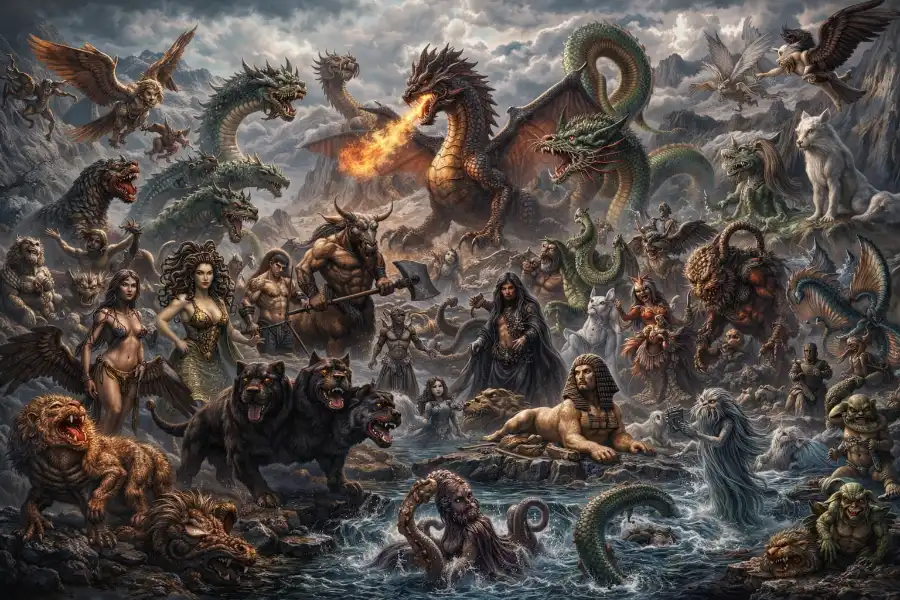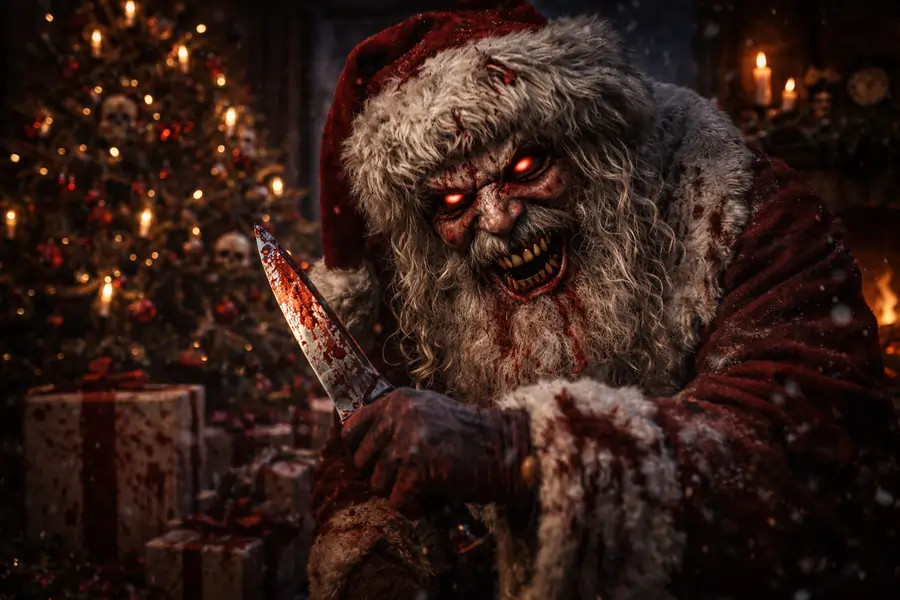
Long before Santa Claus became a symbol of joy, many cultures believed Christmas was a time when dark creatures roamed the night—punishing the wicked and rewarding the good. These scary christmas creatures from mythology and dark christmas legends have haunted winter celebrations for centuries, from the infamous Krampus to Iceland's child-eating giantess Grýla.
Christmas Mythology Creatures: Dark Legends of the Winter Season
The best way to make children behave properly would be to remind them about Santa Claus and Christmas. After all, only the good ones get the presents right? If they still wouldn't listen, here is a list of mythical creatures visiting this Christmas to change their mind. And not all of them plan on giving gifts.
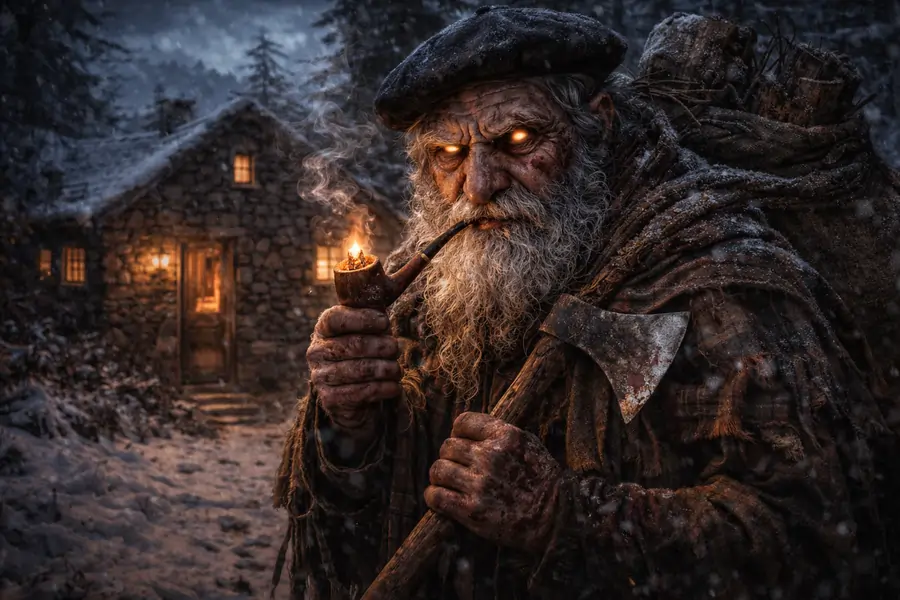
Olentzero
Let us start this list with a nice guy. Olentzero is a character from the Basque Country legend. He is the equivalent of Santa Claus. The word Olentzero literally means "time of the good ones." It is said that on the night of the 24th of December, Olentzero visits the houses of the people to drop off presents for children. Legend has it that Olentzero was one of the Jentillak, a mythological race of Basque giants.
One day there was a very bright cloud in the sky, and no one could see it except Olentzero, who was very old and nearly blind. He confirmed that to be the sign of the birth of Jesus Christ, so he asked the giants to throw him off the cliff to avoid Christianisation. However, the giants tripped and fell, and Olentzero was the only one left alive and embraced Christianity.
Mari Lwyd
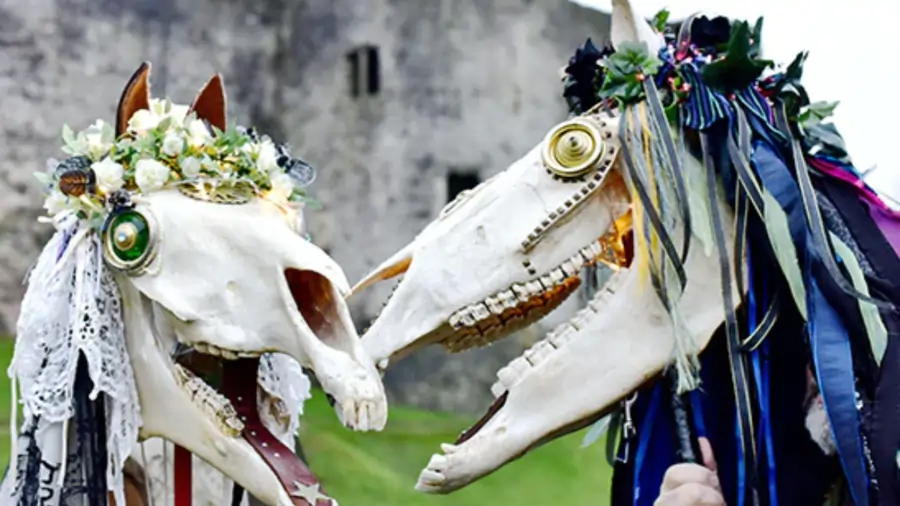
The Mari Lwyd is a folk tale from South Wales. According to tradition, the Mari Lwyd consists of a horse's skull mounted on a pole carried by an individual hidden under a sackcloth. This custom is observed to mark the passing of the darkest days of winter. This is the reason why it overlaps with the celebration of Christmas.
The Mari Lwyd party usually consists of four to seven men with colored ribbons attached to their dress. The party would approach a house singing a song to request entry. The inhabitants of the house would then give some excuse as to why they couldn't enter, which would be followed by another song until they ran out of excuses.
Once inside the Mari Lwyd would then cause havoc and scare the children while the party would try to restrain it.
Befana
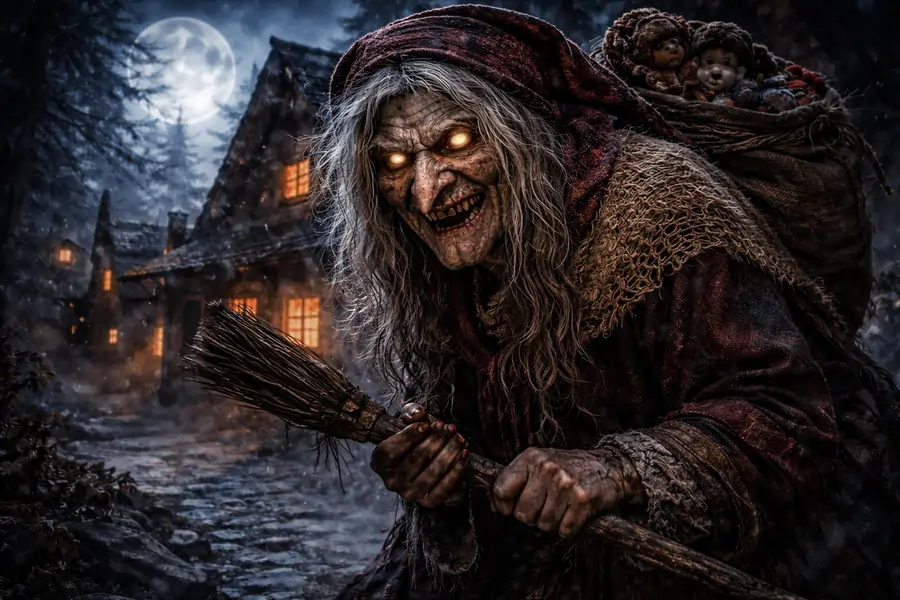
Befana is part of Italian folklore. She is an old woman who delivers gifts to children on Epiphany Eve, which is on January 5th. Befana is portrayed as a hag riding a broomstick wearing a black shawl. She visits each house and leaves candy and fruits for good children while leaving coal, onions or garlic for the bad ones.
According to Christian legend, Befana was approached by the three biblical magi who were in search of Jesus. She did not know where he was, but provided them shelter for the night. However, she refused their offer to join them in their search for Jesus.
She later had a change of heart and searched for baby Jesus but never found him. She continues to search for him and leaves gifts for children who are well behaved.
Perchta: The Belly-Slitting Christmas Demon
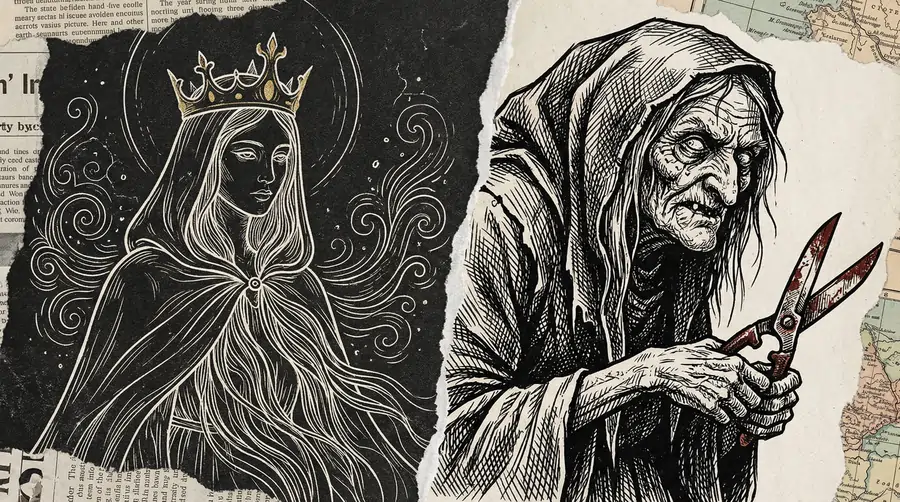
Perchta, also known as Berchta, was once a pagan goddess. Her name means "the bright one." She may appear in the form of a beautiful woman who is as white as snow or an old hag with tattered and torn clothes. She also has one large foot which signifies that she can shapeshift into any animal. Perchta is the upholder of cultural taboos and one of the most terrifying christmas mythology creatures.
During the time between Christmas and Epiphany, she roams the countryside to enter homes. If the children are well behaved, she leaves a small silver coin in a shoe. Seems good, right? No. This dark christmas legend takes a gruesome turn: if children had not behaved properly that year, she would slit their bellies, remove their stomach and guts, then stuff them with straw and pebbles! This naughty children folklore tale should be enough motivation to be good.
Grýla: Iceland Folklore's Child-Eating Christmas Demon
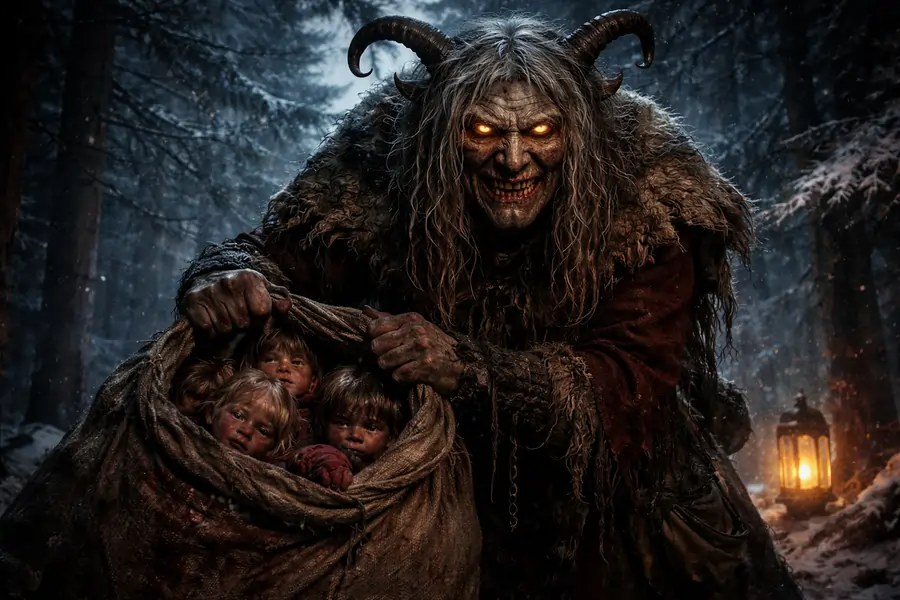
Grýla is a mythical giantess from Icelandic grýla iceland folklore who lives in the mountains. This christmas demon is said to have been married three times, and her third husband lives with her in their cave along with their children and the Yule Cat. In many stories from dark christmas legends, she is depicted as threatening children, and even her name means "threat" or "threatening."
She has the ability to detect children who misbehaved all year. During Christmas, she descends from the mountains to nearby towns in search of her "meal." This naughty children folklore creature's favorite snack is, disturbingly, children themselves. She leaves her cave specifically to hunt for misbehaving kids, and according to Icelandic tales, there is never a shortage of food for her.
Her favorite dish? A stew made of naughty children—a terrifying centerpiece of this dark christmas legend.
Yule Lads
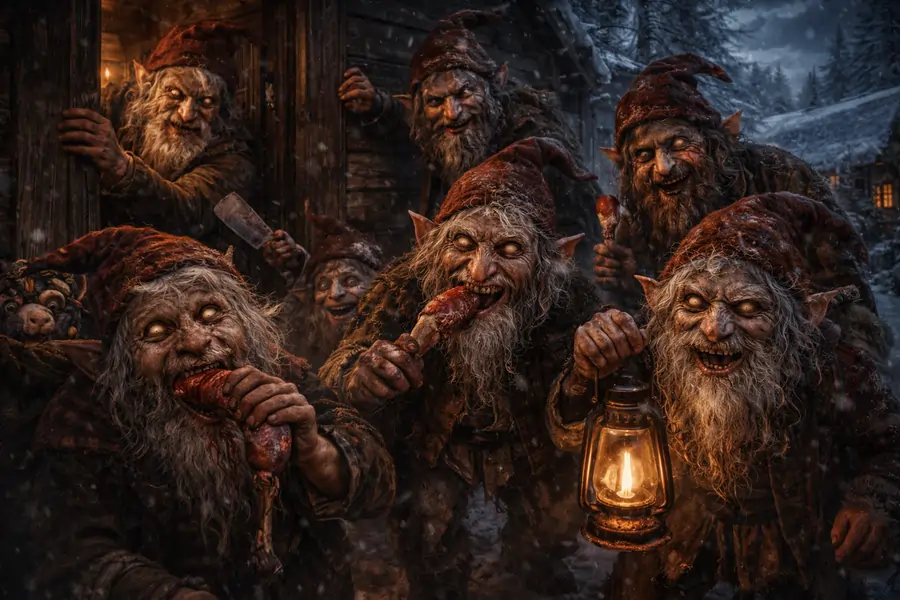
The Yule Lads are the children of Gryla. There are a total of 13 Yule Lads. They are the depiction of Santa Claus in Icelandic folklore. They visit the houses of children on Christmas to leave rewards or punishments to them based on their behavior. One Yuletide Lad visits each child and leaves gifts or rotting potatoes, depending on their behavior.
The Yule Lads are portrayed as mischievous criminals who steal or otherwise harass the population. The Yule Lads come to town on the last 13 nights before Christmas. Each Yule Lad is said to have a specific idiosyncrasy and will behave in that specific manner.
The Yule Cat: Giant Feline from Yule Cat Mythology
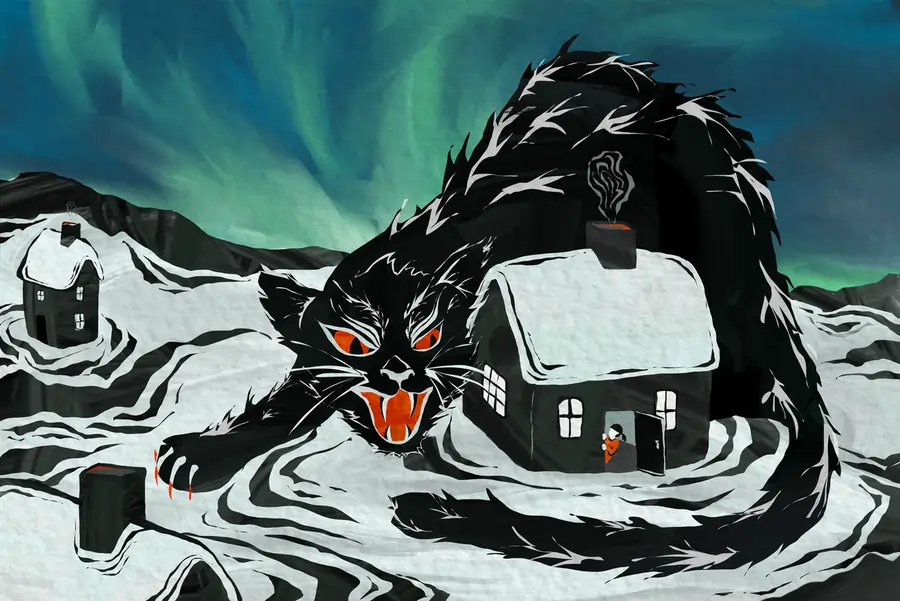
The Yule Cat is said to be the pet of the giantess Grýla and her children, the 13 Yule Lads. This creature from yule cat mythology is a huge and vicious feline that roams the snowy Icelandic countryside during Christmas. According to this naughty children folklore tradition, it devours people—particularly children—who have not received any new clothes on Christmas Eve.
This threat of being eaten by the cat was used by farmers as an incentive for their workers to finish processing the wool before Christmas. Those who helped will be provided with clothes, whereas the others would not be rewarded, allowing them to be devoured by the Yule Cat. Another interpretation states that the cat does not kill them but eats all their food instead.
Krampus Folklore: The Half-Goat Christmas Demon
Belsnickel is a fur-covered Christmas gift-bringer from the folklore of the Palatinate region of southwestern Germany. He is depicted as a man covered in fur and with a long tongue. He wears dirty torn clothes and carries a whip in his hand to beat naughty children. He also carries pocketsful of cakes, candies, and nuts for good children.
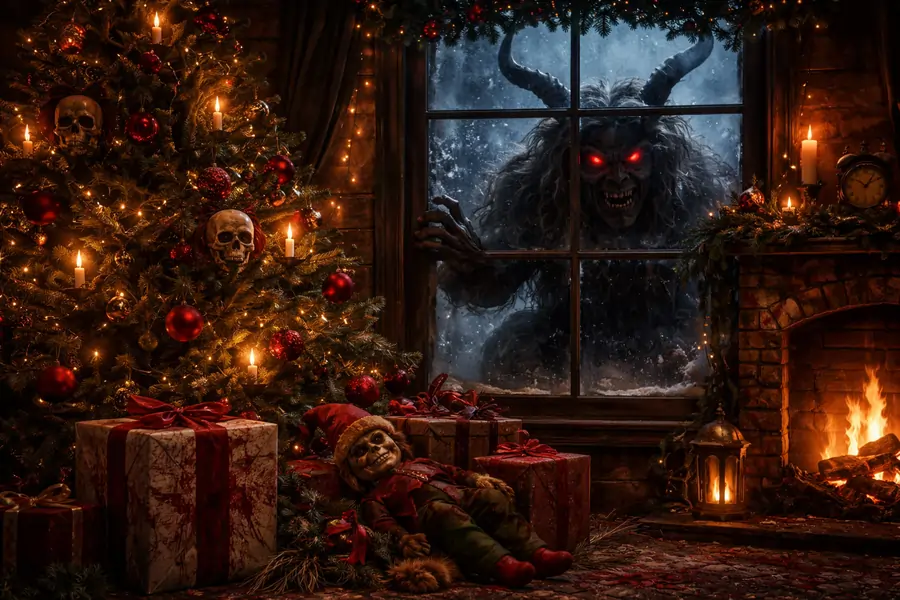
Krampus is perhaps the most famous of all scary christmas creatures—a horned christmas demon that's half-goat and half-demon from krampus folklore. He is said to be a companion of Belsnickel or Santa in respective Central European cultures. Unlike Santa, who rewards good children, Krampus is tasked with punishing naughty children. This naughty children folklore figure is hairy with fangs and a long pointy tongue. He carries a basket for capturing misbehaving children, either drowning them, eating them, or transporting them to hell itself!
Hans Trapp: France's Cannibalistic Christmas Demon
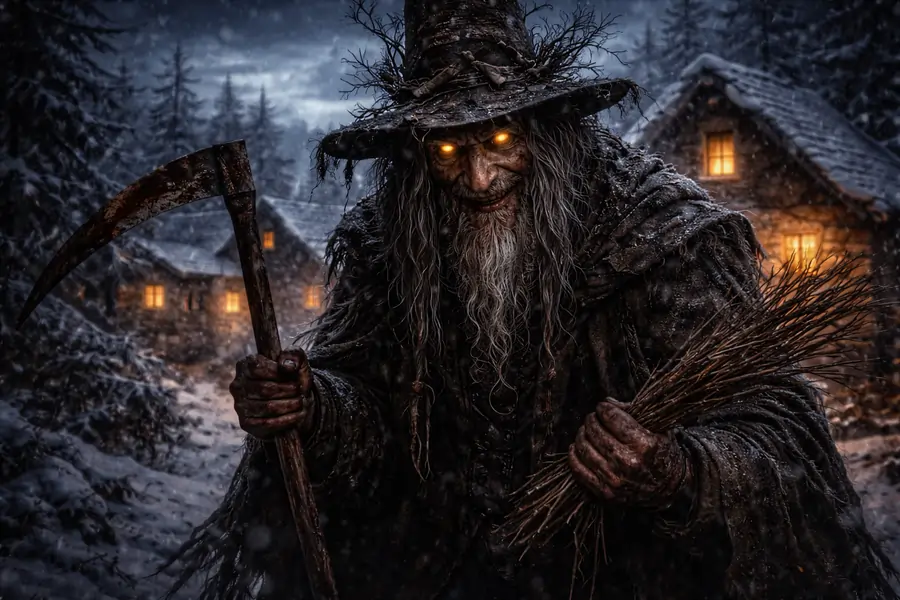
Hans Trapp is a legendary character from the Alsace and Lorraine regions of France. He is said to be an accomplice of Santa Claus and one of the darker scary christmas creatures in European folklore. Similar to krampus folklore traditions, the role of Hans is to punish naughty children at Christmas. The words "Hans Trapp is coming" send shivers down the spine of children in France. Everyone knows this dark christmas legend of Santa's evil accomplice.
According to legend, during the 15th century, there was a wealthy man called Hans Trapp who lived in Alsace. The people of the region knew that he was cunning, cruel, and heartless. It is said that he worshipped Satan and using black magic to obtain his wealth. He was arrested by the church, and his wealth was confiscated.
As he wandered in solitude, he was overcome with anger. He started to lose his mind and craved for human flesh. He killed a young shepherd boy, and as he was about to consume his flesh, he was struck by lightning and died.
Père Fouettard: The Whipping Father Christmas Demon
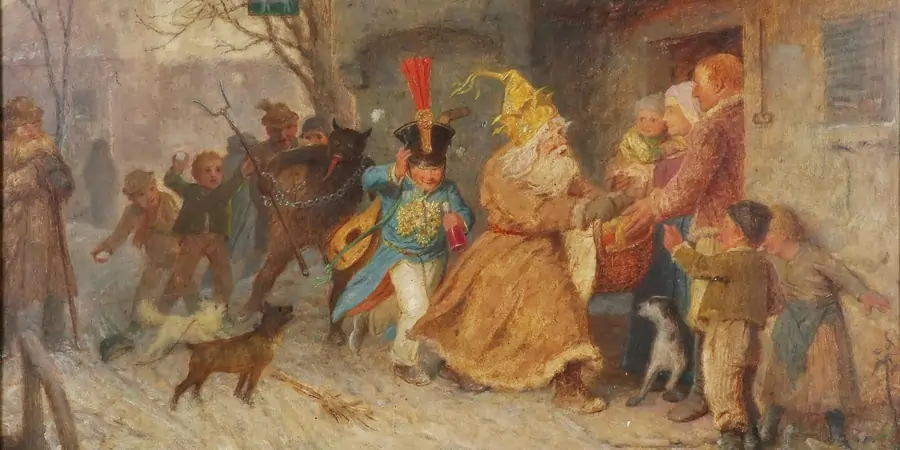
Père Fouettard is also said to be an accomplice of Santa Claus and another terrifying figure from scary christmas creatures folklore. This tale is from the far north and eastern regions of France. He is said to give lumps of coal or floggings to children who misbehaved. The "Whipping Father" is one of the darker christmas demons, portrayed with a sinister face, unkempt hair, and carrying a whip or stick to beat naughty children.
Legend has it that Le Père Fouettard was an innkeeper who captured three boys who appeared to be wealthy. He then killed and robbed them. It is said that he drugs them, slits their throat, cuts them into pieces, and stews them. Santa Claus came to know about this and resurrects them. Père Fouettard then joins Santa as his accomplice to atone for his sin.
Werewolves: Christmas Shapeshifters in Dark Legends
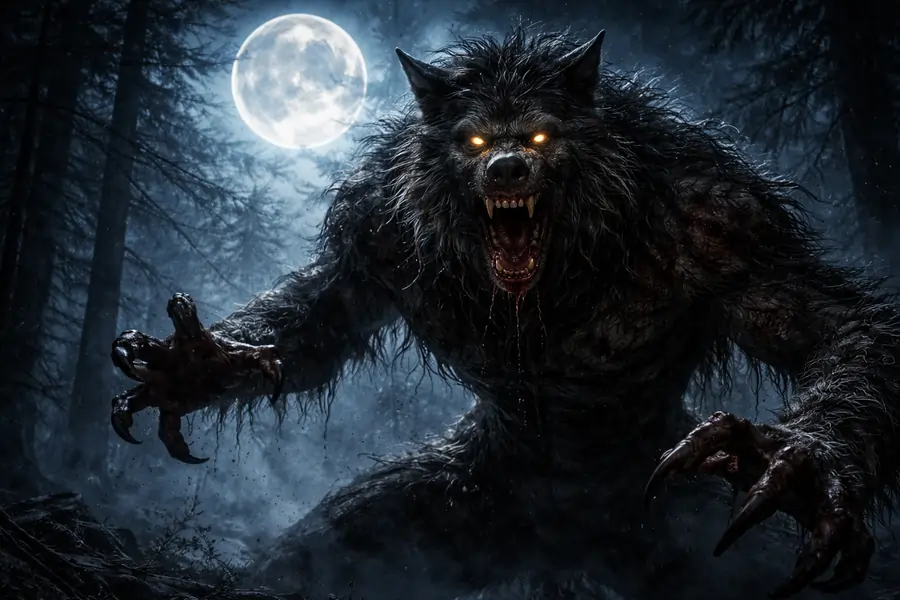
We have all heard about werewolves. A werewolf is a legendary human with the ability to shapeshift into a wolf. Werewolves are also woven into dark christmas legends in surprising ways. It is widely believed that as the hour of Christmas drew near, the forces of evil also raged more fiercely. In Prussia, Livonia, and Lithuania, these scary christmas creatures are believed to gather around Christmas to attack human settlements.
In Latvia and Estonia, it is believed that a Christmas boy lame of legs goes around recruiting demon followers. Those who join reluctantly are then turned into werewolves using an iron whip.
In Poland and northeastern Europe, if a child is born on Christmas day, then he is more likely to become a werewolf. This is because it is said to be audacious to have the same birthday as Jesus Christ.
Knecht Ruprecht: Santa's Menacing German Companion
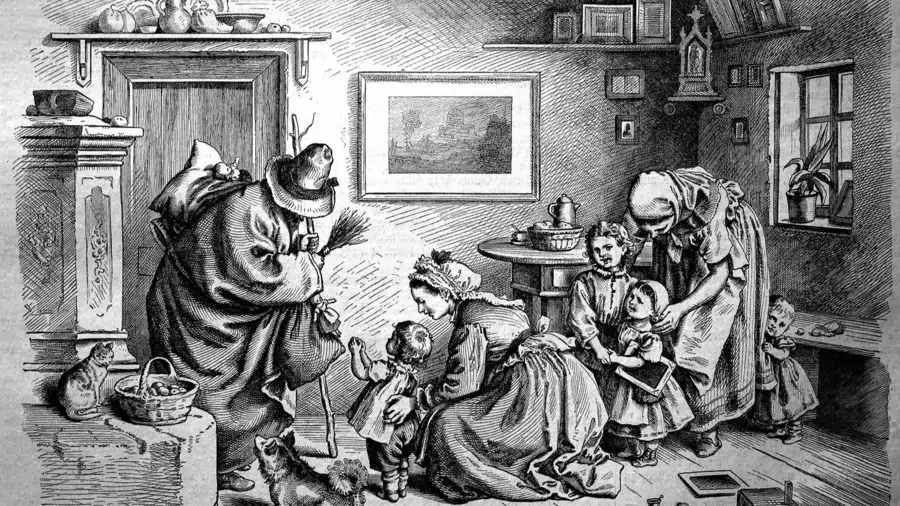
Knecht Ruprecht is a companion of Santa in German folklore and one of the classic naughty children folklore figures. He was supposed to be the most familiar accomplice of Santa in Germany. Following the good cop-bad cop routine found in many christmas mythology creatures traditions, Knecht Ruprecht would threaten to thrash or abduct misbehaving children on Christmas.
Ruprecht was raised from his childhood by Santa. He wears a black and brown robe with a pointed hood. He limps when he walks due to a childhood injury. He carries a long staff and a bag of ashes. During Christmas, he goes around asking the children if they can pray. If they say yes, then he gives them apples, nuts, and gingerbread. If they say no, he hits them with his bag of ashes.
Frequently Asked Questions
What are the scariest Christmas creatures from mythology?
The scariest christmas creatures include Krampus (a half-goat demon from krampus folklore), Grýla (a child-eating giantess from grýla iceland folklore), Perchta (who disembowels naughty children), the Yule Cat (from yule cat mythology), and Hans Trapp (a cannibalistic demon). These dark christmas legends were designed to terrorize children into good behavior, going far beyond Santa's naughty list.
What is Krampus in folklore?
Krampus is one of the most famous christmas demons from krampus folklore, particularly in Austria, Bavaria, and other Alpine regions. This half-goat, half-demon creature with horns, fangs, and a long tongue punishes naughty children during Christmas. Part of naughty children folklore, Krampus carries chains and a basket to capture misbehaving kids, either drowning, eating, or dragging them to hell.
What is the story of Grýla from Iceland?
Grýla is a terrifying giantess from grýla iceland folklore who lives in mountain caves with her husband and the 13 Yule Lads. This christmas demon descends from the mountains during Christmas specifically to hunt naughty children. According to this dark christmas legend, she can detect misbehaving children and makes a stew from them—one of the darkest naughty children folklore tales in existence.
What is the Yule Cat in mythology?
The Yule Cat, from yule cat mythology, is a massive, vicious feline that roams Iceland during Christmas. This creature belongs to Grýla and her children. According to these scary christmas creatures traditions, the Yule Cat devours people—especially children—who haven't received new clothes by Christmas Eve. This naughty children folklore served as motivation for workers to complete textile tasks before winter.
Are there other Christmas demons besides Krampus?
Yes, many cultures have christmas demons beyond Krampus. These christmas mythology creatures include Hans Trapp (a cannibalistic sorcerer), Père Fouettard (the Whipping Father), Perchta (who disembowels children), Belsnickel (who beats kids with a whip), and Knecht Ruprecht (who abducts misbehaving children). These dark christmas legends span from France to Germany to Iceland, all serving as cautionary naughty children folklore.
Why were scary Christmas creatures created?
Scary christmas creatures were created as part of naughty children folklore to enforce good behavior. These christmas mythology creatures and dark christmas legends served practical cultural purposes: teaching obedience, reinforcing social norms, and providing incentive for children to behave. From krampus folklore to grýla iceland folklore, these christmas demons represented the consequences of misbehavior, balancing Santa's rewards with punishment for the naughty.