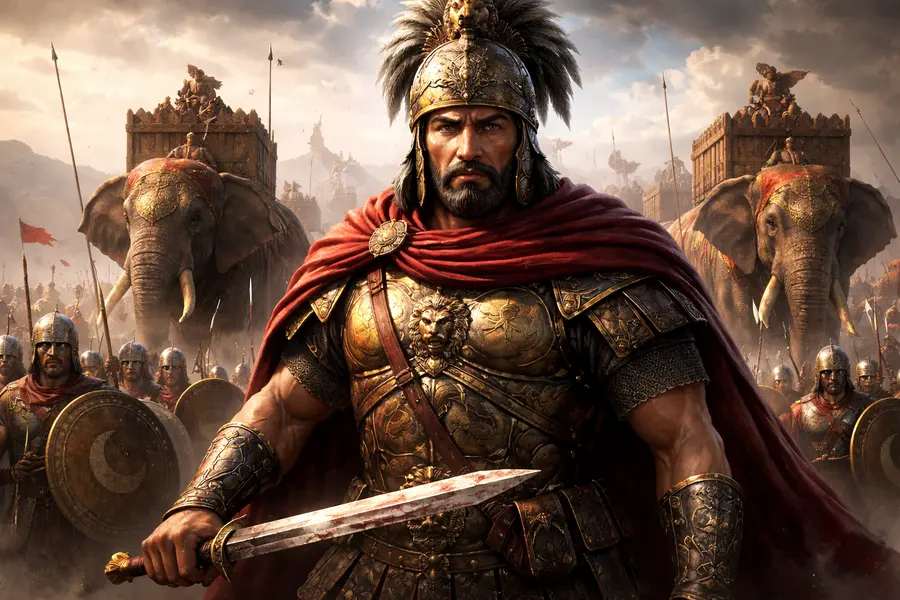
The Second Punic War (218-201 BC) was one of the most decisive conflicts in ancient history, pitting Hannibal of Carthage against the Roman Republic. Ancient historian Polybius, writing only decades after the war, regarded it as one of history's greatest struggles between rival powers. From the legendary Alpine crossing to the devastating Battle of Cannae, this war permanently reshaped military strategy.
Table of Contents
- What Were the Punic Wars?
- The First Punic War
- Hamilcar Barca: Father of Vengeance
- Hannibal: Rome's Greatest Enemy
- The Second Punic War Begins
- Crossing the Alps
- Taking the Fight to Rome
- The Battle of the Trebia
- The Battle of Lake Trasimene
- The Battle of Cannae
- Rome Refuses to Surrender
- The Battle of Zama
What Were the Punic Wars?
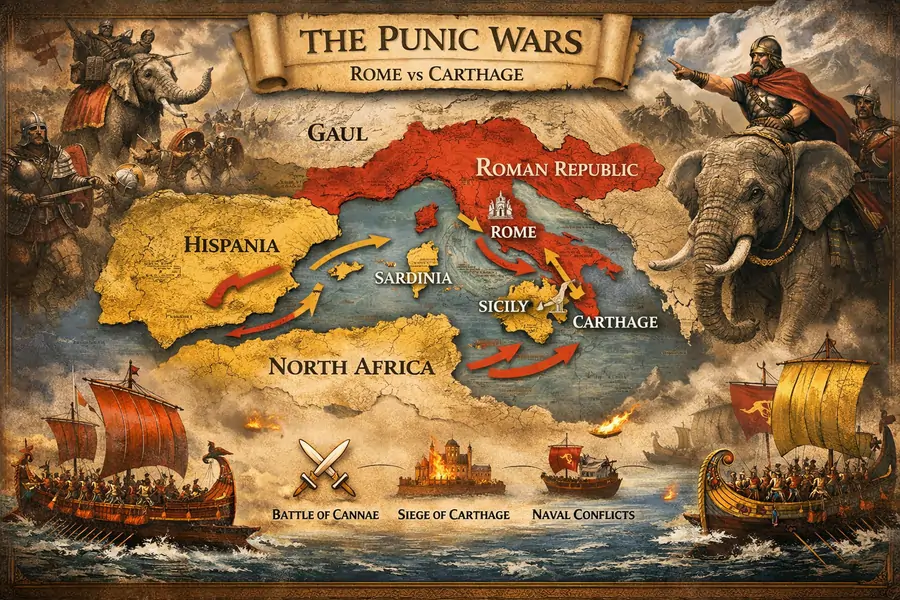
The Punic Wars were a series of three devastating conflicts fought between Rome and Carthage from 264 BC to 146 BC for control of the Mediterranean world. These wars pitted the two dominant superpowers of the ancient world against each other in a struggle for supremacy that would determine the fate of Western civilization. Rome ultimately emerged victorious, but not before Hannibal Barca, whom Polybius described as one of the most gifted commanders of his age, brought the Roman Republic to the brink of collapse.
The First Punic War: Setting the Stage
Rome sought to expand its territory through Sicily, which was partially controlled by Carthage. This territorial dispute sparked the First Punic War in 264 BC. At the time, Carthage dominated the Mediterranean with its formidable navy, while Rome's strength lay in its undefeated land forces.
Initially, Carthage avoided land confrontations and focused on naval engagements where they held the advantage. However, Rome responded by building its own fleet and developing innovative tactics. The invention of the Corvus-a boarding bridge that turned naval battles into land-style combat-gave Rome a crucial edge. By 241 BC, Carthage was forced to sign a peace treaty, surrendering Sicily and paying substantial war reparations to Rome.
Hamilcar Barca: Father of Vengeance
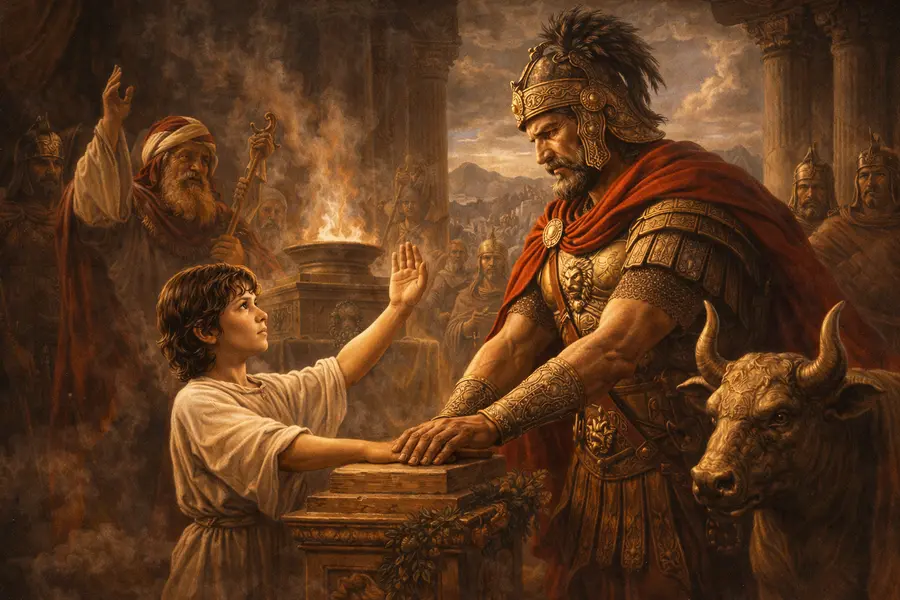
Hamilcar Barca was a distinguished Carthaginian general who fought against Rome during the First Punic War. Bitter from Carthage's defeat, Hamilcar harbored an intense hatred for Rome. According to both Polybius and the later Roman historian Livy, Hamilcar made his young son Hannibal swear a sacred oath of eternal enmity against Rome before departing for Iberia. Hannibal reportedly declared, "I swear so soon as age will permit...I will use fire and steel to arrest the destiny of Rome." This childhood vow would shape the course of ancient history.
I swear so soon as age will permit...I will use fire and steel to arrest the destiny of Rome
Hannibal: Rome's Greatest Enemy
Following the First Punic War, Hamilcar led an expedition to Iberia (modern-day Spain) to secure its valuable silver mines and rebuild Carthaginian power. When Hamilcar died in battle in 228 BC, his son Hannibal assumed command of Carthaginian forces in Iberia. True to his childhood oath, Hannibal would never befriend Rome.
Using wealth from Spanish silver mines, Hannibal raised a powerful army and began expanding northward. Modern historian Adrian Goldsworthy notes that Iberia became the financial and military foundation of Carthaginian power before the war. Rome watched nervously but couldn't intervene directly-the peace treaty allowed Carthaginian expansion south of the Ebro River (Iberus), and Hannibal had not yet crossed that boundary.
The Second Punic War Begins
The spark that ignited the Second Punic War came from the city of Saguntum, a Roman ally located south of the Ebro River in Carthaginian territory. When Saguntine forces attacked neighboring Carthaginian settlements, Hannibal retaliated by laying siege to Saguntum in 219 BC. Polybius presents the dispute over Saguntum as the immediate trigger of the Second Punic War, although he argues that deeper political tensions had existed for years.
Rome demanded that Carthage surrender Hannibal for punishment. When a Roman delegation arrived in Carthage, they presented the senate with an ultimatum: choose between war and peace. The Carthaginians deflected the choice back to Rome. The Romans chose war. This dramatic confrontation marked the beginning of the Second Punic War-a conflict that would last 17 years and test Rome's very survival.
Crossing the Alps: An Impossible March
The Battle of the Trebia marked Hannibal's first major engagement in Italy. Polybius credits Hannibal's careful preparation, superior cavalry, and exploitation of Roman impatience for the Carthaginian victory. Understanding that a direct assault would fail and that Carthage's weakened navy couldn't contest Roman sea power, he conceived a plan that seemed impossible: invade Italy by marching overland through the Alps.
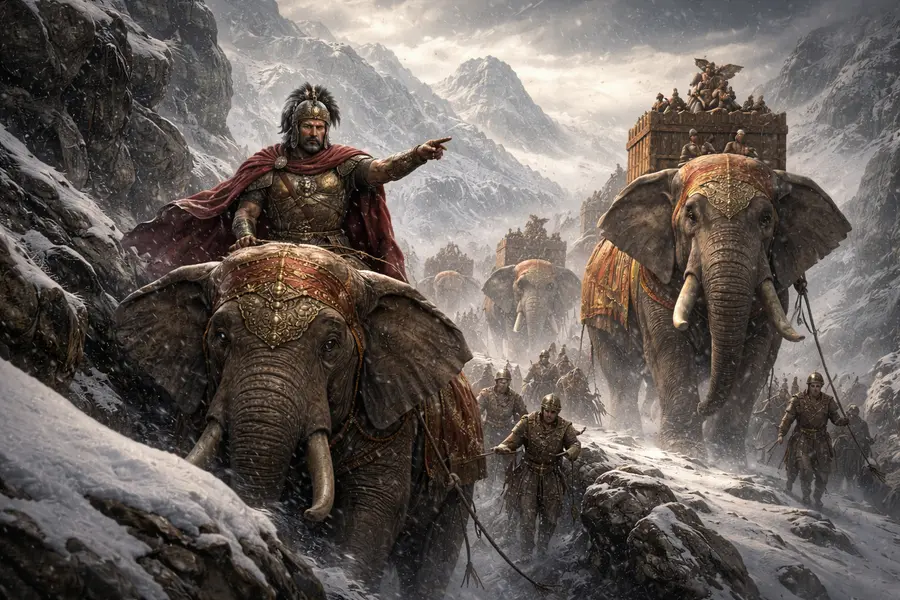
The Romans considered the Alps impassable and left their northern frontier virtually undefended. Hannibal's expedition began with an impressive force of 38,000 infantry, 8,000 cavalry, and 37 war elephants-creatures the Romans had rarely encountered in battle.
The Alpine crossing proved devastating. Treacherous mountain paths, hostile tribal attacks, avalanches, and brutal cold claimed approximately half of Hannibal's army. By the time he descended into the Po Valley in 218 BC, only 20,000 infantry and 6,000 cavalry remained. All but one elephant had perished. Yet despite these losses, Hannibal had achieved what Rome thought impossible-he was in Italy, ready to strike at the heart of Roman power.
Taking the Fight to Rome
Upon reaching northern Italy, Hannibal immediately began recruiting Gallic tribes who harbored their own grievances against Roman expansion. Many joined his cause willingly. The Romans were shocked to discover Hannibal had appeared in northern Italy-they had expected to fight in Spain or Africa, not on Italian soil. Hastily assembling their legions, Rome prepared to confront the Carthaginian threat.
The Battle of the Trebia (218 BC)
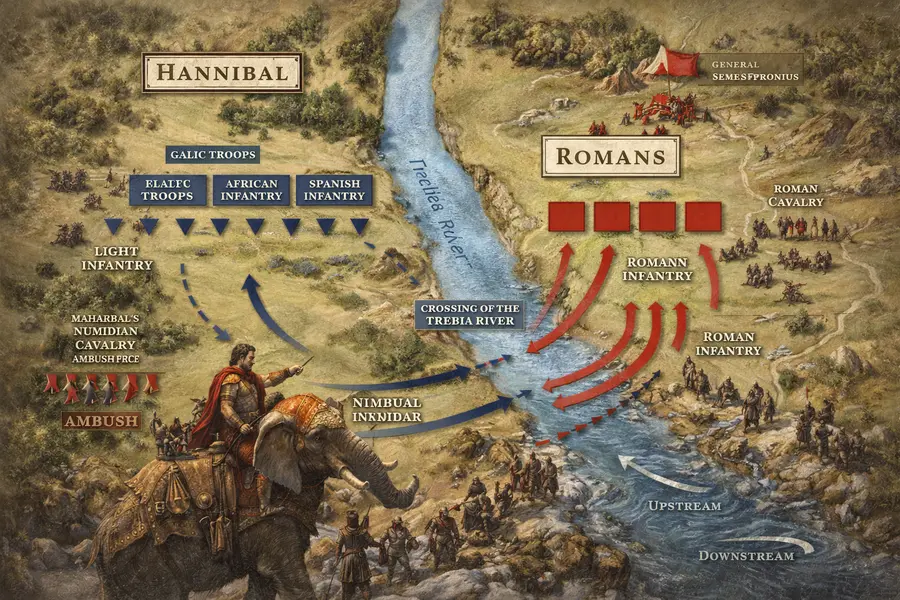
The Battle of the Trebia marked Hannibal's first major engagement in Italy. In December 218 BC, near the banks of the Trebia River, Hannibal's 40,000 troops faced a Roman force of 42,000 under consul Tiberius Sempronius Longus.
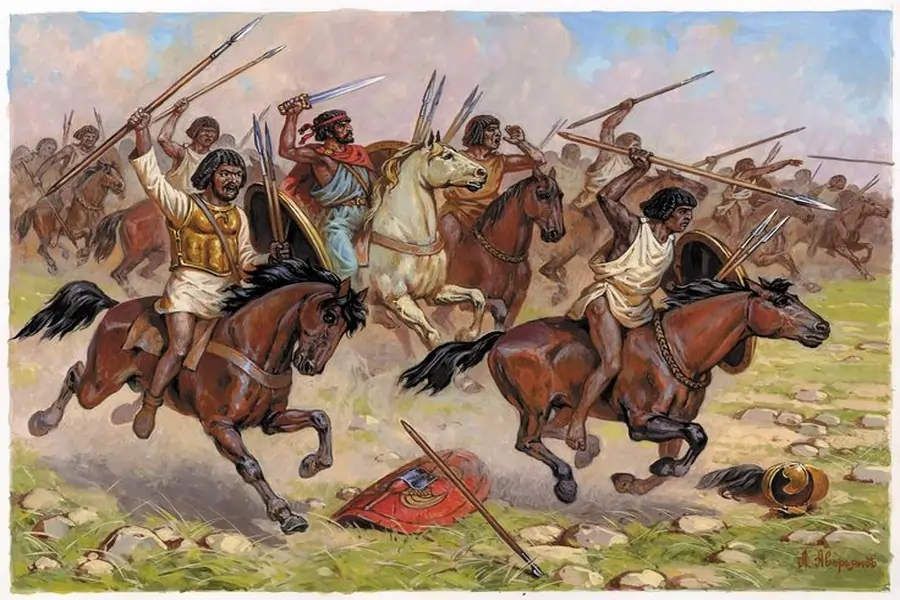
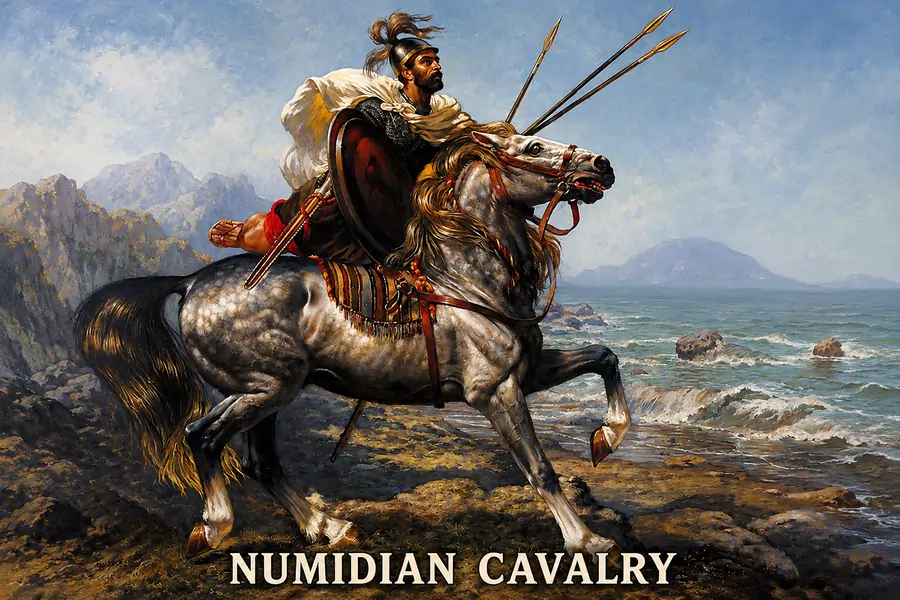
Though outnumbered, Hannibal held crucial advantages: his troops were well-fed and rested, while he possessed superior cavalry. Using psychological warfare, Hannibal's Numidian horsemen taunted Sempronius with insults that enraged the impulsive Roman commander. He ordered his legions to pursue the Numidians across the freezing Trebia River.
By the time the Romans crossed, they were soaked, exhausted, and freezing-facing a fresh, well-prepared Carthaginian army. As battle was joined, Hannibal sprang his trap. He had concealed 2,200 elite troops under his brother Mago behind the Roman position. When Mago's force struck the Roman rear, panic erupted.
The result was catastrophic for Rome: approximately 26,000 casualties against Carthaginian losses of only 4,000-5,000. This stunning victory convinced more Gallic tribes to join Hannibal, significantly strengthening his army.
The Battle of Lake Trasimene (217 BC)
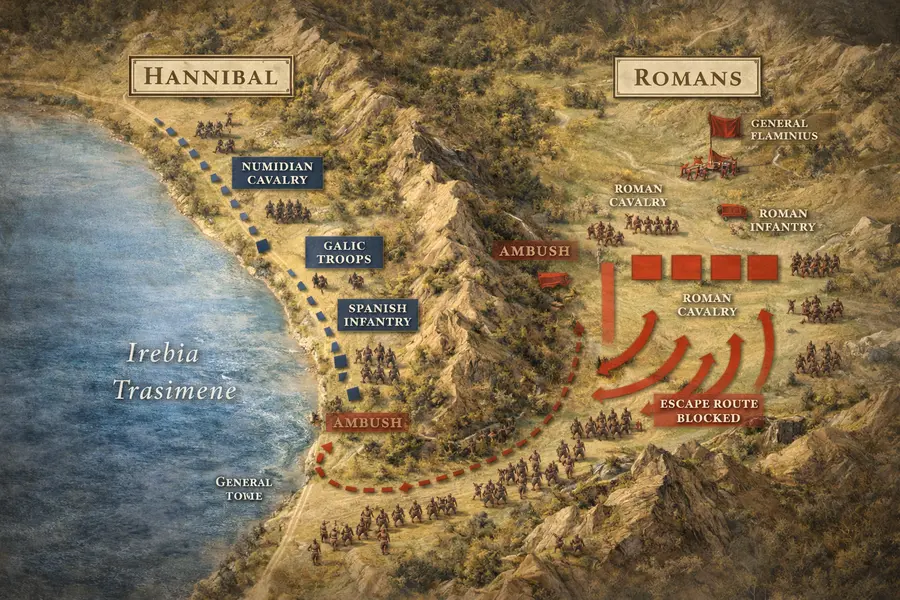
On June 21, 217 BC, Hannibal executed what remains the largest ambush in military history at Lake Trasimene. With 55,000 troops concealed in the surrounding hills, Hannibal lured the Roman army of 30,000 under consul Gaius Flaminius into a narrow valley along the lakeshore.
As the Roman column advanced through morning fog, they attacked what appeared to be a small Carthaginian force at the valley's end. Suddenly, Hannibal's hidden troops descended from the hills, trapping the Romans against the lake. It was a massacre. Rome lost 15,000 killed and another 15,000 captured, while Carthaginian casualties numbered only 1,500.
The Battle of Cannae (216 BC): Masterpiece of Destruction
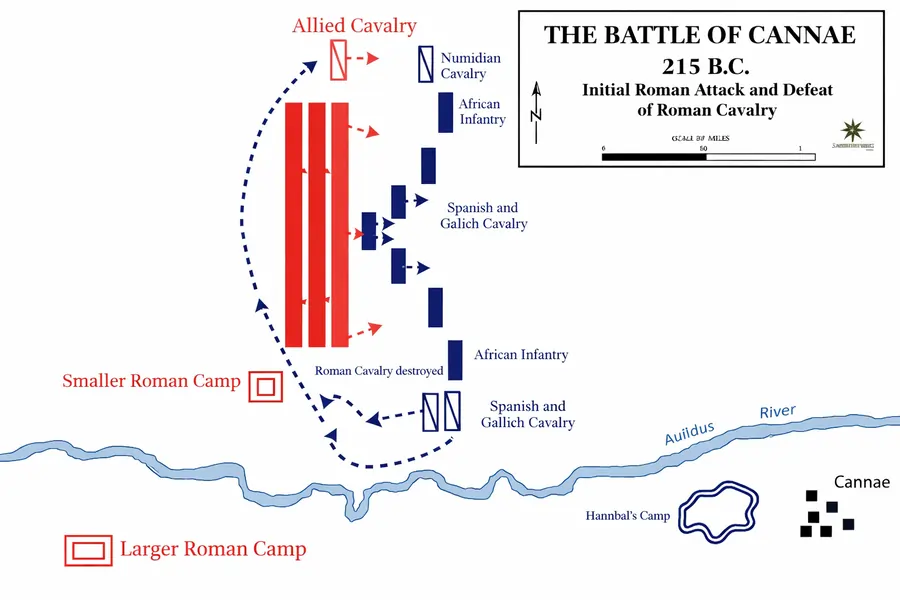
After the disasters at Trebia and Battle of Lake Trasimene, Rome adopted the cautious Fabian strategy-avoiding pitched battles and containing Hannibal through harassment and attrition. This defensive approach worked, but the Roman public grew impatient and demanded decisive action.
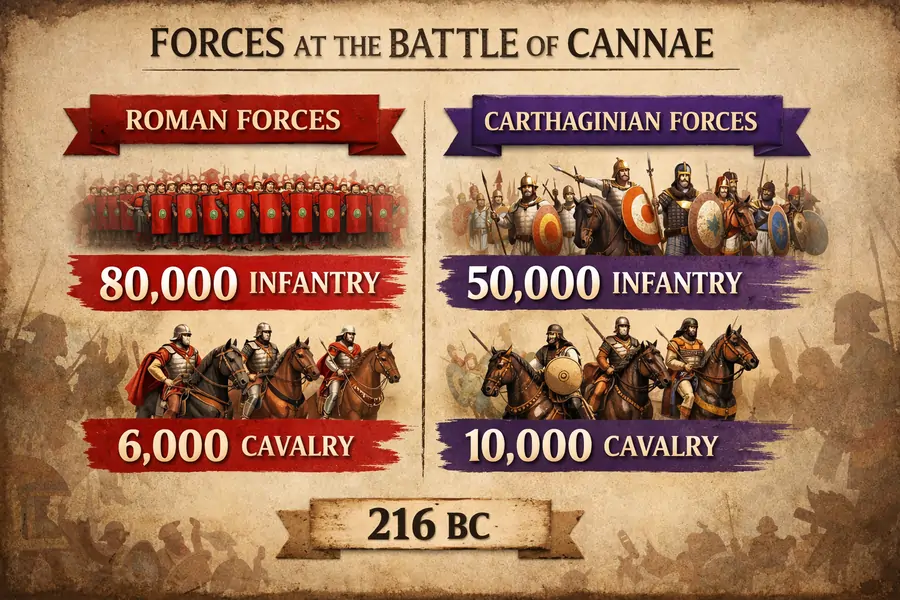
Rome assembled its largest army in history: 86,400 troops under consuls Varro and Paulus. On August 2, 216 BC, near the town of Cannae in southern Italy, this massive force confronted Hannibal's 50,000 troops. What followed became the most studied battle in military history. Military historian Theodore Ayrault Dodge called Cannae the greatest tactical masterpiece of antiquity, while modern military academies continue to study Hannibal's double-envelopment maneuver.
Hannibal arranged his army in a crescent formation with his weakest troops at the center and veteran forces on the flanks. Varro sought to use Rome's numerical superiority to smash through the Carthaginian center.
As the armies clashed, the Carthaginian center slowly buckled backward under the Roman assault-but crucially, it did not break. Hannibal personally commanded these troops to maintain morale. Meanwhile, his veteran flanks held firm, and the Roman legions pushed deeper into what was becoming a trap.
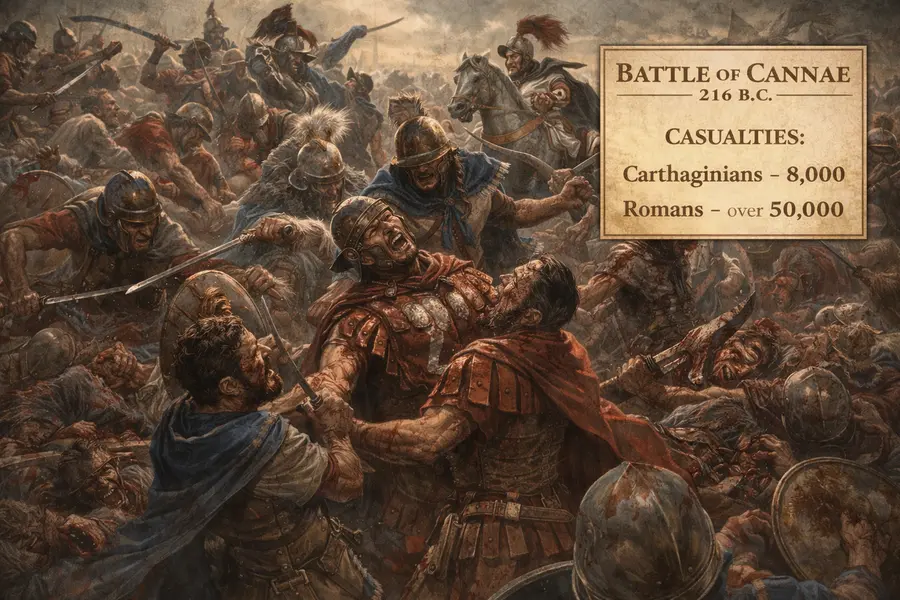
As the Romans pressed forward, the Carthaginian flanks pivoted inward, surrounding them on three sides. Then came the final blow: Hannibal's superior cavalry, having routed the Roman horsemen, returned to strike the Roman rear. The encirclement was complete. What followed was a massacre in which the Romans lost 55,000-70,000 men. The Carthaginians lost a mere 5,700.
Rome Refuses to Surrender
The catastrophe at Cannae should have ended the war. With one-fifth of Rome's fighting men dead, the city faced potential collapse. Rome declared national mourning and, in desperation, even resorted to human sacrifices to appease the gods. Yet remarkably, Rome refused to surrender or negotiate peace. Livy admired this resilience as one of the defining characteristics of the Roman Republic, while modern historian Dexter Hoyos argues that Rome's political stability ultimately proved stronger than Hannibal's battlefield victories. The Roman spirit proved unbreakable.
Hannibal, surprisingly, did not march directly on Rome. He lacked siege equipment and sufficient forces to assault the city's massive fortifications. Instead, he hoped Rome's Italian allies would defect-some did, but most remained loyal. Rome returned to the Fabian strategy, refusing Hannibal another major battle while simultaneously attacking Carthaginian holdings in Spain. The war in Italy became a grinding stalemate, but Rome remained determined to fight on.
The Battle of Zama (202 BC): Hannibal's Defeat
After years of stalemate in Italy, Rome brought the war to Africa. In 203 BC, Hannibal was recalled to Carthage to defend the homeland against Roman invasion led by Scipio Africanus-a brilliant commander who had studied Hannibal's tactics and learned from them.
At Zama in 202 BC, Hannibal fielded 40,000 troops including 80 war elephants against Scipio's 35,100 soldiers. The Romans possessed superior cavalry-a crucial advantage. When Hannibal unleashed his elephants, Scipio's troops blew trumpets and created corridors for the beasts to pass through harmlessly. The frightened elephants stampeded back into Carthaginian lines, causing chaos.
The battle ended in complete Roman victory with Carthage losing 40,000 troops, effectively ending the Second Punic War. Hannibal had finally met his match. He later went into exile and eventually took his own life between 183-181 BC, preferring death to Roman captivity. The greatest military mind of antiquity died far from home, having come tantalizingly close to destroying Rome but ultimately falling short.
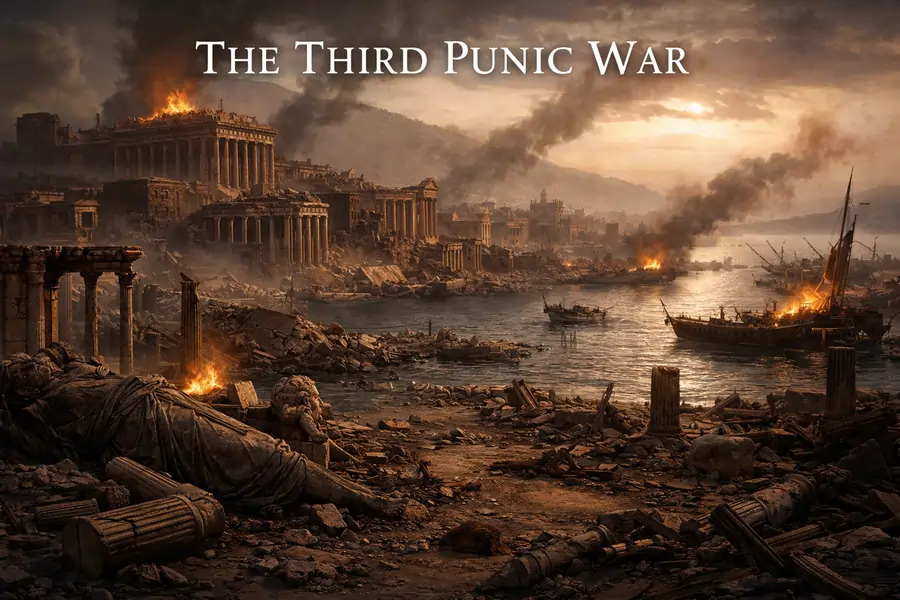
While the Second Punic War ended Carthaginian power in the Mediterranean, Carthage's fate was not yet sealed. The Third Punic War would bring final destruction to the ancient city-state.
References and Further Reading
- Polybius, The Histories - The most important surviving contemporary account of the Second Punic War.
- Livy, Ab Urbe Condita - Roman history covering Hannibal's invasion of Italy and Rome's response.
- Appian, Roman History - Includes the Punic Wars and the destruction of Carthage.
- Adrian Goldsworthy, The Fall of Carthage - One of the leading modern studies of the Punic Wars.
- Dexter Hoyos, Mastering the West: Rome and Carthage at War - Modern analysis of Hannibal's campaigns and Roman strategy.
- Encyclopaedia Britannica - Hannibal
- Wikipedia - Second Punic War
Related Articles
Frequently Asked Questions
Why did Hannibal cross the Alps to invade Italy?
Hannibal crossed the Alps because Rome controlled the Mediterranean, making naval invasion impossible. This audacious route through 'impassable' Alps left Rome's northern frontier undefended. The crossing served as psychological warfare, demonstrating Carthage's capability to strike Rome's heartland. Though costing half his army and nearly all elephants, it achieved complete strategic surprise. Roman forces expected fighting in Spain or Africa, not Italy.
What made the Battle of Cannae so significant in military history?
Cannae (216 BC) was the first perfectly documented double-envelopment tactic, studied for over two millennia. Despite 50,000 troops facing Rome's 86,400 soldiers, Hannibal achieved total victory. His crescent formation let Romans push inward while Carthaginian flanks pivoted, encircling them. Result: 55,000-70,000 Roman casualties vs. 5,700 Carthaginian losses. Demonstrated superior tactics overcome numerical superiority. Military academies worldwide still teach Cannae as the perfect battlefield tactics example.
Why didn't Hannibal march on Rome after the Battle of Cannae?
Hannibal lacked siege equipment, engineering capabilities, and sufficient forces to assault Rome's formidable fortifications. His exhausted army couldn't be reinforced adequately from Carthage. His strategy aimed to break Rome's confederation by encouraging allied defection, not direct conquest. Most allies stayed loyal, denying him needed manpower. Rome refused peace negotiations. Without siege capability or allied support, attacking Rome directly would be strategically foolish, potentially destroying his army against impregnable walls.
How did Rome ultimately defeat Hannibal in the Second Punic War?
Rome defeated Hannibal through strategic adaptation, superior resources, resilience, and Scipio Africanus's generalship. Adopted Fabian strategy avoiding pitched battles while harassing through attrition. Struck Carthaginian territories in Spain, cutting reinforcements. Rome's superior manpower allowed continuous new armies; Hannibal couldn't replace casualties. Rome's absolute refusal to negotiate demonstrated extraordinary determination. Scipio invaded Africa, threatening Carthage directly, forcing Hannibal's recall. At Zama (202 BC), Scipio used Hannibal's own tactics against him, achieving decisive victory.
How did Rome win the Second Punic War?
Rome won through strategic perseverance, superior resources, and tactical adaptation over seventeen years. Despite devastating defeats and losing one-fifth of military-age males, Rome refused surrender. Adopted Fabian strategy avoiding battles while harassing. Rome's vast manpower allowed continuous new legions. Attacked Carthaginian Spain, cutting reinforcements. Scipio invaded Africa (203 BC), forcing Hannibal's recall. At Zama (202 BC), Scipio defeated Hannibal using superior cavalry. Victory resulted from refusing negotiation, strategic depth, loyal allies, and finally matching Hannibal's tactical brilliance.
What role did elephants play in Hannibal's military campaigns?
War elephants played tactical and psychological roles, though less than imagined. Hannibal's 37 elephants served as shock weapons, command posts, and psychological warfare. However, the Alpine crossing killed all but one. Effective initially at Trebia, they proved unreliable-when frightened, they stampeded into own lines. Romans quickly learned counter-tactics: creating corridors, using javelins and fire. By Zama, Scipio neutralized elephants. Hannibal's true genius lay in strategic vision and tactical innovations, not unpredictable elephants.
Add Comment