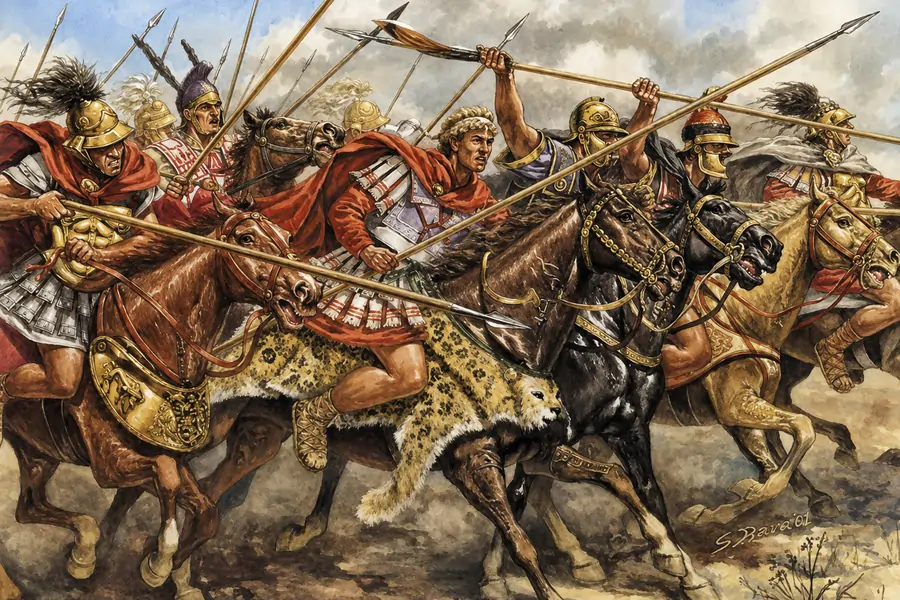
Alexander's Companion Cavalry was one of the most deadly military units of the ancient world. They served as the decisive striking arm of the Macedonian army. They were used by Alexander the Great to deliver the decisive blow in many of his battles. From the Granicus River in Asia Minor to the plains of Gaugamela and the banks of the Hydaspes in India, this elite cavalry force became known for its aggressive battlefield tactics and devastating shock warfare.
During the ancient era, cavalry was predominantly used for scouting, raiding, and minor skirmishes. However, the Companion Cavalry was specialized in offensive shock combat. Armed with long thrusting spears and personally led by Alexander himself, the Companions often delivered the decisive attack that determined the outcome of battle. Ancient historians such as Arrian, Plutarch, Diodorus Siculus, and Curtius Rufus repeatedly emphasized the courage, discipline, and battlefield effectiveness of these cavalrymen.
This article explores the origins, organization, weapons, armor, commanders, tactics, and battlefield achievements of Alexander's Companion Cavalry while examining what made them one of the deadliest cavalry forces in military history.
Origins of the Companion Cavalry
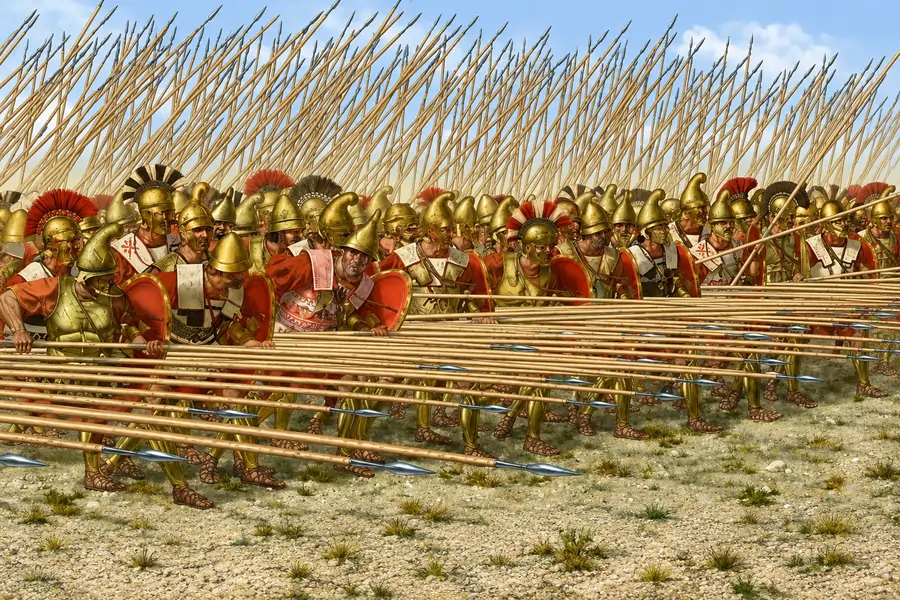
The origins of the Companion Cavalry can be traced to the military reforms of King Philip II of Macedon, the father of Alexander the Great. Before Philip's reign, Macedonia was regarded as a relatively weak kingdom on the northern edge of the Greek world. Philip was responsible for transforming the Macedonian army into a highly organized, disciplined, and effective military machine through reforms. The two primary advancements to the army were the formation of the Macedonian phalanx and the expansion of heavy cavalry forces.
The cavalry unit became known as the Hetairoi, or "Companions," a title that reflected their close relationship with the Macedonian king. According to Arrian in Anabasis Alexandri (Book I), the Companions were not merely soldiers but elite retainers personally loyal to the king and deeply integrated into the Macedonian aristocracy. They were entrusted with protecting the Macedonian King during battle.
Philip was a revolutionary who recognized that cavalry could serve a far greater role than just reconnaissance or skirmishing. Instead of using horsemen as secondary support troops for infantry, he developed them into an independent offensive shock force capable of breaking enemy formations through direct attack. This echoes the same principle used during blitzkrieg warfare in World War II thousands of years later. Although devised by King Philip, Alexander later perfected these tactics during his campaigns against the Persian Empire.
Who Comprised the Companion Cavalry?
The Companion Cavalry was an elite force primarily composed of Macedonian nobles and aristocratic horsemen. Membership in the unit carried immense prestige, and many cavalrymen came from influential families in Upper Macedonia. Diodorus Siculus described the Companions as "the flower of Macedonian nobility" (Bibliotheca Historica, Book XVII).
Unlike mercenary cavalry used by many states of the period, the Companions possessed a strong personal connection to the king. This loyalty and personal bond contributed significantly to their battlefield effectiveness. Alexander frequently fought at the head of the cavalry, placing himself in the fiercest fighting, which significantly bolstered the morale of his units.
At the beginning of the Persian campaign in 334 BC, the Companion Cavalry likely numbered around 1,800 men. Arrian states that the force was organized into regional squadrons known as ilai, each recruited from different parts of Macedonia (Anabasis Alexandri, Book I). The most prestigious formation within the cavalry was the Royal Squadron, or Agema, which acted as Alexander's personal cavalry guard. To be part of the Royal Squadron was considered a huge honor, and Alexander personally led these units in decisive assaults.
Weapons and Armor
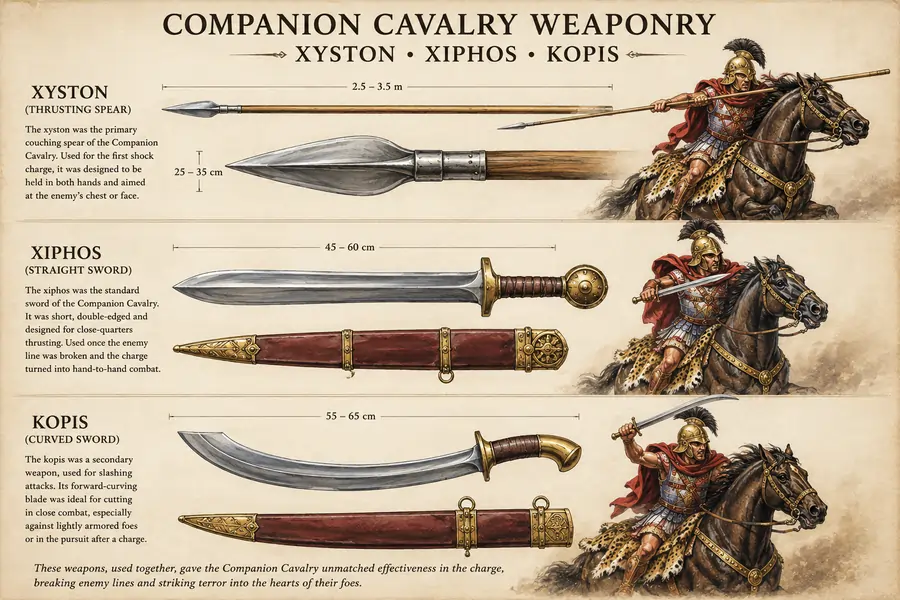
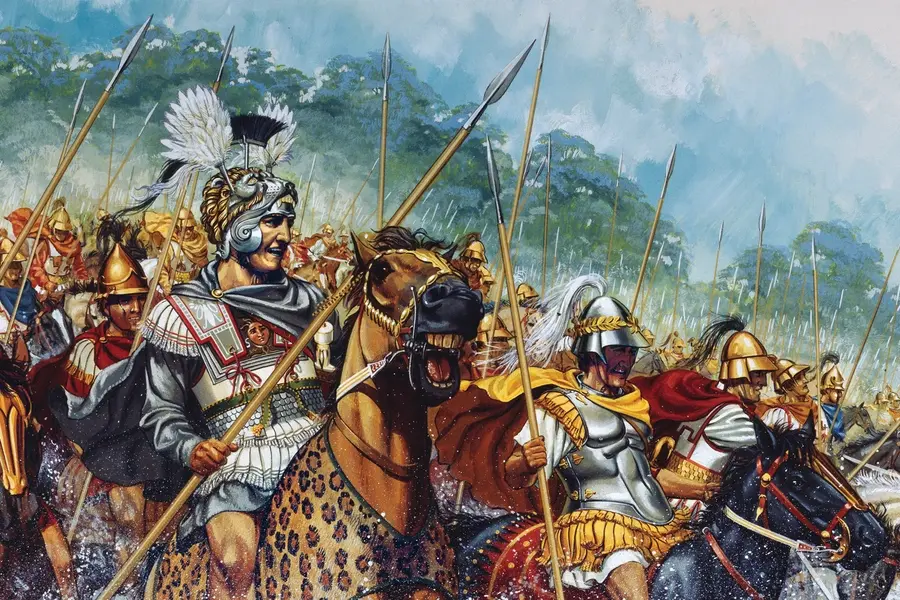
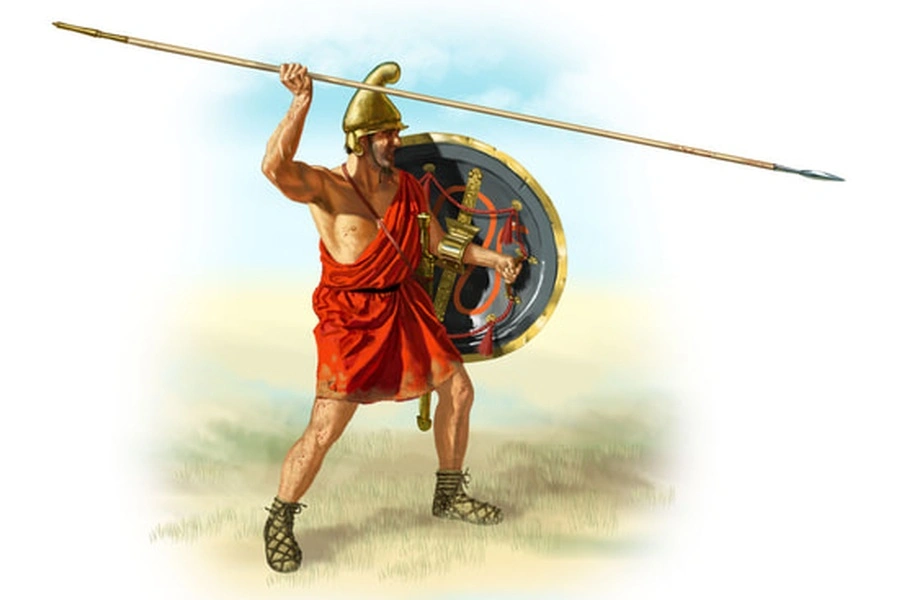
The primary weapon of the Companion Cavalry was the xyston, a long thrusting spear measuring roughly 3 to 4 meters in length. This long lance gave Macedonian cavalrymen a significant reach advantage over many opponents. Arrian repeatedly mentions the effectiveness of the xyston during cavalry engagements against Persian forces. Unlike the shorter spears used by many Greek cavalry units, the xyston was designed specifically for shock combat. The Companions could strike enemy infantry or cavalry before opposing troops could retaliate.
When fighting moved into close quarters, cavalrymen relied on secondary weapons such as the xiphos, which is a double-edged sword, or the curved kopis sword. Curtius Rufus described Macedonian cavalrymen using slashing attacks after their spears broke during combat (Histories of Alexander, Book IV).
| Weapon | Type | Typical Length | Primary Use | Advantages | Historical Notes |
|---|---|---|---|---|---|
| Xyston | Long cavalry spear | Approximately 3-4 meters (10-13 feet) | Main weapon of the Companion Cavalry during charges and mounted combat | Provided superior reach against enemy cavalry and infantry, highly effective in shock attacks | Arrian described the xyston as the primary weapon used by Alexander's Companion Cavalry in battles such as Granicus and Gaugamela. |
| Xiphos | Straight double-edged sword | Approximately 50-70 cm (20-28 inches) | Secondary close-combat weapon after the spear broke or fighting became too close | Lightweight, versatile, effective for thrusting and slashing in confined combat situations | The xiphos was widely used across the Greek world and commonly carried by Macedonian infantry and cavalry alike. |
| Kopis | Curved slashing sword | Approximately 48-65 cm (19-26 inches) | Close-quarters cavalry combat, especially effective from horseback | Forward-weighted blade delivered powerful chopping and slashing attacks capable of cutting through lightly armored opponents | Curtius Rufus and other ancient historians noted the effectiveness of curved cavalry swords in mounted combat during Alexander's campaigns. |
The armour of the Companion Cavalry is considered to be heavy armour for cavalry of the era, where it balanced protection with mobility. Most cavalrymen wore bronze or iron helmets, often of the Boeotian type, which provided excellent visibility while remaining practical for mounted combat. Plutarch notes in Life of Alexander that Macedonian cavalry equipment emphasized speed and maneuverability over excessive weight. Body armor varied depending on rank and wealth. Some Companions wore bronze muscle cuirasses, while others likely used layered linen armor known as the linothorax. Senior officers may have possessed highly decorated armor reflecting their aristocratic status.
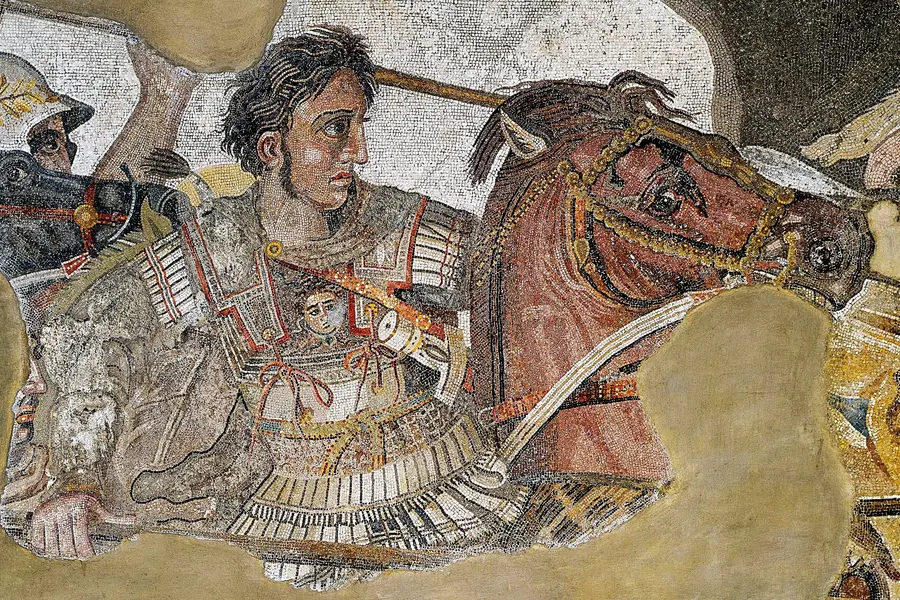
The horses themselves were generally lightly protected. Alexander preferred mobility and rapid maneuvering rather than heavily armored cavalry tactics that became more common in later centuries. Alexander the Great himself typically wore a linothorax reinforced with bronze scales into battle, heavily customized to reflect his royal status.
Organization and Command Structure
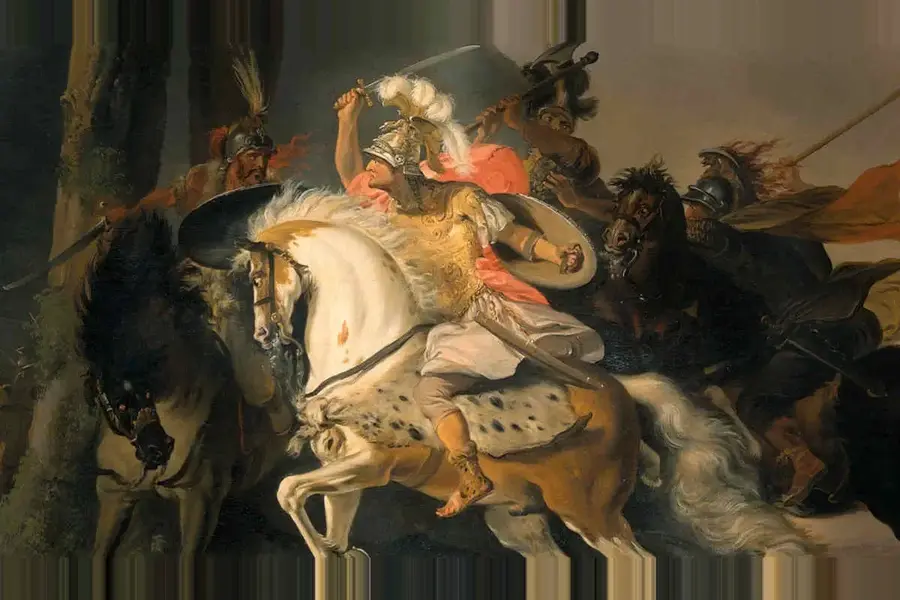
Compared to cavalry units of the period, the Companion Cavalry was organized with remarkable discipline. Arrian explains that the cavalry was divided into squadrons called ilai, each commanded by experienced officers loyal to Alexander. Alexander himself frequently commanded the companion cavalry personally. His aggressive leadership style and decisive charges inspired tremendous confidence among the Companions, though it also exposed him to significant danger. During the Battle of Granicus, for example, Alexander nearly lost his life while leading a cavalry attack against Persian nobles, according to both Arrian and Plutarch.
Several famous commanders served within the Companion Cavalry. Hephaestion, Alexander's close companion and trusted general, commanded cavalry forces during several campaigns. Cleitus the Black became famous for saving Alexander's life at Granicus by killing a Persian noble who attempted to strike the king from behind. Philotas, son of Parmenion, also held command of the Companion Cavalry before his later execution on charges of conspiracy. Having the Companion Cavalry organised into squadrons enabled coordinated battlefield maneuvering, enabling the cavalry to exploit enemy weaknesses with remarkable speed.
Battlefield Tactics
The Companion Cavalry achieved its greatest successes through concentrated cavalry charges and close coordination with the rest of the Macedonian army. Unlike many ancient cavalry forces that relied primarily on skirmishing or harassment, the Companions specialized in spearhead attacks on weak enemy lines. Their most famous tactical formation was the wedge. Arrian specifically notes that the wedge formation allowed cavalry units to penetrate enemy lines more effectively because it concentrated force at a single point while maintaining maneuverability (Anabasis Alexandri, Book III).
Alexander usually deployed the Companion Cavalry on the right wing of his army. The role of the Macedonian phalanx was to fix the enemy in place while Alexander searched for gaps or weak points in opposing formations. Once an opening appeared, the Companion Cavalry launched a rapid assault designed to break through enemy lines and collapse morale.
This is one of the earliest highly effective examples of combined-arms warfare. The cavalry did not operate independently but coordinated closely with infantry, missile troops, and light cavalry. The psychological effect of the shock attacks delivered by the Companion Cavalry was enormous. Curtius Rufus described Persian formations collapsing after the sudden impact of Companion cavalry charges during major engagements.
Why the Companion Cavalry Was So Deadly
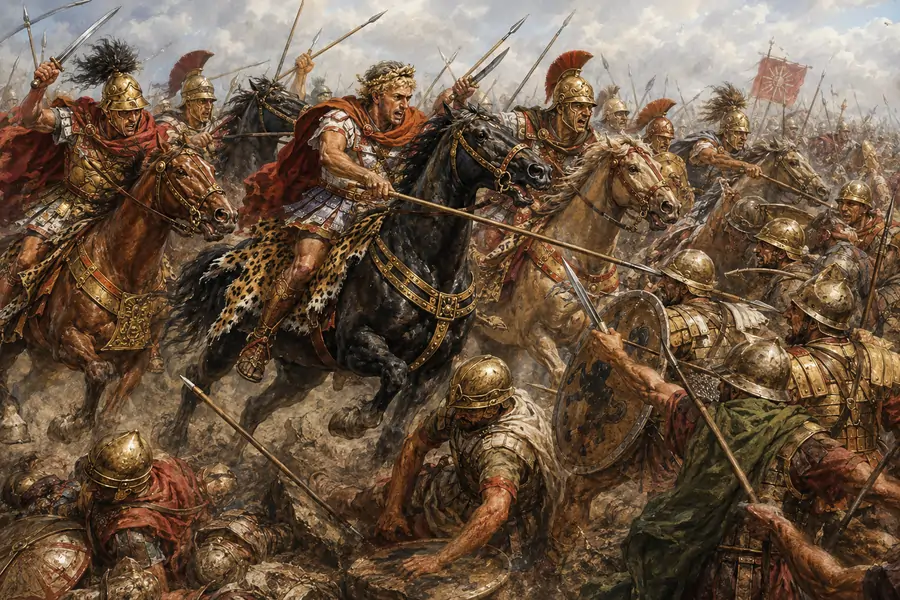
The effectiveness of Alexander's Companion Cavalry resulted from several interconnected advantages.
- First, the cavalry was led by Alexander himself. He personally led charges into combat, inspiring confidence and aggression among his troops. Alexander frequently put himself in danger fighting on the front lines. This, however, motivated his cavalry to fight hard.
- Second, the Companions received extensive training. Their training was organised by Philip, who created one of the most effective and deadly cavalry troops of the ancient world. Their ability to maintain formation during high-speed attacks distinguished them from less disciplined cavalry forces. Arrian frequently emphasized the precision and discipline of Macedonian battlefield maneuvers.
- Third, the cavalry operated in coordination with the rest of the army. The Macedonian phalanx fixed enemy forces in place while the Companions exploited openings through rapid flanking maneuvers.
- Finally, the Companion Cavalry specialized in offensive shock warfare at a time when many cavalry forces still relied heavily on skirmishing tactics. Their ability to deliver concentrated attacks against critical points often decided battles within moments.
Famous Battles of the Companion Cavalry
Battle of Granicus River (334 BC)
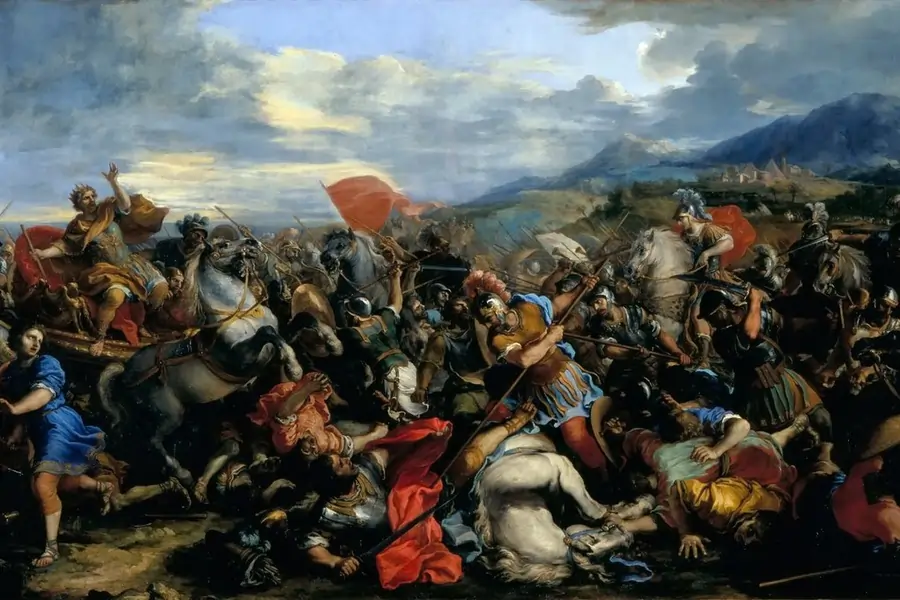
The Battle of Granicus River was Alexander's first major victory over the Persian forces. The Persian forces occupied strong defensive positions along the riverbank, preventing the Macedonians from crossing the river across difficult terrain.
Arrian describes Alexander leading the Companion Cavalry directly into the river crossing despite the danger (Anabasis Alexandri, Book I). The Persians were caught off guard as they did not expect Alexander to attack them across the river. The fighting became intensely chaotic, and Alexander nearly died after being attacked by Persian nobles. Cleitus the Black famously intervened and saved the king's life. The Companion Cavalry eventually broke the Persian cavalry line, allowing the Macedonian infantry to complete the victory.
Battle of Issus (333 BC)
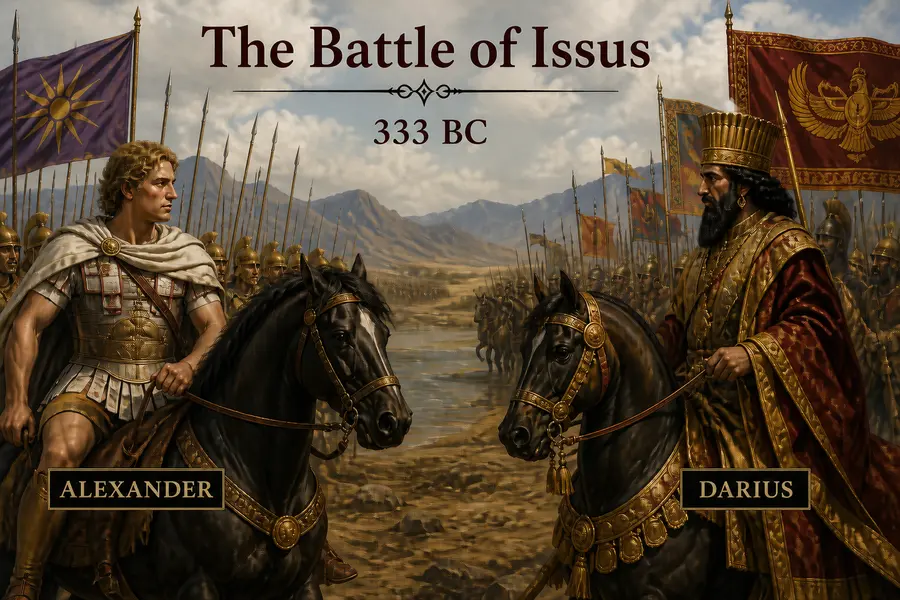
At the Battle of Issus, Alexander faced King Darius III directly for the first time in battle. The narrow battlefield limited the Persians from utilizing their numerical superiority and allowed Alexander to exploit weaknesses in the enemy line.
According to Arrian, Alexander identified a vulnerable section near the Persian left flank and launched a decisive cavalry charge directly toward Darius (Anabasis Alexandri, Book II). He personally led his Companion Cavalry in the attack, causing panic within the Persian command structure. This forced Darius to flee the battlefield, fearing for his life. Seeing their King flee from the battle, morale collapsed for the Persian soldiers and transformed the engagement into a major Macedonian victory.
Battle of Gaugamela (331 BC)
The Battle of Gaugamela remains the most famous demonstration of the Companion Cavalry's battlefield prowess. Darius had assembled a massive army that included cavalry, infantry, scythed chariots, and war elephants from across the Persian Empire. Despite being heavily outnumbered, Alexander outmaneuvered the Persian troops, creating a gap within the Persian center.
Arrian records that Alexander immediately recognized the opportunity and led the Companion Cavalry in wedge formation directly toward Darius (Anabasis Alexandri, Book III). The Persian line broke under the immense weight of the cavalry charge. Alexander then turned his attention to Darius himself, who fled the battlefield once again. The victory at Gaugamela effectively destroyed the Persian Empire and cemented Alexander's reputation as one of history's greatest military commanders.
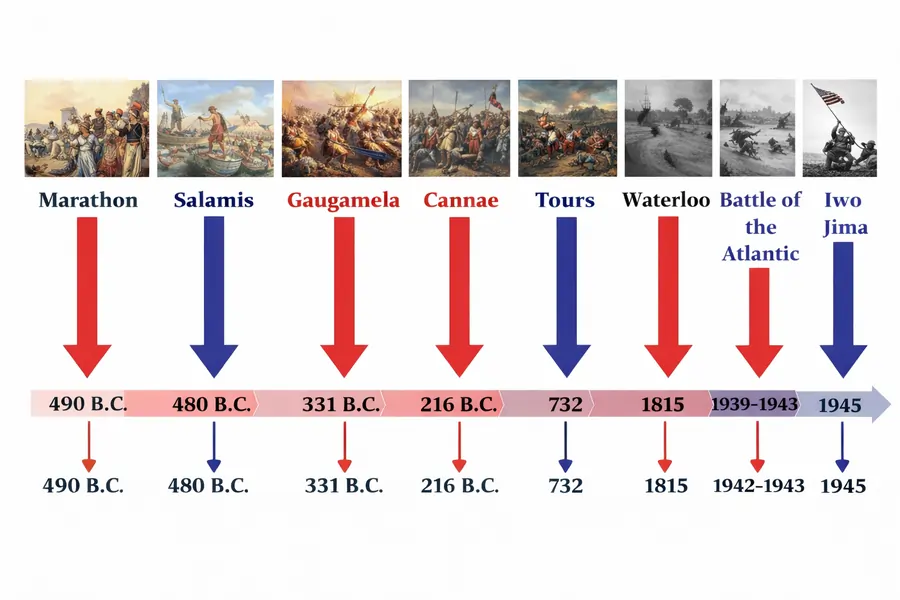
For additional analysis of history's most influential military engagements, see this article on the top decisive battles in history.
Battle of Hydaspes (326 BC)
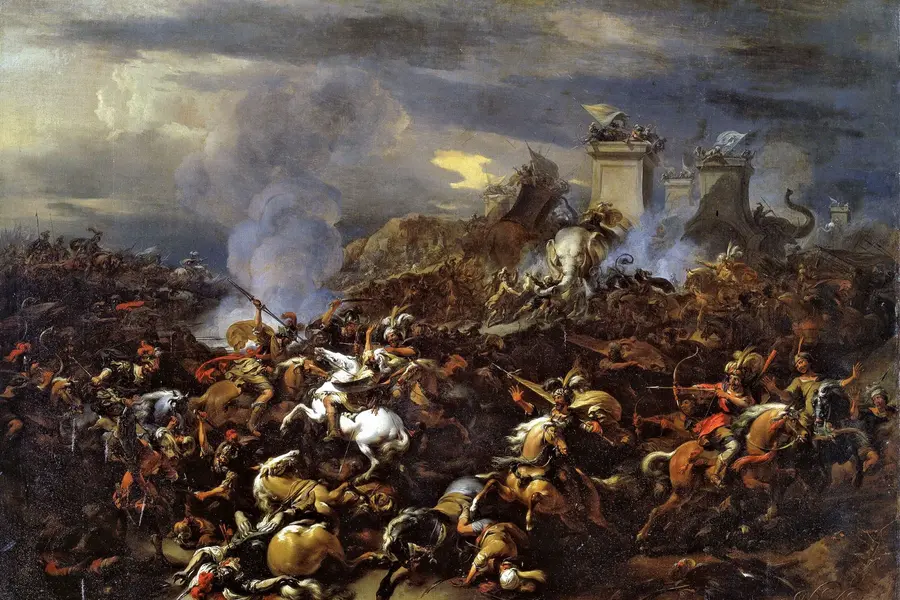
The Battle of the Hydaspes tested the adaptability of the Companion Cavalry under extremely difficult conditions. King Porus fielded 200 war elephants alongside cavalry and infantry forces. The muddy terrain near the river complicated cavalry maneuvering, while the elephants created additional danger for horses.
According to Arrian, Alexander conducted a surprise river crossing with some elite troops by tricking the enemy before launching coordinated attacks against Porus's forces (Anabasis Alexandri, Book V). Knowing that he could not overpower the war elephants directly, he ordered his Companion Cavalry to target and defeat the Indian cavalry units on the enemy wings first. Once the cavalry was defeated, he encircled the enemy army. The battle demonstrated that the Companions could adapt successfully even against unfamiliar tactics and terrain.
Legacy and Historical Impact
The legacy of Alexander's Companion Cavalry extended far beyond the lifetime of Alexander himself. Hellenistic successor kingdoms established by Alexander's generals continued using elite heavy cavalry inspired by the Companion model. Military historians often regard the Companions as one of the earliest true heavy shock cavalry forces in history. Their battlefield methods influenced later cavalry traditions throughout the ancient Mediterranean and Near East.
Modern historians such as J.F.C. Fuller and Adrian Goldsworthy have emphasized the operational sophistication of Alexander's cavalry tactics. The coordination between cavalry assaults and infantry pressure demonstrated a level of battlefield integration rarely seen in the ancient world. The Companion Cavalry also contributed significantly to Alexander's military reputation. He often personally led the cavalry charges, fighting with his men on the front lines. Their repeated success in decisive engagements helped establish him among the greatest commanders in history.
Conclusion
Alexander's Companion Cavalry was far more than an elite mounted unit. It represented a revolutionary approach to warfare that combined aggressive tactics, disciplined formations, exceptional leadership, and coordinated battlefield maneuvering.
Through battles such as Granicus, Issus, Gaugamela, and Hydaspes, the Companions repeatedly proved capable of destroying larger armies and determining the outcome of entire campaigns. Ancient historians consistently highlighted their effectiveness, while modern scholars continue studying their battlefield methods more than two thousand years later.
The success of the Companion Cavalry helped Alexander conquer the Persian Empire and establish one of the greatest military legacies in history. Their influence on cavalry warfare continued long after the fall of Macedonia, securing their place among the most important military formations of the ancient world.
References and Sources
- Arrian, Anabasis of Alexander
- Plutarch, Life of Alexander
- Green, Peter, Alexander of Macedon
- Fuller, J.F.C. The Generalship of Alexander the Great
- Quintus Curtius Rufus (History of Alexander)
- Diodorus Siculus, Bibliotheca Historica
- Waldemar Heckel. Alexander the Great: Historical Sources in Translation. Blackwell Publishing, 2004.
- Robin Lane Fox. Alexander the Great. Penguin Books, 1973.
- Adrian Goldsworthy. The Complete Roman Army. Thames & Hudson, 2003.
- Perseus Digital Library
Recommended Books
This article may contain affiliate links. If you purchase through these links, I may earn a small commission at no extra cost to you.
Related Articles
Frequently Asked Questions
Why did Alexander personally lead the Companion Cavalry in battle?
Alexander the Great personally led the Companion Cavalry because it was the elite strike force of the Macedonian army. By fighting at the front, Alexander inspired morale, increased battlefield coordination, and ensured rapid exploitation of enemy weaknesses during decisive moments of combat.
What made the Companion Cavalry different from Persian cavalry?
The Companion Cavalry specialized in disciplined shock charges using long spears and tight formations, while much of the Persian cavalry relied more heavily on skirmishing tactics, javelins, and mobility. This aggressive offensive doctrine gave the Macedonians a major battlefield advantage.
Did Alexander's Companion Cavalry use stirrups?
No, Alexander's Companion Cavalry fought without stirrups because stirrups had not yet become common in the ancient Mediterranean world. Macedonian cavalrymen relied on balance, training, strong saddles, and excellent horsemanship during combat.
How long was the xyston used by the Companion Cavalry?
The xyston used by Alexander's Companion Cavalry was usually around 3 to 4 meters (10 to 13 feet) long. Its extended reach allowed Macedonian cavalrymen to strike enemies before opposing cavalry or infantry could respond effectively.
Why was the wedge formation effective for the Companion Cavalry?
The wedge formation concentrated cavalry power at a single point, allowing the Companion Cavalry to break through enemy lines more effectively. Ancient historian Arrian noted that the formation also improved maneuverability and command visibility during battle.
Which battle best demonstrated the power of Alexander's Companion Cavalry?
Many historians consider the Battle of Gaugamela in 331 BC to be the greatest demonstration of the Companion Cavalry's effectiveness. Alexander used the cavalry to exploit a gap in the Persian line and launch a decisive attack directly toward King Darius III, helping secure the collapse of the Persian Empire.
Add Comment