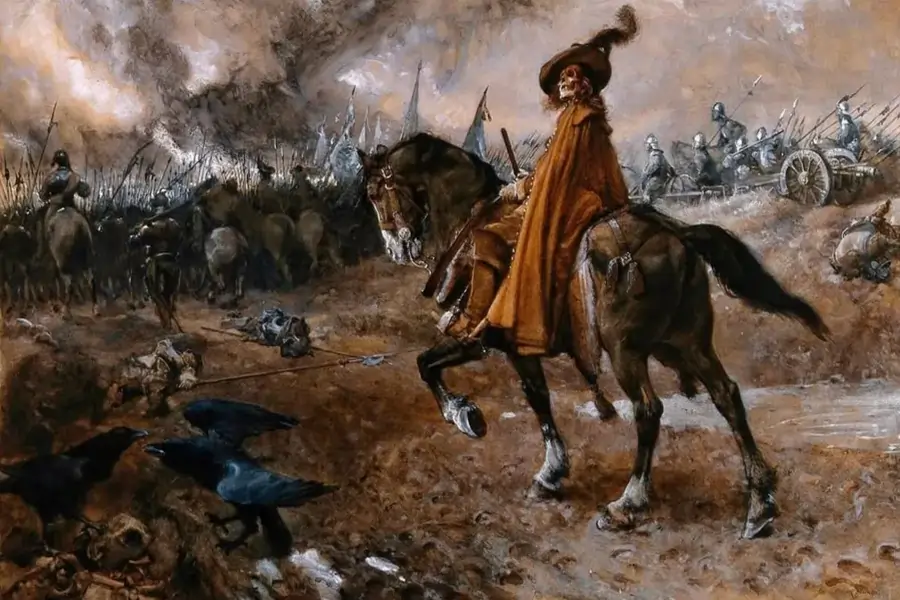
What drives a soldier to step forward into chaos, knowing death is a real possibility? Ancient warfare was not just a contest of weapons and tactics-it was a profound psychological test of fear, honor, discipline, and belief. From the rigid formations of Roman legions to the fearless stand of Spartan warriors, the mentality of ancient soldiers reveals a powerful story of human resilience. In this guide, we explore the psychology of ancient soldiers, their survival rates, and how morale determined victory or defeat.
Table of Contents
- The Psychology of Ancient Soldiers
- Facing Fear and Death in Battle
- Training and Conditioning of Soldiers
- Why Ancient Soldiers Didn't Run Away
- Survival Rates in Ancient Battles
- Did All Frontline Soldiers Die in Ancient Battles?
- The Role of Morale in Warfare
- Leadership and Its Psychological Impact
- Case Studies from Famous Battles
- Conclusion
The Psychology of Ancient Soldiers
The mindset of ancient soldiers was shaped by a combination of necessity, culture, and survival. Unlike modern armies, many ancient soldiers were not made up of professionals. They were ordinary farmers, citizens, or conscripts forced to join the army. Yet once on the battlefield, they had to transform into disciplined warriors who put their lives on the line. (Victor Davis Hanson, The Western Way of War)
Honor and reputation played a crucial role in strengthening the resolve of ancient soldiers. In societies like Sparta, courage in battle defined a man's worth. Plutarch mentioned that cowardice brought lifelong shame not just to the individual but to their family (Sayings of Spartan Women). This cultural pressure made retreat psychologically harder and less viable.
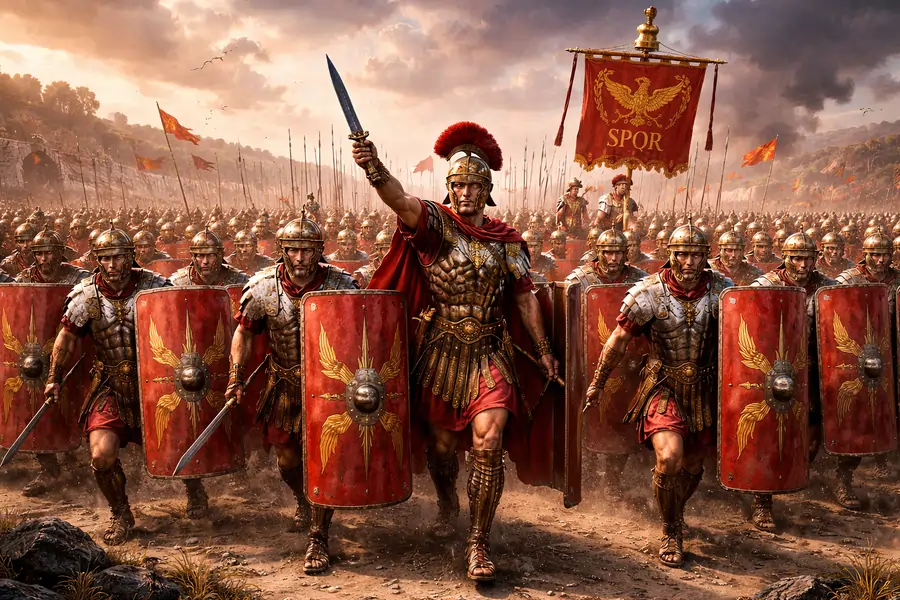
For Roman soldiers, discipline and duty were central. The Roman military system emphasized obedience and cohesion, as seen in the structure explained here: Roman Legion Structure Explained. Soldiers were trained to act as a unit rather than as individuals, reducing panic and hesitation. Religious belief also reinforced courage. Many soldiers believed the gods controlled their fate. This reduced fear-if death was predetermined, then hesitation seemed pointless. (Polybius, Histories Book 6; Adrian Goldsworthy, The Complete Roman Army)
Facing Fear and Death in Battle
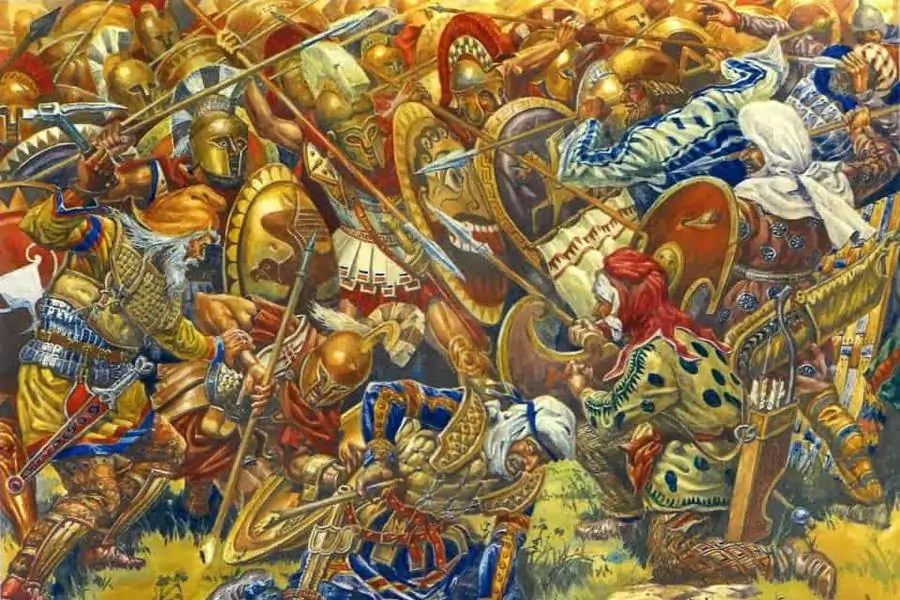
Fear was universal. Even the most experienced warriors felt it. Ancient historians, such as Thucydides, Xenophon, and Livy, describe soldiers experiencing fear, hesitation, and anxiety before battle, often requiring strong leadership and discipline to overcome these emotions. So why did soldiers still charge?
- Peer Pressure: No one wanted to be seen fleeing. This could result in them being shunned from society.
- Formation Dependency: Breaking ranks endangered everyone. Most casualties occur when the formation breaks. (John Keegan, The Face of Battle)
- Command Structure: Orders had to be followed. This was drilled into the soldier's mentality.
- Momentum: Once a charge began, stopping was difficult. (Ardant du Picq, Battle Studies)
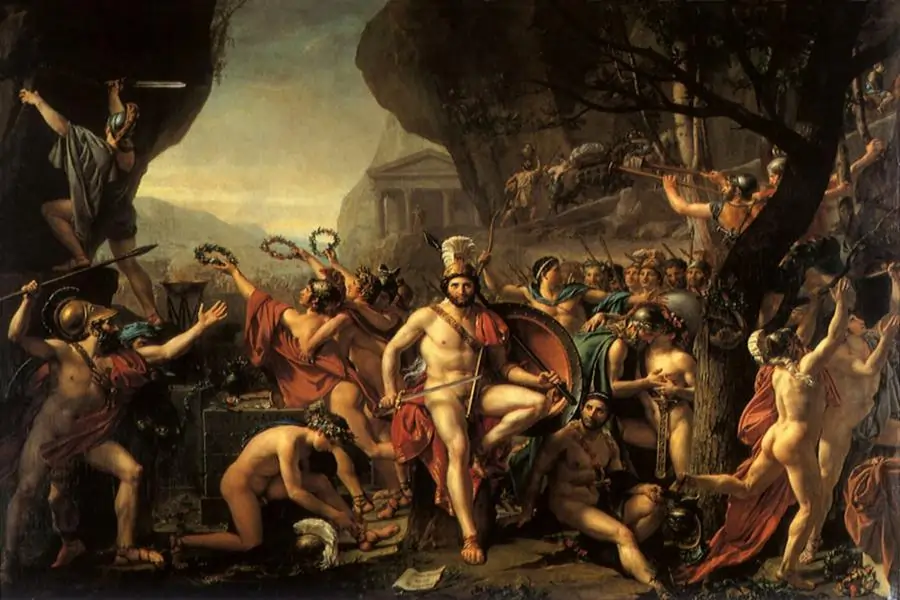
In tightly packed formations like the Greek phalanx, a soldier's safety depended on the man next to him. This mutual dependence created a powerful psychological bond. A famous example is the stand at Thermopylae, where Spartan warriors fought despite certain death. Their mindset was shaped by lifelong conditioning and cultural expectations.
Training and Conditioning of Soldiers
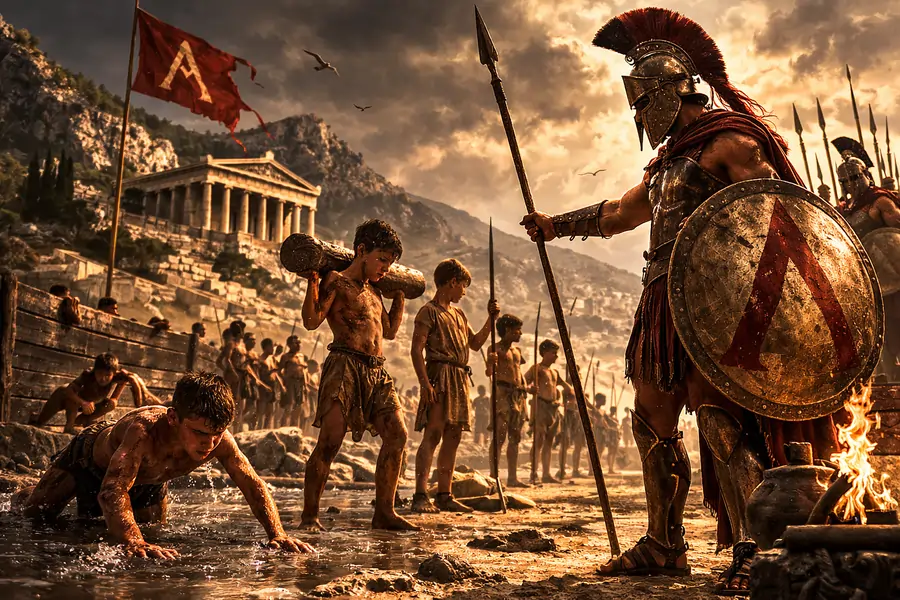
Training transformed fear into controlled aggression. The most effective armies invested heavily in training and preparation. The Spartan system, known as the Agoge, is perhaps the most extreme example. Ancient historian Plutarch mentions that Spartan boys were trained from childhood to endure pain, hunger, and hardship. By adulthood, they were psychologically conditioned for war. Spartan soldiers were considered the most elite warriors in ancient history.
Roman soldiers underwent rigorous drills. They practiced formations, weapon handling, and coordinated maneuvers on a daily basis. This repetition built muscle memory, allowing soldiers to act instinctively even under stress. The Romans created professional soldiers who were trained to kill. Training also normalized violence. Exposure to simulated combat reduced shock during real battles, making soldiers more effective and less likely to panic.
Why Ancient Soldiers Didn't Run Away
At first glance, it seems logical that soldiers facing lethal danger would simply turn and flee. Yet in ancient battles, most soldiers held their ground until a clear breaking point was reached, and all hope was lost in the battle. Understanding why they did not run away reveals the deeper mechanics of ancient warfare psychology.
1. Fear of Shame and Social Consequences
In many ancient societies, dishonor was worse than death. A soldier who fled battle could be publicly shamed, lose citizenship rights, or face lifelong disgrace. In Sparta, this stigma was especially severe, reinforced by the upbringing described in the Agoge system.
2. Formation Discipline and Mutual Dependence
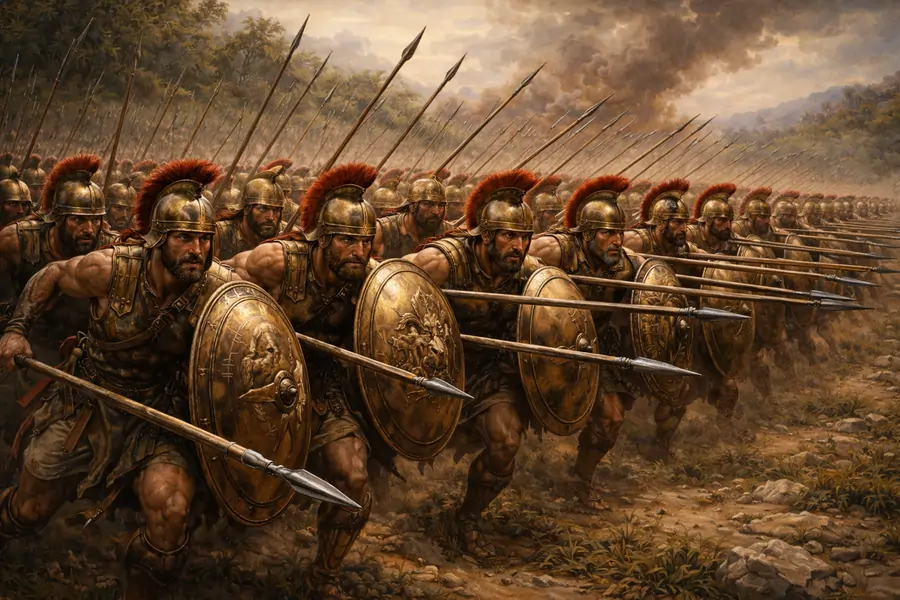
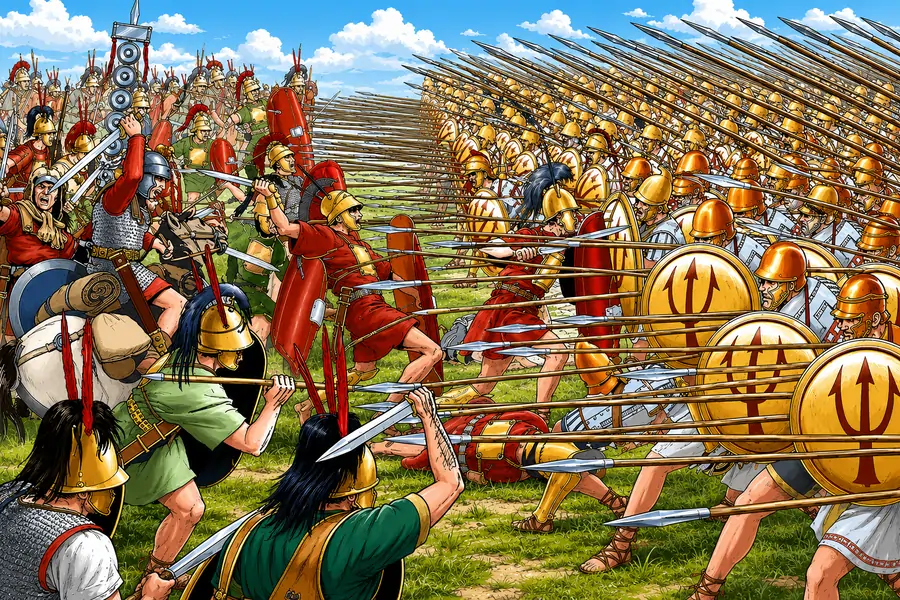
Ancient armies fought in tight formations. In a Roman legion or Greek phalanx, each soldier protected the next. If one man ran, the entire formation would fall apart, leading to a rout. This created a powerful psychological pressure: running was not just cowardly-it was dangerous for everyone. This cohesion is central to understanding formations like those detailed in Roman legion organization.
3. Immediate Physical Barriers
On many battlefields, retreat was not easy. Soldiers were packed tightly, often with ranks behind them. Cavalry, terrain, or even commanders positioned at the rear could prevent escape. In some cases, officers deliberately blocked retreat routes to force soldiers to stand and fight. (Xenophon, Anabasis; Ardant du Picq, Battle Studies)
4. Leadership Presence
Generals and officers often positioned themselves where they could be seen. Their presence acted as a stabilizing force. A commander who stood firm made it harder for soldiers to justify fleeing. This is why many of the more successful generals would lead from the front as an example to their men.
5. The Timing of Collapse
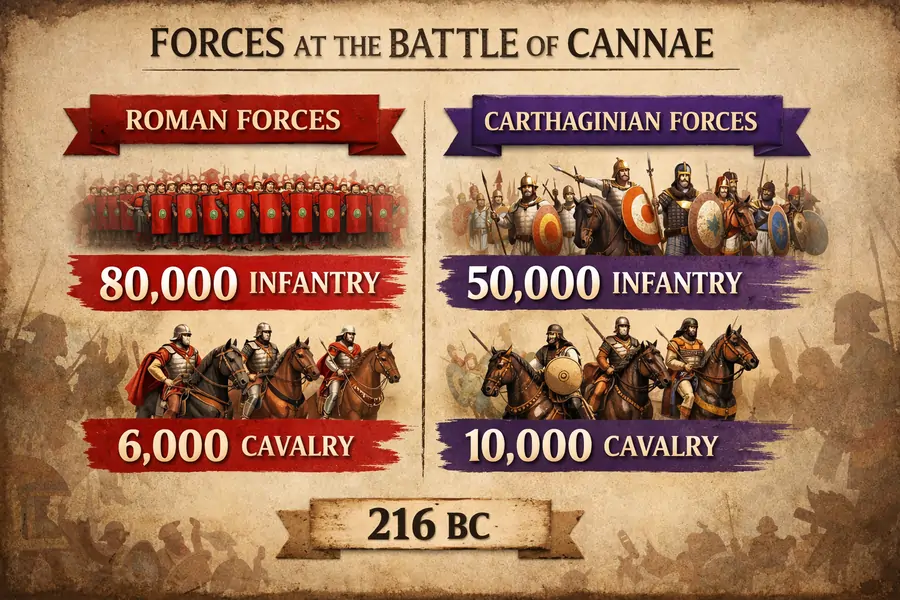
Importantly, soldiers did run-but usually all at once. Ancient battles often ended suddenly when morale broke. This can be seen in disasters like the Battle of Cannae, where encircled Roman troops eventually collapsed under pressure. This is why the armies needed high morale to motivate them to stand and fight.
6. Survival Logic
Paradoxically, standing firm often increased survival chances. As long as the formation held, soldiers were relatively protected. Running, especially during a rout, exposed individuals to pursuit and slaughter. As discussed before, in a proper formation, each man protected those around him and vice versa. For many soldiers, the safest choice was not escape-but cohesion. (John Keegan, The Face of Battle)
Survival Rates in Ancient Battles
Survival rates in ancient warfare varied widely depending on the battle, terrain, and tactics. Contrary to popular belief, most soldiers did not die in ancient battles. Casualty rates often ranged between 5% and 20% for the losing side, though catastrophic defeats could be far worse. (Adrian Goldsworthy, The Punic Wars) For example:
- At the Battle of Cannae, Roman losses were devastating, with tens of thousands killed.
- At the Battle of Lake Trasimene, an ambush led to massive Roman casualties.
- The Teutoburg Forest disaster saw entire Roman legions destroyed.
However, in many battles, most soldiers survived. Combat was often brief, and once one side broke, the fighting ended quickly. The greatest danger came during routs-when an army fled. Soldiers running away were vulnerable and often slaughtered, especially if the enemy had superior cavalry units.
Did All Frontline Soldiers Die in Ancient Battles?
No-frontline soldiers were not doomed to die in ancient battles. While they faced the greatest immediate danger, organized armies used systems that significantly improved survival. Fighting was exhausting, and a soldier could swing his sword around only for a short period. In formations like the Roman legion, troops did not fight continuously until they died. Instead, Polybius explains how units were rotated, allowing exhausted or wounded soldiers to withdraw and be replaced by fresh ranks. This structure, explained in Roman legion organization and tactics, helped maintain combat effectiveness while reducing unnecessary losses.
In addition, most fighting was not a constant, chaotic melee. Battles often involved brief clashes, pushing contests, and pauses, with shields and tight formations offering protection. As long as cohesion held, even soldiers in the front ranks had a reasonable chance of survival.
The Role of Morale in Warfare
Morale was perhaps the single most important factor in ancient battles. An army with high morale could withstand fear, hold formation, and execute complex maneuvers. A well-led, motivated army could fight enemies even if significantly outnumbered, as seen in instances like the Battle of Alesia. (Ardant du Picq, Battle Studies)
Conversely, low morale could lead to panic and collapse-even if the army was numerically superior. Morale was influenced by:
- Confidence in leadership
- Previous victories or defeats
- Supply conditions
- Terrain advantage
- Unity and cohesion
Leadership and Its Psychological Impact
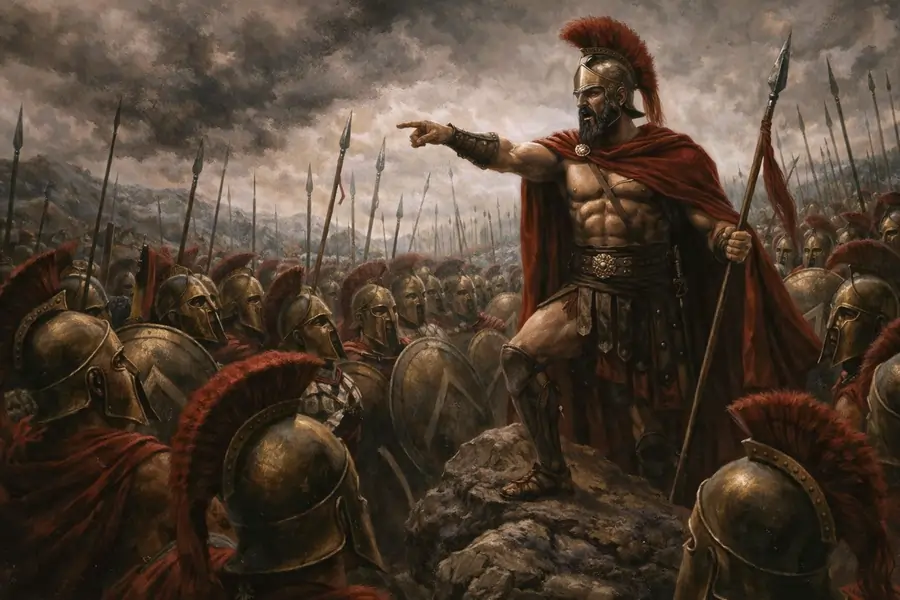
Leaders were central to morale. A strong commander could inspire confidence and courage, while poor leadership could lead to disaster. Ancient generals often fought alongside their troops, reinforcing trust. Seeing a commander in danger motivated soldiers to stand firm.
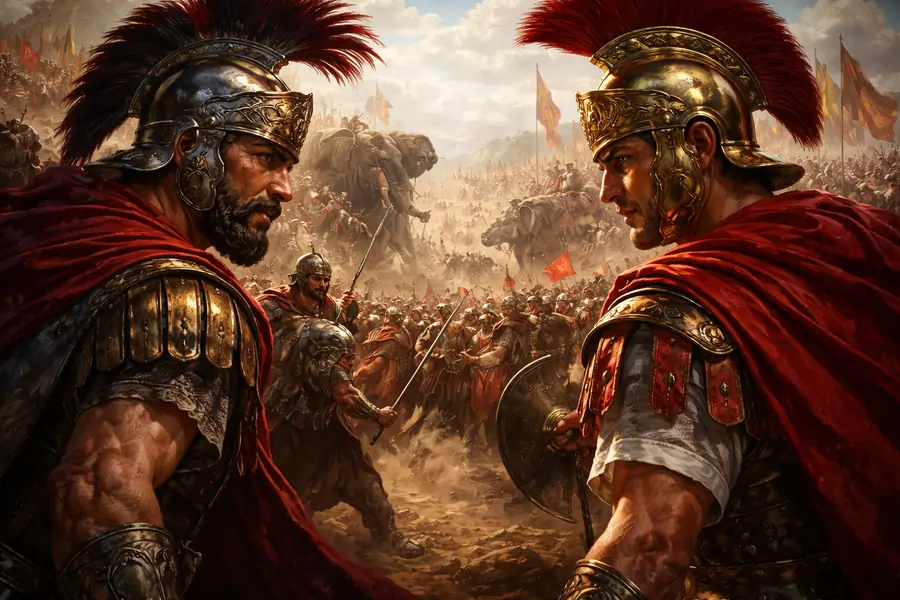
Charismatic leaders like Hannibal and Alexander the Great understood the importance of psychology. They used speeches, rewards, and personal examples to maintain morale. Military generals also often gave inspiring speeches on the promise of glory and spoils to motivate the men for battle.
Case Studies from Famous Battles
The Second Punic War offers excellent examples of soldier mentality and morale:
- Battle of Trebia - The Roman soldiers were forced to wade through the freezing Trebia river and were constantly harassed by enemy cavalry. Hungry, soaked, and freezing, the Roman morale quickly dropped.
- Cannae - once encircled on all sides, the Romans began to panic, and morale collapsed. This led to one of the highest casualities ever recorded in ancient history.
- Zama - disciplined troops overcame fear and stood their ground against charging elephants.
These battles show how morale and psychology often outweighed numbers and equipment.
Conclusion
The mentality of ancient soldiers was shaped by fear, training, culture, and leadership. While weapons and tactics mattered, the outcome of battles often depended on the human element. Understanding this mindset helps us see ancient warfare not just as a series of events, but as a deeply human experience-one where courage, fear, and belief determined the fate of armies and civilizations.
References and Links
- Thucydides - History of the Peloponnesian War
- Xenophon - Anabasis
- Polybius - Histories
- Livy - History of Rome
- Herodotus - Histories
- Arrian, Anabasis of Alexander
- Tacitus - Annals
- Cassius Dio - Roman History
- Ardant du Picq - Battle Studies
- Victor Davis Hanson - The Western Way of War
- Paul Cartledge - Sparta and Lakonia
- Adrian Goldsworthy - The Complete Roman Army
- John Keegan - The Face of Battle
Recommended Books
This article may contain affiliate links. If you purchase through these links, I may earn a small commission at no extra cost to you.
Related Articles

Frequently Asked Questions
Did ancient soldiers actually expect to die in battle?
Most ancient soldiers understood that death was possible, but they did not expect certain death in every battle. Survival was common, especially when formations held. Training, discipline, and unit cohesion were designed to increase a soldier's chances of surviving combat.
Why didn't ancient soldiers run away during battles?
Ancient soldiers rarely ran away because of strong discipline, fear of shame, and reliance on formation. Running often meant exposing fellow soldiers and increasing the risk of death. In many cases, staying in formation was actually safer than fleeing.
What were the survival rates in ancient battles?
Survival rates varied widely, but in many battles the majority of soldiers survived. Casualties were often between 5% and 20% for the losing side, though catastrophic defeats like Cannae could result in much higher losses.
How did ancient armies prevent soldiers from panicking?
Armies relied on training, strict discipline, leadership, and formation tactics to prevent panic. Soldiers were conditioned to act as a unit, and experienced commanders used speeches and positioning to maintain confidence before and during battle.
Did frontline soldiers face higher risk than others?
Frontline soldiers did face greater immediate danger, but they were not guaranteed to die. Many armies, especially the Romans, rotated troops during battle, allowing exhausted soldiers to withdraw and reducing overall casualties.
Why was morale so important in ancient warfare?
Morale often determined the outcome of battles. An army with strong morale could hold formation and fight effectively, while low morale could lead to panic and collapse. Most deaths occurred after morale broke and soldiers began to flee.
Add Comment