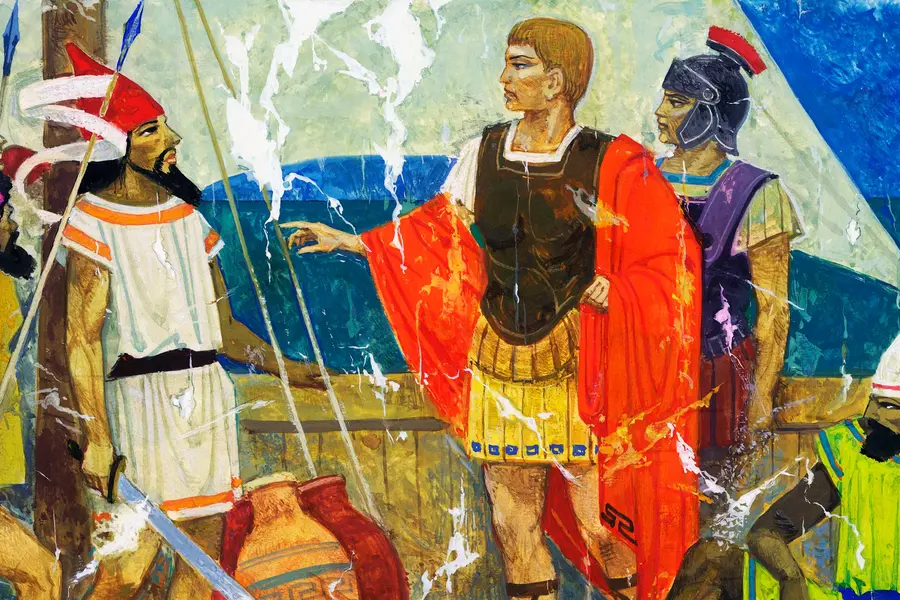
Julius Caesar is one of the most influential figures in Roman history. He had humble beginnings but rose through the ranks to become one of the most influential men of the Roman Empire. He was eventually assassinated by people who feared his power, but not many know about the most remarkable episodes of his early life-his capture by Mediterranean pirates. In his early twenties, Caesar was seized at sea and held for ransom. However, he remained calm, composed, and famously promised to return and crucify them-a promise he later fulfilled (Plutarch, Life of Caesar 1-2; Suetonius, Divus Julius 4). This story recounts one of the earliest documented instances of Caesar's ambition, boldness, and ruthless determination.
Table of Contents
The Mediterranean World and Piracy
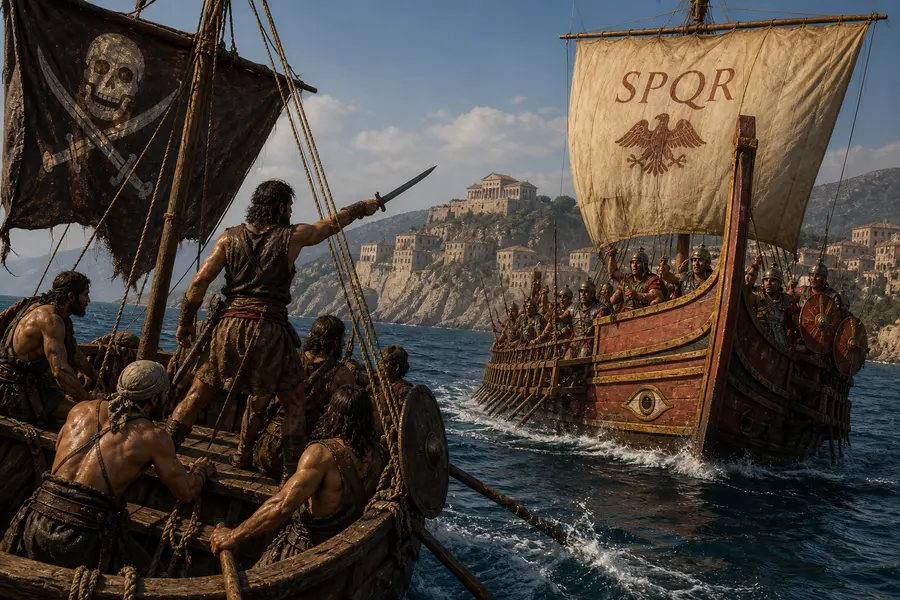
During the 1st century BCE, piracy was widespread in the Mediterranean. The issue was particularly dire in Cilicia, where organized pirate networks operated with relative freedom (Cassius Dio, 36.20; de Souza, Piracy in the Graeco-Roman World). These pirates were not isolated criminals but organized groups capable of capturing ships, ransoming elites, and even influencing regional politics (de Souza, 1999).
Rome had emerged as the naval powerhouse of the western Mediterranean after defeating Carthage in the First Punic War. However, it struggled to maintain consistent naval dominance in the eastern Mediterranean (Goldsworthy, In the Name of Rome). This allowed piracy to flourish and made sea travel dangerous, even for Roman nobles. Piracy was a lucrative trade and offered rich rewards for those willing to take the risk.
Caesar's Early Life and Ambitions
Caesar was born into a noble family with political connections but limited wealth (Goldsworthy, Caesar: Life of a Colossus). His early life was shaped by political instability during the dictatorship of Lucius Cornelius Sulla, who targeted Caesar due to his family ties to rival factions (Plutarch, Life of Caesar 1).
As a young man of 18, Caesar was ordered to divorce his wife Cornelia by the dictator Sulla because she was the daughter of Lucius Cornelius Cinna, one of Sulla's political enemies. After refusing to divorce her, Caesar fled Rome temporarily in 82 BC, demonstrating early signs of independence and defiance (Suetonius, Divus Julius 1). He later set out for Rhodes to study rhetoric under Apollonius Molon, a common practice for aspiring Roman politicians.
The Capture by Pirates
Around 75 BCE, while sailing in the Aegean Sea near Pharmacusa, Caesar was captured by Cilician pirates (Plutarch, Life of Caesar 2). He was 25 years old when he was abducted. These pirates targeted wealthy individuals for ransom, making Caesar an ideal victim due to his noble status.
According to Plutarch, Caesar showed no fear during his capture and maintained an unusually confident demeanor. Rather than pleading for his life, he interacted with the pirates as if he were socially superior-a behavior that both astonished and amused his captors.
Life in Captivity
During his captivity, Caesar behaved in a commanding way rather than like a prisoner. He reportedly ordered the pirates to remain quiet when he wished to sleep, for which the pirates promptly complied (Plutarch, 2).
He composed poems and speeches, forcing the pirates to listen to his work. If they weren't interested, he would criticize them harshly, calling them "illiterate barbarians" (Suetonius, 4). This behavior was not mere arrogance or youthful bravado - it reinforced his authority and psychological dominance over his captors. This behaviour highlights Caesar's aptitude for leadership and command.
Most famously, Caesar joked that he would find them and crucify them once he was freed. The pirates, amused, did not take him seriously (Plutarch, 2). This deadly warning, however, would later prove to be entirely genuine.
The Ransom Negotiation
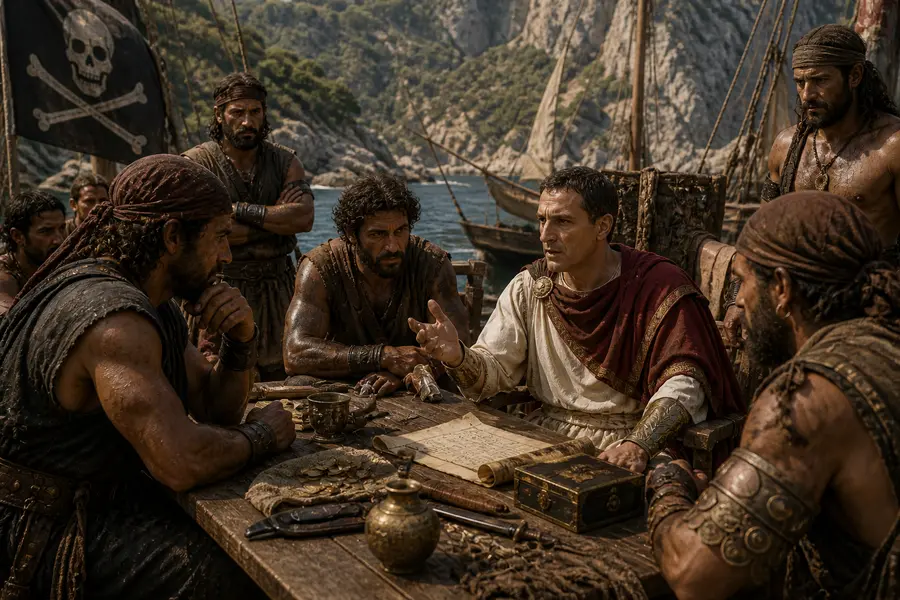
The pirates initially demanded a ransom of 20 talents of silver for the release of Caesar. However, he felt insulted at such a low price for his life and insisted they ask for 50 talents, arguing that he was worth more (Plutarch, 2). The pirates accepted Caesar's negotiation for the new price as they would make more money. This unusual negotiation demonstrated both his confidence. He was also obsessed with pride and his status in Roman society.
The updated ransom of 50 talents of silver was eventually collected by his associates in roughly 38 days (Plutarch, 2). During this time, Caesar remained with the pirates and continued his bold behavior. The pirates continued to treat his behaviour with a mix of fondness and mockery.
Ransom practices were common in this period, as pirates relied heavily on wealthy captives for income (de Souza, 1999). Caesar's ability to secure such a large sum reflects his family's influence and connections within Roman society.
Release and Immediate Action
After the ransom was paid, Caesar was released by the pirates. But he did not return home after his release and immediately planned for his revenge on the pirates who dared to hold him hostage (Plutarch, 2-3). He traveled to Miletus, where he organized ships and forces to pursue the pirates (Suetonius, 4). He used a combination of oratory skills and private funding to help finance the fleet.
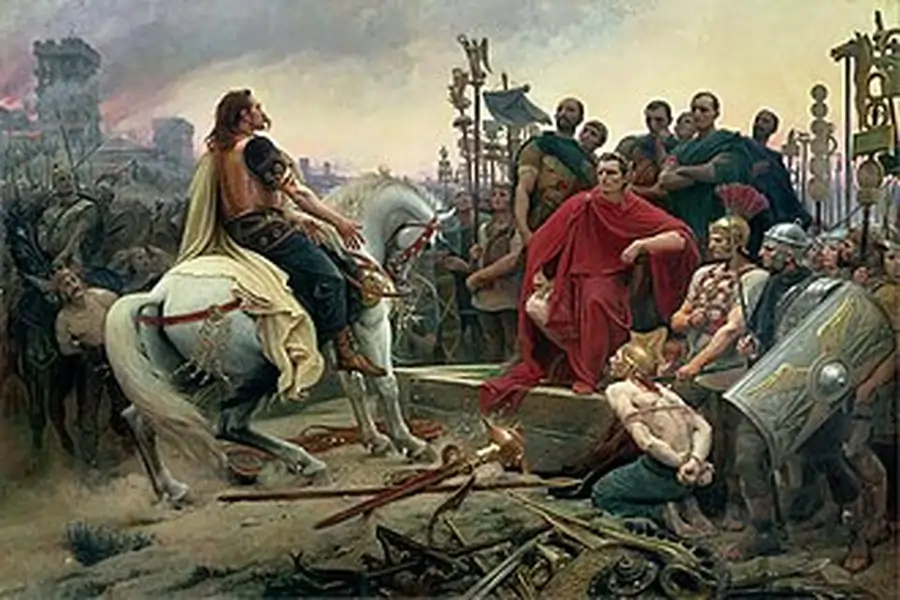
This rapid mobilization demonstrates Caesar's leadership and initiative, traits that would later define his military career. His strategic thinking in this episode foreshadows campaigns such as the Battle of Alesia, where decisive action and planning were critical to success.
Caesar's Revenge
The pirates were celebrating their bounty in the small island of Pharmacusa, where Caesar caught them off guard. They successfully captured the pirates while they were still at anchor. Most of the pirates were captured alive, and Caesar even managed to recover the 50 talents of silver. The pirates were brought to justice and executed by crucifixion, a standard punishment for piracy in the Roman world (Suetonius, 4).
However, sources suggest that Caesar ordered their throats cut before crucifixion, sparing them prolonged suffering (Plutarch, 2). This demonstrates his ability to show a combination of ruthlessness and calculated mercy. Caesar acted with limited official authority, as he was still a young nobleman rather than a magistrate. His willingness to bypass formal legal processes foreshadows his later political actions.
Caesar's Character Analysis
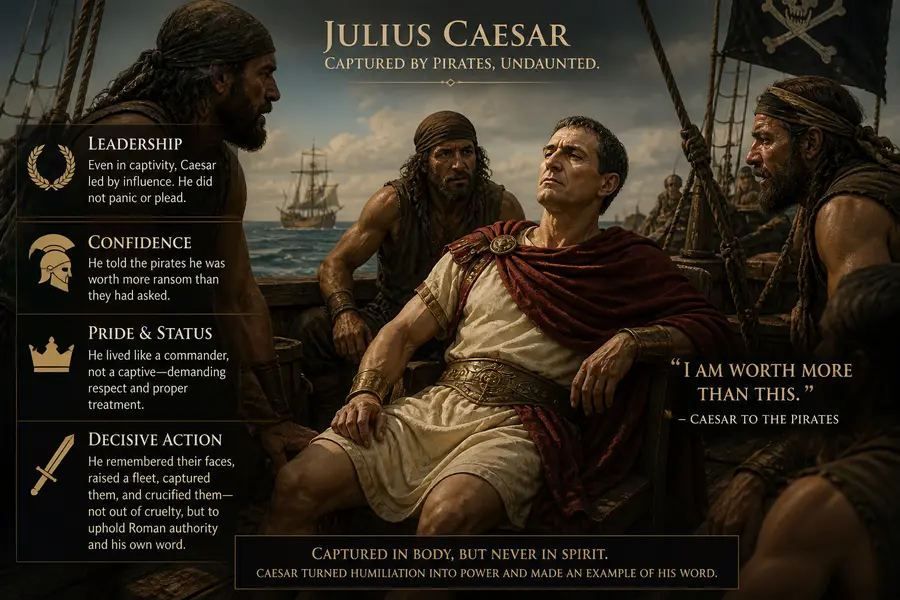
Caesar's interaction with the pirates provides us with an interesting overview of his character. It reveals early patterns in the leadership style that would later define his rise in Roman politics and warfare. He exhibited extreme courage, confidence, and deliberate assertion of authority. By imposing his will on the pirates, he reversed the power dynamic, demonstrating his strong will and ability to control people.
His decision to raise his own ransom and openly threaten his captors illustrates a calculated understanding of reputation and status in Roman society. Caesar was not simply acting out of pride; he was reinforcing his image as a man of importance, even in captivity. This elevated sense of pride and self-worth was what drove him to political success in Rome.
Most significantly, his immediate pursuit and execution of the pirates after release highlights a defining trait: decisive action combined with personal initiative. He personally managed to organize a naval force and sought justice on his own. This willingness to bypass traditional structures foreshadows his later actions, including his defiance of the Roman Senate and his crossing of the Rubicon.
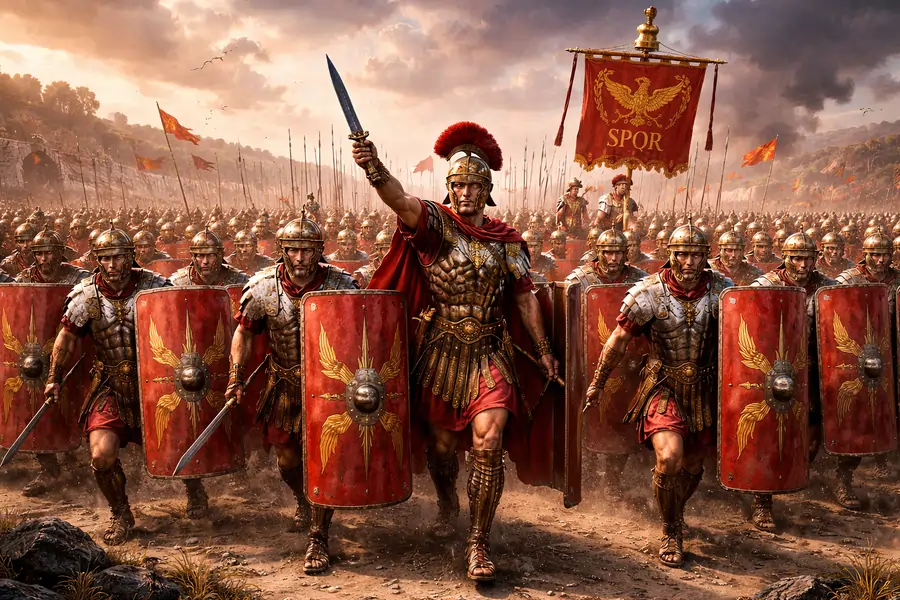
Rather than an isolated anecdote, this episode serves as an early case study in Caesar's leadership-faced with a dangerous situation, he imposed control rather than reacting defensively. He exerted his authority on his captors, negotiated a better deal on their behalf, and took swift revenge by raising a personal navy to exert justice. For deeper insight into how Roman armies operated under leaders like Caesar, see this guide on the Roman legion structure.
Legacy
The story of Caesar and the pirates is one of the most famous and swashbuckling stories in ancient history. This encounter foreshadows his rise to power and provides a glimpse of his capability and enigmatic character. It also reflects the instability of the late Roman Republic, where piracy posed a serious threat even to elites (de Souza, 1999).
Julius Caesar would eventually become dictator of Rome and dominate Roman politics and military affairs. This early encounter offers a preview of the qualities that enabled his rise. The same man who casually promised to crucify his captors would go on to cross the Rubicon, defeat his rivals, and reshape Rome's political order. The pirate episode is not just an entertaining anecdote-it is an early signal of the force of personality that would ultimately change the course of Roman history.
References
- Plutarch. Life of Julius Caesar, sections 1-3.
- Suetonius. The Twelve Caesars: Divus Julius, section 4.
- Cassius Dio. Roman History, Book 36.
- Goldsworthy, Adrian. Caesar: Life of a Colossus. Yale University Press.
- de Souza, Philip. Piracy in the Graeco-Roman World. Cambridge University Press.
- Gruen, Erich S. The Last Generation of the Roman Republic.
- Perseus Digital Library
Recommended Books
This article may contain affiliate links. If you purchase through these links, I may earn a small commission at no extra cost to you.
Related Articles



Frequently Asked Questions
Why did Julius Caesar increase his own ransom to 50 talents?
Julius Caesar increased his ransom from 20 to 50 talents because he believed it better reflected his social status and value as a Roman noble. This act also demonstrated his confidence and helped ensure the pirates treated him with a certain level of respect during captivity (Plutarch, Life of Caesar 2).
How did Julius Caesar behave while he was held captive by pirates?
During his captivity, Julius Caesar behaved with unusual confidence and authority. He ordered the pirates to be quiet when he slept, recited poetry to them, and openly mocked them. His behavior blurred the line between prisoner and commander, showing his strong personality even at a young age (Plutarch, Life of Caesar 2; Suetonius, Divus Julius 4).
Where was Julius Caesar captured by pirates?
Julius Caesar was captured near the island of Pharmacusa in the Aegean Sea around 75 BCE. This region was known for pirate activity, particularly by Cilician pirates who frequently targeted wealthy Roman travelers (Plutarch, Life of Caesar 2).
How long was Caesar held by pirates before his release?
Julius Caesar was held captive for approximately 38 days while his ransom was being arranged and delivered. During this time, he remained with the pirates and maintained his bold and confident demeanor (Plutarch, Life of Caesar 2).
Did Julius Caesar really crucify the pirates who captured him?
Yes, after being released, Julius Caesar raised a small fleet, captured the pirates, and ordered them crucified. According to ancient sources, he had their throats cut first to reduce suffering, showing both ruthlessness and a degree of calculated mercy (Plutarch, Life of Caesar 2-3).
Why is the Caesar pirate story important in Roman history?
The story is important because it reveals early signs of Caesar's character, including his confidence, leadership, and determination. It also highlights the dangers of piracy in the late Roman Republic and foreshadows Caesar's later rise to power (de Souza, 1999; Goldsworthy).
Add Comment