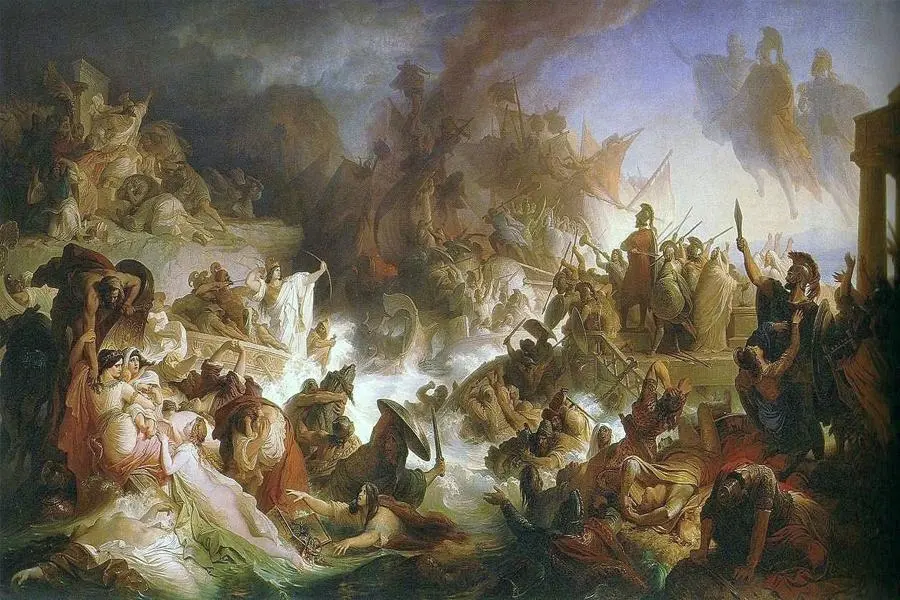
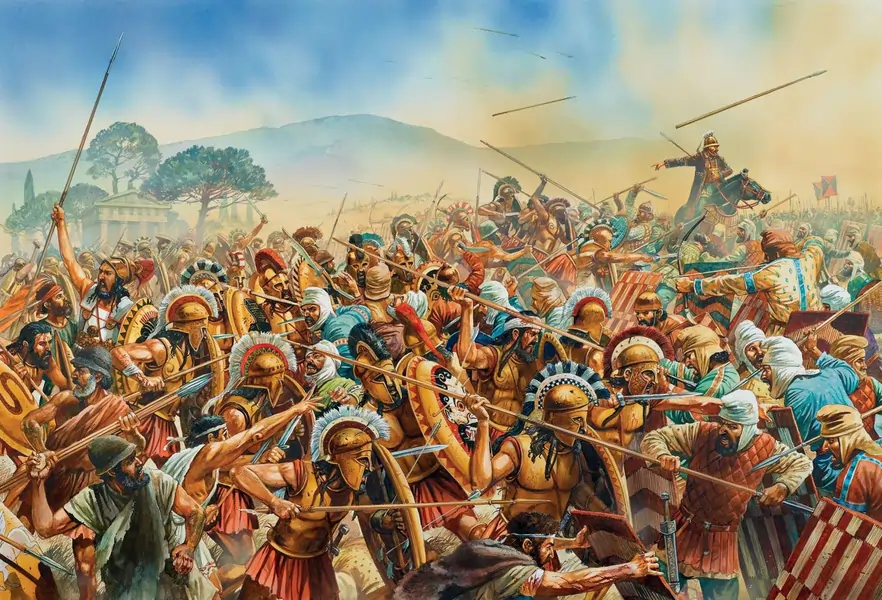
The Battle of Salamis (480 BCE) was the symbol of Greek unity and resistance against the invading Persian forces. It was not merely a naval engagement but a decisive battle that changed the course of Greek history and the world. Fought in the narrow straits near Athens during the Greco-Persian Wars, this naval engagement halted the advance of King Xerxes I and preserved the independence of the Greek city-states. The brilliant victory at Salamis alone did not win the war for the Greeks, but it dealt a severe blow to Persian morale and forced much of the Persian army to retreat to Asia. The fallen Greeks at Thermopylae were avenged by brilliant Athenian leadership under Themistocles. The final blow for the Persians would come later in the Battle of Platea and Mycale.
Table of Contents
- Background of the Greco-Persian Wars
- Thermopylae's Strategic Importance
- Greek and Persian Naval Power
- Leadership and Command Decisions
- Themistocles' Strategy and Deception
- The Battle of Salamis: A Detailed Narrative
- Naval Warfare and Tactical Execution
- Morale and Psychology in Ancient Warfare
- Immediate Aftermath
- Why Salamis Changed History
- Conclusion
- References
Background of the Greco-Persian Wars
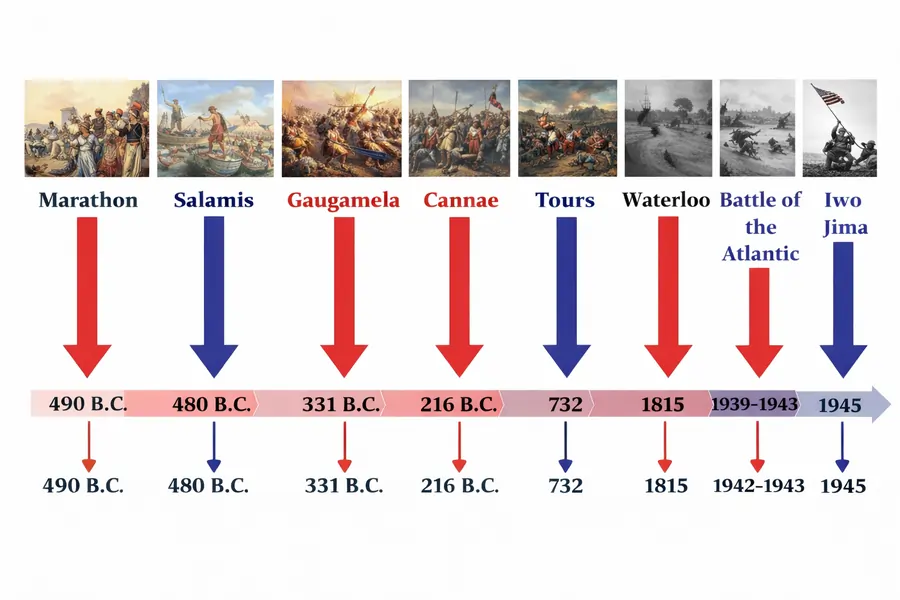
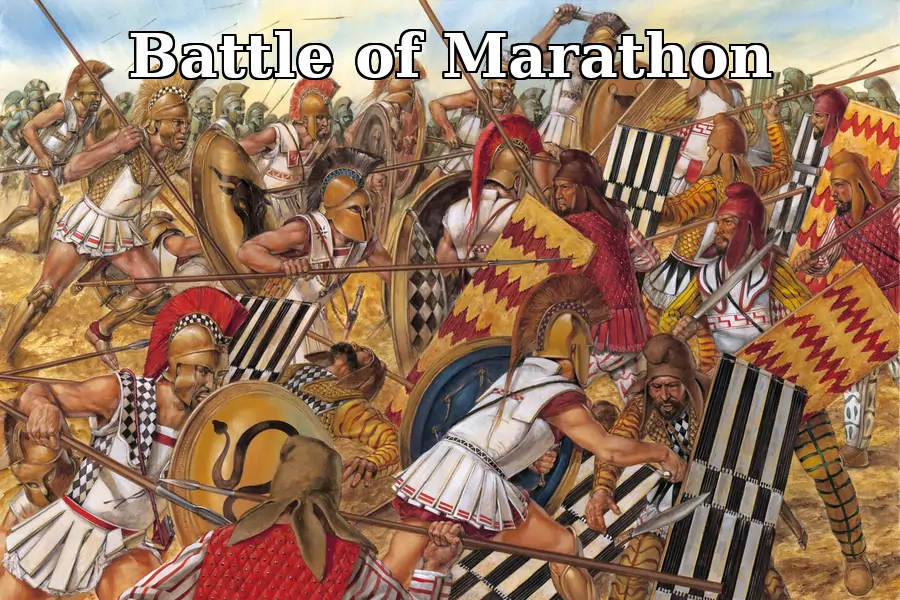
During the first Persian invasion of Greece, Darius I failed to conquer Greece. After the humiliating Persian defeat at the Battle of Marathon in 490 BCE, Xerxes sought to subdue the whole of the Greek world. Herodotus describes the immense scale of Xerxes' invasion, which included both a massive land army and a large multinational fleet (Herodotus, Book VII-VIII).
The Greeks were initially divided and offered little to no resistance against the massive Persian army. However, against the existential threat posed by the Persians, the Greek city-states soon came to the table to coordinate a united resistance. Themistocles of Athens was already wary of the Persian threat and had worked on expanding the Athenian navy. He had invested heavily in naval expansion, recognizing that control of the sea would be decisive in the coming conflict (Plutarch, Life of Themistocles).
Thermopylae's Strategic Importance
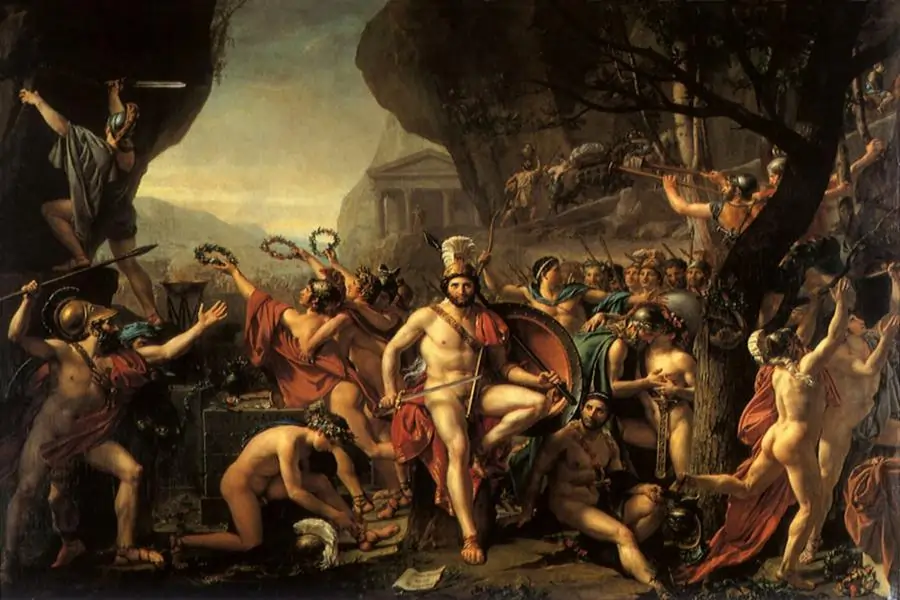
The Spartans and a few other Greek city-states had already faced the Persians at the Battle of Thermopylae earlier that year. Although the Greek forces led by King Leonidas were ultimately defeated, their resistance frustrated Xerxes and delayed his advance. This provided the Greek alliance with precious time to prepare for its defense.
This delay also enabled Athens to evacuate its population and allowed the Greek fleet to regroup at Salamis. The Persians later sacked and burned an empty Athens. Herodotus emphasizes that without this delay, the Greeks would not have been able to coordinate their naval strategy effectively (Herodotus, Book VIII).
Greek and Persian Naval Power
The Greek fleet consisted primarily of triremes. The triremes were fast, maneuverable warships designed for coordinated ramming attacks. These vessels relied on highly trained and disciplined crews and coordinated movement. According to Herodotus, the Greek fleet numbered around 370 ships, with Athens contributing the majority.
The Persian fleet had by far the largest fleet, with the total number of ships possibly exceeding 600. Herodotus originally claimed a total of 1,207 warships. The Persian ships were drawn from various regions of the Persian empire, including contingents from Phoenicia, Egypt, and other regions of the empire. While this provided numerical superiority, it also introduced challenges in coordination and command (Herodotus, Book VIII; Diodorus Siculus, Bibliotheca Historica).
Leadership and Command Decisions
Plutarch credits Themistocles as the central figure in the Greek victory. Themistocles was responsible for expanding the Athenian navy as well as for the strategic decisions that led to the battle at Salamis. His leadership combined political skill with military insight, enabling him to unify the Greek fleet under a coherent strategy.
Xerxes, on the other hand, was the leader of the Persian armada. He was the king of kings who held a position of authority but lacked direct naval experience. Herodotus describes how he observed the battle from a vantage point, expecting a decisive Persian victory (Herodotus, Book VIII). Given the massive size of his navy, Xerxes expected a decisive victory and wanted to view it with his own eyes.
Explore more leaders here: Top 10 Greatest Military Generals in History
Themistocles' Strategy and Deception
Themistocles was crafty and cunning. Herodotus recounts how he deceived Xerxes into thinking that the Greek fleet was retreating. Deceived by the false message, Xerxes ordered his huge fleet to enter the narrow straits, where his numerical advantage would be neutralized.
Themistocles knew that the Persian navy outnumbered the Greeks significantly. He therefore used the terrain to his advantage, similar to how the Spartans held off the Persians in Thermopylae. This strategic decision reflects a broader principle of warfare: controlling the battlefield is often more important than the size of the army or fleet.
The Battle of Salamis: A Detailed Narrative
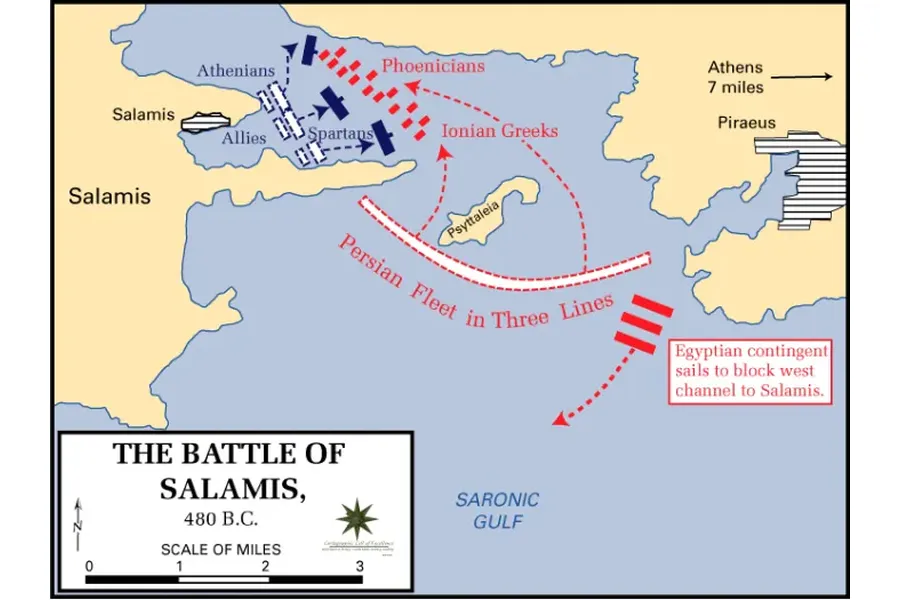
Tricked by the Greek feint of a retreat, the Persian ships entered the straits, expecting to trap the escaping Greek fleet. However, as the massive Persian navy entered the narrow straits, the Persian ships could not move freely, as there was no space to maneuver in the cramped terrain. Aeschylus, who participated in the war, describes the confusion that spread among the Persian ranks as their ships collided and struggled to maintain formation.
The Greek fleet, which was expecting the Persians and positioned strategically, launched a coordinated attack. Their triremes, built for speed and precision, rammed the Persian ships, exploiting weaknesses in their formation. The Persians, unable to maneuver properly in the confined space, were panicking and in disarray. Herodotus notes that the Greeks maintained discipline and cohesion, allowing them to capitalize on the situation.
The Greeks had taken the Persians by surprise and held the initiative. However, this initiative seemed to slip away from them for a moment. Little explanation is provided as to why this happened, but the Greek ships seemed to slow down and reverse course. Perhaps there was doubt after seeing the scale of the Persian navy, or they wanted to regroup after a poorly coordinated initial assault.
However, this doubt was soon dispelled when an Attic captain named Aminias broke the silence by commanding his ship to charge forward and ram into a Persian vessel. The other fellow Greeks, now afraid at the prospect of being shunned for being cowardly, followed suit and rammed the Persian ships in unison.
As the battle progressed, the Persian fleet became increasingly disorganized. Ships collided with one another, and communication broke down. The huge quantity of numbers meant nothing inside the narrow straits. Xerxes, watching from the shore, witnessed the gradual collapse of his naval forces.
Naval Warfare and Tactical Execution
Salamis proved that tactics and proper usage of the environment can dictate the outcome of the battle. The Greek triremes were excellent warships that excelled in speed and maneuverability. The Greek sailors were skilled and capable of executing complex movements such as flanking and line-breaking maneuvers. In contrast, the Persian fleet was bulky and struggled to adapt to the narrow straits.
Modern historians and naval analysts emphasize that the confined geography played a decisive role, turning Persian numerical superiority into a disadvantage.
Morale and Psychology in Ancient Warfare
The Greeks were usually not united and had various conflicts with one another. However, when facing an existential threat from the Persians, they united under one banner to push back the foreign invader. Morale was a critical factor that favored the Greeks. Greek sailors were fighting for their homeland and their lives, while Persian forces were a mix of contingents from all over the Persian empire. These units had little to no motivation in this foreign war. This difference in motivation and morale proved to be evident in the battle's progression. The Greeks fought on despite being outnumbered 2:1, while the Persian line collapsed as they began to take significant losses on their side.
For more insight: Ancient Soldiers Mentality
Immediate Aftermath
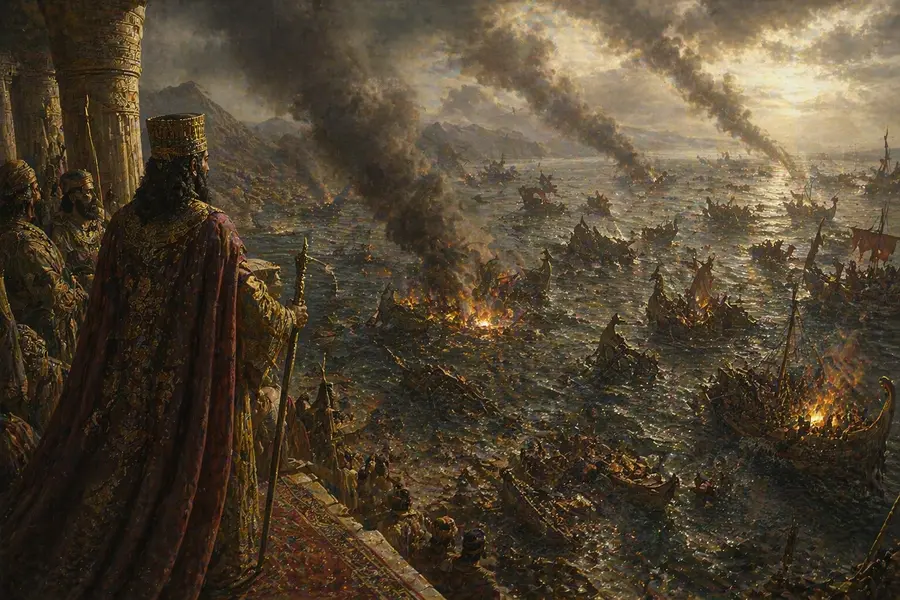
The Persians had lost 200-300 ships while the Greeks lost only 40.The Battle of Salamis was a turning point in the campaign. Without naval superiority, Xerxes had difficulty maintaining supply lines for his massive army. Herodotus records that Xerxes withdrew much of his force back to Asia, leaving a smaller contingent behind (Herodotus, Book VIII-IX). The defeat in Salamis and the retreat marked a turning point in the war, shifting momentum in favor of the Greeks.
Why Salamis Changed History
The significance of Salamis lies in its long-term consequences. By preventing Persian conquest, the battle ensured the survival of Greek political systems, including early forms of democracy in Athens. This survival allowed Greek culture, philosophy, and science to flourish in the centuries that followed.
Modern historians widely regard Salamis as one of the most decisive battles in history due to its far-reaching impact on Western civilization. If the Greeks had lost in the Battle of Salamis, Xerxes would have conquered all of Greece. This would have changed or altered the cultural impact of Greece.
References and Further Reading
- Herodotus. The Histories, Book VII-IX. Read here
- Plutarch. Life of Themistocles. Read here
- Aeschylus. The Persians. Read here
- Diodorus Siculus. Bibliotheca Historica. Read here
- World History Encyclopedia. Greek Strategy at Salamis
- US Naval Institute. Battle of Salamis Analysis
- Oxford Bibliographies. Academic Research
- Wikipedia Overview (for general synthesis). Battle of Salamis
Recommended Books
This article may contain affiliate links. If you purchase through these links, I may earn a small commission at no extra cost to you.
Related Articles

Frequently Asked Questions
Why did Themistocles choose the narrow straits of Salamis for the battle?
Themistocles deliberately chose the narrow straits of Salamis because they limited the movement of the much larger Persian fleet. In confined waters, the Greeks could use their smaller, more maneuverable triremes effectively, neutralizing the Persian advantage in numbers.
How did geography influence the outcome of the Battle of Salamis?
Geography played a decisive role in the Greek victory. The narrow straits restricted Persian ship formations, caused congestion, and made coordination difficult. This allowed the Greeks, who were familiar with the local waters, to attack in organized formations and exploit enemy confusion.
What role did deception play in the Greek victory at Salamis?
Deception was central to the Greek strategy. Themistocles sent false information to Xerxes, convincing him that the Greek fleet was planning to retreat. This led the Persians to enter the straits hastily, placing them in a tactical disadvantage that the Greeks had planned for.
How did the evacuation of Athens contribute to the Battle of Salamis?
The evacuation of Athens allowed the Greek fleet to operate without worrying about civilian protection. It also concentrated Greek forces at Salamis, ensuring a unified naval defense. This strategic move was made possible by the delay achieved at Thermopylae.
Why was the Persian fleet less effective despite its larger size?
The Persian fleet was made up of ships and crews from different parts of the empire, which led to coordination challenges. Differences in training, language, and command structure made it difficult to respond effectively in the chaotic and confined conditions of the straits.
What made the Battle of Salamis a turning point in the Greco-Persian Wars?
The Battle of Salamis marked a turning point because it destroyed Persian naval dominance. Without control of the sea, Xerxes could not sustain his massive army in Greece, forcing him to retreat and shifting the momentum of the war in favor of the Greek alliance.
Add Comment