
Why did Hitler invade the Soviet Union in 1941? Operation Barbarossa, the Nazi invasion of the Soviet Union, was the largest land invasion in history and opened the most devastating theater of the Second World War. Hitler launched the campaign because of a combination of ideological, strategic, and economic motives: he wanted to destroy the Soviet state and communism, seize territory for German settlement, gain access to food and raw materials, and eliminate what he viewed as Germany's greatest long-term rival in Europe.
Why Did Germany Invade the Soviet Union?
The German invasion of the Soviet Union, code-named Operation Barbarossa, began on June 22, 1941. Nearly four million German and Axis troops crossed the frontier along a vast front stretching from the Baltic to the Black Sea. The attack initially produced spectacular German victories, but the Soviet Union did not collapse. The Red Army absorbed enormous losses, mobilized additional forces, and continued fighting. By the end of 1941, the German advance had stalled before Moscow, turning Hitler's planned short war into a prolonged conflict Germany was poorly prepared to fight.
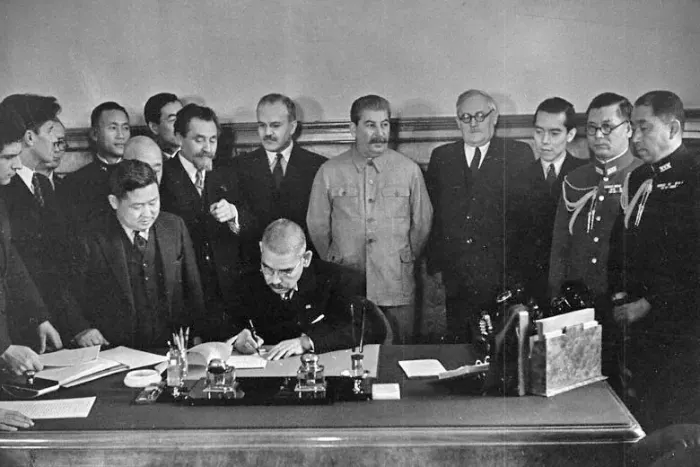
The Hitler-Stalin Pact Before Operation Barbarossa
On August 23, 1939, Nazi Germany and the Soviet Union signed the Molotov-Ribbentrop Pact, a non-aggression agreement that stunned Europe. Its secret protocol divided much of Eastern Europe into German and Soviet spheres of influence. The agreement helped Hitler avoid an immediate war with Stalin while Germany attacked Poland and then turned its attention toward Western Europe.
The pact did not represent genuine friendship between Hitler and Stalin. It was a temporary strategic arrangement. Germany benefited by reducing the immediate danger of a war on two fronts, while the Soviet Union gained time to prepare for a future conflict and expanded its influence into parts of Eastern Europe. The two regimes remained ideological enemies throughout the agreement.
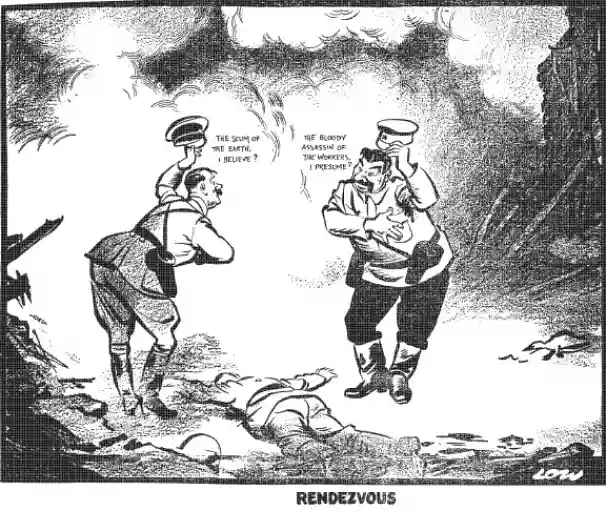
The Hitler-Stalin Rivalry and Growing Tension
Despite the non-aggression pact, relations between Berlin and Moscow steadily deteriorated. Nazi ideology portrayed Bolshevism as a fundamental enemy, while Hitler also viewed the Soviet Union as the source of territory and resources Germany needed for its future. Stalin, meanwhile, distrusted Hitler and understood that the pact was unlikely to last indefinitely.
German-Soviet relations became increasingly strained in 1940. Negotiations over a possible Soviet role in the Axis system failed to resolve competing ambitions in Eastern Europe and the Balkans. By late 1940, Hitler was already convinced that Germany would eventually have to fight the Soviet Union. In December 1940, he issued Führer Directive No. 21, ordering preparations for an invasion.
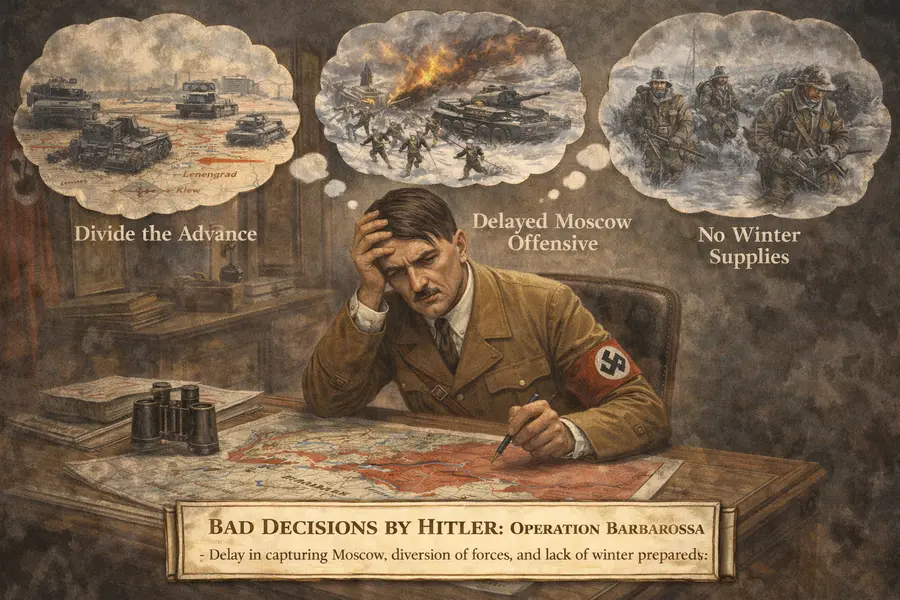
Hitler's Plan for the Nazi Invasion of the Soviet Union
Hitler's plans for the Soviet Union were driven by both ideology and economics. Germany depended heavily on imported food, fuel, and other raw materials, and the Nazi leadership believed that a victorious war in the East could make the German economy more self-sufficient. Soviet grain, Ukrainian agricultural land, and the oil resources of the Caucasus were especially important in German strategic thinking.
Economic considerations, however, cannot be separated from Hitler's ideological goals. He regarded the Soviet Union as the center of what he called Jewish Bolshevism and intended to destroy the Soviet political system. He also wanted to seize enormous areas of Eastern Europe as Lebensraum, or "living space," for Germans. Nazi planners envisioned a colonial empire in the East and accepted mass starvation, forced labor, deportation, and mass murder as part of that project.
Hitler also believed that Britain could not easily be forced out of the war. Germany lacked the naval and air superiority required for a successful invasion of Britain, while Britain remained in the war after the fall of France. Hitler therefore increasingly saw the destruction of the Soviet Union as the key to reshaping the European balance of power. He expected the Soviet state to collapse rapidly once its main armies were destroyed.
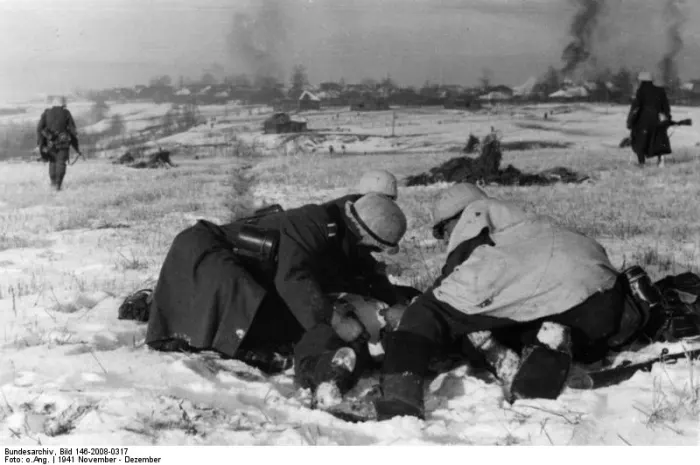
Why Operation Barbarossa Failed
Operation Barbarossa rested on a dangerous assumption: Hitler and the German high command expected the Soviet Union to collapse after a series of massive encirclement battles. German forces initially advanced hundreds of kilometers and destroyed or captured enormous numbers of Soviet troops. Yet these victories did not end Soviet resistance.
The Germans repeatedly encircled Soviet armies, but the Red Army continued to mobilize new formations. Soviet reserves, industrial capacity, and the enormous geographical depth of the USSR made it possible to continue the war even after catastrophic losses. German logistics, meanwhile, struggled to keep advancing across poor roads and enormous distances.
The failure to destroy the Soviet Union in 1941 was decisive. German troops reached the outskirts of Moscow, but the offensive lost momentum before the city could be captured. The Soviet counteroffensive in December 1941 pushed German forces back from the capital. The winter was severe, but weather alone did not defeat Barbarossa; German logistical problems, Soviet resistance, inadequate preparation for a prolonged campaign, and the sheer scale of the Soviet Union were all crucial factors.
Germany had planned for a short campaign rather than a war of attrition. Once the Soviet Union survived the initial assault, Germany faced a conflict in which Soviet manpower and industrial production could increasingly be brought to bear. Soviet factories were evacuated eastward beyond the immediate reach of the German advance, and growing Allied aid, particularly from the United States and Britain, strengthened the Soviet war effort.
Why Is Operation Barbarossa Usually Considered a Strategic Gamble?
With hindsight, Operation Barbarossa appears extraordinarily risky. Germany had failed to force Britain out of the war, yet Hitler opened an enormous new front against a country with a vast population, immense territory, and substantial industrial resources. German intelligence also underestimated Soviet military potential and overestimated the likelihood of a rapid political collapse.
The campaign was not doomed simply because the Soviet Union was large. Germany had achieved rapid victories in Poland and France and possessed a highly experienced army. The problem was that the strategy depended on those victories continuing at a much larger scale. When the Soviet state survived the opening blows, Germany lacked an easy way to convert its battlefield successes into a decisive political victory.
Why Germany Could Not Defeat the Soviet Union
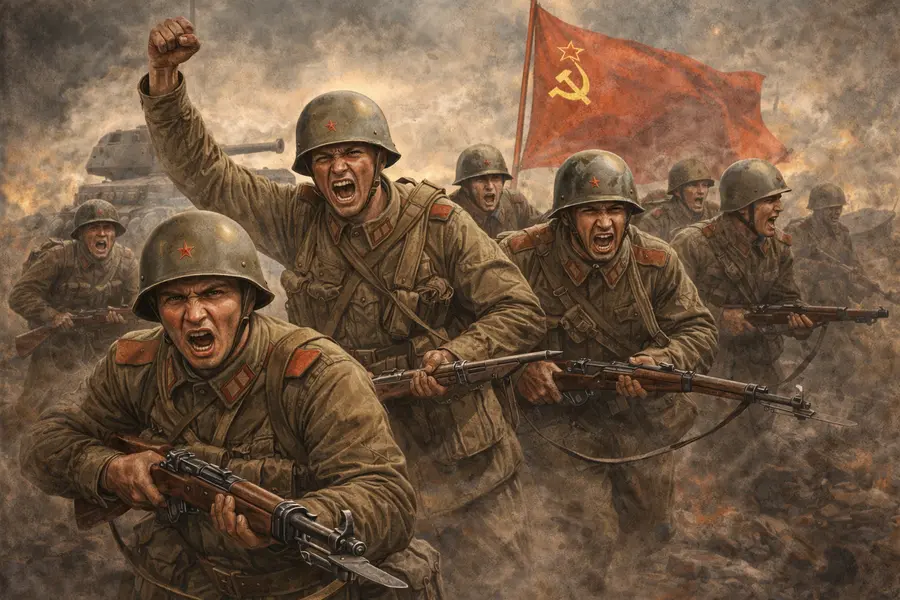
The Soviet Union's enormous geographical depth gave it a major strategic advantage in a prolonged war. Germany could destroy large formations near the frontier without destroying the Soviet state's ability to raise new armies farther east. German supply lines also became longer and more difficult to maintain as the armies advanced.
German leaders had expected the Soviet government to collapse after a series of devastating defeats. Instead, Stalin's regime survived. Soviet authorities mobilized millions of men, relocated major industries, and accepted enormous casualties while continuing to resist. The Soviet military also adapted its tactics and command structure as the war progressed.
The capture of Moscow might have been a severe political and military blow, but it would not necessarily have forced Soviet surrender. The Soviet government had already demonstrated its willingness to relocate important institutions and industrial capacity away from the advancing German armies. Germany therefore faced a much larger problem than capturing a single capital: it had to destroy the Soviet Union's ability and willingness to continue the war.
Fighting on the Eastern and Western Fronts Simultaneously
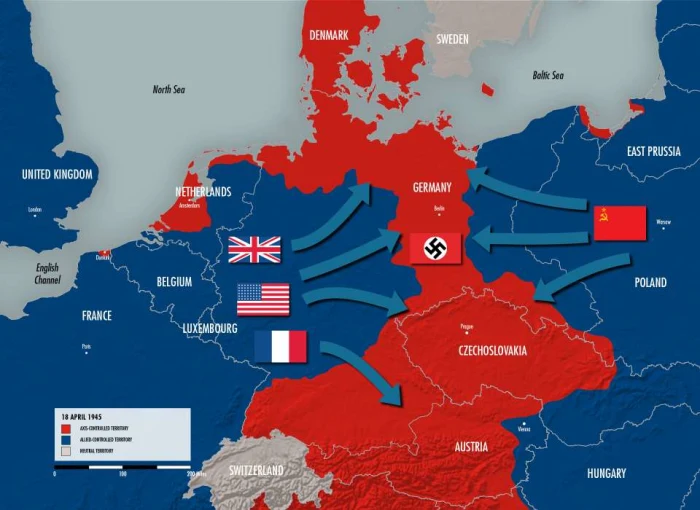
One of Germany's greatest strategic problems was that Britain remained at war when Hitler invaded the Soviet Union. This meant Germany was committed to a major air and naval war against Britain while preparing for an enormous land campaign in the East. After the United States entered the war in December 1941, Germany faced an even more formidable coalition with far greater combined economic resources.
However, it is too simplistic to say that Hitler should simply have conquered Britain first. Germany had already failed to obtain the air superiority required for an invasion, and Britain was protected by the English Channel and the Royal Navy. There was no obvious German military path to conquering Britain. Hitler's decision to attack the Soviet Union was therefore made in the context of a strategic deadlock in the West rather than after Germany had secured victory there.
Hitler's ideological hostility toward the Soviet Union also meant that Barbarossa was not merely an optional campaign for resources. He had long regarded the conquest of Eastern Europe as central to his vision for Nazi Germany. Once Germany and Britain became locked in a prolonged war, Hitler increasingly believed that defeating the Soviet Union would transform the strategic situation and leave Britain isolated.
Hitler's Strategic Mistakes During the German Invasion
Hitler made several controversial decisions during the Eastern Front campaign, but it is important to distinguish decisions made in 1941 from those made later in the war. The German failure before Moscow, the widening of objectives during the 1942 campaign, the drive toward Stalingrad and the Caucasus, and Hitler's refusal to permit withdrawals in later battles all contributed to Germany's eventual defeat.
It is easy to judge these decisions with the benefit of hindsight. German commanders operated with incomplete intelligence and were often convinced that another major Soviet defeat would finally produce collapse. Nevertheless, German intelligence had badly underestimated Soviet reserves and industrial capacity. This fundamental miscalculation shaped many later strategic decisions.
At Stalingrad in 1942-43, Hitler's refusal to allow the German Sixth Army to withdraw after it had been encircled contributed to its destruction. Earlier, the decision to split the 1942 offensive between the Caucasus and Stalingrad dispersed German forces and created severe logistical difficulties. These later failures cannot be used as the original cause of Barbarossa's failure, but they demonstrate how the German leadership repeatedly struggled to match its ambitions with available resources.
Likewise, neither the capture of Moscow nor the capture of Stalingrad would automatically have ended the war. The decisive issue was Germany's inability to destroy the Soviet Union's military and economic capacity. As the war became a struggle of production, manpower, logistics, and coalition strength, Germany's position deteriorated steadily.
Was the Germany-Soviet Union War Inevitable?
The conflict between Nazi Germany and the Soviet Union was rooted in profound ideological and strategic hostility, but calling the war completely "inevitable" can be misleading. The Molotov-Ribbentrop Pact demonstrated that both regimes were willing to cooperate temporarily when it served their interests. The question was whether that temporary cooperation could survive their incompatible ambitions.
Hitler had already identified the Soviet Union as a future enemy before 1941. The Nazi leadership wanted territory, agricultural land, and resources in the East, while Hitler viewed the destruction of the Soviet state as part of his broader ideological program. The Soviet annexations and military preparations after 1939 also reflected Stalin's expectation that a major European conflict was coming.
The Red Army's poor performance against Finland during the Winter War of 1939-40 encouraged German leaders to underestimate Soviet military effectiveness. But the conclusion that Stalin was simply preparing to launch an imminent invasion of Germany remains disputed. Soviet military preparations reflected the expectation of a major war, but evidence for a firm Stalinist plan to launch an offensive against Germany in 1941 is contested among historians.
Operation Barbarossa was therefore not simply a defensive preemptive strike. Hitler chose to launch a war that he had long regarded as ideologically necessary and strategically desirable. His belief that the Soviet Union would collapse quickly proved disastrously wrong. Instead of eliminating Germany's greatest continental rival, Barbarossa created a war of attrition that Nazi Germany ultimately could not win.
Frequently Asked Questions
Why did Hitler decide to invade the Soviet Union in 1941?
Hitler invaded the Soviet Union in June 1941 for multiple strategic, ideological, and economic reasons. Nazi ideology viewed communism as an existential threat. Hitler needed Soviet resources-particularly oil, grain, and raw materials-to sustain Germany's war effort. He feared Stalin would eventually betray Germany once the Soviet military finished rebuilding. Hitler's lebensraum ideology demanded expansion eastward. After failing to invade Britain, Hitler turned eastward. He believed the Soviet Union would collapse quickly, underestimating Soviet resilience. Intelligence reports severely underestimated Soviet military strength.
What was Operation Barbarossa and why did it fail?
Operation Barbarossa was Nazi Germany's massive invasion of the Soviet Union launched June 22, 1941, involving over 4 million Axis troops. Hitler's plan relied on swift blitzkrieg to capture Moscow before winter, expecting Soviet collapse. Initial German success was staggering. However, it ultimately failed because: Germans underestimated Soviet resources and resilience; vast Soviet territory exhausted supply lines; strategic errors including diverting forces delayed Moscow drive; brutal Russian winter arrived before Moscow fell; Soviet resistance was fierce; Stalin relocated industry beyond Urals; failure to capture Moscow transformed campaign into prolonged war Germany couldn't win.
How did the Battle of Stalingrad change the course of World War II?
The Battle of Stalingrad (August 1942-February 1943) marked the decisive turning point on the Eastern Front, transforming Germany from aggressor to defender and beginning the long Soviet advance toward Berlin. Hitler ordered Stalingrad's capture for strategic and symbolic reasons. The battle became history's largest and bloodiest, with nearly 2 million casualties. Hitler's obsession with holding positions trapped the German Sixth Army. Soviet counter-offensive (Operation Uranus) encircled 300,000 German troops. Hitler forbade retreat. On February 2, 1943, Paulus surrendered, shattering German invincibility myths and shifting strategic initiative permanently to Soviets.
What role did the Russian winter play in defeating Nazi Germany?
The Russian winter played a crucial but often overstated role in defeating Nazi Germany. The winter of 1941-1942 was exceptionally harsh, devastating unprepared German forces. Temperatures dropped to -40°C, causing widespread frostbite, hypothermia, and deaths. German equipment failed catastrophically: tanks wouldn't start, weapons jammed, trucks broke down. Soviet troops were equipped for winter. However, attributing defeat solely to winter oversimplifies and diminishes Soviet contributions. Wehrmacht faced serious problems before winter: exhausted troops, overstretched supply lines, fierce resistance, and strategic errors. Winter amplified existing problems but didn't create them. Soviet counteroffensives succeeded due to military competence, not merely weather.
Could Germany have won if Operation Barbarossa succeeded?
Whether Germany could have won even with successful Operation Barbarossa remains debatable, though most historians argue Germany probably couldn't achieve lasting victory. If German forces captured Moscow before winter 1941, the psychological and logistical blow would be enormous, potentially causing Soviet government collapse. However, capturing Moscow wouldn't necessarily mean Soviet surrender. Stalin had relocated Soviet industry beyond the Urals, ensuring continued weapons production. Soviet territory extended thousands of miles beyond Moscow. The fundamental problem was Germany's resource constraints versus Soviet advantages in population, territory, and industrial capacity. Germany lacked sufficient troops to occupy vast Soviet territory. Soviet population exceeded Germany's, providing unlimited manpower reserves. Most historians conclude successful Operation Barbarossa might have prolonged the war but Germany's strategic situation-fighting Britain, Soviet Union, and America simultaneously with inferior resources-made ultimate defeat probable.
What was the Molotov-Ribbentrop Pact and why did it collapse?
The Molotov-Ribbentrop Pact, signed August 23, 1939, was a non-aggression treaty between Nazi Germany and the Soviet Union that shocked the world by uniting ideologically opposed totalitarian states. Named after the foreign ministers who negotiated it, the pact publicly guaranteed peace for ten years. However, secret protocols divided Eastern Europe into spheres of influence. For Hitler, the pact secured Germany's eastern border, allowing him to invade Poland without Soviet intervention. For Stalin, it bought time to rebuild the Red Army after the Great Purge. Despite the pact, neither leader trusted the other. Hitler violated it by launching Operation Barbarossa on June 22, 1941.
Related Articles
Reference and Links
Soviet offensive plans controversy - Wikipedia
Operation Barbarossa | Definition, Summary, & Facts | Britannica - Operation Barbarossa: Operation Barbarossa, during World War II, code name for the German invasion of the Soviet Union, which was launched on June 22, 1941.
Add Comment