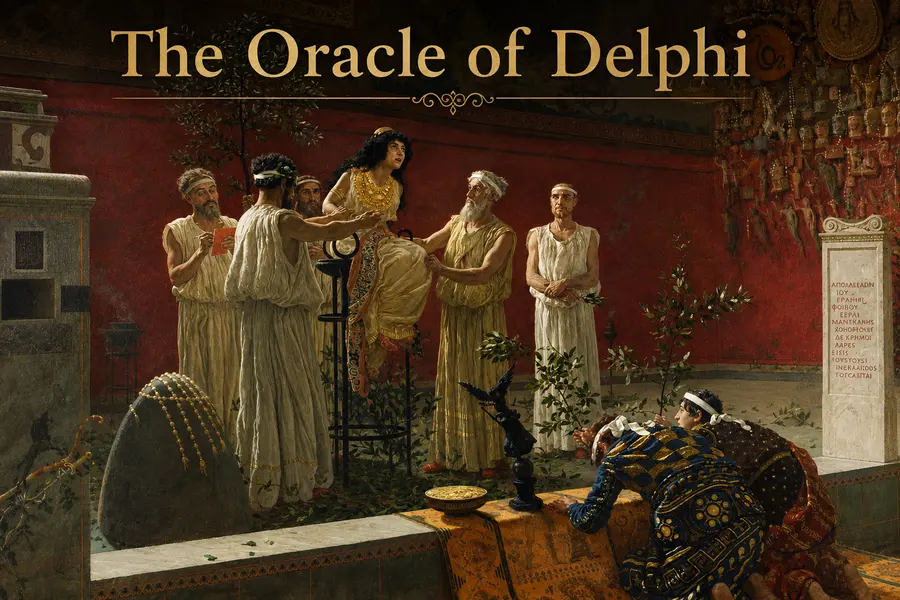
For nearly a thousand years, the Oracle of Delphi held the power to influence the decisions of kings, generals, philosophers, and ordinary pilgrims who journeyed across the Greek world to seek guidance. Believed to speak with the voice of Apollo himself, the oracle shaped political alliances, influenced military campaigns, inspired colonies, and became one of the most respected religious institutions of the ancient Mediterranean. The cryptic prophecies provided by the Pythia remain famous to this day. Modern archaeology, ancient literature, and geology have revealed insights into the workings of the Oracle of Delphi. It was a unique institution where religion, politics, ritual, and psychology converged, leaving a legacy that continues to fascinate historians and archaeologists alike.
Table of Contents
- What Was the Oracle of Delphi?
- Why Delphi Was Considered the Center of the World
- Origins of the Oracle of Delphi
- Apollo and the Sacred Sanctuary
- Archaeological Evidence from Delphi
- Oracle at a Glance
- How the Oracle Became the Voice of Apollo
- Who Was the Pythia?
- How Was the Pythia Chosen?
- How the Oracle of Delphi Process Worked
- Did the Pythia Really Enter a Trance?
- Why Did People Trust the Oracle?
- Famous Prophecies of the Oracle of Delphi
- Why the Oracle of Delphi Declined
- The Enduring Legacy of the Oracle of Delphi
What Was the Oracle of Delphi?
The Oracle of Delphi was the most famous prophetic institution of the ancient Greek world. Located on the southern slopes of Mount Parnassus in central Greece, the sanctuary was dedicated to Apollo, the Greek God of prophecy, music, healing, and order. People from every corner of the Mediterranean traveled to Delphi seeking divine guidance on matters ranging from warfare and colonization to marriage, politics, trade, and religious disputes. Unlike many local shrines that served individual cities, Delphi became a Panhellenic sanctuary, meaning it belonged to all Greeks regardless of political allegiance. Spartans, Athenians, Corinthians, Macedonians, and even foreign rulers consulted its oracle before making important decisions. This neutrality helped Delphi become one of the few places where rival city-states recognized a common religious authority.
The oracle's reputation rested upon a single individual known as the Pythia, a priestess believed to communicate Apollo's will. Her often ambiguous responses were interpreted by temple priests and delivered to those seeking advice. The cryptic nature of the responses helped mask the uncertainty of these prophecies. Their symbolic nature allowed them to remain relevant even as circumstances changed. Ancient authors consistently describe Delphi as a place where divine wisdom intersected with human decision-making. While modern historians no longer view every prophecy as supernatural, there is little doubt that the sanctuary exercised enormous cultural and political influence for centuries.
| Feature | Description |
|---|---|
| Primary Deity | Apollo |
| Main Oracle | The Pythia |
| Location | Mount Parnassus, Phocis, Greece |
| Period of Influence | Approximately 8th century BCE to 4th century CE |
| Primary Function | Providing divine guidance and prophecy |
| Visitors | Greek city-states, foreign rulers, military commanders, pilgrims |
Why Delphi Was Considered the Center of the World
The importance of Delphi extended far beyond its oracle. According to Greek mythology, Zeus released two eagles from opposite ends of the earth. They flew toward one another until they met above Delphi, proving that it occupied the world's center. This sacred point became known as the Omphalos, meaning "navel." An elaborately carved Omphalos stone stood within the sanctuary, symbolizing Delphi's role as the spiritual heart of Greece. Pilgrims believed that by traveling there, they approached the place where communication between mortals and the Gods was strongest.
Its geographical position also contributed to its prestige. Nestled high on the slopes of Mount Parnassus and overlooking the fertile valley of Phocis, Delphi inspired awe long before visitors reached the temple. Ancient roads wound through dramatic cliffs before opening onto terraces filled with temples, monuments, treasuries, statues, and sacred pathways.
The sanctuary gradually became both a religious destination and a political meeting place. Victorious city-states dedicated monuments celebrating their achievements, while defeated powers sought divine reassurance for the future. In many ways, Delphi functioned as the diplomatic heart of ancient Greece. Many of the leaders who transformed Greek history, including those involved in the Battle of Marathon, the Battle of Salamis, and the Battle of Plataea either consulted Delphi directly or operated in a political environment heavily influenced by its authority.
Origins of the Oracle of Delphi
The beginnings of Delphi are a blend of mythology and archaeology. Greek tradition claimed that the sanctuary existed long before Apollo arrived. According to myth, the site originally belonged to Gaia, the primordial Earth goddess, whose sacred spring and prophetic powers predated the Olympian gods. Another tradition states that the monstrous serpent Python guarded the sanctuary. Apollo slew Python with his arrows, claimed the sanctuary as his own, and established his oracle upon the site. The priestess thereafter became known as the Pythia in memory of the defeated creature.
These myths symbolized more than divine combat. Many scholars interpret them as reflecting the gradual replacement of older earth-centered fertility cults with the worship of Apollo during the Greek Dark Age and early Archaic period. Archaeological discoveries support the idea that Delphi was already a sacred location before Apollo's cult achieved prominence. Excavations have uncovered evidence of Mycenaean activity dating to approximately the 14th century BCE, including figurines and offerings that indicate long-standing ritual use.
By the eighth century BCE, Delphi had emerged as the leading sanctuary of Apollo, coinciding with the rise of independent Greek city-states. During this period, Greek communities increasingly sought neutral religious institutions capable of resolving disputes and legitimizing political decisions. Delphi fulfilled this role exceptionally well. As Greek colonization accelerated across the Mediterranean and Black Sea, many expeditions first consulted the Oracle of Delphi. Colonists believed Apollo's approval ensured divine protection for new settlements, helping spread Delphi's prestige far beyond mainland Greece.
| Period | Major Development |
|---|---|
| Mycenaean Era (c. 1400 BCE) | Evidence of early sacred activity |
| Greek Dark Age | Continuation of local cult practices |
| 8th Century BCE | Apollo's sanctuary rises to Panhellenic importance |
| Archaic Period | Oracle consulted by expanding Greek colonies |
| Classical Period | Peak political and religious influence |
Apollo and the Sacred Sanctuary
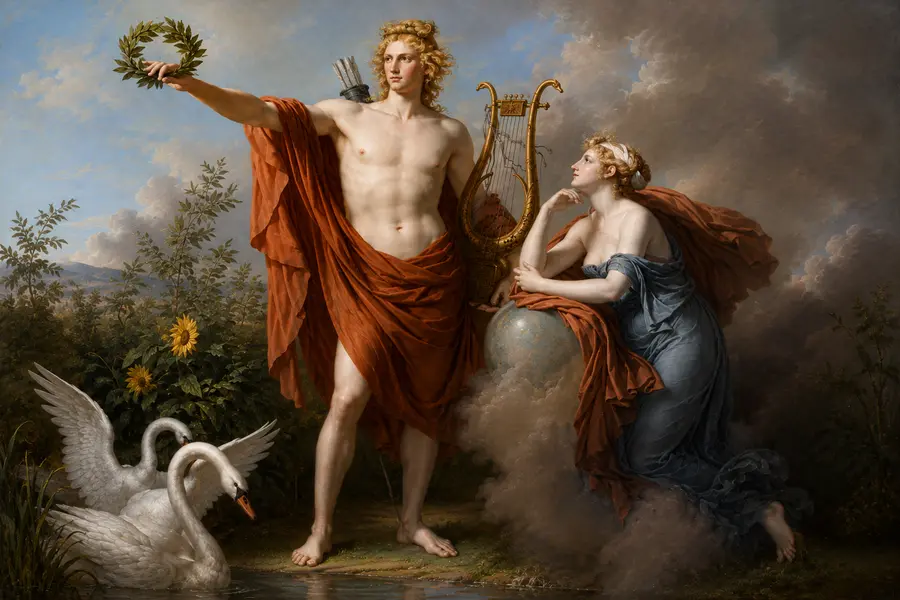
Apollo was uniquely suited to preside over Delphi. Unlike Ares, who embodied war, or Zeus, who ruled through supreme authority, Apollo represented harmony, reason, prophecy, purification, and balance. These qualities reinforced Delphi's image as a place where wisdom, not force, guided human affairs. The sanctuary itself evolved into one of the richest religious complexes in Greece. Pilgrims ascending the Sacred Way passed monuments donated by victorious city-states, including treasuries filled with offerings of gold, silver, bronze, and marble. Every dedication served as a public declaration of gratitude toward Apollo while simultaneously displaying political prestige.
The Temple of Apollo formed the sanctuary's centerpiece. Within its inner chamber stood the tripod upon which the Pythia delivered her prophecies. Nearby lay the Omphalos stone, reinforcing Delphi's symbolic status as the center of the Greek world. Religious festivals such as the Pythian Games further elevated Delphi's importance. Held every four years in honor of Apollo, these competitions featured athletic contests, music, poetry, and chariot racing. Second only to the Olympic Games in prestige, they attracted participants from throughout the Greek world and strengthened Delphi's role as a unifying cultural center. The sanctuary therefore served multiple purposes simultaneously: it was a religious shrine, diplomatic venue, treasury, cultural festival site, and one of antiquity's most influential centers of decision-making.
Archaeological Evidence from Delphi
Modern excavations have transformed our understanding of Delphi. Beginning with extensive French archaeological work in the late nineteenth century, researchers uncovered temples, treasuries, inscriptions, theaters, stadiums, and thousands of dedications left by pilgrims over many centuries. These discoveries demonstrate that Delphi was not merely a legendary location described by ancient writers. It was an extraordinarily active sanctuary visited by people from across the Mediterranean. Numerous inscriptions record official consultations, treaties, civic decrees, and dedications that reveal the sanctuary's deep involvement in Greek political life.
One particularly significant discovery concerns the geology beneath the Temple of Apollo. Studies published during the late twentieth and early twenty-first centuries identified intersecting fault lines beneath the temple, capable of releasing light hydrocarbon gases such as ethylene under certain geological conditions. Although scholars continue to debate the extent of their influence, this evidence reopened discussion regarding whether natural phenomena may have contributed to the Pythia's altered state during prophecy. The archaeological evidence therefore complements rather than replaces the literary tradition. Together, they paint a picture of Delphi as a remarkable institution whose influence rested on religious belief, impressive architecture, political neutrality, and centuries of accumulated prestige.
How the Oracle Became the Voice of Apollo
Delphi's prestige ultimately depended not on its buildings but on the woman believed to communicate directly with Apollo. Known as the Pythia, she occupied one of the most extraordinary positions in the ancient world. Although she held no political office and commanded no army, kings, generals, and philosophers often treated her words with the same seriousness as military intelligence or legal authority.
Understanding who the Pythia was, how she was chosen, and how the consultation ritual unfolded is essential to explaining why the Oracle of Delphi retained its influence for nearly a millennium. Those rituals, and the enduring mystery surrounding the priestess herself, remain among the most fascinating aspects of ancient Greek religion.
Who Was the Pythia?
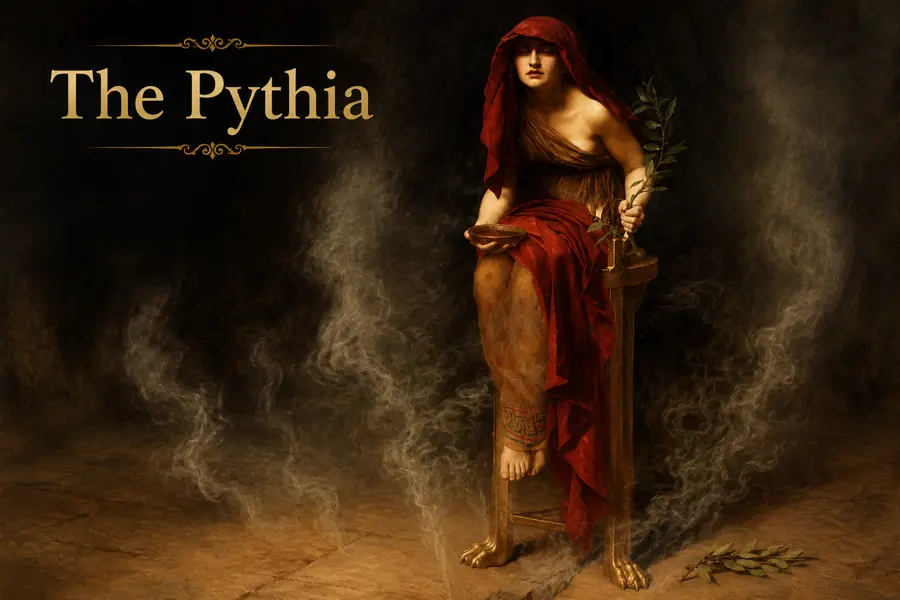
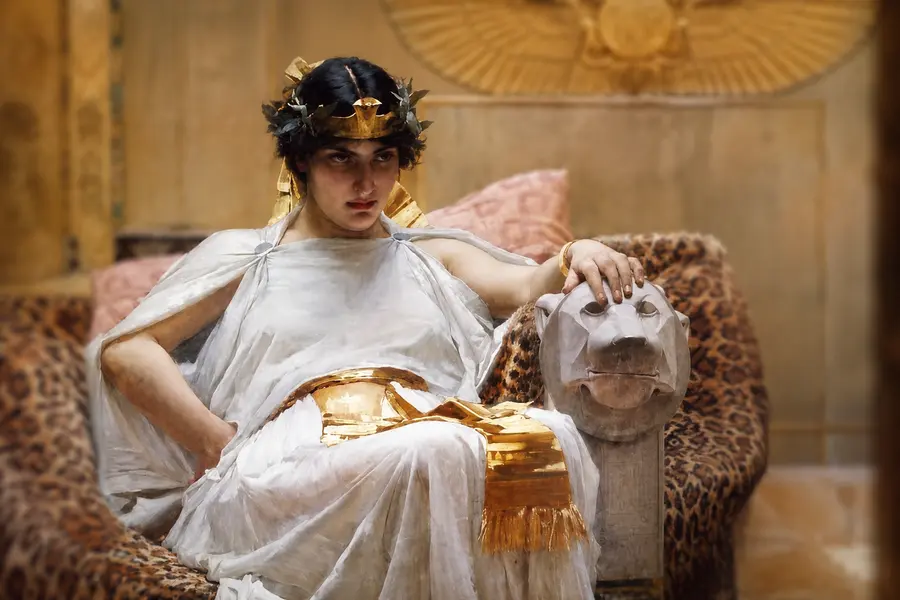
The heart of the Oracle of Delphi was not the temple itself but the Pythia, the priestess believed to serve as Apollo's earthly mouthpiece. Unlike hereditary queens or political leaders, the Pythia held authority solely through religious office. Yet her words could determine whether a city founded a colony, declared war, signed a treaty, or crowned a king. Ancient writers describe the Pythia as sitting upon a sacred tripod within the Temple of Apollo, where she delivered responses believed to originate from the god. While the exact details varied across the centuries, the office remained remarkably consistent for nearly a thousand years, making it one of the longest-lasting religious institutions in classical antiquity.
The title "Pythia" was not the priestess's personal name but the designation of her office, derived from Python, the mythical serpent slain by Apollo. Every woman who occupied the role inherited this sacred title, emphasizing that the office, not the individual, represented Apollo's divine authority. Unlike many religious offices in ancient Greece that were restricted to elite families, the Pythia could come from relatively humble origins. Ancient tradition suggests that this choice reflected Apollo's impartiality: divine wisdom could speak through any worthy individual regardless of wealth or social standing.
How Was the Pythia Chosen?
The earliest Pythias were probably young unmarried women. According to later Greek tradition, this practice changed after a Thessalian visitor allegedly became infatuated with one of the priestesses and abducted her. Whether historical or legendary, the story reflects a significant institutional reform. From the Classical period onward, the Pythia was usually an older woman of respected character. Although she often came from an ordinary family, she underwent ritual purification before assuming office and dedicated the remainder of her life to Apollo's service.
Despite her age, she continued to wear the traditional clothing of a young maiden during ceremonies, symbolizing ritual purity rather than physical youth. Her appearance reinforced the belief that she represented a sacred office transcending ordinary human identity. The Pythia did not work alone. A substantial temple staff supported her, including priests, attendants, interpreters, musicians, sacrificial officials, and administrators responsible for organizing consultations. Together they formed one of the most sophisticated religious institutions in ancient Greece.
How the Oracle of Delphi Process Worked
Consulting the Oracle of Delphi was neither spontaneous nor informal. Every prophecy followed a carefully regulated religious procedure that combined purification, sacrifice, ritual, and divine consultation. These ceremonies reinforced the sanctuary's authority and distinguished Delphi from ordinary temples. For much of its history, consultations took place only on specific days of the year. Ancient sources suggest that the oracle was generally available on the seventh day of each month dedicated to Apollo, except during the winter months when Apollo was believed to leave Delphi and Dionysus symbolically presided over the sanctuary. A visitor seeking guidance followed several distinct stages before hearing the oracle's response.
1. Ritual Purification
The petitioner first purified themselves, often by washing in the sacred Castalian Spring. Purification symbolized entering Apollo's sanctuary free from ritual pollution and prepared both body and mind for communication with the divine.
2. Offering a Sacrifice
Before any prophecy could be given, a sacrificial animal, typically a goat, was presented. Priests sprinkled the goat with cold water. If the animal shivered, Apollo was believed to approve the consultation. If it failed to respond, consultations could be postponed because the god was thought unwilling to speak that day. This ritual served an important institutional purpose. It reinforced the belief that prophecy depended upon Apollo's willingness rather than human demand.
3. Payment of Fees
Pilgrims paid a consultation fee known as the pelanos. Wealthy cities frequently received priority access because of generous donations, although certain communities enjoyed hereditary privileges based on longstanding relationships with the sanctuary. These offerings financed the maintenance of Delphi's temples, monuments, and religious festivals while allowing the sanctuary to accumulate extraordinary wealth.
4. Entering the Temple
After completing the preliminary rituals, the petitioner entered the Temple of Apollo. The Pythia had already undergone her own purification, including drinking from the sacred Kassotis Spring and chewing laurel leaves associated with Apollo. She then took her place upon the famous bronze tripod inside the temple's innermost chamber, known as the adyton.
5. Asking the Question
Questions submitted to the oracle varied enormously. Individuals sought advice about marriage, inheritance, health, and travel, while city-states asked whether they should establish colonies, wage wars, or negotiate alliances. The sanctuary's political importance meant that many of ancient Greece's most consequential decisions passed through Delphi before they reached the battlefield.
6. Receiving Apollo's Response
The Pythia's answers were often delivered in brief statements that temple priests interpreted and recorded. Some responses appeared poetic, while others were remarkably concise. Their ambiguity became one of Delphi's defining characteristics. Rather than providing straightforward predictions, many prophecies encouraged reflection and required interpretation. This ambiguity partly explains why the oracle maintained its reputation across centuries despite changing political circumstances.
Did the Pythia Really Enter a Trance?
One of the greatest mysteries surrounding the Oracle of Delphi concerns the Pythia's mental state while delivering prophecies. Ancient writers generally agreed that she experienced some form of divine inspiration, but they disagreed about exactly what occurred inside the temple. Plutarch, who served as a priest at Delphi during the first century CE, described the Pythia as becoming inspired by Apollo rather than violently possessed. His writings portray the process as solemn and controlled, although physically demanding for the priestess.
Other ancient authors, writing centuries later, depict more dramatic scenes in which the Pythia spoke with ecstatic intensity or appeared temporarily transformed by divine power. These differing descriptions have fueled centuries of debate.
The Geological Gas Theory
In the late twentieth century, renewed geological investigations produced one of the most influential modern explanations. Researchers identified intersecting fault lines beneath the Temple of Apollo capable of releasing small quantities of hydrocarbon gases, particularly ethylene. Laboratory studies demonstrate that low concentrations of ethylene can induce feelings of euphoria, altered perception, and mild trance-like states without necessarily causing unconsciousness.
This discovery challenged earlier assumptions that ancient accounts of vapors were entirely mythical. The geological evidence suggested that natural gases may indeed have escaped beneath the temple under specific environmental conditions. However, the theory remains debated. Some archaeologists argue that gas emissions were too limited or inconsistent to account for centuries of prophetic activity. Others suggest that any gases present likely worked alongside religious expectation rather than replacing it.
Psychological and Religious Explanations
Many historians emphasize that ritual itself can profoundly influence human consciousness. The Pythia underwent fasting, purification, isolation, repetitive ceremonies, exposure to incense, chanting, and intense social expectation before every consultation.
Modern psychology recognizes that carefully structured ritual environments can produce altered states of awareness without requiring intoxicating substances. In Delphi's case, belief, ceremony, sacred symbolism, and years of religious training may have combined to create experiences interpreted by contemporaries as divine inspiration. Rather than viewing these explanations as mutually exclusive, many scholars now regard Delphi as an intersection of geology, ritual, psychology, and sincere religious belief.
Why Did People Trust the Oracle?
Modern readers often wonder why powerful rulers accepted advice delivered through symbolic prophecies. The answer lies not simply in religious belief but in Delphi's institutional credibility. Unlike prophets serving individual kings, Delphi maintained relative independence from any single city-state. Its reputation developed gradually through centuries of successful mediation, respected priesthoods, and widespread acceptance across the Greek world.
Prophecies were also intentionally cautious. Rather than dictating specific actions, they frequently encouraged leaders to consider risks they might otherwise ignore. In this sense, the oracle functioned almost like an ancient strategic advisor. This influence extended into military affairs. Spartan kings, Athenian politicians, and Macedonian rulers all understood that a favorable Delphic prophecy could strengthen public confidence before a campaign. Major events such as the Battle of Thermopylae and Alexander the Great's campaigns were a result of the Oracle's prophecies.
The oracle therefore exercised influence not because every prediction proved literally accurate, but because Delphi had become an institution trusted by generations of Greeks. Its authority rested on reputation, continuity, religious legitimacy, and the collective belief that Apollo's wisdom surpassed human judgment.
Famous Prophecies of the Oracle of Delphi
The Oracle of Delphi earned its legendary reputation not because every prophecy was unquestionably accurate, but because many of its pronouncements became deeply intertwined with pivotal moments in Greek history. The oracle rarely gave direct answers. Instead, its responses were symbolic, requiring interpretation by rulers who often discovered their true meaning only after events had unfolded. Whether viewed as divine inspiration, political diplomacy, or carefully crafted religious counsel, these prophecies profoundly influenced decisions that shaped the ancient Mediterranean.
Croesus and the Fall of Lydia
Perhaps the most famous Delphic prophecy involved Croesus, the wealthy king of Lydia during the sixth century BCE. Before attacking the expanding Persian Empire under Cyrus the Great, Croesus asked the Oracle whether he should wage war. The Pythia reportedly answered:
"If Croesus crosses the Halys River, he will destroy a great empire."
Confident of victory, Croesus invaded Persia. Instead, Cyrus defeated him and destroyed the Lydian Kingdom itself. The prophecy proved technically correct; the "great empire" that fell was Croesus' own. This episode, recorded by Herodotus, perfectly illustrates the deliberate ambiguity that characterized Delphic prophecy. Rather than guaranteeing success, the oracle offered guidance whose meaning depended upon human interpretation.
The Wooden Walls and the Persian Invasion
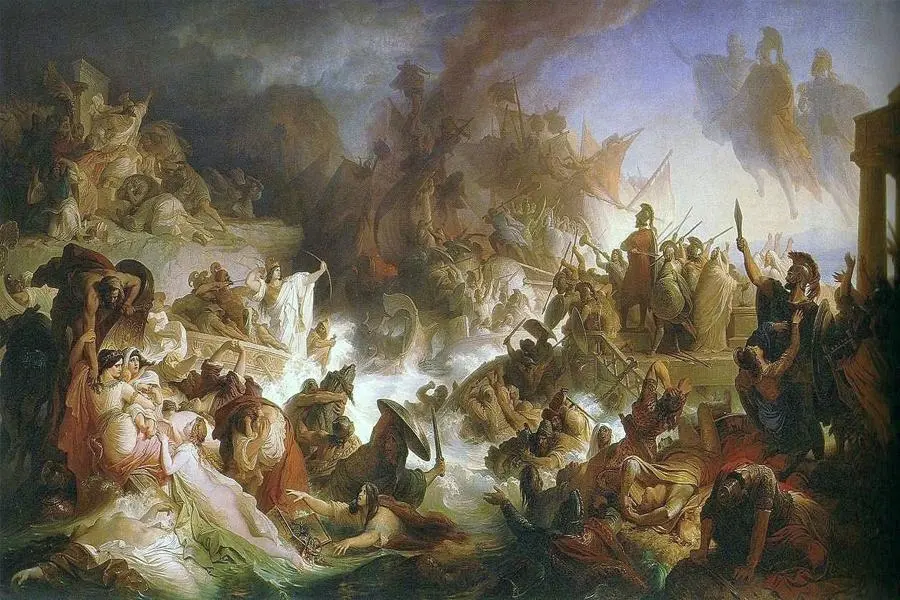
As Xerxes prepared his massive invasion of Greece in 480 BCE, Athens consulted Delphi regarding its survival. The initial prophecy was devastating, warning that the city would fall before the Persian advance. After further appeals, the oracle declared that only "wooden walls" would save Athens.
Themistocles interpreted the "wooden walls" not as the city's ancient wooden fortifications but as its fleet of triremes. His interpretation convinced the Athenians to invest fully in naval power, culminating in their decisive victory at the Battle of Salamis. Modern historians generally regard this as one of the most consequential interpretations of an oracle in history. Had Athens understood the prophecy differently, Greek resistance against Persia might have unfolded very differently.
The Founding of Greek Colonies
Thousands of Greeks left their homeland during the Archaic period to establish colonies across southern Italy, Sicily, North Africa, and the Black Sea. Before departing, many expeditions sought Apollo's approval at Delphi. The oracle frequently identified suitable locations, appointed expedition leaders, or confirmed that the proposed settlement enjoyed divine favor. Although practical considerations such as trade routes and fertile land undoubtedly influenced these decisions, Delphic approval gave colonists religious legitimacy and strengthened unity during dangerous overseas ventures.
Sparta and the Laws of Lycurgus
Spartan tradition held that the legendary lawgiver Lycurgus received Apollo's blessing at Delphi before introducing Sparta's famous constitutional reforms. Although historians debate the historical details, the association demonstrates Delphi's importance in legitimizing political institutions. The Spartan military system, including the rigorous education described in our guide to the Spartan Agoge, was later regarded as enjoying Apollo's divine approval.
Philip II and the Rise of Macedon
During the fourth century BCE, the growing power of Macedon increasingly shaped Greek politics. Philip II became deeply involved in Delphic affairs through the Sacred Wars, eventually gaining significant influence over the sanctuary itself. Although surviving prophecies concerning Philip are limited, Delphi's recognition of Macedonian authority enhanced Philip's legitimacy among many Greek states, helping prepare the political landscape inherited by his son.
Alexander the Great
According to later tradition, Alexander the Great visited Delphi before launching his campaign against Persia. The story recounts that he arrived on a day when the oracle was not scheduled to operate. Frustrated, Alexander reportedly escorted the Pythia toward the temple until she exclaimed:
"You are invincible, my son!"
Alexander interpreted this spontaneous statement as Apollo's prophecy and accepted it as divine confirmation of his future victories. Whether entirely historical or partly legendary, the account reflects Alexander's appreciation for Greek religious traditions despite his extraordinary confidence.
Why the Oracle of Delphi Declined
Despite centuries of influence, Delphi's authority gradually diminished as the political and religious landscape of the Mediterranean changed.
Roman Rule
After Rome established dominance over Greece during the second century BCE, Delphi remained an important sanctuary but increasingly served Roman emperors rather than independent Greek city-states. Several emperors, including Hadrian, admired Greek culture and supported Delphi. Others treated the sanctuary primarily as a prestigious historical monument. Without the intense interstate rivalries that had once driven consultations, the oracle's practical political importance steadily declined.
Changing Religious Beliefs
The growth of mystery religions and later Christianity transformed the religious world that had sustained Delphi for centuries. Increasing numbers of people sought spiritual guidance from new traditions rather than Apollo's sanctuary. By the fourth century CE, Christianity had become the dominant religion of the Roman Empire. Pagan temples gradually lost imperial support, and many traditional religious institutions entered decline.
The Final Closure
The decisive turning point came during the reign of Emperor Theodosius I. Between 391 and 394 CE, imperial decrees prohibited many traditional pagan religious practices throughout the empire. Although the precise date of Delphi's final prophecy remains uncertain, most historians agree that organized oracular activity ended during this period. The sanctuary that had served Greece for nearly a millennium fell silent.
The Enduring Legacy of the Oracle of Delphi
Although the Oracle of Delphi ceased functioning more than sixteen centuries ago, its influence continues to shape modern understanding of religion, politics, psychology, and ancient history. Delphi demonstrated how belief could unite communities separated by geography and political rivalry. Long before international institutions existed, Greek city-states recognized the sanctuary as neutral ground where diplomacy and religion intersected.
The Pythia also challenged assumptions about women's roles in the ancient world. While women often possessed limited political authority in classical Greece, the priestess of Delphi advised kings, legislators, generals, and philosophers. Few other women in antiquity exercised comparable influence over public affairs. The sanctuary likewise remains invaluable to historians because it preserves evidence of how ancient societies understood uncertainty. Rather than seeking fixed predictions, many visitors sought moral guidance, reassurance, or legitimacy for difficult decisions. In that respect, Delphi functioned as both a religious institution and a center for collective reflection.
Archaeological excavations continue to reveal new information about the sanctuary's architecture, inscriptions, and religious practices. Meanwhile, advances in geology, anthropology, and psychology have enriched scholarly debates over how the Pythia delivered her prophecies. Today, Delphi stands as one of the world's best-preserved archaeological sites and a UNESCO World Heritage Site. Its temples, theater, stadium, Sacred Way, and museum continue to attract visitors seeking to understand one of history's most remarkable religious institutions. The Oracle of Delphi reminds us that ancient civilizations rarely separated religion, politics, and public life in the way modern societies often do.
References
- Herodotus - Histories
- Pausanias. Description of Greece.
- Plutarch. Moralia.
- Diodorus Siculus. Library of History.
- Joseph Fontenrose. The Delphic Oracle: Its Responses and Operations. University of California Press, 1978.
- Hugh Bowden. Classical Athens and the Delphic Oracle. Cambridge University Press, 2005.
- John R. Hale, Jelle Z. de Boer, Jeffrey P. Chanton & Henry A. Spiller. "Questioning the Delphic Oracle." Scientific American, August 2003.
- Robin Lane Fox. Travelling Heroes. Penguin Books, 2008.
- Michael Scott. Delphi: A History of the Center of the Ancient World. Princeton University Press, 2014.
Books and Memorables
This article may contain affiliate links. If you purchase through these links, I may earn a small commission at no extra cost to you.


Related Articles
Frequently Asked Questions
What was the Oracle of Delphi?
The Oracle of Delphi was the most famous prophetic institution of ancient Greece, located at the sanctuary of Apollo on Mount Parnassus. People traveled to Delphi to seek divine guidance about warfare, politics, colonization, marriage, and other important decisions. The oracle's prophecies were delivered through a priestess called the Pythia, who was believed to speak for Apollo.
Who was the Pythia at the Oracle of Delphi?
The Pythia was the priestess of Apollo who served as the prophetic voice of the Oracle of Delphi. She underwent ritual purification before entering the temple and delivered responses to questions posed by individuals, rulers, and Greek city-states. The title Pythia was derived from Python, the mythical serpent associated with Delphi that Apollo was said to have defeated.
How did the Oracle of Delphi work?
A consultation at Delphi involved several stages, including ritual purification, sacrifice, payment of an offering, and presentation of a question to the Pythia. The priestess entered the inner chamber of Apollo's temple and delivered a prophetic response believed to come from the god. Priests and interpreters helped communicate and interpret the often symbolic or ambiguous answers.
Did the Pythia really enter a trance at Delphi?
Ancient sources indicate that the Pythia experienced an altered or inspired state while delivering prophecies, although the exact nature of that experience remains uncertain. Some modern researchers have proposed that geological gases released through faults beneath Delphi may have contributed to altered states of consciousness. Ritual, expectation, psychology, and religious belief may also have played important roles.
What was the most famous prophecy of the Oracle of Delphi?
One of the most famous Delphic prophecies concerned Croesus, king of Lydia. Before invading Persia, Croesus was told that crossing the Halys River would result in the destruction of a great empire. He interpreted the prophecy as a prediction that he would defeat Persia, but Cyrus the Great defeated Croesus and destroyed his kingdom. The prophecy became famous because the 'great empire' destroyed was ultimately Croesus' own.
Why did the Oracle of Delphi decline?
The Oracle of Delphi declined as the political and religious world of the ancient Mediterranean changed. Roman control reduced the importance of independent Greek city-states, while the spread of Christianity weakened traditional pagan institutions. Imperial policies against pagan worship under Theodosius I in the late fourth century CE contributed to the final closure of the sanctuary and the end of its ancient oracular activity.
Add Comment