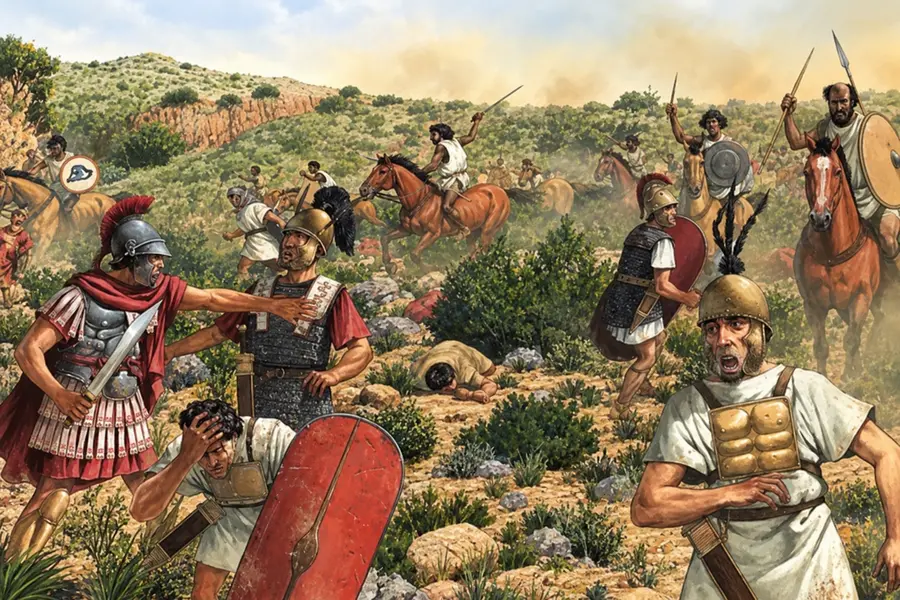
The Battle of Cannae did not destroy every Roman soldier who entered the field, but for those who survived, the nightmare was far from over. Thousands escaped Hannibal's killing ground and reached safety at places such as Canusium and Venusia. Yet Rome treated many of these survivors not as heroes who had escaped annihilation, but as disgraced soldiers who had failed the Republic. Some were condemned to years of military service in Sicily, forbidden from returning home until the war ended. Years later, however, those same hardened veterans would become valuable to the young Scipio Africanus and eventually march against Carthage.
The story of the Roman soldiers who survived Cannae is therefore much more complicated than the familiar image of a defeated army fleeing the battlefield. Their story involves survival, shame, punishment, endurance and, ultimately, redemption. It also raises an uncomfortable question: were the survivors really cowards, or had they simply lived through one of the most catastrophic battles of the ancient world?
Table of Contents
- The Day Rome Lost an Army: The Battle of Cannae
- Who Actually Survived Cannae?
- The Flight from Cannae and Regrouping at Canusium
- Rome's Shocking Decision: Punishing the Survivors
- The Sicilian Exile
- Why Did Rome Punish Soldiers It Needed?
- Scipio and the Cannae Survivors
- Were the Survivors Cowards?
- The Psychological Scars of Cannae
- Conclusion: From Disgrace to Redemption
- Sources and References
The Day Rome Lost an Army: The Battle of Cannae
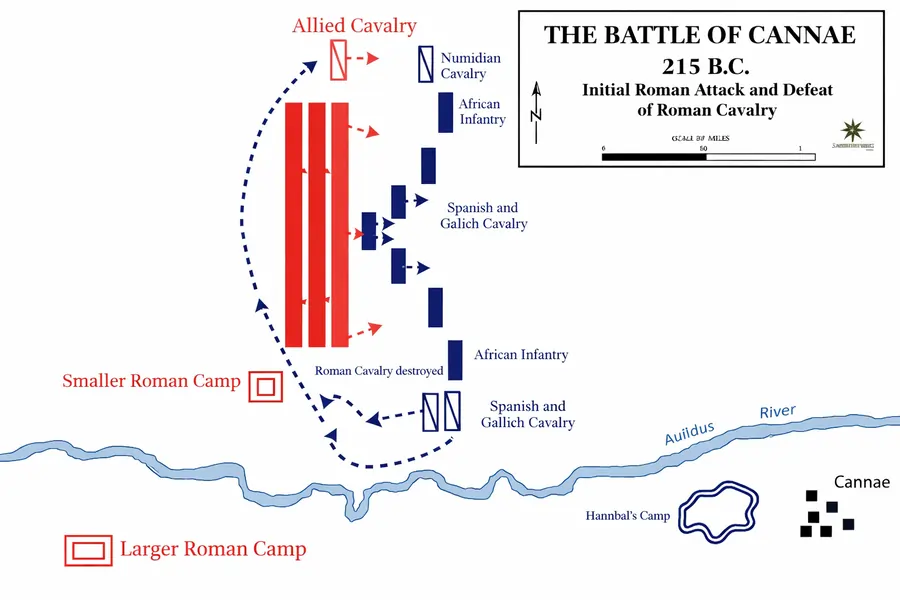
On 2 August 216 BC, Rome suffered the most famous battlefield disaster of the Second Punic War. Hannibal Barca, commanding a Carthaginian army in Apulia, deliberately allowed the center of his formation to bend backward under Roman pressure. As the enormous Roman infantry mass advanced, Hannibal's African infantry closed in from the sides while his cavalry swept around the Roman flanks and rear. The result was a gigantic encirclement. The Roman army was packed so tightly together that its numerical superiority became a liability. Men could scarcely maneuver, and once the Carthaginian cavalry appeared behind them, organized resistance became increasingly difficult.
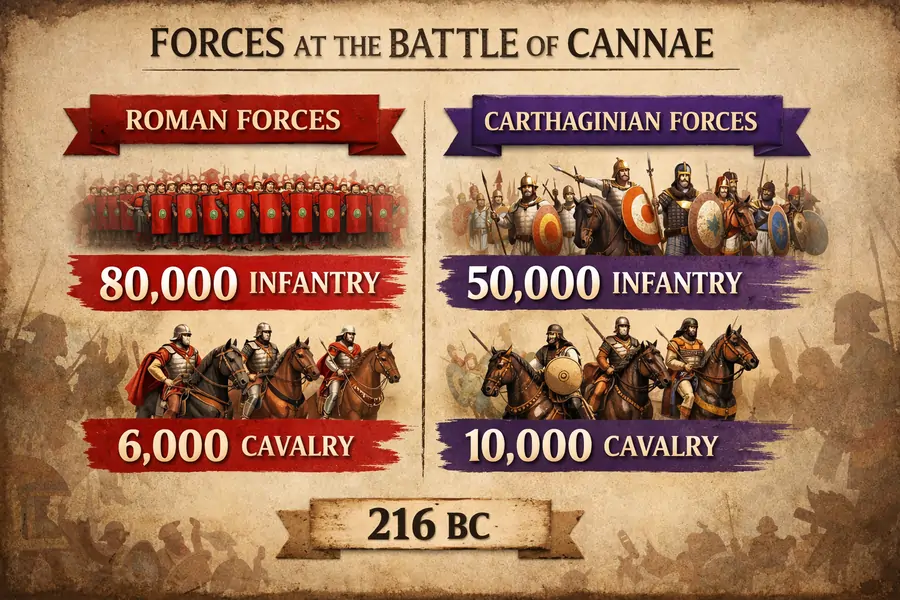
The battle has become famous partly because of the extraordinary scale of the Roman losses. Polybius reports that approximately 70,000 Romans and allies were killed and another 10,000 captured, while only about 3,000 infantry escaped to nearby towns. He also records that only a small fraction of the cavalry survived. Livy's figures are different. He records approximately 45,500 infantry and 2,700 cavalry killed, with thousands more captured during and after the battle. His account also describes groups of Romans escaping from the battlefield, the smaller camp, and the larger Roman camp.
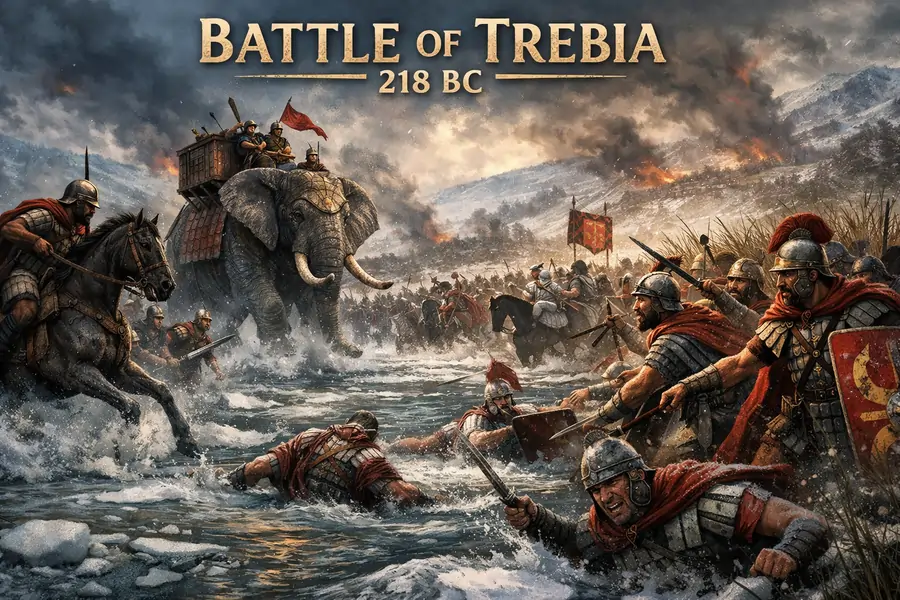
These numbers should not be treated as perfectly precise statistics. Ancient historians often inherited conflicting casualty figures, and the actual strength of the Roman army remains debated. What is beyond serious doubt is the scale of the catastrophe. For a fuller examination of Hannibal's tactics and the Roman defeat, see The Battle of Cannae: 216 BC. Cannae was not an isolated disaster, either. It came after Hannibal had already defeated Roman armies at Trebia and Lake Trasimene, making the disaster part of a terrifying pattern in the early years of the Second Punic War.
| Source | Roman losses | Roman survivors mentioned |
|---|---|---|
| Polybius | About 70,000 killed; about 10,000 captured | About 3,000 infantry escaped; 70 Roman cavalry reached Venusia and about 300 allied cavalry reached other towns |
| Livy | Different and substantially lower casualty figures | About 4,000 escaped the larger camp to Canusium, while about 4,500 reached Venusia |
Ancient casualty figures vary substantially. The table summarizes the figures given by the principal surviving narratives rather than presenting them as modern census-quality numbers.
Who Actually Survived Cannae?
When people imagine survivors of the Battle of Cannae, it is easy to picture a few hundred exhausted legionaries wandering away from the battlefield. The reality was more complicated. Some Roman soldiers escaped directly from the killing ground. Others reached the Roman camps and attempted to defend themselves. Still others were captured when the Carthaginians overran those camps. A number of cavalrymen managed to break through the Carthaginian encirclement and flee toward friendly towns.
Polybius says that roughly 3,000 infantry escaped to neighboring towns, while approximately 370 cavalry survived. Livy's narrative produces a substantially larger number of survivors once the groups that eventually reached Canusium and Venusia are counted. Modern historians therefore tend to treat the ancient totals cautiously. One important distinction must also be made. Not everyone who survived the battle escaped the Carthaginians. Thousands survived the actual fighting only to become prisoners in the Roman camps. Those prisoners would experience a very different fate. Hannibal eventually allowed Roman prisoners to send representatives to Rome to negotiate their ransom. The Senate famously refused.
The Flight from Cannae and Regrouping at Canusium
After the Roman army collapsed, survival depended on individual Romans' actions. Soldiers who had lost their commanders, shields, weapons, and comrades fled in small groups across Apulia. One of the most important destinations was Canusium, a Roman-aligned city roughly southwest of Cannae. The city opened its gates to the fugitives and sheltered them. Canusium's inhabitants played a crucial role in keeping the remnants of the Roman army alive.
Livy gives the story a remarkably human dimension through a wealthy woman named Busa. She provided food, clothing, and money to the exhausted soldiers. The survivors were not arriving as a functioning army. They were a mass of traumatized men who had lost comrades, commanders and equipment within hours. Another group, numbering about 4,500 according to Livy, eventually reached the consul Varro at Venusia. The people of Venusia also took the survivors into their homes and supplied them with clothing, food and equipment. At Canusium, something equally important happened. The survivors began to regroup and reorganize themselves.
Among the officers was the young Publius Cornelius Scipio, the future Scipio Africanus. He was still remarkably young, yet the disaster placed him in a position of extraordinary responsibility. Livy describes a crisis among some of the surviving young Roman nobles. According to his account, a group was considering abandoning Italy and seeking a life elsewhere rather than continuing to serve a Republic that seemed close to collapse. Scipio confronted them and demanded an oath of loyalty to Rome.
The story is dramatic, but it deserves caution. The episode is not preserved in the same form by Polybius, and modern historians have questioned how literally Livy's later narrative should be taken. Nevertheless, it captures something important about the atmosphere after Cannae. Rome's military disaster had become a crisis of confidence.
Rome's Shocking Decision: Punishing the Survivors
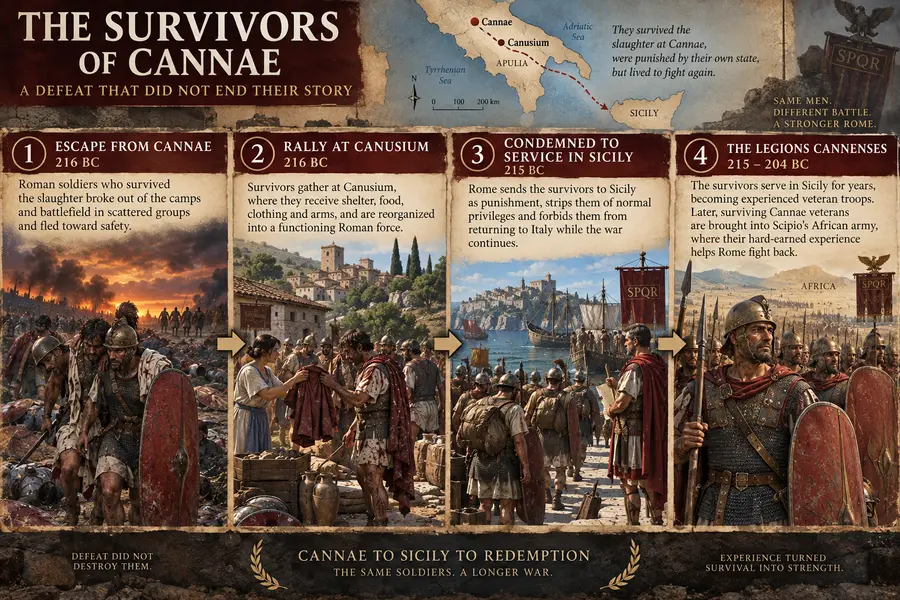
Modern readers might expect Rome to welcome the surviving soldiers. After all, thousands of men had escaped a battle in which enormous numbers of their comrades had died. Rome did almost the opposite. The Senate distinguished between men who had remained in the fight and those who had escaped. In the harsh moral culture of the Roman Republic, battlefield survival could be interpreted as evidence that a soldier had abandoned his duty.
Livy describes the policy in striking terms. The survivors of Cannae were sent to Sicily and were not to receive discharge or return home until the war was over. Later Roman political rhetoric treated their service as a punishment for their supposed disgrace. The decision affected men who had not necessarily behaved dishonorably. Many had been trapped inside an enormous encirclement and fled only when the Roman army had ceased to function as an organized force. Yet the Senate had a larger objective. It wanted to send a message to every Roman soldier still fighting Hannibal. Survival was not supposed to become an excuse for abandoning the army. The survivors therefore became a living symbol of what Rome considered military failure.
The Sicilian Exile: Years of Service Without Honor
The survivors were eventually organized into units that became known as the legiones Cannenses, or the Cannae legions. They were sent to Sicily, far from the main theater of Hannibal's war in Italy. This was not a comfortable retirement. They remained soldiers. Their punishment was effectively an indefinite extension of military service. They were denied the normal privileges that might accompany honorable service, and the Senate maintained restrictions designed to reinforce their disgrace.
Livy later describes the continuing policy as a deliberate mark of dishonor. The Cannae survivors were prevented from receiving normal discharge while the war continued. But there was an irony at the heart of the punishment. By leaving these men in the army for years, Rome unintentionally created a body of extremely experienced veterans. They survived Cannae. They had fought in some of the most brutal years of the Second Punic War. Many had also gained experience in siege warfare and prolonged campaigning.
They were disgraced, but they were not useless. Indeed, their experience would eventually become one of their greatest assets. During the siege of Syracuse, Cannae survivors served under Roman commanders despite the restrictions placed upon them. Later evidence shows that the Senate continued to regard them as soldiers who could be used while still denying them the honors and privileges enjoyed by other troops.
Why Did Rome Not Forgive the Survivors Even When It Needed Soldiers?
This is one of the most fascinating questions surrounding the aftermath of Cannae. Rome desperately needed manpower. Hannibal was still in Italy, several Roman allies had defected to Carthage, and Roman armies were being raised across multiple fronts. Eventually, Rome became so desperate that it enrolled slaves and younger men into military service. Why, then, would it punish experienced soldiers who had already survived Hannibal?
The answer lies partly in Roman military culture. Roman armies depended heavily on discipline, cohesion and obedience. A mass flight could potentially become contagious. If soldiers believed that they could abandon a battlefield and later return to normal service, the psychological foundations of the army could weaken. The Senate therefore chose an extraordinarily harsh example.
Livy later presents the contradiction vividly. Even when Rome was arming men from groups previously excluded from ordinary military service, the Cannae survivors were still denied permission to return home. There was also a political dimension. Cannae had produced an enormous crisis of confidence. Rome needed to demonstrate that the disaster had not broken its traditional standards of military duty. The punishment was therefore less about whether every individual survivor had behaved cowardly and more about what Rome wanted Cannae to mean. The Senate wanted Cannae remembered as a warning.
Scipio and the Cannae Survivors
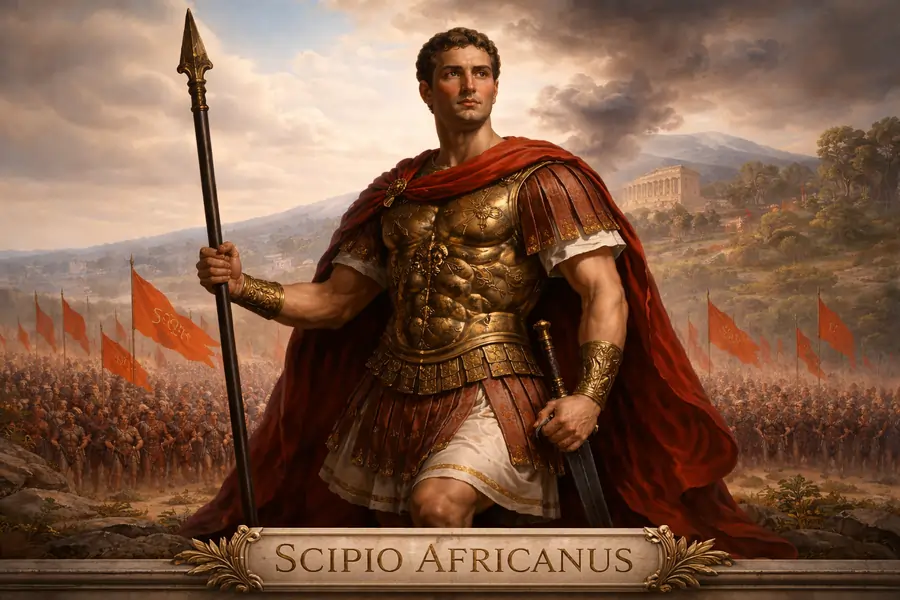
The most extraordinary twist in the story came more than a decade later. By 205 BC, Rome was preparing to take the war directly to North Africa. The commander chosen for the dangerous operation was Publius Cornelius Scipio, the young officer who had survived Cannae and helped rally the survivors at Canusium. According to Livy's dramatic account, Scipio intervened when a group of Roman nobles was discussing abandoning Italy. He confronted them and forced them to swear an oath of loyalty.
When Scipio received command in Sicily, the Senate placed the Cannae legions under him. He recognized that these long-serving veterans were among the most experienced soldiers available to Rome. Livy states that Scipio did not despise the survivors. Instead, he recognized that they had accumulated enormous experience through years of campaigning. He inspected the Cannae legions individually, removed men he considered unfit for further service, and reinforced the units with recruits from Italy. This was a remarkable reversal. The same soldiers whom Rome had once treated as disgraced were now being trusted with the most ambitious campaign of the war.
Scipio's decision was practical rather than sentimental. He needed experienced troops for the invasion of Africa. The Cannae veterans had survived years of warfare and had experience not only in open battle but also in siege operations. A recent scholarly study likewise identifies the Cannae legions as an important veteran component of Scipio's later army. The irony was that a punishment intended to mark soldiers as failures had helped create some of the most experienced veterans available to Rome. For more on Scipio's eventual confrontation with Hannibal, see the account of the Battle of Zama.
Were the Cannae Survivors Cowards?
Probably not in the simple sense that later Roman rhetoric sometimes suggested. The distinction between cowardice and survival is particularly important at Cannae. Hannibal's army had created an encirclement in which tens of thousands of Roman soldiers were trapped. Once the Roman formation collapsed, continuing to fight did not necessarily mean maintaining disciplined resistance. For many men, it meant being killed in a battlefield that had become almost impossible to escape.
Polybius himself makes an important observation. Although he describes the Roman defeat in catastrophic terms, he also says that the defeated fought with conspicuous bravery. This complicates the later Roman accusation of cowardice. Thousands of men died where they stood. Others escaped. Some were captured. The difference between these outcomes was not necessarily courage versus cowardice. It could depend upon position on the battlefield, access to cavalry, proximity to the camps, and simple chance.
Even the later career of the survivors is revealing. If these men had truly been worthless soldiers, Scipio would have had little reason to select them for his African campaign. Instead, he regarded their years of experience as valuable. That does not mean every survivor behaved heroically. Ancient armies contained brave men, frightened men, disciplined men and men who broke under pressure. But treating thousands of survivors as a single category of cowards oversimplifies what happened at Cannae.
The Psychological Scars of Cannae
It is impossible to know exactly what individual survivors felt. Ancient sources rarely provide the private voices of ordinary soldiers. Yet the circumstances allow us to understand the extraordinary psychological burden they carried. Imagine surviving an army's destruction while knowing that friends, relatives, commanders and fellow citizens had been killed around you. Then imagine returning to Roman society and being told that your survival was itself a source of shame.
The survivors were not simply recovering from physical wounds. They were living with the memory of a battlefield that had destroyed the army around them. Modern readers should also remember that ancient Roman military identity was deeply connected to ideas of virtus, honor and public reputation. A soldier's standing was not merely personal. His conduct reflected upon his family, community and Republic. The Senate's punishment therefore had a psychological dimension. The Cannae veterans were repeatedly reminded that Rome considered their survival morally suspect.
Conclusion: From Disgrace to Redemption
The Roman soldiers who survived Cannae lived through an experience that could easily have ended their military careers forever. Instead, their lives followed a remarkable trajectory. First came the flight from the battlefield. Survivors struggled toward Canusium, Venusia and other friendly communities. Local civilians helped feed, clothe and shelter them while Roman commanders attempted to rebuild an army from the wreckage.
Then came punishment. Rome sent the Cannae survivors to Sicily and denied them the normal privileges of honorable soldiers. Their service became a sentence rather than a reward. But Rome's punishment produced an unintended result. These men spent years gaining military experience. They became veterans of a war that had tested Roman armies more severely than almost any previous conflict.
Eventually, Scipio Africanus recognized their value. When Rome prepared to invade Africa, he selected the Cannae survivors as an important component of his army. The men who had once represented Rome's humiliation were now among the soldiers entrusted with taking the war to Hannibal's homeland. They were not celebrated immediately. They were not welcomed home. They were punished, isolated, and made to serve for years. Yet they endured. And when Rome eventually needed experienced soldiers to finish its greatest war, the survivors of Cannae were still there.Hannibal had destroyed a Roman army at Cannae. He had not destroyed Rome's ability to recover.
Sources and References
The account of the Cannae survivors is reconstructed primarily from ancient historians, especially Polybius and Livy. Their casualty figures and narrative details sometimes differ substantially, so numerical claims should be treated as estimates rather than exact modern statistics.
- Polybius, Histories, Book 3. Polybius provides one of the earliest surviving accounts of Cannae and emphasizes the scale of the Roman defeat, the small number of infantry and cavalry who escaped, and Hannibal's tactical superiority.
- Livy, History of Rome, Books 22-30. Livy's narrative provides extensive information about the flight from Cannae, the survivors at Canusium and Venusia, the Senate's treatment of the survivors, their service in Sicily and their later use by Scipio.
- Princeton Encyclopedia of Classical Sites, "Canusium." Provides archaeological and historical context for Canusium and its role in receiving Roman survivors after Cannae.
- Connor Beattie, "Volunteer Soldiers in the Roman Republic: The Case of Scipio Africanus," Journal of Ancient History. A modern scholarly examination of Roman recruitment and the long institutional history of the Cannae legions, including their later service under Scipio.
- Livy, Book 26. Provides evidence for the continued treatment of the Cannae veterans as soldiers under restrictions and their deployment in Sicily.
Books and Memorables
This article may contain affiliate links. If you purchase through these links, I may earn a small commission at no extra cost to you.


Related Articles
Frequently Asked Questions
What happened to the Roman soldiers who survived the Battle of Cannae?
The Roman soldiers who survived Cannae were not immediately welcomed home. Many survivors regrouped at Canusium and other nearby communities before being reorganized into military units. Rome later punished many of the survivors by sending them to Sicily, where they were required to continue serving without the normal privileges of honorable soldiers. Years later, Scipio Africanus recognized their battlefield experience and incorporated veteran Cannae survivors into the army that invaded Africa.
Why did Rome send the survivors of Cannae to Sicily?
Rome sent many of the surviving Cannae soldiers to Sicily as a form of military punishment. Roman leaders believed that some survivors had failed to maintain their duty during the catastrophic defeat and wanted their treatment to serve as a warning to other soldiers. The survivors were therefore kept in service rather than being allowed to return home. Ironically, their years of continued campaigning eventually made them experienced veterans who could be valuable to Rome.
Where did the Roman soldiers who escaped Cannae go after the battle?
Many Roman survivors fled toward friendly settlements after the army collapsed at Cannae. Canusium became one of the most important places of refuge, where surviving soldiers were gathered and reorganized. Other survivors reached Venusia, where local inhabitants helped provide food, clothing and other necessities. These scattered groups formed the surviving manpower from which Roman commanders began rebuilding their forces after the disaster.
Did Scipio Africanus use soldiers who survived Cannae?
Yes. Scipio Africanus eventually made use of experienced survivors of Cannae when he was preparing Rome's invasion of Africa. The men had spent years serving after their punishment and had gained valuable military experience. Scipio recognized this experience and incorporated Cannae veterans into his army. Their later service demonstrates that Rome eventually came to value the very soldiers it had once treated as disgraced.
Were the Roman soldiers who survived Cannae considered cowards?
Roman authorities treated many Cannae survivors as dishonored soldiers, but calling all of them cowards oversimplifies what happened. Cannae involved an enormous Carthaginian encirclement in which tens of thousands of Romans were killed. Escaping the battlefield could depend on a soldier's position, access to an escape route and the collapse of the Roman formation. Ancient accounts also describe Roman soldiers fighting with great determination. The later military usefulness of the survivors further suggests that they should not all be viewed simply as cowards.
How did the survivors of Cannae eventually redeem themselves in the Roman army?
The survivors of Cannae spent years serving in Sicily under harsh conditions rather than returning home. This prolonged service gave many of them considerable military experience. When Scipio Africanus prepared to carry the war into Africa, he selected experienced Cannae veterans for his forces. Their participation in the later Roman campaign transformed their story from one of disgrace into one of endurance and military redemption.
Add Comment