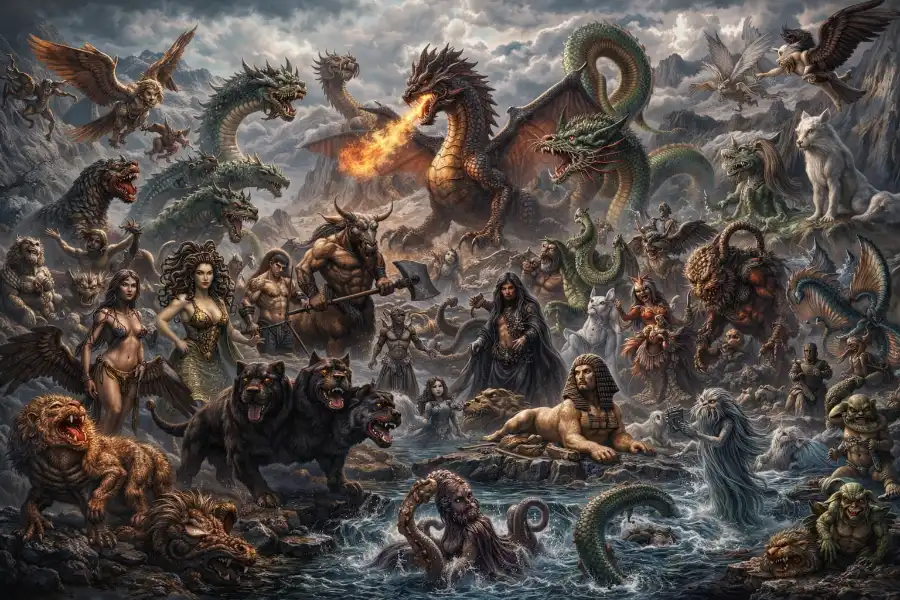
What are the most dangerous mythical creatures from ancient legends? From the fire-breathing Chimera and the petrifying gaze of Medusa to the fearsome Kraken and the many-headed Hydra, mythological monsters have fascinated and terrified people for thousands of years. These legendary beings appear in the myths and folklore of civilizations across the world, including the Greeks, Romans, Norse, Egyptians, Celts, and Japanese. Far more than frightening monsters, they often represented humanity's deepest fears, moral lessons, unexplained natural phenomena, and the constant struggle between order and chaos. Ancient authors such as Hesiod, Homer, and Snorri Sturluson used these creatures not merely as villains, but as symbols that reflected the beliefs and values of their societies.
This comprehensive guide explores 20 of the most famous and dangerous mythological creatures from world mythology, examining their origins, legendary abilities, cultural significance, and the heroes or gods who confronted them. Understanding these ancient monsters provides valuable insight into how different civilizations interpreted danger, justice, death, heroism, and the supernatural forces they believed shaped the world around them.
Most Dangerous Mythological Creatures Across World Cultures
Nearly every civilization developed stories about terrifying supernatural creatures. Although these monsters differed greatly in appearance and abilities, they often served similar purposes. Some explained natural disasters or mysterious deaths, while others warned against arrogance, greed, betrayal, or disrespect toward the gods. Many also acted as obstacles that heroes had to overcome, reinforcing ideals such as courage, wisdom, and perseverance. As mythology evolved, these legendary creatures became enduring symbols that continue to influence literature, art, films, and popular culture today.
Top 20 Mythical Creatures and Monsters from Ancient Legends
- Centaurs (Greek and Roman)
- Basilisks (Greek and Roman)
- The Chimera (Greek)
- Medusa (Greek and Roman)
- Cyclopes (Greek and Roman)
- The Minotaur (Greek)
- The Kraken (Scandinavian)
- Cerberus (Greek)
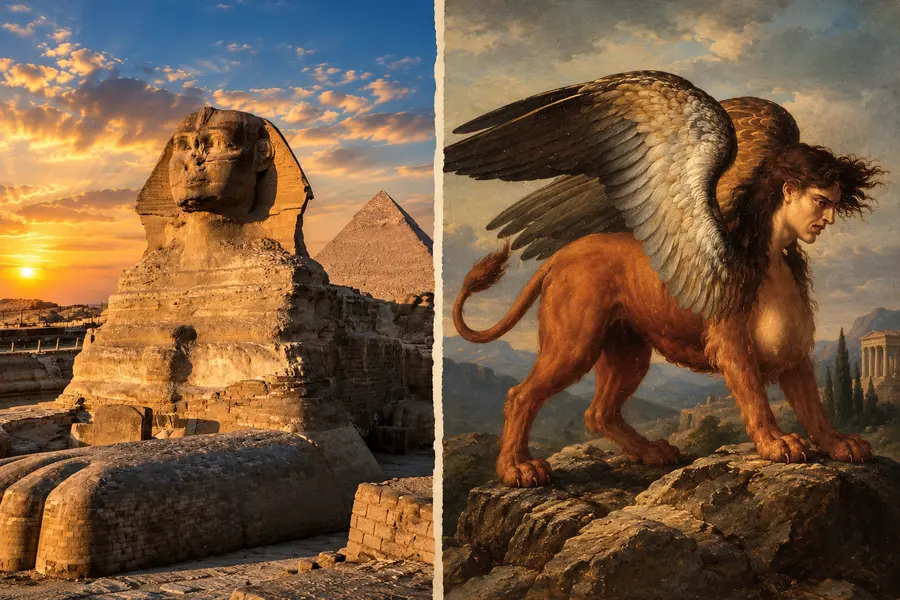
- The Sphinx (Greek and Egyptian)
- Mermaids and Sirens (Greek)
- The Lernaean Hydra (Greek and Roman)
- Kappas (Japanese)
- Lamia and Echidna (Greek)
- Dragons (Many cultures)
- Harpies (Greek and Roman)
- Typhon (Greek and Roman)
- Phoenix (Greek, Roman and Egyptian)
- The Furies (Greek and Roman)
- Scylla and Charybdis (Greek)
- Banshees (Celtic)
Primary Literary Sources: Much of our knowledge about these creatures comes from surviving ancient works, including Hesiod's Theogony, Homer's Odyssey, Apollodorus' Bibliotheca, Ovid's Metamorphoses, the Poetic Edda, Snorri Sturluson's Prose Edda, and the Japanese Kojiki. Because mythology evolved over centuries through oral tradition, different authors often preserved different versions of the same legends.
1. Centaurs: Half-Man, Half-Horse Warriors of Greek Mythology
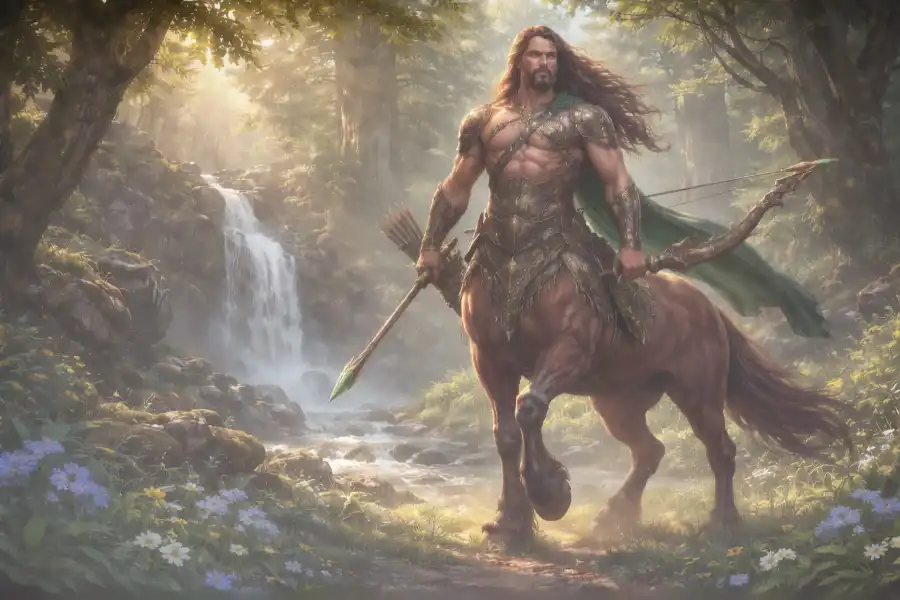
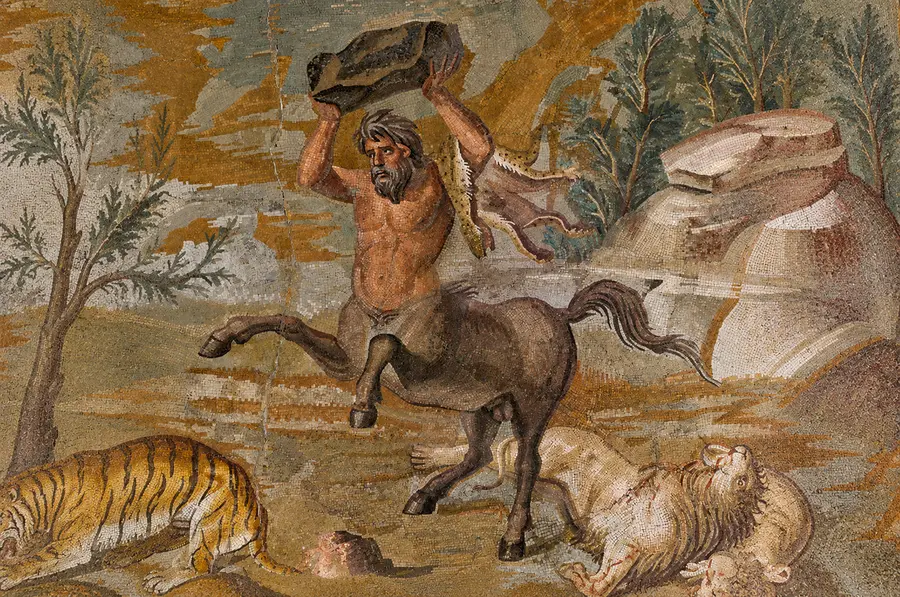
The centaur (or hippocentaur) is one of the most recognizable creatures in Greek mythology, depicted with the upper body of a man and the lower body of a horse. Centaurs frequently appear in Greek literature as powerful but untamed beings who inhabit the mountains and forests of Thessaly. While many were portrayed as violent, drunken, and impulsive, a few-most notably Chiron-were celebrated for their wisdom and virtue. According to the Greek poet Hesiod and the mythographer Apollodorus, the origins of the centaurs are closely tied to the story of Ixion and the wrath of Zeus.
According to the traditional myth, Ixion became infatuated with Hera, the wife of Zeus, and attempted to seduce her despite Zeus's hospitality. To test Ixion's intentions, Zeus fashioned a cloud in Hera's likeness named Nephele. Believing the illusion to be real, Ixion coupled with Nephele. From this union came the race of centaurs, who were later said to inhabit the slopes of Mount Pelion and other wild regions of Greece. Ancient authors presented this story as a warning against arrogance, ingratitude, and disrespect toward the gods.
Most centaurs were portrayed as fierce warriors who frequently clashed with heroes. Their most famous conflict was the Centauromachy, the battle between the centaurs and the Lapiths during the wedding feast of King Pirithous. According to Ovid's Metamorphoses, the drunken centaurs attempted to abduct the Lapith women, triggering a brutal battle that became one of Greek mythology's defining struggles between civilization and savagery. The Centauromachy later became a popular subject in Greek art, including the sculptural decoration of the Parthenon.
Greek writers often used centaurs as symbols of humanity's dual nature. Their human upper bodies represented intelligence and reason, while their equine lower bodies symbolized untamed instincts and uncontrolled passions. The contrast reflected the Greek belief that civilization required individuals to master their impulses through discipline and virtue.
Note: Chiron was the great exception among the centaurs. Unlike his violent kin, he was the immortal son of the Titan Cronus and the nymph Philyra. Renowned for his wisdom, medicine, and knowledge of warfare, Chiron became the tutor of many legendary heroes, including Achilles, Jason, Asclepius, and Heracles. Unlike the other centaurs, he came to symbolize learning, justice, and self-sacrifice rather than savagery. According to Apollodorus, Chiron eventually surrendered his immortality to free the Titan Prometheus from his eternal punishment.
2. Basilisks: The Deadly King of Serpents
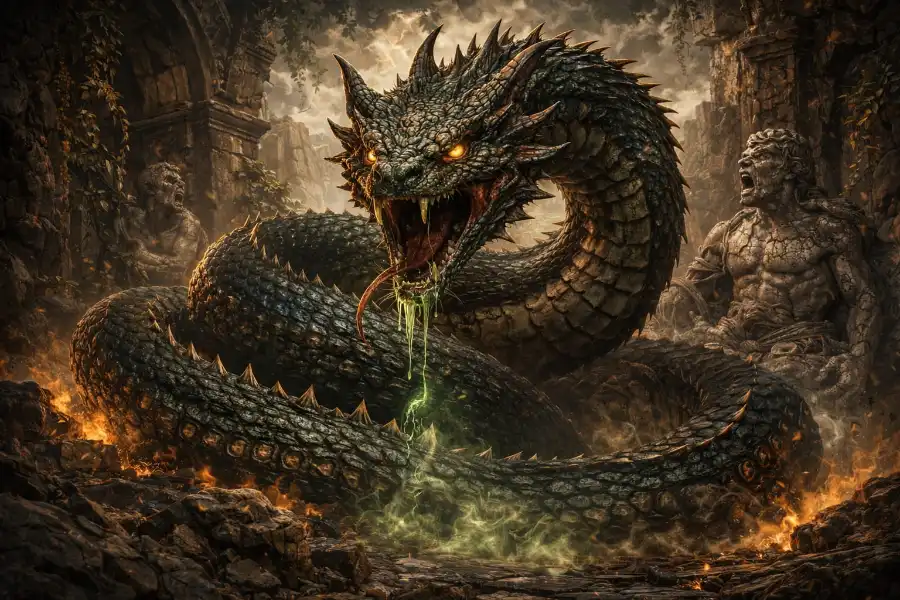
The basilisk, sometimes associated with the cockatrice in later European folklore, was one of antiquity's most feared legendary creatures. Ancient Greek and Roman writers described it as the "King of Serpents," a title reflected in its name, derived from the Greek word basiliskos, meaning "little king." Early accounts, particularly those of Pliny the Elder in Natural History, portray the basilisk as a small but extraordinarily deadly serpent whose mere presence brought death to people, animals, and even vegetation.
During the Middle Ages, the legend evolved considerably. The basilisk became a hybrid creature said to hatch from a serpent's egg incubated by a cockerel, giving it both avian and reptilian characteristics. This later tradition inspired the creature's appearance in countless works of medieval art, literature, and modern fantasy, including Harry Potter and the Chamber of Secrets.
The basilisk's greatest weapon was its supernatural gaze, which was believed to kill instantly. Ancient and medieval writers also claimed that its venom was so potent that it poisoned the surrounding land and contaminated weapons used against it. According to Pliny, even striking the creature with a spear could prove fatal because its poison supposedly traveled along the shaft and killed both the warrior and his horse.
Unlike many monsters that relied on brute strength, the basilisk embodied the ancient fear of invisible and unavoidable death. Its legend likely reflected humanity's fear of venomous snakes and diseases that struck suddenly without warning. As a result, the basilisk became a lasting symbol of lethal power, corruption, and destruction far beyond its relatively small size.
3. The Chimera: Fire-Breathing Hybrid Monster
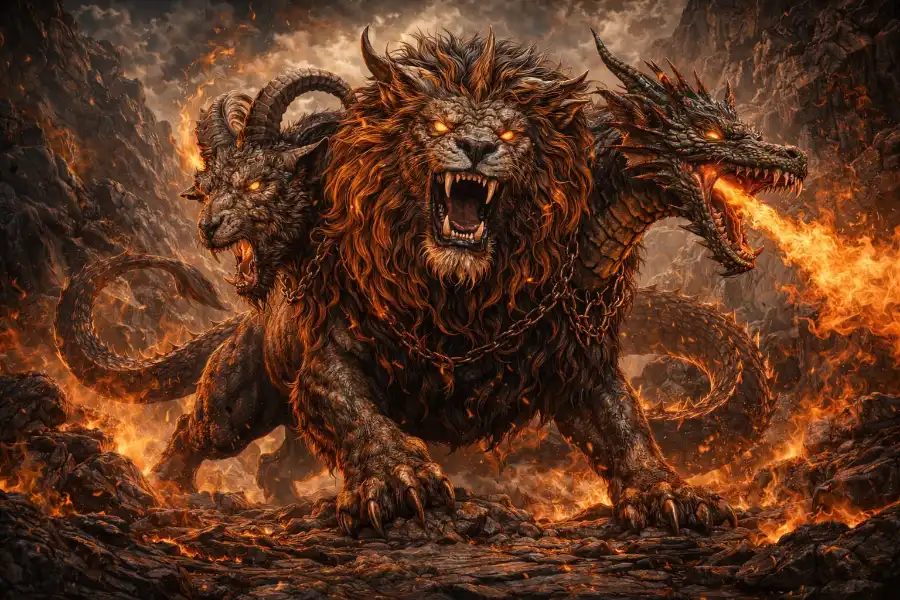
According to Greek mythology, the Chimera was a fearsome fire-breathing monster that terrorized the region of Lycia in Asia Minor. Homer's Iliad describes the creature as having the body and head of a lion, a goat emerging from its back, and a serpent for a tail, while later authors such as Hesiod and Apollodorus provide similar descriptions. Although artistic depictions vary, the Chimera consistently represents one of Greek mythology's most terrifying hybrid beasts.
The Chimera was traditionally said to be the daughter of the monstrous pair Typhon and Echidna, making her the sibling of Cerberus, the Lernaean Hydra, and the Orthrus. Ancient Greek mythology often portrayed these monsters as descendants of primordial chaos, emphasizing the constant struggle between civilization and destructive natural forces.
The creature devastated the countryside by attacking livestock, burning fields, and threatening nearby settlements. Unable to defeat the beast themselves, King Iobates ordered the hero Bellerophon to slay the Chimera, expecting the seemingly impossible task to end the young hero's life. Instead, Bellerophon mounted the winged horse Pegasus and attacked from the air, avoiding the monster's fiery breath.
According to the most popular version of the myth preserved by Apollodorus, Bellerophon fixed a lump of lead to the tip of his spear and thrust it into the Chimera's open mouth. The monster's own flames melted the lead, which flowed into its throat and suffocated it from within. Rather than overcoming the Chimera through brute force alone, Bellerophon triumphed through ingenuity and careful planning, a recurring theme in Greek heroic literature.
The Chimera eventually became a symbol of impossible or unnatural combinations. Even today, the word "chimera" is used to describe something composed of disparate parts or an unrealistic dream that is unlikely to be achieved. In biology, the term also refers to an organism containing genetically distinct cells, demonstrating the enduring influence of this ancient myth.
Note: Although modern illustrations often emphasize the Chimera's terrifying appearance, Greek writers were equally interested in what it represented. As a creature combining several dangerous animals into a single being, the Chimera symbolized chaos, unpredictability, and the disruption of the natural order-qualities that Greek heroes were expected to overcome through courage, intelligence, and divine favor.
4. Medusa: The Gorgon with the Petrifying Gaze
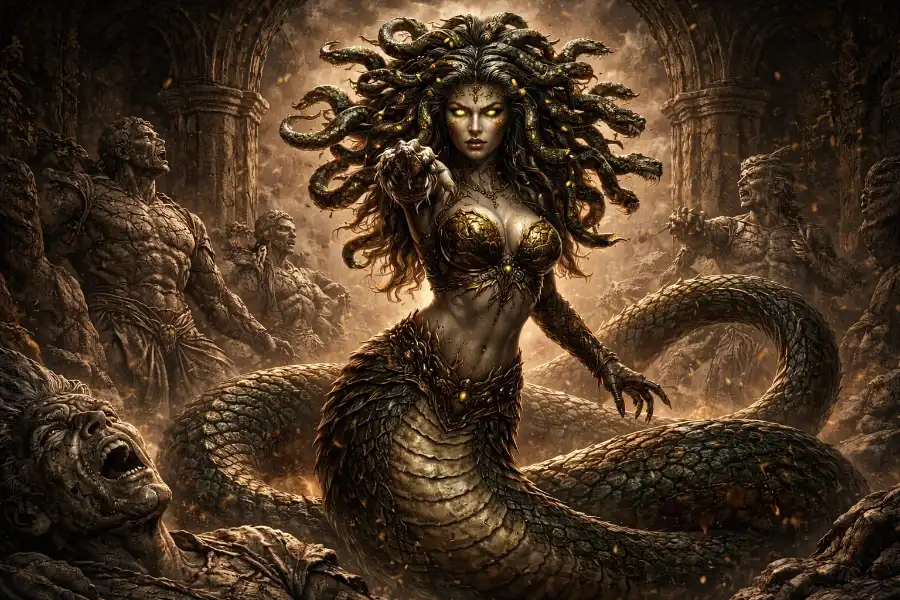
Medusa is one of the most recognizable figures in Greek mythology and the only mortal among the three Gorgon sisters, Medusa, Stheno, and Euryale. However, her story varies considerably between ancient authors. In Hesiod's Theogony, Medusa is simply one of the Gorgons who later bears Pegasus and Chrysaor after her death. The more familiar story-that Medusa was once a beautiful maiden transformed into a monster by Athena after Poseidon violated her in the goddess's temple-comes from the Roman poet Ovid's Metamorphoses, written many centuries later.
Regardless of her origin, Medusa became a terrifying creature whose hair transformed into living serpents and whose gaze turned anyone who looked directly at her into stone. Ancient Greek artists frequently depicted her grotesque appearance not merely to inspire fear but also to serve as an apotropaic symbol-an image believed to ward off evil. Her face, known as the Gorgoneion, appeared on temples, shields, armor, and coins throughout the Greek world.
The hero Perseus ultimately slew Medusa with the help of divine gifts from Athena and Hermes. Rather than looking directly at her, he used the polished surface of his shield as a mirror to avoid her petrifying gaze. According to Hesiod and Apollodorus, when Perseus beheaded Medusa, the winged horse Pegasus and the warrior Chrysaor sprang from her blood, emphasizing Medusa's continuing connection to the divine despite her monstrous form.
Medusa has become one of mythology's most enduring symbols. Ancient Greeks viewed her as both a terrifying monster and a powerful protective figure, while modern scholars often interpret her story as exploring themes of injustice, transformation, fear, and the consequences of divine power. Her tragic evolution from mortal woman to monster continues to inspire literature, art, and popular culture today.
5. Cyclopes: The One-Eyed Giants of Greek Mythology
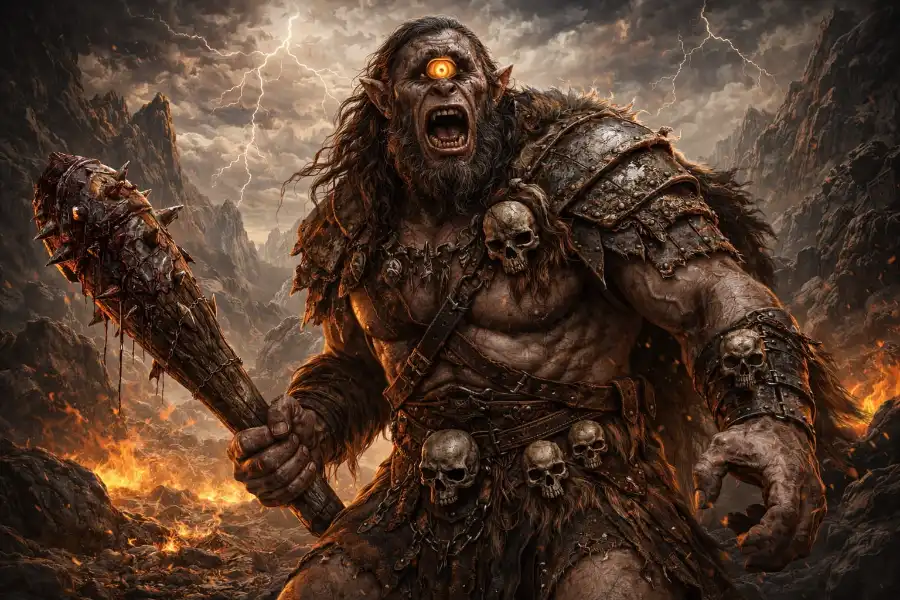
Few creatures from Greek mythology are as famous as the Cyclopes, but ancient authors did not all describe them in the same way. In Hesiod's Theogony, the Cyclopes were three divine craftsmen-Arges, Brontes, and Steropes-born to Uranus and Gaea. Gifted with extraordinary skill, they forged Zeus's thunderbolt, Poseidon's trident, and Hades' helmet of invisibility, weapons that enabled the Olympian gods to overthrow the Titans during the Titanomachy.
The image most familiar today, however, comes from Homer's Odyssey. Homer describes an entirely different race of Cyclopes living in isolation without laws, agriculture, or organized government. The best-known among them is Polyphemus, who trapped Odysseus and his companions inside his cave with the intention of devouring them. Odysseus escaped by blinding the giant with a sharpened olive stake before fleeing beneath the bellies of sheep.
The contrast between Hesiod's and Homer's Cyclopes demonstrates how Greek mythology evolved over time. Hesiod portrayed the Cyclopes as divine artisans whose craftsmanship helped establish the rule of the Olympian gods, while Homer transformed them into symbols of lawlessness and barbarism. Polyphemus' inability to respect the sacred Greek custom of hospitality (xenia) made him the complete opposite of civilized society and reinforced one of the Odyssey's central themes.
The enduring popularity of Homer's Cyclopes ensured that later literature, art, and modern fantasy largely adopted his interpretation rather than Hesiod's. Today, the word "Cyclops" almost always evokes the image of a gigantic, one-eyed monster, even though the earliest surviving Greek tradition presents them as master craftsmen rather than savage beasts.
Note: The word Cyclops comes from the Greek Kyklōps, meaning "round-eyed" or "circle-eyed." Although they are remembered primarily as monsters, the earliest literary tradition associates them with creation and craftsmanship rather than destruction.
6. The Minotaur: Bull-Headed Beast of the Labyrinth
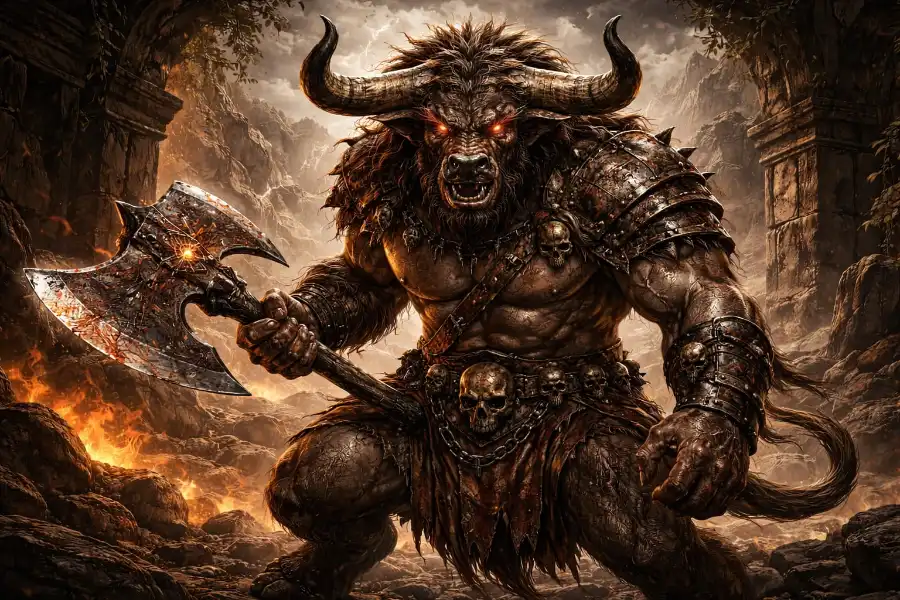
The Minotaur is one of the best-known monsters of Greek mythology, depicted as a creature with the head of a bull and the body of a man. According to Apollodorus' Bibliotheca and later Greek traditions, the monster lived within the famous Labyrinth beneath the palace of King Minos on Crete, where it fed upon human sacrifices sent from Athens.
The Minotaur's origin begins with King Minos, who asked Poseidon to send him a magnificent white bull as a sign of divine approval. Although Poseidon granted his request, Minos refused to sacrifice the animal as promised, choosing instead to keep it for himself. In punishment, Poseidon caused Minos' wife, Pasiphaë, to fall passionately in love with the bull. With the help of the master craftsman Daedalus, she concealed herself inside a wooden cow, resulting in the birth of the Minotaur.
Ashamed of the monstrous offspring yet unable to kill it, Minos ordered Daedalus to construct the Labyrinth-a vast maze so intricate that no one who entered could easily escape. To satisfy the creature's appetite, Athens was compelled to send seven young men and seven young women as tribute every nine years, a punishment imposed after the death of Minos' son, Androgeos.
The hero Theseus eventually volunteered to end this cycle of sacrifice. With the assistance of Princess Ariadne, who fell in love with him, he entered the Labyrinth carrying both a sword and a ball of thread. After slaying the Minotaur, Theseus followed Ariadne's thread back through the maze, escaping safely and freeing Athens from its tribute.
The Minotaur has long been interpreted as more than a terrifying monster. Many historians and literary scholars view it as a symbol of humanity's animal instincts, while the Labyrinth represents confusion, fear, and the difficult journey toward self-discovery. Theseus' victory therefore symbolizes not only the defeat of a beast but also the triumph of courage, intelligence, and reason over brutality and chaos.
7. The Kraken: Legendary Norse Sea Monster
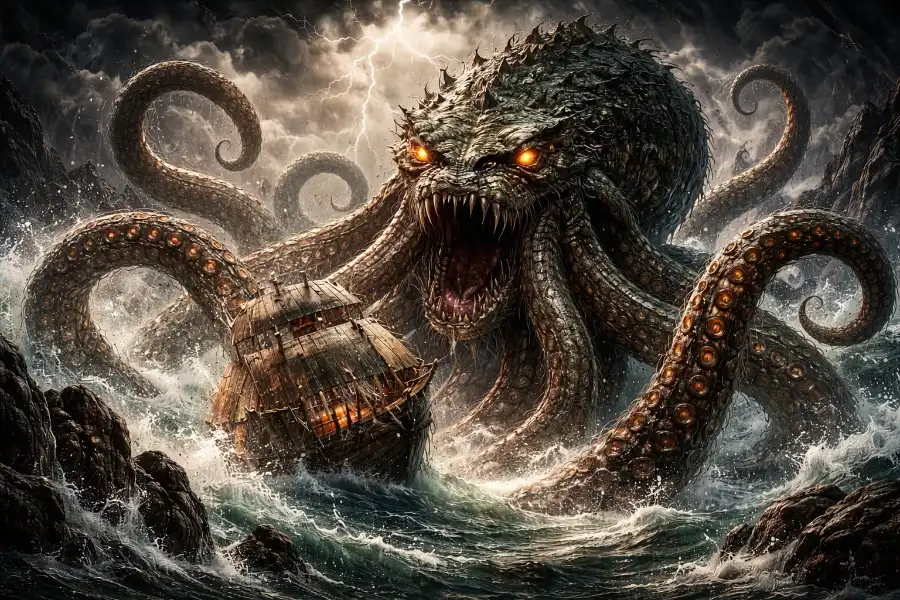
The Kraken is a legendary sea monster from Scandinavian folklore, most commonly associated with the waters surrounding Norway, Iceland, and Greenland. Described as an enormous squid- or octopus-like creature, the Kraken became one of the most feared monsters of northern European seafaring traditions. Early written descriptions appear in the works of the Norwegian bishop Erik Pontoppidan during the eighteenth century, although the legends themselves are considerably older and were passed down through oral tradition.
According to these stories, the Kraken was so immense that sailors occasionally mistook its enormous body for a small island. When the creature submerged beneath the sea, it created powerful whirlpools capable of dragging entire ships and their crews beneath the waves. Such tales reflected the dangers faced by medieval sailors navigating the unpredictable waters of the North Atlantic.
Modern historians believe that the Kraken legend may have been inspired by encounters with giant squids (Architeuthis dux) and colossal squids, animals that can grow to extraordinary lengths yet spend most of their lives in the deep ocean. Because these elusive creatures were rarely observed alive, occasional sightings or stranded specimens likely gave rise to increasingly dramatic stories passed between generations of sailors.
Unlike many monsters in Greek mythology that served as opponents for heroes, the Kraken symbolized humanity's fear of the vast and largely unexplored ocean. For seafaring cultures, the sea represented both prosperity and constant danger, and creatures like the Kraken embodied the unpredictable forces of nature that could destroy even the strongest ships without warning. The legend remains one of the best examples of how real encounters with unfamiliar animals can evolve into enduring myths.
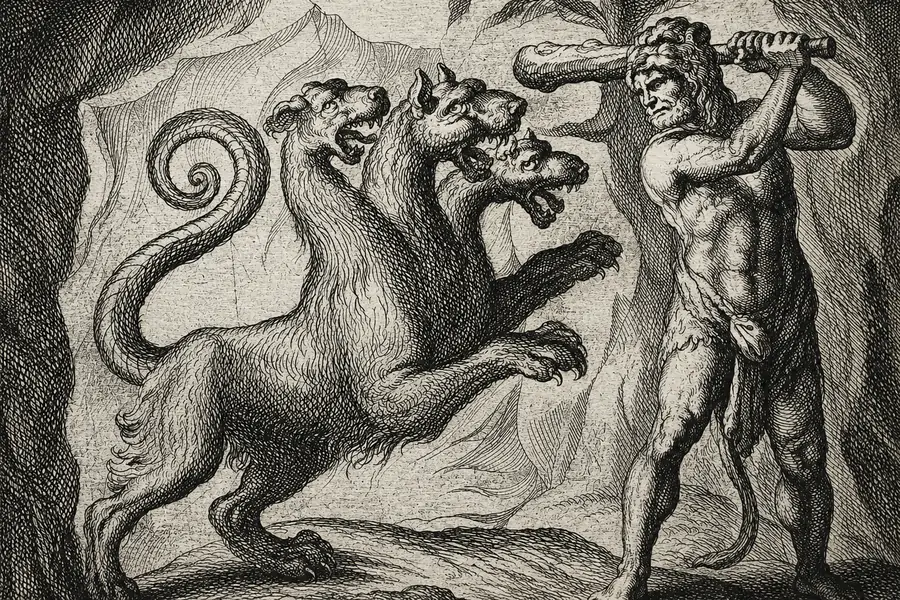
8. Cerberus: Three-Headed Guardian of the Underworld
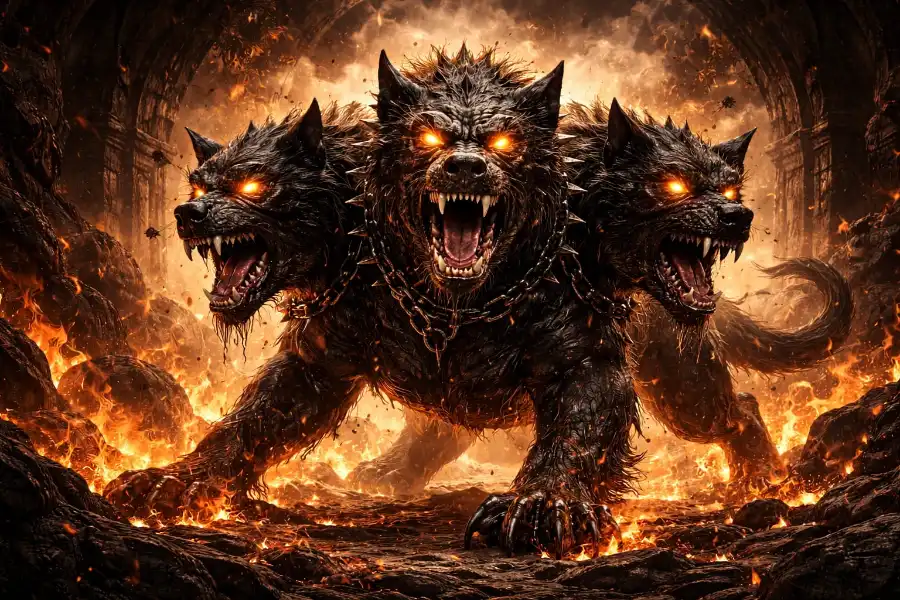
According to Greek mythology, Cerberus was the fearsome watchdog of the Underworld, preventing the dead from escaping while stopping the living from entering without permission. Hesiod's Theogony identifies him as the offspring of the monstrous pair Typhon and Echidna, making him the brother of the Hydra, Chimera, Orthrus, and several other legendary beasts. His appearance reflected his terrifying role, combining the heads of a savage hound with serpents that emphasized his connection to death and the underworld.
Although Cerberus is most commonly depicted with three heads, ancient authors disagreed about his appearance. Hesiod describes him as possessing fifty heads, while later writers, including Pindar, exaggerated this number even further. Over time, artists and storytellers settled on the now-famous three-headed form because it was easier to represent visually and became firmly established in Greek and Roman art.
Cerberus appears in several famous Greek myths. During his twelfth and final labor, Heracles descended into the Underworld and captured Cerberus without using weapons, demonstrating his extraordinary strength while respecting Hades' conditions. In Homer's Odyssey, Odysseus avoids encountering Cerberus during his journey to the realm of the dead, while Virgil's Aeneid recounts how the Sibyl lulled the beast to sleep with a drugged honey cake so that Aeneas could safely pass.
Beyond serving as a terrifying monster, Cerberus symbolized the boundary between life and death. His duty was not to punish the dead but to preserve the natural order by ensuring that the worlds of the living and the deceased remained separate. For the ancient Greeks, Cerberus represented the inescapable reality of mortality and the belief that every soul had its proper place within the cosmic order.
Note: While modern popular culture almost always depicts Cerberus with three heads, ancient literary sources describe him quite differently. The familiar three-headed version became dominant largely through Greek and Roman artistic tradition rather than unanimous agreement among ancient writers.
9. The Sphinx: Riddling Guardian of Ancient Egypt and Greece
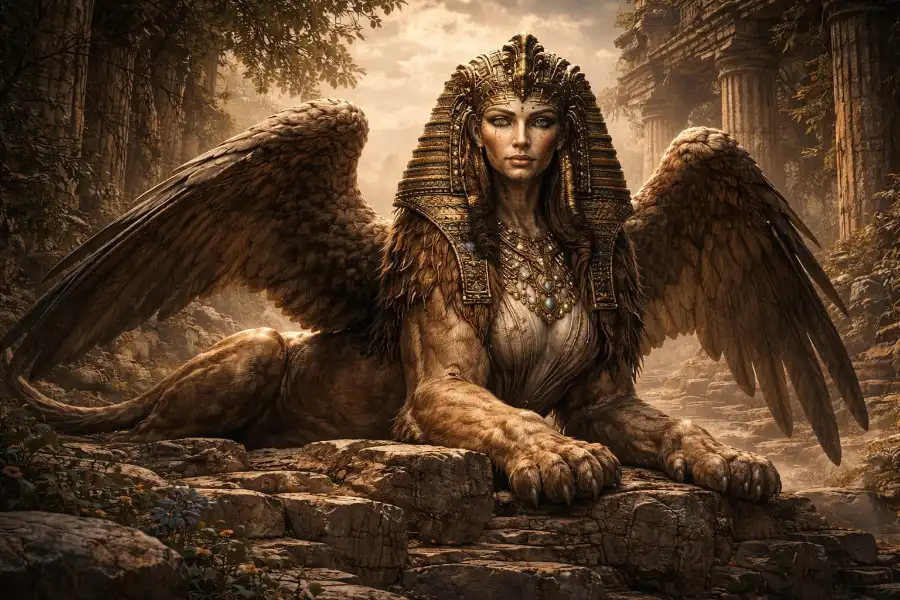
The Sphinx is one of the few mythological creatures shared by multiple ancient civilizations, although its role differs significantly between Egyptian and Greek traditions. In Egypt, the sphinx was usually depicted as a male figure with the body of a lion and the head of a pharaoh, symbolizing royal authority, divine protection, and wisdom. The most famous example is the Great Sphinx of Giza, which is widely believed to represent the Pharaoh Khafre.
Greek mythology transformed the Sphinx into a far more sinister creature. According to Apollodorus and Sophocles' Oedipus Tyrannus, she possessed the head of a woman, the body of a lion, the wings of an eagle, and, in some traditions, the tail of a serpent. Sent as a divine punishment upon the city of Thebes, she challenged every traveler with a famous riddle:
"Which creature walks on four legs in the morning, two at noon, and three in the evening?"
Those who failed to answer correctly were killed and devoured. The hero Oedipus solved the riddle by answering "man," who crawls as an infant, walks upright as an adult, and relies upon a staff in old age. Defeated for the first time, the Sphinx destroyed herself, freeing Thebes from her reign of terror.
The Greek Sphinx symbolized more than physical danger. She represented the idea that wisdom and intelligence were often more powerful than brute strength. Unlike many mythical monsters who were overcome through combat, the Sphinx was defeated through reason, reinforcing one of the central values of Greek philosophy and heroic tradition.
10. Mermaids and Sirens: Deadly Aquatic Enchanters

Although modern popular culture often treats mermaids and sirens as the same creature, they originated from entirely different traditions. Mermaids appear in the folklore of many cultures as aquatic beings with the upper body of a woman and the tail of a fish, while the Sirens of Greek mythology were originally portrayed as part woman and part bird. Over the centuries, medieval European art gradually merged these two traditions, leading to the familiar image of the beautiful fish-tailed siren that remains popular today.
Mermaids are found in legends from Europe, Africa, Asia, and the Middle East. Depending on the culture, they could be benevolent, protective spirits or dangerous beings who lured sailors to their deaths. Their stories often reflected the unpredictable nature of the sea, where beauty and danger existed side by side.
The Sirens, however, belong specifically to Greek mythology. In Homer's Odyssey, they lived on a rocky island where their enchanting songs tempted passing sailors to steer their ships onto hidden reefs. Forewarned by the sorceress Circe, Odysseus ordered his crew to block their ears with beeswax while he had himself tied to the mast so that he could hear the irresistible music without steering the ship toward destruction.
Both mermaids and sirens came to symbolize temptation and the dangers of surrendering to desire. Ancient storytellers used these legendary beings to illustrate how appearances could be deceptive and how wisdom, restraint, and self-control were often the only defenses against hidden dangers. Their enduring popularity demonstrates the universal human fascination with the mysteries of the sea and the unknown worlds believed to exist beneath its surface.
11. The Lernaean Hydra: Multi-Headed Serpent of Greek Legend
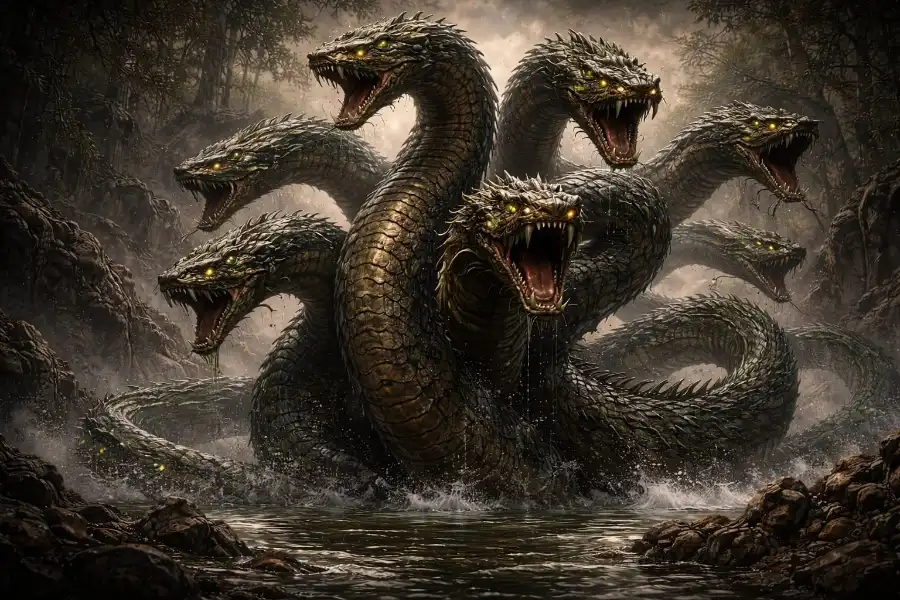
The Lernaean Hydra was one of the most formidable monsters in Greek mythology. According to Hesiod's Theogony, it was the offspring of the monstrous pair Typhon and Echidna and lived in the marshes of Lerna in the Peloponnese. The Hydra was said to possess numerous heads-most later traditions describe nine-and poisonous blood and breath capable of killing both humans and animals.
The Hydra's most terrifying ability was its regenerative power. Whenever one of its heads was severed, two more would grow in its place, making the creature appear almost impossible to defeat. One of its heads was also believed to be immortal, adding to its fearsome reputation. This ability transformed the Hydra from an ordinary monster into a symbol of problems that become worse when confronted without the right strategy.
The Hydra was slain by the hero Heracles during his second labor. Realizing that brute force alone was ineffective, Heracles enlisted the help of his nephew Iolaus, who cauterized each neck with a burning torch immediately after a head was removed, preventing new ones from growing. The immortal head was buried beneath a massive rock, permanently neutralizing the creature. According to Apollodorus' Bibliotheca, Heracles later dipped his arrows in the Hydra's poisonous blood, making them among the deadliest weapons in Greek mythology.
The Hydra came to symbolize challenges that multiply when approached carelessly. Even today, the phrase "cutting off one head only for two more to appear" is commonly used to describe persistent problems that require intelligence rather than force to overcome.
12. Kappas: Water Demons of Japanese Folklore
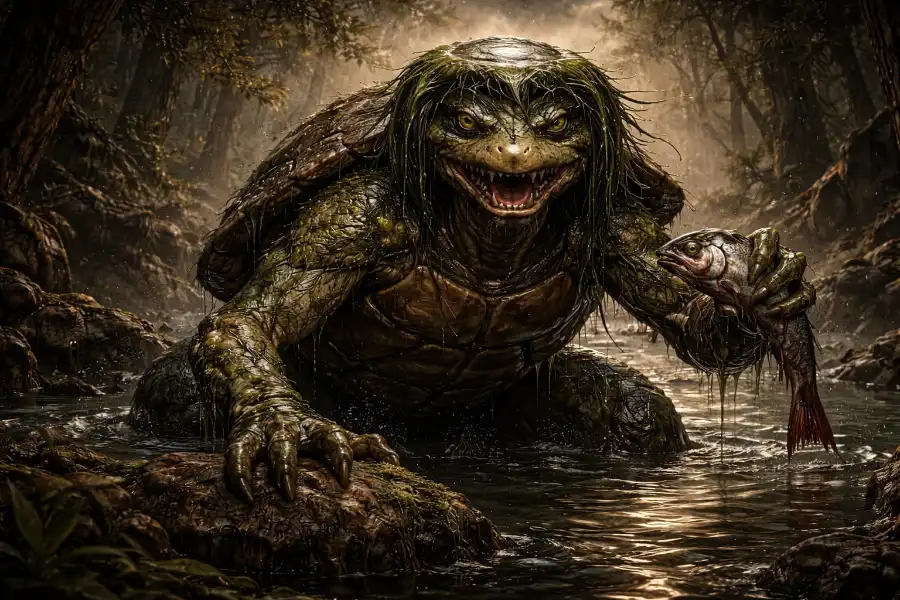
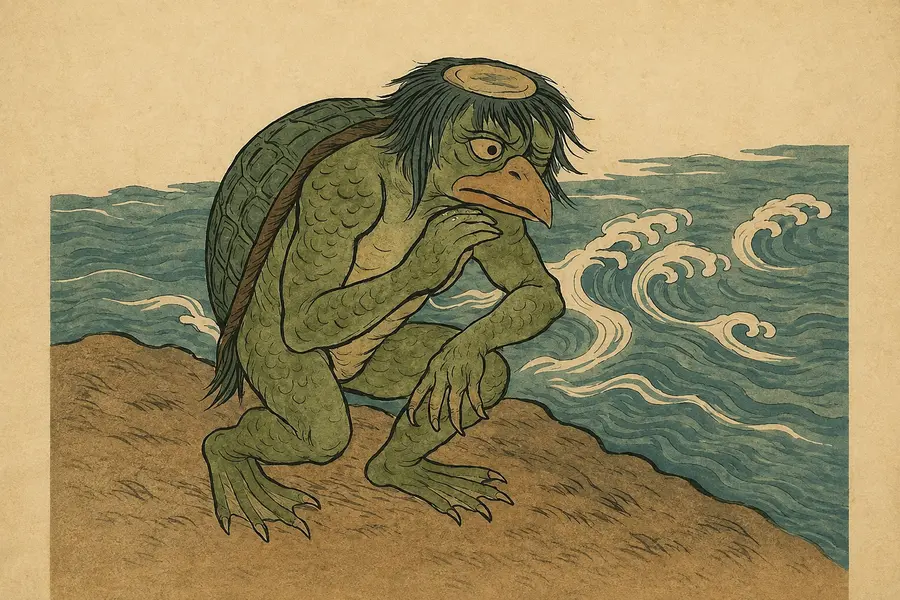
The kappa is one of the best-known supernatural beings in Japanese folklore, appearing extensively in the Kojiki, regional legends, and Edo-period folklore. Its name means "river child," and it is traditionally described as a small humanoid creature with reptilian skin, a turtle's shell, webbed hands, and a shallow dish of water on top of its head that contains its life force.
Kappas were believed to inhabit rivers, ponds, and lakes throughout Japan. Although often portrayed as mischievous tricksters, they could also be extremely dangerous, dragging unsuspecting people and livestock beneath the water. Parents frequently used stories about kappas to discourage children from playing too close to rivers, giving the legends an important practical purpose.
Despite their fearsome reputation, kappas were also known for their strict sense of etiquette. According to Japanese folklore, bowing politely to a kappa would often cause the water in the bowl on its head to spill, depriving it of its supernatural strength. If someone helped refill the bowl, the grateful kappa would become a loyal ally and faithfully repay the kindness.
Unlike many monsters that represent pure evil, the kappa reflects the dual nature of Japanese folklore. It could be both dangerous and helpful depending on how humans treated it, reinforcing cultural values such as politeness, respect, and reciprocity.
13. Lamia and Echidna: Serpentine Monsters and Mother of All Beasts
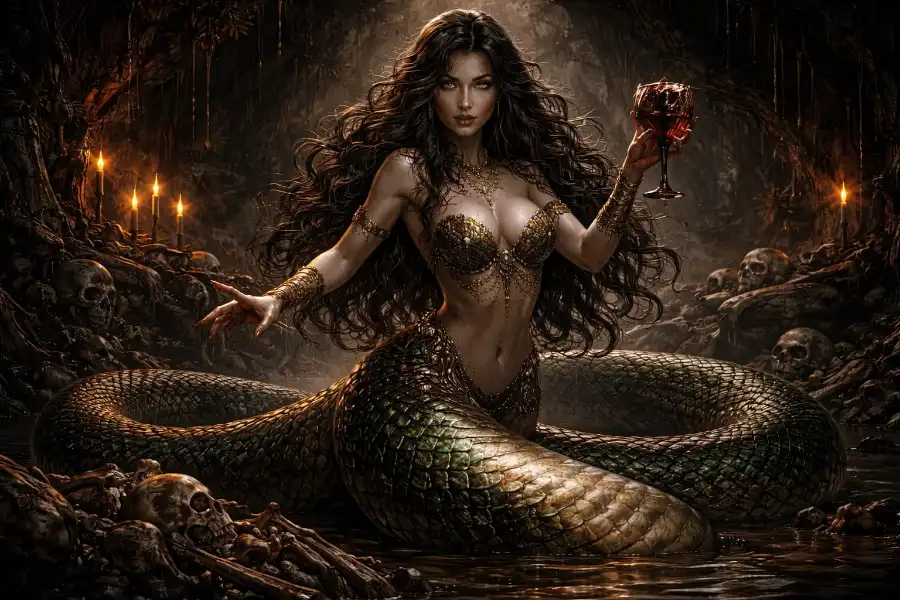
According to later Greek mythology, Lamia was a beautiful queen of Libya who became one of Zeus's lovers. Consumed by jealousy, Hera either killed or caused the death of Lamia's children, driving her into madness and transforming her into a child-devouring monster. The most familiar version of this story comes from later Greek and Roman authors, where Lamia became a terrifying figure used to frighten children into obedience.
Lamia was often described as having the upper body of a beautiful woman and the lower body of a serpent, although ancient depictions varied considerably. Some traditions claimed she could magically disguise herself as a beautiful woman to lure unsuspecting victims, while others emphasized her sleepless existence after Hera cursed her with the inability to close her eyes. Zeus is sometimes said to have granted her the ability to remove her eyes temporarily so she could finally rest.
Over time, Lamia evolved into a symbol of grief, obsession, and destructive vengeance. Ancient writers frequently used her story to illustrate how overwhelming loss and divine punishment could transform even a mortal queen into a monster feared by generations.
Another famous serpentine figure in Greek mythology was Echidna, the wife of the monstrous Typhon. Hesiod's Theogony describes her as half beautiful maiden and half enormous serpent. Unlike Lamia, Echidna was not known primarily for attacking humans herself. Instead, she became famous as the mother of many of Greek mythology's greatest monsters, including Cerberus, the Lernaean Hydra, Chimera, Orthrus, the Nemean Lion, and the Sphinx.
Together, Typhon and Echidna formed the mythical ancestry of many creatures that later challenged heroes such as Heracles, Perseus, and Oedipus. Their offspring represented the forces of chaos that repeatedly threatened the established order of the world, making Echidna one of the most influential figures in Greek mythology despite her relatively limited role in surviving myths.
14. Dragons: The Most Famous Mythical Creatures Across All Cultures
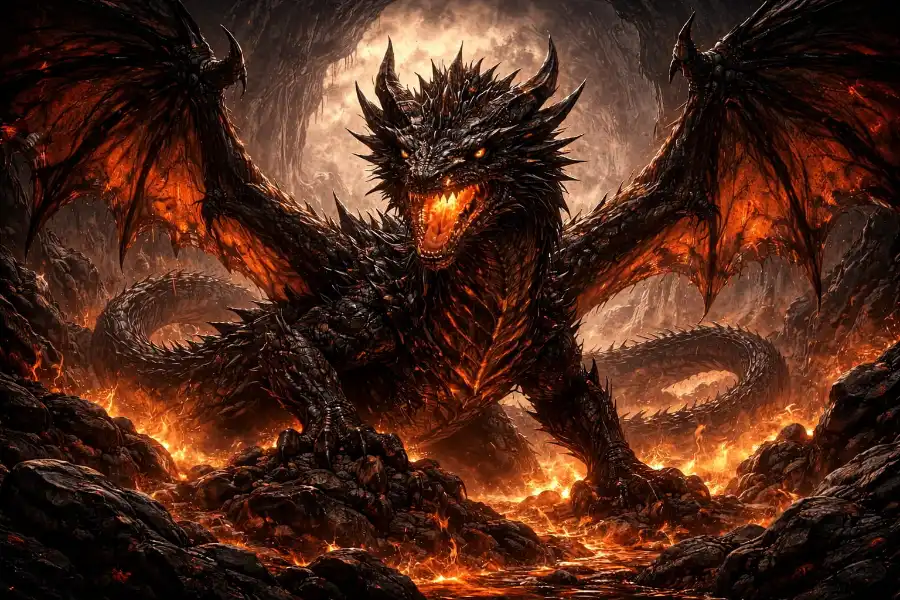
Dragons are among the oldest and most widespread mythological creatures, appearing in the legends of Europe, Asia, the Middle East, and the Americas. Despite sharing a common name, dragons differ dramatically between cultures. In Western mythology, dragons are typically depicted as enormous winged reptiles capable of breathing fire, hoarding treasure, and devastating entire kingdoms. In Eastern traditions, particularly in China, Korea, and Japan, dragons are usually long, serpentine creatures associated with rivers, rainfall, wisdom, and imperial authority.
Western dragons frequently appear as adversaries that heroes must overcome. Greek mythology includes the dragon Ladon, guardian of the golden apples of the Hesperides, while Norse mythology tells of Fafnir, a dwarf transformed into a dragon through greed. Medieval European legends later expanded the image of dragons as embodiments of chaos, destruction, and unchecked power.
Eastern dragons occupy a very different role. Rather than representing evil, they are often regarded as wise and benevolent beings who control water, weather, and agricultural fertility. Chinese emperors even adopted the dragon as a symbol of imperial legitimacy and divine authority, illustrating the creature's positive cultural significance.
The striking contrast between Eastern and Western dragons reflects the different values of the societies that created them. In Europe, dragons often symbolized dangerous wilderness, greed, and forces that heroes were destined to conquer. Across much of East Asia, dragons instead represented harmony between humanity and nature, prosperity, and cosmic balance.
15. Harpies: Winged Storm Spirits and Swift Snatchers
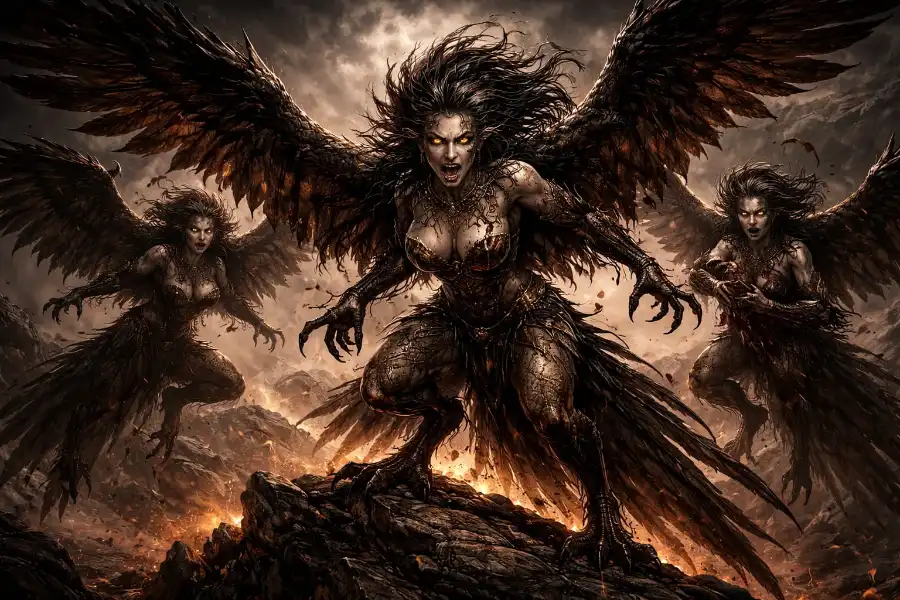
The harpies originated in Greek mythology as the personifications of storm winds. Early Greek poets, including Hesiod, portrayed them as swift, winged spirits rather than hideous monsters. Their name derives from the Greek word meaning "snatchers," reflecting their role as supernatural beings that carried people away with incredible speed.
Over time, the image of the harpies evolved. Later Greek and Roman writers transformed them into frightening creatures with the bodies of birds and the faces of women, infamous for stealing food, spreading filth, and tormenting mortals. One of their best-known appearances occurs in Apollonius of Rhodes' Argonautica, where they relentlessly harass the blind prophet Phineus by contaminating every meal before he can eat.
The Roman poet Virgil also included the harpies in the Aeneid, where they prophesy future hardships awaiting Aeneas and his companions. Medieval writers later adopted the creatures as symbols of divine punishment, greed, and insatiable hunger, a portrayal that influenced Dante's depiction of the harpies in the Inferno.
The transformation of the harpies from wind spirits into terrifying monsters illustrates how mythology continually evolved as stories passed between generations. They eventually came to symbolize relentless punishment and the destructive consequences of greed and moral corruption.
16. Typhon: Father of All Monsters in Greek Mythology
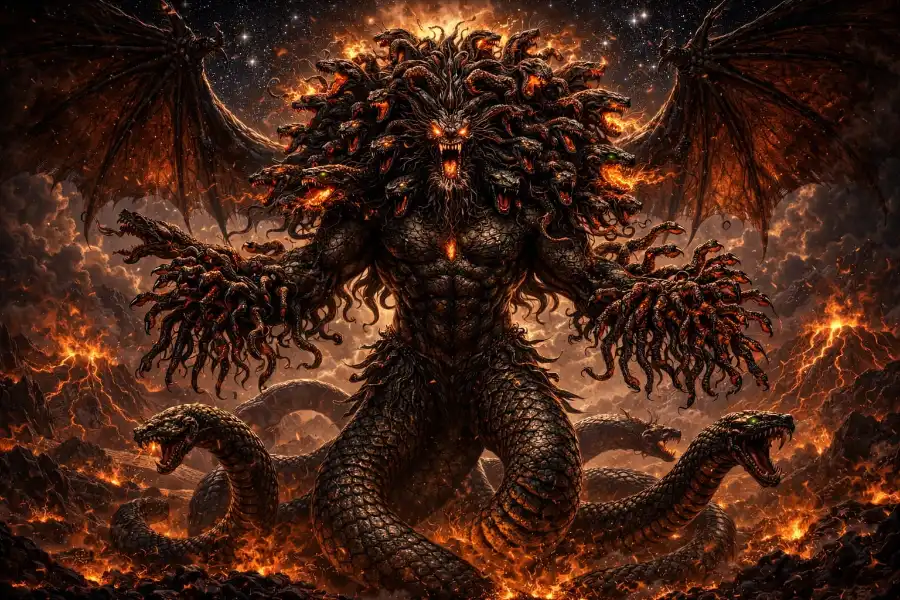
Typhon was the most fearsome monster in Greek mythology and one of the few beings powerful enough to challenge Zeus himself for control of the cosmos. According to Hesiod's Theogony, he was born to Gaia and Tartarus after the defeat of the Titans, representing the final great threat to the rule of the Olympian gods.
Ancient descriptions portray Typhon as a creature of unimaginable size and power. His upper body resembled that of a giant man, while enormous serpents formed his lower body. Hundreds of dragon and snake heads rose from his shoulders, breathing fire and producing terrifying voices that could imitate both wild animals and human speech. His immense wings were said to darken the sky, while flames flashed constantly from his eyes.
Typhon's greatest battle came when he challenged Zeus for supremacy. According to Hesiod and Apollodorus, the conflict shook the heavens and the earth as Zeus unleashed thunderbolts against the monstrous giant. After a prolonged struggle, Typhon was finally defeated and imprisoned beneath Mount Etna in Sicily, where later Greeks believed his movements caused earthquakes and volcanic eruptions.
Typhon's legacy extended far beyond his own defeat. Together with Echidna, he fathered many of Greek mythology's most famous monsters, including Cerberus, the Hydra, Chimera, Orthrus, and the Sphinx. Through his descendants, Typhon continued to threaten heroes and gods long after his imprisonment.
More than any other creature in Greek mythology, Typhon embodied primordial chaos. His defeat symbolized the triumph of cosmic order over destructive natural forces, reinforcing one of the central themes of Greek mythology: the establishment of order from chaos through the rule of Zeus and the Olympian gods.
17. Phoenix: The Immortal Fire Bird of Rebirth and Renewal
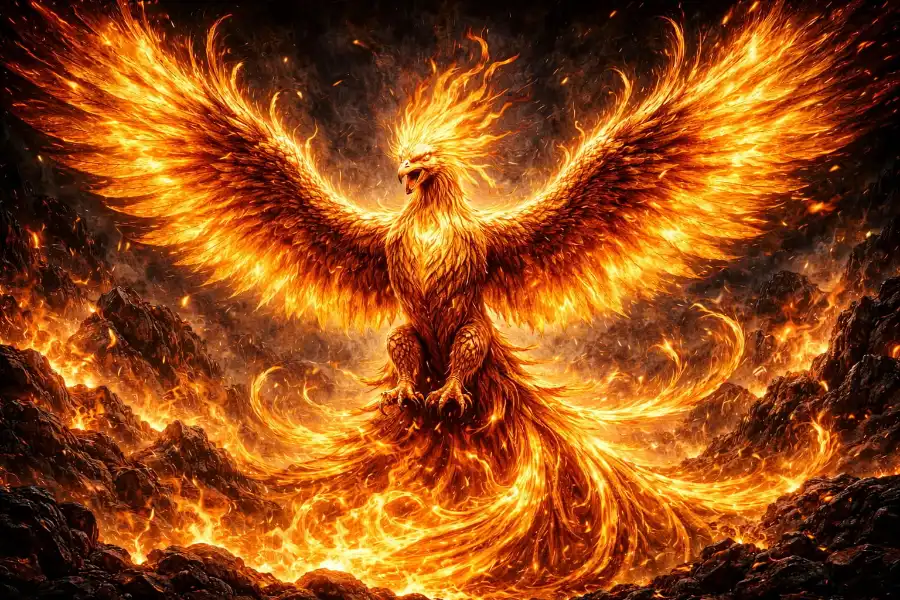
The Phoenix is one of the most enduring symbols of rebirth in world mythology. Although it is best known from Greek and Roman tradition, its origins likely lie in ancient Egypt, where the sacred Bennu bird was associated with the sun god Ra, creation, and the cyclical flooding of the Nile. Greek historians such as Herodotus later described the Phoenix, adapting the legend into a bird that periodically renewed its life through fire.
According to later Greek and Roman writers, only one Phoenix existed at any given time. After living for several centuries-often said to be around 500 years-it built a nest from fragrant herbs such as myrrh and frankincense. As its life came to an end, the bird was consumed by flames, only for a new Phoenix to emerge from the ashes, beginning the cycle once again.
The Phoenix became a powerful symbol of immortality, renewal, and hope. Early Christians later adopted the bird as a symbol of resurrection, while writers and artists across cultures used it to represent perseverance after hardship. Few mythological creatures have had such a lasting influence on religion, literature, and popular culture.
18. The Furies (Erinyes): Goddesses of Vengeance and Retribution
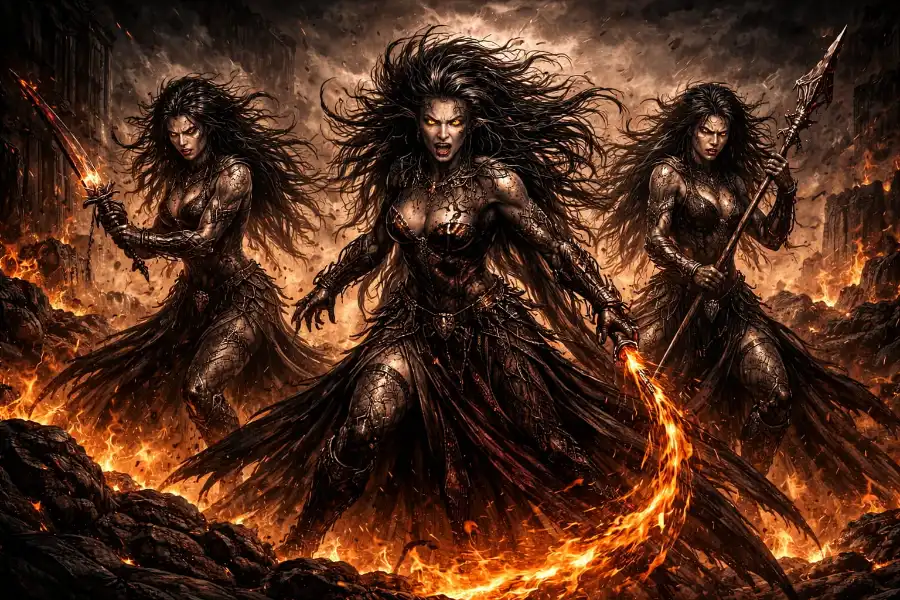
Also known as the Erinyes, the Furies were ancient Greek goddesses of vengeance who punished those guilty of grave moral crimes, particularly murder within one's own family, perjury, and violations of sacred law. Hesiod's Theogony states that they were born from the blood of Uranus after he was castrated by Cronus, making them among the oldest divine beings in Greek mythology.
The three best-known Furies-Alecto ("unceasing anger"), Megaera ("jealous rage"), and Tisiphone ("avenger of murder")-relentlessly pursued wrongdoers until justice had been served. Rather than acting out of cruelty, they represented the ancient Greek belief that certain crimes disrupted the moral order of the universe and demanded divine punishment.
Their most famous appearance occurs in Aeschylus' Oresteia, where they relentlessly pursue Orestes after he kills his mother, Clytemnestra, to avenge his father's murder. The trilogy concludes with Athena establishing a formal court of law to judge Orestes, after which the Furies are transformed into the Eumenides ("Kindly Ones"), symbolizing the transition from personal vengeance to organized justice.
The evolution of the Furies reflects one of the most important developments in Greek thought: the replacement of endless cycles of revenge with lawful justice. As a result, they symbolize not merely punishment but the necessity of accountability for maintaining social and moral order.
19. Scylla and Charybdis: The Twin Terrors of the Strait
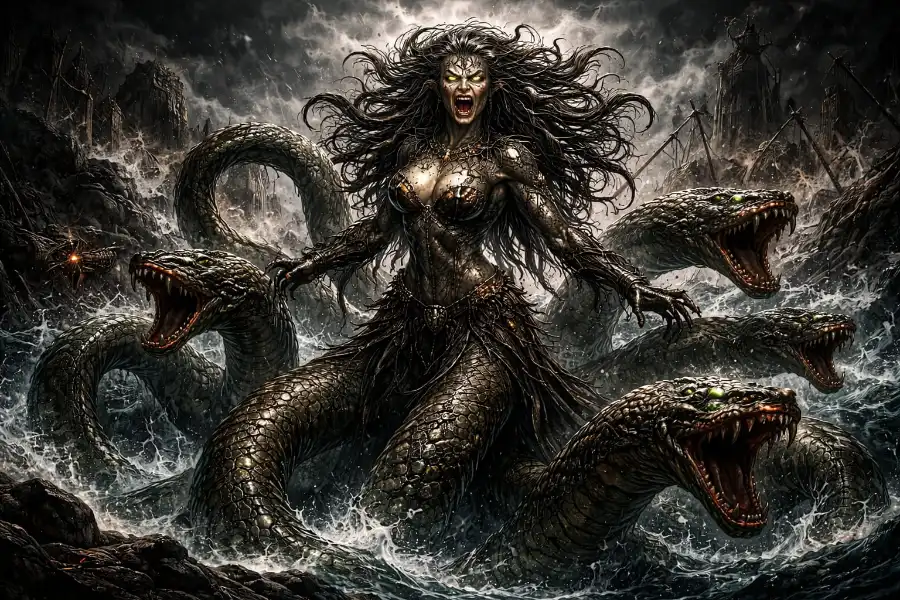
Scylla and Charybdis were two legendary sea monsters that guarded opposite sides of a narrow strait, traditionally identified with the Strait of Messina between Sicily and mainland Italy. Their story appears most famously in Homer's Odyssey, where Odysseus must choose between two deadly dangers rather than avoid both entirely.
Scylla was described as a horrifying creature with six long necks, each ending in a ravenous head armed with rows of sharp teeth. Hidden within a cave overlooking the sea, she snatched sailors directly from passing ships. Charybdis, on the opposite shore, was less a physical monster than a supernatural whirlpool that swallowed vast quantities of seawater before violently expelling it again, threatening to destroy any vessel caught in its current.
Following the advice of the sorceress Circe, Odysseus deliberately sailed closer to Scylla, accepting the loss of six men rather than risking the destruction of his entire ship by Charybdis. The episode highlights one of the central themes of the Odyssey: wise leadership sometimes requires choosing the lesser of two unavoidable evils.
Today, the expression "between Scylla and Charybdis" remains a metaphor for facing two equally dangerous alternatives. Like many myths from the Odyssey, their story continues to influence literature, politics, and everyday language thousands of years after it was first recorded.
20. Banshees: Wailing Death Omens from Celtic Folklore
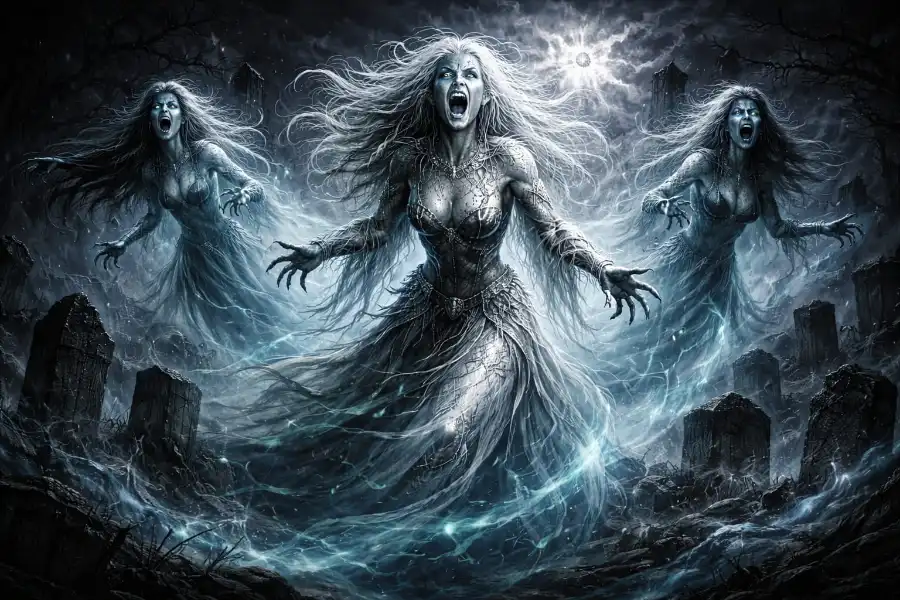
The banshee (Bean Sí in Irish, meaning "woman of the fairy mound") is one of the best-known supernatural beings in Irish and Scottish folklore. Unlike many monsters in mythology, the banshee is not inherently evil. Instead, she serves as a supernatural messenger whose mournful cry warns that a death within a family is near.
Traditional accounts describe the banshee in many different forms. She may appear as a beautiful young woman, a grieving mother, or an elderly crone dressed in white or grey. Her haunting wail, known as caoineadh (keening), reflects the ancient Irish tradition of professional mourners who lamented the dead during funeral ceremonies.
According to Celtic folklore, certain ancient Irish families-particularly those with long Gaelic ancestry-were believed to have their own banshee who watched over the household across generations. Rather than causing death herself, she announced its approach, giving families time to prepare for the loss of a loved one.
The banshee represents the close relationship between the living and the supernatural in Celtic tradition. Unlike many creatures on this list, she is remembered less as a monster than as a tragic and compassionate figure whose sorrow reflects the inevitability of death. Her legend illustrates how mythology often sought not only to inspire fear but also to help people understand grief, mortality, and remembrance.
Why Mythological Monsters Appeared in So Many Ancient Cultures
Although mythological monsters differ greatly between civilizations, they often served remarkably similar purposes. Ancient peoples used these creatures to explain the unknown, from violent storms and dangerous predators to disease, death, and other natural phenomena that science could not yet explain. Monsters also embodied universal human fears, allowing societies to transform abstract dangers into memorable stories that could be passed from one generation to the next.
Many monsters also carried important moral and cultural lessons. Greek myths frequently portrayed them as obstacles that heroes had to overcome through courage, intelligence, or self-discipline rather than strength alone. In other traditions, legendary creatures warned against greed, arrogance, betrayal, or disrespect toward the gods. By confronting these monsters, heroes symbolized the triumph of order over chaos, civilization over savagery, and wisdom over ignorance.
Even today, these legendary beings continue to inspire books, films, video games, and popular culture around the world. Their enduring appeal lies not only in their terrifying appearances but also in the timeless human emotions and ideas they represent. Whether viewed as cautionary tales, religious symbols, or imaginative storytelling, mythological monsters remain some of humanity's most powerful and enduring creations.
References and Further Reading
Primary Literary Sources
- Apollodorus - Bibliotheca (The Library)
- Aeschylus - Oresteia
- Apollonius of Rhodes - Argonautica
- Hesiod - Theogony
- Herodotus - Histories
- Homer - Iliad
- Homer - Odyssey
- Ovid - Metamorphoses
- Pausanias - Description of Greece
- Pindar - Odes
- Pliny the Elder - Natural History
- Snorri Sturluson - Prose Edda
- Poetic Edda
- Sophocles - Oedipus Tyrannus (Oedipus Rex)
- Virgil - Aeneid
- Kojiki
- Nihon Shoki
Modern Scholarship
- Timothy Gantz - Early Greek Myth: A Guide to Literary and Artistic Sources
- Richard Buxton - The Complete World of Greek Mythology
- Jenny March - The Penguin Book of Classical Myths
- Edith Hamilton - Mythology: Timeless Tales of Gods and Heroes
- Robert Graves - The Greek Myths
- Robin Hard - The Routledge Handbook of Greek Mythology
- Walter Burkert - Greek Religion
- John Boardman - The Oxford History of the Classical World
- Neil Philip - The Illustrated Book of Myths
- Joseph Campbell - The Hero with a Thousand Faces
Related Articles

Frequently Asked Questions
What is Medusa's origin story and why does she turn people to stone?
Medusa was originally beautiful until Poseidon raped her in Athena's temple. Rather than punishing Poseidon, Athena transformed Medusa into a creature whose gaze turned anyone to stone. Her hair became venomous serpents. Perseus slayed her using his polished shield as mirror, beheading her. From her blood sprang Pegasus and Chrysaor. Athena mounted her head on her shield.
What are the most famous dragons in mythology and what makes them different?
Dragons differ fundamentally between Eastern and Western traditions. Western dragons (European/Greek) are massive, winged, fire-breathing reptiles hoarding treasure, portrayed as evil forces heroes must slay. Famous ones include Norse Fafnir and Lernaean Hydra. Eastern dragons (Chinese/Japanese) are long, serpentine creatures without wings but can fly, possessing high intelligence. Generally benevolent, associated with water and fortune. These differences reflect divergent worldviews: Western dragons represent chaos; Eastern dragons embody cosmic harmony.
How did heroes defeat the Minotaur and what was the labyrinth?
Theseus defeated the Minotaur with Princess Ariadne's help. The half-man, half-bull monster was imprisoned in Daedalus's elaborate labyrinth-an impossible maze beneath Minos's palace. Athens sent seven youths as tribute every nine years. Theseus volunteered, and Ariadne provided a sword and thread. He tied the thread at the entrance, unraveled it while venturing deeper, killed the Minotaur, then followed the thread back to escape.
What is the Kraken and is it based on a real creature?
The Kraken is a legendary sea monster from Scandinavian folklore, described as a massive cephalopod in Norwegian/Icelandic waters. So enormous it could be mistaken for an island, with tentacles pulling ships underwater. The legend likely originated from encounters with giant squids (Architeuthis dux), growing up to 40-43 feet. These deep-ocean creatures were rarely seen until modern times. Dead squids occasionally surfaced, fueling stories. Modern oceanography confirmed giant squids exist.
Why was Cerberus guarding the underworld and how was it defeated?
Cerberus, Hades's three-headed hound, guarded the underworld entrance ensuring the dead stayed and living couldn't enter without permission. Offspring of Echidna and Typhon, his three heads represented past/present/future. He welcomed the dead but attacked those trying to leave. Few heroes succeeded: Orpheus lulled him to sleep with lyre music; Heracles captured him without weapons as his twelfth labor; Aeneas drugged him with honey cake.
What made Typhon the most dangerous monster in Greek mythology?
Typhon earned his title because he was a god himself (son of Gaia and Tartarus) with incomprehensible power. His head brushed stars; arms stretched horizon to horizon; lower body was coiled viper tails; hundreds of serpents erupted from hands; one hundred snake/dragon heads spewed fire; wings blotted sun. He challenged Zeus for cosmic control. So powerful, Olympian gods initially fled. Eventually defeated by Zeus's thunderbolts, imprisoned beneath Mount Etna where his rage causes volcanic eruptions. Fathered Cerberus, Hydra, Chimera.
Add Comment