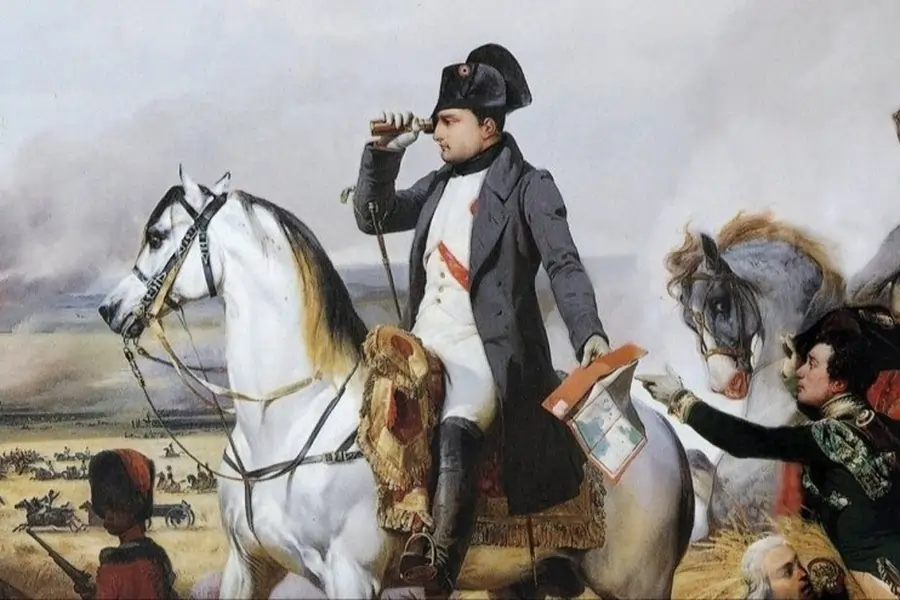
Battles are not won through numbers alone. Great generals across history have often proved that superior tactics can overcome any obstacle. From Hannibal's famous double envelopment at Cannae to the rapid armored offensives of Blitzkrieg, military success has frequently depended on a commander's ability to maneuver forces in unexpected ways. These battlefield maneuvers shaped empires, destroyed kingdoms, and influenced military doctrine for centuries. Understanding how these tactics worked provides valuable insight into the skill and intuition of legendary commanders. This article explores ten military maneuvers that changed history, examining how they worked, where they were used, and why they proved so effective.
Table of Contents
1. Double Envelopment (Pincer Movement)
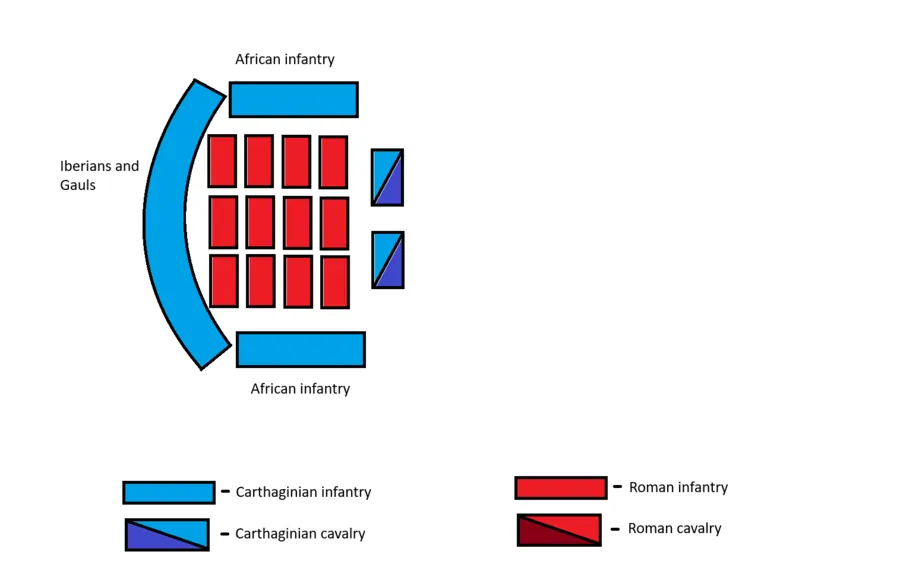
The double envelopment or pincer movement is widely regarded as one of the most complex and devastating battlefield maneuvers ever executed. The tactic involves attacking the enemy on the rear and both flanks simultaneously while preventing its center from escaping. Once the enemy is surrounded, panic, confusion, and loss of command often follow, leading to a massacre.
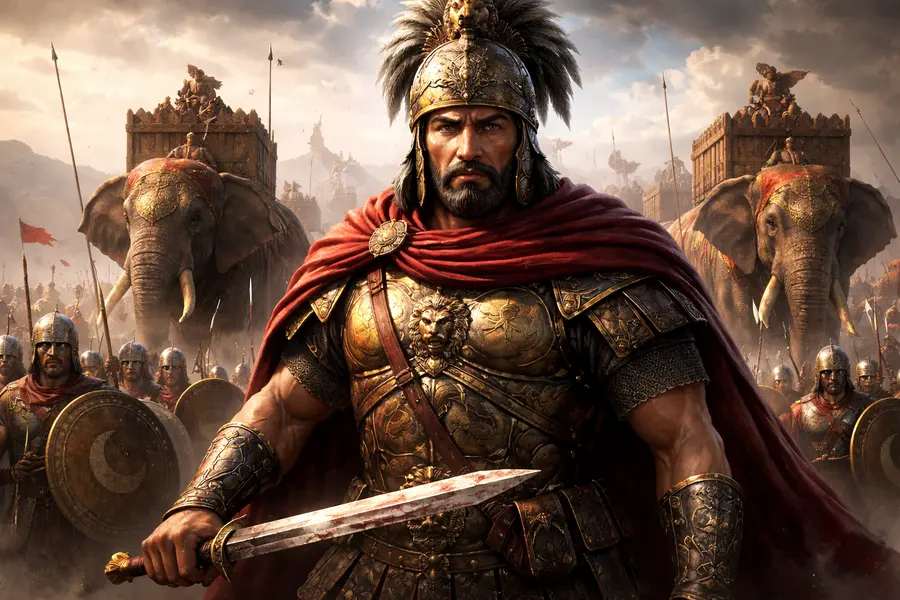
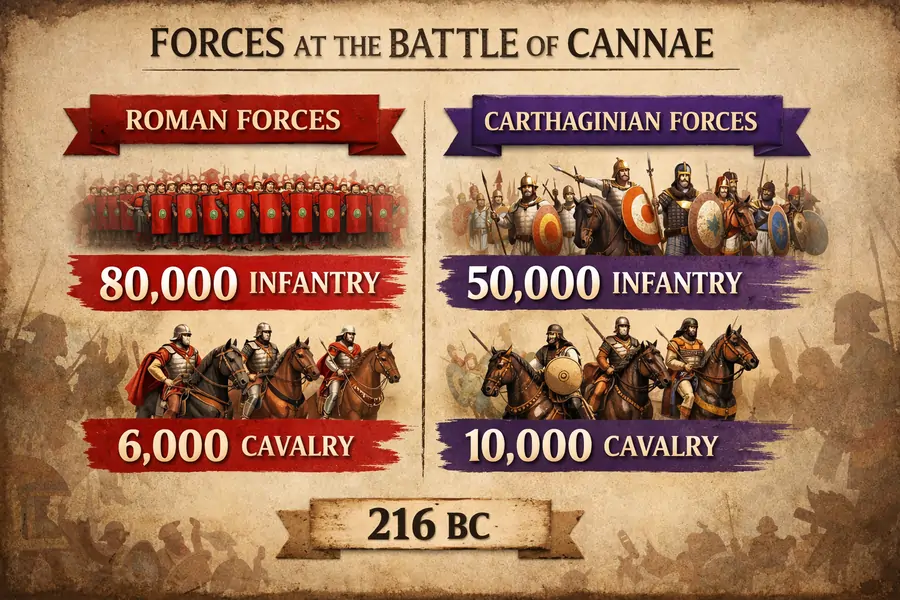
The most famous example occurred during the Battle of Cannae in 216 BC. Facing a Roman army that significantly outnumbered his forces, Hannibal deliberately positioned weaker troops in the center of his line. As the Romans pushed forward, the Carthaginian center gradually withdrew in a controlled fashion. Meanwhile, Hannibal's veteran African infantry attacked the Roman flanks while his cavalry struck from the rear. The result was one of the greatest encirclements in military history. Ancient historian Polybius recorded that tens of thousands of Roman soldiers were trapped and slaughtered. Military historian Theodore Ayrault Dodge later described Cannae as "the masterpiece of tactical execution."
The double envelopment uses the enemy's numerical advantage against them by corralling them into a mindless mob. Generals from Frederick the Great to modern military planners have studied Cannae as a model of battlefield encirclement. The German army executed pincer movements repeatedly during World War II, capturing large pockets of enemy troops.
2. Hammer and Anvil (Combined Arms Warfare)
The hammer and anvil maneuver combines two separate forces that work together to destroy an enemy formation. This doctrine involves combined-arms warfare, in which multiple segments of the army, such as heavy infantry and Cavalry, work together to subdue the enemy. One force, the "anvil," fixes the enemy in place, while the second force, the "hammer," delivers the decisive blow from the flank or rear.
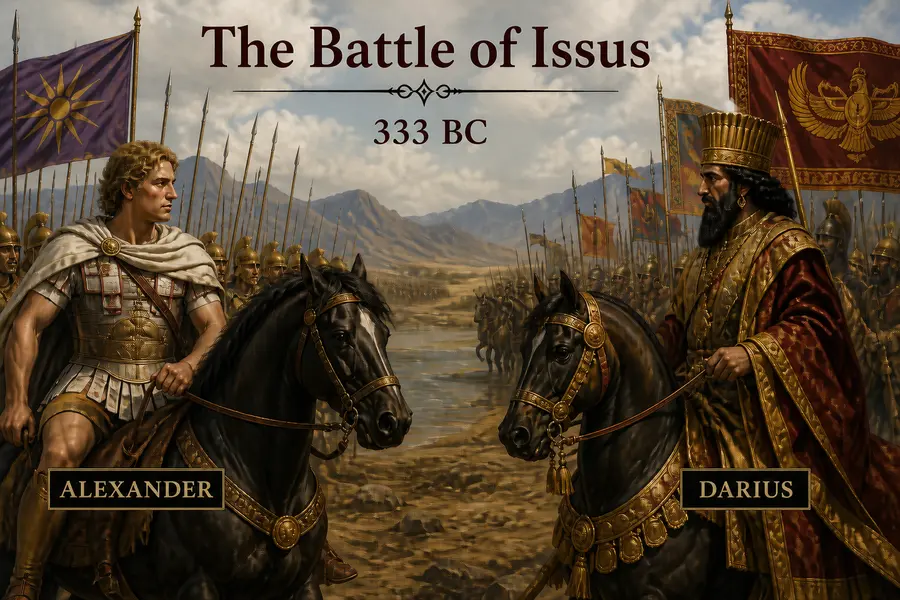
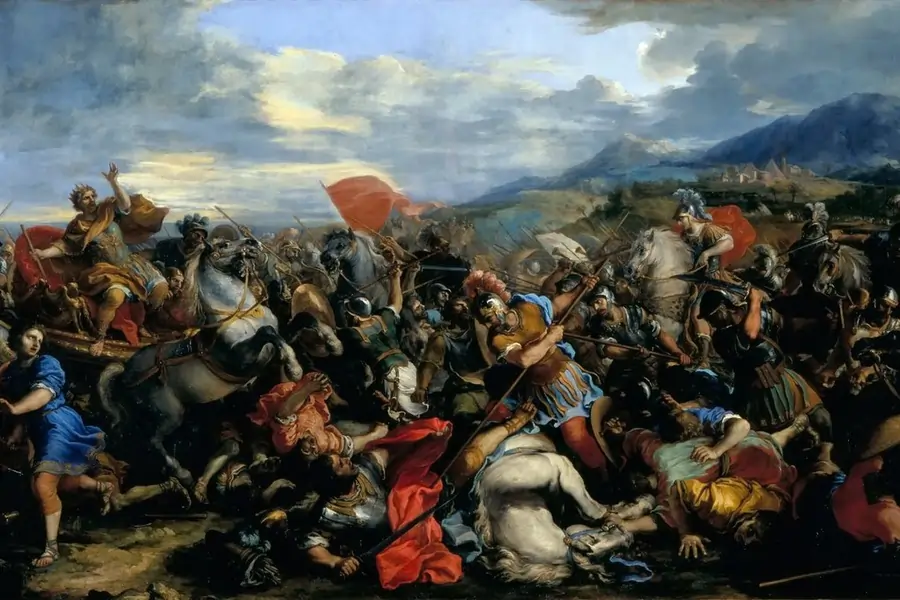
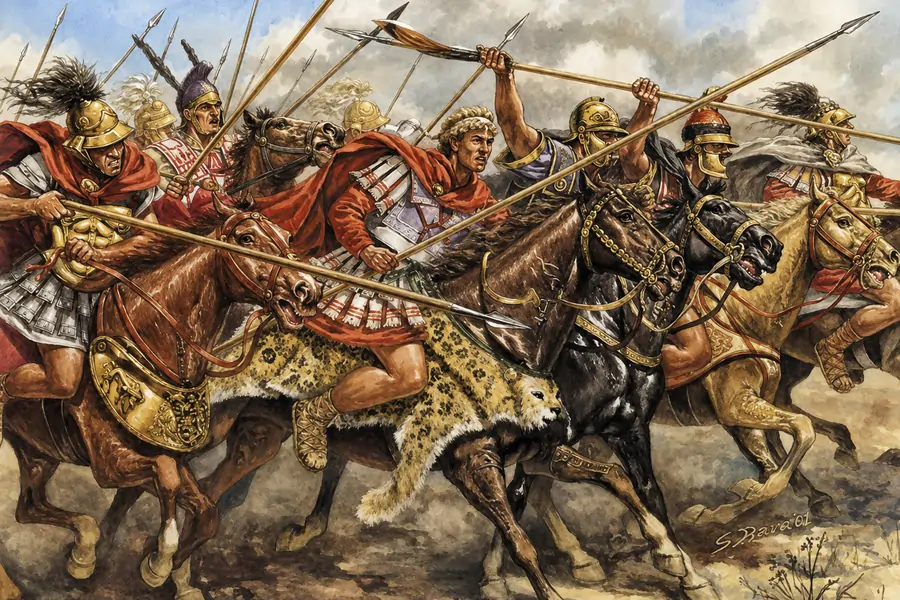
No commander used this tactic more effectively than Alexander the Great. During battles such as the Battle of Gaugamela and the Battle of Issus, Alexander's Macedonian phalanx acted as the anvil. The densely packed infantry engaged the enemy front and bore the brunt of their advance. Once the enemy was fixed in place, engaging the phalanx, Alexander personally led his elite Companion Cavalry into a vulnerable section of the opposing line, crumbling their resistance with their shock attack.
Military historian Donald Engels argues that Alexander's battlefield success stemmed largely from his ability to coordinate different arms of his army with extraordinary precision. The hammer and anvil maneuver demonstrated how infantry and cavalry could complement one another rather than operate independently. This concept became one of the foundations of combined-arms warfare and influenced military doctrine for centuries.
3. Oblique Order
The oblique order is a maneuver in which a commander concentrates overwhelming force on one section of the enemy line while deliberately weakening other parts of his own formation. Rather than attacking evenly across the battlefield, the commander tries to win local superiority while trying to hold off the enemy in other sections of the battlefield. The commander lines up his troops usually in a diagonal or staggered formation to delay the engagement of troops in his weaker sections.
The tactic is most closely associated with Epaminondas of Thebes at the Battle of Leuctra in 371 BC. Facing the feared Spartan army, Epaminondas massed his strongest troops on the left wing while keeping other units back. This concentration of force overwhelmed the Spartan right flank and shattered the enemy army. Historian Victor Davis Hanson notes that Leuctra demonstrated the value of concentrating combat power at a single decisive point rather than spreading forces evenly across a battlefront. The oblique order later influenced commanders such as Frederick the Great and Napoleon. Many historians regard this maneuver as one of the most important tactical innovations of the ancient world.
4. Fabian Strategy
Not every successful military maneuver involves fighting a battle. Sometimes victory comes from avoiding battle altogether. Especially if the enemy is strong and in an advantageous position.
"The supreme art of war is to subdue the enemy without fighting."
The Fabian Strategy is named after the Roman dictator Fabius Maximus, who confronted Hannibal Barca following Rome's disastrous defeats at Trebia, Lake Trasimene, and Cannae. Recognizing that direct confrontation favored Hannibal, Fabius adopted a strategy of delay, harassment, and attrition.
Rather than seeking a decisive engagement, Roman forces shadowed Hannibal, attacked supply lines, and denied opportunities for major battle. Although very unpopular among the Romans, the Fabian strategy allowed the Romans to recover and gradually weakened Carthaginian power in Italy. Military historian Adrian Goldsworthy argues that Fabius understood Rome's greatest strength: its ability to sustain a long war. By refusing to play by Hannibal's rules, Rome eventually regained the strategic initiative.
5. Feigned Retreat
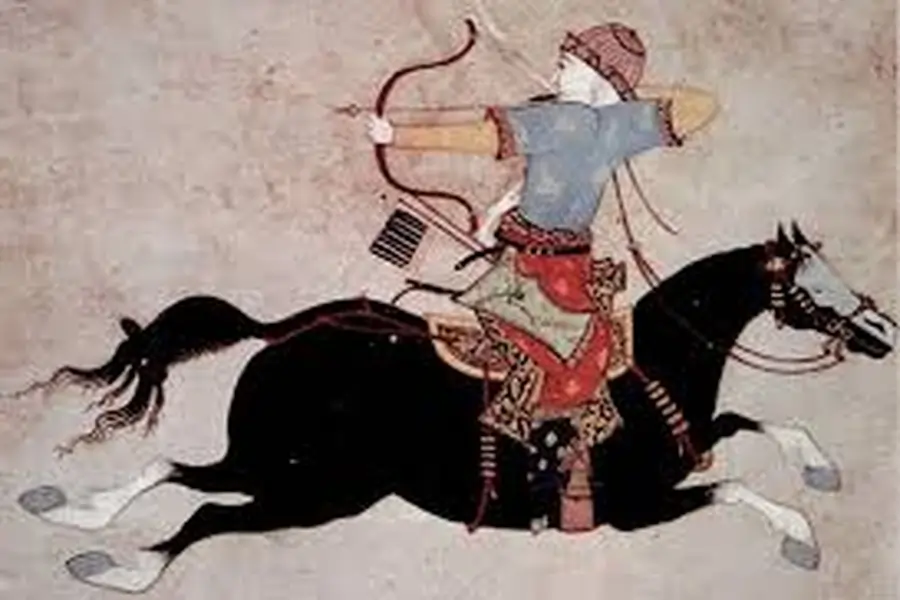
The feigned retreat is among the oldest and most deceptive maneuvers in military history. It involves a section of the army pretending to flee from battle, luring the enemy into a trap. Once the enemy is out of position or breaks formation, the retreating troops suddenly regroup and attack the pursuing enemy. The Mongols perfected this tactic during the thirteenth century. Their cavalry would appear to retreat in panic, drawing opponents into pursuit over long distances. Once the enemy formation became stretched and disorganized, Mongol forces would suddenly reverse direction and attack.
This maneuver was devastating because it exploited human psychology. Victorious soldiers often became overconfident and lost cohesion while chasing a retreating enemy. Military historian Timothy May argues that Mongol success depended as much on deception, discipline, and maneuver as on superior horsemanship and archery. The Mongols were able to conquer superior armies using this deceptive maneuver.
6. Siege Encirclement
Sieges were among the most common forms of warfare throughout history, and successful commanders developed sophisticated methods for isolating fortified positions. The sieging army was very vulnerable during this process, as they were at risk of attacks from within the city as well as relief armies attacking them from outside. Supplies also become critical during long sieges.
One of the greatest examples of a perfectly executed siege occurred during the Battle of Alesia in 52 BC. Julius Caesar faced a difficult challenge: trapping Vercingetorix inside Alesia while also defending against a massive Gallic relief army. Caesar's solution was extraordinary. He constructed two enormous defensive lines. The inner line prevented defenders from escaping, while the outer line protected Roman forces from attackers approaching from outside. Historian Adrian Goldsworthy describes Caesar's engineering achievement as one of the most remarkable siege operations in Roman history.
7. Ambush Warfare
Ambush warfare relies on surprise, terrain, and timing. Rather than confronting an enemy openly, commanders conceal their forces and strike when opponents are not prepared and most vulnerable. The destruction of three Roman legions in the Teutoburg Forest in AD 9 remains one of the most famous ambushes in military history. Germanic tribes under Arminius lured Roman forces into difficult terrain where organized resistance became nearly impossible. Historian Peter Wells argues that Arminius exploited every Roman weakness, including poor intelligence, difficult terrain, and extended marching columns.
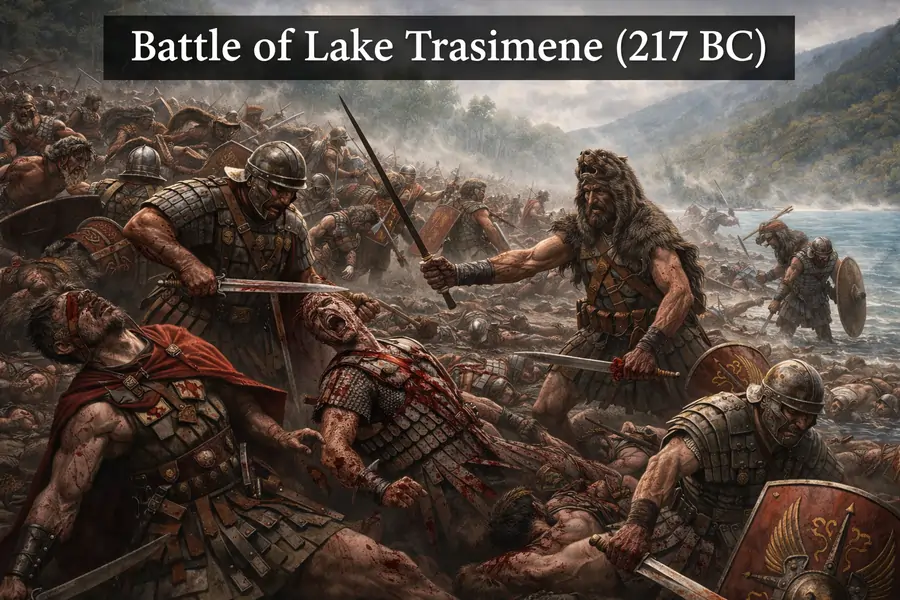
Another famous ambush occurred during the Second Punic War during the Battle of Lake Trasimene in 217 BC, where Hannibal ambushed a Roman army led by Consul Flaminius. Historians regard this as the largest and most successful ambush where Hannibal managed to hide 40,000 to 50,000 troops to ambush the Roman force of 25,000. Roughly 15,000 Romans were slaughtered, including Consul Flaminius.
8. Naval Boarding
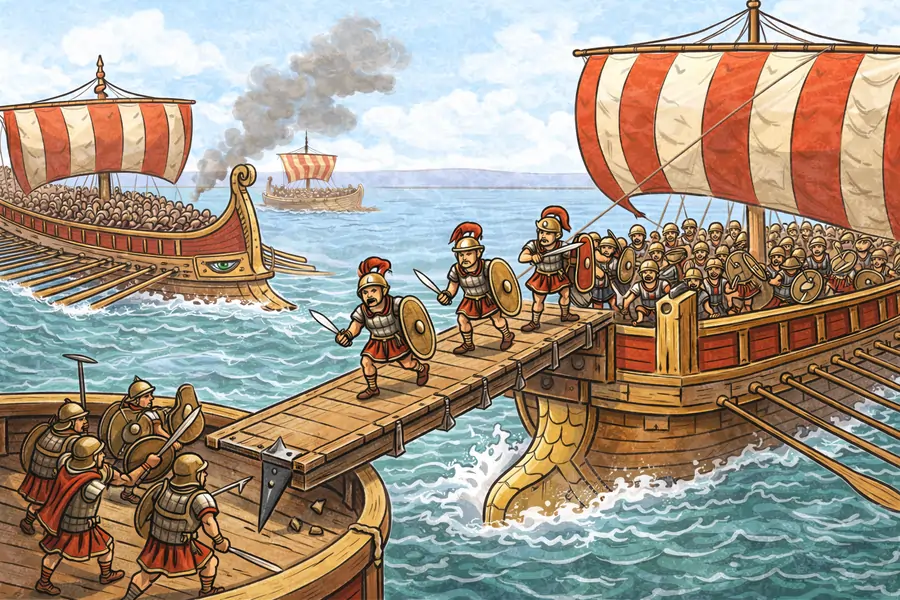
During the First Punic War, the Carthaginians had superior ships and naval experience. The Romans had to adapt to challenge the Carthaginians at sea. During ancient naval battles, commanders frequently sought to board and capture them. The Romans mastered this tactic by devising an innovative boarding platform called the
The Corvus boarding bridge allowed Roman infantry to cross onto enemy vessels. This innovation transformed naval warfare. Carthage possessed greater maritime experience, but Rome transformed the battle to suit their fighting style. Historian John Keegan observed that successful military organizations often adapt warfare to their strengths. The Roman adoption of naval boarding is a textbook example. Boarding tactics remained important until advances in naval artillery gradually shifted emphasis toward long-range combat.
9. Strategy of the Central Position
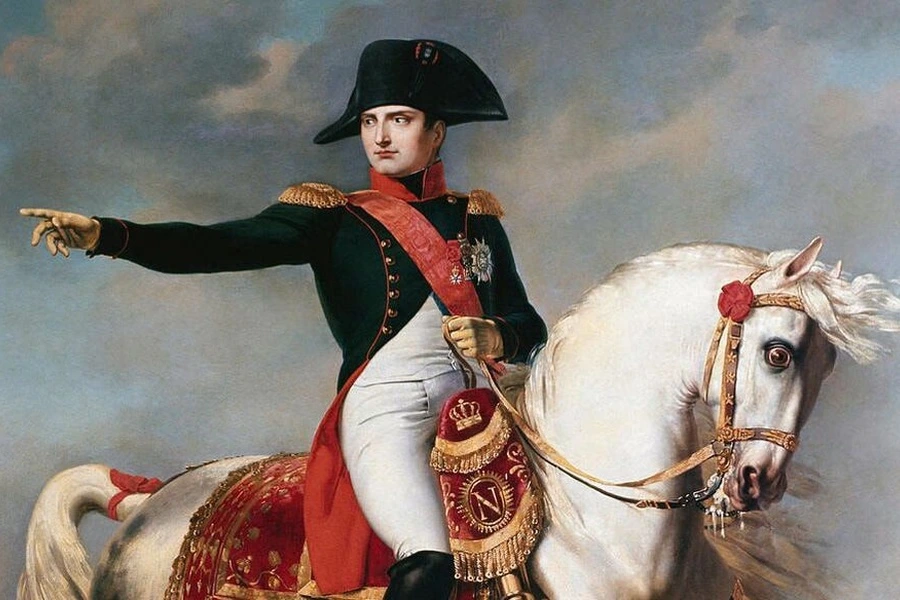
The Strategy of the Central Position was one of Napoleon Bonaparte's most effective operational maneuvers. This was a strategy he devised to combat the numerically superior enemies he faced. Rather than fighting multiple enemy armies at once, Napoleon positioned his forces between them and defeated each army separately before they could unite. By using speed and superior maneuver, he took the fight to the enemy before they could capitalise on their advantage.
The best example of this strategy occurred during Napoleon's Italian Campaign of 1796. Facing Austrian and Piedmontese armies operating in northern Italy, Napoleon recognized that his opponents were separated and poorly coordinated. Instead of attacking both forces simultaneously, he rapidly concentrated against the Piedmontese army, defeating it at battles such as Montenotte and Mondovì. Once Piedmont was neutralized, he turned against the Austrians, preventing the two armies from combining their strength.
Military historian David Chandler described the 1796 campaign as one of the finest demonstrations of operational maneuver in military history, highlighting Napoleon's ability to exploit enemy separation and move faster than his opponents could react. Historian Andrew Roberts similarly argues that the campaign revealed Napoleon's genius for concentrating force at decisive points despite limited resources. The Strategy of the Central Position demonstrated a timeless principle of warfare: defeating enemies in detail is often easier than confronting a larger coalition head-on.
10. Blitzkrieg
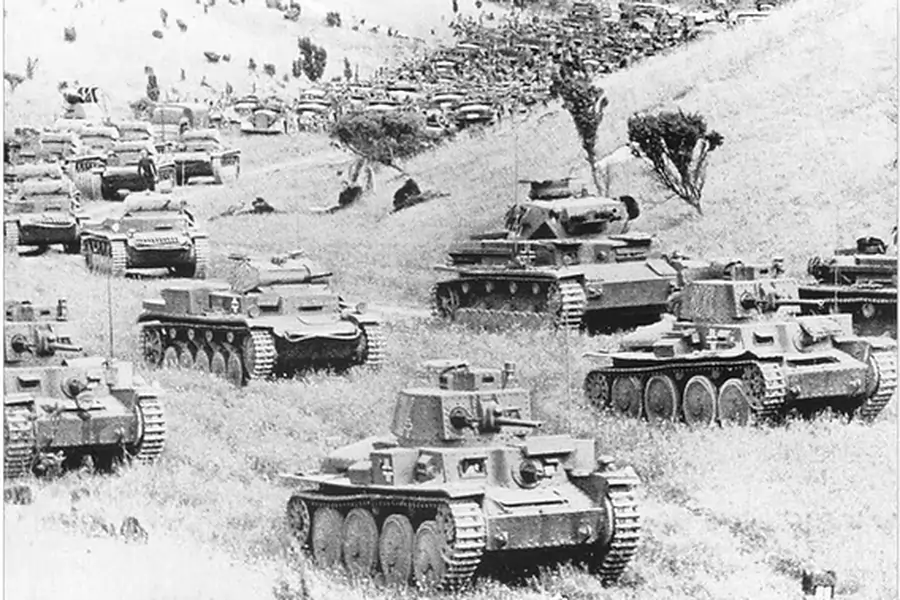
Blitzkrieg, or "lightning war," revolutionized twentieth-century warfare. This was a revolutionary tactic compared to the static trench warfare practised in World War I. German planners sought rapid victories that would avoid the prolonged attritional warfare that had characterized World War I. To combat this, German commanders sought rapid breakthroughs using concentrated armor, aircraft, and mobile infantry. The objective was not merely to defeat enemy frontline units but to collapse entire command structures before effective resistance could be organized.
During the campaigns against Poland in 1939 and France in 1940, Blitzkrieg demonstrated the devastating potential of speed and coordination. This tactic draws upon the use of combined army warfare where infantry, tanks, and the air force operated together to punch through weak enemy defenses. Historian Robert Citino argues that Blitzkrieg represented the culmination of longstanding German operational traditions emphasizing mobility and decisive maneuver. Although technology changed, the underlying principles remained familiar: surprise, concentration of force, and rapid exploitation of success.
Conclusion
The military maneuvers examined here span more than two thousand years of warfare, yet they share common principles. Whether executed by Hannibal, Alexander, Julius Caesar, Fabius, Arminius, Mongol generals, or twentieth-century armored commanders, success depended on exploiting weaknesses rather than merely relying on strength.
Double envelopments trapped armies. Hammer and anvil attacks coordinated different combat arms. Oblique orders concentrated force at decisive points. Fabian's tactics avoided unfavorable battles. Feigned retreats exploited overconfidence. Siege encirclements isolated defenders. Ambushes leveraged surprise. Naval boarding transformed sea battles into infantry fights. The Strategy of the Central Position enabled Napoleon to defeat larger enemy coalitions through rapid maneuver and concentration of force. Blitzkrieg demonstrated the power of speed. These military maneuvers changed history because they demonstrated that superior strategy can often overcome superior numbers.
References and Further Reading
- Polybius - The Histories
- Livy - History of Rome
- Arrian, Anabasis of Alexander
- Julius Caesar, Commentarii de Bello Gallico.
- Adrian Goldsworthy, The Complete Roman Army.
- Victor Davis Hanson, The Western Way of War.
- John Keegan, A History of Warfare.
- Theodore Ayrault Dodge, Hannibal.
- Donald Engels, Alexander the Great and the Logistics of the Macedonian Army.
- Peter Wells, The Battle That Stopped Rome.
- Timothy May, The Mongol Art of War.
- Robert Citino, The German Way of War.
Recommended Books
This article may contain affiliate links. If you purchase through these links, I may earn a small commission at no extra cost to you.
Related Articles
Frequently Asked Questions
What is the difference between a military tactic and a military maneuver?
A military tactic refers to a specific method used during combat, such as a cavalry charge or shield wall. A military maneuver is the movement and positioning of forces to gain an advantage over an enemy. Maneuvers like the double envelopment, feigned retreat, and Napoleon's Strategy of the Central Position focus on how armies move and coordinate on the battlefield rather than how individual soldiers fight.
Which military maneuver has been studied the most by modern armies?
The double envelopment used by Hannibal at the Battle of Cannae is often considered the most studied military maneuver in history. Military academies around the world analyze Cannae because it demonstrates how a smaller force can surround and destroy a larger army through careful positioning, discipline, and timing. The battle remains a classic example of battlefield encirclement.
How did Napoleon's Strategy of the Central Position work?
Napoleon's Strategy of the Central Position involved placing his army between two or more enemy forces and defeating them separately before they could combine. By moving rapidly along interior lines, Napoleon could concentrate his troops against isolated opponents and achieve local superiority even when outnumbered overall. The Italian Campaign of 1796 is one of the best examples of this maneuver.
Why was the Mongol feigned retreat so effective?
The Mongol feigned retreat succeeded because it exploited enemy overconfidence. Mongol cavalry would pretend to flee, encouraging opponents to break formation and pursue. Once the enemy became stretched out and disorganized, the Mongols would suddenly turn and attack. This maneuver combined deception, mobility, and discipline, making it one of the most successful battlefield tactics in military history.
What is the difference between a double envelopment and a pincer movement?
A pincer movement is any attack that strikes both sides of an enemy formation. A double envelopment is a specific type of pincer movement in which both flanks completely surround the opposing army. Hannibal's victory at Cannae is the most famous example of a double envelopment because the Roman army was trapped and attacked from all directions.
Which ancient military maneuver influenced warfare for the longest time?
The hammer and anvil maneuver may have had the longest-lasting influence. Perfected by Alexander the Great, it combined infantry that pinned the enemy in place with cavalry that delivered a decisive flank attack. Variations of this concept appeared throughout medieval warfare, early modern warfare, and even modern combined-arms operations, making it one of history's most enduring battlefield maneuvers.
Add Comment