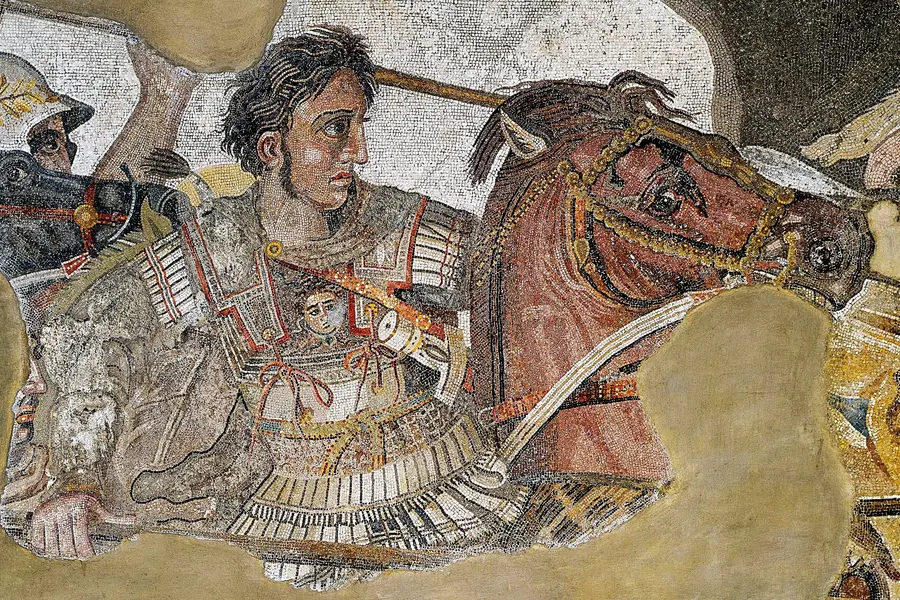
How did a young Macedonian king conquer one of the largest empires in history before the age of 33? The story of Alexander the Great is filled with legendary victories and battlefield brilliance of a young King who was destined for greatness. If we delve deeper into his achievements, we also find the tactical innovations, training, and skills of the Macedonian troops that made this mythical story possible. The story of Alexander is also the story of his generals, his companion cavalry, and the famous Macedonian phalanx, wielding the Sarissa.
Table of Contents
Who Was Alexander the Great?
Alexander III of Macedon, widely known as Alexander the Great, was born in 356 BC in Pella, the capital of ancient Macedonia. Alexander was the son of King Philip II of Macedonia. He inherited a powerful and disciplined kingdom with a large and highly trained professional army. King Philip made sure that his troops were the best in the ancient world to start expanding his empire, but he died before he could realize his dream.
His son Alexander took up his father's ambition and transformed Macedonia into an empire that stretched from Greece to northwestern India. His reputation as one of history's greatest military commanders was built on his undefeated record of numerous battles. His ability to adapt to different enemies, adapt and utilize terrain, and his leadership skill in motivating and inspiring a multinational army made him a legendary figure in history. Ancient sources such as Arrian and Plutarch emphasize not only his battlefield brilliance but also his ambition to surpass legendary heroes like Achilles. Alexander believed that he was destined to conquer the world, and he set about fulfilling his goal from a very young age.
Early Life and Education
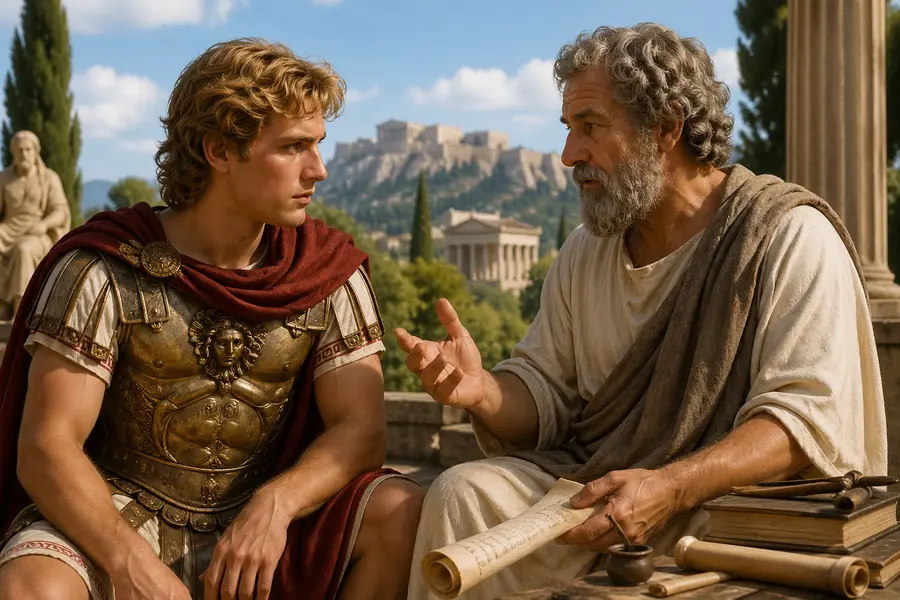
A lot was expected from Alexander right from his childhood. Being the child of royalty, he was exposed to intellectual training by Aristotle, his tutor. He gained knowledge in philosophy, science, and literature. Homer's Iliad became a personal guide for Alexander, shaping his ideals of glory and heroism. Alexander's father, Philip II, had already reformed the Macedonian army into a professional force. Philip would also train him in warfare and military tactics.
Alexander was exposed to warfare and gained experience on the battlefield from a very young age. By his teenage years, Alexander had already taken part in military campaigns. At the Battle of Chaeronea in 338 BC, he reportedly led a decisive cavalry charge as cited by the historian Diodorus Siculus (Book XVI). This early exposure to command helped him understand both tactical execution and the importance of timing in battle. His experience on the battlefield also helped him gain the confidence of his troops.
The Rise to Power
In 336 BC, Philip II was assassinated by his bodyguard Pausanias. With his death, Alexander inherited not only a throne but also a fragile political situation. The Greek city-states, which were not happy to be under Macedonian rule, saw the death of the king as an opportunity and began a revolt. As soon as Alexander took up the throne, he moved quickly, marching south and crushing the Greek revolt. He used all means necessary to quell the rebellion, with the destruction of Thebes serving as a warning that ensured compliance from the rest of Greece.
Alexander had the thirst for conquest and wanted to conquer the entire world. He had to crush the Greek revolt before he could embark on his journey, and the example he set with Thebes ensured that there would be no more resistance from the Greek city-states. This consolidation of power allowed him to launch the campaign that would define his life: the invasion of the Persian Empire.
Alexander's Military Strategy and Innovations
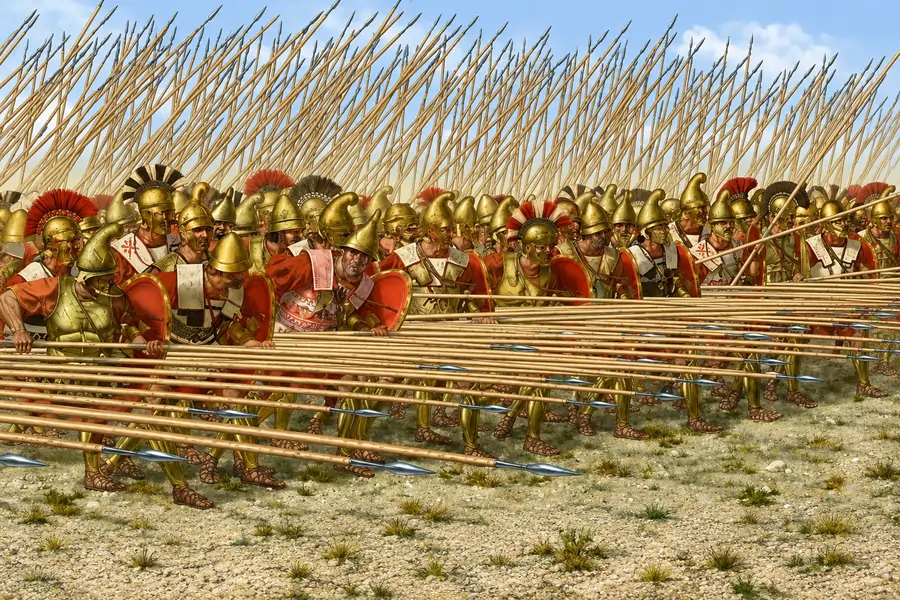
The secret to Alexander's battlefield success came from a number of factors. He inherited a very strong, professional army from his father Philip. This army was already trained and ready for conquest long before Alexander took control. The Macedonian phalanx, equipped with long sarissas, formed the backbone of his army. This was one of the strongest heavy troops in ancient history. However, on their own, the Macedonian phalanx was not invincible. It was Alexander's use of coordinated attacks that made the difference.
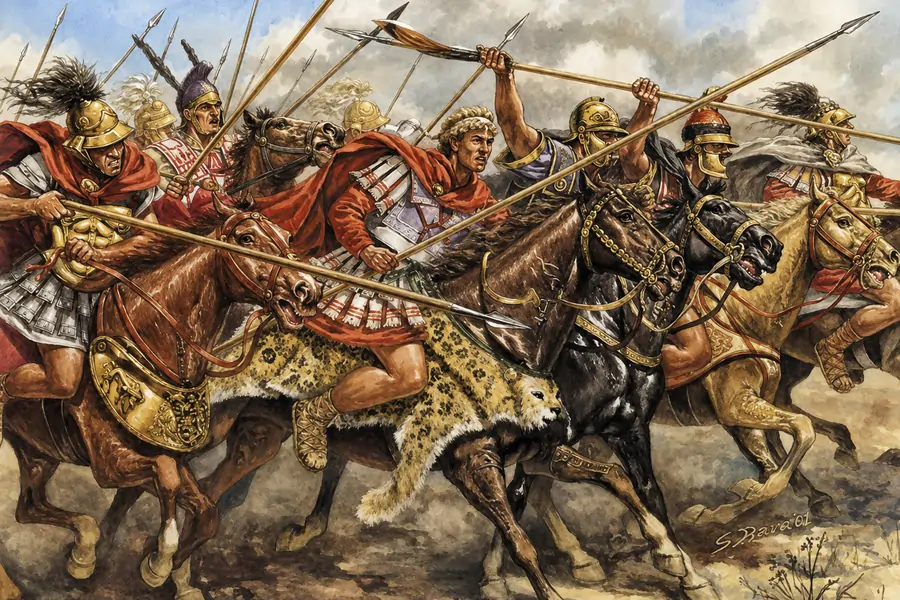
Rather than relying solely on his heavy infantry, Alexander integrated cavalry, light troops, and siege technology into a unified system. His companion cavalry was the elite shock troops of his army, composed primarily of Macedonian nobility. Alexander often created openings with the Macedonian phalanx and then exploited them with fast-moving cavalry strikes. This approach can be compared with later developments in Roman warfare, particularly the flexibility seen in the Roman legion structure.
Another defining feature of Alexander's command was his willingness to take calculated risks. He would place himself at the frontline where the most decisive fighting took place. He would then lead charges that would secure victory, but at the cost of personal danger. This characteristic is what kept the morale of his troops high and created a deep sense of loyalty.
The Persian Campaign: Confronting a Superpower
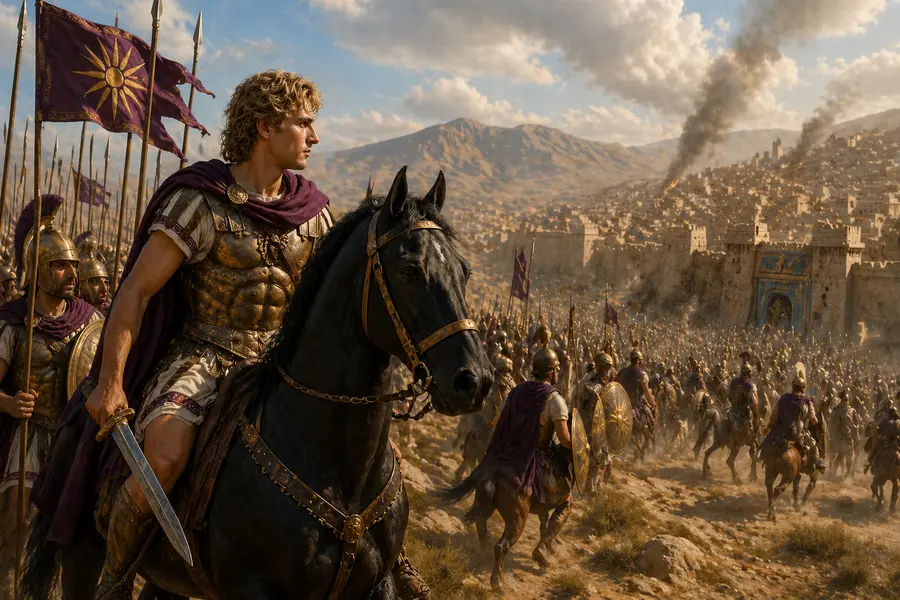
Alexander's campaign against the great Persian Empire is what elevated his glory and cemented his status as one of the greatest military generals in history. The Persian campaign remains one of the most studied military endeavors in history. It began in 334 BC when he crossed into Asia Minor.
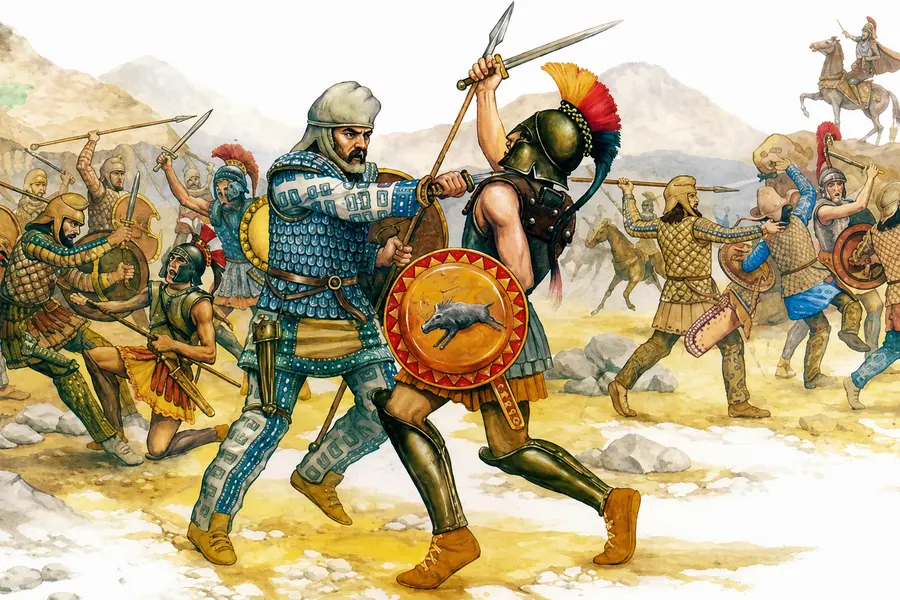
The Battle of the Granicus River was Alexander's first major victory against the Persian Empire. Alexander faced Persian satraps and Greek mercenaries who outnumbered his army. The enemy troops were positioned on the opposite side of the Granicus River and were not expecting the Macedonians to attack them head-on. Alexander, however, decided to cross the river and attack the enemy under full observation. Despite the risks posed by crossing a river, his bold action took the enemy by surprise and secured a victory.
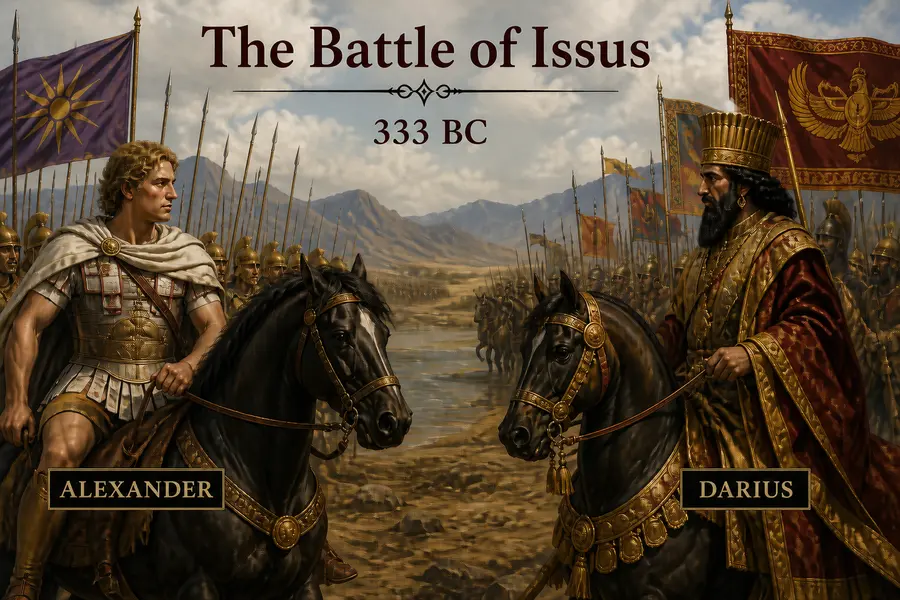
The Battle of Issus in 333 BC was the first time that Alexander faced King Darius III of Persia face to face. The Macedonians were outnumbered by over 2:1. Although outnumbered, Alexander used the narrow terrain to neutralize the Persian advantage. Sensing a weakness in the Persian lines, he charged toward the Persian center with his companion cavalry. Seeing his line crumble, Darius fled the battlefield, which caused the morale of his troops to collapse.
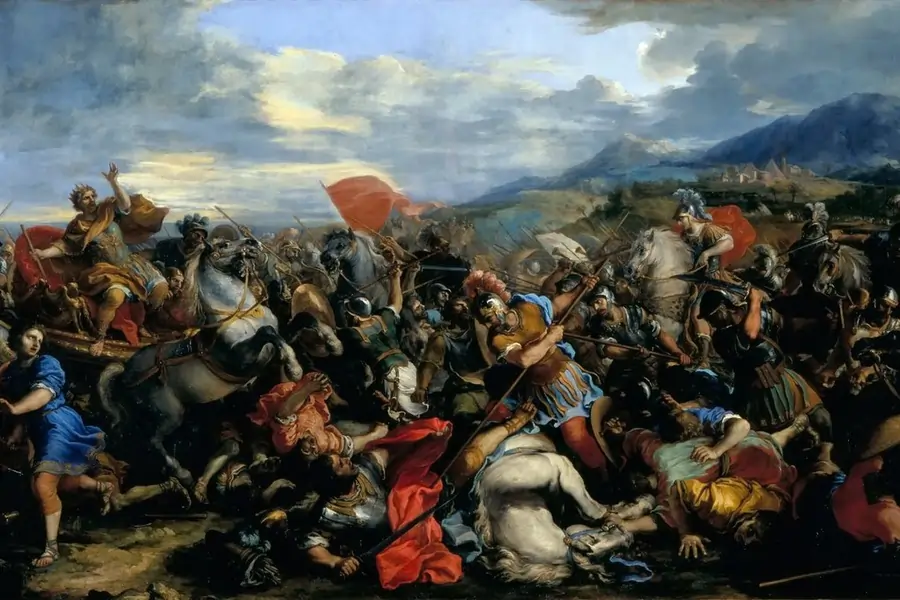
The decisive battle of his Persian campaign came at the Battle of Gaugamela in 331 BC. Alexander would face off against Darius once more in the battle, which saw 47,000 Macedonian troops face 50,000 to over 250,000 Persians. The Persians had prepared a plain, wide battlefield suited for their chariots. Alexander neutralized the Persian advantage by executing a diagonal advance. This diagonal line of his troops created a gap in the Persian line, which was quickly exploited by Alexander. He launched a personal cavalry charge straight at Darius once again, who turned and fled. This victory marked the collapse of Persian resistance. The accounts of this battle can be drawn from Arrian, who is widely regarded as the most reliable historian for Alexander.
These engagements are often compared to later tactical masterpieces such as the Battle of Cannae and the Battle of Zama, where maneuver and timing also proved decisive.
Siege Warfare and the Siege of Tyre
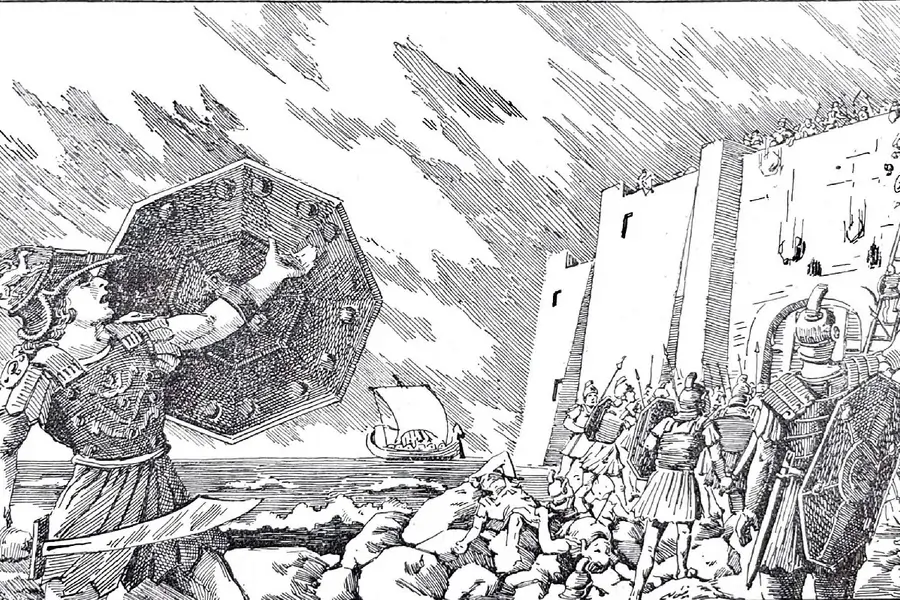
Alexander was not just a military commander but a shrewd tactician. The Siege of Tyre in 332 BC demonstrated his ability to adapt beyond open battle. Tyre was a heavily defended island city. This meant that direct assaults on the city were very difficult and costly. Rather than abandon the objective, Alexander came up with a brilliant solution. He ordered the construction of a massive causeway to connect the mainland to the city. He would change the geography of the island to secure his victory.
This massive engineering effort, combined with naval support, would eventually allow him to breach the mighty defenses of Tyre. The fall of Tyre reinforced Alexander's reputation for persistence and innovation. Comparable ingenuity can be seen centuries later in the Roman siege works at the Battle of Alesia.
Egypt and the Founding of Alexandria
The Egyptians were unhappy with Persian rule and wanted to be free. When Alexander conquered Egypt from Persia, he was received not as a conqueror but as a liberator. His administration skills can be seen in the founding of over 20 cities, with Alexandria being the most famous. This would become one of the most important centers of learning in the ancient world.
Alexander believed in divine blessing and his fate to be the conqueror. His visit to the oracle of Amun at Siwa was a political masterstroke, where he was proclaimed as "son of Amun," further cementing his claim as the rightful Pharaoh and world conqueror. This blending of political authority and religious symbolism helped him govern a diverse empire.
The Indian Campaign
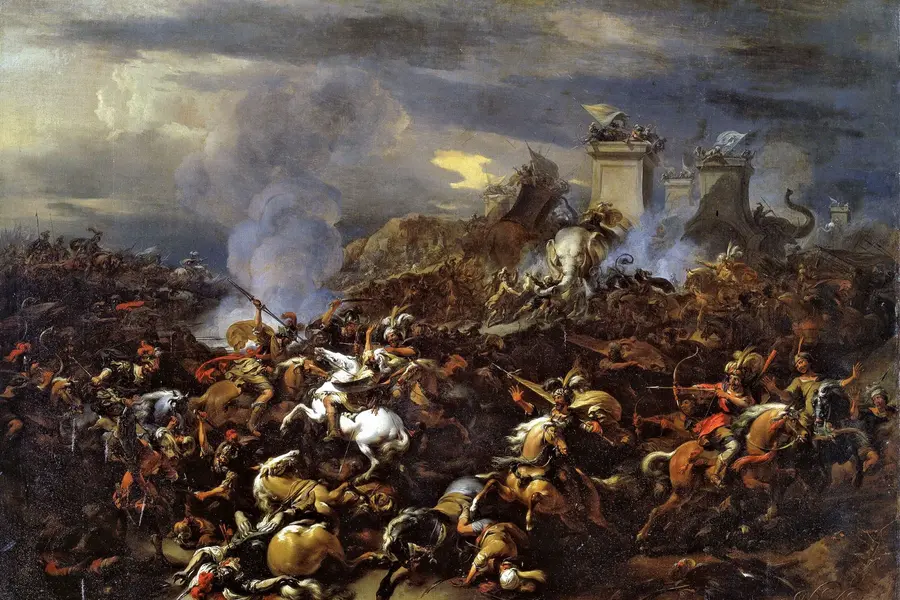
Alexander's conquest took him to the far east, where he would reach the Indian subcontinent. Here, he encountered new challenges, including unfamiliar terrain and the feared war elephants. The Battle of the Hydaspes in 326 BC against King Porus stands out as one of his most difficult victories. It was at this battle that Alexander's skills were tested to the extreme. Alexander executed a deceptive river crossing by using noise and feints to sneak his elite units. Despite taking heavy casualties from the elephant charge, Alexander managed to regroup his army and defeat the enemy in a pincer move. The historian Arrian has provided detailed accounts of the night crossing of Alexander's elite troops and the 17-mile upstream march.
This, however, proved to be a pyrrhic victory for Alexander as his army refused to march further east. Exhaustion and the prospect of facing larger, stronger kingdoms led to a mutiny, forcing Alexander to turn back. Despite his popularity among the soldiers and his earlier successes, most of his troops were homesick and were afraid of the prospect of never-ending battles. The harsh climate of India had also taken its toll on them.
Leadership Style and Personality
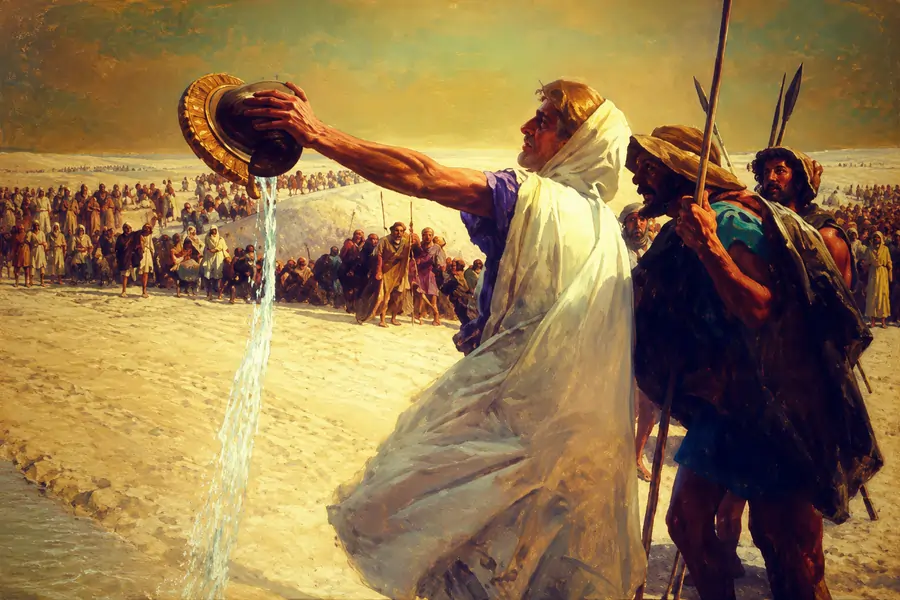
Alexander's leadership combined charisma, ambition, and intensity. He always led from the front and fought with his soldiers. This maintained close relationships with his soldiers and often shared their hardships, which strengthened loyalty. The historian Plutarch mentions a story where Alexander was provided with a cup of water when marching through a parched desert. He is famously quoted to have declined it, saying,
"Too much for one person, too little for all"
At the same time, he was known to be harsh and cruel as well. Episodes such as the execution of close companions reveal a volatile side that contrasts with his visionary ambitions. He attempted to merge the Macedonian and Persian customs together, which created tension among his Macedonian officers.
Comparison with Other Great Generals
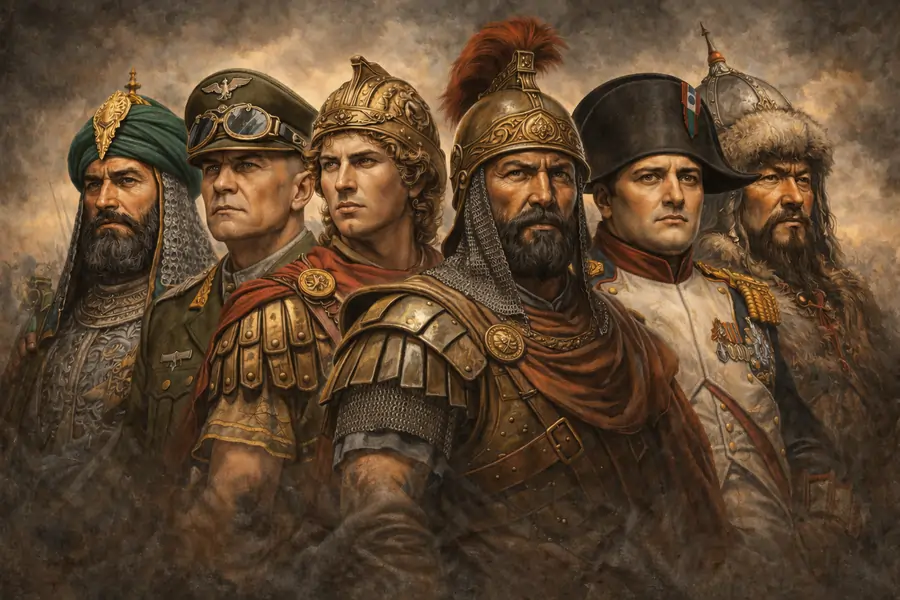
Alexander's approach to warfare emphasized decisive engagement and rapid movement. This contrasts with strategies such as the Fabian Strategy, which avoided direct confrontation in favor of attrition. For a broader perspective on how Alexander compares with other commanders across history, see Top 10 Greatest Military Generals. His influence is also evident in later conflicts, including those of Rome during the Second Punic War.
Death and the Fragmentation of the Empire
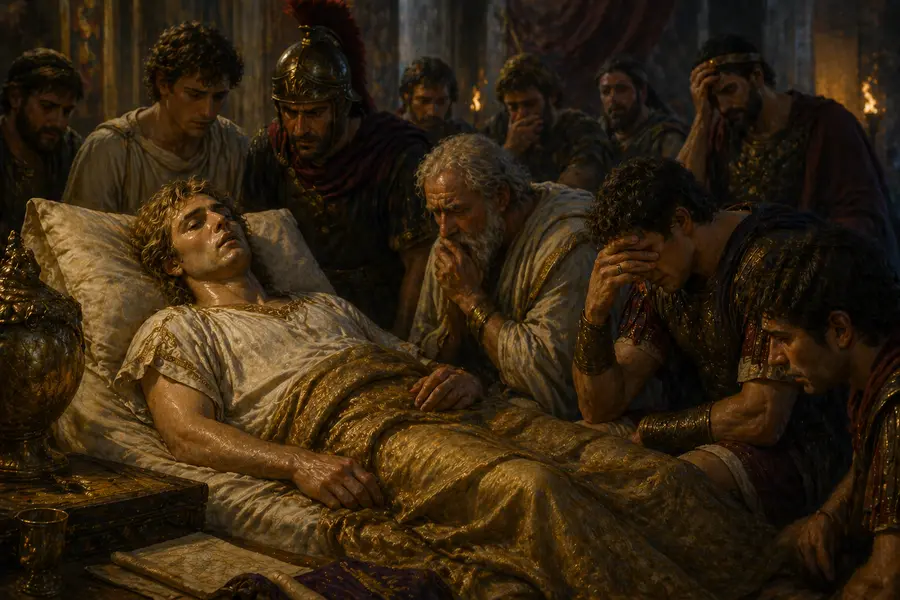
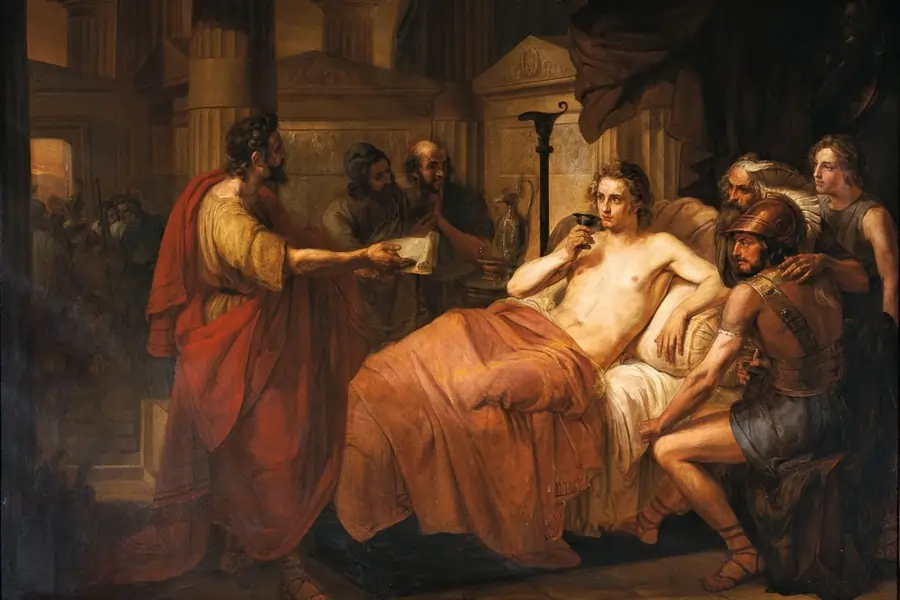
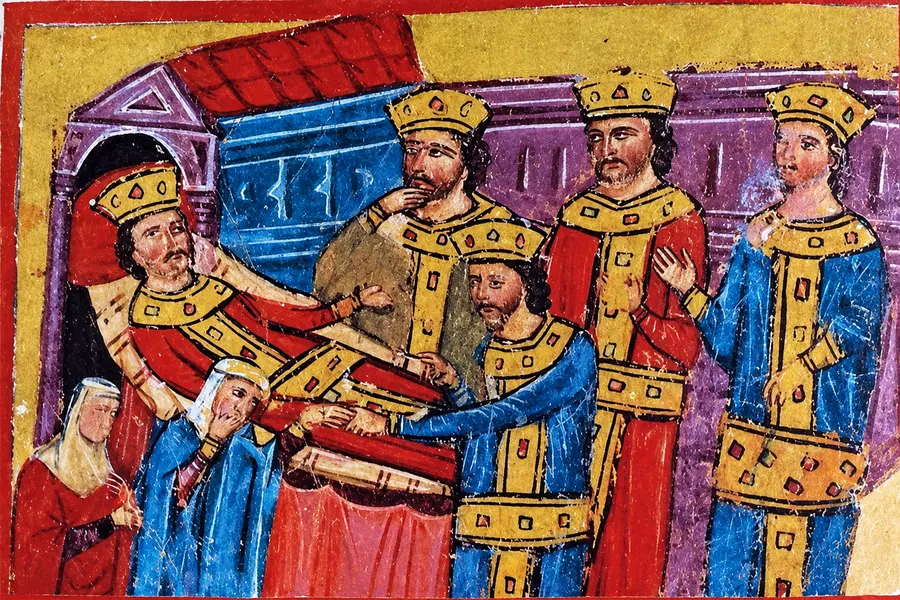
Alexander's life of conquest and glory came to an abrupt, early end. He died in Babylon in 323 BC at the young age of 32. Ancient accounts differ on the cause of death:
- The Court Tradition (Arrian & Plutarch): Based on the "Royal Diaries", this seems to indicate a fever and a 12-day gradual decline of his health.
- The Vulgate Tradition (Diodorus & Justin): This version seems to indicate foul play (using poisoned wine), indicating a plot by his viceroy, Antipater.
- Modern historians like Robin Lane suggest that Alexander's immune system was compromised by a punctured lung during a battle in India, heavy drinking, and grief from the loss of his closest friend, Hephaestion.
Regardless of the cause, his sudden death created a power vacuum in a new but huge Empire. Alexander's half-brother Philip III Arrhidaeus and his posthumous son, Alexander IV, were named joint kings. However, they were just puppets and eventually murdered. His empire was divided among his generals, known as the Diadochi. The resulting conflicts reshaped the political map of the Hellenistic world and the Rise of Rome.
Legacy of Alexander the Great
Alexander's legacy is both military and cultural. His military battles and tactics have been studied by historians and military generals for centuries. His conquests spread Greek language and culture across a vast region, a process known as Hellenization. He founded over 20 cities, and they became centers of trade and knowledge, linking different parts of the ancient world.
His campaigns also influenced later military thought for future battles. Many of his principles-speed, coordination, and decisive action can be traced in later conflicts, including Roman campaigns described in articles such as Lake Trasimene and Trebia. Even today, Alexander remains a central figure in discussions of leadership, empire-building, and the limits of ambition.
Conclusion
Alexander the Great's life represents a unique convergence of opportunity, preparation, and ambition. He inherited a strong kingdom, refined its military system, and applied it with unmatched boldness across diverse environments.
As a foundational pillar for studying ancient warfare, his campaigns provide essential context for understanding later developments, from the Punic Wars to Roman imperial expansion. His story continues to offer insights into strategy, leadership, and the enduring consequences of conquest.
References and Sources
- Arrian, Anabasis of Alexander
- Plutarch, Life of Alexander
- Diodorus Siculus, Bibliotheca Historica
- Green, Peter, Alexander of Macedon
- Cartledge, Paul, Alexander the Great: The Hunt for a New Past
Recommended Books
This article may contain affiliate links. If you purchase through these links, I may earn a small commission at no extra cost to you.
Related Articles
Frequently Asked Questions
Why did Alexander the Great name so many cities Alexandria?
Alexander founded multiple cities named Alexandria to secure his empire, establish administrative centers, and spread Greek culture. These cities also served as military hubs and trade centers, helping maintain control over newly conquered territories.
How did Alexander the Great manage such a large empire at a young age?
Alexander relied on a combination of trusted generals, local administrators, and existing governance systems. He often allowed conquered regions to retain their customs while placing loyal officials in key positions to ensure stability.
What made Alexander the Great's army different from other ancient armies?
His army combined the Macedonian phalanx with highly mobile cavalry and specialized troops, allowing for coordinated and flexible tactics. This integration of different units made his forces more adaptable than traditional armies.
Did Alexander the Great ever lose a battle?
No, Alexander is widely considered undefeated in battle. While he faced difficult situations and near setbacks, he consistently adapted his tactics and secured victory in all major engagements.
How did geography influence Alexander the Great's campaigns?
Geography played a crucial role in Alexander's success. He adapted his tactics to rivers, mountains, deserts, and unfamiliar terrains, often using the environment to his advantage to surprise or outmaneuver his enemies.
Why did Alexander the Great's empire collapse after his death?
The empire collapsed mainly because Alexander left no clear successor. His generals, known as the Diadochi, fought among themselves for control, leading to fragmentation and the eventual division of the empire.
Add Comment