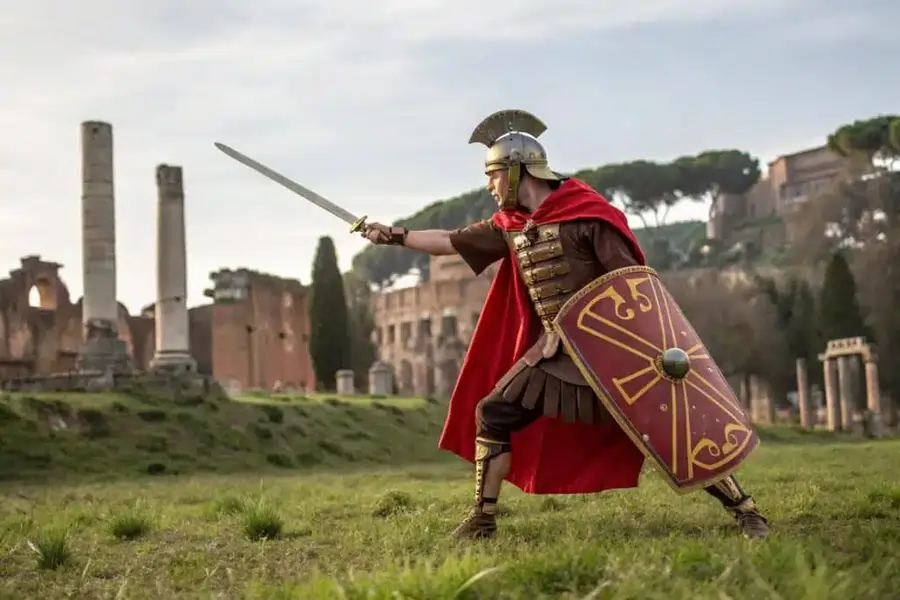
What was daily life like for a Roman soldier? Behind the legendary victories of Rome lay the humble life of a Roman soldier. This was a life filled with discipline, endurance, and battles. Roman soldiers were not just warriors-they were builders, laborers, and survivors who lived under strict rules every single day. From grinding their own food to building fortified camps each night, their daily life was demanding and highly structured. Understanding how Roman soldiers lived helps explain how Rome built one of the greatest empires in history.
Table of Contents
How Roman Soldiers Were Recruited
Being selected for the Roman army was a privilege and an honor for the citizens of Rome. They were carefully selected and trained, usually joining between the ages of 17 and 25. Only citizens of Rome were allowed to be part of the Roman legions to maintain loyalty to the state. Non-citizens were recruited only as part of the auxiliary units. The Roman citizens needed a long-term commitment to join the military, often lasting more than two decades. Before entering service, the recruits took a solemn oath known as the sacramentum, which required them to obey orders without question (Vegetius, De Re Militari, Book II; Polybius, Histories 6.21).
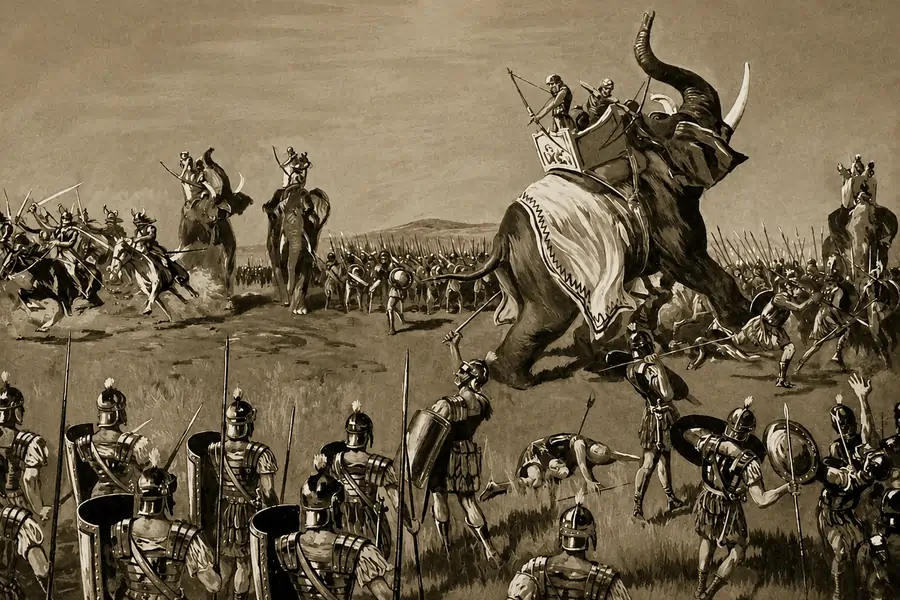
This deep sense of discipline allowed Roman armies to endure even the most difficult situations. During the Second Punic War, Roman forces suffered devastating defeats such as the Battle of Cannae, yet their structure and discipline ensured that the army continued to fight and eventually recover (Livy, Ab Urbe Condita, Books 22-23; Polybius, Histories 3.117-118). Most armies that suffered from such a severe loss would have their morale collapse. Soldiers who escaped the battlefield of Cannae were shunned and punished as cowards. Rome demanded absolute loyalty.
Training and Discipline
Training was intense and designed to prepare soldiers for real-life combat and survival. Roman recruits practiced marching long distances while carrying heavy equipment, often covering up to 20 miles in a single day. They trained with wooden weapons that were heavier than their actual weapons. This ensured that actual combat would feel easier. Vegetius (De Re Militari 1.9-10) describes rigorous marching drills and training with heavier wooden weapons to build strength.
Discipline in the Roman camp was strict and unforgiving. Punishments for disobedience could be severe. This made sure that there was no disobedience among them. This level of discipline played a crucial role in maintaining cohesion during chaotic battles. The Manipular formation also enabled maneuverability and quick battle formations (Polybius, Histories 6.19-42). Rome wanted to create professional soldiers by the end of their intense training.
What Did Roman Soldiers Eat?

The food eaten by Roman soldiers was simple, practical, and carefully designed to sustain energy during long campaigns. Maintaining a supply chain is very challenging and requires considerable effort. Therefore, the Roman soldiers were expected to be largely self-sufficient. Their diet centered around durability, portability, and nutrition rather than taste or variety. Wheat was the staple food for the Roman military diet. Soldiers were typically issued raw grain, which meant they had to grind it themselves using small hand mills. This flour was then used to make bread or a thick porridge known as puls. Grinding grain daily was physically demanding, but it ensured that soldiers always had a reliable source of calories, even when far from supply lines. Polybius (Histories 6.39) notes that grain formed the basis of the Roman soldier's rations.
In addition to wheat, Roman soldiers supplemented their diet with foods that could be preserved for long periods. Salted meat, especially pork, was a common source of protein when available. Cheese was another staple, valued for its durability and nutritional value. Olives and olive oil were frequently consumed, providing essential fats and helping maintain energy levels during long marches.
Roman soldiers also consumed vegetables such as beans, lentils, and onions whenever they were accessible. These foods added variety and improved overall nutrition, especially during extended campaigns where maintaining health was critical. In some regions, soldiers could also gather local food or receive supplies from nearby settlements, further diversifying their diet.
Instead of drinking plain water, which could often be unsafe, soldiers commonly consumed a drink known as posca. This mixture of water, vinegar, and sometimes herbs was both refreshing and practical, as the vinegar helped kill harmful bacteria. It was widely used across the Roman army and became a defining part of military life. Most Romans also believed that it was barbaric to drink pure wine and often diluted it with water. Pliny the Elder (Natural History 23.24) and later military writers mention vinegar-based drinks as common among Roman soldiers.
Cooking was usually done at the small group level. Soldiers were organized into units that shared cooking responsibilities, often preparing meals together at the end of the day after marching and building camp. This system not only ensured efficiency but also strengthened camaraderie among soldiers. This simple but effective diet played a crucial role in the success of Roman armies. Because soldiers could carry and prepare their own food, Roman forces were able to operate independently for long periods. This logistical advantage enabled them to sustain campaigns across vast territories, significantly contributing to Rome's military dominance.
Salary of Roman Soldiers
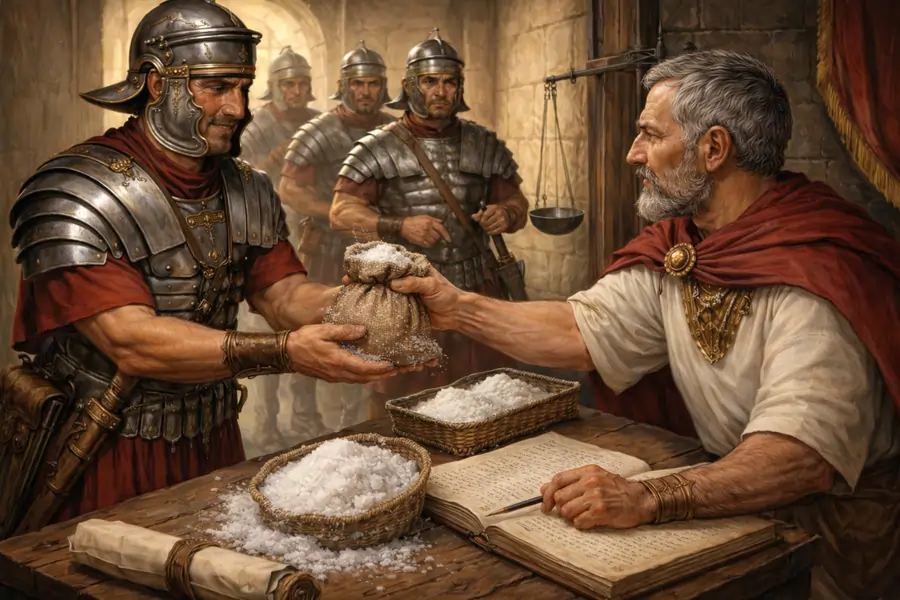
Roman soldiers received regular pay, usually measured in denarii, the standard silver coin of the Roman world. During the reign of Augustus, the base annual salary for a legionary was set at around 225 denarii. While this may seem modest, it provided a stable and predictable income in an ancient economy where financial security was far from guaranteed. According to Tacitus (Annals 1.17), Augustus fixed a legionary's annual pay at 225 denarii.
However, a Roman soldier's pay was not entirely disposable income. The army deducted costs for food, equipment, clothing, and other essentials. As a result, soldiers often received only a portion of their official wage in hand. Even so, this system ensured that their basic needs were consistently met, allowing them to focus entirely on military duties.
The word "salary" itself has its origins in the Roman military system. It comes from the Latin term salarium, which is linked to sal, meaning salt. In ancient times, salt was a valuable commodity used for preserving food and maintaining health. Roman soldiers were sometimes given allowances to purchase salt, and over time, the term salarium evolved to refer more broadly to a soldier's pay. This linguistic connection eventually gave rise to the modern English word "salary," reflecting how deeply Roman systems have influenced everyday life even today.
Over time, military wages increased as emperors sought to maintain loyalty and morale among their troops. As the empire expanded and conflicts became more frequent, the army's importance grew, and so did the financial incentives offered to soldiers. In addition to regular pay, Roman soldiers could earn extra rewards through bonuses and spoils of war. After successful campaigns, they might receive money, valuable goods, or a share of captured wealth. Serving under successful commanders could therefore significantly improve a soldier's financial prospects.
Perhaps the most important financial benefit came at the end of service. After completing around 20 to 25 years in the army, soldiers were typically granted a retirement reward, often in the form of land or a substantial cash payment (Cassius Dio, Roman History 55.23). These rewards not only compensated veterans but also helped Rome establish loyal settlements in newly conquered territories.
For many recruits, the promise of long-term security made military service an attractive option. Despite the hardships of daily life, the Roman army offered a rare combination of steady income, structured support, and a secure future. In this way, the Roman military was not only a powerful fighting force but also an economic system that sustained its soldiers throughout their lives and left a lasting legacy-even in the language we use today.
Weapons and Equipment
Roman soldiers were equipped with standardized weapons that made them highly effective in battle. Their primary weapon was the gladius, a short sword designed for close combat. They also carried the pilum, a throwing spear engineered to bend on impact, making it difficult for enemies to reuse (Polybius, Histories 6.23; Vegetius, De Re Militari 2.15).
The large rectangular shield, known as the scutum, provided excellent protection and allowed soldiers to form defensive formations. Armor and helmets provided additional protection, while each soldier carried a heavy pack containing tools, food, and personal belongings.
This combination of weapons and equipment made Roman soldiers adaptable and resilient in a wide range of combat situations.
How Roman Soldiers Set Up Camp
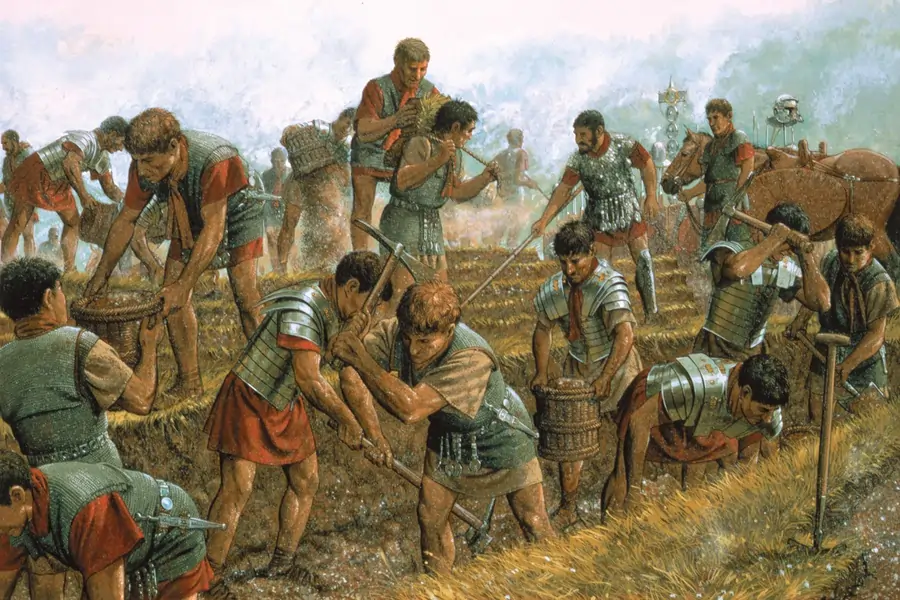
One of the most remarkable aspects of Roman military life was the daily construction of fortified camps. At the end of each day's march, soldiers would build a camp from scratch, even in enemy territory. The process began with selecting a suitable location, followed by digging defensive ditches and constructing wooden walls. Inside, the camp was organized in a precise grid layout, ensuring order and efficiency (Polybius, Histories 6.27-42).
This routine provided safety and structure, allowing Roman armies to operate effectively over long campaigns. Roman engineering was also the primary reason for many famous victories like the Battle of Alesia where Julius Caesar's double-wall strategy helped defeat the Gauls. The Romans were capable of building their camps (castra) in three to five hours. This was because the process was standardised and they were trained rigorously (Josephus, The Jewish War 3.70-84 describes Roman camp construction in remarkable detail).
Daily Routine of a Roman Soldier
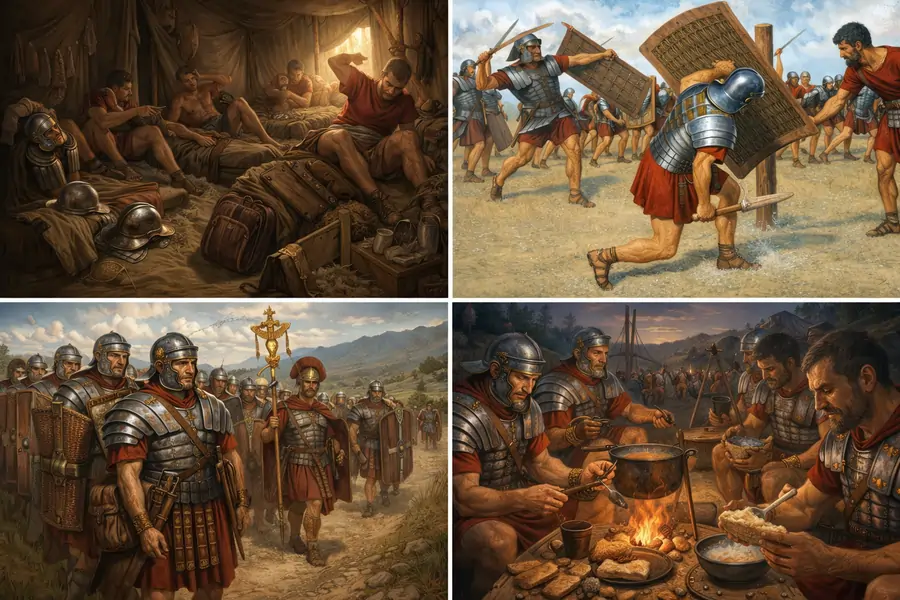
The daily routine of a Roman soldier was highly structured and disciplined, leaving little room for rest or idleness. Every aspect of the day was organized to maintain readiness, efficiency, and order within the ranks. This strict routine was one of the key reasons the Roman army remained effective across centuries of warfare.
The day typically began at dawn with signals or orders from commanding officers. Soldiers would wake, gather their equipment, and prepare for the day's march. Before setting out, they ensured that their weapons and armor were in proper condition, as inspections were common and discipline was strictly enforced.
Marching formed a major part of daily life. Roman soldiers often covered long distances, sometimes up to 20 miles in a single day, while carrying heavy packs that could weigh 30-40 kilograms (Vegetius, De Re Militari 1.9). These marches were not random movements but carefully planned operations that allowed Roman armies to position themselves strategically and maintain pressure on their enemies.
Once the marching phase ended, the most physically demanding task of the day began: building the camp. Regardless of location, Roman soldiers were expected to construct a fortified camp every evening. This involved digging ditches, erecting defensive walls, and organizing the camp in a precise grid layout. Even after a long march, this work had to be completed before soldiers could rest.
After the camp was secured, soldiers prepared their food, often cooking in small groups. This time also allowed for brief rest and social interaction, helping maintain morale within the unit. However, relaxation was limited, as duties were still ongoing.
Nighttime brought another layer of responsibility. Soldiers were assigned to rotating guard shifts to protect the camp from surprise attacks (Polybius, Histories 6.33-37). Strict watch schedules ensured that the camp remained secure at all hours, even while most soldiers slept.
This predictable cycle of marching, building, eating, and guarding created a rhythm that reinforced discipline and unity. Over time, this routine became second nature, allowing Roman soldiers to operate efficiently even under extreme pressure.
The consistency of this daily routine ensured that Roman armies were always prepared-whether advancing into enemy territory or facing battle. It was this combination of structure, endurance, and discipline that made Roman soldiers one of the most formidable military forces in history.
Hardships of Roman Military Life
Life in the Roman army was demanding and often harsh. Soldiers endured long marches, carried heavy loads, and faced strict discipline. Food could be limited during extended campaigns, and the threat of enemy attack was constant.
Physical exhaustion was a constant companion. Soldiers were expected to march for hours under the weight of their equipment, often through difficult terrain and extreme weather conditions. Whether facing intense heat, heavy rain, or cold nights, Roman soldiers had to continue operating without complaint. This relentless physical strain tested both endurance and mental resilience.
Discipline within the army was equally strict. Punishments for disobedience or failure could be severe, including flogging or even execution in extreme cases (Vegetius, De Re Militari 2.5; Polybius, Histories 6.37-38). This harsh system ensured order but also added psychological pressure to an already demanding lifestyle.
Another major hardship was the uncertainty of war. Soldiers could be stationed far from home for years, with little contact with family. Campaigns often took them into unfamiliar and hostile territories, where supply shortages, disease, and ambushes were real dangers. These challenges were especially evident during prolonged conflicts, where survival depended as much on endurance as on combat skill.
Why Roman Soldiers Were So Effective
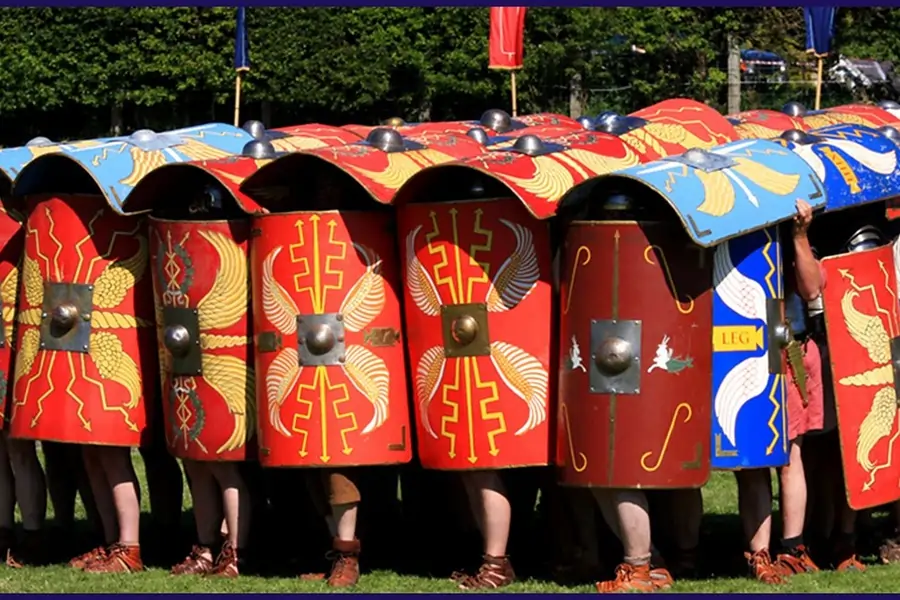
The effectiveness of Roman soldiers came from a combination of discipline, training, and organization. Their ability to follow orders, adapt to changing conditions, and maintain structure under pressure set them apart from many of their enemies.
One of the key strengths of the Roman army was its consistency. Every soldier was trained in the same methods, used similar equipment, and operated within a well-defined command structure. This uniformity allowed Roman units to function smoothly, even in chaotic situations where less organized armies might collapse.
Roman soldiers were also highly adaptable. They learned from defeats and adjusted their strategies accordingly, improving their tactics over time (Adrian Goldsworthy, The Complete Roman Army; Polybius, Histories Book 6). This willingness to evolve gave them a significant advantage against opponents who relied on rigid or traditional methods of warfare.
In addition, the Roman army combined combat strength with engineering skill. Soldiers were not just fighters; they built roads, bridges, and fortified camps that supported long-term campaigns. This ability to create infrastructure on the move allowed Roman forces to operate efficiently across vast territories.
Ultimately, it was the combination of discipline, adaptability, and organization that made Roman soldiers so effective. These qualities enabled Rome to overcome setbacks, win decisive battles, and maintain control over a vast empire for centuries.
Conclusion
The daily life of a Roman soldier was not defined by glory, but by discipline, endurance, and relentless routine. From grinding their own food to building fortified camps every night, Roman soldiers lived a life that demanded both physical strength and mental resilience. These were not occasional efforts-they were daily expectations that shaped every aspect of military life.
It was this consistency that made the Roman army so powerful. While other forces relied on momentary bravery, Roman soldiers relied on structure, training, and preparation. Their ability to march long distances, sustain themselves with simple resources, and remain organized under pressure allowed Rome to win wars, recover from defeats, and expand across vast territories.
Ultimately, the strength of Rome was built not just on great generals or decisive battles, but on the everyday lives of its soldiers. Their routine, discipline, and resilience formed the foundation of an empire that lasted for centuries-proving that true military power is forged long before the battlefield.
References and Further Reading
- Polybius. The Histories, Book VI. https://penelope.uchicago.edu/Thayer/E/Roman/Texts/Polybius/6*.html
- Vegetius. De Re Militari (Epitoma Rei Militaris). https://www.gutenberg.org/ebooks/12373
- Livy. Ab Urbe Condita, Books XXI-XXIII.
- Tacitus. Annals. https://penelope.uchicago.edu/Thayer/E/Roman/Texts/Tacitus/Annals/1A*.html
- Cassius Dio. Roman History. https://penelope.uchicago.edu/Thayer/E/Roman/Texts/Cassius_Dio/home.html
- Josephus. The Jewish War. https://www.gutenberg.org/ebooks/2850
- Pliny the Elder. Natural History. https://penelope.uchicago.edu/Thayer/E/Roman/Texts/Pliny_the_Elder/home.html
- Goldsworthy, Adrian. The Complete Roman Army. Thames & Hudson, 2003.
- Southern, Pat. The Roman Army: A Social and Institutional History. Oxford University Press, 2007.
- Le Bohec, Yann. The Imperial Roman Army. Routledge, 2000.
Recommended Books
This article may contain affiliate links. If you purchase through these links, I may earn a small commission at no extra cost to you.
Related Articles
Frequently Asked Questions
Did Roman soldiers cook their own food?
Yes, Roman soldiers were expected to cook their own food. They were typically issued raw ingredients such as wheat, which they had to grind into flour and prepare as bread or porridge. Cooking was often done in small groups, making soldiers highly self-sufficient during campaigns.
How much weight did a Roman soldier carry daily?
A Roman soldier typically carried between 30 to 40 kilograms of equipment, including weapons, armor, tools, and food supplies. This heavy load earned them the nickname 'Marius' Mules' and was a key part of their endurance training.
Why did Roman soldiers build camps every day?
Roman soldiers built camps every day to ensure safety and maintain discipline. Even after long marches, they constructed fortified camps with ditches and walls to protect themselves from surprise attacks and maintain order within the army.
What drink did Roman soldiers have instead of water?
Roman soldiers commonly drank posca, a mixture of water and vinegar. This drink was safer than plain water and helped prevent illness, especially during long campaigns in unfamiliar regions.
How long did a Roman soldier serve in the army?
A Roman soldier typically served for about 20 to 25 years. After completing their service, they were often rewarded with land or a financial payment, which provided long-term security.
Did Roman soldiers get paid in salt?
Roman soldiers were not directly paid in salt, but the term 'salary' comes from the Latin word 'salarium,' which is related to salt. Soldiers sometimes received allowances to purchase salt, which was a valuable commodity in the ancient world.
Reference and Links
Food History: A Roman soldier's diet - Detailed information in the diet of Roman soldiers.
Add Comment