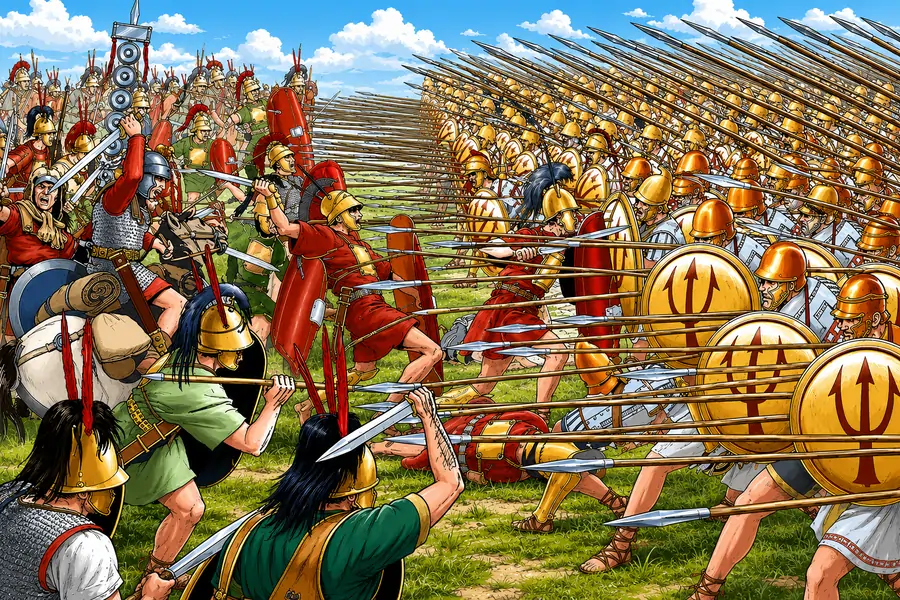
The clash between the Roman legion and the Macedonian phalanx was one of the defining military rivalries of the ancient world. The massive pike formations of the Macedonian phalanx dominated infantry formations for nearly two centuries. The successors of Alexander the Great continued to rely on the Macedonian phalanx to dominate the battlefields of the ancient Mediterranean. Rome, meanwhile, developed a flexible and disciplined legionary system that would eventually challenge and overthrow Macedonian dominance. Battles such as Cynoscephalae in 197 BC and Pydna in 168 BC demonstrated that military adaptability, discipline, and flexibility could overcome even the most feared phalanx formation in history.
Table of Contents
- Origins of the Macedonian Phalanx and Roman Legion
- Why the Macedonian Phalanx Was So Effective
- Weaknesses of the Macedonian Phalanx
- Rise of Rome and the Roman Legion
- Strengths of the Roman Legion
- Weaknesses of the Roman Legion
- Weapons and Armor Comparison
- Training, Discipline, and Organization
- Major Battles Where Rome Defeated the Macedonian Phalanx
- Why the Roman Legion Defeated the Macedonian Phalanx
- Legacy of the Legion and the Phalanx
- Sources and References
Origins of the Macedonian Phalanx and Roman Legion
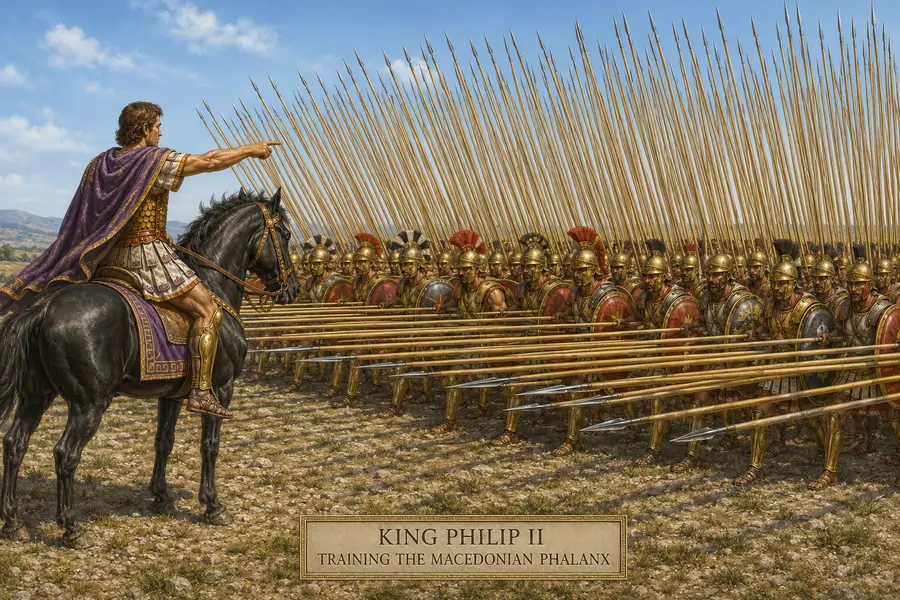
The Macedonian phalanx was created by King Philip II of Macedon and reached its peak under his son, Alexander the Great. Philip transformed the Macedonian army during the 4th century BC by introducing new training methods, professional soldiers, and the famous sarissa, a long pike that gave the phalanx unmatched reach. Ancient historian Arrian described the Macedonian army as a highly disciplined force capable of maintaining cohesion even during rapid battlefield maneuvers (Arrian, Anabasis, 1.14).
Alexander used this revolutionary system along with the Companion Cavalry to conquer the mighty Persian Empire in a series of famous victories including the Battle of the Granicus River, the Battle of Issus, the Siege of Tyre, and the decisive Battle of Gaugamela. Historian N.G.L. Hammond argued that Philip II's military reforms transformed Macedon from a relatively weak kingdom into the dominant military power in Greece by professionalizing infantry warfare and standardizing training (Hammond, The Genius of Alexander the Great).
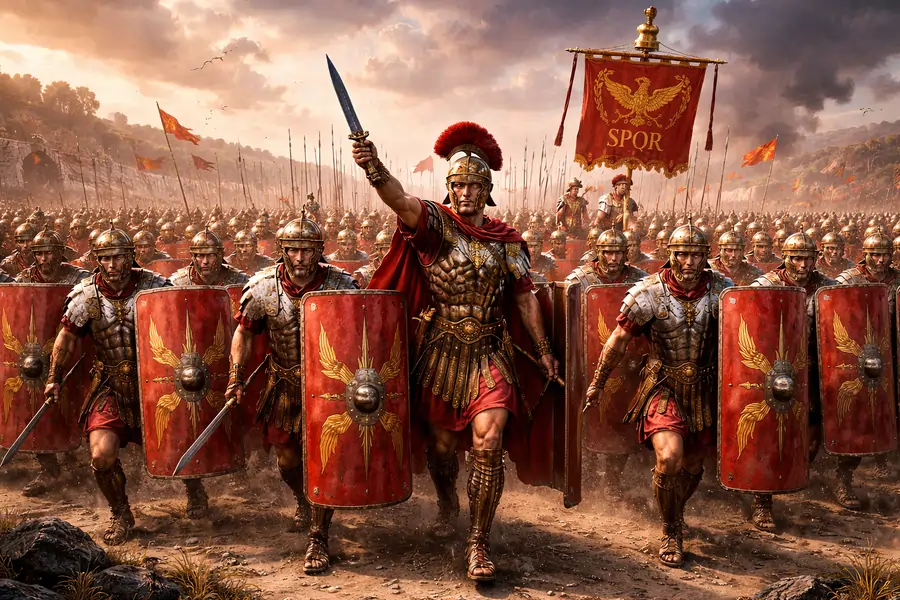
The Roman legions took an entirely different approach. Early Roman armies borrowed heavily from Greek and Etruscan military traditions, but Rome gradually transitioned to a more flexible infantry system. By the middle Republican period, the Romans organized soldiers into maniples, smaller tactical units capable of independent movement. This flexibility became the Roman legion's greatest advantage. Unlike the rigid phalanx, Roman soldiers could adapt and operate even in uneven terrain during chaotic battlefield conditions. Rome's military system also benefited from the Republic's enormous manpower reserves and relentless military culture.
Why the Macedonian Phalanx Was So Effective
The Macedonian phalanx remained one of the deadliest infantry formations in ancient warfare for a long period. Its strength came from discipline, cohesion, and the intimidating reach of the sarissa.
The Sarissa Pike
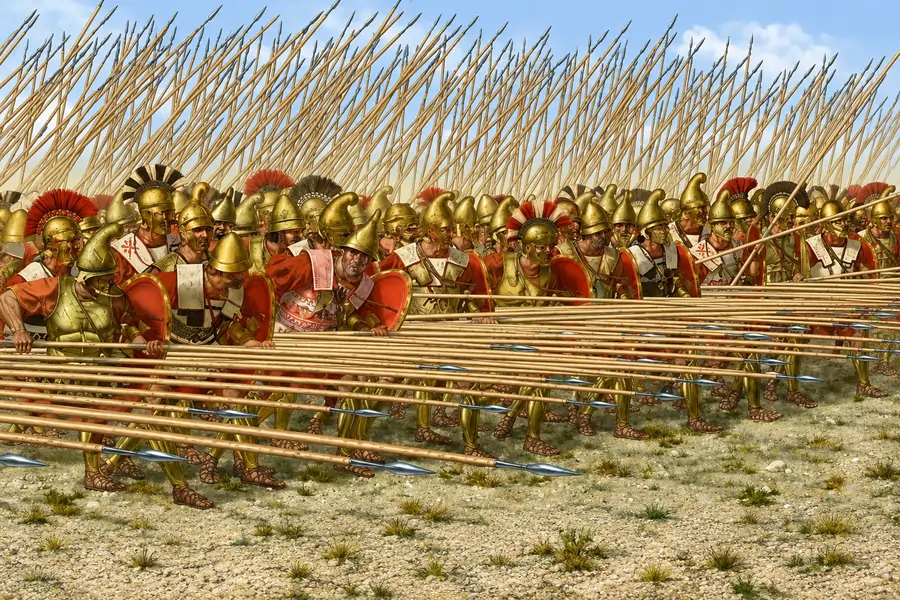
The sarissa was the primary weapon for the Macedonian phalanx and was typically between 15 and 20 feet long. This allowed several rows of soldiers to project spear points toward the enemy simultaneously. The phalanx was very strong in a frontal attack, as attackers had to push through multiple layers of spearheads before reaching the soldiers themselves.
Greek historian Polybius wrote that the Macedonian phalanx was nearly impossible to defeat from the front when it maintained proper formation and terrain conditions (Polybius, Histories, 18.29-32). The tightly packed ranks of long spears created what ancient writers often described as a "wall of iron."
Professional Training
Philip II transformed the Macedonian army into a professional fighting force. Having a professional army meant that the soldiers could be drilled constantly and taught to move as a unified body. Maintaining formation while advancing, turning, or lowering pikes required intense discipline and coordination.
The effectiveness of this system became clear during Alexander's campaigns against the Persian Empire. Even when fighting against larger Persian armies, the phalanx pinned enemy forces in place while cavalry units delivered decisive attacks on the flanks.
Psychological Impact
The sight of thousands of pikes advancing together created enormous psychological pressure. Ancient armies often broke before even reaching close combat.
Combined Arms Warfare
The phalanx was not designed to fight alone. Historian Donald Engels emphasized that Alexander's military system depended not only on the phalanx itself but also on the coordination of infantry and cavalry units working together and supporting each other (Engels, Alexander the Great and the Logistics of the Macedonian Army).
Weaknesses of the Macedonian Phalanx
Despite its strengths, the Macedonian phalanx had major weaknesses that became increasingly obvious against dangerous opponents like Rome, who adapted quickly.
Lack of Flexibility
The greatest weakness of the phalanx was its rigidity. The formation depended on maintaining the close order of soldiers. If the line was broken in any place, these openings exposed the soldiers of the formation. Armed with long pikes, the Macedonian phalanx struggled in close combat once the formation was breached. Unlike Roman legionaries, phalangites could not easily maneuver or fight independently.
Difficulty on Rough Terrain
The phalanx performed best on flat level ground. Hills, rocks, forests, and uneven terrain disrupted formation cohesion. Once the cohesion was lost, the phalanx fell apart. Roman commanders deliberately exploited rough terrain whenever possible. At the Battle of Pydna, uneven ground broke the Macedonian formation, allowing Roman legionaries to penetrate gaps and attack from the sides.
Weakness Against Flank Attacks
The phalanx was strongest from the front but vulnerable when attacked from the sides and rear. Long pikes were difficult to turn quickly. Once enemies reached close quarters, phalangites struggled to defend themselves effectively.
Dependence on Coordination
The system required perfect coordination between all soldiers in the formation. If morale collapsed or units became separated, the phalanx could be taken apart by the enemy.
Limited Tactical Adaptability
Historian Victor Davis Hanson argues that the Macedonian phalanx represented the peak of classical shock infantry warfare, but its specialization ultimately made it less adaptable than the Roman legionary system (Hanson, The Western Way of War). The phalanx depended on close cavalry support and level terrain to remain effective, which was not applicable in all battles.
Rise of Rome and the Roman Legion
Unlike Macedonia's sudden surge in power, Rome's rise was gradual but relentless. Rome also stood the test of time and adapted its military through centuries of continuous warfare. Roman historian Livy noted that the Roman Republic grew stronger through constant warfare and military adaptation, particularly during conflicts against neighboring Italian tribes and Carthage (Livy, History of Rome, Book 8).
The Roman Republic fought wars against neighboring Italian tribes, Carthage, Greek states, and eventually the Hellenistic kingdoms. With each conflict, Rome adapted and improved its military system. Roman society valued discipline, endurance, and military service. Citizens were expected to serve in the army, and commanders gained political prestige through victory.
The Roman legion evolved into a highly organized fighting force capable of operating deep inside enemy territory. Roman soldiers built roads, bridges, and fortified camps, allowing armies to campaign efficiently over long distances. Roman historian Livy described Roman persistence after military disasters as one of the Republic's greatest strengths, allowing Rome to recover repeatedly from devastating defeats (Livy, History of Rome, Book 22).
Strengths of the Roman Legion
Flexibility
The Roman legion's greatest strength was adaptability. Units could maneuver independently, exploit gaps, and respond quickly to battlefield changes and instructions. Even if the formation was broken, the Roman soldiers were fairly equipped to fight on their own. Polybius admired the Roman manipular legion because of its flexibility and ability to adapt to changing battlefield conditions, especially compared to the rigid structure of the phalanx (Polybius, Histories, 18.32).
Military historian Adrian Goldsworthy explains that the Roman legion's flexibility allowed units to maneuver independently, exploit terrain, and maintain effectiveness even when formations became partially disorganized (Goldsworthy, The Complete Roman Army).
Close Combat Superiority
Roman legionaries excelled in close combat. Armed with the short gladius, large shield, and heavy javelins, they were deadly at short range. Once the Romans closed the distance, phalangites struggled to defend themselves.
Discipline and Training
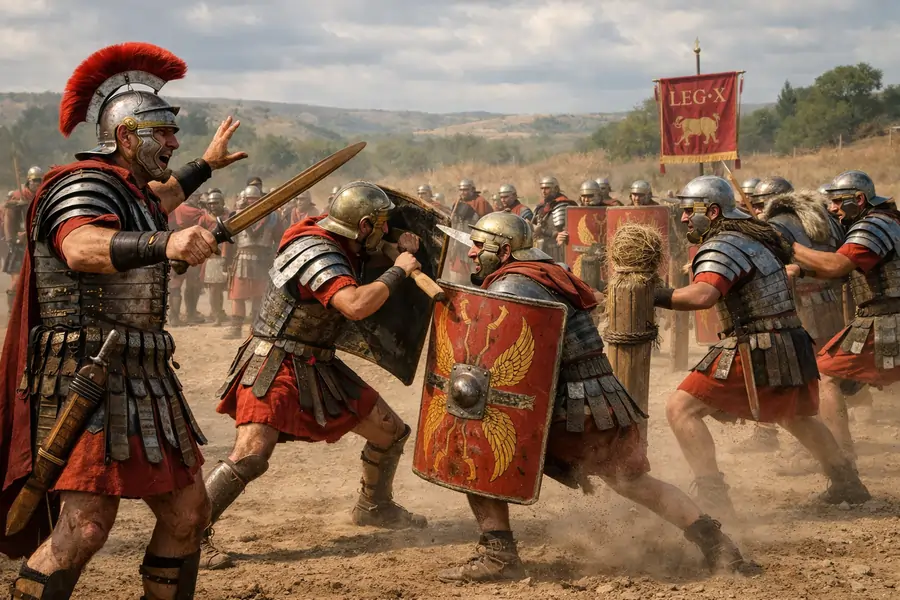
Roman soldiers also underwent rigorous training similar to the Macedonians. Vegetius later claimed that Roman military success came primarily from discipline, training, and organization rather than superior numbers (Vegetius, De Re Militari, Book I). Peter Connolly noted that Roman soldiers trained extensively with heavier practice weapons to build endurance and battlefield effectiveness (Connolly, Greece and Rome at War).
Read more about the realities of Roman military life in Daily Life of a Roman Soldier.
Engineering and Logistics
Roman armies excelled at logistics. Roads, camps, siege engines, and supply systems allowed Rome to sustain long campaigns.
Adaptability to Different Enemies
Rome fought Celts, Carthaginians, Greeks, Numidians, and many other enemies. With each enemy they fought, the Romans adapted and improved their military doctrine.
Weaknesses of the Roman Legion
Vulnerability to Cavalry
Roman infantry sometimes struggled against strong cavalry forces, especially in open terrain. Hannibal Barca exploited this weakness at Cannae.
Dependence on Discipline
Roman tactics depended heavily on discipline, training, and coordination. Poor leadership or the presence of many new recruits could cause disaster.
Political Instability
Later Roman armies became increasingly tied to ambitious generals like Julius Caesar rather than the Republic itself, contributing to civil wars.
Heavy Casualties
Roman warfare often relied on endurance and attrition. Victory was essential to the Romans, no matter the cost. The Romans were willing to take huge casualties in order to secure victory.
Weapons and Armor Comparison
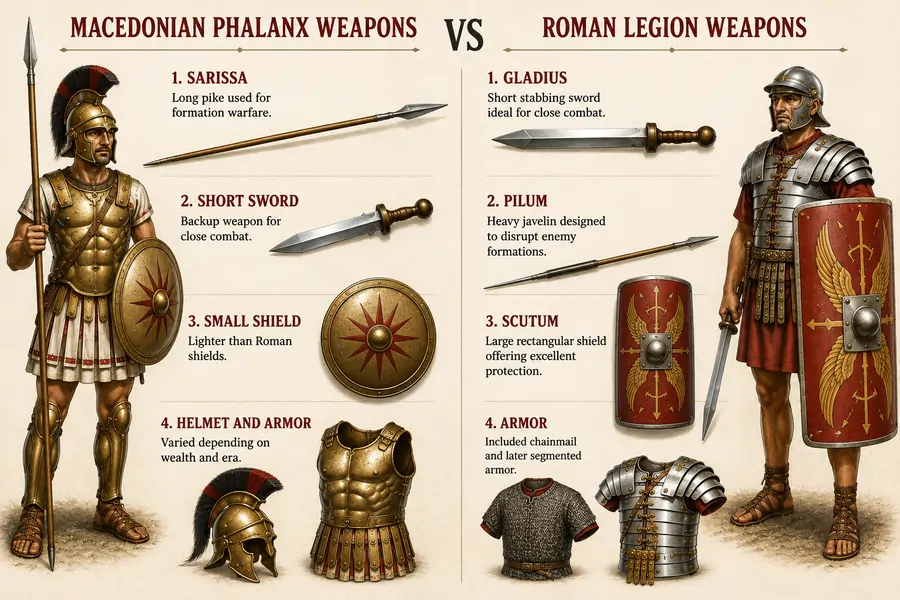
Macedonian Phalanx Weapons
- Sarissa: Long pike used for formation warfare.
- Short sword: Backup weapon for close combat.
- Small shield: Lighter than Roman shields.
- Helmet and armor: Varied depending on wealth and era.
Roman Legion Weapons
- Gladius: Short stabbing sword ideal for close combat.
- Pilum: Heavy javelin designed to disrupt enemy formations.
- Scutum: Large rectangular shield offering excellent protection.
- Armor: Included chainmail and later segmented armor.
Comparison of Combat Styles
The Macedonian phalanx relied on maintaining distance and formation integrity. They were strong when facing the enemy head-on. Roman legionaries focused on aggressive close combat. Roman soldiers typically threw pila before engaging. These heavy javelins could disrupt phalanx cohesion by wounding soldiers and creating confusion. Once gaps formed in the enemy formation, Roman infantry rushed into close quarters where the long sarissa became difficult to use effectively.
Training, Discipline, and Organization
Both armies valued discipline and training and were equally strong. However, they approached warfare differently. The Macedonian phalanx functioned like a giant machine. Every soldier depended on formation integrity. Coordination was essential. Once this integrity was broken, the army collapsed.
The Roman legion emphasized both discipline and individual initiative. Small-unit commanders could respond independently during battle, which gave them a lot of tactical flexibility. Roman armies also benefited from exceptional camp organization. Every marching camp followed a standard layout, improving efficiency and security.
See also: Ancient Soldiers: Mentality, Survival Rates, and Morale.
Major Battles Where Rome Defeated the Macedonian Phalanx
Battle of Cynoscephalae (197 BC)
The Battle of Cynoscephalae was fought during the Second Macedonian War. This was one of the first major battles that demonstrated the superiority of the Roman legions over the phalanx. Roman forces under Titus Quinctius Flamininus fought King Philip V of Macedon. The battlefield was rough and uneven, causing parts of the Macedonian phalanx to become disorganized.
Polybius described how Roman flexibility allowed units to exploit gaps and attack vulnerable flanks (Polybius, Histories, 18.26-32). The Romans secured victory and cemented the superiority of their legions. The battle broke the invincibility of the phalanx and exposed its weaknesses when disrupted.
Battle of Pydna (168 BC)
The Battle of Pydna was the decisive confrontation between Rome and Macedon. King Perseus initially pushed back the Roman forces with the advancing phalanx. Proving the dominance of the phalanx under favorable conditions, the Macedonians were holding the upper hand. Ancient historian Plutarch described the terrifying appearance of the advancing Macedonian line, stating that the dense forest of sarissas initially appeared unstoppable to Roman observers (Plutarch, Life of Aemilius Paulus, 19).
However, Plutarch also explained that uneven terrain disrupted the cohesion of the Macedonian line. Once again, these gaps allowed the Roman legionaries to close the distance and attack between the formations. Once in close range, the long pikes became ineffective, losing the initiative (Plutarch, Life of Aemilius Paulus, 20-21). Once the Romans penetrated the formation, the battle turned into a massacre.
Battle of Magnesia (190 BC)
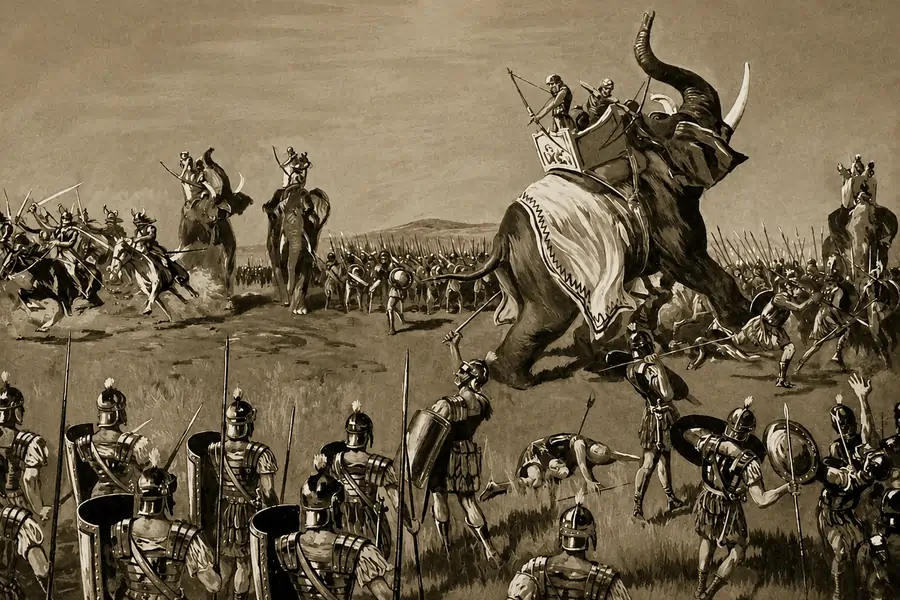
Although the Battle of Magnesia was fought between the Romans and the Seleucid Empire rather than Macedon directly, Magnesia also demonstrated Roman superiority against Hellenistic armies. The Seleucid phalanx was pelted with Roman javelins (Pila) from a distance and engaged on the flanks by the Roman legion. Once the Romans closed in, the phalanx collapsed. These battles collectively marked the decline of the traditional Hellenistic military system and the rise of Roman dominance in the eastern Mediterranean.
Why the Roman Legion Defeated the Macedonian Phalanx
The Romans adapted their army and military doctrine based on the opponents they faced. This tactical flexibility allowed them to exploit the weaknesses in the phalanx:
- The Romans exploited the terrain to their advantage. The Roman legion was more suited to adapt and fight in rough terrain, while the Macedonian phalanx struggled to fight with cohesion.
- The Phalanx was not strong in close-quarter fighting. The Romans engaged the phalanx with javelins at long range and quickly closed the gap to exploit gaps in the formation. The long sarissa pikes were cumbersome and hard to maneuver in close quarters.
- The Macedonian phalanx was excellent in fighting head-on, but once their flanks were exposed, they struggled. The Romans repeatedly exploited this weakness.
- The Romans had a superior military doctrine, which enabled small groups of soldiers to act independently even if the formation broke. This flexibility enabled them to function effectively in rough terrain and amidst the chaos of battle.
- Rome had better leadership and a seasoned military. After the death of Alexander, Macedon was declining and was a shadow of its former glory.
Legacy of the Legion and the Phalanx
The Macedonian phalanx remains one of the most influential military formations in history. Under Philip II and Alexander the Great, it helped Macedon rise from a weak nation to an empire stretching from Greece to India. At the time of its creation, it was one of the most sophisticated and advanced military units of the time.
Alexander's victories demonstrated the incredible power of coordinated Hellenistic warfare. However, warfare evolved. The Roman legion represented a more flexible and adaptable military system. The phalanx evolved slowly compared to the Roman legions, which were constantly adapting. Unable to adapt, it was quickly overcome by superior tactics.
Rome's victories over Macedon marked the beginning of Roman dominance in the eastern Mediterranean and the gradual decline of the Hellenistic kingdoms. The rivalry between the Roman legion and the Macedonian phalanx continues to fascinate historians because it highlights an enduring lesson of military history: adaptability often defeats rigidity.
References and Further Reading
Ancient Sources
- Polybius - The Histories
- Vegetius - De Re Militari
- Livy - History of Rome
- Arrian, Anabasis of Alexander
- Plutarch, Life of Alexander
Modern Historians and Scholarship
- Peter Connolly - Greece and Rome at War
- Victor Davis Hanson - The Western Way of War
- N.G.L. Hammond - The Genius of Alexander the Great
- Donald Engels - Alexander the Great and the Logistics of the Macedonian Army
- Philip Sabin - Lost Battles
Recommended Books
This article may contain affiliate links. If you purchase through these links, I may earn a small commission at no extra cost to you.
Related Articles
Frequently Asked Questions
Why was the Roman legion more flexible than the Macedonian phalanx?
The Roman legion used smaller tactical units called maniples, which could maneuver independently during battle. Unlike the Macedonian phalanx, which depended on maintaining a rigid formation, Roman legionaries could adapt quickly to rough terrain, battlefield confusion, and enemy attacks from multiple directions.
What made the sarissa so effective in ancient warfare?
The sarissa was a massive pike used by the Macedonian phalanx that could reach up to 20 feet in length. Its extreme reach allowed several rows of soldiers to project spear points toward the enemy at the same time, making frontal attacks against the phalanx extremely dangerous.
Why did the Macedonian phalanx struggle on uneven terrain?
The Macedonian phalanx depended on tightly packed formations to keep its long pikes aligned properly. Uneven ground created gaps between soldiers and disrupted coordination, making the formation vulnerable to fast-moving enemies like Roman legionaries.
How did Roman legionaries fight at close range?
Roman legionaries relied on the gladius, a short stabbing sword designed for brutal close combat. After throwing pila to disrupt enemy formations, Roman soldiers advanced behind large shields and fought aggressively in hand-to-hand combat.
Which battle proved the Roman legion was stronger than the Macedonian phalanx?
The Battle of Pydna in 168 BC is widely considered the clearest demonstration of Roman superiority over the Macedonian phalanx. During the battle, rough terrain disrupted the Macedonian formation, allowing Roman legionaries to exploit gaps and defeat the phalanx in close combat.
Did Alexander the Great ever fight against Roman legions?
No, Alexander the Great never fought the Romans. Alexander died in 323 BC before Rome became a major Mediterranean power. The famous clashes between Roman legions and Macedonian phalanxes occurred later during Rome's wars against the Hellenistic successor kingdoms.
Add Comment