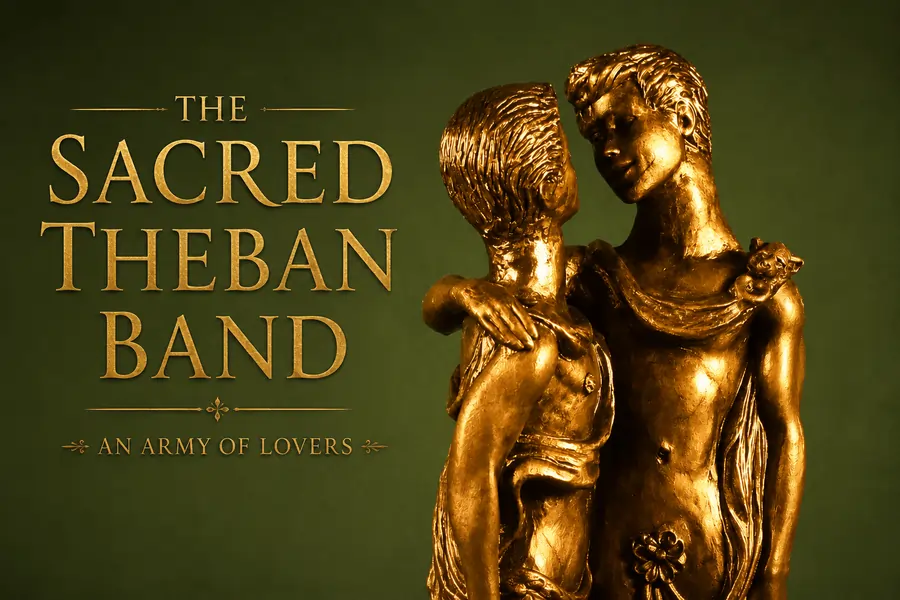
The Sacred Band of Thebes was one of the most legendary warrior groups of ancient Greece. They created an elite corps of 300 warriors whose discipline, loyalty, and battlefield skill helped transform Thebes into the dominant Greek power of the 4th century BC. The Theban band was created to counter Spartan aggression. The Sacred Band became famous for defeating Sparta at the Battle of Leuctra, breaking the myth of Spartan invincibility. Their story combines military innovation, philosophy, courage, and sacrifice, making them one of the most fascinating special forces units in ancient military history.
Although the Sacred Band of Thebes was often overshadowed by Sparta and Macedon in popular history, they were crucial in shifting the balance of power in Greece. Their victories demonstrated the might of the Thebans and challenged the Greek states for dominance, paving the way for the rise of Macedon under Philip II and Alexander the Great.
Table of Contents
- Origins of the Sacred Band of Thebes
- Purpose and Military Role
- The Philosophy Behind the Sacred Band
- Who Comprised the Sacred Band?
- Training and Battlefield Tactics
- The Battle of Leuctra and the Defeat of Sparta
- The Rise of Theban Power
- The Final Stand at the Battle of Chaeronea
- Legacy of the Sacred Band
- Frequently Asked Questions
- References and Sources
Origins of the Sacred Band of Thebes
The Sacred Band of Thebes emerged during one of the most unstable periods in Greek history. Following the Peloponnesian War, Sparta emerged as the dominant military power in Greece. Harsh political control over rival city-states was imposed, including Thebes. Spartan interference created growing resentment throughout the Greek world and eventually sparked resistance movements against Spartan rule.
According to the Greek historian Plutarch, the Theban elite force was formed around 378 BC under the leadership of the Theban commander Gorgidas. Sparta had the best heavy infantry in ancient Greece, and the Theban band was designed as a permanent elite force to counter them. Unlike most Greek armies, which depended heavily on temporary citizen militias, the Sacred Band operated as a professional standing unit. Historian Victor Davis Hanson notes that Greek warfare was traditionally seasonal and citizen-based, making the Sacred Band highly unusual for its time.
There were a large number of military reforms introduced by Theban leaders such as Pelopidas and Epaminondas. Historian John Buckler argues that these reforms transformed Thebes from a secondary Greek power into the dominant military state in mainland Greece. For generations, Sparta's military reputation had intimidated rival city-states. The Spartan professional warrior system and the famous Agoge training were considered nearly unbeatable. The Sacred Band would eventually break this myth.
Purpose and Military Role
At the core of the Theban military transformation was the Sacred Band. They were an elite group whose primary purpose was to function as a shock force capable of breaking enemy formations during the most critical moments of battle. Ancient Greek warfare relied heavily on morale, discipline, and formation integrity. Historian Adrian Goldsworthy explains that hoplite battles often became brutal pushing contests in which victory depended on which side lost cohesion first.
The Theban elite band excelled because of its professionalism and battlefield experience. Greek soldiers were usually ordinary citizen soldiers who returned to civilian life after campaigns. However, the Sacred Band trained and fought continuously as a professional standing army. They were often positioned at decisive points in combat where the fighting was most intense. Historian N.G.L. Hammond describes the unit as one of the earliest examples of a permanent elite military corps in classical Greece.
The Philosophy Behind the Sacred Band
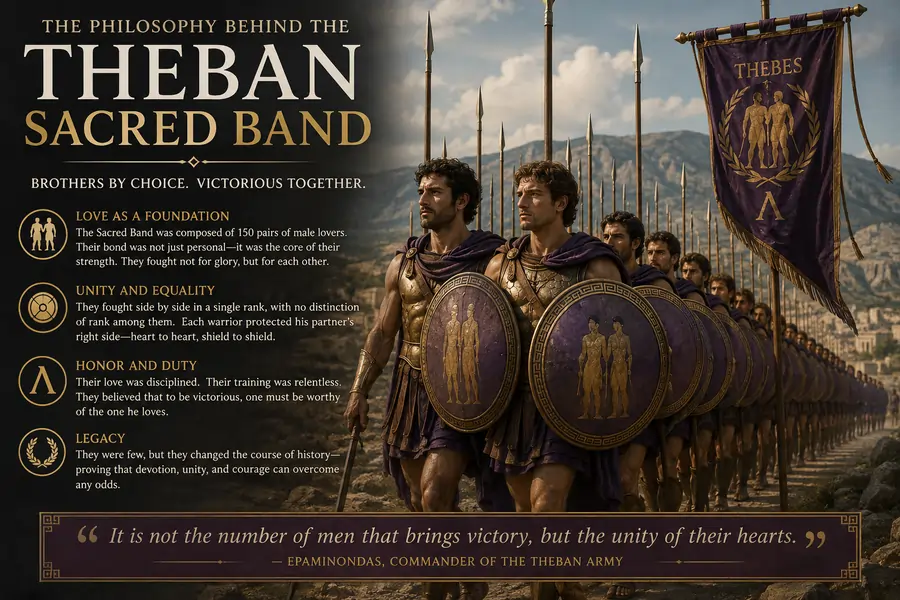
One of the most unique aspects of the Sacred Band was the philosophy behind its organization. Ancient sources state that the unit consisted of 150 pairs of male companions bound by close personal relationships. Plutarch explained that the founders believed soldiers would fight more bravely beside those they loved because the fear of dishonor before a companion was stronger than fear of death itself. Historian David Leitao mentions that these relationships between the soldiers were viewed in Theban society as a source of military unity and battlefield loyalty rather than weakness.
The Sacred Band's structure created extraordinary battlefield cohesion. Each soldier fought not only for victory or survival, but also for the person beside him. This was the core reason for the success of the elite group. Psychology played a massive role in ancient warfare. Historian Victor Davis Hanson emphasizes that Greek battles were often decided by morale collapse rather than sheer casualties. This helps explain why the Sacred Band's emotional bonds were militarily effective. They would rather fight to the death protecting each other than surrender.
The philosophy behind Sparta's military culture was prioritizing absolute obedience to the state. The Sacred Band instead emphasized loyalty between comrades as the foundation of military effectiveness. As explored in studies of ancient soldiers' mentality and morale, psychological resilience often mattered just as much as physical strength in ancient warfare.
Who Comprised the Sacred Band?
The Theban elite band consisted of exactly 300 elite hoplites organized into 150 pairs. Members were carefully selected for courage, physical ability, discipline, and loyalty. Most soldiers came from Theban aristocratic or upper-class backgrounds because full-time military service required substantial financial support. Historian J.K. Anderson notes that maintaining hoplite equipment and constant training was expensive by ancient Greek standards.
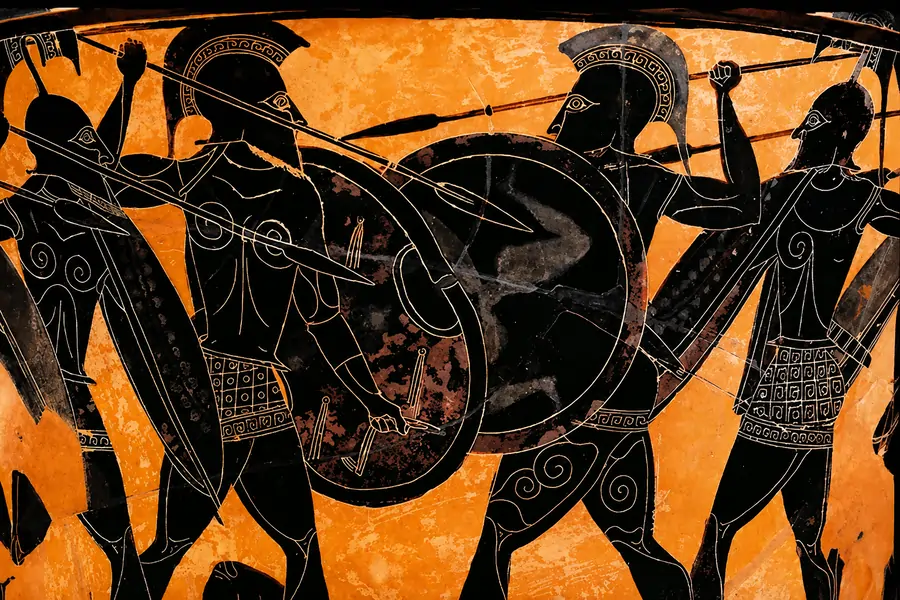
As hoplites, they fought as heavily armored infantry equipped with spears, swords, shields, bronze helmets, cuirasses, and greaves. The effectiveness of tightly organized infantry formations later influenced Macedonian military reforms under Philip II. To know more about the evolution of Greek warfare, you can explore why the Macedonian phalanx became so effective.
Training and Battlefield Tactics
The Sacred Band trained throughout the year, giving them a major advantage over most Greek armies. Their preparation included formation drills, weapons training, endurance exercises, and coordinated maneuver practice. Historian Donald Kagan explains that most Greek citizen armies lacked the ability to execute complicated battlefield maneuvers because they fought infrequently. The Sacred Band's professional structure allowed them to overcome this limitation.
The Sacred Band became especially formidable under the leadership of Epaminondas, one of the greatest military innovators of ancient Greece. Historian Richard A. Gabriel describes Epaminondas as the commander who revolutionized Greek warfare by abandoning rigid symmetrical formations and concentrating force against decisive enemy positions. This revolutionary tactical system would permanently alter Greek warfare and directly contribute to Sparta's downfall.
The Battle of Leuctra and the Defeat of Sparta
The Battle of Leuctra in 371 BC was one of the most important turning points in ancient Greek history. Before Leuctra, Sparta had dominated Greece militarily for generations. Spartan hoplites were widely considered to be the best heavy troops in antiquity and were unbeatable in combat. At Leuctra, the Theban army led by Epaminondas and supported by the Sacred Band faced a larger Spartan force commanded by King Cleombrotus I.
Rather than matching the Spartan line evenly, Epaminondas concentrated his strongest troops - including the Sacred Band - into an unusually deep formation on the left flank. Historian Victor Davis Hanson states that this tactic allowed the Thebans to gain local superiority by overwhelming the Spartan right wing through concentrated attacks rather than engaging them evenly across the battlefield.
The Theban force played a decisive role in breaking Spartan morale and helping kill King Cleombrotus during the fighting. The Spartan defeat at Leuctra shocked the Greek world. Historian Paul Cartledge describes the battle as the moment when "the myth of Spartan invincibility died." The battle permanently changed Greek military doctrine by demonstrating that tactical innovation could defeat even the most feared armies. Leuctra deserves recognition among the most decisive battles in history.
The Rise of Theban Power
Following the victory at Leuctra, Thebes entered a brief but extraordinary period of dominance known as the Theban Hegemony. The Sacred Band participated in numerous military campaigns during this period, including invasions of the Peloponnese and operations against Spartan allies. Historian John Buckler argues that the destruction of Spartan prestige allowed Thebes to become the leading military power in Greece for nearly a decade.
For the first time in centuries, Spartan territory became vulnerable to invasion. This was a massive psychological blow to Sparta's authority throughout Greece. However, Theban dominance proved relatively short-lived. After the deaths of Epaminondas and Pelopidas, Thebes gradually weakened politically and militarily. This weakening paved the way for Macedon under Philip II to rise as the new dominant power in Greece.
The Final Stand at the Battle of Chaeronea
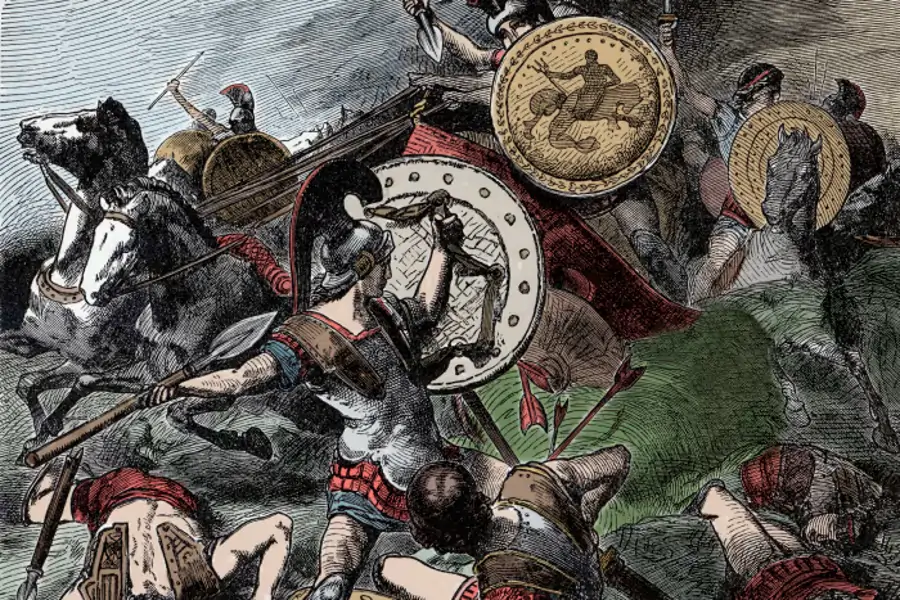
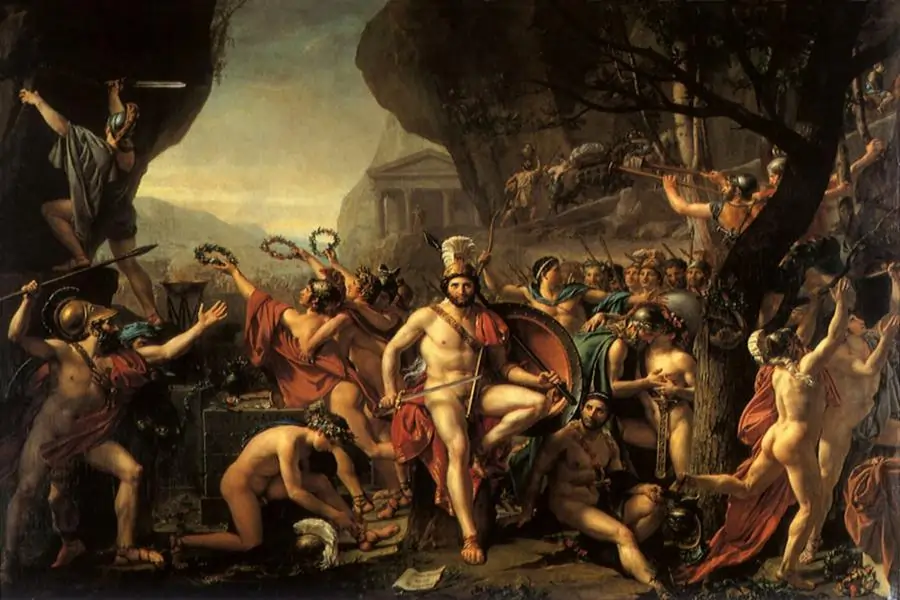
The Sacred Band met its heroic end at the Battle of Chaeronea in 338 BC. This battle was fought between a coalition of Greek city-states led by Athens and Thebes against the rising Macedonian kingdom under Philip II. Among Philip's commanders was his young son, Alexander the Great, who likely commanded part of the Macedonian cavalry during the battle.
The Sacred Band occupied a critical position within the Theban line. During the fighting, the Macedonian army used superior coordination, cavalry maneuverability, and the long pike phalanx to overwhelm the Greek coalition. According to Plutarch, the Sacred Band refused to surrender or retreat and fought to the death where they stood. Plutarch later wrote that Philip II wept upon seeing their bodies piled together, praising their courage and condemning anyone who believed they had acted dishonorably.
Archaeological discoveries near Chaeronea support the ancient accounts. Historian Nicholas Sekunda notes that excavations beneath the Lion of Chaeronea monument uncovered a burial site widely associated with the Sacred Band. Their destruction symbolized the end of the dominance of independent Greek city-states and the beginning of Macedonian superiority under Philip and Alexander. The Macedonian military system that defeated them would later conquer Persia and much of the known world.
Legacy of the Sacred Band
The Sacred Band of Thebes left an extraordinary legacy in military history. They demonstrated the effectiveness of professional standing armies, elite shock troops, and strong battlefield cohesion long before such concepts became common in later military systems. Historian Richard Gabriel argues that the military reforms pioneered by Thebes directly influenced Philip II's reorganization of the Macedonian army.
Their victories shattered the invincibility of Spartan hoplites and proved the importance of tactical innovation, superior morale, and disciplined concentration of force. The Sacred Band also influenced later military reformers such as Philip and Alexander the Great. The unit's final stand at Chaeronea became one of antiquity's most famous examples of courage, where warriors refused to retreat despite overwhelming odds.
References and Sources
- N.G.L. Hammond, A History of Greece to 322 BC.
- David Leitao, The Origins of Same-Sex Desire.
- Victor Davis Hanson, The Western Way of War.
- J.K. Anderson, Military Theory and Practice in the Age of Xenophon.
- Peter Connolly, Greece and Rome at War.
- Donald Kagan, The Peloponnesian War.
- Diodorus Siculus, Bibliotheca Historica
- Victor Davis Hanson, Ripples of Battle.
- Xenophon, Hellenica, Book VI.
- Plutarch, Life of Pelopidas, Chapter 18.
Recommended Books
This article may contain affiliate links. If you purchase through these links, I may earn a small commission at no extra cost to you.
Related Articles
Frequently Asked Questions
Why was the Sacred Band of Thebes so effective against Sparta?
The Sacred Band of Thebes was highly effective against Sparta because it consisted of professionally trained elite soldiers who fought in permanent formations rather than temporary citizen militias. Their battlefield cohesion, deep emotional loyalty between paired warriors, and innovative tactics under Epaminondas allowed them to break the Spartan phalanx at the Battle of Leuctra in 371 BC.
How did the Sacred Band of Thebes train for battle?
The Sacred Band of Thebes likely trained year-round in formation fighting, spear combat, endurance exercises, and coordinated battlefield maneuvers. Unlike most Greek armies that assembled only during wartime, the Sacred Band operated as a permanent professional military unit, giving them superior discipline and combat readiness.
What made the Sacred Band of Thebes different from Spartan warriors?
The Sacred Band of Thebes differed from Spartan warriors because the unit was built around 150 pairs of bonded companions who fought side by side. The Thebans believed emotional loyalty between soldiers improved courage and battlefield discipline. Spartan warriors, by contrast, emphasized obedience to the state and collective military duty through the Agoge system.
Did Alexander the Great destroy the Sacred Band of Thebes?
Alexander the Great likely played a major role in defeating the Sacred Band at the Battle of Chaeronea in 338 BC while serving under his father, Philip II of Macedon. Ancient historians describe the Sacred Band fighting to the death rather than retreating, making their destruction one of the most famous last stands in ancient military history.
Why did the Battle of Leuctra change Greek history?
The Battle of Leuctra changed Greek history because it ended centuries of Spartan military dominance and proved that Spartan hoplites could be defeated through superior tactics and concentrated force. The Theban victory reshaped the balance of power in Greece and influenced the later military reforms of Philip II and Alexander the Great.
Where were the Sacred Band of Thebes buried after Chaeronea?
The Sacred Band of Thebes is believed to have been buried beneath the Lion of Chaeronea monument in Greece. Archaeologists discovered a mass burial site near the monument that many historians associate with the fallen warriors of the Sacred Band after their final stand against the Macedonian army.
Add Comment