Few figures in ancient history transformed the world as dramatically as Julius Caesar. Born into a declining aristocratic family, Caesar rose through ambition, military genius, political skill, and calculated risk to become the most powerful man in Rome. His victories in the Gallic Wars expanded Roman territory, his crossing of the Rubicon triggered a civil war that accelerated the collapse of the Roman Republic, and his reforms created the foundations that later allowed the Roman Empire to emerge. The story of Julius Caesar is not only about conquest and power; It is also a story of loyalty, rivalry, betrayal, and the changing nature of Roman civilization.
Table of Contents
- Early Life of Julius Caesar
- Caesar's Early Political Career and Ambitions
- When Julius Caesar Was Captured by Pirates
- How Julius Caesar Rose to Power in Rome
- The First Triumvirate: Caesar, Pompey, and Crassus
- Julius Caesar and the Gallic Wars
- Major Military Victories of Julius Caesar
- Crossing the Rubicon and the Roman Civil War
- Julius Caesar and Cleopatra
- Caesar as Dictator of Rome
- Why Julius Caesar Was Such a Successful Leader
- The Assassination of Julius Caesar
- Legacy of Julius Caesar
Early Life of Julius Caesar: From Noble Birth to Political Ambition
Gaius Julius Caesar was born on July 12 or 13 (based on ancient calendar representation), 100 BC, into the ancient Roman Julian family (Julii Caesares). Although his family claimed descent from the legendary Trojan prince Aeneas and the goddess Venus, by Caesar's time the family had lost much of its political influence (Suetonius, The Twelve Caesars).
Caesar grew up during one of the most unstable periods of the Roman Republic. Rome had become the dominant power of the Mediterranean, but internally it was divided by political rivalry, economic inequality, and competition between powerful generals. The conflict between Gaius Marius and Lucius Cornelius Sulla shaped Caesar's early years. Caesar's family was connected to Marius, a champion of the populares political faction, which supported reforms aimed at gaining the support of common citizens. This connection nearly destroyed Caesar's future when Sulla seized control of Rome.
After becoming dictator, Sulla ordered Caesar to divorce his wife Cornelia, who was the daughter of one of Sulla's political enemies. Caesar refused, a dangerous decision that showed the stubborn confidence that would define much of his later career. According to Plutarch in Life of Caesar, Caesar was forced into hiding until influential friends convinced Sulla to spare his life. Sulla reportedly warned those who protected Caesar:
"In this Caesar there are many Mariuses."
Whether the quote is completely accurate or was fabricated later, ancient writers used it to show that even Caesar's enemies recognized his unusual thirst for ambition and power.
Caesar's Early Career: Building Reputation in Rome
After escaping Sulla's persecution, Caesar began building his career through military service, public speaking, and political alliances. Like many ambitious Roman nobles, he understood that success required both battlefield achievements and popularity among Roman citizens. Caesar served in Asia Minor and earned the Civic Crown (corona civica), one of Rome's highest military honors, for saving the life of a fellow citizen during combat. Roman military culture placed enormous value on courage and discipline, qualities that Caesar would later use to inspire his own soldiers.
Rome had a highly organized and efficient military system that was capable of producing strong and efficient legions. The effectiveness of the Roman legion structure and battlefield tactics became one of Caesar's greatest advantages during his later campaigns. Caesar also developed a reputation as a powerful public speaker. Ancient Rome rewarded men who could influence crowds, argue legal cases, and gain political supporters. His charisma became one of his most important weapons on and off the battlefield.
When Pirates Captured Julius Caesar: A Story of Confidence and Revenge
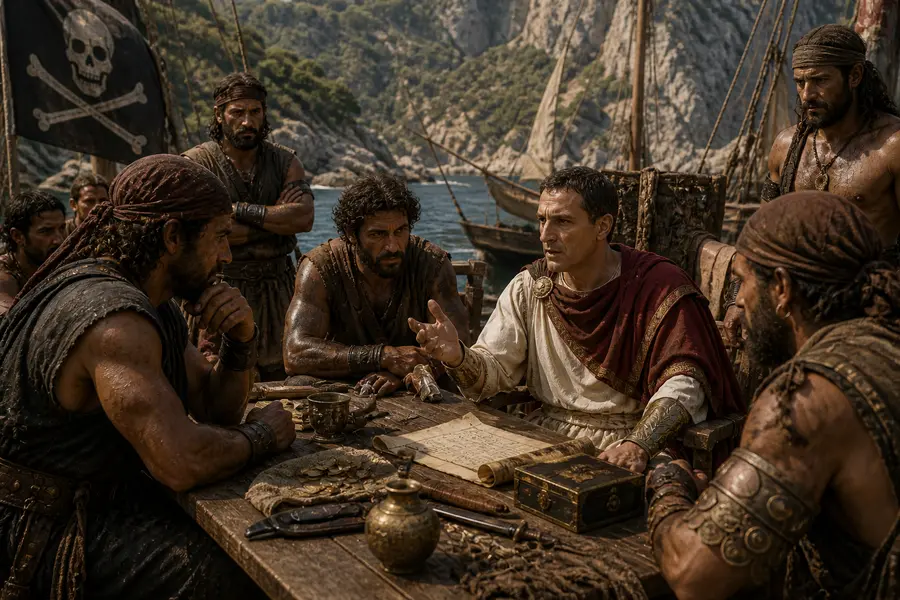
One of the most famous stories from Caesar's youth occurred around 75 BC when he was captured by Cilician pirates while traveling across the Aegean Sea. Although the event happened decades before he became Rome's most powerful figure, ancient historians saw it as an early example of his personality. According to Plutarch, the pirates demanded a ransom of twenty talents of silver. Caesar reportedly laughed at the amount and told them they clearly did not understand who they had captured. He demanded they increase the ransom to fifty talents, as he believed he was worth the increased amount.
During his captivity, Caesar behaved less like a prisoner and more like a commander. He joined the pirates in conversation, practiced speeches before them, and allegedly warned them that after his release, he would return and punish them. The pirates treated his threats as jokes and did not take him seriously. After the ransom was paid and Caesar was freed, he immediately gathered ships, captured the pirates, and carried out the punishment he had promised. The incident became one of the most famous examples of Caesar's confidence, determination, and refusal to accept humiliation.
A detailed account of this unusual episode can be found in our article on how Julius Caesar was captured by pirates and took revenge.
How Julius Caesar Rose to Power in the Roman Republic
Caesar understood that military glory alone was not enough. Roman politics depended on alliances, public popularity, wealth, and influence. During the 60s BC, Caesar carefully positioned himself as a champion of ordinary Romans while maintaining relationships with powerful elites. He spent enormous amounts of money on public games, festivals, and construction projects to gain support. This strategy placed him heavily in debt, but it also made him one of the most recognizable figures in Rome.
In 63 BC, Caesar achieved a major political victory when he became Pontifex Maximus, the highest religious office in Rome. In 62 BC, he became praetor, and later governor of Hispania Ulterior (Further Spain). His governorship allowed him to gain valuable military experience and wealth. Success in Spain strengthened his reputation and prepared him for the much larger campaigns that would define his career.
The First Triumvirate: Caesar, Pompey, and Crassus
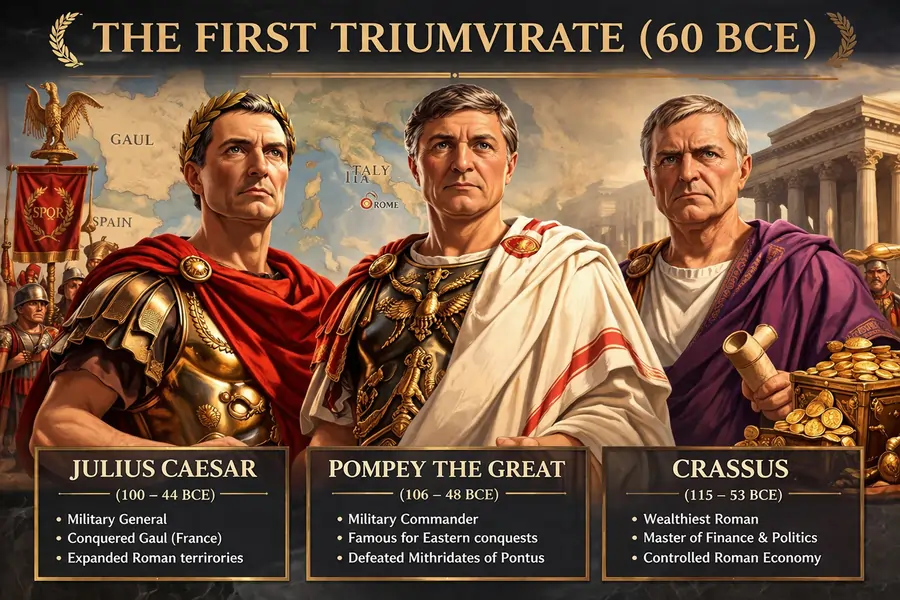
In 60 BC, Caesar formed one of the most important political alliances in Roman history: the First Triumvirate. It was an unofficial agreement between three powerful men:
- Julius Caesar - a rising politician seeking military command and influence.
- Pompey the Great - Rome's most celebrated military commander at the time.
- Marcus Licinius Crassus - one of the richest men in Rome.
Each member needed something from the others. Pompey wanted land settlements for his veterans, Crassus wanted financial advantages and military triumph, and Caesar wanted the political support necessary to obtain a major military command.
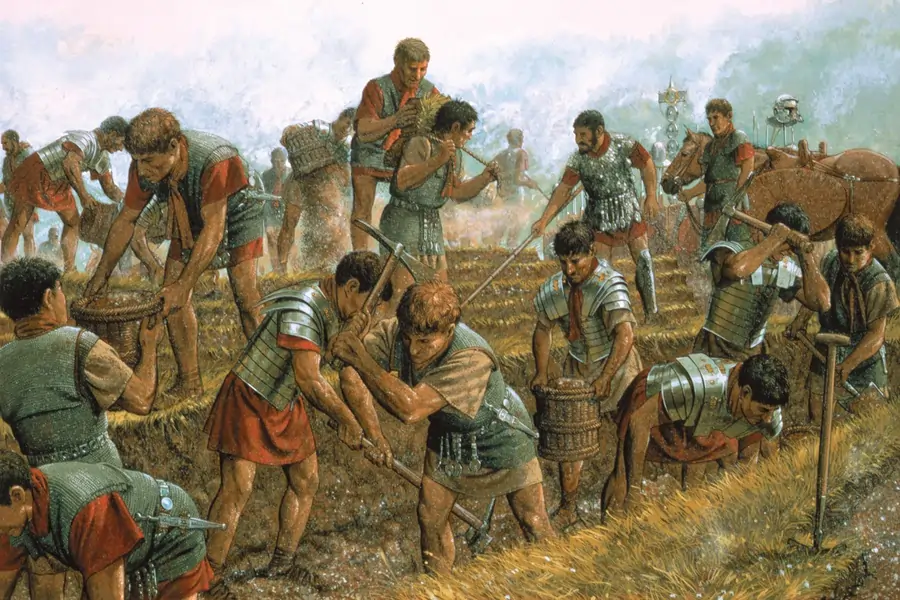
The alliance helped Caesar become consul in 59 BC. After his consulship, he received command over provinces in Gaul, giving him control of several Roman legions. This decision changed both Caesar's life and the future of Rome. The soldiers who followed Caesar were professional warriors who endured harsh campaigns, long marches, and brutal conditions. Understanding the daily life of a Roman soldier explains why loyalty between generals and their armies became such a powerful force in late Republican politics.
Julius Caesar and the Gallic Wars: The Campaign That Made Him Legendary
The Gallic Wars (58-50 BC) transformed Caesar from an ambitious politician into one of history's most successful military commanders. Over nearly a decade, Caesar led Roman armies across modern France, Belgium, Switzerland, and parts of Germany. Caesar documented these campaigns himself in Commentarii de Bello Gallico (Commentaries on the Gallic War). Although the work remains one of the most important sources on the conflict, historians also recognize that Caesar wrote it partly as political propaganda to strengthen his reputation in Rome.
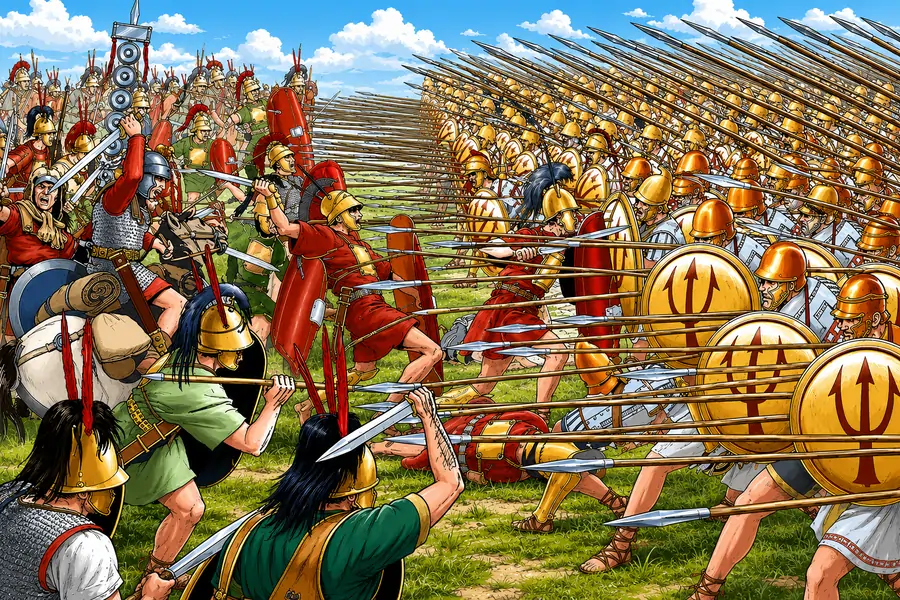
His success came from speed, engineering ability, discipline, and his understanding of enemy weaknesses. Caesar frequently defeated larger forces by moving faster than opponents expected and forcing battles under favorable conditions. Roman military flexibility had developed over centuries. Unlike older formations such as the Greek phalanx, Roman armies adapted more effectively to different terrains and enemies. This evolution is explored further in our comparison of why the Roman legion defeated the Macedonian phalanx.
Major Military Victories of Julius Caesar in Gaul
Battle Against the Helvetii (58 BC)
Caesar's first major campaign was against the Helvetii, a migrating tribal confederation moving through Gaul. Caesar argued that their movement threatened Roman interests and defeated them after a difficult campaign.
Victory Over Ariovistus and the Germanic Tribes
Later in 58 BC, Caesar confronted Ariovistus, a Germanic leader who had crossed into Gaul. Before the battle began, panic spread among the Roman soldiers who feared the Germanic people, who were rumored to be giants. Caesar restored the morale of his soldiers with a famous speech where he claimed that he would march alone with his loyal 10th Legion if they did not follow him. Ashamed, the army rushed to Caesar, and the victory demonstrated his ability to maintain discipline even when his soldiers feared facing unfamiliar enemies.
The Battle of Alesia (52 BC): Caesar's Greatest Victory
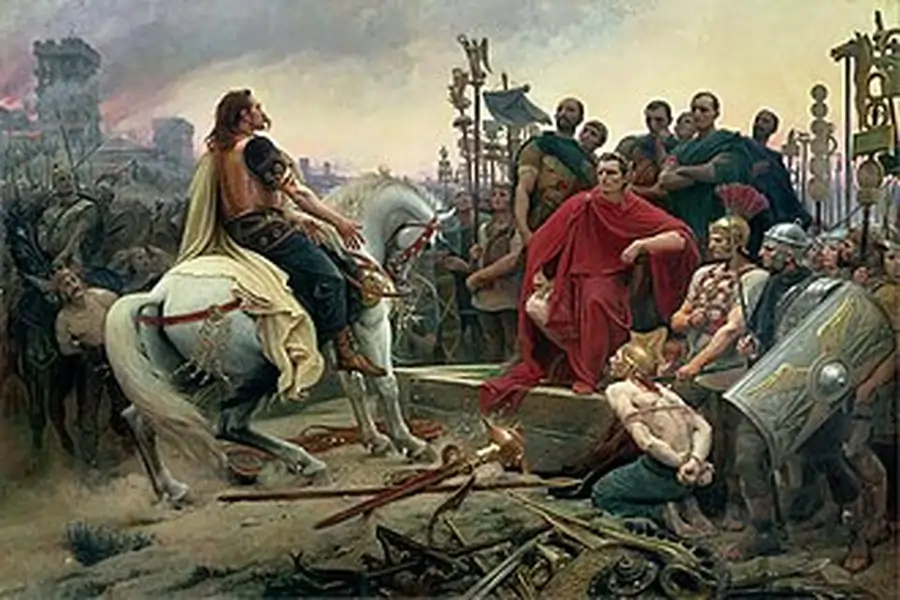
The most famous battle of the Gallic Wars came at Alesia in 52 BC against the Gallic leader Vercingetorix. Caesar ordered his soldiers to construct two massive defensive lines: one facing inward to trap Vercingetorix and another facing outward against a relief army. This extraordinary engineering achievement remains one of the greatest examples of ancient battlefield strategy. Alesia secured Roman dominance over Gaul and established Caesar among the greatest commanders in military history. His combination of leadership, engineering, and tactical innovation places him among the greatest military generals in history.
Caesar's victory at Alesia was remarkable because he successfully conducted offensive and defensive siege warfare simultaneously, trapping Vercingetorix while defending himself from a larger relief army. A full analysis of this campaign is covered in our detailed article on the Battle of Alesia and Caesar's double wall strategy.
Crossing the Rubicon: The Decision That Ended the Roman Republic
By 50 BC, Julius Caesar had become one of the most powerful men in the Roman world. His victories in Gaul brought him enormous wealth, loyal soldiers, and popularity among ordinary citizens. However, his success also created fear among many Roman senators who believed Caesar had become too powerful. The Roman Republic was built on the idea that no individual should hold unlimited authority. Rome had rejected kings centuries earlier, and many senators feared that Caesar's military success would allow him to dominate politics through the loyalty of his army.
The First Triumvirate that had protected Caesar politically was already broken. Marcus Licinius Crassus died in 53 BC during his failed invasion of Parthia, and the relationship between Caesar and Pompey collapsed. Pompey increasingly aligned himself with the conservative faction of the Roman Senate, known as the optimates. The Senate ordered Caesar to give up command of his army before returning to Rome. Caesar faced a dangerous choice: obey and risk prosecution by his enemies, or challenge the authority of the Senate.
In January 49 BC, Caesar led the famous Thirteenth Legion across the Rubicon River, the boundary between his province and Italy. Roman generals were forbidden from bringing armies into Italy, which made this action a declaration of rebellion. According to the Roman historian Suetonius, Caesar declared:
"The die is cast."
Whether Caesar truly spoke these exact words remains debated, but the phrase became symbolic of a decision from which there was no return. The crossing of the Rubicon was one of the most important turning points in ancient history. It started a civil war that destroyed the political system of the Roman Republic and eventually created the conditions for the rise of the Roman Empire.
Caesar vs Pompey: The Roman Civil War
After crossing the Rubicon, Caesar advanced rapidly through Italy. His speed surprised his enemies, a pattern seen throughout his military career. Pompey and many senators abandoned Rome and moved east to gather forces.
The conflict between Caesar and Pompey was not simply a personal rivalry. It represented a larger struggle over the future of Roman government. Caesar claimed he was defending his dignity and the rights of the Roman people, while his opponents argued they were protecting the Republic from a potential dictator.
The Battle of Pharsalus (48 BC)
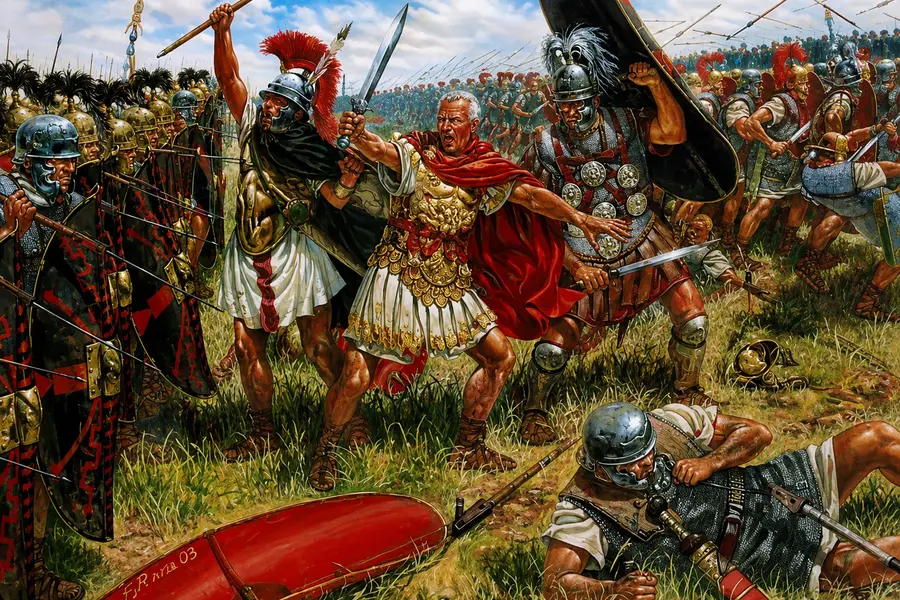
The decisive confrontation came at the Battle of Pharsalus in Greece in 48 BC. Pompey commanded a larger army, but Caesar relied on experienced veterans who had fought with him during the Gallic Wars. Caesar predicted Pompey's cavalry would attempt to attack his flank. He secretly placed veteran troops behind his lines who surprised Pompey's cavalry and turned the battle in Caesar's favor.
Despite being outnumbered, Caesar achieved a complete victory. Pharsalus demonstrated the same qualities that defined many of history's most decisive battles: leadership, discipline, timing, and tactical flexibility. After the defeat, Pompey fled to Egypt, hoping to find support. Instead, he was assassinated by officials of the young Egyptian king Ptolemy XIII, who hoped the act would please Caesar.
Julius Caesar and Cleopatra: Alliance, Romance, and the Egyptian War
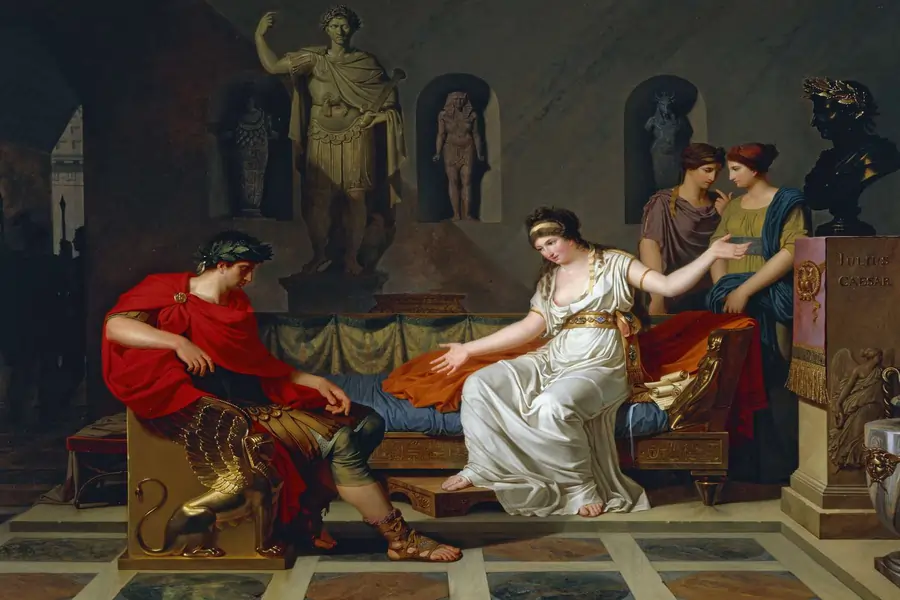
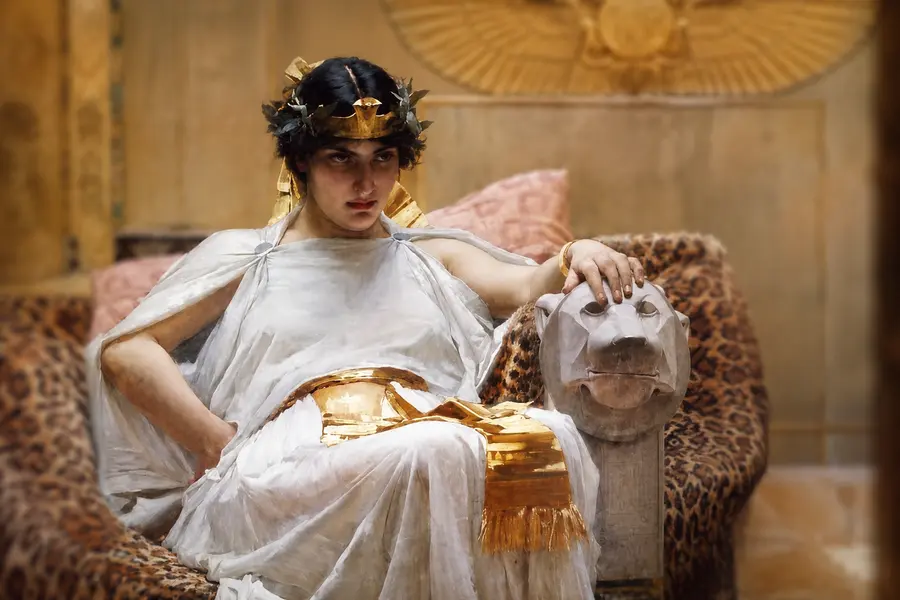
When Caesar arrived in Egypt in 48 BC, he became involved in a political struggle between Ptolemy XIII and his sister Cleopatra VII. Egypt was wealthy, strategically important, and a key supplier of grain to Rome. Cleopatra needed Caesar's support to regain her throne, while Caesar wanted stability in Egypt and repayment of Egyptian debts owed to Rome. Their political alliance soon developed into a personal relationship that became one of the most famous romances of the ancient world.
Ancient writers such as Plutarch describe Cleopatra as intelligent, persuasive, and politically skilled rather than simply focusing on her appearance. She understood that an alliance with Rome's most powerful general could secure her position.
The Alexandrian War
Caesar's involvement in Egyptian politics led to the Alexandrian War (48-47 BC). Supporters of Ptolemy XIII rebelled against Caesar's influence, trapping him with a relatively small force inside Alexandria. Despite being heavily outnumbered, Caesar survived until reinforcements arrived. His forces eventually defeated Ptolemy's army, and Ptolemy XIII died while attempting to escape.
Caesar restored Cleopatra as ruler of Egypt. She later gave birth to a son named Caesarion, whom she claimed was Caesar's child, although his status remained politically controversial. The relationship between Julius Caesar and Cleopatra strengthened Rome's influence over Egypt and created political consequences that continued long after Caesar's death.
Julius Caesar as Dictator: How Rome Changed Forever
After defeating his enemies, Caesar returned to Rome as the most powerful individual in the Republic. He was appointed dictator, an emergency office traditionally granted temporarily during a crisis. However, Caesar's authority was unlike that of earlier dictators. In 44 BC, he was named dictator perpetuo, meaning dictator for life. For many senators, this confirmed their fear that Rome was moving toward monarchy. Caesar introduced several important reforms:
- He reorganized the Roman calendar, creating the Julian calendar.
- He expanded the Senate by adding new members from across Roman territories.
- He founded colonies for veterans and poorer citizens.
- He introduced laws aimed at reducing debt problems.
- He began large construction projects in Rome.
Supporters viewed Caesar's reforms as necessary solutions to problems the Republic had failed to address, while opponents saw his concentration of authority as a threat to Rome's political traditions. Many of Caesar's reforms strengthened Roman administration, but his concentration of power angered traditional elites who believed Republican freedoms were disappearing. The irony of Caesar's rule is that he never officially became emperor. However, his actions destroyed the political balance of the Republic and created the path that his adopted heir, Octavian, would go on to become Augustus, the first Roman emperor.
Why Julius Caesar Was Such a Successful Leader
Julius Caesar became one of history's most influential leaders because he combined several qualities rarely found in a single individual. He was not only a skilled commander but also an exceptional communicator, organizer, and judge of human behavior. Caesar understood that lasting power depended on more than winning battles; it required inspiring loyalty, controlling public perception, and making effective decisions under pressure.
Understanding People and Motivation
One of Caesar's greatest strengths was his ability to understand what motivated different groups of people. Soldiers wanted recognition, rewards, and confidence in their commander, while citizens wanted stability, opportunity, and strong leadership. Caesar was skilled at adapting his message to different audiences, allowing him to build support among both his troops and the wider Roman population.
Unlike commanders who relied only on authority and punishment, Caesar often used personal connection and encouragement to inspire loyalty. His ability to remember individuals, acknowledge achievements, and make his followers feel valued helped create unusually strong bonds with those who served under him.
Speed and Decisive Decision-Making
Caesar was famous for acting quickly while his opponents hesitated. He understood that uncertainty could be just as dangerous as making the wrong decision. By moving faster than his enemies expected, Caesar often gained advantages before opposing forces had time to organize an effective response.
This ability to analyze situations rapidly and commit fully to a course of action became one of his defining traits. Caesar accepted that leadership involved risk, but he focused on controlling those risks through preparation, discipline, and careful observation of his opponents.
Communication and Control of His Reputation
Caesar recognized the importance of controlling how people understood his achievements. His writings, speeches, and public actions helped create an image of a capable leader acting in Rome's interests. He understood that political success depended not only on what a leader accomplished but also on how those accomplishments were presented.
This mastery of communication allowed Caesar to influence supporters far beyond the battlefield. His ability to combine military achievement with public persuasion made him different from many successful generals who struggled to convert victories into lasting political power.
Balancing Innovation With Discipline
Caesar succeeded because he combined creativity with organization. He encouraged flexible thinking and rapid solutions but still relied on discipline, planning, and preparation. This balance allowed him to respond effectively to unexpected challenges without losing control of larger objectives.
Ultimately, Caesar's greatest advantage was his ability to combine different forms of leadership. He could inspire soldiers, influence citizens, negotiate with powerful rivals, and make difficult decisions during moments of crisis. These qualities explain why his impact lasted far beyond his lifetime and why his name became associated with leadership and authority for centuries.
The Assassination of Julius Caesar: Betrayal on the Ides of March
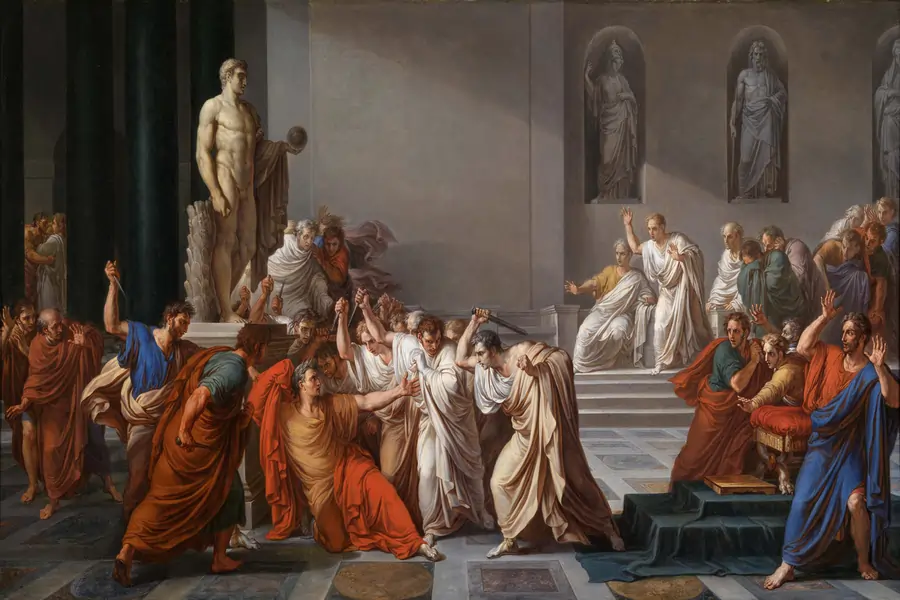
On March 15, 44 BC, known as the Ides of March, Julius Caesar entered a meeting of the Senate near the Theatre of Pompey. A group of senators had secretly planned his assassination. The conspirators included Gaius Cassius Longinus and Marcus Junius Brutus, a man Caesar had previously forgiven after the civil war.
The assassins believed they were saving the Republic by removing a tyrant. According to ancient sources, including Plutarch and Suetonius, Caesar was attacked by multiple senators and stabbed twenty-three times. The famous phrase "Et tu, Brute?" ("You too, Brutus?") is strongly associated with Caesar's death, but it comes mainly from William Shakespeare's later play rather than confirmed Roman records.
Instead of restoring the Republic, the assassination created more instability. Rome entered another series of civil wars as Caesar's supporters fought his killers.
Legacy of Julius Caesar: Conqueror, Reformer, and Architect of Imperial Rome
The legacy of Julius Caesar remains one of the most debated subjects in ancient history. Some view him as a brilliant reformer who repaired a failing political system, while others see him as an ambitious leader whose actions ended centuries of Republican government. As a military commander, Caesar combined speed, engineering, psychological understanding, and personal courage. His campaigns in Gaul expanded Roman territory dramatically and demonstrated the effectiveness of disciplined professional armies.
Caesar understood the mindset of soldiers better than many commanders. He shared hardships with his troops, rewarded bravery, and created intense personal loyalty. The psychology behind ancient warriors and battlefield survival is explored further in our article on ancient soldiers, morale, and survival in battle. His military systems also influenced later Roman commanders. The importance of organization, fortifications, and logistics remained central to Roman warfare, including the famous Roman military camps used by legions during campaigns.
Politically, Caesar changed Rome forever. His assassination did not save the Republic but instead accelerated its collapse. After years of conflict, his adopted heir Octavian defeated his rivals and became Augustus, establishing the Roman Empire in 27 BC.
More than two thousand years later, Caesar's name remains a symbol of power. Titles such as "Kaiser" in Germany and "Tsar" in Russia were derived from Caesar, showing the lasting influence of his reputation. Julius Caesar's life represents one of history's greatest examples of how a single individual can reshape politics, warfare, and civilization. His rise from an ambitious nobleman to ruler of Rome marked the end of one era and the beginning of another.
Historical Sources and References
- Caesar, Julius. Commentarii de Bello Gallico (Commentaries on the Gallic War).
- Plutarch. Parallel Lives: Life of Julius Caesar.
- Suetonius. The Twelve Caesars: Julius Caesar.
- Cassius Dio. Roman History.
- Appian. The Civil Wars.
- Goldsworthy, Adrian. Caesar: Life of a Colossus. Yale University Press, 2006.
- Meier, Christian. Caesar: A Biography. Basic Books, 1995.
- Gelzer, Matthias. Caesar: Politician and Statesman. Harvard University Press.
Recommended Books
This article may contain affiliate links. If you purchase through these links, I may earn a small commission at no extra cost to you.


Related Articles
Frequently Asked Questions
How did Julius Caesar rise to power in ancient Rome?
Julius Caesar rose to power through a combination of political alliances, military victories, and public support. He formed the First Triumvirate with Pompey and Crassus, gained command of Roman legions in Gaul, and became famous after his victories in the Gallic Wars. His popularity with soldiers and citizens eventually allowed him to challenge the Roman Senate and become the most powerful figure in Rome.
Why were Julius Caesar's victories in the Gallic Wars important?
Julius Caesar's victories in the Gallic Wars were important because they expanded Roman territory, increased Rome's wealth, and transformed Caesar into one of the Republic's most successful generals. His campaigns showed his skill in strategy, engineering, and leadership, especially during the Battle of Alesia where he defeated Vercingetorix despite facing enemies on two sides.
Why did Julius Caesar cross the Rubicon River with his army?
Julius Caesar crossed the Rubicon River in 49 BC because the Roman Senate ordered him to surrender his military command before returning to Rome. Caesar believed this would leave him vulnerable to his political enemies. By crossing the Rubicon with the Thirteenth Legion, he started a civil war against Pompey and the Senate, permanently changing the Roman Republic.
How did Julius Caesar contribute to the fall of the Roman Republic?
Julius Caesar contributed to the fall of the Roman Republic by concentrating political and military power in his own hands after defeating his rivals. Although he introduced reforms that improved Roman administration, his appointment as dictator for life created fears that Rome was becoming a monarchy. The political crisis after his assassination eventually led to the creation of the Roman Empire under Augustus.
What was the relationship between Julius Caesar and Cleopatra?
Julius Caesar and Cleopatra formed both a political alliance and a personal relationship after Caesar arrived in Egypt during the Roman Civil War. Caesar helped Cleopatra regain the Egyptian throne after defeating her brother Ptolemy XIII. Their alliance strengthened Roman influence over Egypt, and Cleopatra later claimed that her son Caesarion was Caesar's child.
Why did Roman senators assassinate Julius Caesar on the Ides of March?
Roman senators assassinated Julius Caesar on the Ides of March in 44 BC because they feared his growing power would permanently end the Roman Republic. After Caesar became dictator for life, conspirators including Brutus and Cassius believed removing him would restore Republican government. Instead, his death triggered further civil wars and helped lead to the rise of the Roman Empire.
Add Comment