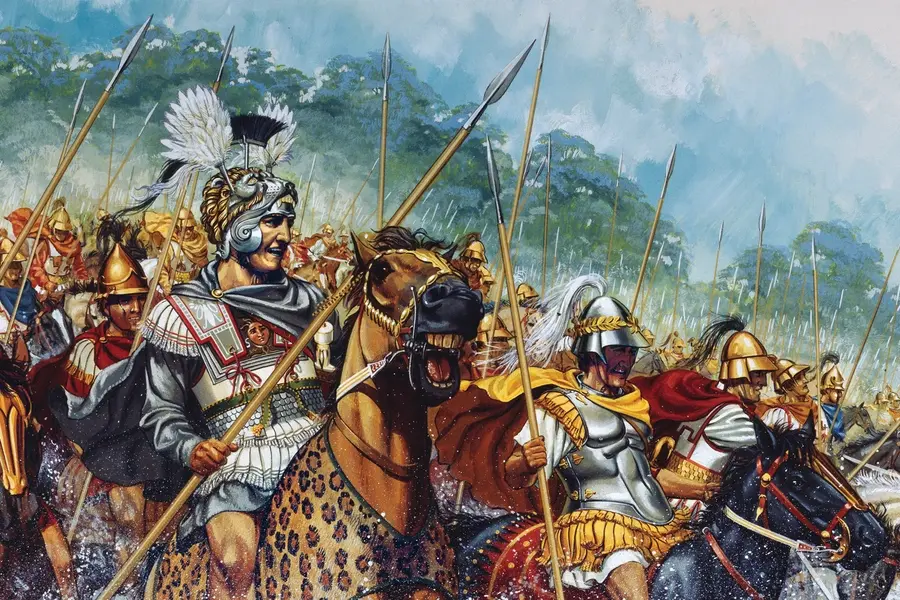
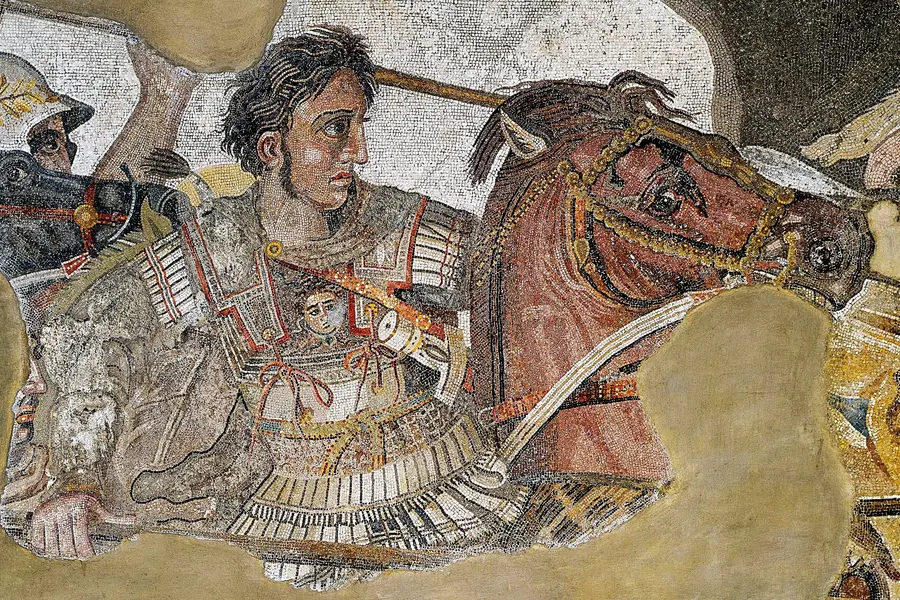
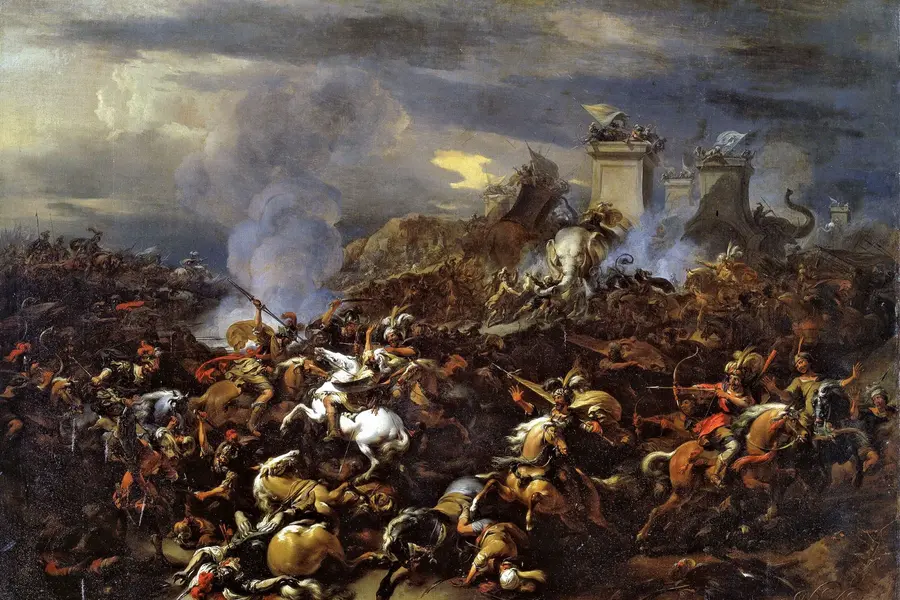
The Battle of the Granicus River (334 BC) was the first major battle for Alexander the Great during his Persian campaign. This battle would reveal to the world the qualities that would define his conquests: boldness, calculated risk-taking, and tactical precision. Alexander was facing a larger Persian army assembled by the Persian Satraps. The Persians held a strong defensive position across the Granicus River. Against the advice of his generals, Alexander ordered his troops to cross the river and launch a direct assault on the enemy. Although risky, it caught the Persians completely by surprise. Within hours, the Persian defenses collapsed. Granicus was a precursor to what was to come, as Alexander would go on to win many major battles against the Persian Empire.
Table of Contents
Overview of the Persian Campaign
After succeeding his father Philip II of Macedonia, Alexander the Great crossed the Hellespont into Asia Minor in 334 BC. The stage was now set for the clash against the mighty Achaemenid Persian Empire under Darius III. According to Arrian, Alexander justified his campaign against the Persians as both a war of revenge for earlier Persian invasions of Greece and a mission to liberate Greek cities in Asia (Anabasis, 1.11). Modern historians, such as Peter Green, argue that this justification also served a political purpose. This was a tactical move used by Alexander to gather Greek support for his campaign of expansion.
The Persian Empire consisted of many satrapies that governed and ruled a segment of land. To secure a foothold in Asia, Alexander aimed to defeat the western satrapies before confronting the Persian king directly. Alexander planned to conquer the Persian coastline to deprive Persia of its naval bases. This was crucial as the Persian fleet still dominated the eastern Mediterranean (Fuller, The Generalship of Alexander the Great).
Prelude to the Battle
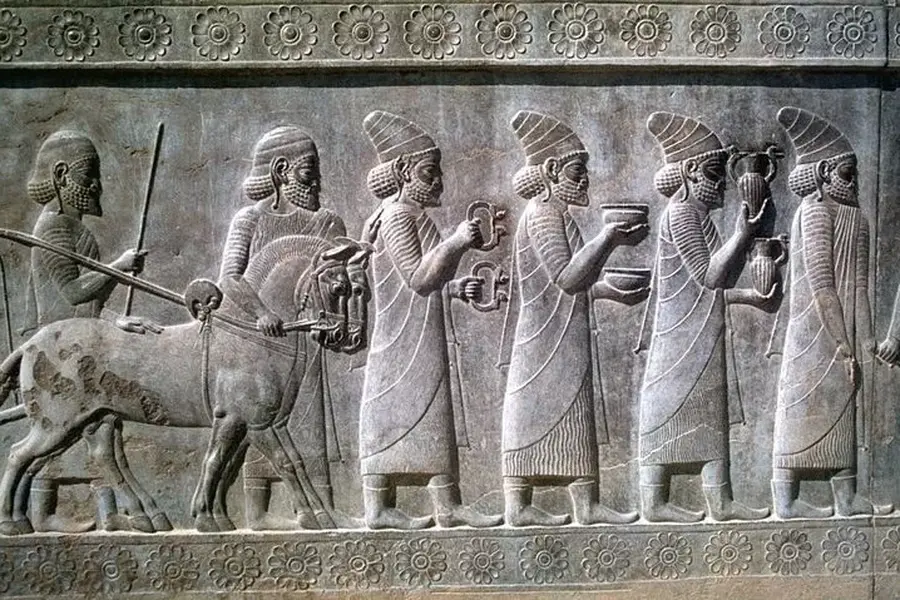
The Persian satraps were divided on how to respond to Alexander's invasion. There was internal disagreement on how to handle the Macedonians. Memnon of Rhodes was a Greek mercenary commander in Persian service. Having witnessed the capability of the Macedonian phalanx and the Companion Cavalry in action, he advised a scorched-earth strategy - retreating inland while destroying supplies to stretch Alexander's logistics. Arrian records this proposal but notes that Persian satraps rejected it, unwilling to destroy their own territories (Anabasis, 1.12).
The Persians, instead, chose to confront Alexander head-on near the Granicus River in northwestern Asia Minor. Alexander was waiting for an opportunity to engage the Persians in a decisive battle and seized the opportunity. He wanted to avoid a long, drawn-out war and fight the Persians before they could mobilize a larger, more unified army.
Forces and Deployment
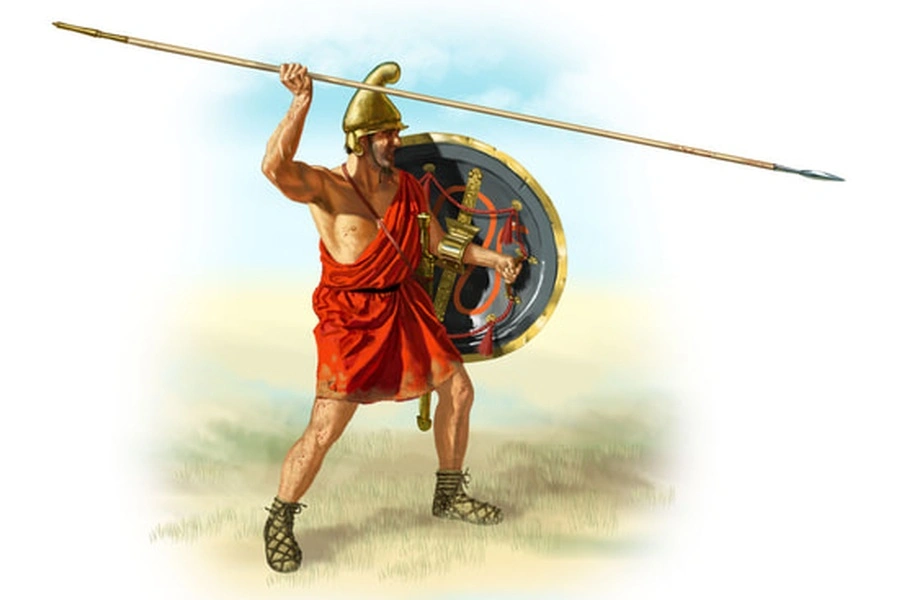
Ancient sources differ on the size of the armies, but it was clear that the Persians had a significant advantage in cavalry over the Macedonians in Granicus. Arrian estimates the Macedonian force at around 30,000 infantry and 5,000 cavalry (Anabasis, 1.14), while Diodorus gives slightly higher figures. According to Arrian, the Persian army fielded approximately 20,000 cavalry and an equal number of Greek mercenaries, although modern historians often consider these numbers to be exaggerated on both sides.
| Source | Macedonian Infantry | Macedonian Cavalry | Persian Infantry | Persian Cavalry |
|---|---|---|---|---|
| Arrian | ~30,000 | 5,000 | 20,000 | 20,000 |
| Diodorus | 32,000 | 5,100 | 100,000+ | 10,000 |
| Plutarch | 30,000-43,000 | 4,000-5,000 | 20,000 (total) | Not specified |
| Justin | 32,000 | 4,500 | 600,000 | Not specified |
| Modern Estimates | 13,000-18,000 | 5,100 | 5,000-16,000 | 10,000-15,000 |
The Persians made a critical error in the deployment of their troops. Their strongest asset was their advantage in cavalry, but they were placed along the riverbank in front of the infantry. The Greek mercenary infantry, among the most disciplined troops available to Persia, could not engage the enemy unless the allied cavalry troops were dispersed. This arrangement was in part because of the thinking that Alexander would not cross the river and engage the Persians at such a disadvantageous position.
Terrain and Strategic Context
The Granicus River, identified with the modern Biga Çayı in Turkey, presented a significant obstacle. The river banks were uneven and steep in some places. Any crossing attempted on the river would pose significant risks for the attacking army. Arrian emphasizes that the Persians positioned themselves on the other bank of the river to strike Macedonian troops if they attempted a crossing, expecting the river itself to act as a defensive barrier.
Conventional military thinking dictates that attacking across such terrain was highly risky and is to be avoided at all costs. Parmenion, one of Alexander's senior generals, reportedly advised waiting until morning or seeking a more favorable crossing point. Alexander, however, rejected the idea. He showcased his signature bold and daring command style by planning an attack on the Persians across the river head-on.
Sequence of the Battle
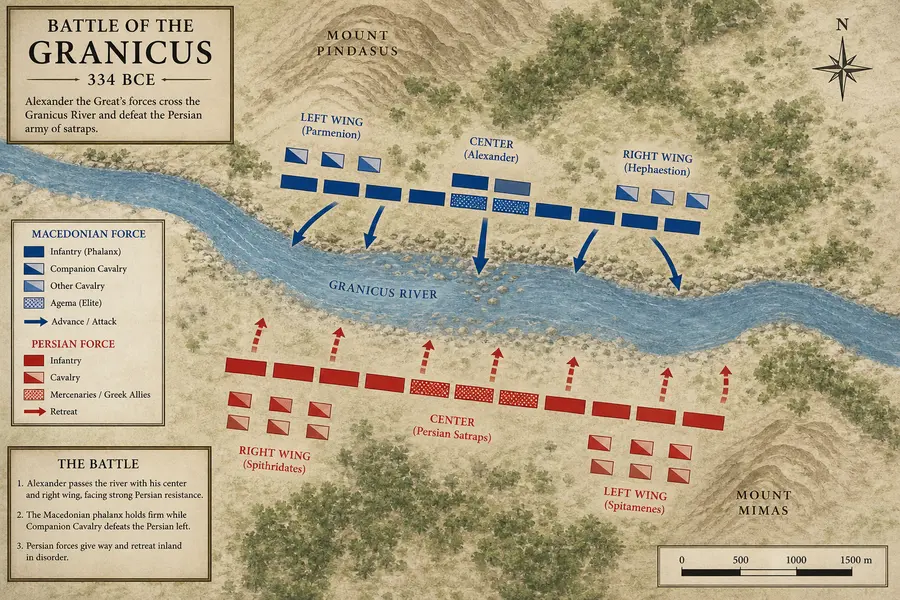
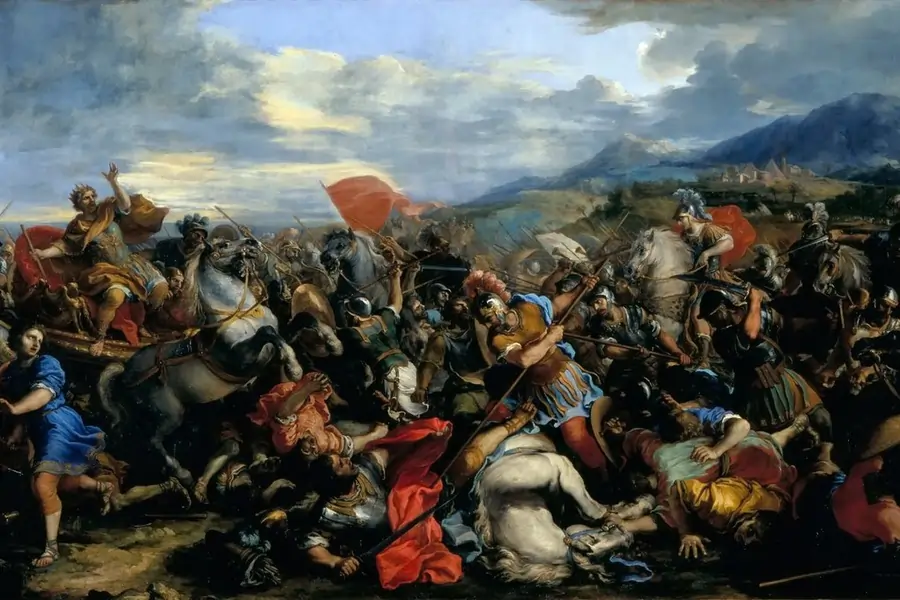
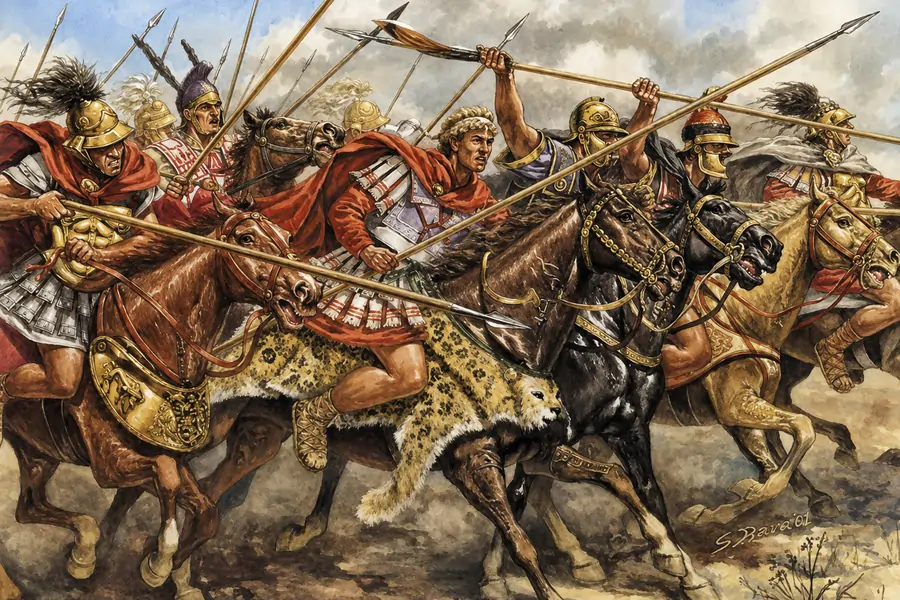
The Battle of Granicus began with an initial probing attack, likely intended to test the Persian line. Arrian describes how a contingent of Macedonian cavalry advanced into the river and engaged the enemy. The Persians responded by sending their units to block the crossing and engaging the Macedonian cavalry in combat. The Macedonians then launched their main attack on the left flank of the enemy. Alexander personally led his Companion Cavalry in the assault.
The crossing itself was chaotic. Macedonian cavalry had to fight uphill as they emerged from the river. On the other bank, the Persian cavalry attempted to push the attackers back into the water. Despite the demanding nature of the battle, the Macedonians maintained cohesion and discipline, a testament to their training and command structure.
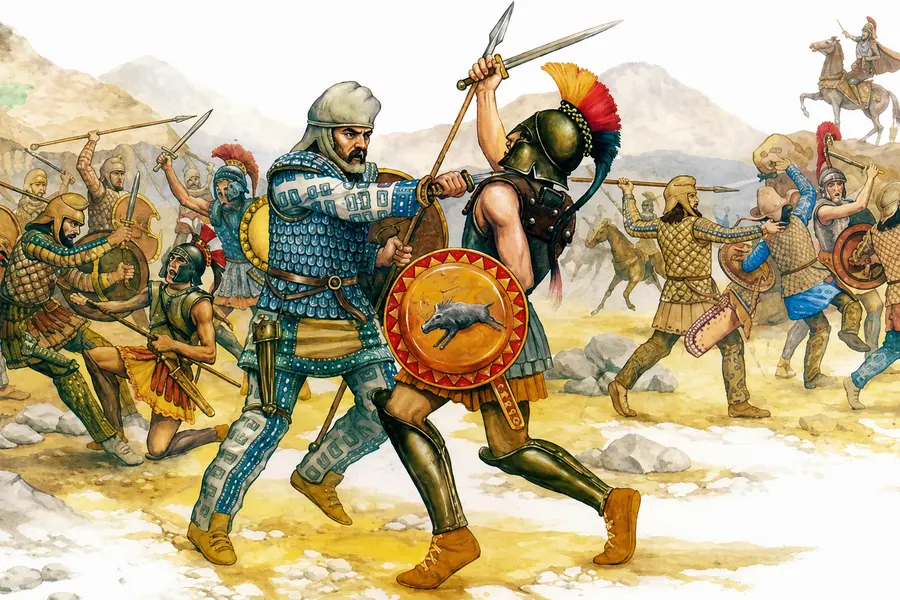
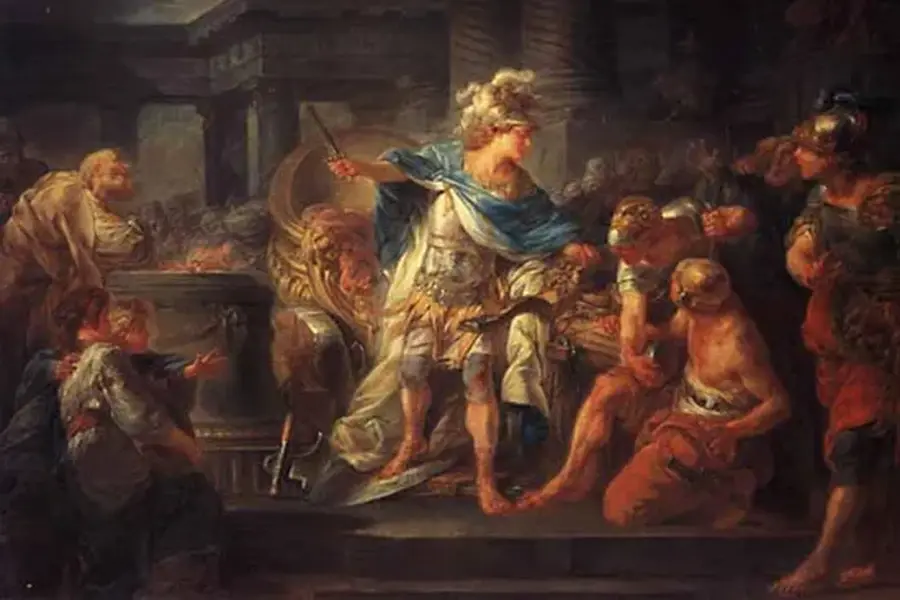
The battle soon devolved into close combat with Alexander on the front lines, motivating his troops. Plutarch recounts that Alexander, identifiable by his distinctive helmet plume, became a focal point of the fighting (Life of Alexander, 16). The Persians tried to target Alexander and end the battle in one blow. During this phase, he was nearly killed when the Persian noble Spithridates struck at him, only to be stopped by Cleitus the Black, who severed the attacker's arm.
After a hard-fought crossing, the Macedonian cavalry gained the upper hand. Once Alexander and his cavalry gained a foothold on the other bank, the Persian line began to lose cohesion. The decisive moment came when the Macedonian cavalry broke through the Persian front, causing disorder that quickly spread along the line. Arrian notes that the Persian cavalry, once disrupted, began to retreat, leaving the stranded Greek mercenaries completely exposed (Anabasis, 1.16).
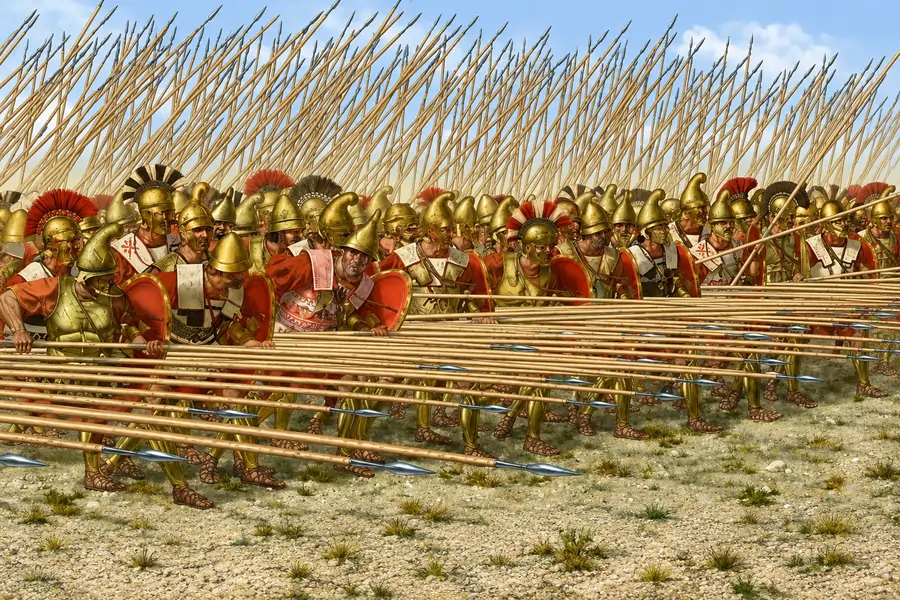
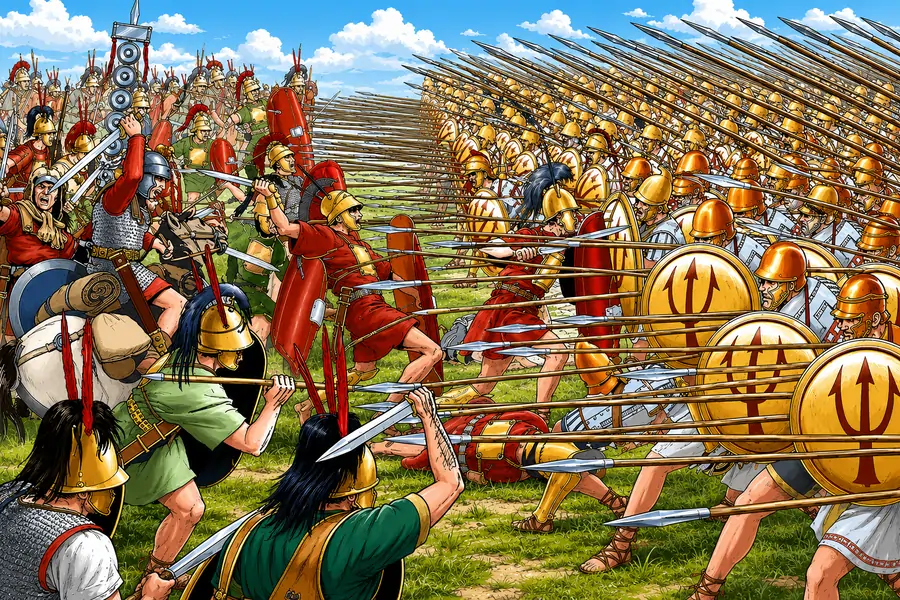
Once the crossing was secured, the Macedonian phalanx advanced across the river and engaged the mercenaries. Unlike the earlier chaotic cavalry engagement, this phase was more methodical. The disciplined Greek mercenaries fought stubbornly, but without cavalry support, they were gradually surrounded and overwhelmed. Diodorus reports heavy casualties among them, with many killed and others captured (Bibliotheca Historica, 17.21).
How Alexander Won the Battle
Several factors led to Alexander's victory at the Granicus River. His bold decision to attack the enemy immediately caught the Persians by surprise and did not allow them time to redeploy their lines or reconsider Memnon's earlier strategy. The Macedonian cavalry was also highly trained and disciplined. They quickly overwhelmed their Persian counterparts in the melee. Arrian explicitly credits Alexander's boldness with seizing the initiative.
The coordination between cavalry and infantry was also equally important for the battle. While the initial assault was led by cavalry, which created the breakthrough, the timely arrival of the phalanx ensured that the initiative was not lost. In contrast to this close integration, the Persian cavalry and infantry were not properly coordinated. The elite Greek mercenary troops were kept on standby for the majority of the battle and were completely abandoned by the cavalry once the line broke.
Casualty figures further illustrate the scale of the victory. Arrian reports that Macedonian losses were relatively light - around 25 Companion Cavalry and about 60 other cavalry, with some infantry casualties (Anabasis, 1.16). Persian losses, by contrast, were substantial, particularly among the mercenaries, many of whom were killed or enslaved. Alexander considered the Greek mercenary troops to be traitors and treated them harshly. While exact numbers remain debated, modern historians agree that the Persian army suffered a decisive defeat.
Strategic Analysis: Why the Persians Lost
The defeat at Granicus can be mostly attributed to Persian mismanagement of infantry and cavalry. One of the most significant factors resulting in the loss was their misuse of cavalry. By placing cavalry directly at the riverbank, they negated its primary advantage - mobility. Cavalry is most effective in open terrain where it can maneuver, charge, and exploit gaps. At Granicus, the Persian cavalry was forced into a static defensive role.
Another critical issue was the Persian command structure. The Persian army was led by multiple satraps rather than a unified commander. Arrian implies that this lack of centralized authority contributed to inconsistent decision-making. There was a lack of unity and disagreements that led to poor decision-making. In contrast, Alexander exercised direct and cohesive command over his forces.
The elite Greek mercenaries were also not coordinated with the cavalry. These troops were one of the best heavy infantry in the ancient era, capable of challenging the Macedonian phalanx. However, they were positioned too far back to influence the initial phase of the battle. By the time they engaged, the cavalry line had already collapsed, leaving them isolated.
Aftermath and Consequences
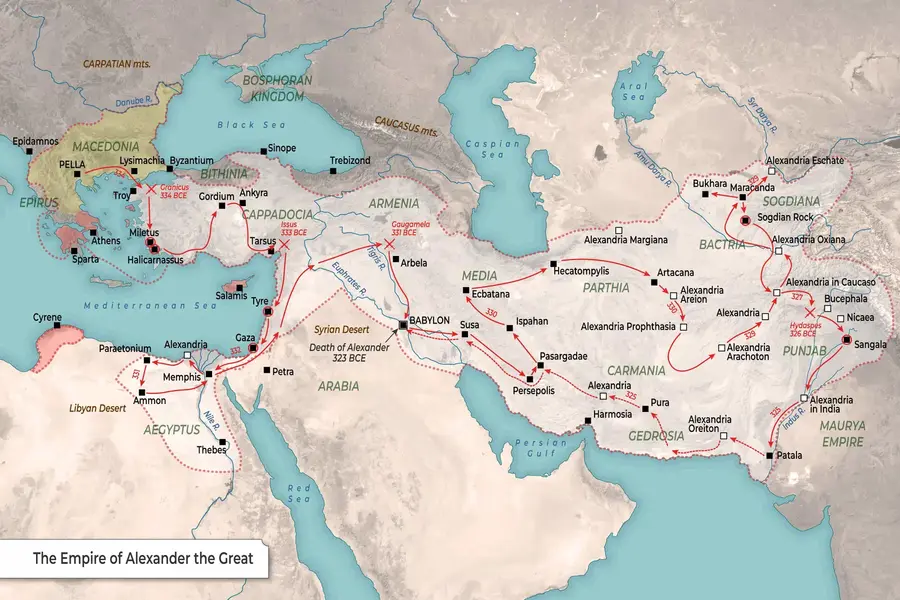
The consequences of the Battle of Granicus were significant. This victory boosted the morale of the Macedonian troops while demoralizing the Persians. Resistance in Asia Minor collapsed. Cities such as Sardis surrendered without significant resistance, and others followed suit. Arrian notes that many Greek cities welcomed Alexander as a liberator, reinforcing his political narrative (Anabasis, 1.17).
Strategically, the battle secured Alexander's foothold in Asia and allowed him to continue his campaign deeper into Persian territory. If the Macedonians had been defeated in Granicus, it would have been the end of Alexander's invasion. It also demonstrated to both allies and enemies the superiority of Macedonian troops and Alexander's leadership skills. In a broader historical context, the Battle of the Granicus River stands as one of the most decisive battles in ancient history.
Conclusion
The Battle of the Granicus River was the first major victory for Alexander against the Persian Empire. He proved that leadership, timing, and battlefield awareness can determine the outcome of a battle. Alexander's willingness to take calculated risks, combined with the skill and discipline of his troops, allowed him to turn a dangerous river crossing into a decisive victory. Following the defeat of the Persian satraps, Darius would confront Alexander in the Battle of Issus in 333 BC.
From a modern analytical perspective, the battle highlights enduring principles of warfare: unity of command, effective use of terrain, and the importance of integrating different arms of the military. These lessons continue to resonate in military studies today, reinforcing why Granicus remains one of the most studied battles of the ancient world.
References and Sources
- Arrian, Anabasis of Alexander
- Plutarch, Life of Alexander
- Diodorus Siculus, Bibliotheca Historica
- Green, Peter, Alexander of Macedon
- Fuller, J.F.C. The Generalship of Alexander the Great
- Engels, Donald. Alexander the Great and the Logistics of the Macedonian Army
Recommended Books
This article may contain affiliate links. If you purchase through these links, I may earn a small commission at no extra cost to you.
Related Articles
Frequently Asked Questions
Why did Alexander attack immediately at the Granicus River instead of waiting?
Alexander chose to attack immediately to maintain momentum and prevent the Persian forces from reorganizing or withdrawing. Ancient historian Arrian notes that delay could have emboldened the enemy and weakened Macedonian morale, so Alexander prioritized initiative over caution.
What role did the Companion Cavalry play in the Battle of the Granicus?
The Companion Cavalry, led by Alexander himself, formed the decisive shock force of the Macedonian army. They led the main assault across the river, broke through the Persian cavalry line, and created the opening that allowed the Macedonian phalanx to advance and secure victory.
Why were the Greek mercenaries in the Persian army defeated so quickly?
The Greek mercenaries were positioned behind the Persian cavalry and entered the battle too late. By the time they engaged, the cavalry had already been routed, leaving them isolated and surrounded by the advancing Macedonian phalanx, as described by Diodorus.
How risky was crossing the Granicus River during battle?
Crossing the Granicus under enemy attack was extremely risky due to uneven banks and strong currents. Most generals would have avoided such a maneuver, but Alexander's calculated risk paid off because it disrupted Persian expectations and forced them into close combat quickly.
What was the biggest mistake made by the Persian commanders at Granicus?
One of the biggest mistakes was placing their cavalry directly at the riverbank, which restricted its mobility and effectiveness. Additionally, the lack of unified command among Persian satraps prevented coordinated decision-making during the battle.
How did the Battle of the Granicus River impact Alexander's campaign?
The victory secured Alexander's foothold in Asia Minor and led to the rapid surrender of several key cities. It also boosted his reputation and demonstrated that Persian forces could be defeated in open battle, shaping the momentum of the entire campaign.
Add Comment