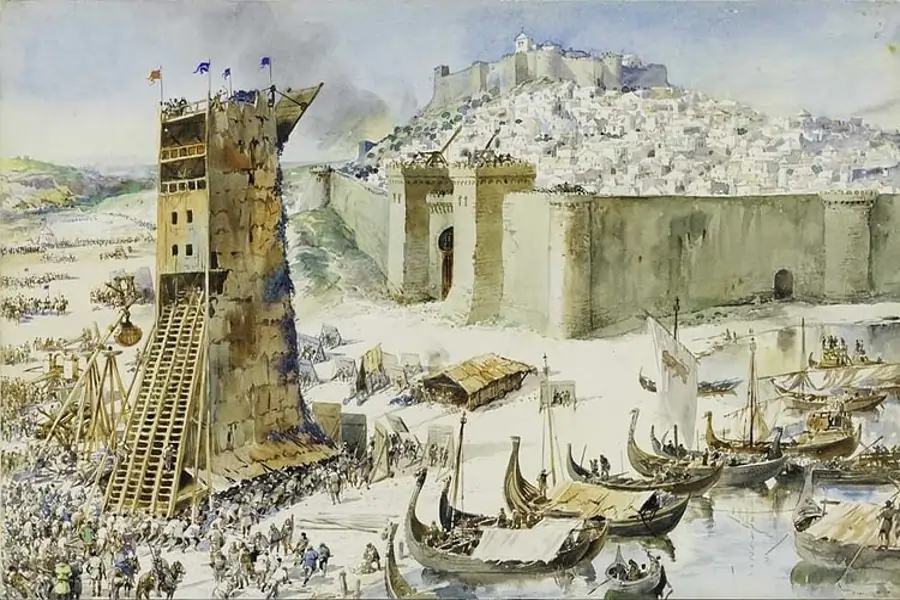
Ancient siege warfare was a very chaotic, complex, and terrifying experience for the soldiers during ancient times. Ancient battles were decided in a matter of hours, while sieges often lasted months or even years. Siege warfare was a traumatic experience for soldiers and civilians alike as the defending cities slowly ran out of food, morale, and hope. Behind the walls of ancient fortresses, civilians and soldiers endured starvation, disease, bombardment, and psychological pressure. The attackers also had to deal with logistical and supply issues. Poor sanitation caused disease outbreaks in the attacking armies as well. Entire empires rose or collapsed depending on the outcome of major sieges.
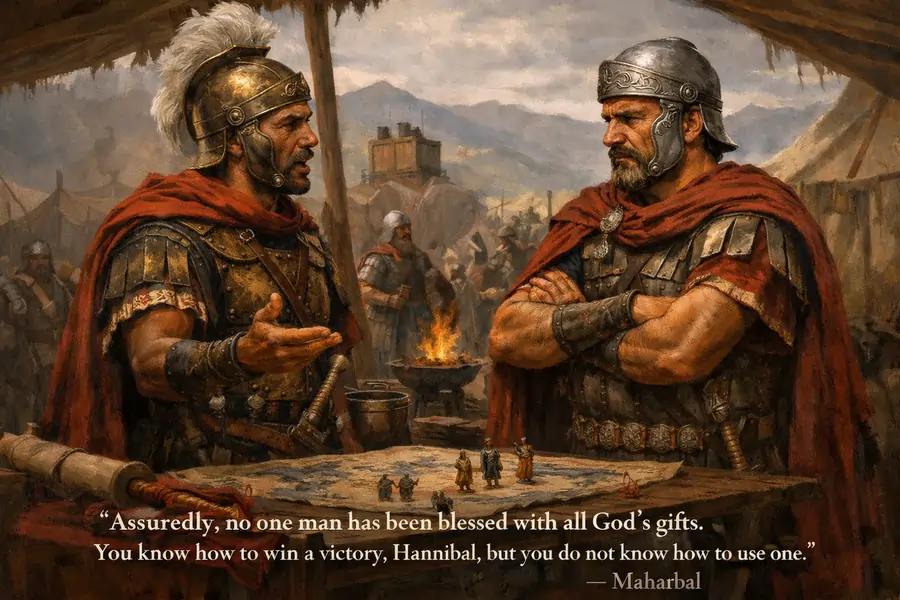
For ancient armies, capturing fortified cities was often more important than just winning battlefield victories. Cities controlled ports, granaries, and political authority. As the Greek historian Polybius noted in The Histories, wars were ultimately decided not merely by defeating armies in the field but by controlling the fortified centers that sustained states and kingdoms. This is evident during the Second Punic War when Hannibal Barca won a string of major victories but failed to capture Rome.
From Assyrian battering rams to Roman artillery and Alexander the Great's massive engineering projects, siege warfare became a deadly contest of engineering, logistics, discipline, innovation, and endurance. This detailed guide explains how ancient siege warfare worked, including the goals of attackers and defenders, how sieges were conducted, the role of siege engines, and defensive fortifications.
Table of Contents
- What Was an Ancient Siege?
- Why Siege Warfare Was Important in the Ancient World
- How Many Troops Were Needed to Lay Siege?
- How Ancient Sieges Usually Happened
- Goals of Attackers and Defenders
- Ancient Siege Weapons and War Machines
- Ancient Defensive Systems and Fortifications
- Special Siege Tactics
- Case Study: The Siege of Alesia
- Case Study: The Siege of Tyre
- Psychological Warfare During Sieges
- The Legacy of Ancient Siege Warfare
- Frequently Asked Questions
- References and Further Reading
What Was an Ancient Siege?
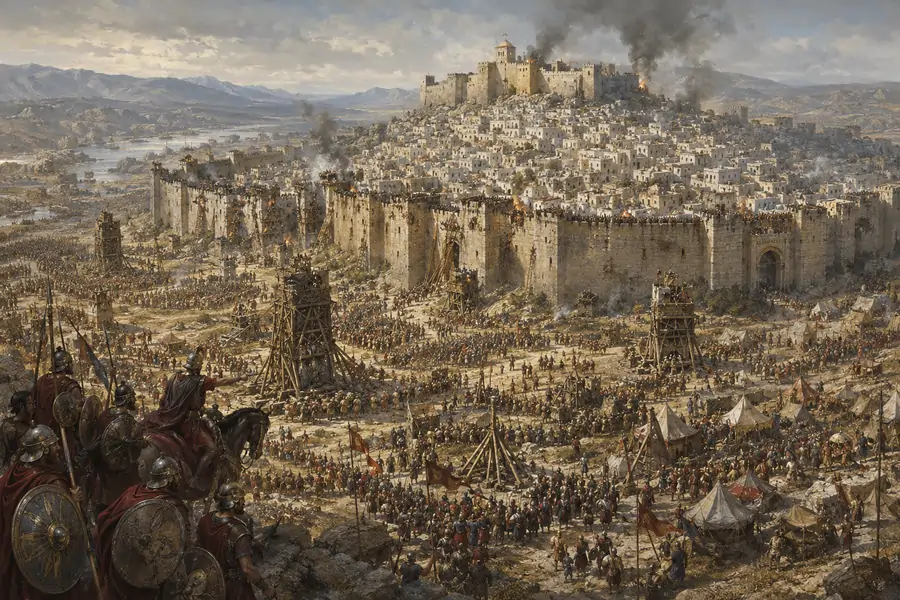
Ancient siege warfare is the act of surrounding and isolating a fortified city, fortress, or stronghold to force its surrender. The sieging army has to block the escape of forces escaping the city, as well as prevent reinforcements and supplies from entering the city from outside. A weaker army would seek refuge in a fortified city instead of fighting the superior enemy on open ground, which favors the superior force. Defensive structures such as walls, towers, gates, and trenches help improve the chances of the defenders to repel the attacks. Fortified cities relied on fortifications, stored food, elevated positions, and time itself to resist capture.
In the ancient world, fortified settlements were central to political and economic power. It helped armies rest, recuperate, and supply themselves. Capturing a city often meant gaining access to treasure, strategic ports, trade routes, and agricultural supplies. Because of this, sieges became one of the most decisive forms of warfare in antiquity.
The Greek historian Thucydides observed during the Peloponnesian War that fortified cities could prolong conflicts for years because breaching the defenses of a city was a long struggle of endurance. Ancient commanders, therefore, had to innovate and master engineering, logistics, and psychological warfare. Some sieges ended with violent assaults after walls were breached, often resulting in street-to-street fighting. Others concluded through starvation, disease, betrayal, or negotiation. In many cases, civilians suffered more than soldiers during prolonged blockades.
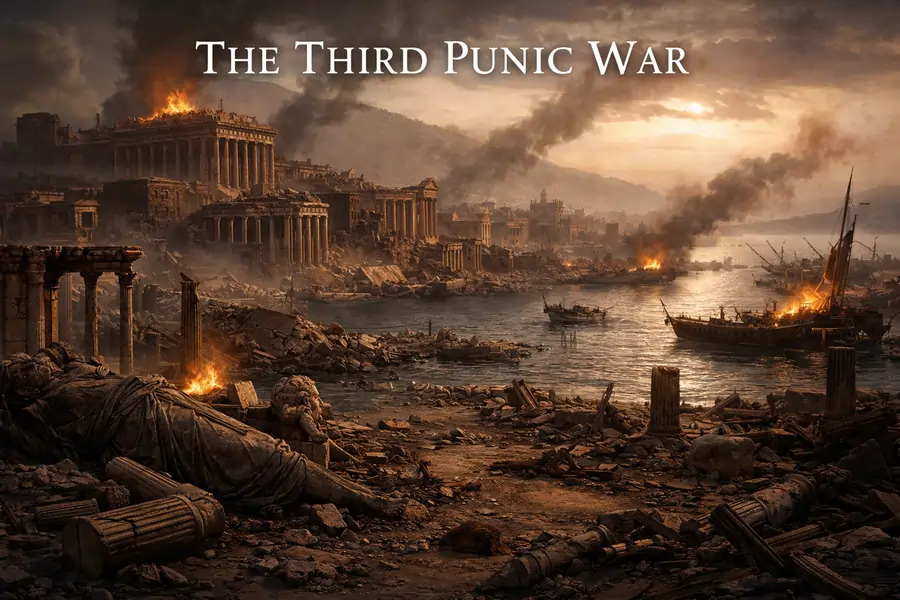
The importance of siege warfare can also be seen during the Roman destruction of Carthage in the Third Punic War, where Rome systematically dismantled one of its greatest rivals through prolonged siege operations.
Why Siege Warfare Was Important in the Ancient World
To conquer territory, it was essential to capture enemy strongholds and cities. Ancient kingdoms depended on fortified cities to protect administration, wealth, granaries, and military infrastructure. Armies could recover their losses and continue fighting as long as they held on to vital ports and supply centers. As a result, conquering territory usually required taking cities rather than merely defeating armies in battle.
The Assyrians were among the first civilizations to make siege warfare a central part of imperial expansion. Relief carvings from Nineveh show soldiers using battering rams, siege towers, and scaling ladders against enemy fortifications. Historians such as Simon Anglim argue that Assyrian military organization laid the foundation for many later siege techniques adopted by Persians, Greeks, and Romans.
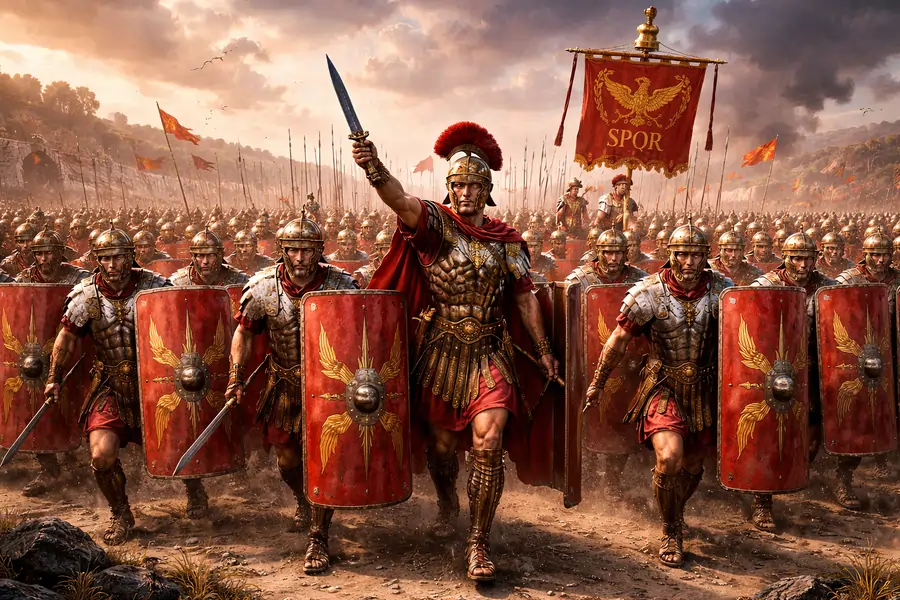
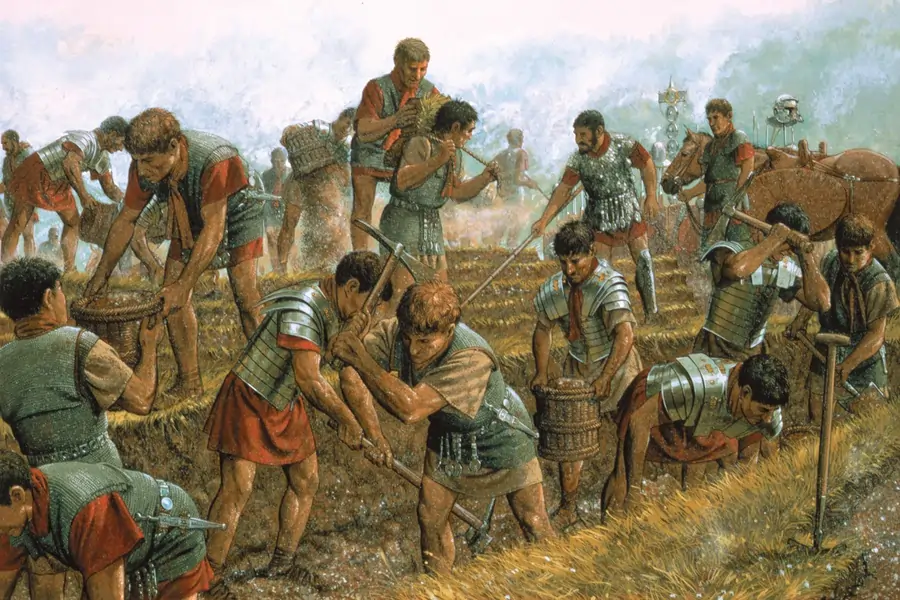
The Romans excelled in constructing camps, fortifications, artillery positions, trenches, and supply networks with remarkable speed and discipline. Modern historian Adrian Goldsworthy notes that Roman military success depended as much on engineering and organization as battlefield tactics. For a Roman soldier, engineering was as important as fighting, and the daily routine of a Roman soldier included engineering. This engineering culture can also be seen in the structure and flexibility of the Roman army itself. You can explore this further in Roman Legion Structure Explained.
How Many Troops Were Needed to Lay Siege?
To properly siege a city, the attacking army needed a lot of manpower. A besieging army needed enough soldiers not only to attack the city, but also to surround it. They had to prevent enemy soldiers from breaking out of the city and prevent relief forces from supplying or reinforcing the besieged city. Continuous pressure needs to be maintained by starving the inhabitants of food, as well as the construction of siege equipment to overpower the defenders.
Military historians generally estimate that attackers preferred at least a three-to-one numerical advantage over defenders to have a good chance of successfully besieging a garrison. The ratio, however, varied greatly depending on terrain, troop quality, and fortifications of the city. Heavily fortified cities with strong defenses and large garrisons could require an enormous army to effectively isolate them. For example, a city defended by five thousand soldiers might require fifteen thousand or more attackers to maintain a proper blockade. If the attackers lacked sufficient manpower, defenders could still smuggle in supplies or launch breakout attacks on weaker segments.
Roman armies were experts in siege warfare, as they often handled these demands more effectively than their opponents. Building fortified camps and defenses was part of their daily life. This allowed armies to maintain secure positions even during lengthy operations. More details can be found in Roman Military Camps Explained.
Troop quality mattered just as much as raw numbers. Professional soldiers with engineering experience were far more valuable than a larger but poorly coordinated force. Julius Caesar repeatedly demonstrated this principle during the Gallic Wars, where Roman discipline compensated for numerical disadvantages. The emotional strain on soldiers during sieges was also severe. Disease and desertion were major causes of concern during ancient sieges. The psychological realities of ancient warfare are explored further in Ancient Soldiers: Mentality, Survival Rates, and Morale.
How Ancient Sieges Usually Happened
Fortified cities were essential for conducting operations in enemy territory to secure a base of operations and a supply depot. The first stage was encirclement. Attackers surrounded the city to prevent escape and block incoming supplies and reinforcements. The attacking army needed to have enough manpower to physically surround the city. The attackers could also construct trenches, wooden palisades, artillery positions, and fortified camps to help maintain a stranglehold on the city. Roman armies became particularly skilled at rapidly fortifying their positions, turning siege lines into defensive systems of their own as showcased in the Battle of Alesia.
Once the city was isolated, commanders could then study its weaknesses carefully. This phase could take weeks to months as engineers searched for vulnerable gates, unstable terrain, poorly defended walls, or opportunities for mining operations. Ancient historians such as Josephus frequently described how reconnaissance and engineering determined the success or failure of Roman siege operations.
After reconnaissance came the construction phase. Attackers needed to create siege equipment to batter down the huge stone walls of the city. This required the construction of siege towers, battering rams, catapults, artillery platforms, and protective shelters. Large quantities of timber, stone, rope, iron, and labor were required to build these siege weapons. Some sieges effectively became giant engineering projects.
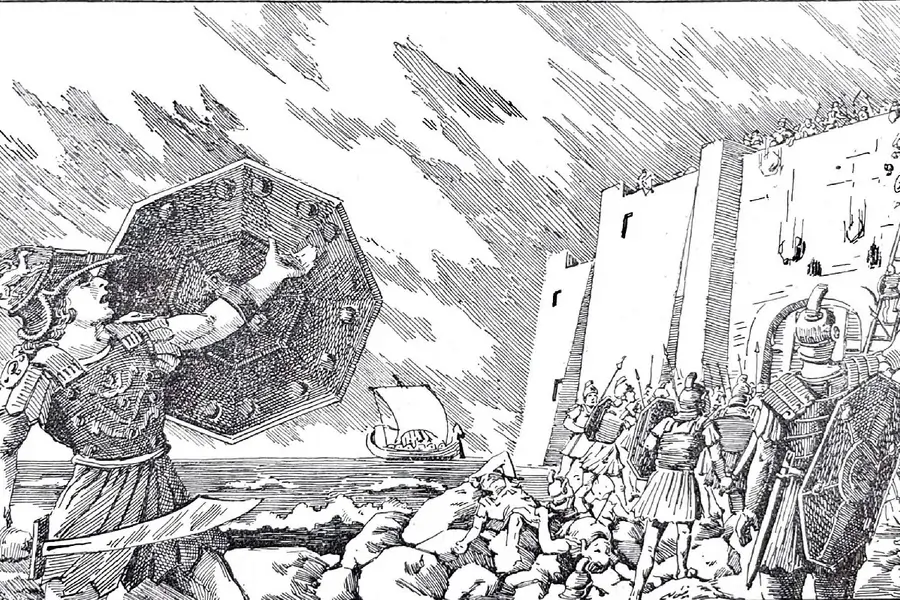
The war machines were then used to soften the defenses and hopefully damage or breach the walls. Direct assaults on the city would then follow. Catapults and ballistas bombarded defenders while infantry attempted to scale walls or force gates open. These assaults were extremely dangerous for the attackers, as the defenders in the city held the advantage of elevation and protection. Casualties were usually very high during these assaults. If the city was breached, what followed was usually a brutal massacre of the population and pillaging. In long, drawn-out sieges, the attackers usually took out their frustration on the defending forces for wasting their time and resources.
If assaults failed, the siege would eventually turn into a war of attrition. This was arguably the most difficult phase of the siege, especially for the civilians living in the city. Attackers attempted to starve the city into submission while defenders rationed supplies and waited for relief forces. In many ancient sieges, starvation and disease outbreaks ultimately proved more decisive than battlefield violence.
Goals of Attackers and Defenders
The primary goal of the attackers in a siege was to capture the city by any means necessary. They would aim to be as efficient as possible while preserving enough strength to continue campaigning afterward. Capturing a fortified city could secure trade routes, destroy enemy morale, eliminate political leadership, and provide valuable loot. Some sieges also had broader strategic goals. The Third Punic War against Carthage, for instance, involved not just military conquest but the elimination of a rival Mediterranean power. The wider geopolitical importance of those conflicts is discussed in Why the Punic Wars Are So Fascinating.
Defenders, meanwhile, focused on survival and endurance. Their primary objective was usually to hold out long enough for reinforcements to relieve the siege or to inflict as many casualties as possible on the attackers, forcing them to withdraw. Because ancient armies struggled with logistics, time was an ally for the defenders. The longer the siege dragged on, the more difficult the logistical situation for the attackers.
Food and supplies management was a major priority, especially for the defenders during sieges. Grain stores, wells, livestock, and ration systems could determine whether a city survived or collapsed. Food rations were consumed by both the defending troops and the civilian population. If morale dropped, riots and internal unrest sometimes forced cities to surrender even before defenses were breached.
Ancient Siege Weapons and War Machines
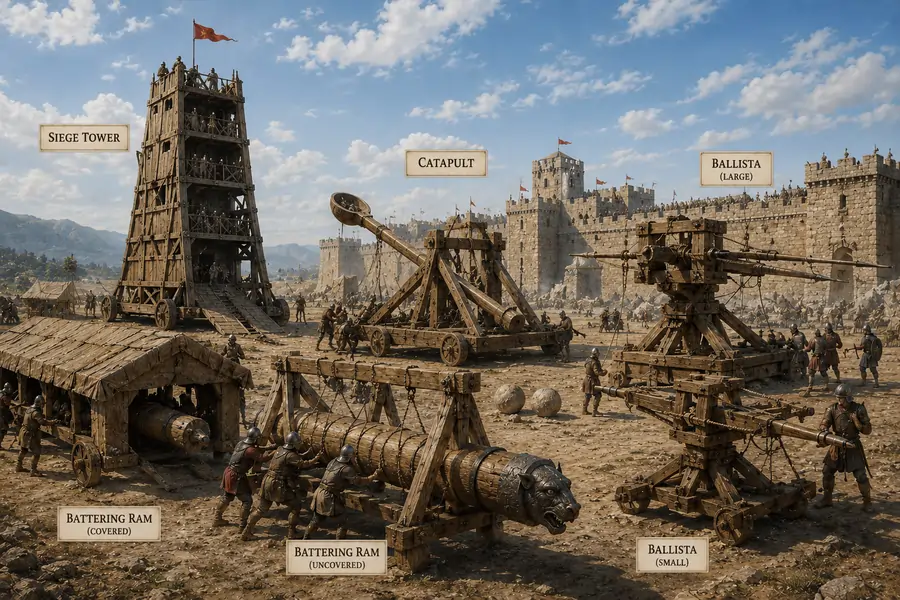
Starving a city to surrender took a huge amount of time. To force an outcome, the attacking army needed to breach the walls of the city and capture it by force. Cracking open the walls of a fortified city without gunpowder weapons was no easy feat. Ladders were often not enough to scale the walls of a heavily defended city. Ancient engineers made remarkable innovations in siege warfare. Over centuries, civilizations developed increasingly sophisticated machines designed specifically to overcome fortified defenses.
The battering ram was among the oldest and most widely used siege weapons. The Battering Ram typically consisted of massive tree trunks reinforced with iron. They were used to target gates and weak sections of walls. Assyrian reliefs from the seventh century BC already show advanced ram designs protected by covered wooden shelters. These wooden shelters helped protect the soldiers operating the rams from arrows.
Siege towers were another major innovation that took a different approach to siege warfare. These towering wooden structures allowed attackers to hide inside them to protect themselves from missile weapons. Once the towers were moved closer to the walls, the soldiers could climb up the towers and cross over the walls. Sometimes archers were stationed inside the towers to suppress defenders while assault troops crossed onto the battlements.
Catapults and ballistas were the artillery of the ancient era. Greek engineers pioneered torsion-powered artillery capable of hurling stones and giant bolts with deadly force. This enabled the attackers to deal significant damage to the walls and defending troops from a safe distance. According to historian Peter Connolly, Hellenistic kingdoms invested heavily in artillery development because fortified cities had become increasingly difficult to storm directly. Roman armies designed the Ballistas that functioned like giant crossbows, firing heavy bolts with impressive accuracy. Onagers hurled large stones capable of damaging walls and defensive towers.
Ancient Defensive Systems and Fortifications
As siege weapons evolved through the ages, defensive architecture evolved to counter siege tactics. Ancient cities invested heavily in the construction of walls, towers, gates, and layered fortifications, which were designed to slow down and frustrate attackers.
Stone walls formed the core of most ancient defenses. The walls were manned by defenders equipped with missile weapons to take out attackers trying to scale the walls. Popular culture often emphasizes the use of boiling oil being dumped on troops approaching the walls. However, historians such as Philip Sabin note that boiling water, heated sand, burning pitch, and flaming debris were more practical because oil was expensive and valuable. Some cities constructed multiple concentric walls so that even if attackers breached one line, defenders could retreat to another. This layered defense was highly effective in delaying the attackers. Babylon's walls became legendary in antiquity for their immense scale.
The walls were equipped with towers that provided elevated firing positions for archers and artillery crews. The defenders also relied heavily on artillery during sieges. Ballistas and catapults mounted on walls could inflict severe casualties on attacking forces. They could also be used to target the catapults used by the attacking troops, leading to artillery duels between the attackers and defenders.
Ditches and moats were also dug up outside the city's walls. This helped in slowing down troops who could then be picked off by the archers on the walls. They were also effective against battering rams and siege towers because they prevented the heavy weapons from being brought near the vulnerable walls. Earthen ramparts were also constructed to complement or replace walls in cases where the defenses were built up quickly.
Special Siege Tactics
Ancient commanders also came up with many innovative strategies to overcome defenses. The defenders were constantly at risk of mining operations. Sappers dug tunnels beneath walls and tried to burn or remove the foundations, which would cause sections of the wall to collapse. Countermining could be done by the defenders by digging their own tunnels to intercept enemy miners underground. Mining and counter-mining have been done for centuries and even to this present day.
Starvation remained one of the slowest but most reliable siege strategies. Ancient armies often preferred blockades because frontal assaults were costly and unpredictable. Over time, hunger, disease, and declining morale weakened resistance from within. During the time of plagues, diseased corpses were intentionally flung into cities to spread the infection. Gabriele de' Mussi, an Italian notary, explains how during the Siege of Caffa (1346), the attacking Mongol army catapulted plague-infected bodies into the besieged Crimean port city.
Bribery and betrayal also played a surprisingly important role in siege warfare. Ancient historians repeatedly describe bribed guards, political conspiracies, or internal factions opening gates to attackers. The most famous instance of betrayal can be seen in the Siege of Antioch (1098), where Crusader forces bribed an Armenian guard commander to betray his garrison.
Naval operations mattered greatly during coastal sieges. Without control of the sea, a besieging army could struggle to prevent resupply. This factor became crucial during the Siege of Tyre.
Case Study: The Siege of Alesia
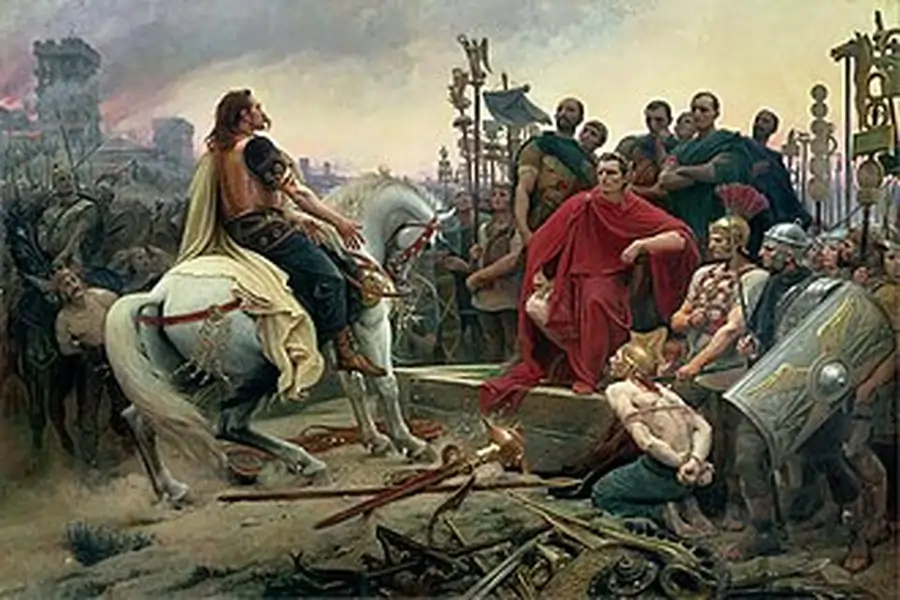
The Siege of Alesia in 52 BC remains one of the most remarkable siege operations in ancient history. Julius Caesar had finally cornered the Gallic leader Vercingetorix inside the hill fortress of Alesia. However, with victory within his grasp, the Roman commander was faced with a major strategic problem. He needed to contain the defenders from escaping the city while also preparing to hold off a massive Gallic relief army.
According to Caesar's own Commentaries on the Gallic War, the Romans solved this problem by constructing two separate lines of fortifications. One line faced inward toward the city, while another faced outward against approaching reinforcements. This was an astonishing feat of engineering and ingenuity.
These defenses included trenches, towers, traps, palisades, and fortified camps stretching for miles across the landscape. Historian Adrian Goldsworthy describes the operation as one of the greatest demonstrations of Roman engineering and military discipline. Caesar was conducting a siege within a siege by both becoming the besieger as well as the besieged. Eventually, repeated Gallic assaults failed, starvation worsened inside Alesia, and Vercingetorix surrendered. The victory effectively secured Roman control over Gaul.
You can read a detailed breakdown in Battle of Alesia: Caesar's Double Wall Strategy.
Case Study: The Siege of Tyre
The Siege of Tyre in 332 BC demonstrated Alexander the Great's extraordinary persistence and adaptability. Tyre was a fortress city protected by powerful walls and its location on an offshore island. Because direct assault was impossible, Alexander ordered the construction of a massive causeway extending from the mainland toward the city.
Alexander essentially changed the geography of the place by connecting Tyre to the mainland. The defenders launched constant attacks using ships and missile weapons. Ancient historian Arrian described the siege as one of Alexander's most difficult operations because the Macedonians faced both naval and engineering challenges simultaneously. Alexander eventually assembled a fleet from allied Phoenician cities and used siege towers, artillery, and naval pressure to breach Tyre's defenses. After months of fighting, the city finally fell.
For a full analysis, see Siege of Tyre (332 BC).
Psychological Warfare During Sieges
Ancient siege warfare was more than just a battle of physical strength. Morale and psychological well-being were much more important. Continuous bombardment, starvation, executions, and uncertainty placed enormous mental pressure on defenders. Attackers often massacred captured populations specifically to intimidate future opponents into surrendering without resistance. The Assyrians became infamous for this strategy.
Defenders tried to maintain morale through religion, propaganda, public ceremonies, and displays of resistance. As historian John Keegan observed, morale frequently determined whether armies continued fighting even after military defeat became likely. The reputations of famous commanders also mattered enormously. Generals such as Alexander the Great, Hannibal Barca, and Julius Caesar inspired fear partly because of their previous victories.
The Legacy of Ancient Siege Warfare
Ancient siege warfare had evolved for hundreds of years and influenced military development for centuries. Many techniques created during ancient times survived into medieval and even early modern warfare, including artillery bombardment, mining operations, fortified camps, and logistical blockades.
Sieges also accelerated technological innovation. The need for making stronger, better defenses helped progress defensive architecture. As fortifications improved, attackers developed more advanced engines and tactics in response. This constant competition between offense and defense became a defining feature of military history. Several decisive turning points in world history involved major sieges rather than open battles alone. Some of these conflicts are explored in Top 10 Decisive Battles in History.
Even debates about alternative historical outcomes often focus heavily on siege logistics and urban defenses. For example, discussions about whether Hannibal could have marched on Rome after Cannae depend partly on Rome's formidable fortifications and manpower reserves. This topic is explored in What If Hannibal Marched on Rome?. Ultimately, siege warfare revealed the true complexity of ancient military power. Victory depended not only on courage or battlefield skill, but also on engineering, organization, patience, leadership, and the ability to endure prolonged hardship.
References and Further Reading
- Polybius - The Histories
- Arrian, Anabasis of Alexander
- Julius Caesar - Commentaries on the Gallic War
- Josephus - The Jewish War
- Thucydides - History of the Peloponnesian War
- Adrian Goldsworthy - The Complete Roman Army
- Duncan Campbell - Ancient Siege Warfare
- Peter Connolly - Greece and Rome at War
- Philip Sabin - Lost Battles
- Simon Anglim - Fighting Techniques of the Ancient World
Recommended Books
This article may contain affiliate links. If you purchase through these links, I may earn a small commission at no extra cost to you.
Related Articles
Frequently Asked Questions
How did ancient armies break through city walls?
Ancient armies used siege weapons such as battering rams, siege towers, catapults, and mining tunnels to break through fortified city walls. Some armies also relied on starvation blockades or betrayal to force cities to surrender without a direct assault.
Why were ancient sieges often longer than battles?
Ancient sieges often lasted much longer than battles because fortified cities were designed to resist direct attacks. Defenders could survive behind walls for months using stored food, wells, and defensive positions while attackers tried to cut off supplies and weaken morale.
What was the most effective siege tactic in ancient warfare?
Starvation was often the most effective siege tactic in ancient warfare. Instead of risking heavy casualties in direct assaults, many armies surrounded cities and blocked food supplies until defenders were forced to surrender.
How did Roman armies conduct sieges?
Roman armies conducted sieges using disciplined engineering and organized logistics. They built fortified camps, trenches, siege towers, artillery platforms, and defensive walls around enemy cities while using catapults and battering rams to pressure defenders.
What defenses did ancient cities use against siege attacks?
Ancient cities used thick stone walls, towers, ditches, fortified gates, artillery, and elevated defensive positions to resist siege attacks. Defenders also used arrows, stones, fire, and countermining tactics against attackers.
Why was the Siege of Alesia important in Roman history?
The Siege of Alesia in 52 BC was important because Julius Caesar defeated the Gallic leader Vercingetorix using massive double-layered fortifications and superior Roman engineering. The victory helped secure Roman control over Gaul.
Add Comment