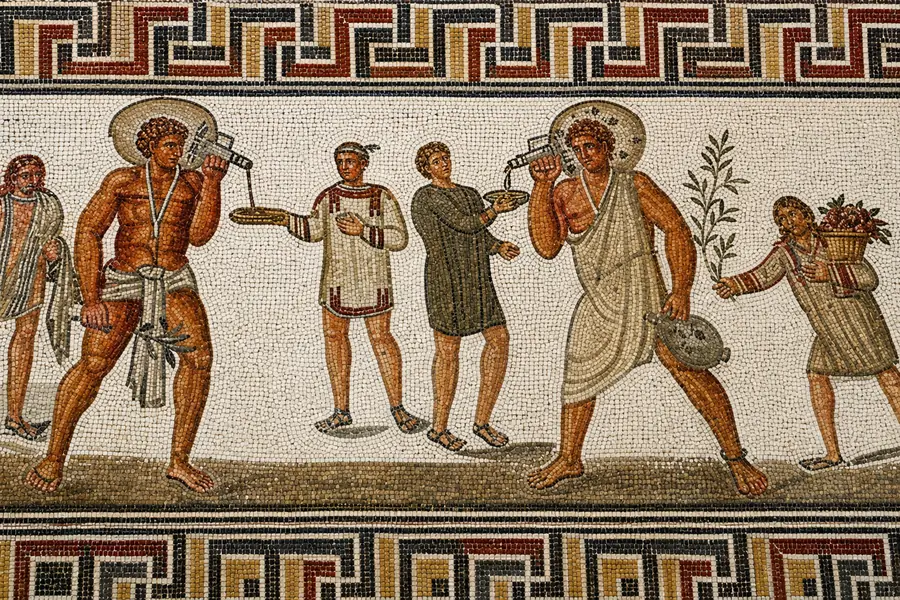
The Spartan helots were the oppressed population whose labor sustained one of the ancient world's most militarized societies. Behind Sparta's reputation for discipline and battlefield success was a system built on the conquest and control of thousands of people who worked its lands and supported its economy. The helots lived under constant restrictions, intimidation, and the threat of violence as Sparta attempted to maintain power over a population that greatly outnumbered its citizens. While the helot system allowed Spartan citizens to dedicate themselves to military training, it also created deep social instability and repeated revolts, becoming one of the major weaknesses that contributed to Sparta's decline.
Table of Contents
- Who Were the Spartan Helots?
- Why Sparta Needed the Helots
- Why Were There So Many Helots in Sparta?
- Daily Life of Spartan Helots
- How Were Helots Treated by the Spartans?
- Why Sparta Declared War on the Helots Every Year
- The Crypteia: Sparta's Secret Police Against Helots
- Did Helots Fight in the Spartan Army?
- Why the Helots Never Successfully Overthrew Sparta
- How the Helot System Weakened Sparta
- Conclusion
- References
Who Were the Spartan Helots?
The helots were a large population of state-owned serfs who lived under the control of ancient Sparta. Unlike privately owned slaves in many other ancient societies, helots belonged collectively to the Spartan state and were assigned to Spartan citizens to work their agricultural estates. The word "helot" is believed by some ancient writers to come from Helos, a town in Laconia that was conquered by the Spartans, although the exact origin remains debated. According to Greek traditions, the earliest helots came from populations defeated as Sparta expanded across the region of Laconia.
The largest and most important group of helots came from Messenia. During the Messenian Wars, Sparta conquered the fertile lands west of Mount Taygetus and reduced much of the local population into hereditary servitude. The conquest of Messenia transformed Sparta from a normal Greek city-state into a militarized society built around controlling a much larger subject population.
The historian Thucydides described the helots as a group whose relationship with Sparta was defined by fear and rebellion. He wrote that many Spartan policies were influenced by the constant need to prevent a helot uprising (Thucydides, History of the Peloponnesian War, Book IV). While Athens became famous for democracy, naval power, and cultural achievements, Sparta focused almost entirely on military discipline and internal security.
Why Sparta Needed the Helots
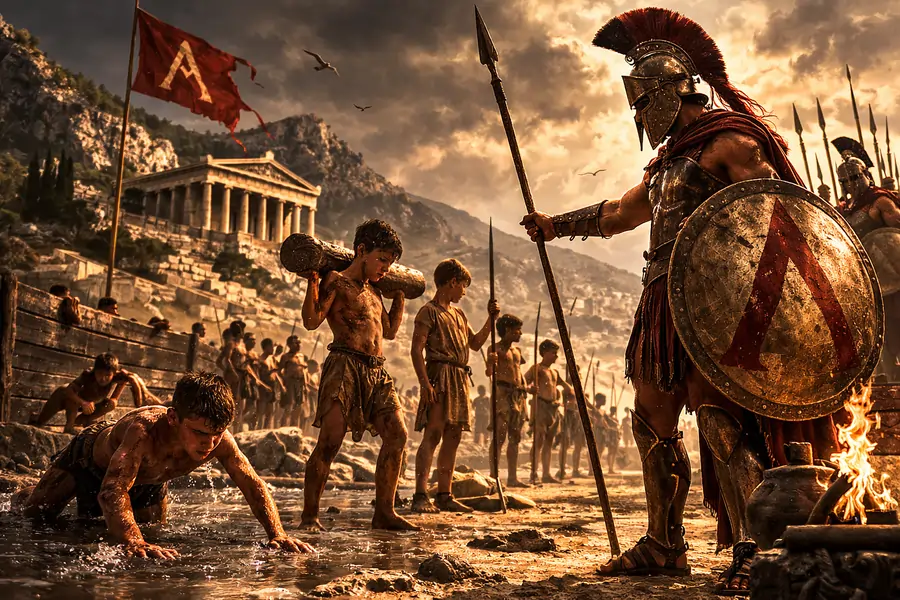
The famous Spartan warrior lifestyle would have been impossible without the helots. Spartan citizens, known as Spartiates, were expected to dedicate their lives to military training, discipline, and service. Unlike ordinary Greek farmers or craftsmen, full Spartan citizens were discouraged from working in agriculture or trade. From childhood, Spartan males entered the harsh state-controlled education system known as the agoge. This system trained boys to become professional soldiers through physical hardship, discipline, and military preparation. You can learn more about this process in our detailed guide on the Spartan agoge training system.
However, creating a society of full-time warriors who basically do nothing else created a major problem. Someone still needed to produce food, maintain farms, and support the economy. The Spartan solution to this problem was the helot system.
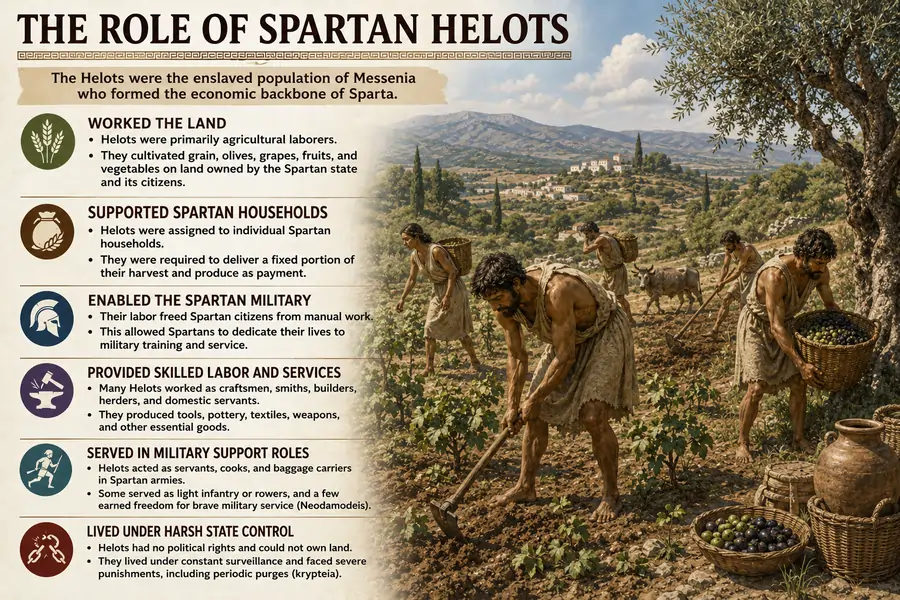
Helots performed the agricultural labor that supported Sparta's warrior class. They cultivated the estates of Spartan citizens and provided a portion of their harvest to their Spartan masters. This arrangement gave Spartan warriors the time and resources needed to constantly train for war. In many ways, the military strength of Sparta was built on this division of labor. The discipline and effectiveness of Spartan hoplites depended on thousands of people who rarely received recognition in ancient accounts.
Why Were There So Many Helots in Sparta?
One of the most unusual aspects of Spartan society was the enormous difference between the number of Spartan citizens and the number of helot slaves. Ancient sources suggest that helots greatly outnumbered the Spartans, although exact numbers remain uncertain. The historian Herodotus provides evidence of this imbalance during the Persian Wars. At the Battle of Plataea in 479 BCE, he claimed that each Spartan warrior was accompanied by seven helots (Herodotus, Histories, Book IX).
While historians debate whether this ratio applied to all of Spartan society, most agree that the helots significantly outnumbered full Spartan citizens. Some modern estimates suggest that there may have been several helots for every Spartiate.
This imbalance in the number of helots to Spartans created a paradox. The helots made Sparta powerful by supporting its military system, but their large numbers also made them Sparta's greatest internal threat. Unlike many states that feared foreign invasion most, Sparta constantly feared revolt from within. The possibility of a massive helot rebellion influenced Spartan politics, military decisions, and even foreign policy. This was the primary reason why Sparta refrained from conflicts outside the Peloponnese.
Daily Life of Spartan Helots
The daily life of Spartan helots was centered around agricultural labor and service to the Spartan state. Most helots lived in rural communities across Laconia and Messenia, where they worked the same lands that their ancestors had occupied before the Spartan conquest. Unlike slaves in some other ancient societies, helots were not usually bought and sold individually in markets. They were tied to the land and remained a hereditary labor class. A helot family's status passed from one generation to the next, making escape from the system extremely difficult.
Their primary responsibility was farming. Helots grew crops, maintained estates, and provided a fixed portion of agricultural production to Spartan citizens. This allowed the Spartiate class to focus on military training instead of economic activities. The Greek writer Plutarch later claimed that Spartan lawgiver Lycurgus created a system where citizens avoided ordinary labor and focused entirely on public service and warfare (Plutarch, Life of Lycurgus). Although modern historians debate the accuracy of some traditions surrounding Lycurgus, the connection between helot labor and Spartan militarization is widely accepted.
The treatment and living conditions of all Helots were not the same. Some lived under harsher conditions than others, depending on location and period. The Messenians, who had once possessed their own independent identity before Spartan conquest, were especially prone to revolts and resisted Spartan rule. Despite their oppressed status, helots maintained families, communities, and elements of their cultural identity. This made them different from many forms of slavery in the ancient world, but it also meant that they remained capable of organizing large-scale revolts. This remained a thorn in their side for the Spartans.
Most helots lived in small farming villages rather than within the city of Sparta itself. Their homes were likely modest stone or mud-brick dwellings with thatched or tiled roofs, built to support agricultural life rather than comfort or luxury. Clothing was generally simple and practical, consisting of coarse woolen garments suited to manual labor. Ancient sources suggest that Spartans deliberately distinguished helots from citizens through their appearance, although some descriptions may reflect later traditions rather than fact.
Despite their subordinate status, helots lived in family units and raised children who inherited their parents' condition of servitude. These village communities allowed them to preserve local customs, religious practices, and social ties, particularly in Messenia, where memories of independence remained strong. While everyday life revolved around farming and fulfilling obligations to the Spartan state, these close-knit communities also helped maintain a shared identity that contributed to repeated outbreaks of resistance against Spartan rule.
How Were Helots Treated by the Spartans?
The treatment of helots in Sparta was often harsh because the Spartans viewed them not only as workers but also as a potential enemy population. Since the helots greatly outnumbered their rulers, Spartan control depended on intimidation, discipline, and psychological dominance. Ancient sources describe several methods used to reinforce Spartan authority. Plutarch claimed that Spartans sometimes forced helots to drink excessive amounts of wine and display drunken behavior as a lesson to young Spartans about self-control (Plutarch, Life of Lycurgus).
While historians caution that some anti-Spartan accounts may have been exaggerated by later writers, there is little doubt that fear of rebellion shaped Spartan attitudes toward the helots. Aristotle criticized the Spartan system in his work Politics, arguing that the helots were a constant security problem because they waited for opportunities to revolt whenever Sparta faced difficulties (Aristotle, Politics, Book II).
This created a society where even the strongest warriors of Greece lived with permanent anxiety. The same military culture that produced legendary soldiers at battles such as Thermopylae was built on a society that systematically terrorized, subjugated, and exploited slaves.
Why Sparta Declared War on the Helots Every Year
One of the most unusual traditions associated with Sparta was the annual declaration of war against the helots. According to ancient sources, the Spartan ephors, who were powerful elected officials, formally declared war on the helot population each year. Plutarch recorded that this declaration allowed Spartans to use violence against helots without violating religious restrictions against unlawful killing (Plutarch, Life of Lycurgus).
The purpose of this practice was not a conventional military campaign. Instead, it symbolized the relationship between Sparta and the people it controlled. The helots were not simply viewed as servants but as a defeated enemy population living inside Spartan territory. It reinforced Spartan dominance over a conquered population that the Spartan state regarded as permanently subordinate.
Modern historians debate whether the annual war declaration happened exactly as later sources describe. However, the tradition reflects a larger truth about Spartan society: maintaining dominance over the helots was treated as a matter of survival. Sparta's greatest military advantage also created its greatest weakness. The city could produce elite soldiers because helots supported them, but those same soldiers were always needed at home to prevent rebellion.
The Crypteia: Sparta's Secret Police Against Helots
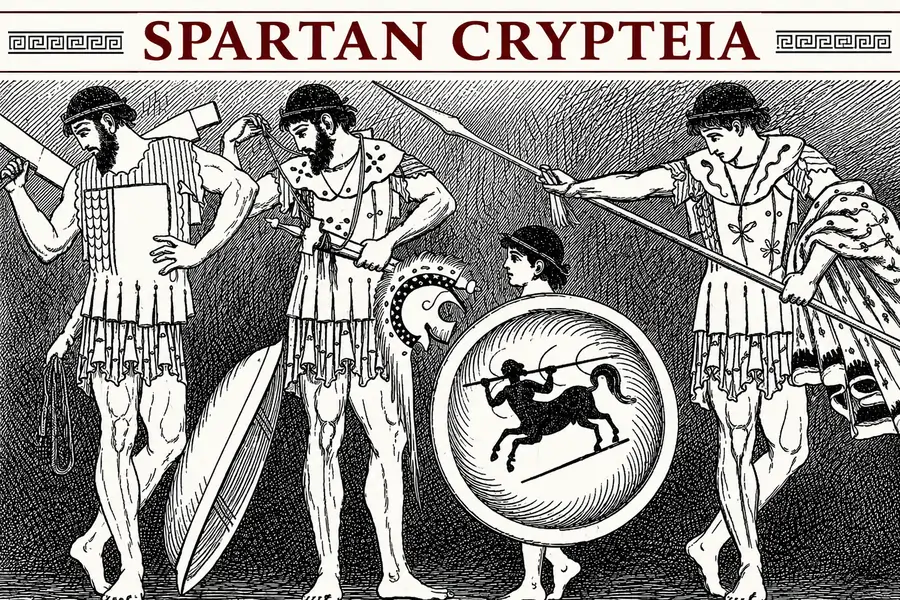
The Crypteia (also spelled Krypteia) was one of the most controversial institutions in ancient Sparta. Ancient writers describe it as a system where selected young Spartan men were sent into the countryside to observe, intimidate, and sometimes kill helots considered dangerous. According to Plutarch, members of the Crypteia carried limited supplies, moved secretly through the countryside, and targeted helots who appeared especially strong or capable of leading resistance (Plutarch, Life of Lycurgus).
The exact nature of the Crypteia remains debated among historians. Some view it mainly as a secret police organization designed to control the helot population. Others argue that it was also a brutal training exercise that prepared young Spartans for hardship, stealth, and survival. Either way, the existence of the Crypteia demonstrates the unusual relationship between Spartan military culture and internal control. Spartan boys were trained not only to defeat foreign armies but also to maintain dominance over the population that supported their society.
The Spartan approach to warfare produced some of the ancient world's most disciplined soldiers, but it differed greatly from other military systems. Later armies, such as the highly organized Roman legion, developed a military system that was built on self-sufficiency. Each soldier was responsible for building camps, preparing food, building bridges, carrying their own equipment, and gathering supplies without depending on such a large controlled population.
Did Helots Fight in the Spartan Army?
Although the helots are usually remembered as agricultural workers, they also played an important role in Spartan military campaigns. The image of Sparta as a society where only elite hoplite warriors fought is incomplete. Behind every Spartan army was a much larger support system that included thousands of helots.
During military expeditions, helots served as attendants, carried equipment, transported supplies, and performed essential logistical duties. These roles were critical because ancient armies depended heavily on support personnel to remain effective during long campaigns. Helots were also sometimes armed and used directly in combat. During major emergencies, Sparta could not always rely only on its shrinking number of full citizens and was forced to expand the military role of the helot population. As Sparta's citizen population declined, practical military necessity increasingly outweighed traditional distrust of the helots.
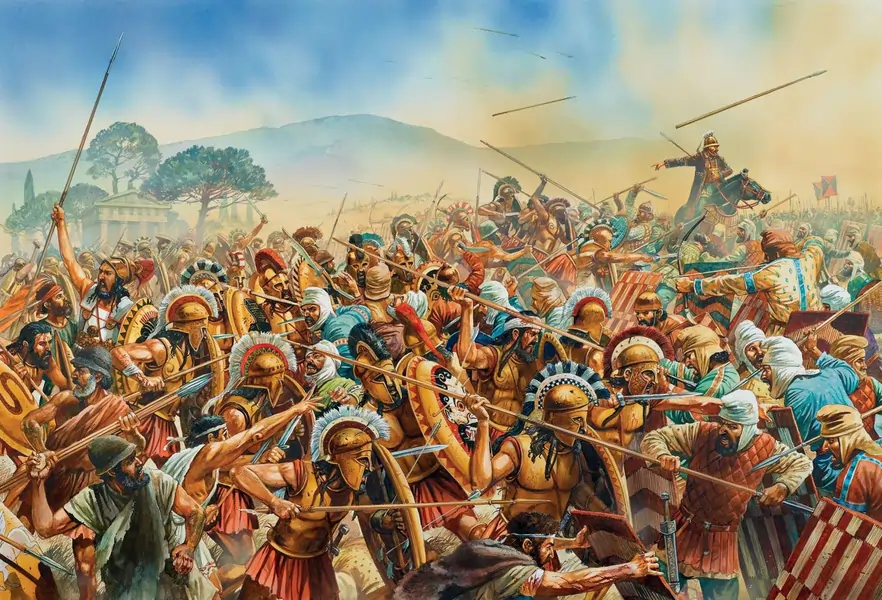
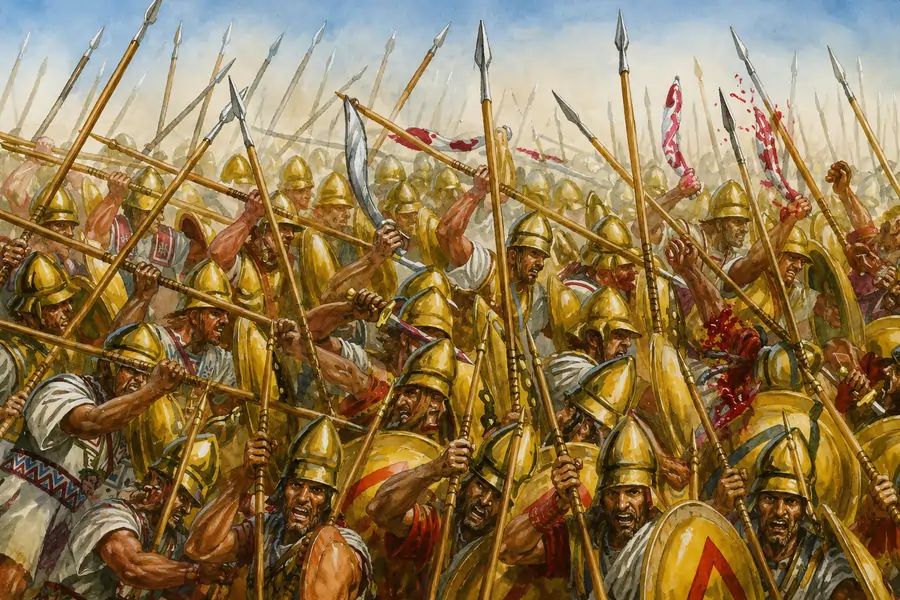
One of the most famous examples occurred during the Persian Wars. At the Battle of Plataea in 479 BCE, Herodotus recorded that 5,000 Spartan citizens were accompanied by 35,000 helots (Herodotus, Histories, Book IX). The exact battlefield role of these helots remains debated. Some historians argue that many served primarily as light troops and attendants rather than heavily armored hoplites. However, their presence shows that Sparta's military achievements were never created by Spartan citizens alone.
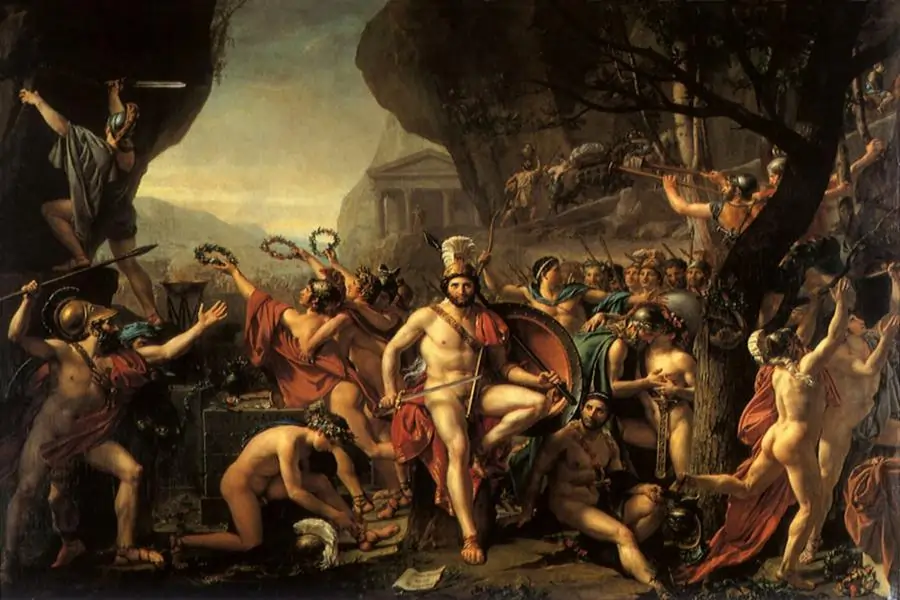
Even during famous moments of Spartan heroism, such as the Battle of Thermopylae, Spartan warriors operated within a wider military system supported by non-citizen groups including helots and allied forces. As Sparta's citizen population declined in later centuries, the military importance of helots increased. Some helots who performed exceptional military service could even gain freedom and become a group known as neodamodes, meaning "new citizens" or newly enfranchised men.
Why the Helots Never Successfully Overthrew Sparta
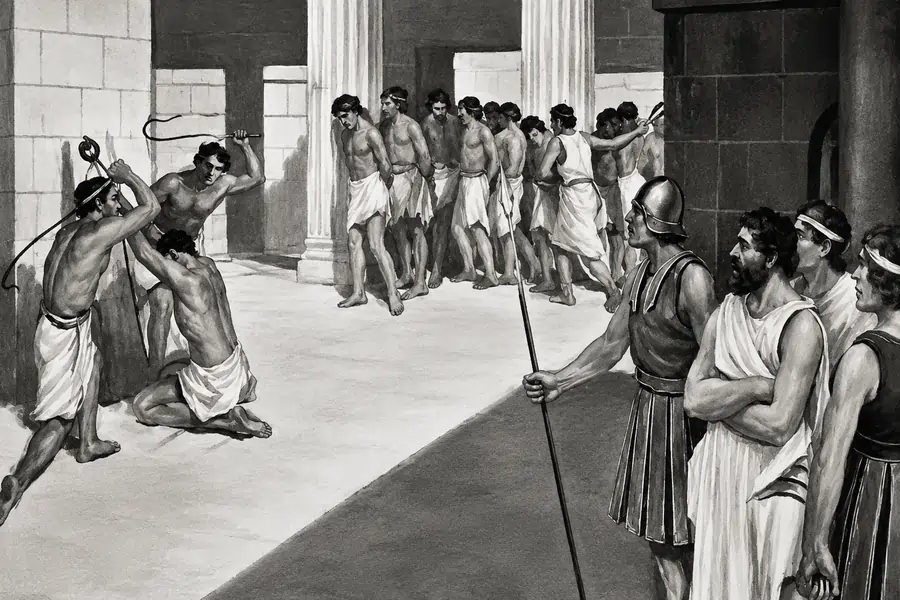
Given that the helots greatly outnumbered the Spartan citizens, it is natural to wonder why they never permanently overthrew their rulers. The answer lies in a combination of Spartan military organization, constant surveillance, and the difficulties of organizing a large population spread across Laconia and Messenia. Although the helots launched several major revolts throughout Spartan history, they rarely possessed the unity, leadership, or military resources needed to defeat one of Greece's most disciplined armies.
Sparta's Constant Readiness for Rebellion
Unlike most Greek city-states, Sparta always expected the possibility of an internal uprising. Its military institutions, including the agoge and the permanent readiness of its citizen soldiers, were designed not only to fight foreign enemies but also to suppress domestic revolts. Because Spartans viewed the helots as a constant security threat, they were able to respond quickly whenever signs of rebellion appeared.
Geography and Organization
The helots were dispersed across numerous farming communities rather than concentrated in a single location. This made coordinated resistance difficult, especially without an independent political leadership or centralized command structure. Communication between different regions was limited, allowing Spartan authorities to isolate and suppress local uprisings before they developed into a unified revolt.
Rebellions Succeeded Only When Sparta Was Weak
The greatest helot uprisings occurred when Sparta was distracted by external wars or natural disasters. The most famous example followed the devastating earthquake of 464 BCE, when many Messenian helots revolted while Sparta struggled to recover. Even then, the conflict developed into a prolonged struggle rather than an immediate overthrow of Spartan rule. It was only after Sparta's military decline in the fourth century BCE, particularly following its defeat at the Battle of Leuctra, that the Theban general Epaminondas liberated Messenia and permanently ended Spartan control over much of the helot population.
The history of the helots illustrates that numerical superiority alone was not enough to overthrow a highly organized military state. While the helots remained the majority of the population for centuries, Sparta's discipline, institutions, and ability to suppress rebellion allowed a relatively small warrior elite to maintain control until its military power finally declined.
How the Helot System Weakened Sparta
The helot system was responsible for Sparta's rise, but it also contributed heavily to its decline. The same structure that created Sparta's legendary warrior class placed severe limitations on the city-state's ability to adapt. The first major weakness was constant internal insecurity. Because the helots greatly outnumbered the Spartans, Sparta always had to consider the possibility of rebellion. This limited how far and how often Spartan armies could campaign away from home.
Thucydides noted that Spartan decision-making during the Peloponnesian War was strongly influenced by fear of helot revolts (Thucydides, History of the Peloponnesian War, Book IV). A major uprising could threaten Sparta's survival even without an enemy invasion. This problem became clear after the devastating earthquake of 464 BCE. The disaster caused enormous destruction in Sparta and created an opportunity for a major helot revolt, particularly among the Messenians. The conflict that followed weakened Sparta and forced it to dedicate resources toward restoring internal control.
The second major weakness was Sparta's limited citizen population. Because the entire system depended on a small warrior elite controlling a huge labor population, the loss of trained Spartan soldiers was difficult to replace. Unlike societies that could expand citizenship or recruit from broader populations, Sparta struggled to rebuild its military manpower. This became increasingly dangerous as Greek warfare evolved.
The problem became clear during Sparta's conflicts with other Greek powers. The defeat of Sparta by the Thebans at the Battle of Leuctra in 371 BCE permanently damaged Spartan dominance. The elite Sacred Band of Thebes helped demonstrate that Spartan military superiority was not unbeatable. After the Battle of Leuctra, the Theban general Epaminondas invaded the Peloponnese and liberated Messenia. This was a devastating blow because Messenian helot labor had supported the Spartan system for centuries. Without control over this population, Sparta could no longer maintain the same military structure.
In contrast, later military powers created more flexible systems. The Macedonian army of Philip II and Alexander the Great combined professional training with larger recruitment networks and innovative formations like the Macedonian phalanx. Later, the adaptability of Rome allowed the Roman legion to overcome the Macedonian phalanx and dominate the Mediterranean world. Spartans did not adapt their military tactics and were left behind by armies that chose to innovate.
Conclusion: The Helots Were Both Sparta's Strength and Weakness
The story of the Spartan helots reveals the contradiction at the heart of ancient Sparta. The world remembers Sparta for its fearless warriors, strict discipline, and battlefield achievements, but those achievements depended on a large population of people who lived under Spartan control. The helots allowed Spartan citizens to spend their lives training for war. Without helot labor, the famous Spartan military system, the agoge, and the professional warrior lifestyle of the Spartiate class could not have existed.
However, the same system created long-term problems. The fear of rebellion shaped Spartan society, limited military expansion, and prevented Sparta from adapting when circumstances changed. Ancient Sparta remains one of history's most fascinating examples of a society built almost entirely around warfare. Yet the story of the helots shows that even the strongest military systems can contain hidden weaknesses.
Sparta created some of the most famous warriors in history, but the population that supported those warriors ultimately exposed the limits of the Spartan way of life.
References
- Herodotus. The Histories, Book IX - Account of Spartan forces and helots during the Battle of Plataea.
- Thucydides - History of the Peloponnesian War, Book IV - Discussion of Spartan fears regarding helot revolts.
- Plutarch. Life of Lycurgus - Ancient descriptions of Spartan society, helot treatment, and the Crypteia.
- Aristotle. Politics, Book II - Analysis and criticism of Sparta's political and social system.
- Xenophon. Constitution of the Lacedaemonians - Observations on Spartan customs and institutions.
- Cartledge, Paul. Sparta and Lakonia: A Regional History 1300-362 BC. Routledge.
- Powell, Anton. Athens and Sparta: Constructing Greek Political and Social History from 478 BC. Routledge.
- Lazenby, J. F. The Spartan Army. Aris & Phillips.
Recommended Books
This article may contain affiliate links. If you purchase through these links, I may earn a small commission at no extra cost to you.


Related Articles
Frequently Asked Questions
Were Spartan helots slaves or serfs?
Spartan helots were neither typical slaves nor free peasants. They were a hereditary population owned by the Spartan state rather than by individual citizens. Helots were assigned to work agricultural estates and were required to provide a share of their harvest to Spartan citizens, making their status closer to state-owned serfs than privately owned slaves.
Why did Sparta depend so heavily on the helots?
Sparta depended on the helots because they farmed the land, produced food, and supported the Spartan economy. Their labor allowed Spartan citizens to spend most of their lives training for war and serving in the army instead of working as farmers or craftsmen.
Why did the Spartans fear the helots so much?
The Spartans feared the helots because they greatly outnumbered the Spartan citizen population. Since the helots were descendants of conquered peoples, especially the Messenians, Sparta worried they would revolt whenever the city-state appeared weak. This constant threat influenced Spartan military policy and domestic governance.
Did Spartan helots fight alongside Spartan soldiers?
Yes. Although most helots worked as agricultural laborers, many accompanied Spartan armies as attendants, supply carriers, and light troops. During major wars such as the Battle of Plataea, thousands of helots marched with the Spartan army, and some later earned their freedom through military service.
What was the Crypteia and how did it control the helots?
The Crypteia was a secretive Spartan institution described by ancient writers as a force that monitored and intimidated the helot population. Selected young Spartans reportedly patrolled the countryside and targeted helots considered dangerous, helping Sparta maintain control over its much larger subject population.
How did the helot system contribute to Sparta's decline?
The helot system weakened Sparta by forcing it to devote significant military resources to preventing rebellions instead of expanding its power. The constant fear of revolt, combined with a shrinking Spartan citizen population and the eventual loss of Messenia after the Battle of Leuctra, undermined Sparta's long-term military and political strength.
Add Comment