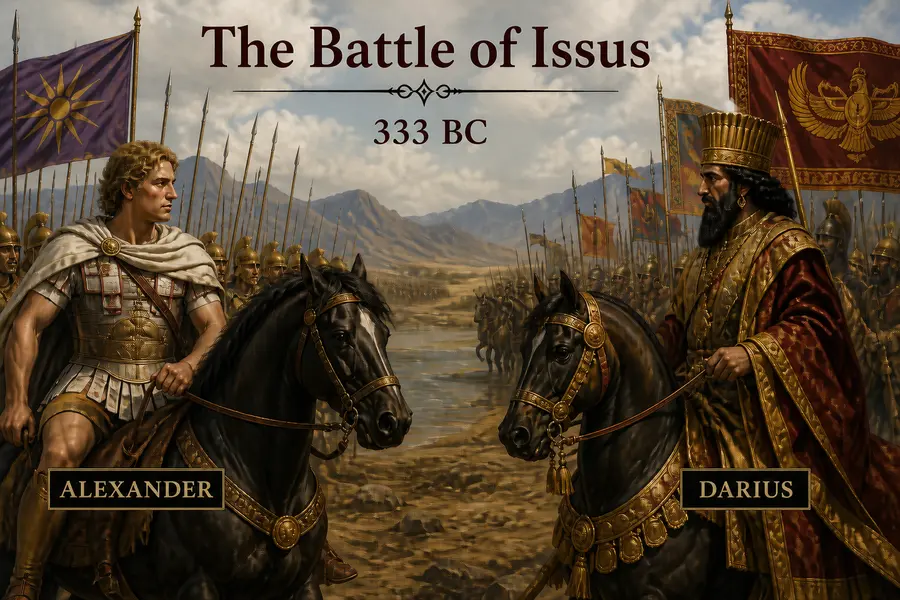
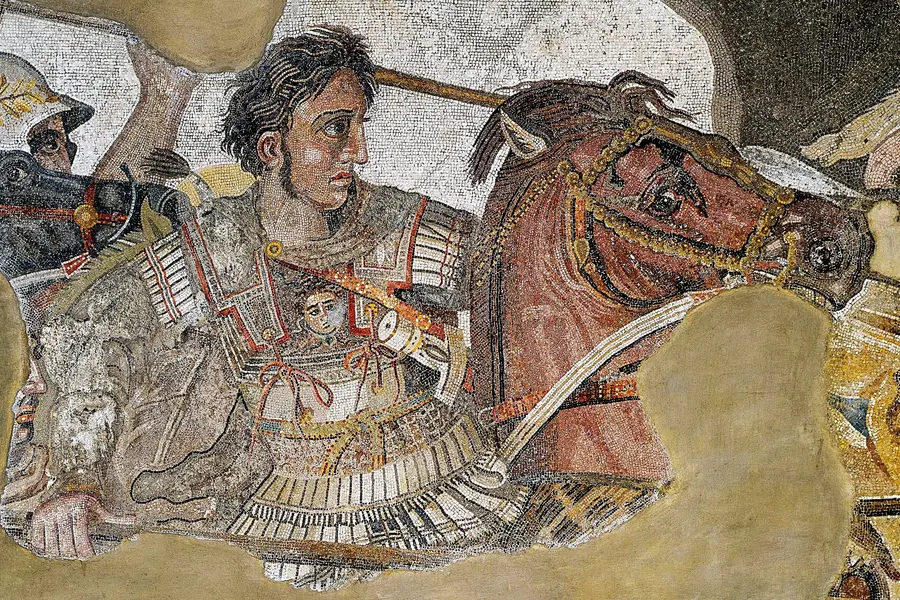
After his first victory at the Battle of Granicus, Alexander was also crowned King of Asia. When the Persian King Darius III outflanked Alexander's army and captured the town of Issus, conflict was inevitable. The Battle of Issus (333 BC) was a decisive encounter between Alexander the Great and Darius, marking the first instance where both commanders faced each other directly. Despite being outnumbered by the Persian army, Alexander made use of terrain, the discipline of his troops, and aggressive tactics to defeat a much larger force, permanently weakening Persian dominance in the eastern Mediterranean (Arrian, Anabasis 2.7-11; Diodorus 17.33-36).
Table of Contents
Introduction
Following the Battle of Granicus River, Alexander and Darius were tailing each other, waiting for the best moment to strike. The opportunity presented itself when Alexander marched south toward Syria to attack Darius. However, the Persian King pulled off a brilliant flanking maneuver to arrive behind Alexander's army and captured the town of Issus. Darius had now cut off the supply lines of the Macedonian troops. Realizing that he had been cut off, Alexander turned his army back to face Darius. This represents the first direct confrontation between Alexander and Darius III and would establish Macedonian dominance over Persian field armies (Plutarch, Alexander 20).
Prelude to the Battle
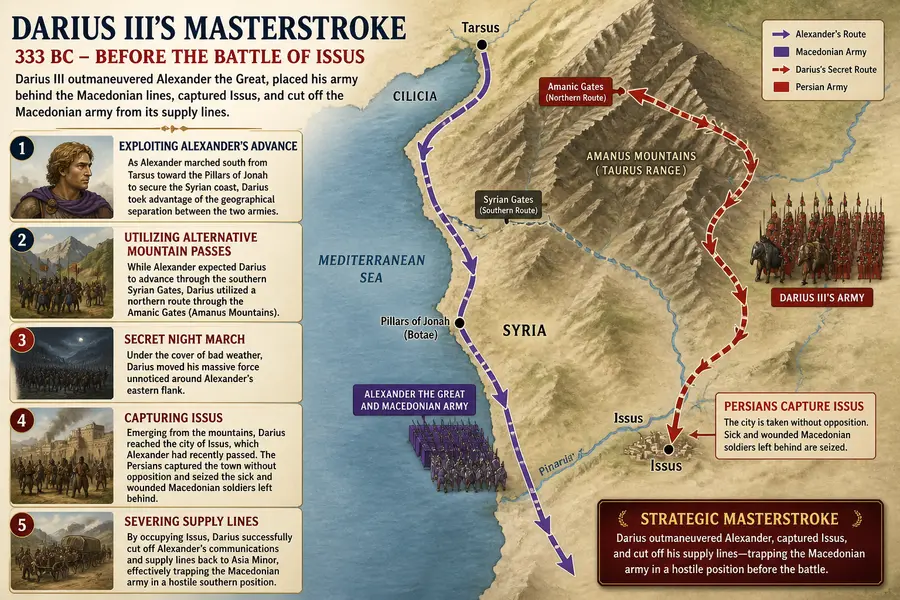
After securing Asia Minor, Alexander advanced south along the Mediterranean coast, consolidating control over key port cities to neutralize the impact of the Persian fleet (Arrian 2.4). Meanwhile, Darius had assembled a massive army by drawing manpower from across the Achaemenid Empire. His intention was to overwhelm Alexander in open terrain by capitalising on his superiority in numbers (Diodorus 17.30).
When Darius captured Issus, he effectively cut off Alexander's supply lines and forced him to fight. After capturing the city without any struggle, Darius found the Macedonian sick and wounded soldiers that Alexander had left behind to recover. To intimidate the Macedonian troops, Darius ordered his soldiers to cut off their arms and kill most of them (Quintus Curtius Rufus History of Alexander, 3.8.15-16). However, this brutality had the opposite effect as the Macedonians were now willing to fight to the death, knowing what awaited them if they surrendered. Darius also made a critical strategic error by advancing north of Alexander and positioning himself near Issus in a narrow coastal plain. This terrain offered little room for maneuverability and largely negated the Persian army's numerical superiority (Arrian 2.6; Fuller, 1960).
Geography and Terrain
The battlefield geography was one of the primary reasons Alexander was able to overcome the huge Persian army. Issus was wedged between the Mediterranean Sea and the Amanus Mountains in modern-day Turkey. Both the armies were separated by the Pinarus River running through the middle. This terrain restricted troop movement and prevented the Persians from deploying their full force effectively (Arrian 2.7).
The narrow terrain favored disciplined infantry formations like the Macedonian phalanx while limiting the maneuverability of the superior Persian cavalry (Engels, 1978). The Persian army was forced to deploy in stacked lines and was not able to utilize its numerical superiority.
Army Composition and Numbers
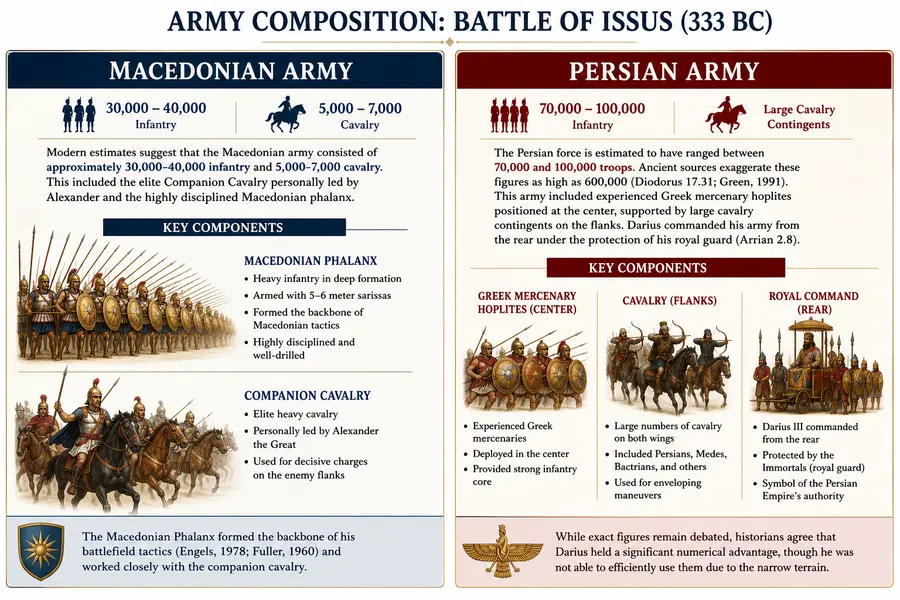
Darius III sought to decisively crush Alexander at Issus and assembled a vast army drawn from across the Persian Empire. With a clear numerical advantage, the Persians were confident of victory.
Macedonian Army
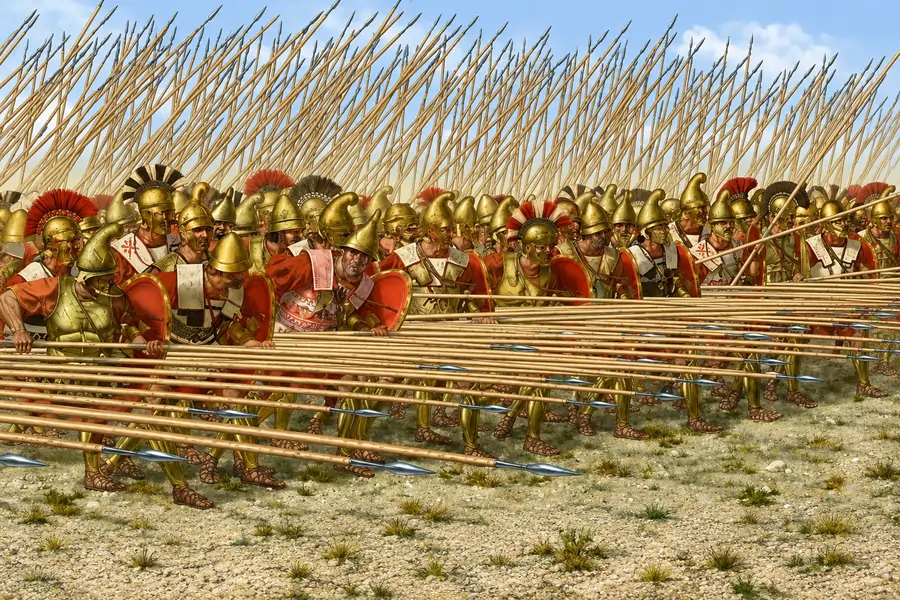
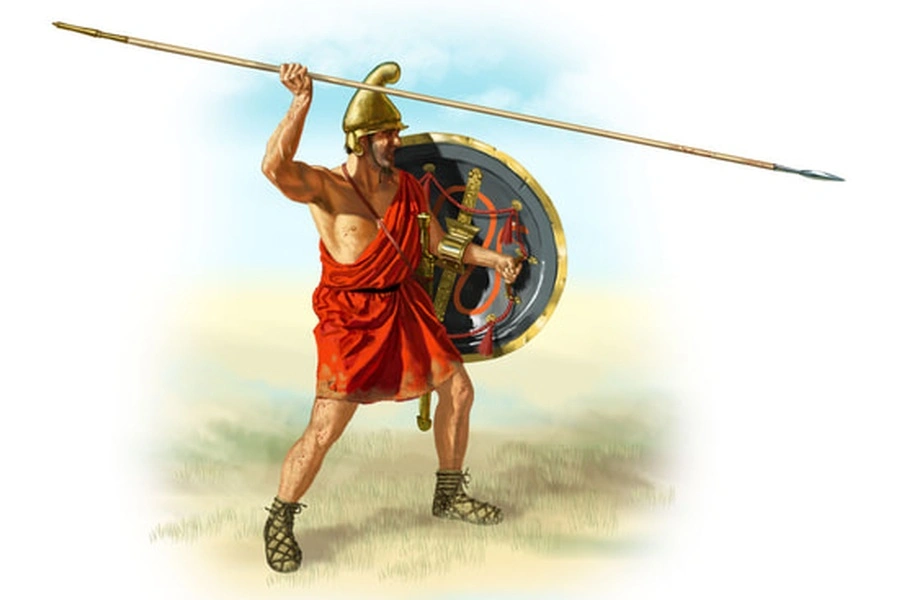
Modern estimates suggest that the Macedonian army consisted of approximately 30,000-40,000 infantry and 5,000-7,000 cavalry. This included the elite Companion Cavalry personally led by Alexander and the highly disciplined Macedonian phalanx. The Macedonian Phalanx formed the backbone of his battlefield tactics (Engels, 1978; Fuller, 1960) and worked closely with the Companion Cavalry.
Persian Army
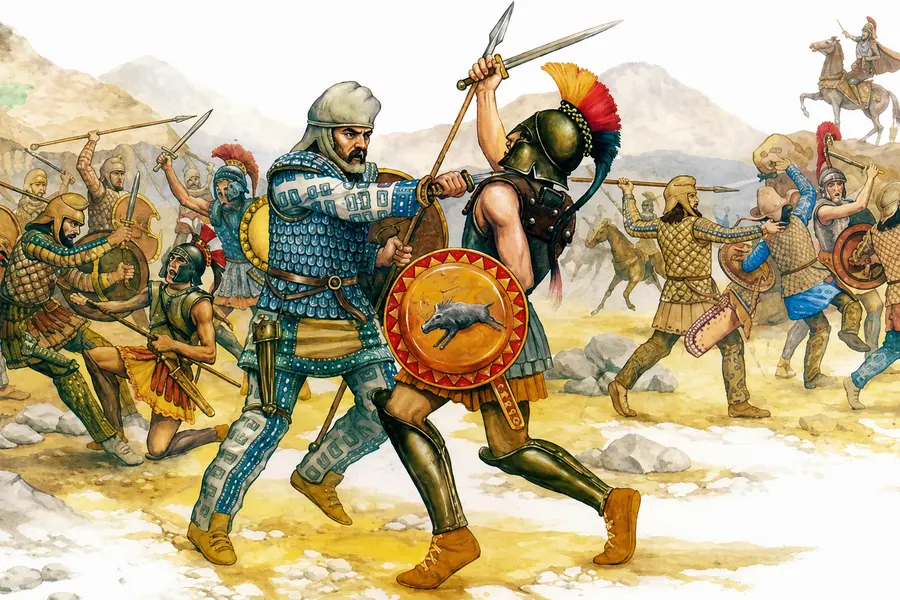
The Persian force is estimated to have ranged between 70,000 and 100,000 troops. Ancient sources exaggerate these figures as high as 600,000 (Diodorus 17.31; Green, 1991). This army included experienced Greek mercenary hoplites positioned at the center, supported by large cavalry contingents on the flanks. Darius commanded his army from the rear under the protection of his royal guard (Arrian 2.8).
While exact figures remain debated, historians agree that Darius held a significant numerical advantage, though he was not able to efficiently use them due to the narrow terrain.
Step-by-Step Progress of the Battle
Initial Deployment
Darius positioned his forces behind the Pinarus River, placing Greek mercenaries in the center and cavalry on the flanks (Arrian 2.8). Darius concentrated his heavy cavalry on his right wing, hoping to crush the enemy's left wing. Alexander arranged his army with the Macedonian phalanx at the center, cavalry on the right, and allied Greek troops on the left (Plutarch 20). Alexander personally led his companion cavalry on the right wing.
Opening Phase
The battle began with Persian cavalry attacking Alexander's left flank, attempting to outflank the Macedonians (Arrian 2.9). Alexander had secretly repositioned his Thessalian cavalry behind his left wing to bear the brunt of the Persian heavy cavalry charge. The Thessalians were desperately holding the line.
Crossing the River
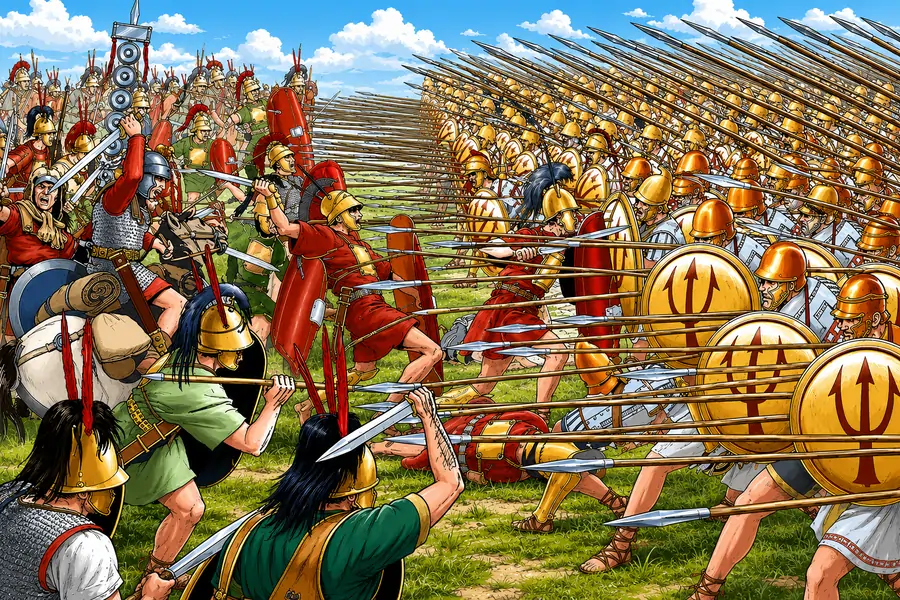
The Macedonian phalanx faced stiff resistance while crossing the Pinarus River due to the uneven terrain. Gaps formed in the phalanx and were exploited by the Persian and Greek mercenary forces, causing significant casualties (Diodorus 17.33).
Alexander's Charge
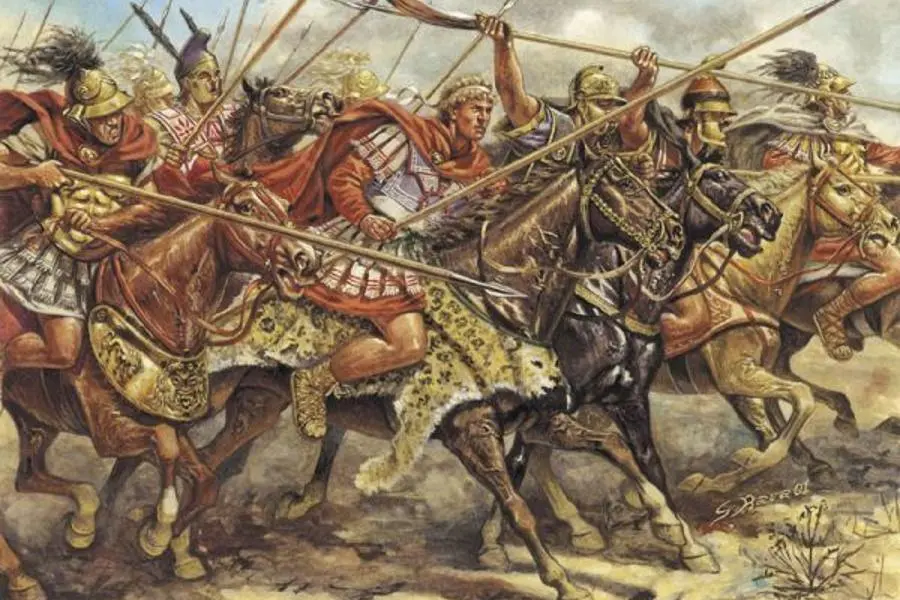
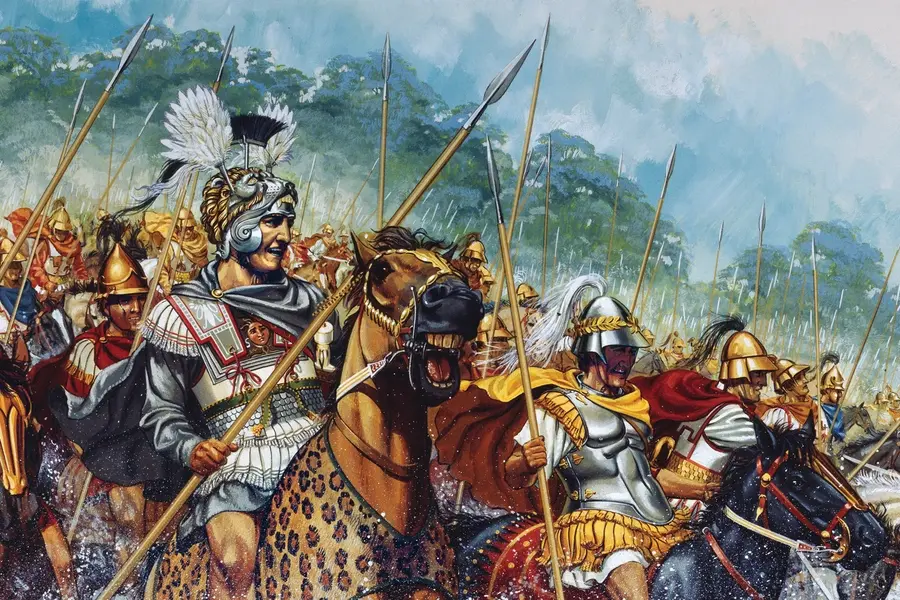
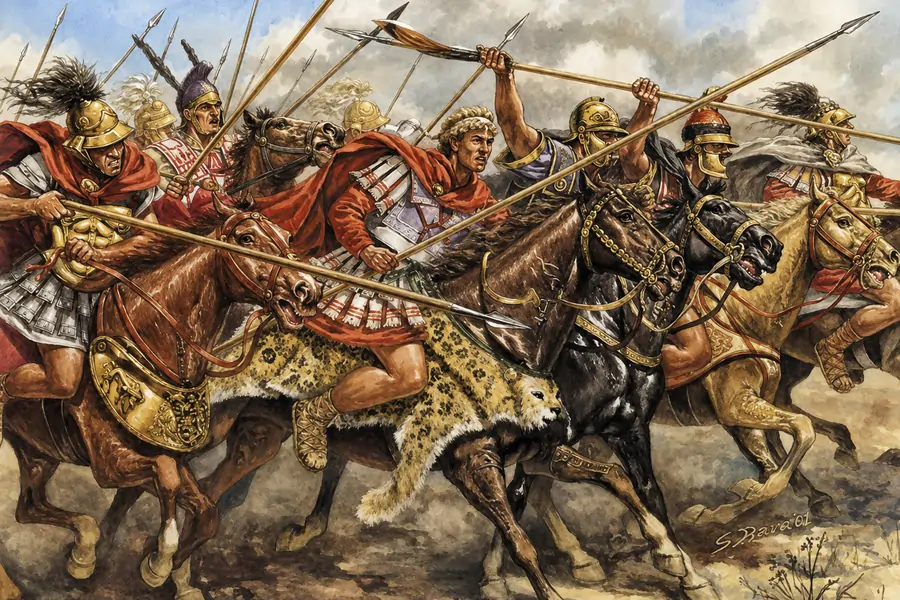
Meanwhile, Alexander realized that his phalanx was hard pressed and struggling. He led his Companion Cavalry on a high-speed charge across the river and crashed into the Persian left wing. The elite Macedonian cavalry shattered the Persian left wing, which soon crumbled. Recognizing a gap in the Persian line, Alexander led a decisive cavalry charge aimed directly at Darius (Arrian 2.10). This was the decisive charge to break the deadlock in the battle.
Collapse of Persian Resistance
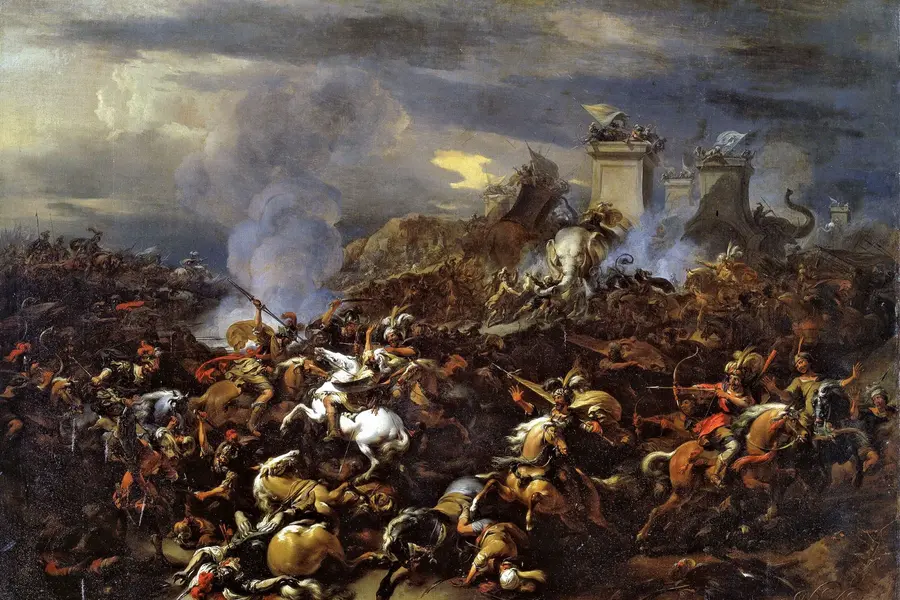
When the Persian royal guard saw Alexander and his companion cavalry charge directly at them, they began to waver. Darius panicked and quickly turned his chariot around and fled the battlefield, triggering widespread panic among Persian troops (Plutarch 20; Arrian 2.11). Seeing their king run away from the battlefield, the Persian troops lost hope, and morale collapsed. What followed was a rout where thousands of fleeing Persian troops were massacred by the Macedonians.
How Alexander Won the Battle
Exploitation of Terrain
Alexander knew that his army would be overwhelmed by the numerically superior Persian troops in open terrain. By fighting on a narrow battlefield, Alexander leveled the playing field.
Targeting Leadership
Ancient battles ended as soon as the army's morale was broken. Morale was tightly coupled to leadership presence on the battlefield. When Alexander chased Darius off the battlefield, he effectively broke Persian morale in one move.
Tactical Flexibility
Alexander demonstrated adaptability based on the situation in the battle. Realizing that the Persian heavy cavalry would outflank his left wing, he moved his Thessalian cavalry to counter the risk. His aptitude for finding the right moment to exploit gaps in the enemy lines and take decisive action was also commendable.
Superior Training
The Macedonian army was a better-trained and cohesive force. They were disciplined and better motivated. The Persian forces, on the other hand, were from a wide range of regions and had challenges in coordination. Their motivation was also questionable, as seen by their tendency to falter in the face of danger.
Unified Command
Alexander held command of his whole army. The Persian command structure was fragmented and slow to take decisive action.
Capture of Darius' Household
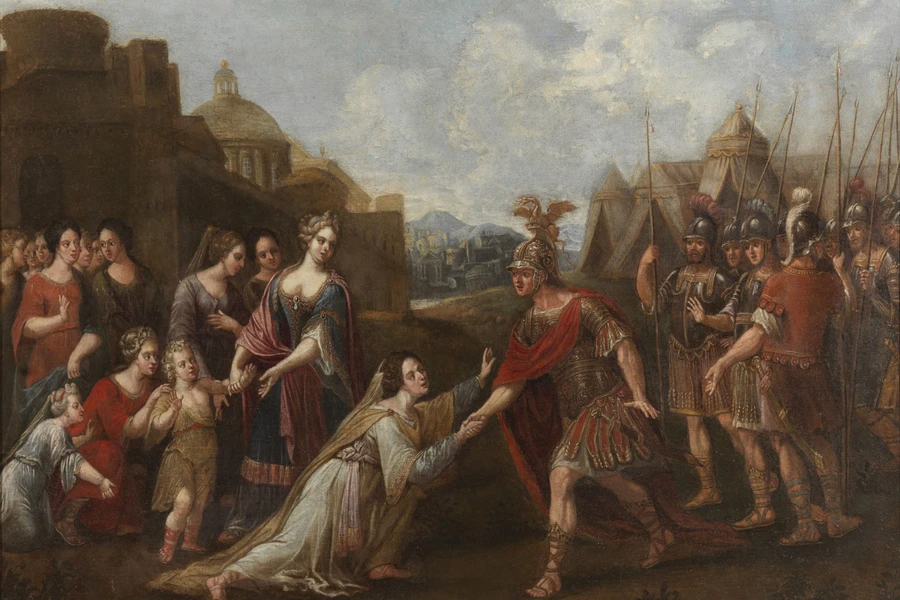
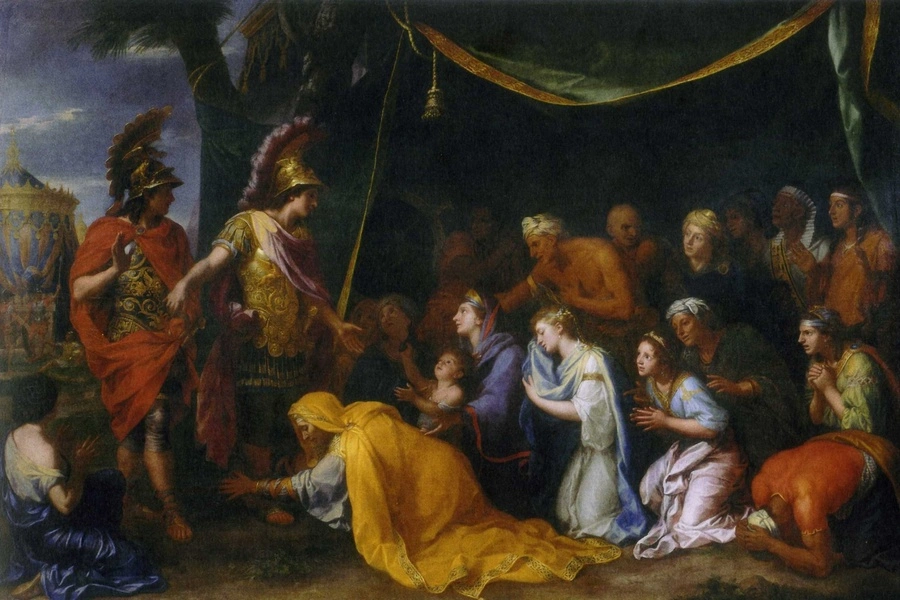
Darius fled in his chariot in such a hurry that he left behind his entire family. His wife, Stateira I, his mother Sisygambis, and his children were captured by Alexander. Sisygambis mistook Alexander's close friend Hephaestion for the king, as he looked taller and more impressive. When her aide corrected her, she was terrified, as this would have been taken as an insult (Diodorus Siculus Library of History, 17.37.5-6). Alexander, however, helped her up and said:
"Do not worry, Mother; he, too, is Alexander."
Alexander treated Darius' family well after they were captured, which improved his reputation. Historians like Plutarch mention that he specifically refused to visit Stateira I (who was known as the most beautiful woman in Asia), fearing that he might want to take her as a concubine instead of treating her as the Queen. Sisygambis became so fond of Alexander that she treated him as her own son.
Significance
The Battle of Issus is widely regarded as one of the most decisive battles in history because it:
- Marked the first major defeat of Darius III when he was in direct command of the army
- Shattered Persian authority in Asia Minor (Green, 1991)
- Provided Alexander with strategic momentum and boosted his troops' morale for future campaigns
- Demonstrated the superiority of Macedonian troops and his tactical brilliance
- The victory opened the path to Syria, Phoenicia, and Egypt, allowing Alexander to expand his control across the eastern Mediterranean (Arrian 2.13)
Alexander's performance at Issus solidified his reputation as one of the greatest military generals in history.
Conclusion
The Battle of Issus demonstrated that strategy, leadership, and tactical brilliance would outweigh numerical superiority. Alexander exploited the weakness in the Persian lines and took his chance by charging right at the enemy king. The gamble paid off as the morale of the Persian troops collapsed as soon as Darius retreated from the battlefield. He was able to overcome Persian numerical superiority by utilising his troops to their maximum potential in a terrain that suited his army.
Issus reshaped the balance of power in the ancient world. The flaws and vulnerabilities of the Achaemenid military system were laid bare. It opened the eastern Mediterranean to Macedonian control and set the stage for the eventual fall of the Persian Empire. Darius sent multiple diplomatic letters to Alexander to stop the invasion through negotiation, but Alexander rejected his proposals. Issus also solidified Alexander's reputation as a commander capable of adapting, improvising, and decisively capitalizing on an opportunity.
References and Sources
- Arrian, Anabasis of Alexander
- Plutarch, Life of Alexander
- Diodorus Siculus, Bibliotheca Historica
- Green, Peter, Alexander of Macedon
- Fuller, J.F.C. The Generalship of Alexander the Great
- Engels, Donald. Alexander the Great and the Logistics of the Macedonian Army
- Quintus Curtius Rufus (History of Alexander)
Recommended Books
This article may contain affiliate links. If you purchase through these links, I may earn a small commission at no extra cost to you.
Related Articles
Frequently Asked Questions
Why did Darius choose to fight at Issus instead of open plains?
Darius III initially intended to fight on open plains where his numerical superiority would be effective, but he maneuvered north and unintentionally positioned his army near Issus in a narrow coastal strip. This restricted terrain prevented him from deploying his full force and ultimately worked in Alexander's favor.
How did the terrain at Issus affect the outcome of the battle?
The narrow battlefield between the mountains and the sea limited the Persian army's ability to outflank the Macedonians and reduced the effectiveness of their larger numbers, allowing Alexander's smaller, more disciplined force to engage more effectively.
What role did the Companion Cavalry play at the Battle of Issus?
The Companion Cavalry, led personally by Alexander, played a निर्णing role by launching a focused charge at the Persian center. This attack targeted Darius III directly, causing panic and ultimately leading to the collapse of the Persian army.
Were Greek mercenaries important in the Persian army at Issus?
Yes, Greek mercenary hoplites formed the core of the Persian center and were among the most effective troops in Darius's army. They put up strong resistance against the Macedonian phalanx during the battle.
Why did Darius flee the battlefield at Issus?
Darius fled when Alexander's cavalry charge broke through toward his position. In ancient warfare, the safety of the king was critical, and his retreat triggered panic among Persian troops, leading to a full rout.
How did the Battle of Issus impact Alexander's campaign?
The victory at Issus gave Alexander control over much of the eastern Mediterranean, boosted his reputation, and weakened Persian authority, allowing him to continue his campaign into Syria, Egypt, and eventually deeper into the Persian Empire.
Add Comment