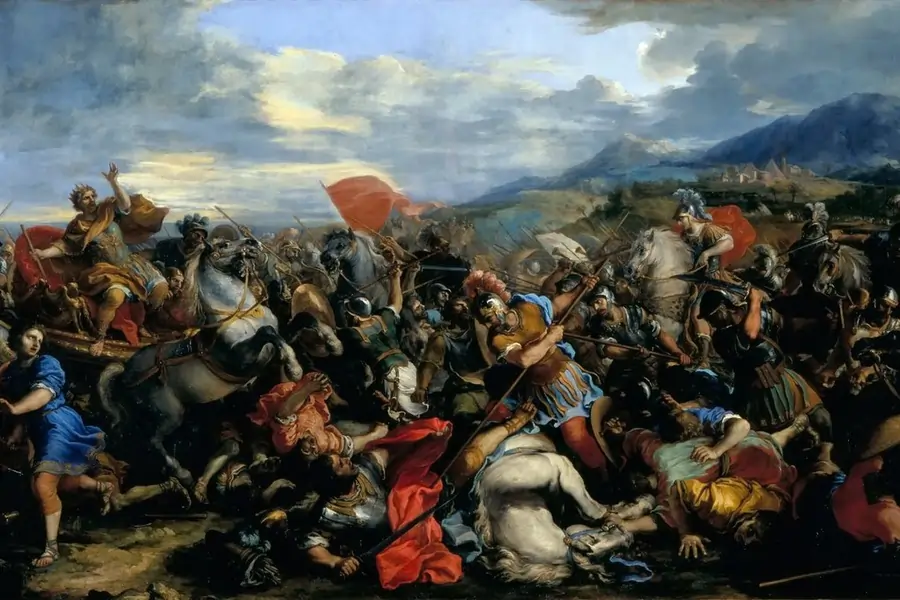
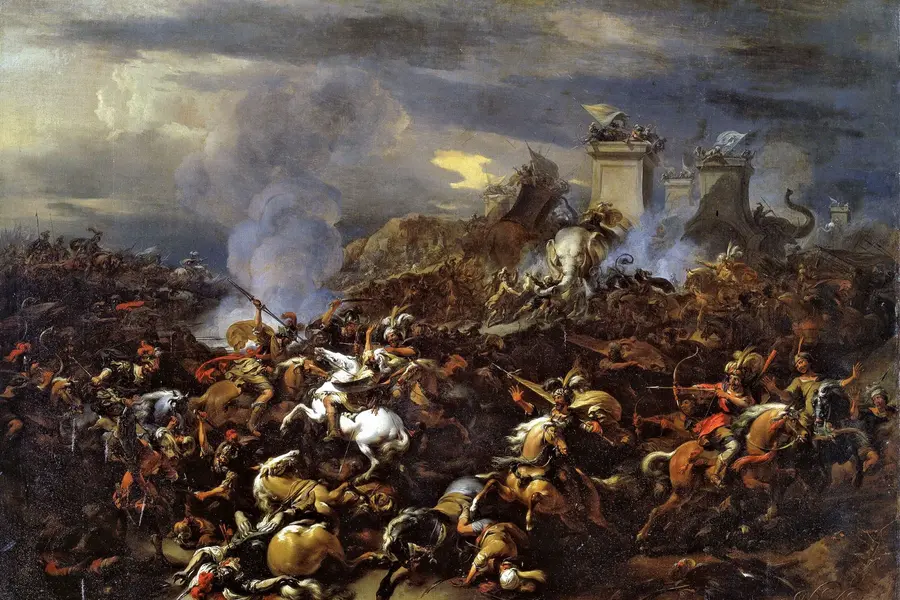
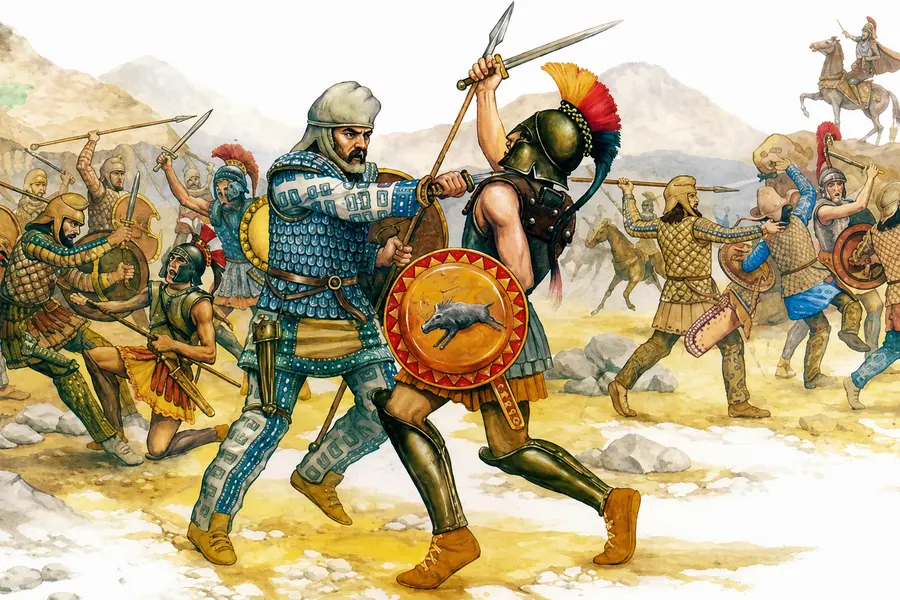
The Battle of Gaugamela was one of the most decisive military victories in ancient history. The iconic battle was fought on 1 October 331 BC between Alexander the Great and the Persian King Darius III. In earlier battles like the Battle of Issus, the mountainous terrain was selected carefully by Alexander to restrict Persian maneuverability, which negated their numerical advantage. However, at Gaugamela, the battlefield was chosen by Darius and carefully prepared to suit his larger army, cavalry, and scythed chariots (Diodorus Siculus, Bibliotheca Historica 17.53). Despite being heavily outnumbered, Alexander still came out victorious, which can be attributed to disciplined battlefield coordination, intelligent use of the Macedonian phalanx, aggressive cavalry tactics, and one of the most famous decisive charges in military history.
- Background and Prelude to the Battle
- Why the Battle of Gaugamela Was Important
- Where Was Gaugamela?
- The Opposing Armies
- Alexander's Macedonian Army
- Darius III and the Persian Army
- Battlefield Preparations
- Detailed Progress of the Battle
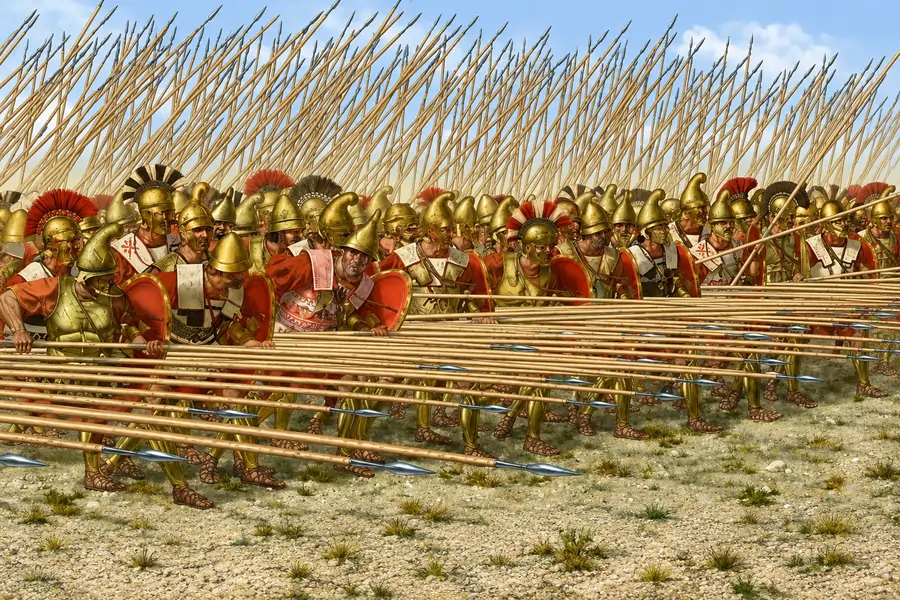
- Alexander's Use of the Macedonian Phalanx
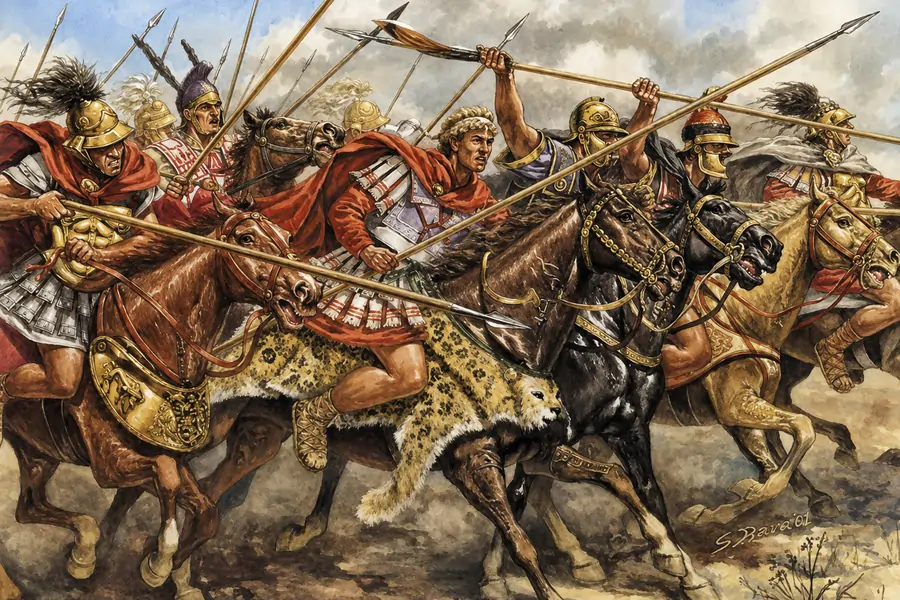
- The Companion Cavalry and the Decisive Charge
- Casualties of the Battle
- Why Alexander Won
- Consequences of the Battle
- Historical Legacy of Gaugamela
- Frequently Asked Questions
- References and Sources
Background and Prelude to the Battle
After becoming king of Macedon in 336 BC following the assassination of his father, Philip II, Alexander quickly consolidated power in Greece before launching his campaign into Asia Minor in 334 BC (Arrian, Anabasis 1.1). Alexander's first major victory came at the Battle of the Granicus River, where Macedonian forces defeated Persian satrapal armies defending Asia Minor (Arrian, Anabasis 1.16). This victory can be attributed to Alexander's decisive charge at the start of the battle that took the Persians off guard without giving them time to organise their army.
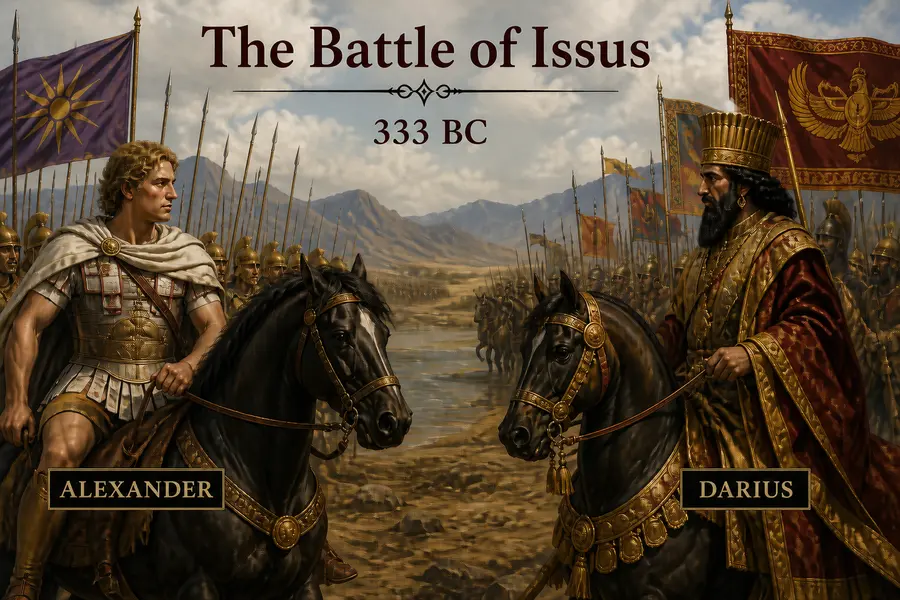
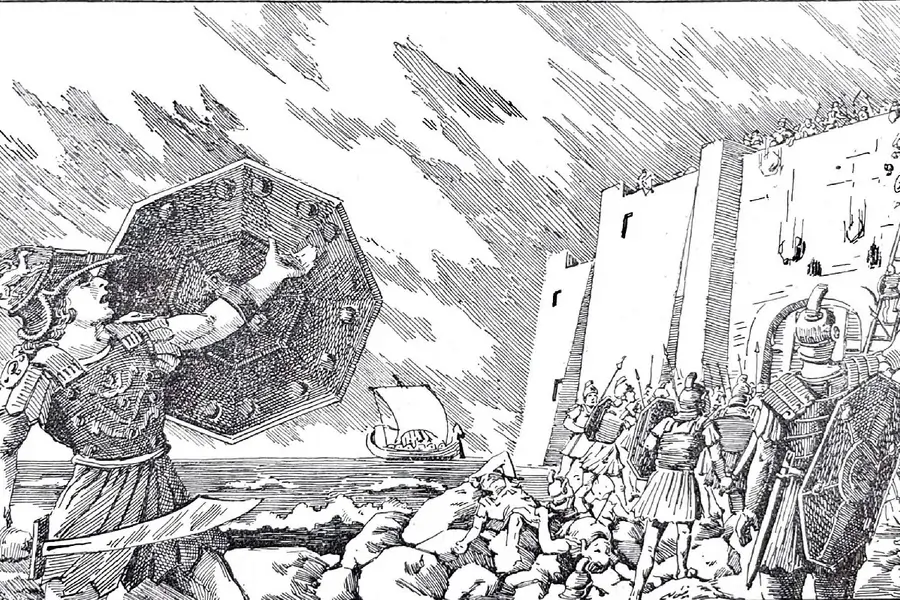
In 333 BC, Alexander confronted Darius III directly at the Battle of Issus. Although heavily outnumbered, Alexander exploited the narrow terrain of Issus to neutralize the Persian numerical superiority and achieved another major victory. Darius fled the battlefield, abandoning his family, treasury, and camp to the Macedonians (Curtius Rufus, Histories 3.11). Instead of immediately pursuing Darius, Alexander captured Persian port cities on the eastern Mediterranean coast to improve his logistics. This campaign included the famous Siege of Tyre, where Alexander constructed a massive mole to capture the island city after months of resistance (Arrian, Anabasis 2.18-24).
By conquering Phoenicia, Gaza, and Egypt, Alexander denied critical naval bases to the Persian navy and secured his army for striking deep into the Persian Empire. In Egypt, he founded the city of Alexandria and was recognized as Pharaoh (Plutarch, Life of Alexander 26). Meanwhile, Darius III was busy preparing for a final conflict with the Macedonian king. According to Arrian, Darius assembled forces from across his empire, including cavalry from Bactria, Scythian horse archers, Indian troops, and elite Persian guards (Arrian, Anabasis 3.8). Unlike at Issus, Darius intended to fight on a terrain of his own choosing. He selected a broad plain near Gaugamela in northern Mesopotamia and ordered workers to flatten the battlefield to improve the effectiveness of his cavalry and scythed chariots (Diodorus Siculus, Bibliotheca Historica 17.53).
Why the Battle of Gaugamela Was Important
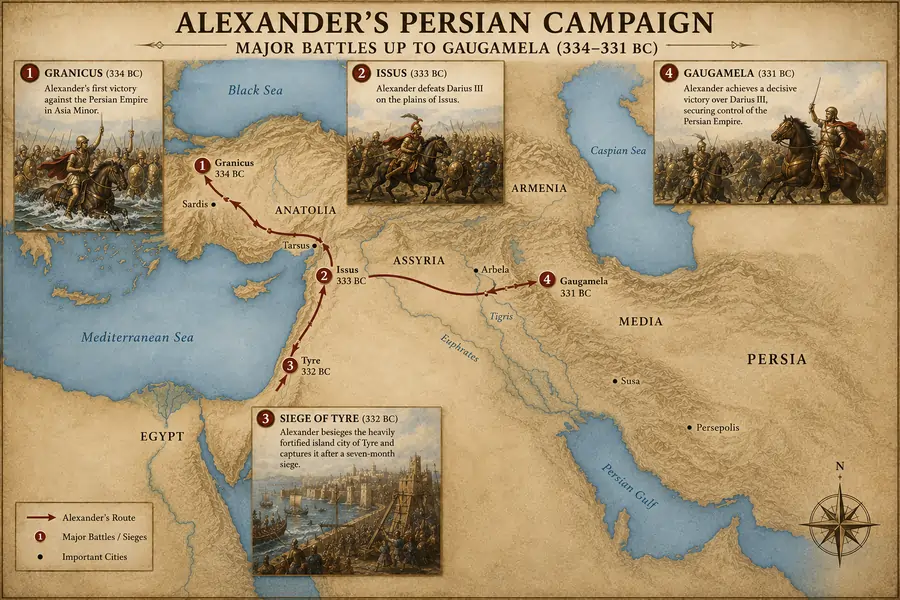
The Battle of Gaugamela was a decisive encounter that would determine the outcome of the war with Persia and control of the known world. If Darius won, Alexander's invasion would have stalled inside deep enemy territory, making the situation of the Macedonians precarious. The Macedonian army was far from home and could not be easily resupplied or reinforced. The Macedonians were also heavily outnumbered, and any loss could have been catastrophic given the size of their army and impacted morale as well.
Given the desperate situation of Darius after his major losses earlier in the campaign, if Alexander won, the Persian Empire would likely collapse. The major imperial capitals of Babylon, Susa, Persepolis, and Ecbatana would become vulnerable to conquest. Modern historians such as Peter Green and Adrian Goldsworthy consider Gaugamela one of the most decisive battles in history because it permanently shifted power from the Persian Empire to the Hellenistic world (Green, 1991; Goldsworthy, 2004).
For a broader analysis of major turning points in warfare, see Top 10 Decisive Battles in History.
Where Was Gaugamela?
Gaugamela was located east of the Tigris River near modern-day Mosul in Iraq. Ancient sources sometimes refer to the conflict as the Battle of Arbela because Arbela was the nearest major city (Arrian, Anabasis 3.8). Darius chose this battlefield personally as it was ideal for cavalry operations. Darius intentionally selected flat open terrain to make maximum use of his numerically superior army, and allowed his mounted forces freedom of movement. He also had scythed chariots, which would be deadly in the open fields of Gaugamela (Diodorus Siculus, Bibliotheca Historica 17.53).
The Opposing Armies
Alexander's Macedonian Army
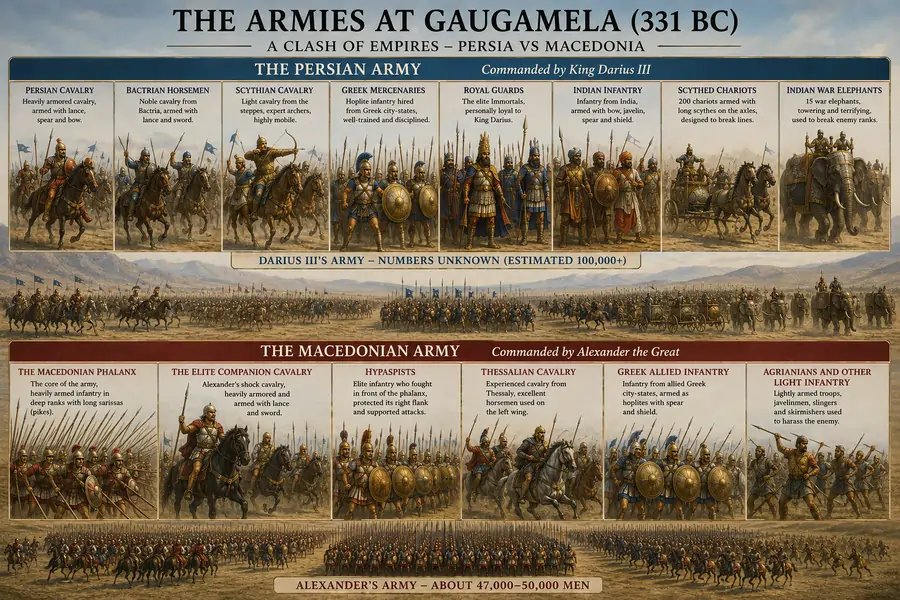
Modern historians estimate that Alexander commanded approximately 40,000 infantry and 7,000 cavalry at Gaugamela (Engels, 1978; Goldsworthy, 2004). Although the Macedonian army was much smaller than the Persians, they were highly disciplined, experienced, and battle-tested.
The army included:
- The Macedonian phalanx
- The elite Companion Cavalry
- Hypaspists
- Thessalian cavalry
- Greek allied infantry
- Agrianians and other light infantry
The Macedonian phalanx formed the core of Alexander's infantry and was one of the most elite soldiers in ancient history. The Macedonian phalanx was equipped with the sarissa, a pike estimated to be between 18 and 22 feet long (Fuller, 1958). This long weapon allowed multiple ranks of soldiers to attack the enemy simultaneously with their long pikes. The phalanx created a dense and intimidating wall of pikes similar to a porcupine. Alexander personally commanded the right wing alongside the Companion Cavalry, while his experienced general Parmenion commanded the left wing (Arrian, Anabasis 3.11).
Darius III and the Persian Army
Darius had managed to recruit a variety of soldiers from all across his vast empire. The Persian army significantly outnumbered Alexander's force. Ancient sources sometimes claim Persian numbers exceeded several hundred thousand troops, though modern historians generally estimate between 80,000 and 120,000 soldiers (Green, 1991; Fox, 1973).
The Persian army included:
- Persian cavalry
- Bactrian horsemen
- Scythian cavalry
- Greek mercenaries
- Royal guards
- Indian infantry
- 200 Scythed chariots
- 15 Indian War elephants
Darius positioned himself in the center alongside elite Persian guards and Greek mercenaries (Curtius Rufus, Histories 4.9). Persian cavalry occupied both flanks with the intention of surrounding Alexander's smaller army. The cavalry was the strongest aspect of the Persian army. Although numerically superior, the Persian army was put together from many different regions with varying equipment, training, and languages. Historians often note that this reduced overall cohesion and battlefield coordination compared to the Macedonian army (Goldsworthy, 2004).
Battlefield Preparations
Before the battle, Alexander carefully studied the Persian position. Ancient historian Arrian records that some Macedonian officers proposed a surprise night attack to offset Persian numerical superiority (Arrian, Anabasis 3.10). Alexander refused this as he considered it to be a cowardly act. According to Arrian, he declared that he would "not steal victory" through a night assault (Arrian, Anabasis 3.10). Modern historians debate whether this reflected confidence, practical concerns about confusion during nighttime combat, or later propaganda designed to emphasize Alexander's heroic image.
Given the wide empty plain of Gaugamela, Darius was able to deploy his forces in an extremely broad formation intended to outflank the Macedonians. Scythed chariots were positioned at the front to disrupt the Macedonian line before the main Persian attack began (Diodorus Siculus, Bibliotheca Historica 17.57).
Detailed Progress of the Battle
The battle began with Alexander marching his right wing diagonally toward the edge of the Persian line instead of marching directly forward. This maneuver was one of the most important tactical decisions of the battle (Fuller, 1958). Darius feared that he would be outflanked by the Macedonians and so ordered his left wing cavalry commanded by Bessus to shadow Alexander's troops. This was also to prevent the Macedonians from leaving the carefully prepared battleground in Gaugamela. This move from the Persians, however, gradually stretched the Persian line and created exploitable gaps in their formation.
Darius then launched his 200 Scythian war chariots at the Macedonian center. However, Alexander had already prepared for this threat. Macedonian light infantry (Agrianians) attacked the horses and drivers with javelins before they could reach their target and dealt with most of the threat. For the remaining chariots that did make it to the Macedonian center, sections of the phalanx opened lanes to allow the chariots to pass through harmlessly before being neutralized (Arrian, Anabasis 3.13).
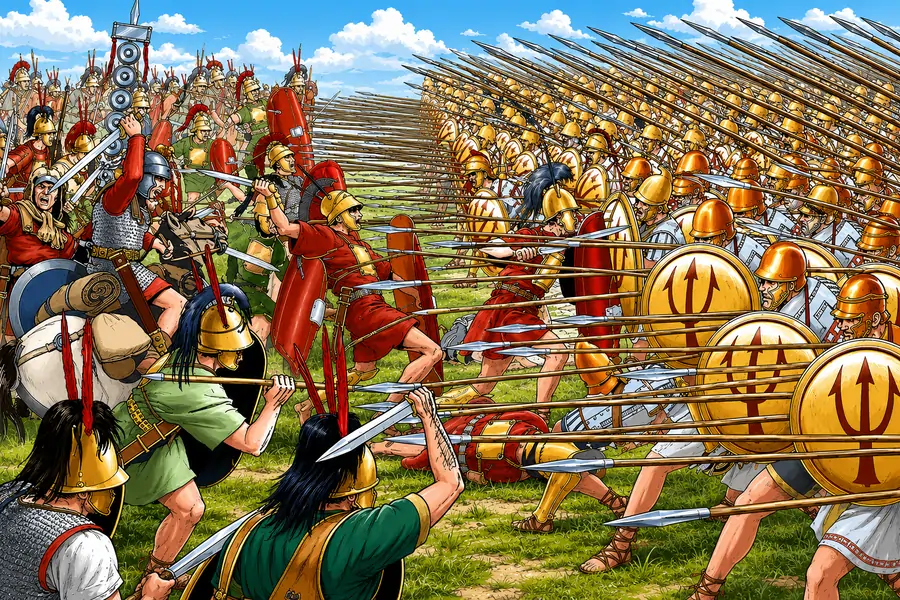
The situation in the Macedonian left wing under Parmenion was, however, becoming dire for Alexander. The Persian right wing under Mazaeus had managed to outflank Parmenion. Some of the Persian and Indian heavy cavalry had also managed to punch through a hole in the Macedonian line and began raiding the baggage train. Despite this pressure, the Macedonian phalanx maintained cohesion and continued advancing steadily without breaking. The discipline of the phalanx, however, prevented a Persian breakthrough even as sections of the line became dangerously stretched.
Alexander's Use of the Macedonian Phalanx
The Battle of Gaugamela demonstrates Alexander's deep understanding of combined-arms warfare. Rather than using the phalanx purely as an offensive weapon, in Gaugamela, he used it as an anchor to hold off the brunt of the Persian offensive till he could win the battle elsewhere. The phalanx was the stabilizing force that anchored the battlefield, while cavalry operations created the decisive breakthrough at the other end of the battlefield.
The sarissa gave Macedonian infantry tremendous reach and defensive strength against frontal assaults (Fuller, 1958). The Persian light infantry with little to no armour struggled to engage effectively against the dense forest of spear points presented by the phalanx. The phalanx also had its limitations, which Alexander understood very well. It lacked maneuverability and was vulnerable if isolated or attacked from the sides. To compensate for this weakness, Alexander integrated cavalry, light infantry, and elite guards into a single coordinated battlefield system. This flexible use of infantry and cavalry is considered one of the most advanced tactical systems of the ancient world (Goldsworthy, 2004).
The Companion Cavalry and the Decisive Charge
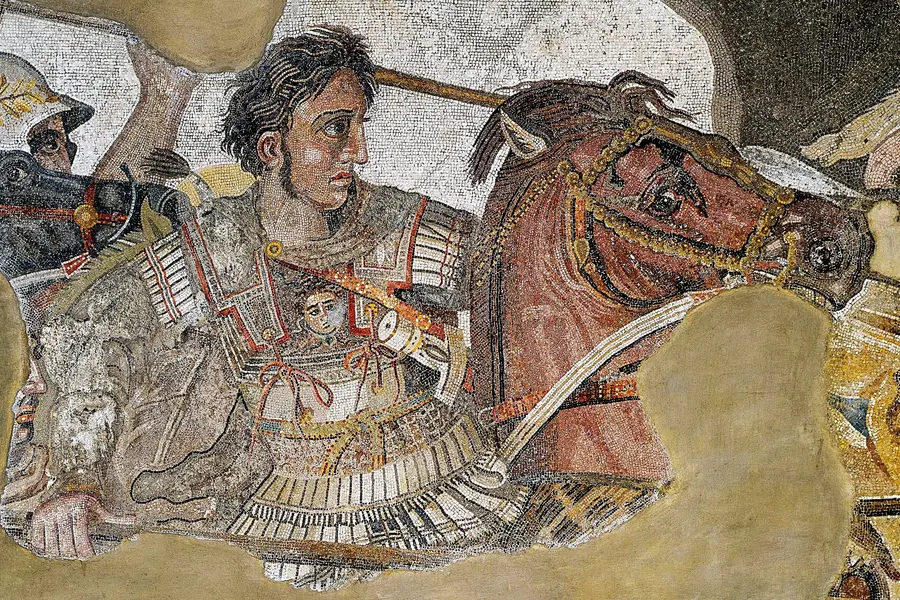
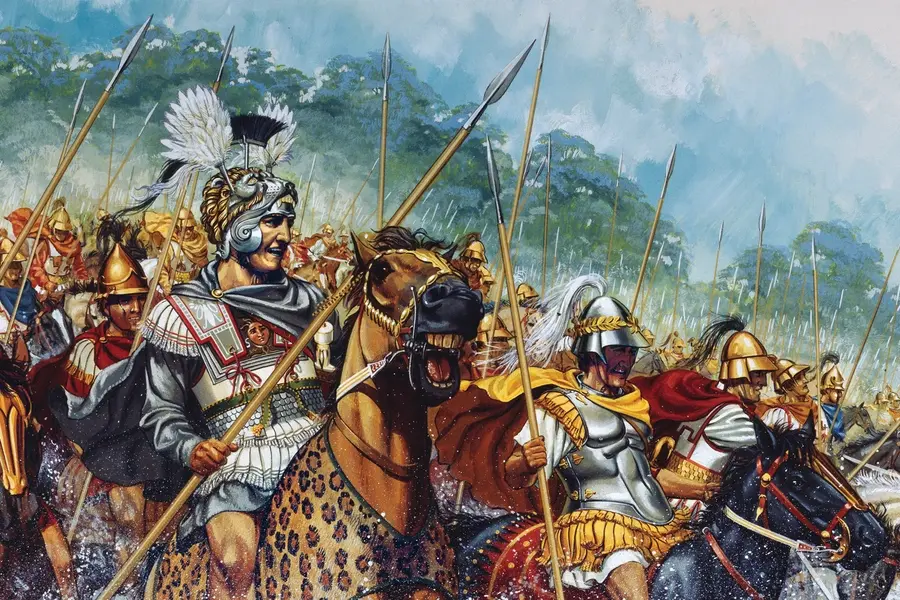
The decisive moment of the battle came through Alexander's use of the Companion Cavalry. The Companions were elite heavy cavalry units drawn primarily from the Macedonian nobility. They were personally led by Alexander the Great. Armed with lances, they represented Alexander's primary offensive striking force (Curtius Rufus, Histories 4.15).
As the Persian left wing stretched and disorder began appearing within the enemy formation, Alexander recognized an opening near the Persian center-left. He quickly instructed his Companion Cavalry into a wedge formation and launched a direct attack to exploit this gap. The charge shattered portions of the Persian center. Arrian describes intense fighting as Macedonian cavalry drove toward Darius' position (Arrian, Anabasis 3.14).
Alexander then exploited the same psychological crisis that Darius had faced at Issus. Seeing Alexander and his Macedonian cavalry advancing directly toward him, the Persian king lost confidence in the stability of his position. Darius promptly fled the battlefield in haste (Plutarch, Life of Alexander 33).
His retreat triggered a wider collapse in Persian morale. In ancient warfare, the king's presence helped maintain morale and confidence for the soldiers. Once Darius fled, many Persian troops, whose loyalty and motivation were already questionable, interpreted the battle as lost. Alexander initially pursued the fleeing Darius and planned to end the war. However, Parmenion's left wing, which was under severe pressure, requested immediate support (Arrian, Anabasis 3.15).
Alexander was now faced with a dilemma. He could pursue the Persian King and attempt an immediate capture. Or he could turn back and support Parmenion and save his left wing from collapse and severe casualties. Alexander chose to assist Parmenion. Although this decision allowed Darius to escape temporarily, it preserved Macedonian battlefield control and prevented a potential disaster on the left flank.
Casualties of the Battle
Ancient casualty figures for Gaugamela are likely exaggerated. Arrian claimed Persian losses exceeded 300,000 men while Macedonian casualties were minimal (Arrian, Anabasis 3.15). Modern historians strongly dispute these numbers. The casualties for the Persians are suggested to be between 20,000 and 50,000 killed or captured, where the Macedonians lost about 1,000 to 5,000 troops (Green, 1991; Goldsworthy, 2004). Regardless of the exact figures, Persian losses were catastrophic, and the defeat permanently damaged Persian military morale.
Why Alexander Won
Superior Tactical Flexibility
Alexander continuously adapted throughout the battle. In each battle, he is capable of innovating based on the terrain and situation. His diagonal advance disrupted Persian deployment and created exploitable weaknesses (Fuller, 1958).
Combined-Arms Coordination
The Macedonian army operated as an integrated military system. Infantry, cavalry, skirmishers, and elite troops supported one another effectively. This was possible due to the training and skill of the Macedonian troops.
Exceptional Leadership
Alexander was an excellent leader capable of rallying his forces and conquering most of the known world. Ancient historians repeatedly emphasize Alexander's personal leadership and battlefield presence (Plutarch, Life of Alexander 33).
Effective Use of Cavalry
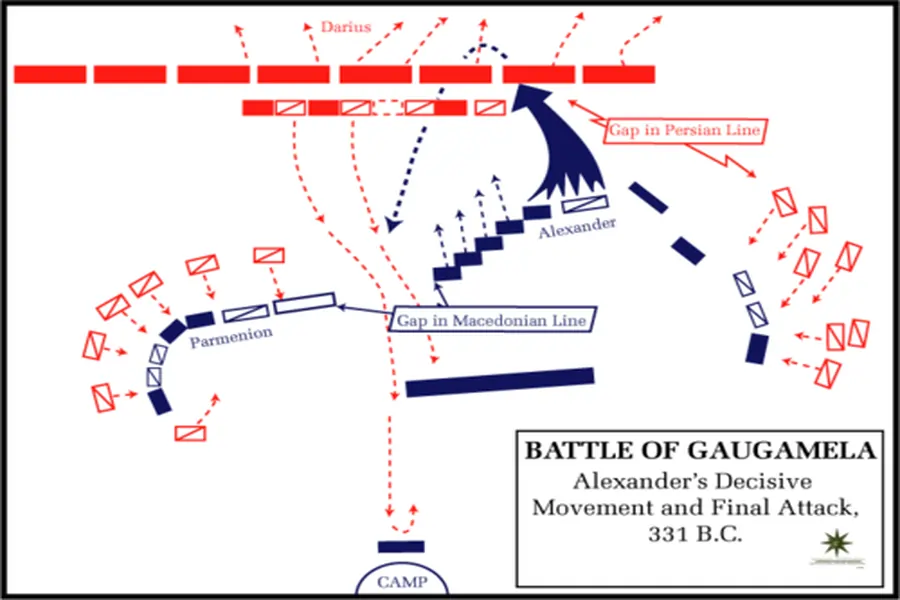
The Companion Cavalry delivered the decisive breakthrough at the critical moment of the battle. It was this concentrated attack that broke the Persian formation.
Psychological Warfare
Alexander targeted Darius directly, understanding the symbolic importance of the Persian king's presence. The Persian morale and resistance collapsed as soon as Darius fled.
Persian Structural Weaknesses
The Persian army's multinational composition reduced cohesion and complicated battlefield coordination (Goldsworthy, 2004). The Persian troops were also less motivated and had varying levels of loyalty.
Consequences of the Battle
The Macedonian victory at Gaugamela permanently transformed the ancient world.
Collapse of the Persian Empire
The battle effectively destroyed the Achaemenid Persian Empire as a dominant military power. Darius was not able to raise another significant army and was assassinated by his own men.
Capture of Persian Capitals
Following the battle, Alexander captured Babylon, Susa, Persepolis, and Ecbatana (Arrian, Anabasis 3.16-19).
Massive Wealth Acquisition
The conquest of Persia gave Alexander access to enormous imperial treasuries, vastly increasing Macedonian resources.
Spread of Hellenistic Culture
Alexander's victories and conquests accelerated the spread of the Greek language, culture, and political influence throughout the Near East and Central Asia.
Historical Legacy of Gaugamela
The Battle of Gaugamela remains one of the most studied battles in military history because it demonstrates the importance of leadership, tactical flexibility, and coordinated battlefield maneuver. Military historian J.F.C. Fuller considered Gaugamela one of history's finest examples of combined-arms warfare because Alexander effectively synchronized infantry stability with decisive cavalry shock action (Fuller, 1958).
Peter Green argues that Alexander's greatest strength was not simply bravery, but his extraordinary ability to identify and exploit fleeting battlefield opportunities (Green, 1991). Gaugamela is studied even today in modern military academies as an example of operational maneuver warfare and the impact of strong, decisive leadership.
References and Sources
- Arrian, Anabasis of Alexander
- Plutarch, Life of Alexander
- Green, Peter, Alexander of Macedon
- Fuller, J.F.C. The Generalship of Alexander the Great
- Quintus Curtius Rufus (History of Alexander)
- Diodorus Siculus, Bibliotheca Historica
- Waldemar Heckel. Alexander the Great: Historical Sources in Translation. Blackwell Publishing, 2004.
- Robin Lane Fox. Alexander the Great. Penguin Books, 1973.
- Adrian Goldsworthy. The Complete Roman Army. Thames & Hudson, 2003.
- Perseus Digital Library
- Encyclopaedia Britannica - Battle of Gaugamela
Recommended Books
This article may contain affiliate links. If you purchase through these links, I may earn a small commission at no extra cost to you.
Related Articles
Frequently Asked Questions
Why did Darius III choose the battlefield at Gaugamela?
Darius III selected the plain near Gaugamela because the open terrain favored the larger Persian army, especially its cavalry and scythed chariots. Ancient historians state that the Persians even leveled parts of the ground to improve chariot effectiveness.
What weapons did the Macedonian phalanx use at Gaugamela?
The Macedonian phalanx used the sarissa, a long pike that could reach between 18 and 22 feet in length. This weapon allowed several ranks of soldiers to project spear points toward the enemy simultaneously.
How did Alexander counter the Persian scythed chariots?
Alexander used light infantry armed with javelins to target the horses and drivers of the scythed chariots. The Macedonian phalanx also opened gaps in its formation to let some chariots pass through harmlessly.
Why was the Companion Cavalry important at Gaugamela?
The Companion Cavalry served as Alexander's elite shock force during the battle. Their decisive wedge-shaped charge toward Darius III helped break the Persian center and triggered the collapse of Persian morale.
What happened to Darius III after the Battle of Gaugamela?
After fleeing the battlefield at Gaugamela, Darius III retreated eastward while Alexander captured the major Persian capitals. In 330 BC, Darius was killed by the Bactrian noble Bessus during his flight.
How did the Battle of Gaugamela change history?
The Battle of Gaugamela led to the collapse of the Achaemenid Persian Empire and allowed Alexander the Great to control much of the Near East. The victory also accelerated the spread of Hellenistic culture across Asia.
Add Comment