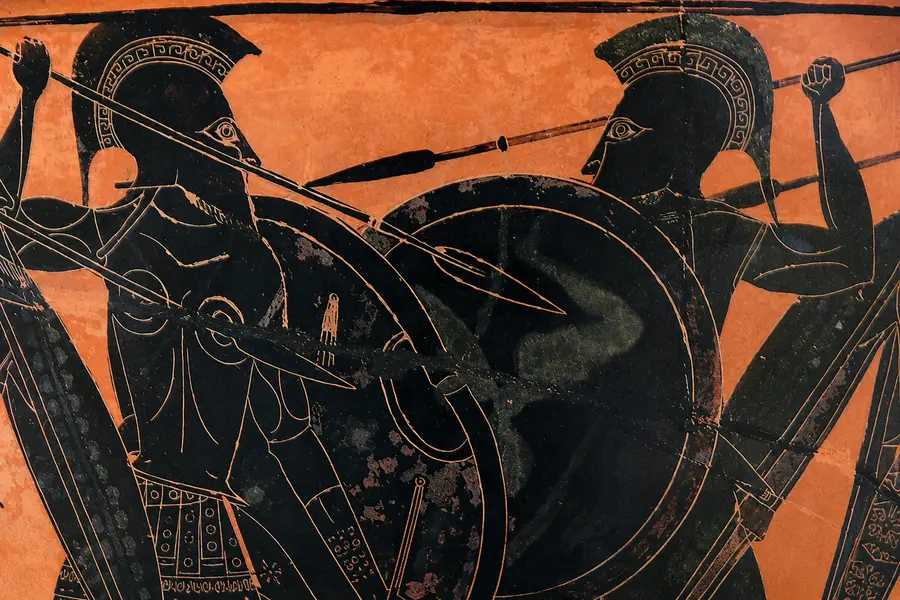
For nearly three centuries, Spartan hoplites represented the gold standard of heavy infantry warfare in the ancient Greek world. Their discipline, battlefield dominance, and skill created a military reputation so powerful that enemies often feared facing them before a battle even began. From the heroic last stand at the Battle of Thermopylae to the decisive clashes of the Peloponnesian War, Spartan hoplites became legendary elite soldiers of the ancient era. Their dominance emerged from a unique combination of rigorous education, social organization, superior battlefield discipline, and mastery of phalanx warfare. The entire Spartan society was built around its fabled heavy infantry. Understanding how Spartan hoplites fought, trained, and ultimately declined provides valuable insight into one of history's most influential military systems.
Table of Contents
- Who Were the Spartan Hoplites?
- The Spartan Hoplite Panoply: Armor and Weapons
- The Agoge: Training Spartan Warriors
- Spartan Phalanx Formation and Battlefield Tactics
- Famous Battles Fought by Spartan Hoplites
- What Made Spartan Hoplites So Effective?
- Spartan Hoplites vs Other Greek Hoplites
- The Decline of Spartan Military Power
- The Battle of Leuctra and Sparta's Defeat
- Legacy of the Spartan Hoplite
- References and Further Reading
Who Were the Spartan Hoplites?
Spartan hoplites were the elite citizen-soldiers of Sparta, a powerful city-state located in the Peloponnese region of southern Greece. Most Greek states had their own hoplite heavy infantry, but military service for the state was only one aspect of citizenship. However, Sparta organized nearly every aspect of society around warfare and service to the state. Male Spartan citizens, known as Spartiates, were trained from childhood to become professional soldiers.
The term "hoplite" derives from the Greek word hoplon, referring to the large shield carried by their heavy infantry. Across Greece, hoplites formed the backbone of armies from approximately the seventh to fourth centuries BCE. Spartan hoplites, however, differed from their counterparts because of their skill, training, discipline, and battlefield excellence.
The Spartan military system evolved to maintain control over a large population of helots. The helots were state-owned agricultural laborers who outnumbered Spartan citizens by at least 7 to 1. This created a constant need to quell rebellions from the enslaved population, giving birth to their elite soldiers. According to the historian Xenophon, Sparta's institutions were deliberately designed by the lawgiver Lycurgus to produce disciplined and obedient warriors. The result was a military force whose reputation spread throughout the Mediterranean and became synonymous with courage, discipline, and battlefield effectiveness.
The Spartan Hoplite Panoply: Armor and Weapons
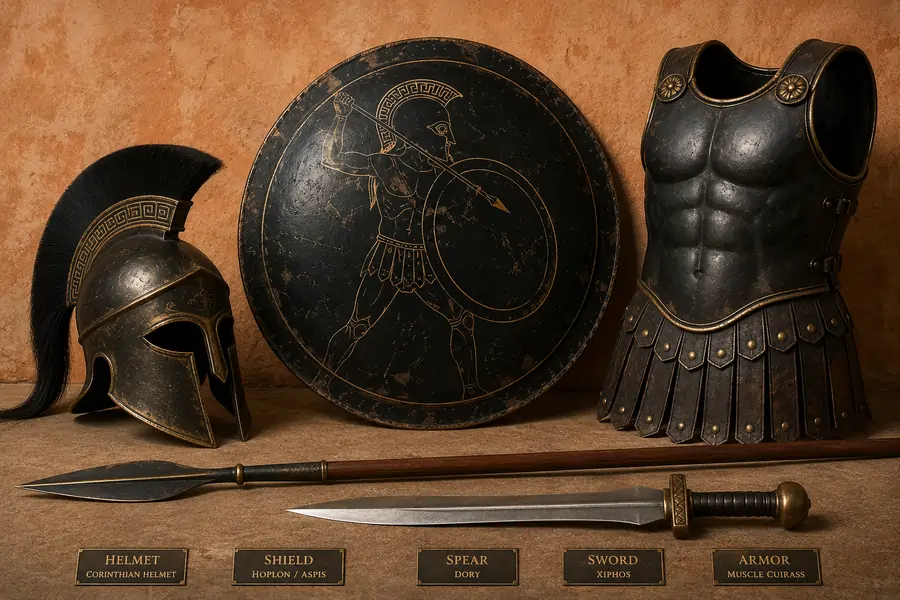
The effectiveness of Spartan hoplites depended not only on training but also on the equipment collectively known as the panoply. A fully equipped hoplite carried armor and weapons designed for close-quarters combat within the phalanx formation.
The Aspis Shield
The most important piece of equipment was the aspis, often called the hoplon shield. Measuring roughly 90 centimeters (3 feet) in diameter and weighing approximately 7 to 8 kilograms, the shield was constructed from wood and reinforced with bronze. The shield was not only meant to protect the bearer but also the soldier standing to his left. This interlocking defense formed the foundation of phalanx warfare. Spartan mothers were famously said to tell their sons to return " With your shield or on it," which posed a chilling ultimatum: either return home victorious or return dead.
The Dory Spear
The primary offensive weapon was the dory, a spear typically measuring between 2 and 3 meters (6.5 to 10 feet) long. The spear featured an iron spearhead and a bronze butt-spike known as a sauroter or "lizard killer." The long spear gave Spartans great reach, enabling them to engage the enemy before the enemy could engage them. The butt-spike could serve multiple purposes, including finishing fallen enemies, anchoring the spear, or functioning as a secondary weapon if the main spearhead broke during combat.
The Xiphos Sword
Once the spear was broken or the phalanx engaged in close-quarter combat, Spartan hoplites relied on the xiphos, a short double-edged sword. Spartan swords were often shorter than those used elsewhere in Greece, typically measuring between 30 and 45 centimeters. According to Plutarch, when someone criticized the short length of Spartan swords, a Spartan replied that they were long enough to reach the enemy. The shorter blade proved highly effective in the compressed conditions of phalanx combat.
Helmet and Body Armor
The Spartan hoplites were heavily armored and hard to take down in head-on clashes. Early Spartan hoplites commonly wore the Corinthian helmet, which provided excellent protection for the head and face. Later periods saw increasing use of more open designs such as the Pilos helmet, which improved visibility and hearing.
Body protection evolved slowly over time. Early hoplites often wore bronze muscle cuirasses, while later warriors increasingly adopted lighter linen armor known as the linothorax. Greaves protected the lower legs, and some warriors used arm guards for additional defense. Together, this equipment transformed Spartan hoplites into heavily armored infantry capable of enduring and delivering immense punishment during battle.
The Agoge: Training Spartan Warriors
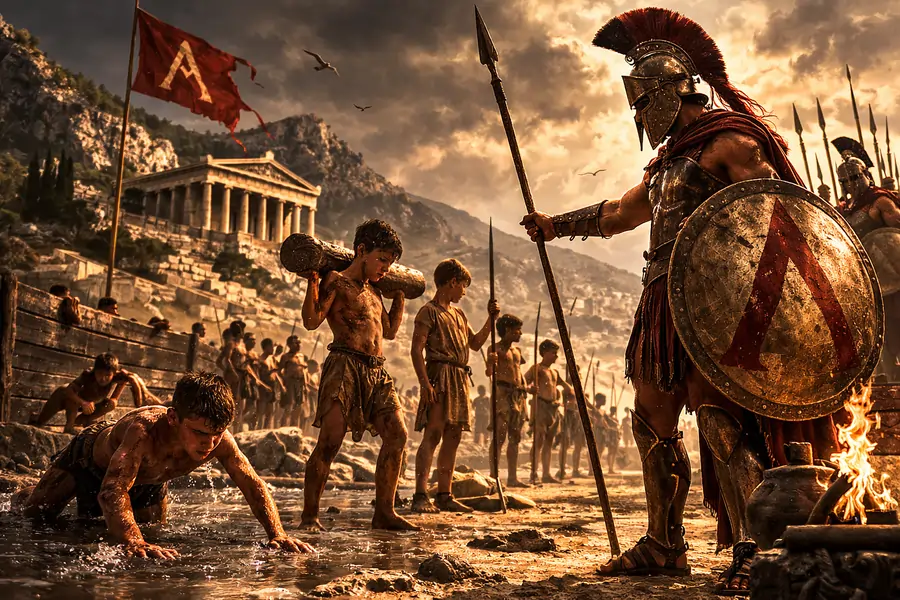
No discussion of Spartan hoplites is complete without examining the Agoge training system. This brutally efficient state-sponsored educational program transformed Spartan boys into seasoned veterans. This disciplined training system distinguished Sparta from every other Greek city-state.
Beginning around age seven, Spartan boys entered the Agoge, where they lived communally under strict supervision. Training emphasized physical endurance, discipline, obedience, and teamwork. Young Spartans were exposed to harsh conditions, limited food, and demanding exercises intended to build resilience. The Agoge also focused heavily on mental toughness. Boys learned to withstand hardship without complaint, suppress fear, and place the interests of the state above personal comfort. They were trained to obey orders, endure hardship, and place collective duty above personal interests.
The training became increasingly intensive during adolescence. Recruits practiced weapon handling, formation drills, mock battles, and tactical maneuvers. By adulthood, Spartans possessed decades of military experience before entering major campaigns. Modern historians debate some of the more extreme accounts of Spartan education, but ancient sources consistently emphasize the system's role in producing disciplined soldiers. The Agoge helped produce the battlefield cohesion that became Sparta's greatest military advantage.
Spartan Phalanx Formation and Battlefield Tactics
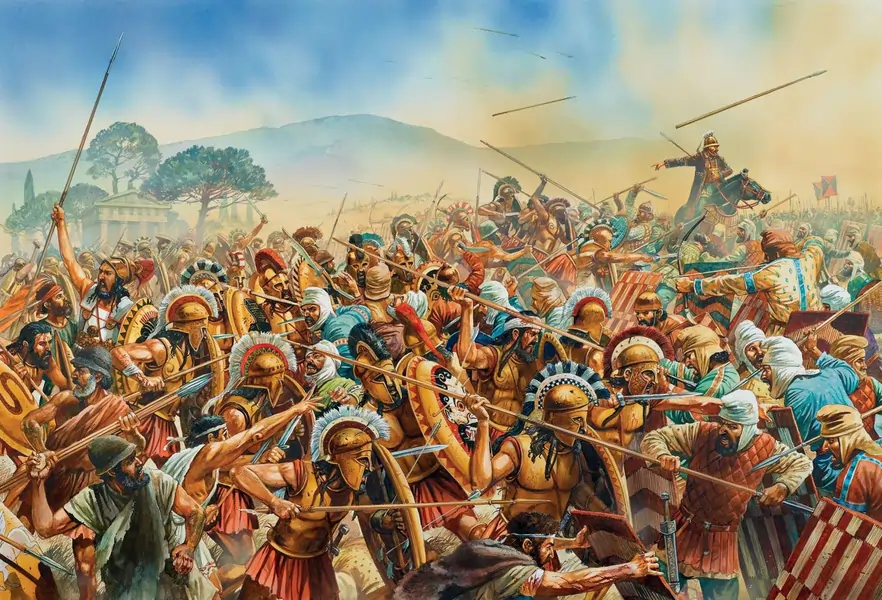
The effectiveness of Spartan hoplites depended on collective discipline rather than individual combat skill alone. Their effectiveness and strength relied on the phalanx, the dominant infantry formation of classical Greece. A phalanx consisted of multiple ranks of heavily armed infantry standing shoulder-to-shoulder. Each soldier's shield protected part of the man beside him, creating a continuous defensive wall. Spears projected outward from the shield wall, allowing several ranks to threaten the attacking enemy soldiers simultaneously.
Success depended less on individual skill and more on collective discipline and endurance. Maintaining formation under pressure was crucial for the success of the phalanx. Once a phalanx lost cohesion, it became vulnerable to attack and would collapse. Spartan hoplites excelled in this environment because years of training allowed them to handle the harsh conditions of warfare. Ancient sources frequently praise Sparta's ability to perform complex battlefield movements that other Greek armies struggled to execute.
One common tactic involved advancing steadily while maintaining formation integrity. Rather than charging recklessly, Spartan units sought to preserve order until the decisive clash occurred. This was practical as charging for a long distance in heavy armor was tiring and threatened the integrity of the phalanx formation. After contact, the disciplined phalanx gradually pushed opposing formations backward. The Spartan military also developed sophisticated command structures. Officers coordinated movements through signals and established chains of command. This organizational advantage often enabled Sparta to outperform numerically superior opponents.
The phalanx system later influenced the development of the Macedonian phalanx under Philip II and Alexander the Great. Readers interested in this evolution can explore our guides on why the Macedonian phalanx was so effective and the military campaigns of Alexander the Great.
Famous Battles Fought by Spartan Hoplites
Battle of Thermopylae (480 BCE)
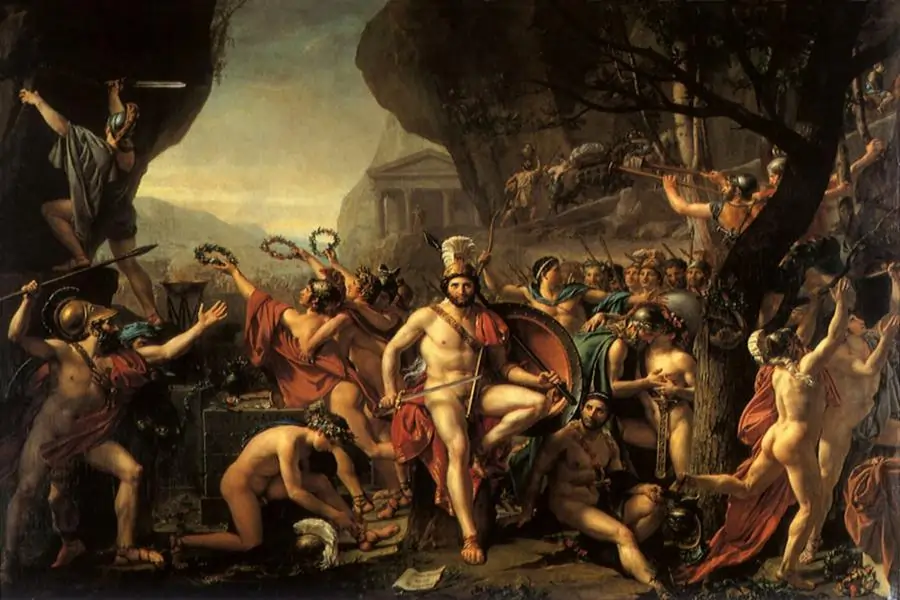
The famous Spartan last stand occurred during the Persian invasion of Greece. King Leonidas and approximately 300 Spartan hoplites joined a larger Greek coalition to defend the narrow pass at Thermopylae. For several days, the Greeks successfully blocked the vastly larger Persian army. Although ultimately defeated after being outflanked, the Spartan resistance became a lasting symbol of courage and sacrifice.
Battle of Plataea (479 BCE)
One year after Thermopylae, Spartan hoplites played a decisive role at the Battle of Plataea. Under the command of Pausanias, the Greek alliance defeated the Persian land army and effectively ended the invasion threat. Many historians regard Plataea as one of the most consequential victories in Western history due to its impact on Greek independence and subsequent cultural development.
Peloponnesian War (431-404 BCE)
Throughout the Peloponnesian War, Spartan hoplites formed the backbone of Sparta's military campaigns against Athens. Athens predominantly avoided confrontation with Sparta on land due to the threat posed by the Spartan heavy infantry. Their battlefield effectiveness contributed significantly to the eventual Spartan victory. The conflict demonstrated both the strengths and limitations of Sparta's power. Though victorious, the Spartan state was now weakened, which led to the rise of Macedonian supremacy under Philip and Alexander the Great.
What Made Spartan Hoplites So Effective?
Although most Greek states fielded hoplites, the Spartans were exceptionally effective and stronger. This can be attributed to several factors:
- First, they possessed unmatched military training. Most Greek citizens balanced military service with farming, trade, or craftsmanship. A Spartan's life was built around military service to the state.
- Second, Spartan society emphasized collective discipline over individual glory. Hoplite warfare rewarded unit cohesion, making Spartan values ideally suited to phalanx combat.
- Third, Sparta developed an efficient command structure. Officers and soldiers understood their responsibilities and could execute maneuvers reliably even under extreme pressure. Other Greek phalanx formations struggled to maneuver freely under battle conditions.
- Fourth, Spartan morale remained exceptionally high. These battle-hardened warriors fought alongside lifelong companions with whom they had trained since childhood. The social stigma associated with cowardice further strengthened battlefield resolve.
Spartan Hoplites vs Other Greek Hoplites
| Category | Typical Greek Hoplite | Spartan Hoplite |
|---|---|---|
| Primary Occupation | Farmer, artisan, merchant | Professional soldier |
| Training | Limited military preparation | Lifelong Agoge military training |
| Discipline | Varied by city-state | Exceptionally high |
| Formation Maneuvers | Basic | Advanced and coordinated |
| Military Culture | Part-time service | Central to society |
| Battlefield Reputation | Regional | Pan-Hellenic prestige |
It is important to recognize that Spartan hoplites were not fundamentally different in equipment from other Greek hoplites. Their advantage came primarily from superior training, discipline, organization, and social conditioning rather than revolutionary weapons or armor.
The Decline of Spartan Military Power
Despite centuries of success, Sparta's military system contained structural weaknesses that gradually deteriorated its power. The most significant problem was the decline in population. Full Spartan citizenship remained restricted to a relatively small population. Over time, war casualties, economic pressures, and citizenship requirements reduced the number of available Spartiates who were eligible for military service.
By the fourth century BCE, Sparta could field far fewer citizen hoplites than during the peak of its strength. This shrinking manpower pool limited strategic flexibility and reduced the resilience of the Spartan state. It was also more difficult to manage the increasing helot population. At the same time, rival Greek states improved their military capabilities. Thebes developed innovative tactics, while Macedon later transformed warfare through professional armies and combined-arms operations.
These changes exposed the limitations of traditional hoplite warfare. Similar developments would eventually contribute to the superiority of more flexible military systems such as the Roman legions, where theRoman legions overcame the phalanx formation.
The Battle of Leuctra and Sparta's Defeat
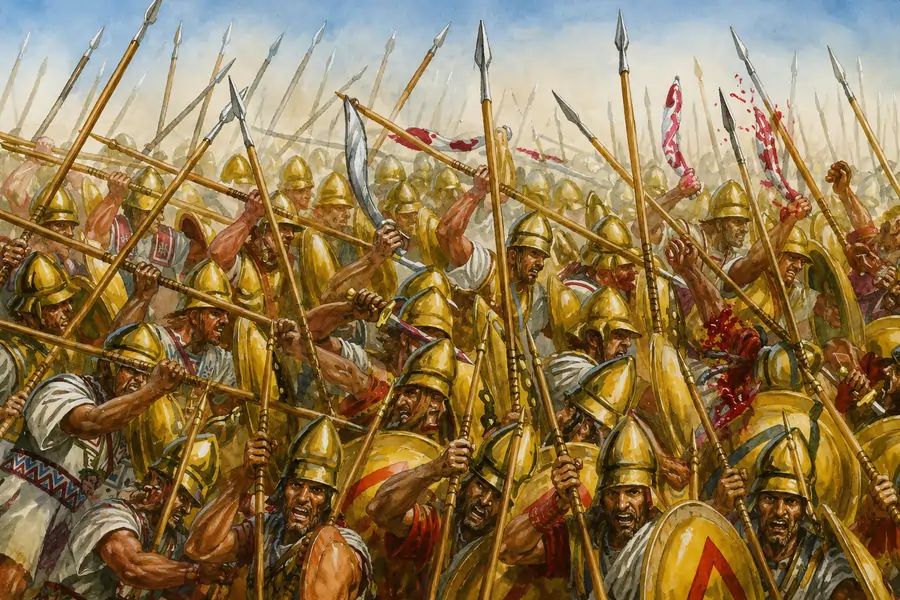
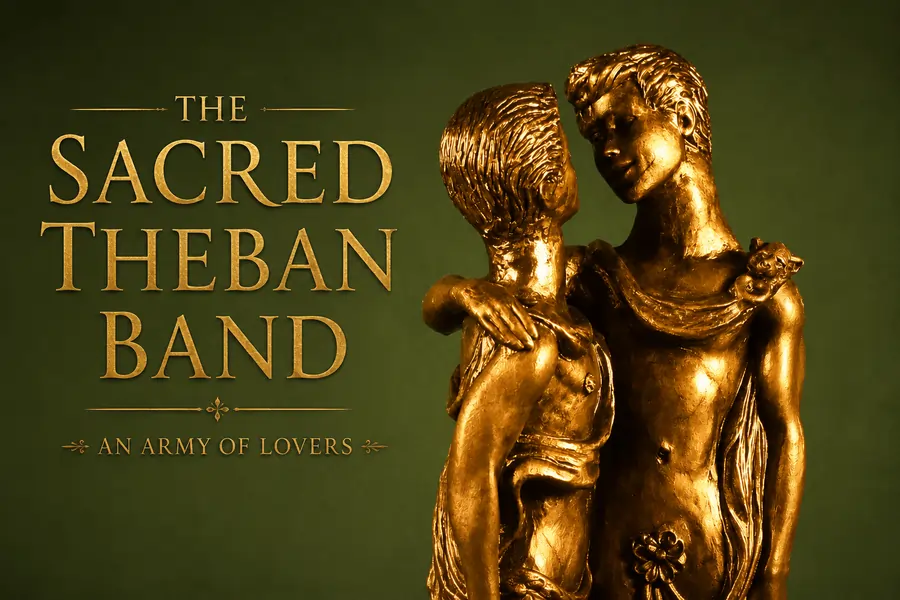
The turning point in Spartan military history occurred at the Battle of Leuctra in 371 BCE. Facing the Theban army under Epaminondas, Sparta entered the battle expecting a decisive victory, confident in the strength and skill of their hoplites. Instead, the Thebans employed innovative tactics that fundamentally altered Greek warfare. The battle also brought to light the skill of the Sacred Theban Band, an elite Theban unit traditionally composed of 150 pairs of male companions.
Epaminondas concentrated elite troops on his left wing and arranged them in an unusually deep formation, reportedly fifty ranks deep. Rather than matching Sparta evenly across the battlefield, he focused overwhelming force against the Spartan right flank, where the best Spartan troops traditionally stood. This move was intended to gain local superiority on the battlefield.
The tactic succeeded spectacularly. The Theban assault shattered the Spartan elite, killing King Cleombrotus I and inflicting severe casualties. For the first time in generations, Sparta suffered a decisive defeat in open battle against another Greek hoplite army. Ancient historians Xenophon and Diodorus describe the shock that followed. The myth of Spartan invincibility was finally broken. More importantly, Sparta lacked the manpower reserves necessary to recover fully from such devastating losses. Leuctra marked the beginning of the end of Spartan dominance. Thebes briefly became the leading power in Greece, while Sparta never regained its former military supremacy.
Legacy of the Spartan Hoplite
The Spartan hoplite remains one of history's most iconic military groups. While Sparta eventually lost its dominance, the legacy of the disciplined Spartan warrior survived long after the fall of Sparta. Spartan influence extended beyond the battlefield. Their emphasis on discipline, collective responsibility, endurance, and obedience became a model studied by later military leaders and historians. Ancient writers such as Xenophon and Plutarch praised Spartan institutions, while modern military academies continue to examine Sparta as an example of how training, cohesion, and morale can transform a relatively small population into a formidable fighting force.
The Spartan approach to warfare also helped shape the development of Greek military thought. The emphasis on organization and cohesion influenced later military systems, including the armies of Macedon under Philip II and Alexander the Great. Although the Macedonian phalanx evolved beyond traditional hoplite warfare, it built upon principles that Spartans had helped perfect over centuries.
Spartan battlefield achievements became deeply embedded in Western historical memory. The stand at Thermopylae, the victories over Persian forces during the Greco-Persian Wars, and Sparta's eventual triumph in the Peloponnesian War all contributed to a reputation that endured for hundreds of years. Today, the Spartan hoplite occupies a unique place in military history. Neither merely a legendary warrior nor an invincible super-soldier, he represents the power of training, discipline, and collective action. The story of Sparta's rise and fall continues to offer valuable lessons about leadership, military effectiveness, societal priorities, and the challenges of maintaining dominance in a changing world.
References and Further Reading
Ancient Sources
- Herodotus, Histories, Book IX.
- Thucydides - History of the Peloponnesian War
- Xenophon, Hellenica.
- Plutarch. Life of Lycurgus.
- Diodorus Siculus. Library of History.
Modern Scholars
- Cartledge, Paul. The Spartans: The World of the Warrior-Heroes of Ancient Greece.
- Lazenby, J.F. The Spartan Army.
- Hanson, Victor Davis. The Western Way of War.
- Kagan, Donald. The Peloponnesian War.
- Anderson, J.K. Military Theory and Practice in the Age of Xenophon.
- Goldsworthy, Adrian. The Complete Roman Army.
Recommended Books
This article may contain affiliate links. If you purchase through these links, I may earn a small commission at no extra cost to you.


Related Articles
Frequently Asked Questions
How heavy was a Spartan hoplite's armor and equipment?
A fully equipped Spartan hoplite typically carried between 20 and 30 kilograms (44 to 66 pounds) of armor and weapons. This included the large aspis shield, dory spear, helmet, body armor, greaves, and a short sword. Despite the weight, years of training in the Agoge helped Spartans move and fight effectively while carrying their panoply.
Why were Spartan swords shorter than other Greek swords?
Spartan hoplites often used shorter xiphos swords because most fighting occurred in the tightly packed phalanx formation. A shorter blade was easier to maneuver in close quarters after spears broke or formations collided. Ancient writers such as Plutarch noted that Spartans viewed their short swords as ideal weapons for reaching enemies at close range.
How did Spartan hoplites communicate during battle?
Spartan armies relied on a structured chain of command, visual signals, and musical instruments such as flutes to coordinate movements. The use of music helped maintain marching rhythm and formation cohesion, allowing Spartan hoplites to advance in an organized manner even under battlefield pressure.
Could Spartan hoplites fight outside the phalanx formation?
Spartan hoplites were primarily trained for phalanx warfare, where discipline and collective action were most effective. While individual Spartans were capable fighters, their greatest strength came from maintaining formation and fighting as a coordinated unit rather than engaging in isolated combat.
How many Spartan citizens served as hoplites at Sparta's peak?
Historians estimate that Sparta may have had between 8,000 and 10,000 full Spartan citizens during its height in the sixth and early fifth centuries BCE. However, the number declined significantly over time due to warfare, demographic pressures, and strict citizenship requirements, contributing to Sparta's eventual military decline.
What happened to Spartan hoplites after the Battle of Leuctra?
The defeat at Leuctra in 371 BCE severely weakened Sparta's military power. Many experienced Spartan citizens were killed, and the city-state lacked sufficient manpower to replace them. Although Spartan hoplites continued to fight in later conflicts, Sparta never regained the dominance it had enjoyed during the fifth century BCE.
Add Comment