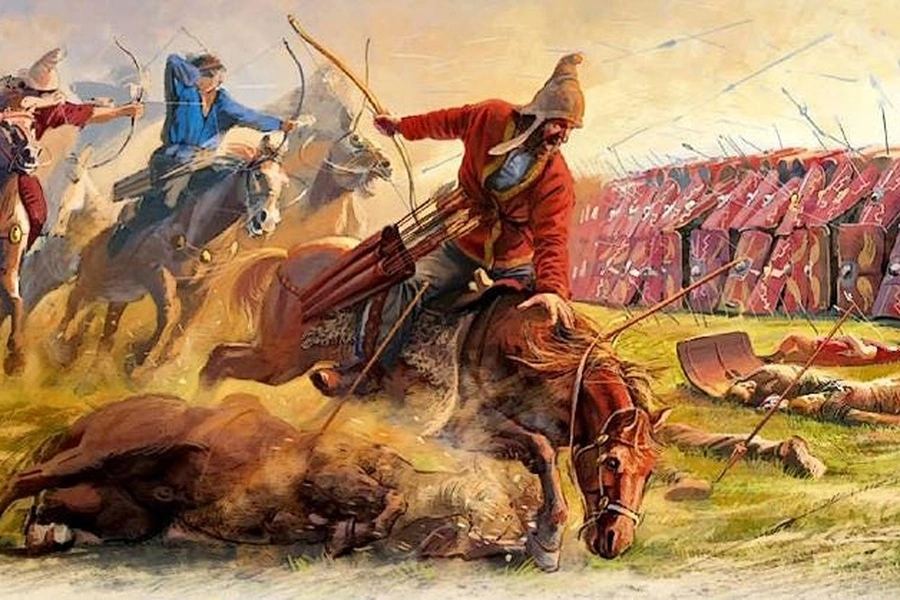
The Battle of Carrhae in 53 BC was one of the most devastating defeats in Roman military history. Marcus Licinius Crassus marched into Mesopotamia expecting to win the military glory that had eluded him, only to find his legions trapped in a battle they struggled to fight on their own terms. Parthian horse archers attacked from a distance, heavy cavalry struck at vulnerable formations, and a seemingly endless supply of arrows turned the open plain into a killing ground. Carrhae exposed the limits of Roman infantry power and forced Rome to confront a formidable eastern rival whose methods of warfare demanded a different response.
Table of Contents
- Why Did Rome Invade Parthia?
- The Parthian Empire and Its Military System
- The Roman and Parthian Armies
- Crassus Marches into Mesopotamia
- The Battle of Carrhae Begins
- How Parthian Horse Archers Defeated Roman Infantry
- The Destruction of Publius Crassus' Force
- The Roman Retreat and Crassus' Death
- How Rome Adapted: Slingers Against Parthian Cavalry
- Why Did Rome Lose the Battle of Carrhae?
- The Aftermath and Historical Significance
- References and Further Reading
Why Did Rome Invade Parthia?
By the middle of the first century BC, Rome had transformed itself from an Italian republic into the dominant military power of the Mediterranean. Its victories over Carthage, the Hellenistic kingdoms, and various eastern rulers had created an empire of influence stretching from Spain to Syria. Yet beyond the Euphrates stood a powerful rival: the Parthian Empire. Rome's ambitions in the East were closely connected to the political rivalry between three influential Romans: Julius Caesar, Pompey the Great, and Marcus Licinius Crassus. Their informal political alliance, commonly known as the First Triumvirate, helped each man advance his interests. Caesar sought opportunities for conquest in Gaul, Pompey possessed enormous military prestige, and Crassus wanted a comparable achievement of his own.
Crassus was immensely wealthy and had played a decisive role in suppressing Spartacus' slave revolt. However, his reputation as a commander did not match that of Pompey or Caesar. A successful eastern campaign promised to change that. Parthia offered the prospect of enormous wealth, strategic influence and a victory that might rival the conquests of Alexander the Great. In 55 BC, Crassus secured another consulship and subsequently assumed the governorship of Syria. From this strategic base, he prepared to invade Parthian territory. The expedition was controversial, and the campaign was not simply a defensive response to a Parthian attack. Crassus crossed the Euphrates in 54 BC and made further advances before returning to Syria for the winter. He resumed operations in 53 BC.
His objective was ambitious. He wanted to defeat the Parthians and advance toward their wealthy western centres. The campaign, however, would expose a crucial difference between Roman and Parthian warfare. Rome excelled at deploying disciplined infantry, maintaining fortified positions and winning battles in which its legions could close with the enemy. The Parthians could exploit distance, mobility and the vast open spaces of Mesopotamia to avoid the kind of engagement the Romans preferred.[1]
The Parthian Empire and Its Military System
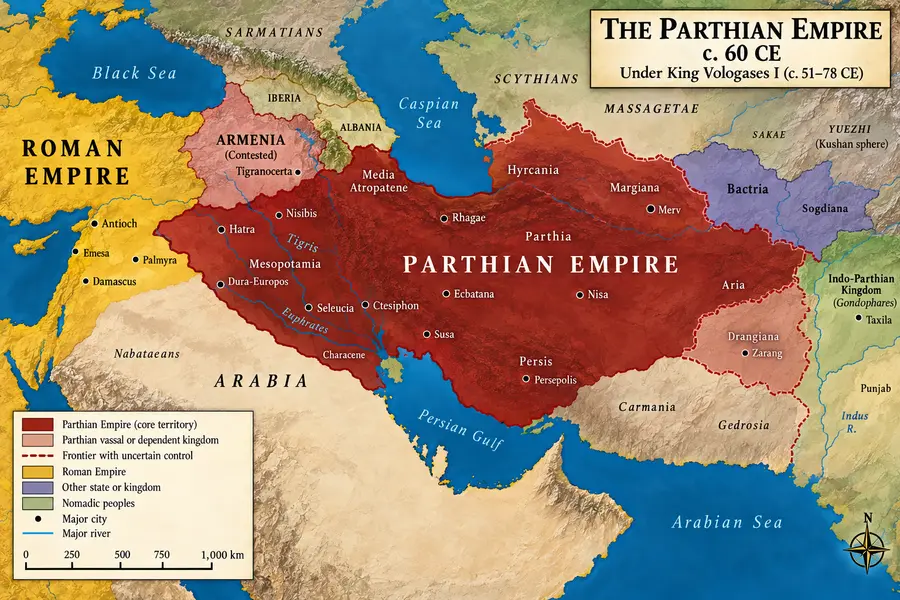
The Parthian Empire emerged from the Iranian world and developed into a major power under the Arsacid dynasty. Its territories included much of Iran and extended into Mesopotamia, placing it directly in the path of Roman expansion. The two powers increasingly competed for influence over Armenia and the kingdoms bordering their frontiers. Parthian warfare differed from the infantry-centred military system for which Rome was famous. Parthian armies relied heavily on cavalry, including mounted archers and heavily armoured lancers known as cataphracts. These forces could operate together, allowing the Parthians to harass opponents at a distance before exploiting weaknesses with a charge.
Horse archers
Parthian horse archers were mounted troops trained to shoot while riding. Their composite bows combined different materials to produce a powerful weapon in a relatively compact form. A skilled rider could approach an enemy formation, release arrows, and withdraw before slower infantry could engage. The technique commonly called the Parthian shot involved shooting backward while riding away from an opponent. Its effectiveness depended on training, coordination, and the ability to control distance. A retreating cavalryman could continue inflicting casualties even as an enemy attempted to pursue him.
Cataphracts
Parthian cataphracts provided a different capability. These heavily armoured cavalrymen, often riding armoured horses, carried long lances suited to shock combat. They could threaten infantry formations that had become disordered, exhausted or isolated. The combination mattered more than either arm alone. Horse archers could force an opponent to remain defensive, while cataphracts could punish attempts to break out or advance in an uncoordinated fashion. This complementary system would prove devastating at Carrhae.[1][2]
The Roman and Parthian Armies
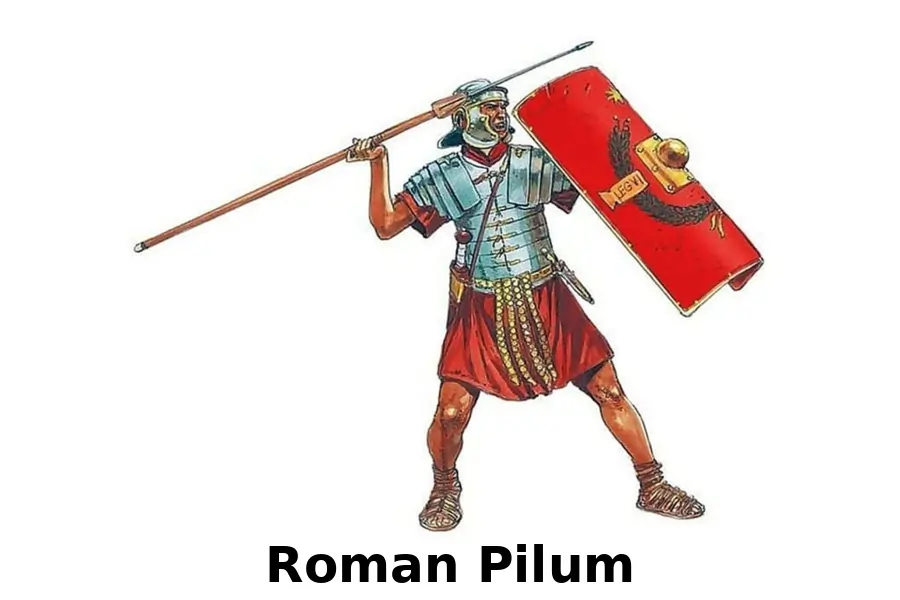
Crassus brought a substantial Roman expeditionary force into Mesopotamia. Ancient accounts and modern reconstructions differ over its exact size, but the army is generally understood to have included seven legions, along with cavalry and light-armed troops. Its strength lay in the discipline, cohesion, and close-combat ability of its legionaries. Roman legionaries fought with shields, swords, javelins, and protective equipment. Their formations could withstand considerable pressure, and Roman commanders were experienced in organising infantry for sustained campaigns.
However, an army's effectiveness depended on the enemy it faced. The legions were not inherently incapable of fighting cavalry, but Crassus lacked enough effective mounted troops to control the battlefield against a mobile Parthian force. His infantry also had limited means of forcing mounted archers to stand and fight at close quarters.
| Feature | Roman army | Parthian army at Carrhae |
|---|---|---|
| Main battlefield strength | Heavy infantry | Mounted archers and heavy cavalry |
| Preferred engagement | Close combat and formation fighting | Mobile missile attacks followed by selective charges |
| Mobility | Limited by the marching speed of infantry | High, owing to the cavalry-centred force |
| Missile capability | Javelins and light troops, with limited reach against mounted archers | Powerful composite bows and a large arrow supply |
| Principal vulnerability | Difficulty forcing the enemy into close combat | Dependence on cavalry, mobility and suitable conditions |
The Parthians did not need to destroy every legionary in a single charge. Their advantage lay in their ability to inflict damage while limiting the Romans' opportunities to retaliate. The battle would become a contest between Roman endurance and Parthian control of distance.
Crassus Marches into Mesopotamia
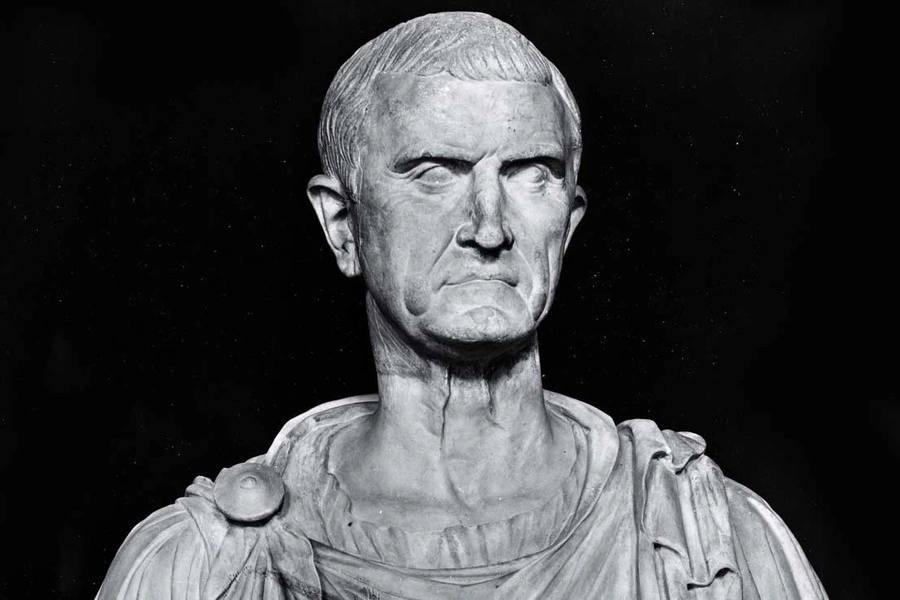
Crassus' approach to Carrhae helped determine the outcome before the main fighting began. According to Plutarch, the Roman commander received advice from the Armenian king Artavasdes, who recommended an invasion route through Armenia. The rougher terrain could have restricted the effectiveness of Parthian cavalry while offering the Romans greater protection. Crassus instead advanced through Mesopotamia. He also relied on local guidance from an Arab chieftain named Abgarus, whom the Roman narrative presents as having misled him. The precise motives and reliability of the local allies are difficult to establish, so their actions should not be treated as a complete explanation for the defeat.
The more important strategic problem was the terrain. Mesopotamia's open plains offered mounted archers room to manoeuvre and maintain their distance from infantry. Crassus was advancing into territory where the enemy could choose how to engage him. As the Romans approached Carrhae, reports of enemy activity and the disappearance of scouts increased their anxiety. Some of Crassus' officers urged caution and reconnaissance. Instead, the army continued until the Parthian force appeared near the Balissus River, commonly associated with the modern Balikh region.
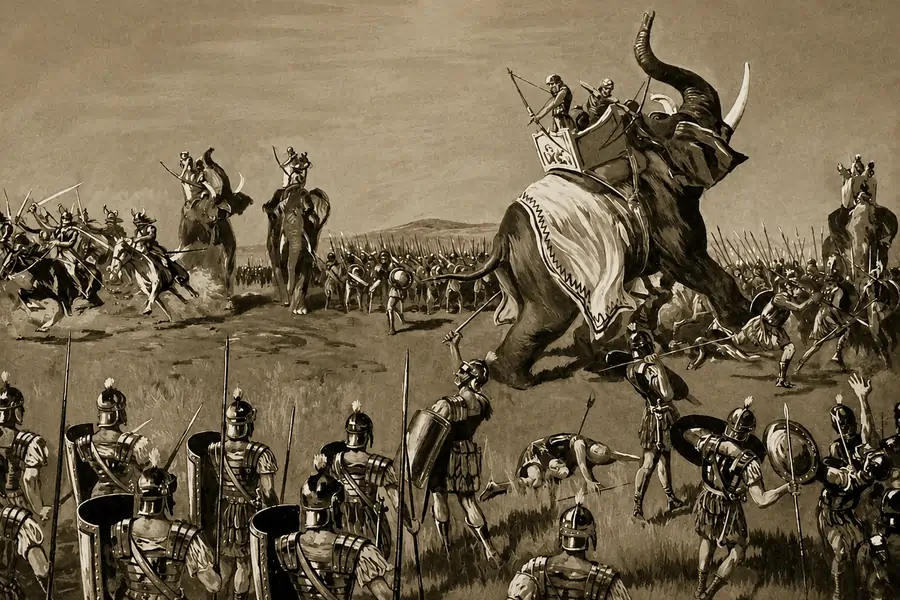
Surena, the Parthian commander, had prepared carefully. Plutarch describes an army dominated by horse archers, supported by a smaller body of heavily armoured cavalry. He also records the use of camels carrying additional arrows. The logistical arrangement meant that the mounted archers could replenish their ammunition during the fighting rather than rely solely on what each rider initially carried.[1]
The Battle of Carrhae Begins
The Battle of Carrhae was fought in 53 BC, generally dated to late spring or early summer. Ancient sources do not agree on every detail, but the broad sequence is clear. Crassus deployed his troops in a defensive formation as the Parthians approached. Plutarch describes a hollow square intended to protect the army from attacks on multiple sides. The formation was a rational response to the danger of encirclement. Rather than presenting an exposed flank, the Romans could defend against attacks from different directions. The formation helped protect the Roman army's flanks, but it did not neutralize the Parthians' principal advantage. Their ability to deliver sustained missile fire without remaining within reach of Roman infantry. This did not solve the problem of how to make the cavalry fight on Roman terms.
The Parthians advanced with a display intended to intimidate. Their cavalry manoeuvred around the Roman formation, and the horse archers began shooting. The Romans initially hoped that the attackers would exhaust their arrows. When the camel train supplied fresh ammunition, that hope disappeared. Crassus ordered light-armed troops to counterattack, but they could not close the distance. Exposed to concentrated missile fire, they withdrew toward the legionaries. The Roman formation remained cohesive enough to resist immediate collapse, but its soldiers were taking casualties without a reliable way to silence the attackers.
How Parthian Horse Archers Defeated Roman Infantry
The Parthian method exploited the difference between being able to defend against an attack and being able to stop it. Roman shields and armour offered some protection, but they could not make the legionaries immune to sustained archery. Nor could the Romans easily pursue mounted opponents who controlled the distance between the armies. Horse archers circled the Roman formation, shooting from different directions. The Romans had to maintain their ranks while protecting themselves and their wounded. If they broke formation to pursue the archers, they risked becoming isolated. If they stayed together, they remained targets for continued missile attacks.
The Roman testudo, or tortoise formation, is often associated with protection against projectiles. It involved overlapping shields, but it was not a universal solution to mounted archery. A formation that protected soldiers from incoming missiles could also restrict movement and visibility. The testudo should not be imagined as a formation that made an army invulnerable to arrows. The Parthians also possessed a major advantage in battlefield mobility. A Roman infantryman could throw a javelin only within a relatively short range, while a horse archer could attack from farther away and move before the Romans could respond. The legionaries' strength in close combat was therefore difficult to bring into play.
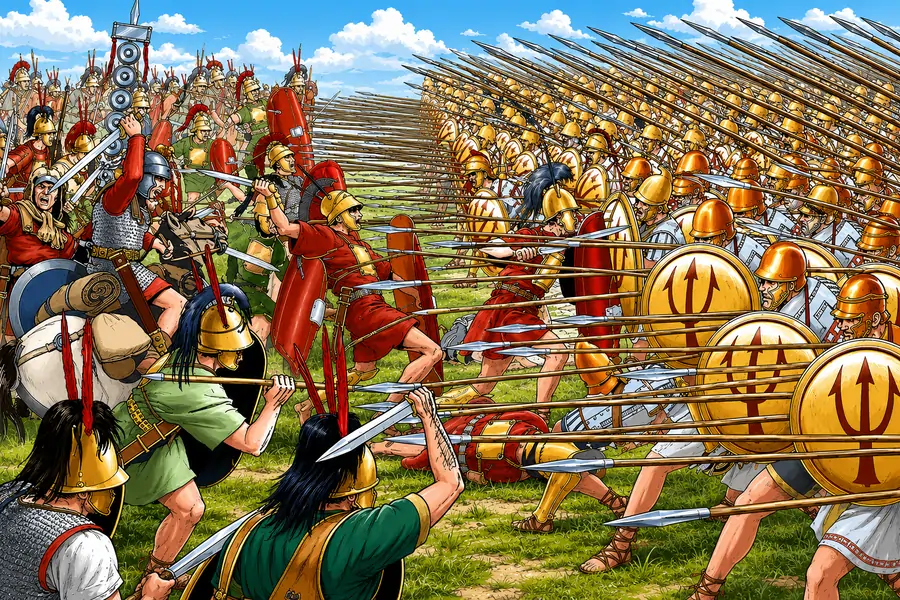
This does not mean that Roman infantry was obsolete. Roman legions remained formidable against many opponents, and Rome would continue to win major battles in the East. Carrhae instead showed that an army could be exceptionally effective in one tactical environment yet vulnerable in another. The Roman victory over the Macedonian phalanx at Pydna, for example, involved a very different battlefield problem, in which close combat and the cohesion of formations were central.
The Destruction of Publius Crassus' Force
As the Parthian attacks continued, Crassus faced a difficult decision. Remaining in the defensive formation exposed the army to further losses. He therefore sent his son, Publius Crassus, to attack with a detachment that included cavalry, light-armed troops, and legionaries. Publius advanced with considerable energy. His force included Gallic cavalry, whose mobility initially made them useful in pursuing the Parthian horsemen. The Parthians appeared to withdraw, encouraging the Romans to press forward. But the pursuit drew Publius' troops away from the main army and into a more dangerous position.
The Parthians turned against the isolated detachment. Their horse archers harassed the Romans, while their heavily armoured cavalry threatened them at close quarters. Publius' force could not escape the combined pressure. It suffered catastrophic losses, and Publius himself died. Ancient accounts describe the psychological impact of his death. The Parthians reportedly displayed his severed head before the Roman army. The episode was more than a gruesome spectacle. It announced that Crassus' son and a substantial part of the Roman force had been destroyed.
Publius' defeat eliminated an important attempt to disrupt the Parthian attacks and deprived Crassus of a substantial detachment that might otherwise have helped him respond to the crisis. It also showed the danger of pursuing cavalry without adequate support or a way to prevent the enemy from turning back. A Roman detachment that might have threatened the horse archers became vulnerable once it was separated from the legions.
The Roman Retreat and Crassus' Death
After Publius' defeat, the Romans faced renewed attacks and worsening morale. The legionaries continued to resist, but the Parthians had inflicted substantial casualties and demonstrated that their missile supply was not about to run out. The Romans could neither force a decisive close engagement nor safely pursue the mounted enemy. Nightfall brought a temporary break in the fighting. Crassus withdrew toward Carrhae, where surviving troops attempted to regroup. The retreat was disorganised, and not all Roman soldiers reached safety. Some were left behind, while others escaped under the command of officers such as Gaius Cassius Longinus.
Crassus subsequently attempted to move toward the safety of the surrounding region. The circumstances of his final encounter with the Parthians are disputed. Plutarch recounts a meeting with Surena that ended in violence, while other details of Crassus' death and the treatment of his body became entangled with later storytelling. One famous tradition claims that molten gold was poured into Crassus' mouth to mock his greed. It is a memorable story, but it should not be treated as securely established fact. The more certain conclusion is that Crassus died during the aftermath of the campaign and that his army suffered a major defeat.
The Romans lost thousands of men, and the Parthians captured legionary standards. The exact casualty figures vary among ancient accounts and should be treated cautiously. Carrhae was nevertheless a military and political disaster that shocked Rome and strengthened Parthia's standing as a rival power.[1][3]
How Rome Adapted: Slingers Against Parthian Cavalry
The Roman response to Parthian warfare was not a single reform introduced immediately after Carrhae. Rome's commanders experimented with different strategies over subsequent decades, including improved use of terrain, stronger cavalry support, careful marching, fortified positions, and specialist missile troops. Among these troops were slingers, whose weapons offered a different way to threaten an enemy that relied on mobility.
The legacy of Balearic slingers from the Punic Wars
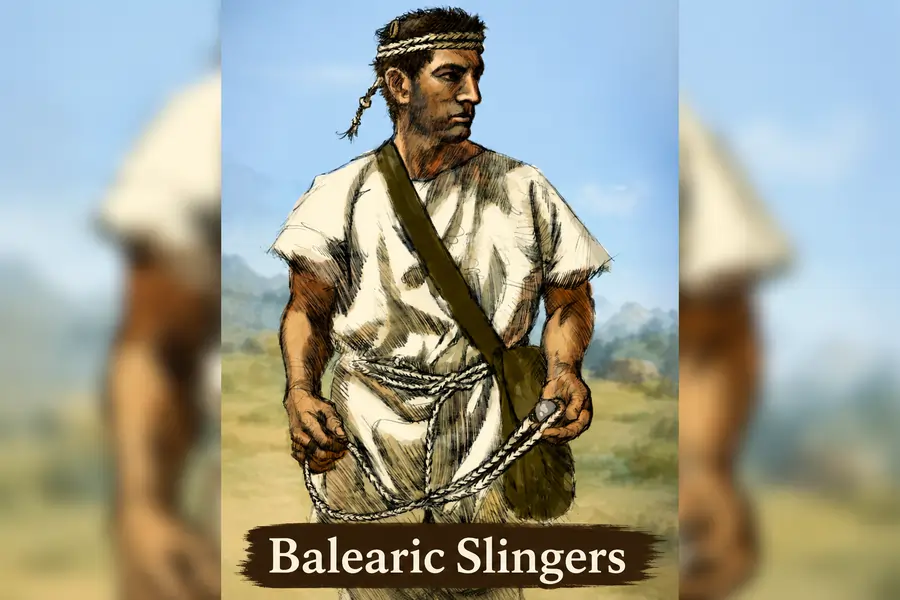
Slingers were not a new invention in Roman warfare. The Balearic Islands, in the western Mediterranean, were famous in antiquity for producing highly skilled slingers. Their reputation was already established during the Punic Wars, when Rome and Carthage competed for control of the Mediterranean. Carthaginian armies employed Balearic slingers, and Rome encountered their capabilities during its wars against Carthage. These troops used slings to launch stones or specially prepared lead projectiles at considerable speed. Effective slinging required practice from an early age, and skilled specialists could deliver repeated shots without carrying the bulky equipment required by some other missile troops.
It is important, however, to distinguish a longstanding Roman familiarity with slingers from a specific historical claim about Carrhae. The surviving evidence does not establish that Rome responded to the defeat by creating a standard doctrine of massed Balearic slingers specifically designed to counter Parthian horse archers. Slingers and other light-armed auxiliaries remained part of the wider Roman military repertoire, but the precise deployment of Balearic units in later eastern campaigns must be demonstrated from individual sources rather than assumed.
What could slingers do against horse archers?
A sling offered Roman commanders another way to deliver long-range missile fire against mounted opponents. Skilled slingers could launch stones or lead projectiles at considerable distances, potentially threatening troops that remained beyond the effective reach of Roman javelins. Ancient accounts of Rome's later wars against Parthia describe the use of slingers in conjunction with infantry and favourable terrain. However, a sling did not automatically outrange every composite bow, nor could foot soldiers match the mobility of mounted archers. Its value depended on range, positioning, numbers and coordination with the rest of the army.
But slingers were not a magic answer to the Parthian system. Horse archers could move rapidly, change direction, and attack from beyond the effective range of many weapons. Slingers on foot could not automatically catch them or force them into close combat. Their usefulness depended on terrain, protection, range, coordination, and support from other troops. The larger lesson is that Rome needed a combined response. Missile troops could supplement infantry, but cavalry and sound operational planning were necessary to contest the mobility of the Parthians. Commanders also had to avoid allowing mounted archers to dictate the terms of engagement.
Ventidius Bassus and Rome's later victories
Rome's recovery was gradual. In 39-38 BC, Publius Ventidius Bassus led Roman forces against Parthian-backed armies in the East. His campaigns culminated in a major Roman victory at Gindarus in 38 BC, where the Parthian prince Pacorus was killed. The defeat helped restore Roman prestige after Carrhae and demonstrated that Parthian forces could be beaten when Roman commanders managed the circumstances of battle more effectively.[4]
Ventidius' success should not be reduced to the use of one type of missile troop. The evidence points to the importance of terrain, positioning, command decisions, and the ability to exploit the enemy's approach. Slingers and archers were useful components of ancient armies, but the surviving accounts do not justify describing massed Balearic slingers as the decisive or universal Roman solution to Parthian horse archers. Rome continued to face serious difficulties in eastern campaigns. Mark Antony's invasion of Parthian territory in 36 BC suffered severe losses, despite the resources he committed. These later events underline that Carrhae did not produce a simple lesson that Rome immediately mastered. Roman commanders had to adapt repeatedly to a rival whose military system was especially effective in open terrain.
Why Did Rome Lose the Battle of Carrhae?
Carrhae was therefore not a simple contest between inferior Roman tactics and superior Parthian weapons. Surena combined mobility, missile fire, ammunition supply and selective shock action into a coherent battlefield system. Crassus, by contrast, entered terrain that favoured his opponent without an effective way to force a decisive close engagement.
Unfavourable terrain
The open Mesopotamian plain gave the Parthians room to manoeuvre. Crassus could not easily use terrain to restrict their movement or force them to fight at close quarters. His decision not to follow the Armenian route removed one possible way of limiting the cavalry threat.
Inadequate cavalry support
The Romans had cavalry, including the Gallic contingent commanded by Publius, but not enough to dominate the Parthian horsemen. Roman infantry could hold its formation, yet it could not readily compel the enemy to remain within reach.
Parthian missile superiority
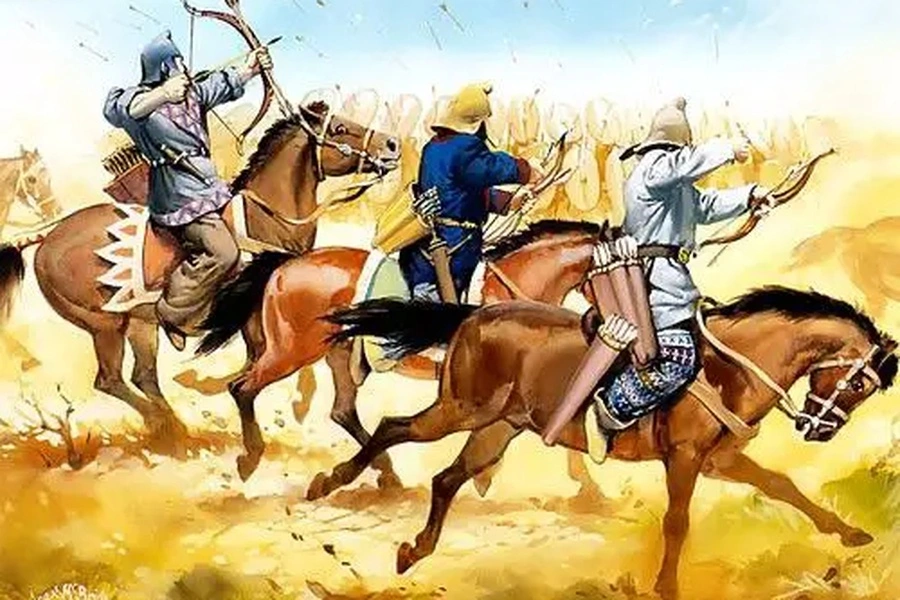
The horse archers could inflict damage over time. The Romans had light-armed troops, but their attempts to counterattack failed to end the harassment. The Parthians controlled the distance and tempo of the fighting.
Superior logistical preparation
The camel-borne arrow supply helped Surena sustain the attack. The Romans had to endure continued missile fire rather than wait for the enemy to exhaust its ammunition. This logistical advantage magnified the effect of Parthian mobility.
A costly tactical pursuit
Publius Crassus' advance separated a substantial detachment from the main army. Once the Parthians isolated and defeated it, the Romans lost troops, a potential counterattack force, and the confidence that a decisive blow might still be possible.
Strategic overconfidence
Crassus entered the campaign seeking glory and underestimated the problems posed by the Parthian military system. The defeat illustrates a recurring principle of military history: an army must adapt its plans to the enemy and the environment rather than assume that previous victories guarantee success. Rome's own history offered examples of the dangers of poor intelligence and unfavourable terrain, including the destruction of Varus' army in the Teutoburg Forest in AD 9. See the Battle of Teutoburg Forest for another case in which Roman military strengths could not overcome a disastrous operational situation.
The Aftermath and Historical Significance
The defeat at Carrhae had consequences beyond the loss of an army. Crassus' death removed one of the three central figures of the First Triumvirate. With him gone, the political balance between Caesar and Pompey weakened, contributing to the tensions that eventually culminated in civil war. Carrhae did not by itself cause that conflict, but it altered the political landscape in which it unfolded. For Rome, the loss also exposed the difficulty of conquering Parthia. The Roman Republic had defeated major Mediterranean rivals, but Parthia presented a different combination of geography, cavalry and strategic depth. Roman commanders would return to the East, sometimes successfully and sometimes disastrously, without permanently eliminating the Parthian threat.
The return of the Roman standards captured at Carrhae became an important symbolic achievement for Augustus. In 20 BC, diplomatic negotiations with the Parthian king Phraates IV secured the return of standards lost in earlier campaigns. Augustus presented the recovery as a victory for Roman prestige, even though it was achieved through diplomacy rather than a new conquest of Parthia.[5] Carrhae also offers a broader lesson about military adaptation. Roman commanders did not abandon the legion or replace infantry with cavalry. Instead, Rome continued to employ a variety of forces and methods as it confronted different enemies. Light-armed troops, including archers and slingers, formed part of the wider tactical toolkit, but their value depended on how they were integrated into a complete army.
The comparison with the Punic Wars is revealing. Balearic slingers had long demonstrated the value of specialist missile troops in Mediterranean warfare. Their history helps explain why slingers remained relevant to Roman military thinking, but it does not prove that a massed Balearic slinger formation was the specific answer to Carrhae. The better-supported conclusion is that Rome's experience against Parthia reinforced the need to combine missile fire, cavalry, terrain and disciplined infantry rather than rely on legionaries alone.
The Battle of Carrhae remains one of the clearest demonstrations that military superiority is conditional. The Roman legions were highly effective in many circumstances, but at Carrhae Surena created a battlefield where Roman strengths were difficult to use. His horse archers sustained the pressure, his cataphracts threatened isolated troops, and his logistical preparation prolonged the attack. Crassus' defeat was therefore not merely a story of Roman failure; it was also a demonstration of the sophistication of Parthian military planning.
References and Further Reading
- Plutarch, Life of Crassus, especially chapters 18-31. An ancient narrative of Crassus' invasion, the battle, the retreat, and his death.
- Shahbazi, Alireza Shapur. "Carrhae." Encyclopaedia Iranica, 1990. A detailed reference entry on the battle, the forces involved, and the historical context. Read the article.
- Whitby, Michael. "The Battle of Carrhae, 53 BC." In The Encyclopedia of Ancient Battles, 2017. https://doi.org/10.1002/9781119099000.wbabat0550.
- "Gindaros." Encyclopaedia Iranica. A reference entry on the later Roman victory over Parthian forces under Pacorus in 38 BC. Read the article.
- "Orodes II." Encyclopaedia Iranica. Background on Parthian-Roman conflict and the campaigns of Ventidius Bassus. Read the article.
- Overtoom, Nikolaus L. "The Parthians' Unique Mode of Warfare: a Tradition of Parthian Militarism and the Battle of Carrhae." Anabasis. Studia Classica et Orientalia 8 (2017): 95-122. Read the article.
- Overtoom, Nikolaus Leo. "The Parthian Rival and Rome's Failure in the East: Roman Propaganda and the Stain of Crassus." Acta Antiqua Academiae Scientiarum Hungaricae 57, no. 4 (2017): 415-435. https://doi.org/10.1556/068.2017.57.4.4.
Recommended Books
This article may contain affiliate links. If you purchase through these links, I may earn a small commission at no extra cost to you.


Related Articles
Frequently Asked Questions
How did Parthian horse archers defeat Roman legions at the Battle of Carrhae?
At the Battle of Carrhae in 53 BC, Parthian horse archers used their mobility and powerful composite bows to attack Roman legionaries from a distance. They surrounded the Roman formation, maintained their distance from the infantry and continued firing while withdrawing. Heavy cavalry called cataphracts supported the horse archers by attacking vulnerable Roman troops. This combination prevented Crassus from bringing the Parthians into the close combat in which Roman legionaries excelled.
Why did Crassus invade Parthia in 53 BC?
Marcus Licinius Crassus invaded Parthia to expand Roman influence in the East and gain the military prestige enjoyed by Julius Caesar and Pompey. As governor of Syria, he had a strategic base from which to launch the campaign. His ambition for military glory, combined with Rome's rivalry with Parthia, led him to undertake an expedition that ended in a disastrous defeat at Carrhae.
How did Parthian horse archers carry enough arrows during the Battle of Carrhae?
According to Plutarch, the Parthian commander Surena brought a large camel train carrying additional arrows for his horse archers. When the Romans expected the Parthians to exhaust their ammunition, the mounted archers replenished their supplies and continued attacking. This logistical preparation allowed the Parthians to sustain missile fire for much longer than the Romans had anticipated.
What was the role of Surena in the Battle of Carrhae?
Surena was the Parthian commander who led the cavalry force against Crassus in 53 BC. He deployed horse archers to harass the Roman army and used heavily armoured cataphracts against isolated troops. His use of mobility, battlefield positioning and an extensive arrow supply helped the Parthians defeat a much larger Roman army. His victory established him as one of the most notable commanders in Parthian military history.
Did the Romans use Balearic slingers against Parthian horse archers after Carrhae?
Balearic slingers were renowned specialist troops whose skills had been employed during the Punic Wars, and slingers remained part of the wider range of missile troops available in ancient Mediterranean warfare. However, surviving evidence does not establish that Rome adopted massed Balearic slingers as a standard, direct response to Carrhae. Roman campaigns against Parthia involved broader tactical adaptations, including attention to terrain, cavalry support, reconnaissance and the coordination of different troop types.
What happened to the Roman army after the Battle of Carrhae?
The Roman army suffered catastrophic losses at Carrhae in 53 BC. Crassus retreated toward Carrhae with the surviving troops, but he was killed during the subsequent negotiations with the Parthians. Many Romans died or were captured, and the Parthians seized Roman military standards. The defeat weakened Roman prestige in the East and intensified the rivalry between Rome and Parthia, although Rome continued campaigning in the region in later decades.
Add Comment