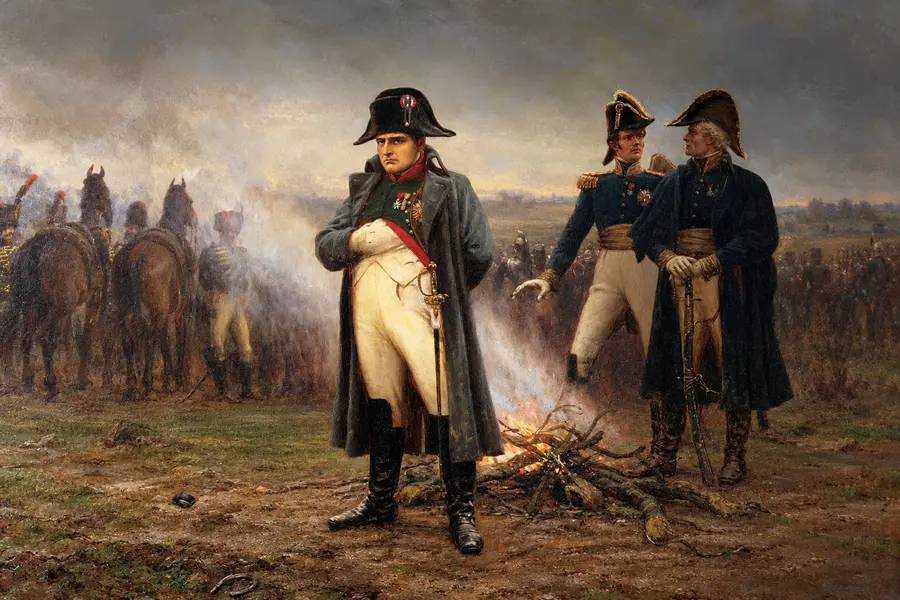
The Battle of Waterloo on 18 June 1815 was more than Napoleon Bonaparte's final defeat. It was the climax of a desperate campaign that began when Napoleon escaped exile on Elba, returned to France, rebuilt an army in a matter of weeks, and attempted to defeat the armies of the Seventh Coalition before they could combine against him. At Waterloo, his French Army faced the Anglo-Allied army commanded by the Duke of Wellington while the Prussian army of Field Marshal Gebhard von Blücher marched toward the battlefield. The battle became a brutal contest of artillery, infantry, cavalry, defensive positions, and timing, ending with the collapse of Napoleon's army and the destruction of his political power. [1]
Waterloo is often remembered as a single dramatic moment. The French Imperial Guard advancing toward Wellington's ridge and then falling back under fire. In reality, the outcome had been shaped by decisions made days earlier at Ligny, Quatre Bras and Wavre. Napoleon needed to destroy Wellington and Blücher separately. Instead, Wellington's army held its position long enough for the Prussians to arrive. The result was one of the most consequential battles in European military history.
Table of Contents
- Napoleon's Escape from Elba
- The Formation of the Seventh Coalition
- Napoleon's Road to Waterloo
- The Opposing Armies and Commanders
- The Waterloo Battlefield
- The Battle of Waterloo on 18 June 1815
- The Fight for Hougoumont
- D'Erlon's Great Infantry Attack
- The French Cavalry Attacks
- Blücher and the Prussian Arrival
- The Capture of La Haye Sainte
- The Imperial Guard's Final Attack
- Why Did Napoleon Lose Waterloo?
- Waterloo Casualties
- Napoleon's Defeat and Abdication
- Impact and Significance of the Battle of Waterloo
- The Legacy of Waterloo
- References and Further Reading
Napoleon's Escape from Elba
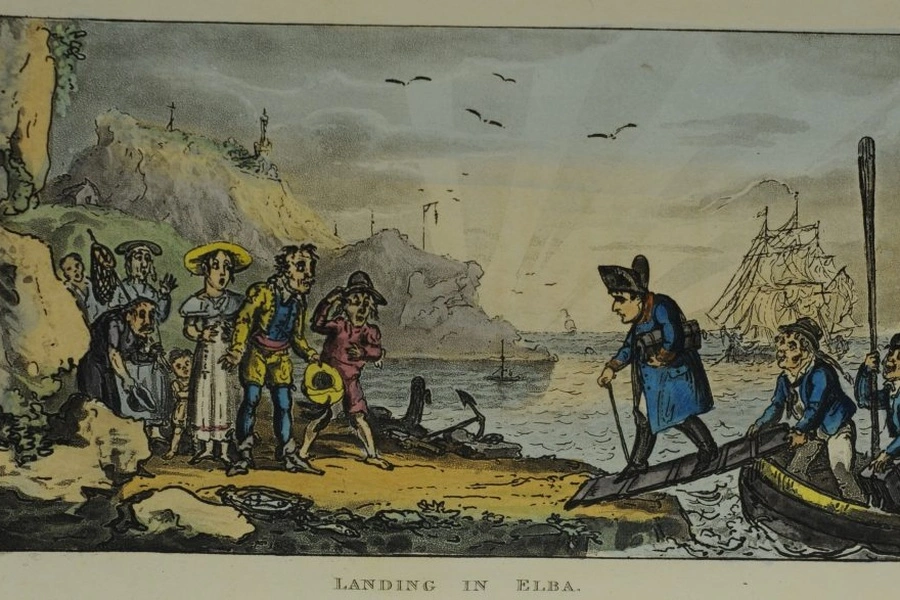
The road to Waterloo began with Napoleon's first abdication in 1814, more than a year before his army crossed the Belgian frontier. In 1814, Napoleon's enemies invaded France after years of exhausting warfare. Paris fell, Napoleon abdicated, and the former emperor was exiled to the Mediterranean island of Elba. He retained his imperial title and was permitted to govern the island, but the arrangement was never likely to satisfy a man who had spent two decades building an empire. Napoleon escaped Elba on 26 February 1815 with a small group of supporters and landed on the French coast in early March. Instead of collapsing immediately, his return triggered a remarkable political and military reversal. Soldiers sent to stop him increasingly rallied to his side. Louis XVIII abandoned Paris, and Napoleon entered the capital on 20 March. His return marked the beginning of what became known as the Hundred Days. [2]
The speed of Napoleon's return mattered enormously. The European powers had gathered at the Congress of Vienna to reorganize Europe after the Napoleonic Wars. Napoleon's escape transformed their diplomatic problem into an immediate military emergency. Napoleon understood the danger. Austria, Russia, Prussia and Britain could eventually place enormous armies in the field against him. France could not comfortably fight all of them at once. His best chance was therefore to move quickly into Belgium, strike before the Allied armies had fully coordinated, and defeat them separately. This was a familiar Napoleonic concept. Concentrate superior force against one enemy while another enemy is unable to intervene. The campaign would depend on whether Napoleon could achieve that concentration quickly enough.
The Formation of the Seventh Coalition
Napoleon's return united his enemies rather than dividing them. Britain, Austria, Prussia, and Russia were among the major powers preparing to continue the war. The coalition powers declared Napoleon Bonaparte an enemy and sought to prevent his return to power, while preparing to continue military operations against France. Their objective was not simply to defeat Napoleon in one battle but to prevent another return to power and restore a durable political settlement in Europe. The renewed alliance is commonly known as the Seventh Coalition. [2]
The coalition possessed a major numerical advantage, but its armies were scattered across Europe. That gave Napoleon a narrow window. If he could defeat the Anglo-Allied army in Belgium before the Prussian and Austrian armies could combine with it, the political and military situation might change dramatically. Napoleon therefore adopted an offensive strategy. Rather than waiting for the coalition armies to enter France, he would take the war into Belgium.
The campaign's geography was crucial. Wellington's army was positioned west of the Prussian army. If Napoleon could push between them, he could potentially force Wellington north-west toward the coast while driving Blücher eastward. The two coalition armies would then be unable to support one another. That explains the central strategic question of the Waterloo campaign. Could Napoleon defeat Wellington and Blücher separately before they could cooperate? For a short time, it appeared possible.
Napoleon's Road to Waterloo
The French advance into Belgium
On 15 June 1815, Napoleon's Army of the North crossed the River Sambre and entered Belgium. The movement achieved a degree of surprise. Wellington's army was still assembling, while the Prussian army under Blücher was also spread across several positions. [3] Napoleon's first objective was to drive a wedge between the two Allied armies. The campaign then produced two important battles on 16 June.
Ligny and Quatre Bras
At Ligny, Napoleon attacked Blücher's Prussian army. The battle ended in a French victory, and the Prussians were forced to withdraw. French forces had achieved the battlefield victory Napoleon needed, but not the destruction of the Prussian army. At Quatre Bras, however, Marshal Ney failed to eliminate the Anglo-Allied force occupying the important crossroads. Wellington's troops resisted the French attacks and prevented Ney from securing the junction.
The combination was critical. Napoleon had defeated Blücher, but he had not destroyed him. Wellington had been forced to retreat, but his army remained intact. Napoleon subsequently detached approximately 33,000 men under Marshal Emmanuel de Grouchy to pursue the retreating Prussians. The French commander expected Grouchy to keep Blücher away from Wellington. Instead, the Prussians withdrew toward Wavre and maintained their ability to turn west toward the battlefield. [3]
This decision became one of the defining issues of the campaign. Grouchy was not simply ordered to wander after the Prussians. He had a substantial force and an important mission. Grouchy's mission was reasonable in principle. The problem was that the French failed to prevent the Prussians from concentrating at Waterloo. On 17 June, Wellington withdrew toward the ridge south of Waterloo. Napoleon followed. Heavy rain turned the roads and fields into difficult ground, slowing movement and complicating the deployment of artillery and cavalry. By the evening of 17 June, the stage was set. Wellington had selected defensive ground. Napoleon had concentrated his main army against him. Blücher was moving toward the battle.
The Opposing Armies and Commanders at Waterloo
The Battle of Waterloo brought together three major military formations rather than two simple national armies. Wellington commanded a multinational Anglo-Allied force. Napoleon commanded the French Army of the North. Blücher commanded the Prussian army that would enter the battle progressively during the afternoon.
| Force | Principal commander | Approximate strength at Waterloo | Important characteristics |
|---|---|---|---|
| French Army of the North | Napoleon Bonaparte | About 72,000 men and 246 guns | Experienced veterans mixed with troops raised during the Hundred Days |
| Anglo-Allied Army | Duke of Wellington | About 68,000 men and 156 guns | British, Dutch-Belgian, German and other contingents |
| Prussian Army | Field Marshal Gebhard von Blücher | About 48,000 men with large formations arriving progressively | Veterans, militia and reserves with an effective staff system |
The National Army Museum gives approximately 72,000 French troops and 246 guns against around 68,000 Anglo-Allied troops and 156 guns at Waterloo itself. The Prussian army, although badly affected at Ligny, retained its ability to reorganize and march toward Wellington. [1]
Napoleon Bonaparte
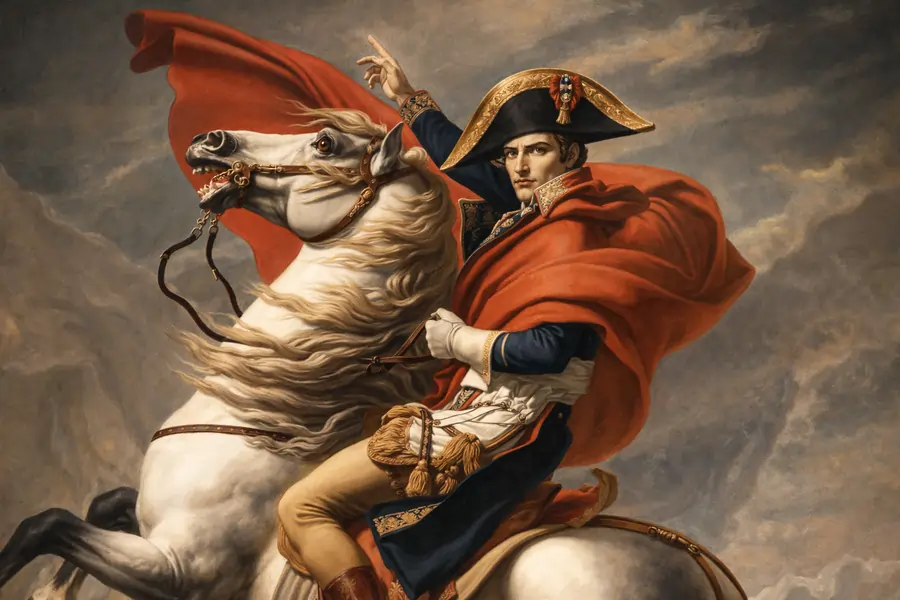
Napoleon remained the central figure of the French command. His military system relied heavily on rapid concentration, aggressive maneuver, and the use of corps capable of operating independently before concentrating for battle.
Arthur Wellesley, Duke of Wellington
Wellington brought extensive experience from the Peninsular War. His army was multinational, and not every formation had the experience of his veteran British troops. His battlefield method at Waterloo relied heavily on terrain, concealment, and disciplined defensive formations. Wellington placed much of his infantry behind the crest of the ridge, shielding them from direct artillery fire. This meant Napoleon often saw less of the Allied army than the total number of soldiers actually available to Wellington. The National Army Museum notes that Wellington had perfected similar defensive methods during the Peninsular War. [4]
Gebhard von Blücher
Blücher was an aggressive Prussian commander whose army had already fought Napoleon at Ligny. Rather than withdrawing from Wellington, the Prussians moved toward Wavre, preserving the possibility of supporting the Anglo-Allied army. Blücher's determination became crucial. Wellington had indicated that he intended to stand at Waterloo if the Prussians could arrive in sufficient strength. The battle therefore became a race against time.
"I have given my promise to Wellington, and you surely don't want me to break it? Push yourselves, my children, and we'll have victory!"
Michel Ney and Emmanuel de Grouchy
Two French marshals deserve particular attention. Marshal Michel Ney was given major responsibilities during the battle and personally directed several attacks against Wellington's position. Marshal Grouchy, meanwhile, commanded the force sent to pursue Blücher after Ligny. The contrast between their positions illustrates the difficulty facing Napoleon. His army was powerful, but it was increasingly being asked to solve several problems at once. Break Wellington's defensive line, prevent Blücher from arriving, protect the French right flank and exploit any breakthrough.
The Waterloo Battlefield
The battlefield was dominated by a ridge running broadly east-west near Mont-Saint-Jean. The village of Waterloo lay farther north and gave the battle its familiar name, although much of the fighting occurred around positions south of the village. Wellington organized his defense around several strongpoints:
- Hougoumont anchored the Allied right.
- La Haye Sainte stood forward of the Allied center.
- Papelotte, La Haye and Smohain helped protect the Allied left.
- Mont-Saint-Jean ridge provided the principal defensive position.
- Plancenoit became strategically important once the Prussians attacked Napoleon's right.
The battlefield was not simply an open field where two armies marched directly toward each other. Wellington deliberately used farms, hedges, sunken roads, and the reverse slope of the ridge to complicate French attacks. That terrain became especially important because Napoleon's artillery and infantry attacks repeatedly had to climb toward defenders who were partially protected from observation.
The Battle of Waterloo on 18 June 1815
The battle did not begin at dawn. Heavy rain had fallen during the night, leaving the ground wet. Napoleon waited for conditions to improve before beginning the main attack. This delay has often been presented as one of the decisive mistakes of the battle, but the decision also had a practical military basis: artillery and cavalry operated more effectively on firmer ground. Nevertheless, the delay mattered. The delay also gave Wellington additional time to organize his defense and gave the Prussians more time to approach the battlefield. [2]
Napoleon's opening plan
Napoleon intended to put pressure on Wellington's right at Hougoumont while attacking the Allied center and left. The purpose of the fighting around Hougoumont was not simply to capture the chateau. It could also draw Allied reserves away from other parts of the ridge. Once the Allied line became sufficiently weakened, Napoleon could attempt to force a breakthrough. The concept was sound in principle. The problem was that the fighting at Hougoumont consumed far more French resources than expected.
The Fight for Hougoumont
At approximately 11:30 in the morning, French troops attacked Hougoumont. British Guards and allied troops defended the position. The surrounding gardens, walls, buildings, and woods created a complicated defensive zone. The French captured portions of the surrounding area but failed to eliminate the defenders inside the main complex. A small French force briefly penetrated through a gate, but the defenders closed it and prevented the breakthrough. Hougoumont remained in Allied hands throughout the battle.
Its importance extended beyond the physical position. French troops repeatedly fed into the fight, creating a battle within the larger battle. Instead of functioning purely as a diversion, Hougoumont became a persistent drain on French manpower. This illustrates one of Waterloo's central characteristics. The battle was decided by the cumulative effect of several local struggles rather than one isolated tactical event.
D'Erlon's Great Infantry Attack
While fighting continued around Hougoumont, Napoleon's main infantry attack developed against Wellington's left-center. Jean-Baptiste Drouet, Comte d'Erlon, commanded the French I Corps. His infantry advanced in large formations toward the Allied ridge. The attack penetrated parts of the Allied forward position but failed to break Wellington's main line. But the French formation encountered disciplined Allied infantry and concentrated fire. As the French approached the ridge, the Allied response intensified.
British heavy cavalry then launched a major counterattack. The Union Brigade and Household Cavalry charged into the French formations, creating considerable disruption. The cavalry advance achieved a dramatic local success but carried the British formations too far forward. French cavalry subsequently counterattacked. The British cavalry suffered severe losses. More importantly, the French infantry attack had failed to break Wellington's army. More importantly, Napoleon had not created the decisive rupture he needed before the Prussians arrived.
The French Cavalry Attacks and the Allied Squares
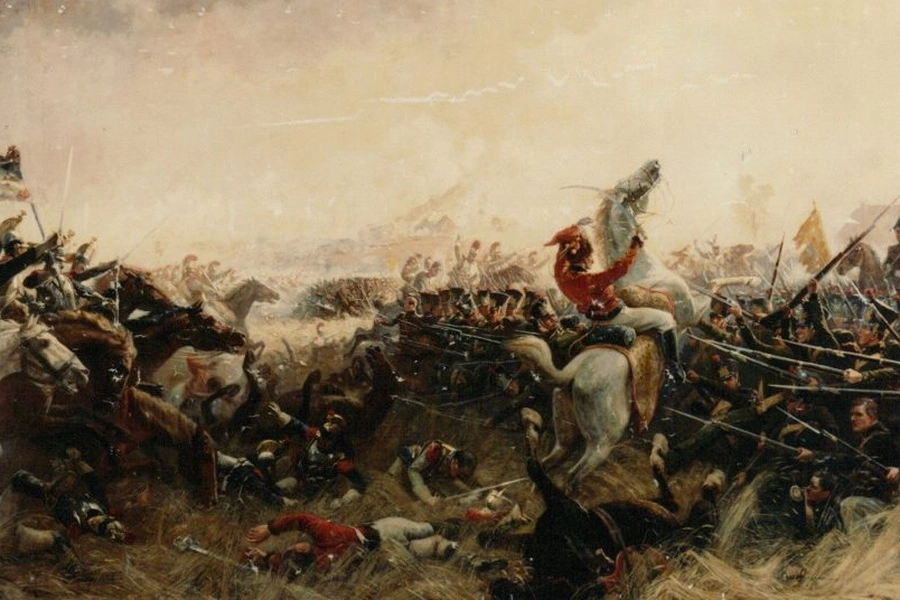
One of the most famous episodes of the Battle of Waterloo was the series of French cavalry attacks against Allied infantry squares. French cavalry formations, including heavy cavalry, advanced against Wellington's infantry. Allied infantry responded by forming squares: compact defensive formations with soldiers facing outward on all sides and bayonets projecting from the ranks. A cavalry formation could not easily break a disciplined infantry square frontally. Horses generally refused to charge a solid wall of bayonets, while infantry inside the square could fire at approaching cavalry.
The French cavalry nevertheless continued to attack. The spectacle was impressive but strategically costly. Cavalry could force infantry to remain in square and could therefore pin them in place, but without effective infantry and artillery coordination it was difficult to convert that pressure into a breakthrough. The wet terrain also reduced the effectiveness of rapid mounted movement. Wellington's defensive position continued to survive. The repeated cavalry attacks therefore became one of the most debated episodes of Waterloo. They were not simply reckless charges in isolation. They formed part of the larger attempt to disrupt Wellington's center. But they did not achieve the breakthrough Napoleon required. Wellington's battered forces were still holding on - "barely".
"Give me night or give me Blücher."
Blücher's Arrival at Waterloo
The most important development of the afternoon was happening east of the main battlefield. Blücher's Prussian army was marching toward Wellington. The Prussians had suffered heavily at Ligny, but the defeat had not destroyed their army. Their staff system enabled the army to reorganize and move toward the battlefield. The National Army Museum notes that the Prussians were able to reorganize after Ligny and move toward Waterloo within roughly two days. [1] Napoleon therefore faced a new problem. The French right flank, which had previously been relatively secure, now became threatened by a large enemy force.
The first major Prussian formations approached the area around Plancenoit. French troops were sent to contain them. Fighting around the village became extremely intense. Plancenoit was important because losing it would expose the French right and potentially threaten Napoleon's communications and rear. Napoleon committed additional troops, including elite formations, to stabilize the position. This is why the common description of Blücher simply "arriving at Waterloo" can be misleading. The Prussians did not suddenly appear as one enormous army behind Wellington. Their formations arrived progressively and forced Napoleon to divert troops and attention to his right flank. The result was strategic pressure from two directions.
| French problem | Consequence |
|---|---|
| Wellington's army remained intact | Napoleon still needed a breakthrough in the center |
| Prussians reached the battlefield | French troops had to reinforce the eastern flank |
| Plancenoit came under attack | Napoleon committed additional troops away from Wellington's center |
| Time was running out | A decisive French victory became increasingly difficult |
Wellington had survived long enough for his strategic partner to arrive.
The Capture of La Haye Sainte
Late in the battle, the French finally achieved an important tactical success when they captured La Haye Sainte. The farm had been defended by the King's German Legion and other Allied troops. Its position in front of Wellington's center made it particularly valuable. As long as it remained in Allied hands, French infantry faced a significant obstacle when attempting to approach the ridge. The eventual French capture of La Haye Sainte created a serious crisis for Wellington. French troops could now operate much closer to the Allied center, and Napoleon's forces appeared to have a genuine opportunity to exploit the weakened position.
But the timing was disastrous for Napoleon. The Prussians were already pressing the French right. Wellington's army had suffered enormous casualties but remained organized. The Allied commander could reinforce threatened sectors and continue resisting. The French had achieved a local breakthrough but could not transform it into a strategic victory.
The Imperial Guard's Final Attack
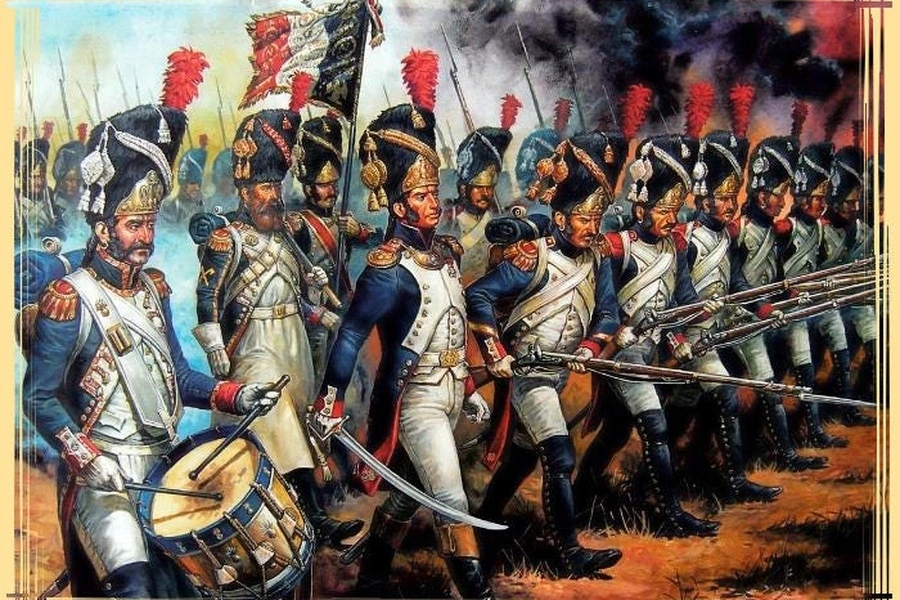
As evening approached, Napoleon needed a decision. The battle had become a contest of diminishing reserves. The French had failed to break Wellington's army, while the Prussian presence was steadily increasing. Napoleon still possessed one of the most famous formations in European military history: the Imperial Guard. The Guard had become a symbol of the French Empire. Its reputation was immense, and Napoleon normally treated it as a reserve to be committed at a decisive moment.
That moment had arrived. Napoleon committed elements of the Imperial Guard toward Wellington's center. The attack was intended to force a breakthrough and turn the remaining Allied resistance into a general collapse. Instead, the Guard encountered intense resistance. Allied infantry opened fire as the French approached. The Guard's advance slowed. Units halted and began to withdraw. The repulse of the Imperial Guard was a powerful signal that Napoleon's final offensive had failed.
The famous cry that "the Guard is retreating" became associated with the collapse of French morale, although the precise historical wording and circumstances surrounding the phrase have been debated. What is less debatable is the military consequence. Once the Guard's attack failed, Napoleon had little remaining capacity to restore the offensive. The Allied army began advancing. Prussian forces simultaneously increased pressure on the French right and rear. The French retreat rapidly became disorganized. Units that had fought effectively throughout the day were swept into the general withdrawal. Waterloo had been decided.
Why Did Napoleon Lose the Battle of Waterloo?
Napoleon's defeat at Waterloo cannot be attributed to one mistake. The outcome resulted from several interacting factors.
1. Napoleon failed to separate Wellington and Blücher decisively
This was the fundamental strategic problem. Napoleon's campaign began with the intention of preventing the Anglo-Allied and Prussian armies from cooperating. Ligny gave him an opportunity to do so, but the Prussians remained sufficiently intact to retreat toward Wellington. Once Blücher committed his army to Wellington's support, Napoleon's original strategic advantage disappeared.
2. Wellington's defensive position was extremely difficult to break
Wellington made effective use of the ridge at Mont-Saint-Jean. Infantry positioned behind the crest were partially protected from French artillery and direct observation. The Allied strongpoints at Hougoumont and La Haye Sainte also forced the French to fight for individual positions before reaching the main ridge.
3. The French failed to convert local successes into a breakthrough
Napoleon's army attacked repeatedly, but the fighting developed into several simultaneous struggles. Hougoumont consumed French troops. D'Erlon's attack failed. Cavalry attacks did not break the infantry squares. The capture of La Haye Sainte came late. Napoleon could not turn local superiority into a decisive breakthrough before the Prussian intervention changed the operational situation.
4. Blücher's army arrived at the critical moment
Blücher's arrival did not simply add more soldiers to the Allied side. It changed Napoleon's operational problem. He now had to fight Wellington while preventing the Prussians from turning his right flank. The pressure forced Napoleon to divert troops to Plancenoit and reduced the forces available for a final assault against Wellington.
5. Napoleon's battlefield decisions came under increasing pressure
Napoleon was still capable of directing large-scale operations, but Waterloo required him to solve several problems simultaneously. The French commander had to maintain pressure on Wellington, respond to Blücher, protect the right flank and decide when to commit his final reserves. The battle therefore became progressively less favorable as the afternoon passed.
6. The French Army was exhausted by the campaign
The Army of the North was formidable, but Napoleon had rebuilt his forces rapidly after returning from Elba. His army contained experienced veterans alongside newer troops. The campaign itself had already produced major fighting at Ligny and Quatre Bras. By Waterloo, Napoleon needed a fast and decisive victory. Instead, he encountered a battle that consumed time and manpower without producing a breakthrough.
Waterloo Casualties
Casualty estimates vary substantially depending on whether they include prisoners and the wider fighting around Waterloo. The National Army Museum gives roughly 40,000 French casualties and 22,000 Allied casualties overall, while other estimates separate killed, wounded and prisoners differently. [5]
| Force | Approximate losses |
|---|---|
| French | About 25,000 killed or wounded, plus roughly 8,000 prisoners according to National Army Museum estimates |
| Anglo-Allied | More than 15,000 killed or wounded |
| Prussian | About 7,000 killed or wounded |
These figures should be treated as estimates rather than precise modern casualty statistics. The human cost was nevertheless enormous. Waterloo was fought across a relatively compact battlefield, and thousands of men were killed or wounded within hours. The physical evidence of the battle was equally striking. Contemporary accounts and later battlefield investigations describe a landscape filled with abandoned equipment, dead and wounded soldiers, dead horses and shattered formations.
Napoleon's Defeat and Abdication
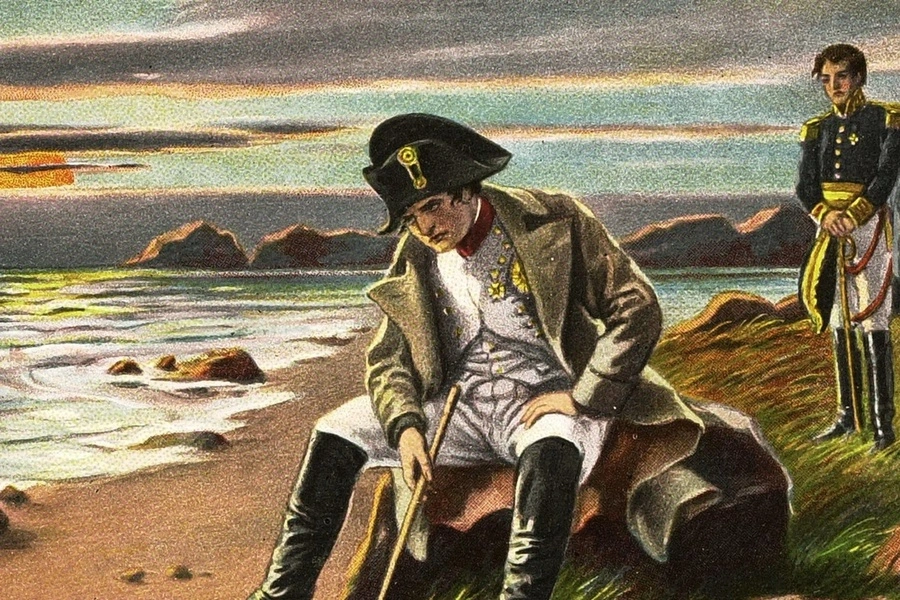
Napoleon left the battlefield as the French army disintegrated. His defeat at Waterloo did not immediately end the French state, but it destroyed the political foundation of the Hundred Days. Napoleon returned to Paris and abdicated on 22 June 1815, only days after Waterloo. The victorious coalition armies continued their advance into France. Paris was occupied on 7 July, and Napoleon eventually surrendered to the British. Instead of returning to Elba, he was sent into a much more distant exile on Saint Helena in the South Atlantic. [1]
Napoleon would never again command an army or rule France. The difference between the two exiles is significant. Elba had been intended as a controlled settlement following his first abdication. Saint Helena was effectively a permanent political imprisonment. Waterloo therefore marked not merely another military defeat but the end of Napoleon's career as a European ruler.
Impact and Significance of the Battle of Waterloo
Waterloo ended Napoleon's political career
The most immediate consequence was the permanent removal of Napoleon from European politics. Napoleon had returned to power in 1815 despite his previous abdication. After Waterloo, the coalition powers ensured that he could not repeat the experiment. His exile to Saint Helena removed the possibility of another military return.
Waterloo ended the Napoleonic Wars
The battle is generally regarded as the final major battle of the Napoleonic Wars. It ended more than a decade of repeated European conflict involving France and shifting coalitions of European powers. The National Army Museum describes Waterloo as bringing the final curtain down on a war that had reshaped Europe and ending France's attempt to dominate the continent. [1]
The balance of power in Europe changed
Waterloo strengthened the diplomatic settlement emerging from the Congress of Vienna. Britain, Austria, Prussia and Russia had demonstrated that sustained coalition warfare could eventually defeat even Napoleon's rebuilt army. The post-1815 settlement sought to preserve a balance among the major European powers and prevent another French attempt to dominate the continent.
Prussia's role became more important
The Prussian contribution at Waterloo had consequences beyond the battlefield. Prussia emerged from the Napoleonic era with increased military prestige and a stronger position in European affairs. The cooperation between Wellington and Blücher also became an enduring example of coalition warfare. Neither army alone had to win the entire battle. Wellington's role was to hold the ridge while Blücher's army approached. Blücher's role was to arrive and apply pressure before Wellington's position collapsed.
Waterloo demonstrated the importance of coalition warfare
Napoleon's military career had been built on defeating coalitions by moving faster than they could coordinate. Waterloo showed the opposite possibility. The coalition armies were not perfectly integrated. They used different languages, military systems and command structures. Yet Wellington and Blücher maintained enough strategic cooperation to make their separate armies function as a combined operational problem for Napoleon.
Waterloo became a symbol of decisive defeat
The word "Waterloo" eventually became synonymous with a final or overwhelming defeat. The phrase "to meet one's Waterloo" entered common English usage because Napoleon's final defeat became one of the most recognizable turning points in modern European history.
The Military Legacy of Waterloo
Waterloo is sometimes reduced to the image of Wellington's defensive line and the Imperial Guard's failed assault. Its deeper military significance is more complicated. The battle demonstrated the power of defensive terrain when combined with disciplined infantry. Wellington did not attempt to destroy Napoleon through constant offensive movement. Instead, he forced the French to attack a prepared position while preserving his main infantry behind the ridge. At the same time, Waterloo demonstrated that defensive warfare alone was not enough. Wellington needed Blücher. The Anglo-Allied army absorbed repeated French attacks, but the arrival of the Prussians transformed endurance into victory.
The battle therefore offers a powerful lesson in the relationship between tactics and strategy. A formation can win a local engagement without deciding a campaign. The French cavalry could overrun portions of the battlefield without breaking Wellington's army. The French captured La Haye Sainte without being able to exploit it decisively. Napoleon defeated Blücher at Ligny without destroying the Prussian army. At Waterloo, the larger operational picture mattered as much as any individual charge. The same principle can be seen throughout Napoleon's career. His greatest victories, such as Austerlitz, depended on the ability to manipulate an enemy's movements before delivering a concentrated blow. The Battle of Austerlitz and Napoleon's strategy provides a useful contrast to Waterloo. At Austerlitz, Napoleon successfully created the conditions for decisive concentration. At Waterloo, his opponents managed to maintain enough cohesion to prevent that outcome.
Waterloo also belongs in the broader history of military leadership. Napoleon's career demonstrates the extraordinary influence a commander could exercise over operational maneuver in the early nineteenth century, while Wellington and Blücher demonstrate a different strength. The ability to coordinate multinational forces and sustain an operational plan under extreme pressure. For a broader comparison of famous commanders, see 10 Greatest Military Generals in History. Waterloo ultimately demonstrates that military genius cannot operate independently of time, terrain, logistics, subordinate commanders, and enemy decisions. Waterloo demonstrated that Napoleon's operational methods could be constrained when his opponents maintained cohesion, coordinated across separate armies, and denied him the decisive concentration he had used so effectively in earlier campaigns.
Key Waterloo Dates
| Date | Event |
|---|---|
| 26 February 1815 | Napoleon escapes from Elba. |
| 20 March 1815 | Napoleon returns to Paris; the Hundred Days begin. |
| 15 June 1815 | French forces cross the Sambre and invade Belgium. |
| 16 June 1815 | Napoleon defeats the Prussians at Ligny while Wellington's army fights at Quatre Bras. |
| 17 June 1815 | Wellington withdraws to the Mont-Saint-Jean position near Waterloo. |
| 18 June 1815 | Battle of Waterloo; Wellington and Blücher defeat Napoleon. |
| 22 June 1815 | Napoleon abdicates for the second time. |
| 7 July 1815 | Allied forces enter Paris. |
| Late 1815 | Napoleon is exiled to Saint Helena. |
References and Further Reading
- National Army Museum. Battle of Waterloo. The museum's detailed overview covers the campaign, opposing armies, battlefield positions, major attacks, the Prussian arrival and the final Imperial Guard attack.
- National Army Museum Collections. Plan of the Battles of Ligny, Quatre Bras & Waterloo. This collection record provides useful information on Napoleon's attempt to separate Wellington and Blücher, the retreat from Ligny and the Prussian movement toward Waterloo. View the collection record.
- British Library. The Waterloo Despatch. The British Library holds an autograph draft of Wellington's dispatch describing the Allied victory, dated 19 June 1815. View the British Library archive record.
- David G. Chandler. The Campaigns of Napoleon: The Mind and Method of History's Greatest Soldier. Macmillan, 1966. A major study of Napoleon's campaigns and operational system.
- Alessandro Barbero. The Battle: A New History of Waterloo. Atlantic Books, 2005. A detailed reconstruction of the battle using accounts from participants and contemporary evidence.
- Andrew Roberts. Napoleon: A Life. Viking, 2014. A modern biography placing Waterloo within the wider political and military context of Napoleon's career.
- Peter Hofschröer. 1815: Waterloo. Greenhill Books, 1998. A detailed examination of the Waterloo campaign with particular attention to the Anglo-Allied and Prussian forces.
Books and Memorables
This article may contain affiliate links. If you purchase through these links, I may earn a small commission at no extra cost to you.


Related Articles


Frequently Asked Questions
Why did Napoleon escape from Elba before the Battle of Waterloo?
Napoleon escaped from Elba in February 1815 because he believed he could regain power in France and rebuild his political and military position. He landed in France in early March, attracted soldiers to his cause, and entered Paris on 20 March, beginning the Hundred Days. His return prompted the European powers to form the Seventh Coalition, forcing Napoleon to launch a rapid campaign in Belgium before the coalition armies could fully combine.
Why did Napoleon invade Belgium before the Battle of Waterloo?
Napoleon invaded Belgium in June 1815 because two major coalition armies were gathering there: the Prussian army under Gebhard von Blücher and the Anglo-Allied army under the Duke of Wellington. Napoleon's strategy was to move between them and defeat each army separately before they could support one another. He crossed the Sambre on 15 June and fought the battles of Ligny and Quatre Bras on 16 June before pursuing Wellington toward Waterloo.
How did Blücher's army reach Waterloo after losing at Ligny?
After Napoleon defeated the Prussian army at Ligny on 16 June 1815, Blücher did not withdraw away from Wellington. The Prussians reorganized and moved north toward Wavre while maintaining contact with the Anglo-Allied army. Wellington therefore knew that Blücher intended to support him at Waterloo. Prussian formations began arriving on Napoleon's right flank during the afternoon of 18 June, forcing Napoleon to divert troops to fight around Plancenoit and weakening his ability to concentrate against Wellington.
What was the importance of Hougoumont at the Battle of Waterloo?
Hougoumont was a fortified farm complex on Wellington's right flank that became one of the key defensive positions at Waterloo. Napoleon initially intended the attack on Hougoumont as a diversion that would draw Allied troops away from the main battlefield. Instead, the fighting continued throughout the day and consumed substantial French resources. The defenders held the position, preventing the French from turning Wellington's right flank.
Why did French cavalry fail to break Wellington's squares at Waterloo?
French cavalry repeatedly attacked Allied infantry formations at Waterloo, but Wellington's troops formed defensive squares. A square presented bayonets and firearms in every direction, making it extremely difficult for cavalry to break through. The wet ground also hindered French cavalry operations. Although the cavalry attacks created pressure and forced Allied infantry to remain in defensive formations, they did not destroy Wellington's line or produce the breakthrough Napoleon needed.
Why did the Imperial Guard fail at Waterloo?
Napoleon committed elements of the Imperial Guard late in the battle as a final attempt to break Wellington's defensive position. The Guard advanced toward the Allied center but encountered concentrated resistance from Allied infantry positioned on and behind the ridge. The attack stalled and elements of the Guard withdrew. Because the Imperial Guard had been Napoleon's principal reserve, its failure had a powerful effect on French morale and was followed by a general French retreat. The National Army Museum identifies the failed Imperial Guard attack as the decisive final stage of the battle.
Add Comment