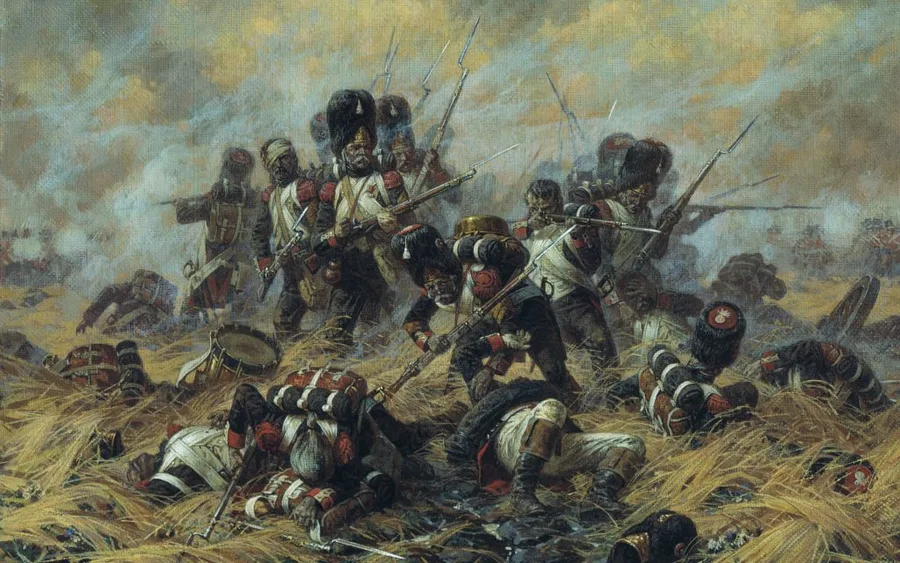
When Napoleon Bonaparte needed to turn the tide of a battle, he had one formation he trusted above all others: the Imperial Guard. Composed of some of the most experienced and carefully selected soldiers in the French army, the Guard became the emperor's most prestigious military formation. Its towering grenadiers, decorated cavalry and disciplined infantry inspired fear across Europe. Yet the Imperial Guard was more than a collection of elite soldiers. It was Napoleon's personal reserve, a symbol of imperial power and, ultimately, the last instrument of an empire fighting for survival. From its modest beginnings as a consular bodyguard to its dramatic collapse at the Battle of Waterloo, the story of Napoleon's Imperial Guard reflects both the extraordinary rise and the tragic decline of the French Empire.
Table of Contents
- The Origins of Napoleon's Imperial Guard
- How Napoleon Transformed the Guard into an Elite Fighting Force
- Organization: Old Guard, Middle Guard and Young Guard
- The Different Units of the Imperial Guard
- Recruitment, Training and Privileges
- The Imperial Guard in Napoleon's Major Campaigns
- The Russian Campaign of 1812
- The Imperial Guard at Waterloo
- Napoleon's Farewell to the Old Guard
- The Legacy of Napoleon's Imperial Guard
- References and Further Reading
The Origins of Napoleon's Imperial Guard
The origins of the Imperial Guard can be traced to the political instability of Revolutionary France. Following the French Revolution of 1789, successive governments struggled to maintain political order while fighting several European powers. Military formations responsible for protecting the government and its leaders underwent repeated reorganizations. Napoleon, who rose to prominence through his military victories in Italy, understood the importance of having a dependable force personally loyal to him.
In 1796, during the Italian campaign, Napoleon established a mounted escort known as the Guides à cheval. The formation was intended to provide personal protection and assist the commander in the field. Its creation followed an incident in which Napoleon narrowly escaped capture during an Austrian cavalry raid near Valeggio. When he became First Consul following the coup of 18 Brumaire in November 1799, he needed a more substantial formation to protect the new government and reinforce his political authority.
The result was the Garde des Consuls, or Consular Guard, established in 1799. It combined existing guard formations and included both infantry and cavalry. Although its principal responsibility was protecting the First Consul, it was not intended to remain a ceremonial bodyguard. Its soldiers were expected to be capable of fighting alongside the regular army.
The Consular Guard demonstrated its military value at the Battle of Marengo in 1800. During the difficult fighting against Austrian forces, elements of the Guard infantry resisted repeated attacks despite being heavily outnumbered. Their determined defence helped Napoleon stabilize a dangerous situation until French reinforcements, including Desaix's returning division, contributed to the eventual victory. Marengo proved that Napoleon's personal guard could serve as a reliable battlefield formation, not merely as protection for the commander.
Following Napoleon's coronation as Emperor of the French in December 1804, the Consular Guard was reorganized and expanded into the Imperial Guard. The new formation reflected the ambitions of the French Empire. It would protect the emperor, represent the prestige of his regime, and provide a powerful reserve that could be committed when an ordinary army formation could no longer secure victory.
How Napoleon Transformed the Guard into an Elite Fighting Force
Napoleon's achievement was not simply the creation of a prestigious military unit. He transformed the Guard into a carefully structured military institution with its own infantry, cavalry, artillery, and supporting services. It became a force capable of operating independently and supporting the wider Grande Armée. Napoleon understood that battlefield experience was one of the most valuable qualities a soldier could possess. Rather than relying entirely on newly raised recruits, he initially filled the Guard with veterans who had demonstrated courage and discipline during previous campaigns. These men brought practical knowledge of combat, familiarity with military routines and the confidence that came from surviving repeated engagements.
He also invested heavily in the Guard's material advantages. Its soldiers received better pay than their counterparts in ordinary regiments, enjoyed preferential treatment in several aspects of supply and equipment, and wore distinctive uniforms that immediately identified their status. These privileges reinforced their identity as an elite formation. However, Napoleon's approach went beyond financial incentives. The emperor cultivated a personal relationship with his Guardsmen. He frequently reviewed them, spoke with veterans, and publicly recognized their achievements. For many soldiers, serving in the Guard meant gaining direct access to the emperor and becoming part of an institution associated with France's military successes.
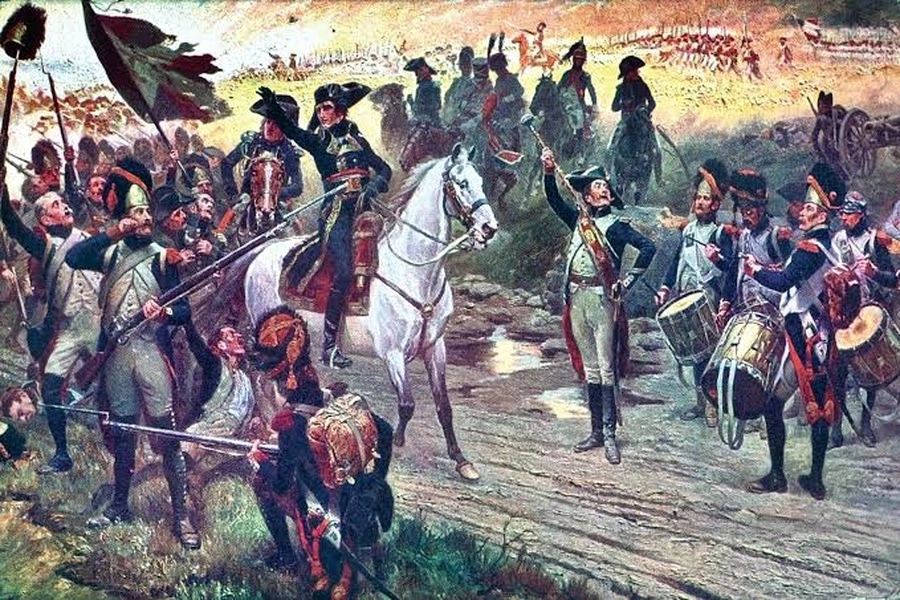
The Guard also served a practical purpose within Napoleon's wider military system. His corps system allowed large French armies to march and fight in separate formations. The Imperial Guard, meanwhile, remained under the emperor's direct control as a central reserve. When a battle reached a decisive moment, Napoleon could commit its infantry, cavalry or artillery to reinforce a threatened position or exploit an opportunity. Its reputation grew partly because Napoleon rarely committed his finest soldiers without careful consideration. The sight of the Guard advancing often had a psychological effect on opposing armies. Its appearance suggested that the emperor had decided the battle had reached a critical stage.
Organization: Old Guard, Middle Guard and Young Guard
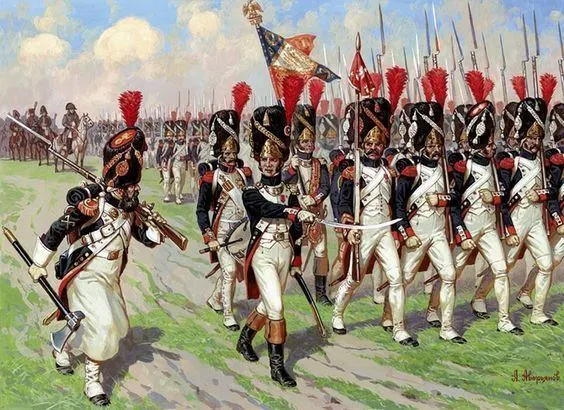
As Napoleon's military ambitions expanded, the Imperial Guard grew far beyond its original size. What began as a relatively small formation eventually became a substantial army within the Grande Armée. Its soldiers were divided into three broad categories: the Old Guard, Middle Guard and Young Guard. These distinctions reflected differences in experience, seniority, recruitment and prestige, although their precise organizational meaning changed over time.
| Formation | Characteristics | Battlefield role |
|---|---|---|
| Old Guard | Most experienced and prestigious veterans | Elite reserve and decisive battlefield interventions |
| Middle Guard | Experienced soldiers with substantial military training | Reinforcement and major combat operations |
| Young Guard | Younger soldiers and promising recruits, supported by experienced cadres | Active fighting, reinforcement and lighter infantry duties |
These categories were not fixed throughout the Empire. The Old Guard retained its identity as the senior veteran formation, while the Young Guard emerged in 1809 to accommodate the expansion of the Guard with younger recruits. The Middle Guard developed as an intermediate category for formations that did not fit neatly into either group. Its precise composition and status changed over time, particularly during the later campaigns. The distinctions therefore reflected seniority and military experience rather than three permanently defined branches.
The Old Guard
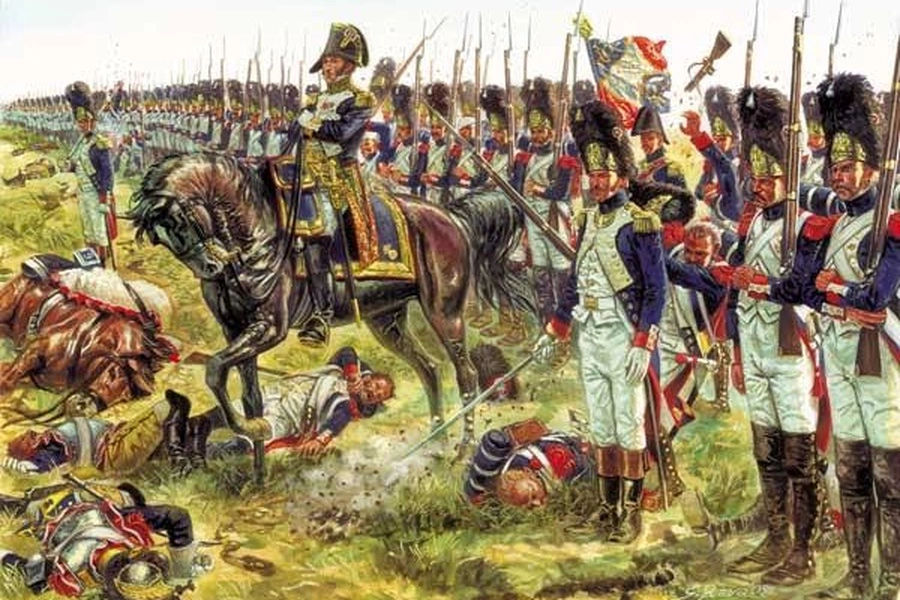
The Old Guard occupied the highest position in Napoleon's military hierarchy. Its soldiers were generally experienced veterans with considerable service records. Many had participated in the Revolutionary Wars and the early campaigns of Napoleon's career. The grenadiers à pied and chasseurs à pied were among its most celebrated infantry formations. Their reputation was built on discipline, experience, and the confidence that came from years of campaigning. Being accepted into the Old Guard was a significant distinction, and its members enjoyed considerable privileges.
The Middle Guard
The Middle Guard occupied a position between the prestigious veteran formations and the younger elements of the organization. Its development was gradual, and the distinction was not applied consistently throughout the Empire. It included experienced fusilier formations and other units that were not necessarily part of the original Old Guard. During the later campaigns, the boundaries between the different categories became increasingly complicated as Napoleon expanded the Guard and reorganized its regiments.
The Young Guard
The Young Guard was established in 1809 as Napoleon required a larger elite formation without relying entirely on the limited pool of experienced veterans. It was built from selected recruits and supported by experienced officers and non-commissioned officers drawn from established formations. Unlike the Old Guard, the Young Guard was regularly employed in active fighting. Its soldiers participated in the campaigns of the later Empire, including the battles of 1813 and 1814. Although it lacked the prestige of the veteran formations, it became an important component of Napoleon's expanding military reserve.
The Different Units of the Imperial Guard
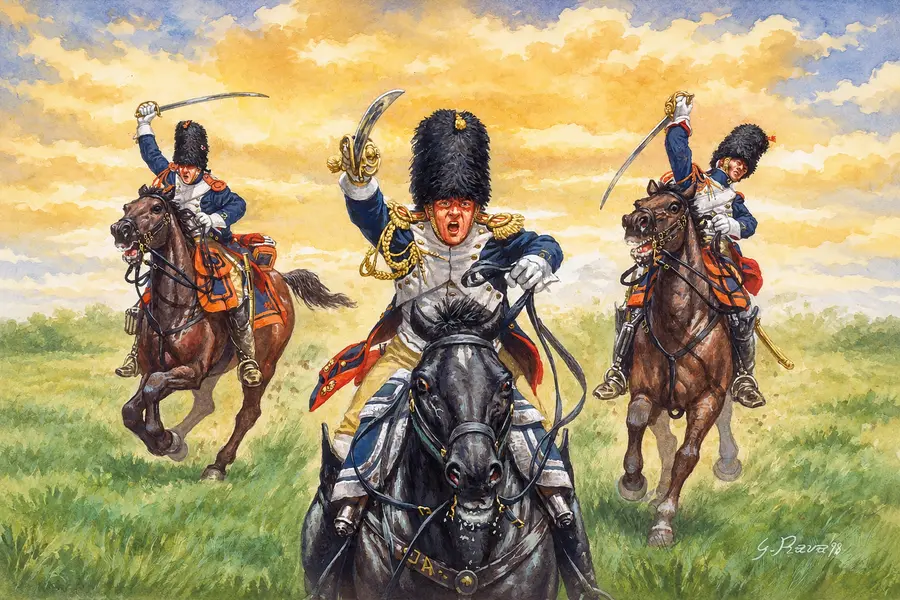
The Imperial Guard was not a single regiment of grenadiers. It was a combined-arms formation containing several types of infantry, cavalry, and artillery. Its organization evolved throughout Napoleon's reign, with new regiments being created, expanded, or reorganized as military requirements changed.
Infantry
The infantry formed the core of the Guard. Among its most famous formations were:
- Grenadiers à Pied: The senior heavy infantry of the Old Guard. Their tall bearskin caps, moustaches and imposing appearance made them instantly recognizable.
- Chasseurs à Pied: Elite infantry who served alongside the grenadiers and were known for their experience and battlefield discipline.
- Fusiliers: Formations associated primarily with the developing Middle Guard, providing trained infantry for the expanding organization.
- Tirailleurs and Voltigeurs: Lighter infantry formations associated with the Young Guard. They were designed for more mobile operations and skirmishing.
Cavalry
The Guard cavalry was among the most prestigious components of Napoleon's army. It combined heavy cavalry, light cavalry, and specialized mounted formations.
- Grenadiers à Cheval: Heavy cavalry known for their imposing stature and distinctive bearskin headgear. They were intended for powerful mounted attacks.
- Chasseurs à Cheval: Light cavalry used for reconnaissance, escort duties, and battlefield operations. Napoleon's personal mounted escort was associated with this formation.
- Polish Lancers: Famous for their skill with the lance and their spectacular charge at Somosierra in 1808.
- Empress's Dragoons: A mounted regiment established in honour of Empress Joséphine, capable of operating as both cavalry and, when required, mounted infantry.
- Mamelukes: A small, distinctive cavalry formation whose origins were connected to Napoleon's Egyptian expedition. Their exotic uniforms and eastern-style weapons made them particularly recognizable.
Artillery and Supporting Units
The Guard also possessed its own artillery, including foot and horse artillery. Its horse artillery was particularly valuable because it could move rapidly to support cavalry and infantry operations. Engineers, administrative personnel, medical services, and transport units supported the formation's ability to operate as a self-contained military organization.
This diversity made the Imperial Guard much more than an elite infantry corps. It was effectively a miniature army, equipped to perform several battlefield functions under Napoleon's direct command.
Recruitment, Training and Privileges
Admission to the Imperial Guard was considered one of the greatest honours available to a French soldier. Napoleon initially favoured experienced men who had already demonstrated their abilities in battle. Recruitment requirements varied between regiments and changed as the Guard expanded, but service history, military conduct and physical suitability were important considerations.
Admission to the senior formations of the Old Guard was highly selective. Candidates were generally expected to have several years of military service, experience in previous campaigns and a strong disciplinary record. Certain regiments also imposed physical requirements, including minimum height standards, although these varied between formations. The emphasis was on selecting soldiers whose experience and reliability justified the Guard's privileged status.
The Guard's privileges reinforced the distinction between its soldiers and ordinary line infantry. Guardsmen generally received higher pay, better allowances and preferential access to equipment. Their uniforms were also more elaborate, reflecting their prestige and the emperor's desire to make the formation visually distinctive.
These advantages created a powerful sense of identity. Soldiers who entered the Guard were not simply joining another regiment; they were becoming part of a military institution associated with Napoleon himself.
However, the Guard's prestige came with expectations. Its soldiers were expected to maintain discipline, demonstrate courage, and set an example for the rest of the army. Napoleon relied on this reputation, and a failure by the Guard could have a damaging effect on the morale of the entire Grande Armée.
The Imperial Guard in Napoleon's Major Campaigns
Napoleon did not use the Imperial Guard as an ordinary frontline formation. He generally kept it close to his headquarters and committed it when a battle demanded a decisive intervention. This made the Guard an important element of his battlefield strategy, although parts of it participated in several major engagements.
Marengo (1800): The Guard's Early Battlefield Reputation
Before becoming the Imperial Guard, its predecessor, the Consular Guard, fought at Marengo. Its infantry demonstrated considerable determination during the Austrian attack, helping to delay the enemy and allowing the French army to reorganize. Although the final victory depended on the wider French counterattack, Marengo established the military credibility of Napoleon's personal guard.
Austerlitz (1805): The Guard as a Strategic Reserve
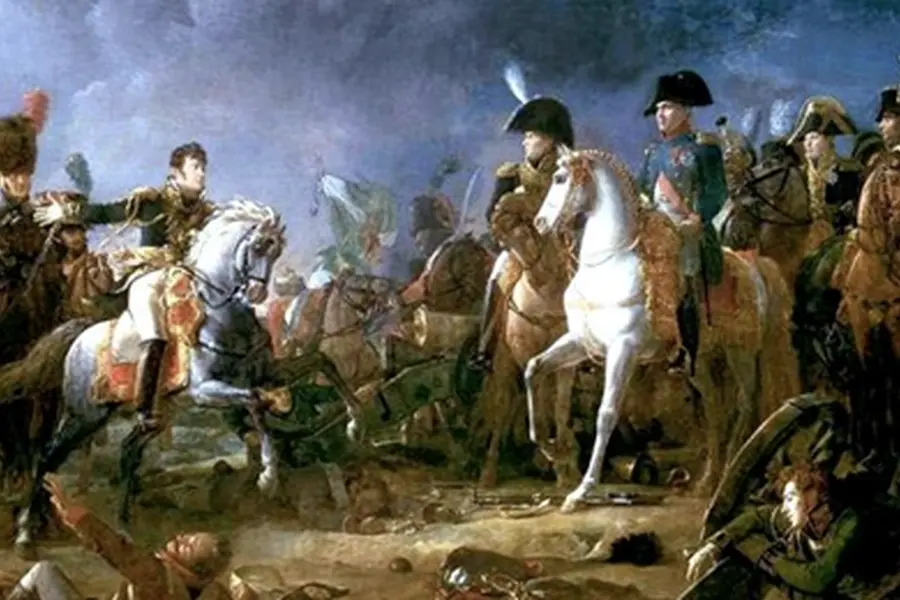
At Austerlitz, Napoleon demonstrated why he valued the Guard so highly. On 2 December 1805, the French defeated the combined Russian and Austrian armies in one of the most celebrated victories of the Napoleonic Wars. The Imperial Guard was held largely in reserve during the engagement. Its presence gave Napoleon a powerful formation that could be committed if the situation deteriorated. The Guard cavalry participated in the fighting, while the infantry reserve remained largely uncommitted.
Napoleon's victory at Austerlitz demonstrated his ability to control the battlefield through careful positioning, deception and timing. The Guard was an important part of that system, even when it did not have to deliver the decisive blow.
Eylau (1807) and Wagram (1809)
The Guard was more actively involved in the difficult fighting at Eylau in February 1807. During the battle, Napoleon's forces faced a determined Russian army amid snow, poor visibility, and enormous casualties. The Guard cavalry took part in the fighting, helping to support the French position during a critical phase.
At Wagram in July 1809, the Guard again formed an important reserve. Napoleon eventually secured victory against the Austrian army, but the engagement demonstrated how costly his campaigns had become. The Guard's expanding size also meant that its role was changing from a small personal reserve into a substantial military force.
Borodino (1812): Why Napoleon Held Back the Old Guard
One of the most debated decisions of Napoleon's military career occurred at the Battle of Borodino on 7 September 1812. The French army fought a brutal engagement against Russian forces defending the approaches to Moscow. Despite enormous casualties, the French eventually forced the Russians to withdraw.
Napoleon faced repeated demands to commit his principal reserve, particularly the veteran infantry of the Old Guard. He refused, believing that the battle might not be the final engagement of the campaign and that he could not afford to destroy his most experienced soldiers so far from France. Elements of the wider Guard organization had supporting roles, but the Old Guard's main infantry formations were withheld from the decisive assault. The decision remains controversial. Committing them might have increased the pressure on the Russian position, but it could also have exposed Napoleon's most valuable reserve to severe losses. The French victory at Borodino failed to destroy the Russian army, leaving Napoleon without the decisive result he needed.
The Guard's role changed as Napoleon's empire expanded. In its early years, its veteran formations were often held back as a final reserve, and their appearance on the battlefield carried considerable psychological weight. However, the rapid expansion of the organization created new formations that could be employed more frequently. By the later campaigns, the Guard was increasingly involved in sustained combat. Napoleon could no longer preserve every unit as an untouchable reserve, particularly as the quality and size of his ordinary armies declined.
The Russian Campaign of 1812: The Beginning of the End
By 1812, Napoleon had expanded the Imperial Guard considerably. It included thousands of soldiers from different parts of his empire, and its composition reflected the multinational character of the Grande Armée. The Guard entered the Russian campaign as one of the most powerful elite reserves in European warfare.
Napoleon invaded Russia in June 1812 with an enormous multinational army. His objective was to force Tsar Alexander I to return to the Continental System and accept French political dominance in Europe. Instead of offering the decisive battle Napoleon expected, the Russians repeatedly withdrew, destroying supplies and leaving little for the advancing French to capture. The French eventually reached Moscow in September. However, the occupation of the city did not force Russia to surrender. As winter approached and supplies dwindled, Napoleon was compelled to order a retreat.
The withdrawal became a catastrophe. Hunger, disease, exhaustion, attacks by Russian forces and freezing temperatures devastated the Grande Armée. The Imperial Guard was not spared, although the scale of its losses varied considerably between formations. The veteran Old Guard retained greater cohesion during parts of the retreat, but its soldiers also suffered heavily. The younger formations were particularly vulnerable. The Young Guard, which contained many relatively inexperienced recruits, experienced devastating losses from illness, exposure and the breakdown of the army's supply system. The retreat therefore exposed an important distinction within Napoleon's elite formation: the Old Guard's accumulated experience could improve its chances of survival, but even the emperor's most prestigious soldiers were not immune to the catastrophe.
The retreat across the Berezina River in November 1812 became one of the most desperate episodes of the campaign. French engineers constructed bridges under extremely difficult conditions, allowing thousands of soldiers to escape encirclement. The surviving Guard formations helped protect the retreating army, but the Grande Armée had been irreparably weakened. Napoleon returned to France to raise another army, but his enemies recognized that the balance of power had shifted. The campaigns of 1813 and 1814 would place the Imperial Guard under increasing pressure as France struggled against a growing European coalition.
The Imperial Guard at Waterloo (1815)
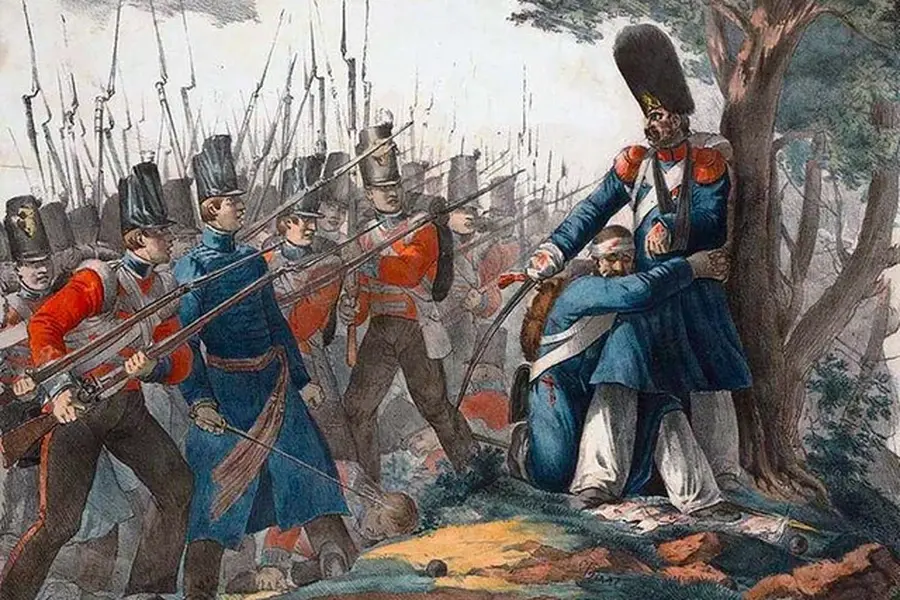
Napoleon's return from exile on the island of Elba in March 1815 gave the Imperial Guard one final opportunity to defend the empire. During the Hundred Days, Napoleon reorganized his army and prepared to confront the Allied forces gathering in Belgium. The decisive confrontation came at Waterloo on 18 June 1815. Napoleon faced the Anglo-Allied army commanded by the Duke of Wellington and the approaching Prussian forces under Gebhard Leberecht von Blücher. The French emperor needed a victory before the two Allied armies could combine their strength.
The battle developed into a prolonged and bloody struggle. French attacks failed to break Wellington's defensive positions, while the arrival of Prussian reinforcements increasingly threatened Napoleon's right flank. As the afternoon progressed, the emperor faced a rapidly deteriorating situation. Napoleon eventually committed selected infantry formations of the Imperial Guard in an attempt to break Wellington's centre. This was not a single attack by the entire Guard. Earlier, the Young Guard had been sent to Plancenoit to contain the Prussian advance against the French right. The later assault against Wellington's position involved selected battalions of the Middle and Old Guard. Advancing against the Allied line, the French columns initially pressed forward, but disciplined infantry fire and counterattacks forced them to retreat. The failure of this attack was devastating. Napoleon had committed some of his most trusted reserves, yet they had failed to break the Allied position.
The retreat of the Guard had an enormous psychological impact. For years, its soldiers had represented the most dependable part of Napoleon's army. If even the Imperial Guard could be driven back, the remaining French troops had little reason to believe that the battle could still be won. Some Guard units attempted to maintain an organized defence as the French army began to collapse. Near the end of the battle, surviving Guardsmen formed defensive positions against advancing Allied forces. Their resistance became one of the most famous episodes of the Waterloo campaign.
The story of General Pierre Cambronne became closely associated with the final stand of the Guard. According to popular legend, when called upon to surrender, he replied, "The Guard dies but does not surrender!" The phrase became one of the most enduring quotations associated with Waterloo. However, its authenticity is doubtful. Cambronne was captured after being wounded, and later accounts questioned whether he had uttered the famous words at all. The quotation is therefore better understood as part of the legend surrounding the Old Guard than as a verified battlefield statement. Nevertheless, it captured the image that Napoleon's supporters wanted to preserve: veteran soldiers who remained loyal to their emperor even as his empire collapsed.
Napoleon's Farewell to the Old Guard
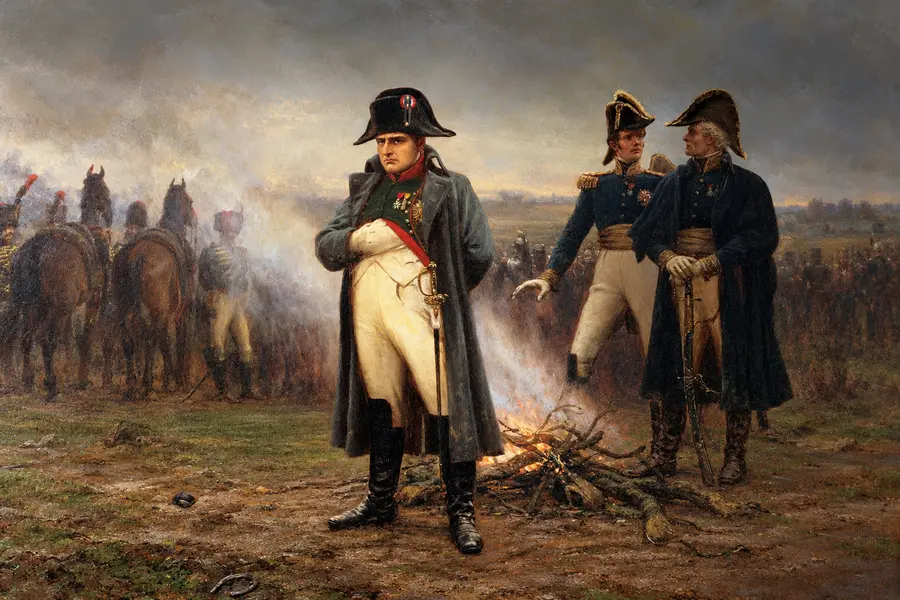
Waterloo was not the first time Napoleon had said goodbye to his veteran soldiers. One of the most emotional episodes in the history of the Imperial Guard had occurred more than a year earlier, following his first abdication in April 1814. After the disastrous Russian campaign and the defeats of 1813 and 1814, the Allied armies entered France and eventually occupied Paris. Napoleon's political position collapsed, and he agreed to abdicate. Under the Treaty of Fontainebleau, he was granted sovereignty over the island of Elba and prepared to leave France.
On 20 April 1814, at the Château de Fontainebleau, Napoleon assembled his Old Guard for a final farewell. The soldiers who had accompanied him through years of campaigns gathered in the courtyard beneath the famous horseshoe staircase. The emperor addressed them with visible emotion. In his speech, Napoleon praised their courage and loyalty, reminding them that they had accompanied him on the road to honour and glory for twenty years. He explained that he had chosen to sacrifice his personal interests rather than plunge France into further suffering and civil war. The words traditionally attributed to Napoleon were recorded in Baron Fain's account, published in 1830. Although the broad substance of the farewell is supported by several recollections, the precise wording remains uncertain, and different versions of the speech have survived.
"Soldiers of my Old Guard, I bid you farewell."
- Napoleon Bonaparte, Fontainebleau, 20 April 1814
Napoleon then embraced General Petit and kissed the Guard's standard (the regimental eagle). Accounts of the ceremony describe the soldiers breaking down in tears as their emperor departed. The scene became one of the most enduring images of the Napoleonic era, representing the extraordinary personal bond between Napoleon and his veterans.
The historical account of the farewell is preserved in Baron Fain's Manuscrit de 1814, while the Fondation Napoléon's publication provides a detailed discussion of the different versions of the speech. The account of Napoleon's farewell at Fontainebleau is particularly useful for understanding the ceremony and its historical context. Napoleon returned from Elba in 1815, and the Imperial Guard was reconstituted for the Hundred Days. However, after Waterloo and his second abdication, the restored Bourbon monarchy permanently disbanded the Imperial Guard. Its institutional existence had come to an end.
The Legacy of Napoleon's Imperial Guard
The Imperial Guard occupies a unique place in military history. It was simultaneously a personal bodyguard, an elite fighting force, a strategic reserve and a symbol of Napoleon's authority. Few military formations have become so closely associated with a single commander. Its reputation was built on more than its distinctive uniforms or privileged status. The Guard contained experienced soldiers who had fought across Europe and demonstrated remarkable discipline in some of the most difficult campaigns of the Napoleonic Wars. Its presence on a battlefield could influence both military decisions and the morale of opposing forces.
Yet its history also reveals the limitations of elite military formations. The Guard could reinforce an army, protect a retreat or deliver a powerful attack, but it could not compensate indefinitely for strategic mistakes, inadequate supplies or the overwhelming numerical strength of opposing coalitions. The Russian campaign and Waterloo demonstrated that even Napoleon's finest soldiers were vulnerable to the wider conditions of war.
The Guard's legacy also reflects Napoleon's understanding of leadership. Like other great military commanders, he recognized the importance of morale, discipline and personal loyalty. His relationship with the Guard was reminiscent of the bonds forged between ancient commanders and their veteran troops. Alexander the Great's relationship with his Companion Cavalry and Julius Caesar's reliance on experienced legionaries offer useful comparisons, although the military structures and political circumstances were very different. Explore these themes in our articles on Alexander the Great and Julius Caesar.
Today, the Imperial Guard remains one of the most recognizable formations of the Napoleonic era. Its bearskin grenadiers, Polish lancers and dramatic final stand at Waterloo continue to feature prominently in military histories, museums and popular representations of the period. Ultimately, the story of Napoleon's Imperial Guard is inseparable from the story of the emperor himself. It rose with his ambition, reached its height during the expansion of the French Empire and shared his final defeat. The soldiers who once symbolized the invincibility of Napoleon's armies became witnesses to the collapse of his empire. Their legacy, however, survived the battlefield, preserving the memory of one of the most celebrated elite military formations in European history.
References and Further Reading
- George Nafziger, Napoleon's Use of His Imperial Guard, The Napoleon Series. A specialist study of the Guard's military, political and organizational roles.
- Philip Dwyer, Napoleon: The Path to Power, 1769-1799 and Napoleon: Passion, Death and Resurrection, 1815-1840. Bloomsbury Academic. Useful background on Napoleon's political and military career.
- David G. Chandler, The Campaigns of Napoleon. Scribner, 1966. A comprehensive military study of Napoleon's campaigns and battlefield decisions.
- Baron Fain, Manuscrit de 1814, Paris, 1830. A contemporary account containing the famous farewell speech at Fontainebleau.
- Fondation Napoléon, Napoleon's Adieux to the Old Guard at Fontainebleau, 20 April 1814. Historical examination of the farewell and its surviving accounts.
- PBS, Weapons and Units of the Grande Armée: The Imperial Guard. An accessible overview of the Guard's composition and battlefield role.
- National Army Museum, The Last Stand of the Imperial Guards at Waterloo. Museum account of the Guard's final stand and the Cambronne legend.
- Royal United Services Institute, Warfare in the Age of Napoleon. Background on Napoleonic army organization, the corps system, and the Guard's role as an army reserve.
Books and Memorables
This article may contain affiliate links. If you purchase through these links, I may earn a small commission at no extra cost to you.


Related Articles
Frequently Asked Questions
How was Napoleon's Imperial Guard different from the regular French army?
Napoleon's Imperial Guard was an elite military formation made up of experienced soldiers, selected recruits and specialized units. Unlike ordinary French infantry regiments, the Guard enjoyed higher pay, better privileges, distinctive uniforms and direct access to the emperor. It also served as Napoleon's strategic reserve, which he could deploy when a battle reached a critical stage. The Guard had its own infantry, cavalry, artillery and support units, making it a miniature army within the Grande Armée.
What were the differences between Napoleon's Old Guard, Middle Guard and Young Guard?
The Old Guard consisted primarily of Napoleon's most experienced and prestigious veterans, including the famous grenadiers and chasseurs. The Middle Guard occupied an intermediate position and included experienced formations that did not necessarily belong to the senior Old Guard. The Young Guard was established in 1809 and recruited younger soldiers, supported by experienced officers and non-commissioned officers. Although the Old Guard enjoyed the highest prestige, the Young Guard saw extensive battlefield service during the later Napoleonic campaigns. These categories evolved over time rather than remaining fixed throughout Napoleon's reign.
How did a French soldier qualify to join Napoleon's Imperial Guard?
Recruitment into Napoleon's Imperial Guard depended on the soldier's experience, military conduct, physical suitability and the requirements of the particular regiment. The prestigious Old Guard generally recruited experienced veterans with several years of service and a record of participation in previous campaigns. Certain formations, particularly the grenadiers, also had physical requirements. Soldiers accepted into the Guard received better pay, distinctive uniforms and greater privileges than ordinary line infantrymen, making selection a highly sought-after achievement.
Why did Napoleon refuse to send the Old Guard into battle at Borodino in 1812?
Napoleon refused to commit the Old Guard at the Battle of Borodino because he wanted to preserve his most reliable military reserve. Although the French army faced determined Russian resistance on 7 September 1812, Napoleon feared that committing the Guard could leave him without an experienced force for the remainder of the Russian campaign. He hoped to retain the veterans for a possible future confrontation or emergency. The decision remains debated because using the Old Guard might have increased French pressure on the Russian positions, although it could also have exposed Napoleon's finest troops to devastating losses.
What happened to Napoleon's Imperial Guard during the retreat from Russia in 1812?
Napoleon's Imperial Guard suffered from the extreme cold, hunger, disease and exhaustion during the retreat from Russia in 1812. However, unlike many formations of the Grande Armée, parts of the Guard retained greater organization and discipline and managed to survive the disastrous withdrawal. Its soldiers helped protect the retreating French army, including during the difficult crossing of the Berezina River in November 1812. The Guard was badly weakened but not completely destroyed, and surviving units continued to serve in Napoleon's campaigns of 1813 and 1814.
Which Imperial Guard units took part in Napoleon's final attack at Waterloo?
During the Battle of Waterloo on 18 June 1815, Napoleon committed elements of the Imperial Guard in a final attempt to break the Allied centre. The advancing Guard infantry included veteran formations associated with the grenadiers and chasseurs, alongside other Guard units. Their attacks were resisted by Wellington's Anglo-Allied troops, whose disciplined infantry and artillery fire forced the French formations to retreat. The failure of the Guard's assault damaged French morale and contributed to the collapse of Napoleon's army. Other Guard formations continued fighting in organized defensive positions during the final stages of the battle.
Add Comment