
Baldwin IV of Jerusalem, remembered as the Leper King, ruled one of the most vulnerable Christian kingdoms of the medieval world while suffering from a progressive and devastating disease. Yet between 1174 and 1185, he repeatedly frustrated Saladin's attempts to overwhelm the Crusader Kingdom of Jerusalem. His victory at Montgisard in 1177 became one of the most celebrated battlefield reversals of the Crusades, but his achievements extended far beyond a single battle. Baldwin managed rival nobles, strengthened strategic fortifications, mobilised scarce military resources and preserved royal authority as his physical abilities deteriorated. His reign reveals how leadership, political judgment and military adaptability could sustain a kingdom even when its enemies appeared to possess overwhelming advantages.
Table of Contents
- Who Was Baldwin IV, the Leper King?
- How Was Baldwin IV Diagnosed with Leprosy?
- The Crusader Kingdom and the Rise of Saladin
- Baldwin IV's Leadership and Political Skills
- The Battle of Montgisard, 1177
- Baldwin IV's Other Military Campaigns
- Baldwin IV's Military Strategy
- Succession, Rival Nobles and the Final Years
- The Death of Baldwin IV and Its Immediate Impact
- The Legacy of Baldwin the Leper King
- References and Further Reading
Who Was Baldwin IV, the Leper King?
Baldwin IV was King of Jerusalem from 1174 until he died in 1185. Born in 1161, he was the son of King Amalric I and Agnes of Courtenay, and belonged to the dynasty that had established and governed the Crusader Kingdom of Jerusalem since the First Crusade. His reign coincided with the emergence of Saladin as the dominant Muslim ruler in Egypt and Syria.
Baldwin's early education was entrusted to William of Tyre, a senior churchman and one of the most important historians of the Crusader states. William's account provides the principal contemporary narrative of Baldwin's childhood and reign. It is particularly valuable because he knew the young prince personally and later occupied influential positions in the kingdom's administration. Nevertheless, William was also a participant in Jerusalem's political affairs, so his testimony must be read with an awareness of his perspective.[1]
According to William of Tyre, Baldwin displayed an unusual lack of sensation in his right hand and arm as a child. The discovery occurred during an activity in which he played with other boys. They pinched and scratched one another, but Baldwin did not react to the pain in the affected limb. Further examination revealed that this was not ordinary clumsiness or a temporary injury.
His condition would gradually become one of the defining circumstances of his life. At the time of his father's death in July 1174, Baldwin was only thirteen years old. He was crowned king on 15 July, four days after Amalric's death, inheriting a kingdom surrounded by hostile powers and divided by competing aristocratic interests.[1][2]
His youth and illness made his accession exceptional, but they did not prevent him from exercising authority. Baldwin's reign would demonstrate that the survival of a medieval kingdom depended on much more than the physical strength of its monarch. It required a ruler capable of commanding loyalty, judging military risks, and persuading powerful nobles to cooperate despite their disagreements.
How Was Baldwin IV Diagnosed with Leprosy?
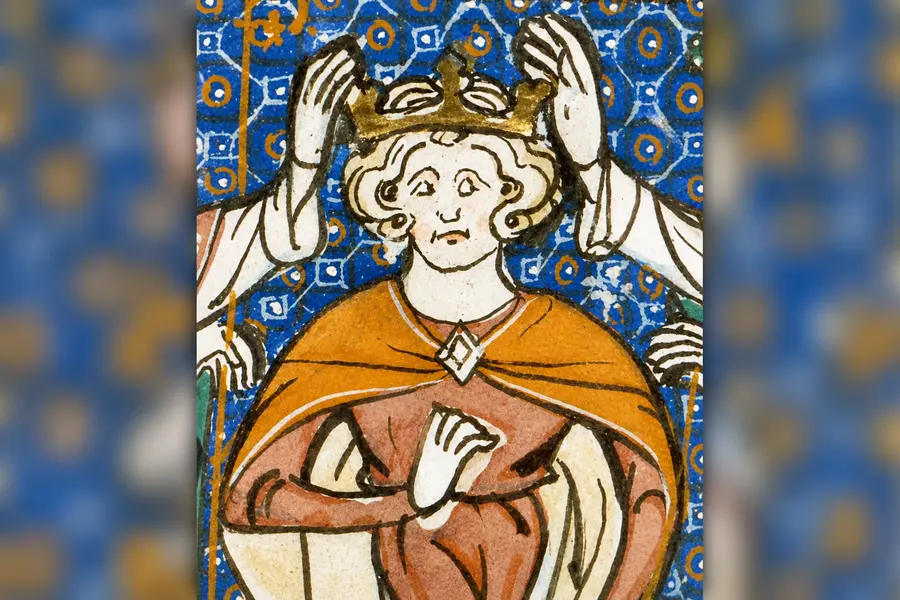
William of Tyre described Baldwin's inability to feel pain in his right hand and arm while he was still a child. This symptom is consistent with damage to the peripheral nerves, one of the characteristic effects of leprosy. However, the surviving account does not allow modern historians to establish exactly when Baldwin's condition could be identified with confidence. His later illness is generally understood as leprosy, but the precise timing and clinical course of the disease remain uncertain.
William reported that Baldwin was examined by physicians who recognised the seriousness of his condition. Medieval medicine lacked modern laboratory tests and a detailed understanding of infectious diseases, but physicians could identify certain patterns of symptoms through observation and experience. Baldwin's diagnosis emerged from this clinical examination rather than from any test comparable to those used today.[1][3]
What type of leprosy did Baldwin IV have?
Leprosy, now also called Hansen's disease, is a chronic infectious disease caused by the bacteria Mycobacterium leprae and, in some cases, Mycobacterium lepromatosis. It primarily affects the skin and peripheral nerves, although the eyes and other tissues can also be involved. Nerve damage may cause loss of sensation, muscle weakness, and injuries that go unnoticed because the affected person cannot feel pain normally.
Modern medical historians have attempted to reconstruct the progression of Baldwin's illness from medieval descriptions of his symptoms. A neurological assessment published in 2009 proposed that his early symptoms may have been consistent with a tuberculoid or borderline form of leprosy that later progressed towards a more severe lepromatous form. This is a retrospective medical interpretation, not a diagnosis that can be confirmed from surviving evidence. Medieval accounts do not provide enough clinical detail to establish Baldwin's precise classification with certainty.[3]
By the later years of his life, Baldwin reportedly suffered severe weakness, ulcerated extremities and progressive loss of physical function. Historical accounts also associate his advanced illness with impairment of his sight. He eventually became unable to perform many ordinary physical tasks independently.
Leprosy could be particularly devastating in a society where a monarch was expected to embody royal authority through public appearances, religious ceremonies, military leadership and personal interaction with his followers. The disease also carried powerful social and religious associations, often producing fear and exclusion. Baldwin's continued kingship therefore represented a political achievement as well as a personal struggle.
One important qualification concerns the timing of his diagnosis. Although William of Tyre described symptoms during Baldwin's childhood, the historian Stephen Lay has challenged the assumption that the prince's leprosy was conclusively established before his coronation. The surviving evidence does not settle every detail of when the disease could first have been identified with confidence.[4]
Baldwin's achievement should not be reduced to the idea that he simply ignored his illness. He had to govern through it, adapt to its effects, and increasingly depend on trusted subordinates. His ability to remain politically engaged as his physical condition worsened became central to the kingdom's survival.
The Crusader Kingdom of Jerusalem and the Rise of Saladin
To understand Baldwin IV's military achievements, it is necessary to understand the strategic position of his kingdom. The Crusader Kingdom of Jerusalem was not a large, unified territorial state with unlimited manpower. It consisted of a network of cities, castles, coastal ports and inland territories populated by Latin Christians, Eastern Christian communities, Muslims and Jews. Its rulers depended heavily on aristocratic landholders, military religious orders, foreign reinforcements and carefully managed truces.
Its geographical position was both an advantage and a vulnerability. Coastal cities such as Acre, Tyre and Beirut connected the kingdom to the Mediterranean and to potential support from Europe. Inland, however, its territories bordered Muslim-controlled Syria and Egypt. Maintaining communication between these areas and defending important roads, river crossings and fortified settlements demanded constant attention.
The kingdom also faced limited availability of military forces. Knights and mounted sergeants formed the elite of its armies, while infantry, archers and other troops provided essential support. The military orders, especially the Knights Templar and the Knights Hospitaller, maintained disciplined fighting forces and defended strategically important fortifications. Even so, the kingdom could not afford to lose large numbers of experienced soldiers in repeated engagements.
For an introduction to the human factors behind medieval military performance, see Myth and Memory's article on soldiers' mentality, battlefield survival and morale. Although that article addresses broader military history, morale, discipline and the willingness to remain in formation are equally important considerations when examining Crusader warfare.
Saladin's growing power
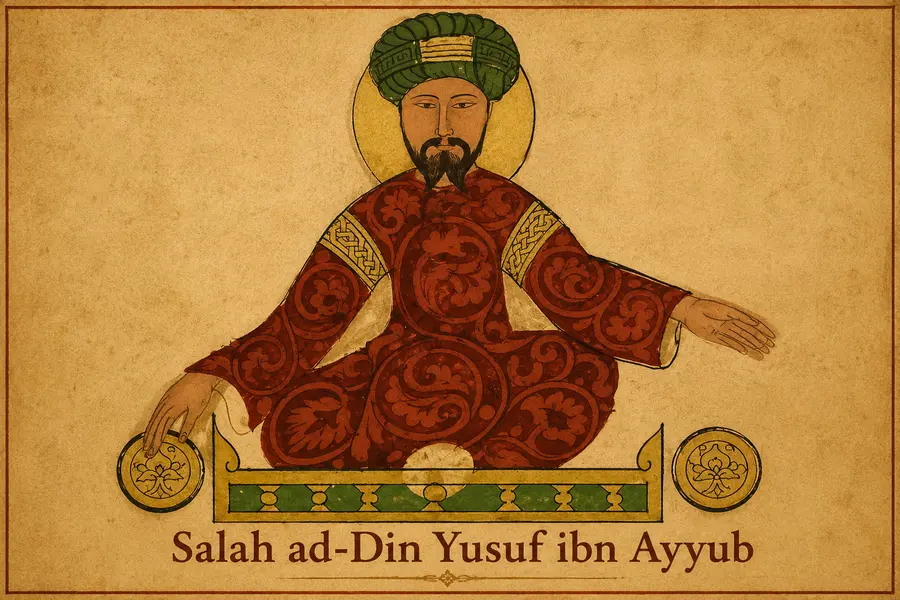
Baldwin's greatest opponent was Saladin, born Salah al-Din Yusuf ibn Ayyub. Saladin had risen to prominence in Egypt and became its ruler in 1171, ending the Fatimid caliphate. He subsequently worked to extend his authority into Syria, presenting himself as a champion of Sunni Islam and the struggle against the Crusader states.
The year 1174 was particularly consequential. Nur al-Din, the powerful Muslim ruler of Syria, died in May, leaving a young heir and a political vacuum. Amalric I of Jerusalem died in July. Baldwin inherited his father's kingdom at almost the same moment that Saladin began consolidating territories previously controlled by Nur al-Din.[2][5]
Over the following years, Saladin extended his influence across Egypt and much of Syria, bringing previously divided Muslim territories under his authority. This did not mean that his rule was uncontested or that every campaign succeeded, but it gradually gave him a larger resource base than the Crusader Kingdom could match.
Baldwin's challenge was therefore not merely to defeat an enemy army. He had to prevent Saladin from converting his growing territorial power into the destruction of Jerusalem's kingdom. That required a combination of battlefield resistance, strategic fortification, diplomacy, and the management of internal rivalries.
| Strategic challenge | Baldwin IV's response |
|---|---|
| Saladin's growing military resources | Mobilised available forces, exploited opportunities and avoided allowing the enemy to dictate every engagement. |
| Limited Crusader manpower | Relied on castles, military orders, local mobilisation and the preservation of experienced troops. |
| Internal aristocratic rivalries | Used royal authority, appointments, negotiations and succession arrangements to maintain cooperation. |
| Vulnerability of inland routes | Supported defensive construction and efforts to secure important crossings and approaches. |
| His worsening illness | Continued directing affairs of state and adapted his reliance on other officials and commanders. |
Baldwin IV's Leadership and Political Skills
Baldwin's reputation rests partly on the extraordinary contrast between his physical condition and his responsibilities. Yet endurance alone cannot explain why he remained an effective ruler. His political skill lay in understanding the limits of royal power in a feudal kingdom and working within those limits without surrendering the crown's authority.
Maintaining royal authority despite illness
In the Crusader Kingdom, the king could not govern effectively by issuing orders alone. Powerful nobles controlled territories, castles, and private military resources. Their cooperation was essential, but their interests did not always align with the kingdom's immediate needs.
Baldwin had to persuade these competing groups that the monarchy remained a useful centre of authority. His continued participation in military campaigns demonstrated that he was not simply a ceremonial figurehead. His willingness to face danger alongside his troops helped preserve his credibility, particularly when his illness gave his rivals reasons to question his capacity to rule.
It would be misleading, however, to suggest that Baldwin governed entirely alone. The kingdom relied on experienced figures such as Raymond III, Count of Tripoli, as well as senior churchmen, military commanders and royal officials. Effective kingship involved selecting, negotiating with and sometimes restraining these individuals. Baldwin's achievement was to keep the monarchy functioning amid their competing ambitions.
Managing rival factions within Jerusalem
Aristocratic rivalry was one of the most persistent threats to the kingdom's stability. Raymond of Tripoli represented a powerful political interest among established nobles, while Baldwin's relatives and other influential figures competed for positions and influence. The succession became particularly contentious because Baldwin had no children of his own.
His sister Sibylla and her descendants therefore became central to the future of the crown. Baldwin's decisions about her marriages, her son's position and the appointment of regents were not merely family matters. They determined which political faction might control the kingdom after his death.
These disputes were not always resolved successfully. Baldwin's relationship with Guy of Lusignan, Sibylla's second husband, deteriorated after Guy's performance during the 1183 campaign. The king eventually sought to limit Guy's authority and secure the succession for Sibylla's young son, Baldwin V. These actions show a ruler attempting to protect the state from the consequences of a potentially divisive succession.
Diplomacy, truces and strategic patience
Baldwin did not fight every campaign as though the survival of Jerusalem depended on a single decisive battle. Truces could provide time to repair fortifications, rebuild military strength and manage political difficulties. Diplomacy was therefore an essential part of his strategy rather than an alternative to military action.
Nevertheless, a lasting settlement with Saladin was difficult to secure. Saladin's expansion into Syria threatened to encircle the Crusader territories, while the Latin kingdom could not easily accept the loss of strategically important positions. Baldwin's government had to weigh the immediate benefits of peace against the possibility that a truce might give Saladin greater freedom to consolidate his empire.
Historian Bernard Hamilton argues that Baldwin's reign should not simply be viewed as a period of inevitable decline. His study of the king and his successors emphasises Baldwin's effectiveness as a military leader and his efforts to preserve the kingdom's political cohesion. This interpretation offers a more balanced view than narratives that explain Jerusalem's later fall primarily through the king's illness.[2]
The Battle of Montgisard, 1177: Baldwin IV's Greatest Victory
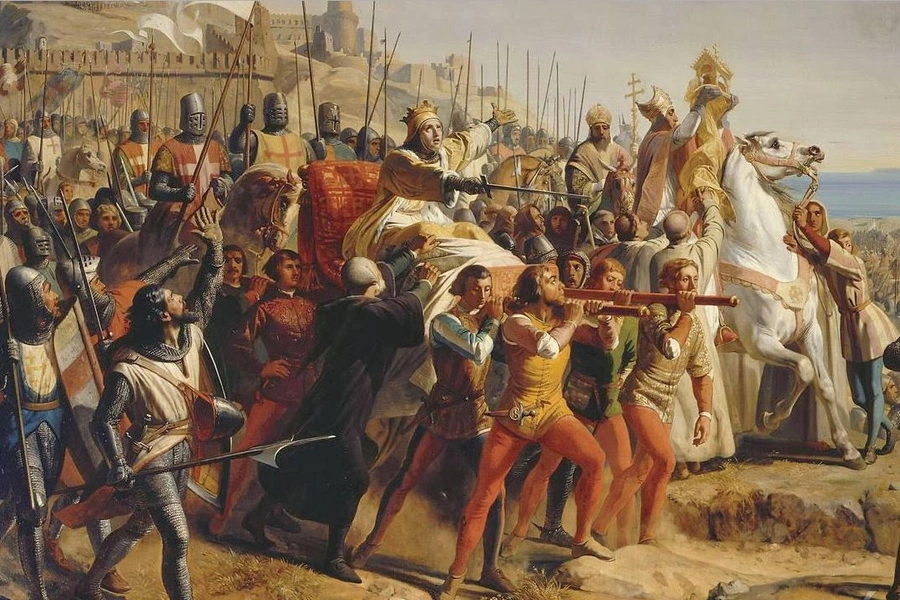
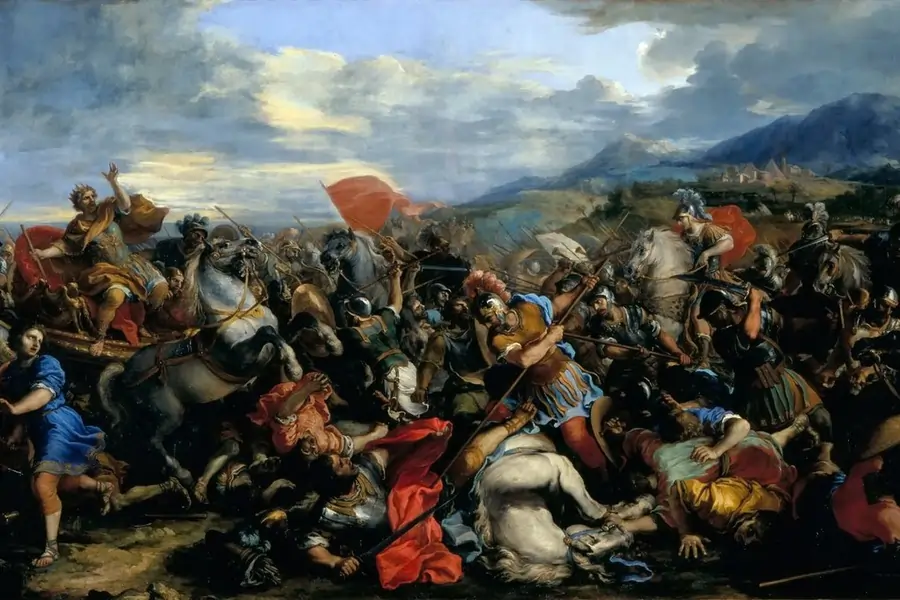
The Battle of Montgisard, fought on 25 November 1177, became the defining military achievement of Baldwin IV's reign. It demonstrated that Saladin's larger forces could be defeated when circumstances, timing and battlefield leadership favoured the Crusaders.
Why did Saladin invade Jerusalem's kingdom?
In 1177, Philip of Flanders arrived in the Crusader states and undertook a military expedition in the north. This affected the availability of some prominent nobles and military resources for the defence of the kingdom's southern territories, although it should not be assumed that the entire Crusader army had left the area. Saladin, operating from Egypt, saw an opportunity to invade the Kingdom of Jerusalem while its forces were not fully concentrated. His advance threatened the kingdom and placed Baldwin under pressure to assemble the troops he could mobilise quickly.
Baldwin was unable to rely on a fully concentrated royal army. He gathered the forces available to him and moved towards Ascalon, an important coastal stronghold. The king was still a teenager, and his army was considerably smaller than Saladin's invading force. Exact troop numbers in medieval accounts are uncertain and should not be treated as reliable modern statistics, but the broad imbalance is clear.[1][6]
Saladin advanced through the kingdom while his troops foraged and dispersed to obtain supplies. This created an opening. An army spread across a broad area could be difficult to concentrate quickly if an unexpected attack developed.
How Baldwin defeated Saladin at Montgisard
Baldwin's forces eventually caught up with Saladin's army near Montgisard, commonly located in the region between Ramla and Yibna in present-day Israel. The Crusaders attacked when the Muslim army was not fully prepared for a major engagement. The sudden confrontation disrupted Saladin's plans and turned his numerical advantage into a liability.
The Crusader army included mounted knights, infantry and the forces of the military orders. The heavy cavalry charge was especially dangerous against troops who were dispersed or unable to organise a coherent defensive line. Baldwin's army exploited the opportunity, and the engagement developed into a rout of Saladin's forces.
William of Tyre's account helped establish the image of Baldwin as a courageous young king who participated in the fighting despite his disease. The victory enhanced his prestige throughout the kingdom and dealt a serious blow to Saladin's reputation. The invading army suffered a major defeat, and Saladin withdrew towards Egypt.[1][6]
Montgisard is often described as a miraculous victory, but its military significance becomes clearer when viewed in practical terms. Baldwin did not defeat Saladin simply because his soldiers were braver or because his illness made him more determined. The Crusaders benefited from an opportunity created by the enemy's dispersed deployment, and they acted decisively when that opportunity appeared.
What made Montgisard such an important victory?
- It protected the kingdom at a dangerous moment. Saladin's invasion had threatened the heart of the Crusader territories.
- It restored Baldwin's military credibility. The young king demonstrated that he could lead an army against a formidable opponent.
- It disrupted Saladin's plans. The defeat forced Saladin to recover from a serious military setback before pursuing further ambitions against Jerusalem.
- It strengthened morale. The victory reassured the kingdom's defenders that Saladin could be resisted in open battle.
Montgisard belongs among the memorable reversals in military history, although its long-term consequences should not be exaggerated. Saladin survived, rebuilt his strength, and continued expanding his power. Baldwin had won a battle, not permanently removed the strategic threat to his kingdom. For another perspective on how individual engagements can reshape a wider conflict, see our guide to decisive battles in history.
Baldwin IV's Other Military Campaigns Against Saladin
Montgisard was the most famous battle of Baldwin's reign, but it was not the only occasion on which he personally directed military operations. The campaigns that followed reveal both the strengths and the limitations of his approach. They also show why the king's record should be assessed across his entire reign rather than through a single celebrated victory.
The Battle of Marj Ayyun, 1179
In June 1179, Crusader forces encountered Saladin's troops near Marj Ayyun, close to the Litani River in modern-day Lebanon. Baldwin was accompanied by Raymond III of Tripoli and Odo of Saint-Amand, the Grand Master of the Knights Templar.
The fighting began when Crusader forces attacked a Muslim force associated with Farukh-Shah, Saladin's nephew. The initial engagement developed into a much more dangerous confrontation when Saladin's larger army intervened. The Crusader forces were thrown into disorder, turning the encounter into a serious defeat. Odo of Saint-Amand, Grand Master of the Knights Templar, was captured, while Baldwin IV and Raymond III of Tripoli narrowly escaped. The episode illustrates the danger of committing troops to an engagement before the scale and position of the opposing forces are fully understood.[7]
Marj Ayyun provides an important counterpoint to Baldwin's victory at Montgisard. The king's reign included moments when Crusader forces were caught in unfavourable circumstances and suffered serious losses. The defeat also shows why a successful opening attack could not guarantee control of a battle once additional enemy forces arrived. Baldwin's military record is best understood through both his successes and the setbacks that exposed the kingdom's vulnerabilities.
The siege of Jacob's Ford, 1179
Jacob's Ford was a strategically important crossing of the Jordan River. Control of the ford affected movement between the territories around Damascus and the Crusader Kingdom of Jerusalem. Following the events of 1177, Baldwin supported the construction of a major fortress there, intended to strengthen the kingdom's defensive position.
The project reflected a broader understanding of warfare. Castles could protect crossings, restrict enemy movement and provide bases for troops operating in contested territory. They also required substantial investment in labour, building materials, supplies and garrisons. A fortress was not simply a stone structure; it was a continuing commitment of the kingdom's limited resources.
In August 1179, Saladin besieged Jacob's Ford and captured the fortress after a fierce assault. The defenders suffered heavy losses, and the castle was destroyed. Its fall exposed the risks of investing scarce resources in a forward defensive position that could not be adequately protected or relieved. The project had addressed a genuine strategic concern: securing an important crossing of the Jordan River. Yet its capture demonstrated that a fortress's value depended not only on its location and construction, but also on the kingdom's ability to reinforce and sustain its garrison against a determined siege.[8]
Although the loss of Jacob's Ford damaged the Crusaders' position, the episode should not be interpreted as evidence that Baldwin lacked strategic understanding. The decision to fortify the crossing addressed a real vulnerability. The failure lay in the inability to prevent Saladin from overwhelming the position before it could become a durable part of the kingdom's defences.
The campaign of 1182 and the Battle of Le Forbelet
By 1182, Saladin's power had grown considerably, and he launched another major campaign against the Crusader territories. Baldwin's illness was now more severe, but he continued to direct the kingdom's military response.
The campaign included fighting around Le Forbelet, near Belvoir Castle, in July 1182. The Crusaders resisted Saladin's advance, and the confrontation ended without the Muslim army achieving its immediate objective. It was not a decisive victory that destroyed Saladin's military strength, but it demonstrated that his growing resources did not guarantee success in every campaign. Baldwin's forces remained capable of resisting major incursions, even as the king's illness increasingly limited his physical participation in military affairs.[2][9]
The campaign is particularly important because it occurred late in Baldwin's reign, when his physical condition was increasingly debilitating. His continued presence and authority helped the Crusader army remain organised during a dangerous period. Yet it would be inaccurate to claim that he personally controlled every tactical movement or that the outcome rested on his actions alone. The army's commanders, soldiers and defensive network all contributed to the result.
The defence of Beirut, 1182
Later in 1182, Saladin attempted to take Beirut through a combined land and sea operation. The port was strategically important because it connected the kingdom to Mediterranean shipping and supported communications along the coast.
Baldwin helped organise the defence and the kingdom's naval response. The attempt to seize Beirut failed, and Saladin withdrew without capturing the city. The episode underlined the continuing value of the Crusaders' coastal strongholds and their ability to use maritime connections to resist an enemy whose strength was growing inland.[2]
These campaigns reveal a consistent pattern. Baldwin's kingdom did not win every encounter, and its castles were not impregnable. Nevertheless, the king repeatedly prevented Saladin from turning military superiority into immediate conquest. His achievement was the preservation of a functioning state under relentless pressure.
Baldwin IV's Military Strategy: How He Kept the Kingdom Fighting

Baldwin IV was not a conqueror on the scale of Alexander the Great, nor did his reign produce an uninterrupted series of victories. His military importance lay in defensive leadership: making the best use of limited resources, responding to sudden threats and denying Saladin the opportunity to destroy the kingdom during Baldwin's lifetime.
1. Recognising the importance of timing
Montgisard illustrates how timing and concentration could offset an enemy's numerical advantage. Saladin's army had become dispersed during its advance, creating an opportunity for Baldwin's forces to attack before it could fully respond. The lesson is not that surprise always outweighed numbers, but that an army's strength depended on its immediate condition as well as its total size. Baldwin's success came from exploiting a temporary opening rather than overcoming Saladin's broader resource advantage permanently.
2. Combining field armies with fortified positions
Castles and walled towns helped the Crusader kingdom defend key routes, shelter garrisons and complicate enemy movements. Jacob's Ford demonstrates both the promise and the limits of this approach. The fortress occupied a strategically important crossing, but Saladin captured and destroyed it in 1179. Defensive construction could strengthen the kingdom's position, yet it could not replace the troops, supplies and relief forces needed to keep a stronghold operational during a major siege.
At the same time, a castle could become a liability if it demanded resources that the kingdom could not spare or if a relief army could not arrive in time. The fall of Jacob's Ford showed the limits of defensive construction when an opponent could concentrate superior forces.
3. Preserving the kingdom's limited manpower
The kingdom's limited manpower made the preservation of experienced troops a strategic concern. Knights, sergeants and commanders could not be replaced quickly, and a severe defeat might weaken the kingdom long after a particular campaign had ended. Baldwin therefore had to balance the need to confront Saladin against the danger of risking too much in a single engagement. This did not mean avoiding battle at all costs; it meant recognising that the consequences of a defeat could extend well beyond the battlefield.
His forces included the military orders, whose disciplined members played a central role in defending important positions and conducting operations. However, the orders were not simply extensions of the king's personal army. Their commanders possessed their own institutional interests, and cooperation had to be maintained through shared strategic priorities.
4. Remaining a visible commander
As Baldwin's illness progressed, his ability to perform the physical duties traditionally associated with kingship became increasingly restricted. His continued involvement in military affairs nevertheless helped sustain the authority of the crown. That presence should not be confused with personally directing every movement on the battlefield: medieval armies relied on subordinate commanders to lead troops and coordinate operations. Baldwin's leadership increasingly depended on maintaining direction and political authority through others, rather than performing every military task himself.
His example should not obscure the importance of delegation. Medieval armies depended on subordinate commanders who could lead cavalry, coordinate infantry and manage fortifications. Baldwin's effectiveness rested partly on his ability to work through this military structure rather than personally performing every task.
5. Connecting military resistance with political authority
Military outcomes shaped Baldwin's political position, just as political stability affected the kingdom's ability to fight. Successful campaigns could strengthen confidence in the crown, while defeats and succession disputes risked weakening cooperation among the nobility. Fortifications, diplomacy and military action were therefore parts of the same defensive system. Baldwin's achievement was not that he eliminated the kingdom's vulnerabilities, but that he repeatedly managed them well enough to prevent Saladin from conquering Jerusalem during his reign.
Readers interested in comparing leadership across different periods can also explore our overview of the greatest military generals in history. Baldwin's experience offers a useful contrast with commanders whose reputations rest primarily on conquest: his achievement was to keep a threatened kingdom alive.
Succession, Rival Nobles and Baldwin IV's Final Years
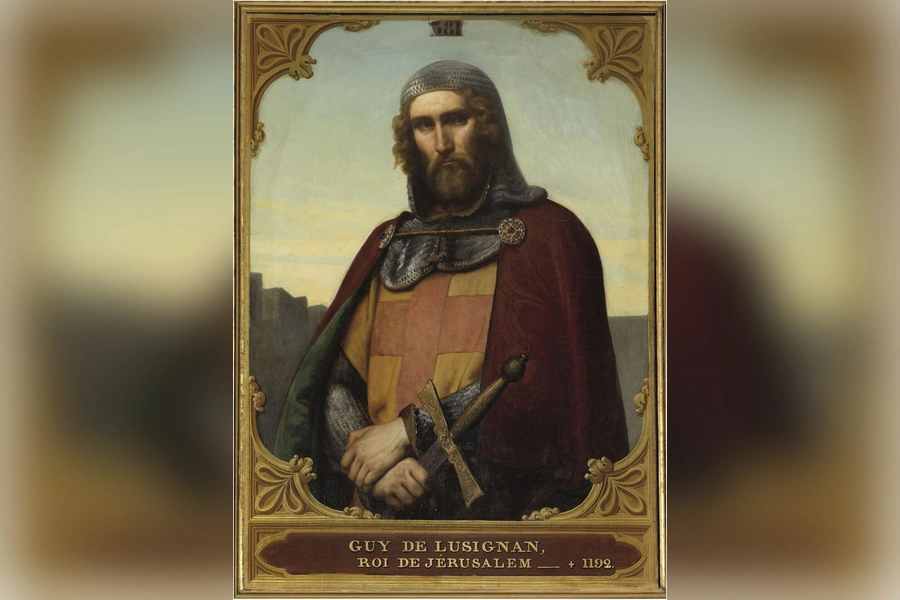
As Baldwin's disease progressed, the question of who would rule after him became increasingly urgent. He had no surviving children, and his sister Sibylla's son, Baldwin V, was the most important candidate to continue the dynasty. The boy's father, William of Montferrat, died in 1177, leaving Sibylla widowed before she married Guy of Lusignan in 1180.
Guy's position created serious political difficulties. Baldwin initially associated him with royal authority, but their relationship deteriorated during the campaign of 1183. When Saladin invaded, Guy was entrusted with command, yet he failed to satisfy the king's expectations. Baldwin subsequently removed him from effective authority and arranged for the young Baldwin V to be crowned as co-king, strengthening the boy's claim to the succession.[2][10]
These decisions were not straightforward. Baldwin could not simply choose a successor without considering the interests of the nobility, the legal customs of the kingdom and the rival claims surrounding the royal family. His attempts to manage the succession reveal both his political determination and the limits of his power.
By 1184, his illness had advanced to the point where he could no longer manage all the kingdom's affairs personally. Raymond III of Tripoli was entrusted with the regency, providing an experienced political and military figure to govern on behalf of the young Baldwin V.
The regency was an attempt to preserve continuity, but it could not eliminate the underlying factional tensions. Baldwin had spent much of his reign balancing competing interests through personal authority. Once that authority disappeared, the kingdom would have to rely on institutions and agreements that were less capable of holding its rivals together.
The Death of Baldwin IV and Its Immediate Impact
Baldwin IV died in Jerusalem on 16 May 1185, aged approximately twenty-four. His death ended a reign during which the Crusader Kingdom had survived repeated invasions and resisted Saladin's growing power. The king's physical decline had been severe, but he had continued to occupy the throne and direct the kingdom's affairs until the final stage of his illness.[2][3]
His death did not immediately destroy the Crusader Kingdom of Jerusalem. Baldwin V succeeded him, with Raymond of Tripoli serving as regent. The immediate challenge was to maintain political stability while protecting the young king's position and continuing to defend the realm against Saladin.
But the kingdom had lost the ruler who had spent more than a decade mediating among powerful nobles and coordinating resistance to an increasingly formidable enemy. Baldwin's successor was a child, and his regency arrangements could not reproduce the personal authority that had helped contain factional disputes.
Baldwin V died in 1186, and the succession crisis that followed brought his mother, Sibylla, and her husband, Guy of Lusignan, to the throne. The disputes surrounding their accession contributed to the kingdom's political divisions, which complicated its response to Saladin's next major offensive. In July 1187, the Crusader army suffered a catastrophic defeat at the Battle of Hattin. Saladin captured Jerusalem later that year, in October. These events followed Baldwin IV's death, but they should not be treated as the inevitable result of his illness or the loss of a single ruler. They emerged from a combination of political rivalries, military decisions and the strategic circumstances of 1186–1187.[2][5]
It is tempting to treat these later disasters as proof that Baldwin's kingdom had been doomed from the beginning. That conclusion is too simple. The kingdom faced serious structural disadvantages throughout his reign, but Baldwin had repeatedly prevented those disadvantages from producing immediate collapse. The events of 1186 and 1187 reflected a combination of political divisions, strategic decisions, and military circumstances rather than a single inevitable consequence of his death. The contrast with Baldwin's reign is striking. The king who defeated Saladin at Montgisard was gone, and the political system he had held together struggled to respond to the threat.
The Legacy of Baldwin the Leper King
Baldwin IV's legacy rests on the intersection of illness, kingship, and military leadership. His disease made his reign exceptional, but it was not the only reason he deserves historical attention. He governed a vulnerable state during a period of profound regional change, and he repeatedly prevented a stronger opponent from achieving his strategic objectives.
A successful defensive ruler
Baldwin's greatest achievement was not the conquest of new territory but the preservation of the kingdom he inherited. Montgisard demonstrated his ability to exploit an unexpected opportunity, while the later campaigns showed that the Crusaders could continue resisting Saladin even after setbacks such as Marj Ayyun and the fall of Jacob's Ford.
His reign also demonstrates why military history must look beyond victories and defeats. Fortifications, manpower, political cohesion and the willingness of nobles to cooperate all influenced whether a kingdom could survive. Baldwin's record was built on the interaction of these factors rather than on battlefield courage alone.
A king whose authority outlasted his physical strength
Baldwin's ability to remain king while suffering from an advanced disease was remarkable in a society where rulers were expected to embody strength and divine favour. His authority was not unlimited, and the succession crisis showed how difficult it was to preserve stability without a clear adult heir. Nevertheless, his continued rule challenges the assumption that physical disability necessarily made effective medieval kingship impossible.
His experience also deserves to be separated from romantic portrayals of illness as a source of supernatural courage. Baldwin faced practical limitations and relied on other people. His achievement lay in continuing to govern despite those constraints, not in being unaffected by them.
Why Baldwin IV remains historically important
The later fall of Jerusalem has sometimes overshadowed Baldwin's successes. Because Saladin ultimately conquered the city in 1187, the years preceding that defeat can appear, in retrospect, to have been merely a prelude to disaster. Yet this perspective understates how effectively Baldwin resisted the pressures confronting him.
Bernard Hamilton's reassessment of the reign emphasises that Saladin did not achieve the conquest of Jerusalem while Baldwin IV was alive. The king's government frustrated important aspects of Saladin's expansion and maintained a kingdom that remained capable of military resistance. Baldwin could not remove the kingdom's underlying vulnerabilities, but he helped prevent them from becoming fatal during his lifetime.[2][5]
Baldwin IV should be remembered neither as an invincible warrior nor simply as a tragic monarch. He was a ruler who confronted a formidable opponent while managing severe physical limitations and persistent political rivalries. Montgisard remains the best-known example of his military leadership, but his wider achievement was keeping the Kingdom of Jerusalem capable of resisting Saladin through years of pressure. Baldwin could not resolve every structural weakness or guarantee the kingdom's future after his death. He did, however, prevent those weaknesses from producing the kingdom's immediate collapse during his own reign. His story demonstrates that medieval leadership depended not only on battlefield victories, but also on political judgment, adaptation, and the difficult work of preserving a state under sustained threat.
References and Further Reading
The following sources provide the historical foundation for this article. William of Tyre is particularly important as a contemporary witness, while modern scholarship helps assess the political context, military campaigns, and medical evidence without relying solely on later heroic interpretations.
- William of Tyre, A History of Deeds Done Beyond the Sea. A major contemporary account of the Crusader Kingdom of Jerusalem and Baldwin IV's reign. An accessible selection is available through the Internet Medieval Sourcebook: Fordham University, Medieval Sourcebook.
- Bernard Hamilton, The Leper King and His Heirs: Baldwin IV and the Crusader Kingdom of Jerusalem. Cambridge University Press, 2000. A major modern study of Baldwin's reign, his political environment, and the succession crisis. Cambridge University Press.
- A. L. Guerrero-Peral, "Neurological evaluation of the leper king Baldwin IV of Jerusalem." Revista de Neurología, 2009. A medical-historical assessment of the symptoms attributed to Baldwin. PubMed record.
- Stephen Lay, "A leper in purple: the coronation of Baldwin IV of Jerusalem." Journal of Medieval History, vol. 23, no. 4, 1997, pp. 317–334. Examines the evidence concerning Baldwin's illness and coronation. https://doi.org/10.1016/S0304-4181(97)00011-0.
- Bernard Hamilton, "Prologue," in The Leper King and His Heirs. Cambridge University Press. Provides context for the deaths of Nur al-Din and Amalric I, and the rise of Saladin. Cambridge University Press.
- Bernard Hamilton, "Epilogue," in The Leper King and His Heirs. Discusses the later interpretation of Baldwin's reign and the events leading to Hattin and the fall of Jerusalem. Cambridge University Press.
- World History Encyclopedia, "Battle of Marj Ayyun." An accessible overview of the 1179 engagement and the military situation surrounding it. World History Encyclopedia.
- Thomas Asbridge, research and historical commentary on the Crusader fortress at Jacob's Ford. For an accessible account of the castle's strategic significance, consult the relevant historical literature on the 1179 siege and the fortifications of the Crusader states.
- Bernard Hamilton, The Leper King and His Heirs, especially the chapters on Baldwin's military campaigns and the final years of his reign. The study discusses Le Forbelet and the continued resistance to Saladin. Cambridge University Press.
- Bernard Hamilton, The Leper King and His Heirs, chapter on the heirs of Baldwin IV. Provides historical context for the succession arrangements involving Baldwin V, Sibylla, Guy of Lusignan and Raymond of Tripoli. Cambridge University Press.
Books and Memorables
This article may contain affiliate links. If you purchase through these links, I may earn a small commission at no extra cost to you.


Related Articles

Frequently Asked Questions
How did Baldwin IV the Leper King continue ruling Jerusalem despite leprosy?
Baldwin IV continued ruling the Crusader Kingdom of Jerusalem by combining personal leadership with the support of experienced nobles, military commanders and royal officials. Although leprosy progressively weakened his body and eventually restricted his mobility, he remained involved in military campaigns, political negotiations and succession decisions. He relied on the kingdom's castles, military orders and available troops to defend its territories against Saladin. His reign demonstrated how political authority and strategic decision-making could sustain a kingdom even when its monarch suffered from a severe illness.
How did Baldwin IV defeat Saladin at the Battle of Montgisard in 1177?
Baldwin IV defeated Saladin at the Battle of Montgisard on 25 November 1177 by exploiting an opportunity to attack the Muslim army when it was dispersed and insufficiently prepared for a major engagement. Baldwin gathered the Crusader forces available to him and launched a counterattack near Montgisard in the territory of the Kingdom of Jerusalem. The Crusaders broke Saladin's army and forced him to retreat towards Egypt. The victory enhanced Baldwin's reputation as a military leader, although Saladin subsequently rebuilt his forces and continued campaigning against the Crusader states.
What military strategies did Baldwin IV use to defend Jerusalem against Saladin?
Baldwin IV used a combination of battlefield counterattacks, fortified strongholds, military cooperation and diplomacy to defend Jerusalem against Saladin. His victory at Montgisard demonstrated the importance of timing and exploiting an opponent's vulnerable position. He also supported the construction of strategic fortifications, including the fortress at Jacob's Ford, to protect important routes and crossings. Baldwin relied on the Knights Templar, the Knights Hospitaller, royal forces and local nobles to maintain the kingdom's defences. His strategy focused on preventing Saladin from turning his greater resources into the immediate conquest of Jerusalem.
What type of leprosy did Baldwin IV of Jerusalem suffer from?
Baldwin IV suffered from a disease identified by his contemporary historian William of Tyre as leprosy, now known as Hansen's disease. William described an early loss of sensation in Baldwin's right hand and arm, consistent with peripheral nerve damage. Modern medical historians have suggested that his symptoms could fit a form of leprosy that progressed over time, but the surviving medieval descriptions cannot establish a definitive modern clinical classification. As his illness advanced, Baldwin reportedly experienced severe physical disability that increasingly limited his ability to perform ordinary activities.
Why did the Crusader Kingdom of Jerusalem survive under Baldwin IV but fall to Saladin in 1187?
The Crusader Kingdom of Jerusalem survived during Baldwin IV's reign because the king maintained royal authority, mobilised military resources, defended strategic positions and repeatedly frustrated Saladin's campaigns. His victory at Montgisard and the successful defence of important coastal strongholds helped preserve the kingdom. After Baldwin died in 1185, a child king, Baldwin V, inherited the throne, and political divisions intensified following his death in 1186. The resulting succession crisis weakened cooperation among the kingdom's leaders. In July 1187, Saladin defeated the Crusader army at the Battle of Hattin, opening the way for his capture of Jerusalem later that year.
What happened to Jerusalem immediately after Baldwin IV the Leper King died?
Baldwin IV died on 16 May 1185, and his young nephew Baldwin V succeeded him as king, with Raymond III of Tripoli serving as regent. Jerusalem did not fall immediately after Baldwin IV's death. However, the kingdom faced growing political uncertainty because its new monarch was a child and rival nobles disagreed over the succession. Baldwin V died in 1186, after which Sibylla and Guy of Lusignan became rulers. The resulting political tensions contributed to the kingdom's difficulties in responding to Saladin's campaign of 1187, which culminated in the Crusader defeat at Hattin and the fall of Jerusalem.
Add Comment