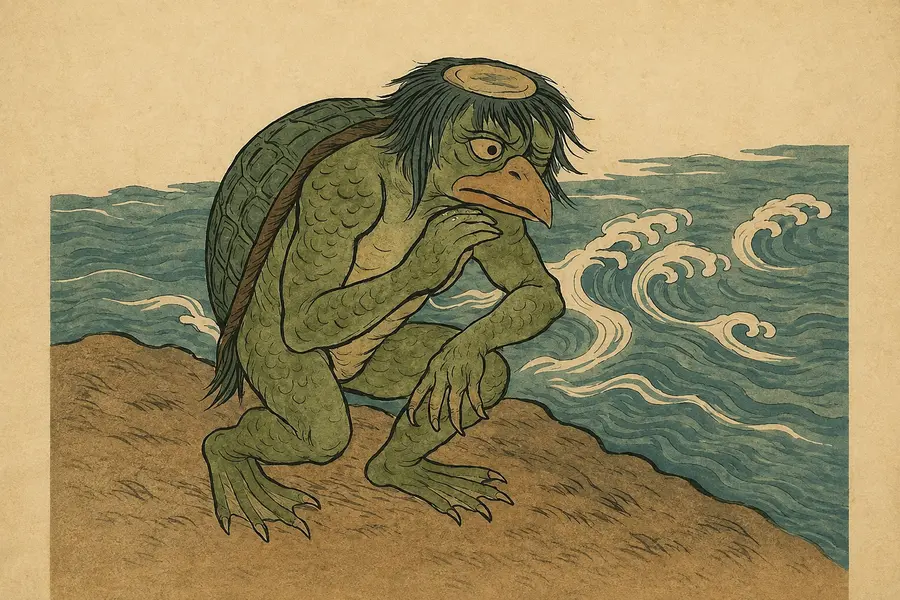
Few creatures in Japanese folklore are as strange as the kappa. At first glance, this water-dwelling yokai looks almost comical. A small green creature with a turtle shell, webbed hands and feet, a beak-like mouth, and a mysterious dish filled with water on top of its head. Yet traditional kappa legends are anything but funny. These creatures were feared as dangerous river demons capable of drowning people, attacking animals, and stealing the mythical shirikodama from their victims. They were also obsessed with cucumbers, loved challenging humans to sumo wrestling, and could sometimes be defeated simply by exploiting their strict sense of etiquette.
The kappa is therefore much more than a Japanese monster with a funny appearance. Its legends preserve older fears surrounding rivers, drowning, agriculture, animals, and the unpredictable forces of nature. Over time, however, the terrifying river spirit was transformed into one of Japan's most recognizable and often playful folkloric characters.
Table of Contents
- What Is a Kappa?
- The Origin of the Kappa
- The Strange Anatomy of a Kappa
- Why Were Kappas Feared?
- Why Are Kappas Obsessed With Sumo?
- Why Do Kappas Love Cucumbers?
- The Kappa and the Shirikodama
- How to Defeat a Kappa
- Legacy and Cultural Significance
- The Enduring Mystery of the Kappa
- References and Further Reading
What Is a Kappa?
A kappa (河童) is a supernatural creature from Japanese folklore, traditionally associated with rivers, ponds, marshes, and other bodies of water. It belongs to the broad category of yokai, supernatural beings and phenomena found throughout Japanese folklore. The name kappa is commonly explained as deriving from Japanese terms associated with a river child, although the creature's name and form developed through regional traditions. The image most people recognize today, however, is the result of many regional traditions developing and merging over centuries. Kappa legends were not identical everywhere in Japan. The creature could have different names, appearances, personalities, and abilities depending on the region.
Some traditions portrayed the kappa as a dangerous predator that dragged humans and animals underwater. Others depicted it as mischievous rather than murderous. In still other stories, a kappa could become an ally of humans, particularly when treated respectfully or when a human helped the creature out of trouble. This contradictory nature is one of the most interesting features of the kappa. It could be simultaneously a monster, trickster, water spirit, and supernatural neighbor. The official Kochi tourism organization, for example, describes kappa traditions involving both dangerous behavior and friendly interactions with humans. Unlike a creature such as Cerberus or Medusa, which belongs to a relatively recognizable mythological tradition, the kappa developed through countless local legends. This makes it difficult to define a single "original" kappa story.
The Origin of the Kappa
There is no single ancient text that provides a definitive origin story for the kappa. Instead, scholars generally approach the creature as the product of several overlapping strands of Japanese folklore. One important possibility is the connection between kappa traditions and older beliefs about water deities. Rivers were essential to Japanese communities but could also be extremely dangerous. They provided irrigation and drinking water, yet floods, currents, and deep pools could kill people and livestock without warning.
Some local traditions consequently treated water as a supernatural domain inhabited by powerful beings. Over time, certain water spirits could be interpreted as more dangerous, mischievous, or monstrous. The kappa retained traces of this ambiguous relationship with water: it could harm humans but could also assist them. Folklorist Kunio Yanagita, one of the most influential figures in Japanese folklore studies, collected and analyzed traditions that helped later scholars understand yokai within their local social and cultural contexts. Later scholarship has examined the kappa as a particularly rich example of this process.
Michael Dylan Foster's academic study The Kappa: A Study in the Lower Mythology of Japan examines the creature's regional variations and its connections with Japanese folklore, religion, agriculture, and local society. The result is a creature that should not be understood as having emerged from one "kappa creation myth." Instead, the kappa developed from a broad folkloric environment in which rivers, supernatural beings, local customs, and stories about dangerous encounters constantly interacted.
The Strange Anatomy of a Kappa
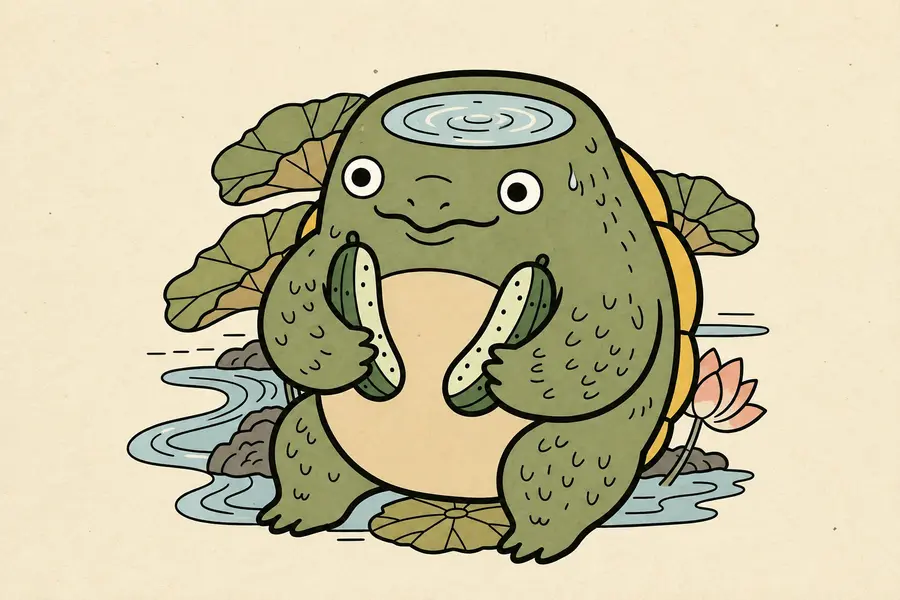
The modern mental image of a kappa is remarkably distinctive. It looks almost like someone combined a child, turtle, frog, monkey, and bird and then placed a plate on its head.
| Feature | Traditional Description | Purpose or Significance |
|---|---|---|
| Head dish (sara) | A shallow depression or dish on top of the head | Contains water that gives the kappa strength |
| Shell | Turtle-like shell on its back | Contributes to its amphibious, reptilian appearance |
| Skin | Often green, scaly, slippery, or frog-like | Reflects its association with water |
| Hands and feet | Often webbed | Allow the creature to move effectively through water |
| Mouth | Frequently depicted with a beak | Gives the kappa its distinctive animal-like appearance |
| Shirikodama | Mythical ball or vital object associated with the body | A prized object sought from human victims |
The mysterious dish on its head
The most unusual part of the kappa's anatomy is the sara, the dish-like depression on top of its head. It is traditionally said to contain water, and that water is connected to the creature's supernatural strength. This creates one of the strangest weaknesses in Japanese mythology. If the water spills out, the kappa becomes weak or helpless. Consequently, several legends describe humans defeating kappa through cleverness rather than physical strength.
The creature's appearance varies considerably between sources. Some portray it as more turtle-like, while others emphasize its resemblance to monkeys, frogs, or children. Historical Japanese illustrations also demonstrate that the appearance familiar today was not completely standardized.
Why Were Kappas Feared?
The friendly green kappa of modern popular culture hides a much darker folkloric past. Traditional stories warned people that kappa lived in waterways and could drag humans underwater and drown them. Children were particularly vulnerable because rivers and ponds were dangerous places to play. The kappa consequently served as a supernatural explanation for accidents that could otherwise be difficult for communities to understand. Animals were also vulnerable. Folklore describes kappa attacking horses and cattle near waterways. This made the creature especially relevant to agricultural communities whose livelihoods depended on livestock, irrigation, and access to rivers.
Some stories attribute even more disturbing behavior to kappa, including attacking human bodies and consuming organs. Nippon.com notes that older kappa traditions could be considerably more frightening than the modern cute version, with stories describing the creatures as drowning people and animals and taking their internal organs or shirikodama. The kappa therefore embodied the danger of water itself.
Why Are Kappas Obsessed With Sumo?
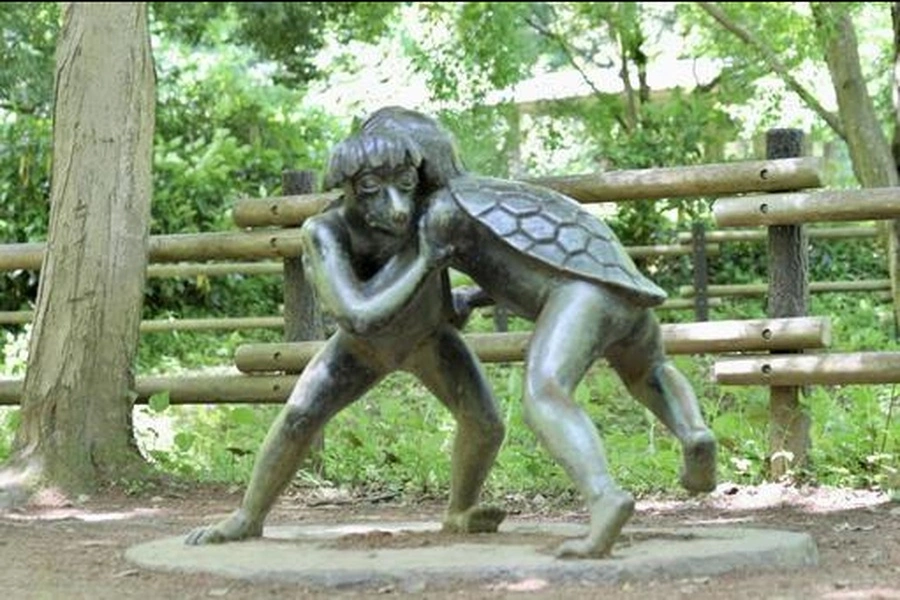
One of the strangest recurring features of kappa folklore is its fascination with sumo wrestling. In numerous stories, a kappa challenges a human to a wrestling match. The challenge might initially seem harmless, but there is usually a dangerous catch. The kappa is exceptionally strong, particularly when fighting near water. The connection between kappa and sumo has attracted scholarly attention. A 2008 study published in the Japan Journal of Sport History examined the long-standing tradition that kappa like wrestling and explored possible connections involving the legendary figure Nomi no Sukune, a character associated with early Japanese traditions surrounding sumo.
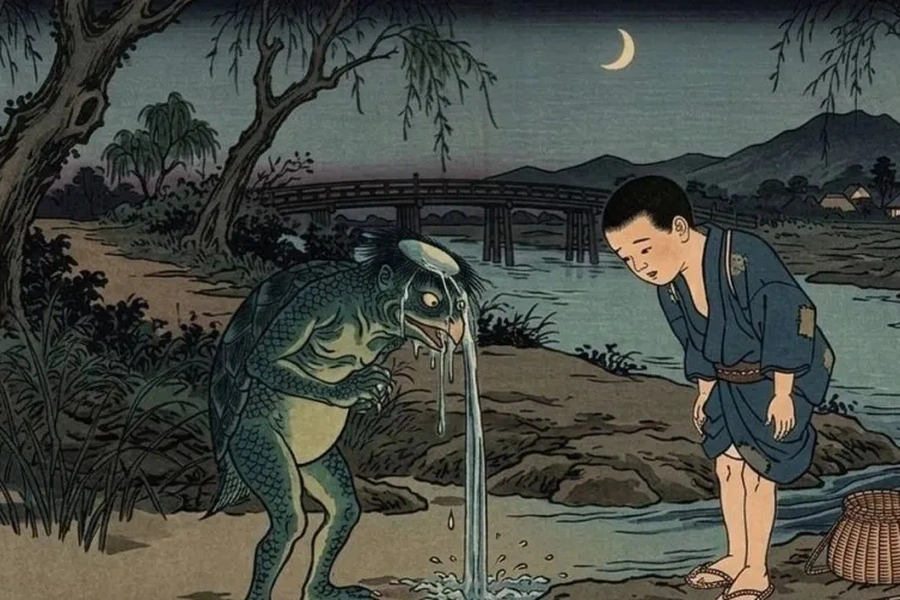
Another interpretation suggests that the connection says as much about human communities as it does about kappa. Research on kappa and sumo has argued that wrestling was already an important cultural motif, making it a natural way for storytellers to represent a contest between humans and supernatural beings. There is also a practical folklore connection. Sumo begins with ritualized bows. Since kappa are often depicted as extremely concerned with etiquette and promises, this becomes a perfect opportunity for humans to trick them. If a person bows deeply to a kappa, the creature may instinctively bow in return. When it does so, the water in the dish on its head spills out, making it weak. The seemingly silly wrestling obsession therefore becomes part of the kappa's most famous weakness.
Why Do Kappas Love Cucumbers?
If there is one food permanently associated with kappa, it is the cucumber. Japanese folklore frequently portrays cucumbers as the kappa's favorite food. In some traditions, people offered cucumbers to the creatures in the hope of avoiding attacks or gaining their goodwill. The association became so strong that it survives in modern Japanese culture. Kappamaki, a cucumber-filled sushi roll, takes its name from the kappa. The connection is an excellent example of folklore surviving not merely in books or museum displays but in ordinary food vocabulary.
In some regional traditions, people reportedly wrote their names on cucumbers before offering them to kappa. The practice reflects a broader pattern in which potentially dangerous supernatural beings could be appeased through gifts. Interestingly, the folklore surrounding cucumbers was not completely uniform. Different regions could preserve different beliefs about what kappa liked, feared, or required. This is an important reminder that there was never one universal rulebook for kappa behavior.
The Kappa's Obsession With the Shirikodama
Perhaps the strangest kappa belief concerns the shirikodama. The shirikodama is a mythical object said to be imagined as a mysterious ball or vital object associated with the human body. It is sometimes described as a small ball or organ containing a person's life force, soul, or vital essence. According to some legends, a kappa would seize a swimmer and attempt to extract the shirikodama. The victim could die as a result. This bizarre idea helps explain why kappa legends were so frightening. The creature was not merely trying to scare people away from rivers. It was imagined as a predator with a very specific and horrifying objective.
Historical illustrations also preserve this strange aspect of kappa folklore. Nippon.com notes that Hokusai depicted a kappa exploiting the belief in the shirikodama, illustrating just how deeply the idea had entered Japanese popular culture. There is no anatomical reality behind the shirikodama. It belongs entirely to the supernatural logic of folklore. Yet its importance demonstrates how myths often turn vague fears into specific images. Drowning is frightening, but a story about a monster stealing a mysterious object from the body is far more memorable. The shirikodama consequently became one of the defining ideas behind the kappa.
How to Defeat a Kappa
The kappa may be terrifying, but Japanese folklore provides several ingenious ways to survive an encounter.
1. Make the kappa bow
This is perhaps the most famous method. Since kappa are traditionally depicted as extremely polite and respectful of formal etiquette, a person can bow deeply to the creature. The kappa is likely to return the bow. When it lowers its head, the water contained in its dish spills out. Without that water, the creature becomes weak or helpless.
2. Challenge its politeness
The same principle can be used in other ways. A kappa may be bound by its own sense of honor. If it makes a promise, some legends suggest that it will keep it. This means that clever negotiation can sometimes succeed where physical force cannot.
3. Keep its head dish empty
The dish functions as a source of the kappa's supernatural strength. Spilling the water, or preventing the creature from replenishing it, can deprive the kappa of its strength.
4. Offer a cucumber
If the goal is simply to avoid conflict, fighting may be unnecessary. Offering a cucumber can sometimes placate the creature. The tradition reflects the broader folkloric idea that dangerous supernatural beings can sometimes be managed through gifts and ritual behavior.
5. Never underestimate the river
The most practical lesson behind all these stories is less supernatural. Stay away from dangerous water. Kappa folklore repeatedly places humans in peril when they enter rivers, ponds, or other bodies of water without caution. The monster may be imaginary, but the hazard it represents is real.
| Kappa Weakness | Folkloric Method |
|---|---|
| Water in the head dish | Bow and make the kappa spill it |
| Love of cucumbers | Offer one to avoid conflict |
| Strong sense of etiquette | Use politeness against the creature |
| Sense of honor | Exploit promises and agreements |
| Dependence on waterways | Avoid entering its territory |
The folklore is particularly revealing because the kappa is not usually defeated by a hero possessing overwhelming strength. It is defeated through cleverness, manners, and knowledge of its weaknesses.
Legacy and Cultural Significance of Kappas
The kappa has undergone a remarkable transformation. The traditional creature was capable of drowning people and attacking animals. Modern representations, however, often turn the kappa into a cute, humorous, almost friendly character. Its green body, shell, beak, and head dish have become instantly recognizable symbols of Japanese folklore. This transformation reflects a broader process in which frightening folklore becomes entertainment. The same pattern can be seen elsewhere in mythology. Once terrifying creatures can eventually become children's characters, mascots, toys, or comic figures.
Yet the older kappa has not disappeared. Kappa museums, local festivals, statues, artwork, folklore collections, and regional traditions continue to preserve different versions of the creature. The Kaiyodo Kappa Museum in Kochi, for instance, displays hundreds of kappa-related artworks and sculptures, demonstrating the creature's continuing cultural popularity. Kappa also remain closely connected with particular Japanese landscapes. Rivers and ponds that once inspired stories about dangerous water spirits can now become places where visitors encounter kappa statues, local legends, festivals, and folklore displays.
The Enduring Mystery of the Kappa
The kappa may look like a comical turtle-like goblin today, but its origins lie in a much darker world. For communities living beside rivers, water was both essential and dangerous. The kappa gave that danger a face. A creature lurking beneath the surface, waiting to drag careless swimmers underwater. Its strange anatomy, especially the water-filled head dish, created a memorable explanation for its supernatural powers. Its obsession with cucumbers and sumo gave storytellers opportunities for humor, while the horrifying shirikodama made encounters with the creature genuinely frightening. Perhaps the most fascinating feature of the kappa is that it does not fit neatly into the categories of "monster" or "spirit." It can be a killer, trickster, guardian, helper, rival, or even an honored supernatural neighbor depending on the story.
That flexibility explains why the kappa has survived so successfully. The creature can be frightening enough for an ancient river legend, strange enough for folklore, amusing enough for children's stories, and recognizable enough to become a modern cultural icon. Behind the cucumber-loving creature with a dish on its head lies an older lesson. Nature is powerful, unpredictable, and deserving of respect. The kappa simply gives that lesson a face, and a surprisingly strong appetite for cucumbers.
References and Further Reading
- Foster, Michael Dylan. The Kappa: A Study in the Lower Mythology of Japan. University of California, Berkeley, 1995. A major scholarly study of kappa folklore, regional traditions, and the creature's place in Japanese culture.
- Takemura, Masaya. "A Study on the Oral Tradition that tells Kappa Wants to Play Sumo." The Japan Journal of Sport History, No. 21, 2008. The study examines the connection between kappa traditions and sumo, including possible links to Nomi no Sukune.
- Kim, Yong Ui. "A Study on the Dualistic Structure of Sumo in Kappa and Human." Japanese Literature, 2013. Examines the recurring sumo motif in kappa folklore and its relationship to Japanese cultural ideas surrounding wrestling.
- Nippon.com. "Kappa: The Terror of Japan's Rivers." Useful background on the older, more frightening conception of the kappa and its transformation in modern popular culture.
- Visit Kochi Japan. Kaiyodo Kappa Museum. Provides information on regional kappa traditions and the modern preservation of kappa-related art and folklore.
- Fukusaki Town Tourism Association. Kappa folklore and regional traditions, including the creature's association with waterways, cucumbers, sumo, and the shirikodama.
Books and Memorables
This article may contain affiliate links. If you purchase through these links, I may earn a small commission at no extra cost to you.


Related Articles


Frequently Asked Questions
What is a kappa in Japanese mythology?
A kappa is a water-dwelling yokai from Japanese folklore, traditionally associated with rivers, ponds, and other freshwater environments. Kappa are usually described as small, powerful creatures with a turtle-like shell, webbed hands and feet, a beak-like mouth, and a dish called a sara on top of the head. Older legends portray them as dangerous beings that could drown people and animals, although some regional traditions describe helpful or mischievous kappa as well.
Why do kappa have a bowl of water on their heads?
The dish, or sara, on a kappa's head is one of its most important folkloric features. Traditional stories say that the water held in the dish is connected to the kappa's supernatural strength. If the water is spilled or the dish becomes dry, the kappa becomes weak and may be unable to fight until it can replenish the water. This unusual weakness is also central to several stories about how humans can defeat a kappa.
Why do kappa like cucumbers in Japanese folklore?
Cucumbers are traditionally described as one of the kappa's favorite foods. In some Japanese legends, people offered cucumbers to kappa as a way of avoiding conflict or appeasing the creatures. The association became so strong that the cucumber sushi roll known as kappamaki is named after the kappa. The exact customs surrounding cucumber offerings vary between regional traditions.
What is the shirikodama that kappa are said to steal?
The shirikodama is a mythical ball or organ that Japanese folklore places inside the human body near the anus. Kappa legends sometimes say that the creature attacks swimmers to obtain the shirikodama, which may be associated with a person's vital essence or life force. It is a folkloric object rather than a real anatomical organ, and the belief is one of the darker features of traditional kappa stories.
Why do kappa wrestle humans in Japanese folklore?
Kappa are famously associated with sumo wrestling and are often portrayed as challenging humans to contests of strength. The motif may reflect the cultural importance of sumo and its ritualized rules in Japan. Kappa are usually described as exceptionally strong, particularly near water, but their love of wrestling can also become a weakness because the formal bow associated with the contest may cause the water in the kappa's head dish to spill.
How can you defeat a kappa according to Japanese folklore?
The most famous way to defeat a kappa is to make it bow deeply enough for the water in the sara on its head to spill out. Because kappa are traditionally portrayed as extremely polite, they are said to return a human's bow. Without the water, the kappa loses its supernatural strength. Other regional stories mention cucumber offerings, exploiting the creature's sense of honor, or avoiding dangerous waterways altogether. These are elements of folklore rather than real methods for dealing with an actual creature.
Add Comment