
Alexander the Great did not command his armies from a safe position far behind the fighting. Again and again, the Macedonian king placed himself where the battle was most dangerous, leading cavalry charges, attacking fortified positions, and sometimes fighting within reach of enemy weapons. Ancient sources describe him being struck by swords, arrows, stones, and other missiles, with one wound in India coming dangerously close to killing him. So how did Alexander survive so many battles? The answer lies in a combination of battlefield leadership, elite bodyguards, armor, cavalry tactics, disciplined troops, medical care and an enormous amount of luck.
Alexander's willingness to fight alongside his soldiers became one of the defining features of his military career. It also created a paradox. The more personally involved he became in combat, the greater the risk that a single arrow, spear or sword could end his campaign. Yet Alexander survived from the beginning of his Asian invasion in 334 BC until his death in Babylon in 323 BC, despite sustaining a remarkable catalogue of battle wounds. The surviving evidence does not support every dramatic story told about Alexander. Several ancient authors report some injuries, while others appear only in Plutarch's rhetorical catalogue of his wounds. Understanding that difference is essential when asking how many times Alexander the Great was wounded and whether he really fought on the front lines.
Table of Contents
- Did Alexander the Great Really Fight on the Front Lines?
- Why Did Alexander Fight So Close to the Enemy?
- Alexander the Great at the Battle of the Granicus
- Alexander's Wound at the Battle of Issus
- Alexander Was Wounded During the Siege of Gaza
- Alexander's Injuries in Central Asia
- The Mallian Campaign: Alexander Nearly Dies
- How Did Alexander the Great Survive So Many Battles?
- Alexander the Great's Injuries: A Chronological List
- Was Alexander Reckless in Battle?
- Why Alexander's Personal Courage Mattered to His Army
- The Cost of Leading From the Front
- Alexander Survived the Battlefield, But Not the Campaign
- References and Sources
Did Alexander the Great Really Fight on the Front Lines?
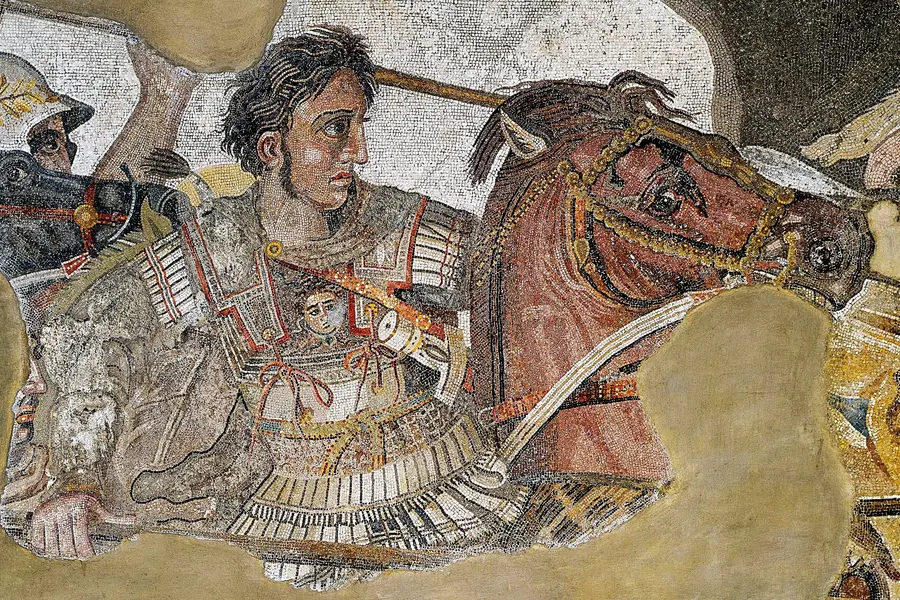
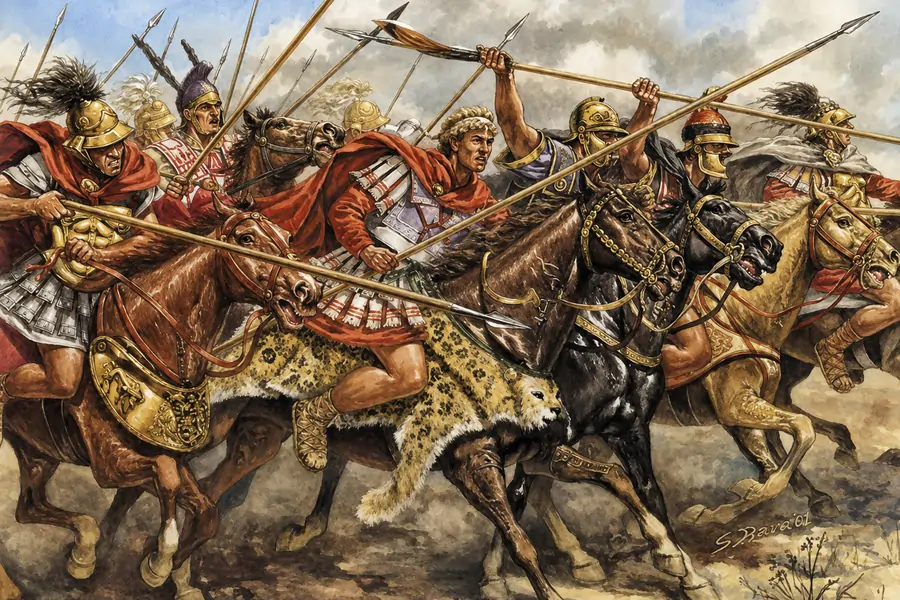
Yes, but "front lines" needs to be understood in the context of ancient warfare. The phrase "front lines" should not be taken literally. Alexander was not an infantryman who spent an entire battle standing in the first rank of the Macedonian phalanx. His primary role was that of a commander, and his position changed as the battle developed, but he repeatedly placed himself at the head of the decisive attack and within reach of enemy weapons. Most famously, he personally led the Companion cavalry, the elite Macedonian horsemen who formed the army's principal striking force. When Alexander led the cavalry, he was not several hundred metres behind his troops issuing orders. He could be at the head of the formation, riding directly toward the enemy. At major battles such as Granicus, Issus, and Gaugamela, his position put him in genuine personal danger.
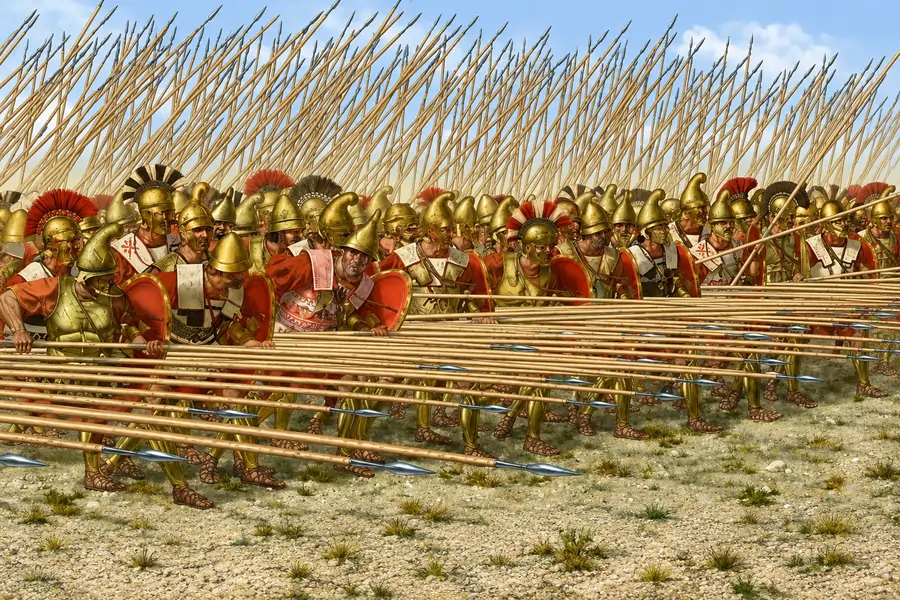
This was partly a feature of Macedonian kingship. A king was expected to demonstrate courage in person. Alexander inherited a military culture in which commanders could lead from the front and share the dangers faced by their soldiers. Modern commanders can coordinate a battle through maps, radios and remote communications. Alexander had none of these advantages. Visibility, messengers, personal observation and physical presence mattered enormously. Modern scholarship also emphasizes the unusual structure of Alexander's army. His command system combined the Macedonian phalanx, elite infantry, cavalry, light troops and specialized units rather than relying on one formation to win every engagement. The result was an army in which Alexander could personally direct the decisive part of an attack while other formations supported the maneuver.
Why Did Alexander Fight So Close to the Enemy?
Alexander's behavior makes more sense when his position as commander of the Companion cavalry is considered. The Companion cavalry was not simply an escort for the king. It was an elite offensive formation capable of delivering powerful mounted attacks against vulnerable points in an enemy line. Alexander frequently placed himself at its head because this allowed him to direct the attack at the exact point where he wanted the breakthrough. At Issus, for example, Alexander attacked toward the Persian center after maneuvering his cavalry against Darius's position. At Gaugamela, he used a controlled advance and oblique movement before launching the decisive cavalry attack. The personal charge was the visible climax of a much larger tactical system.
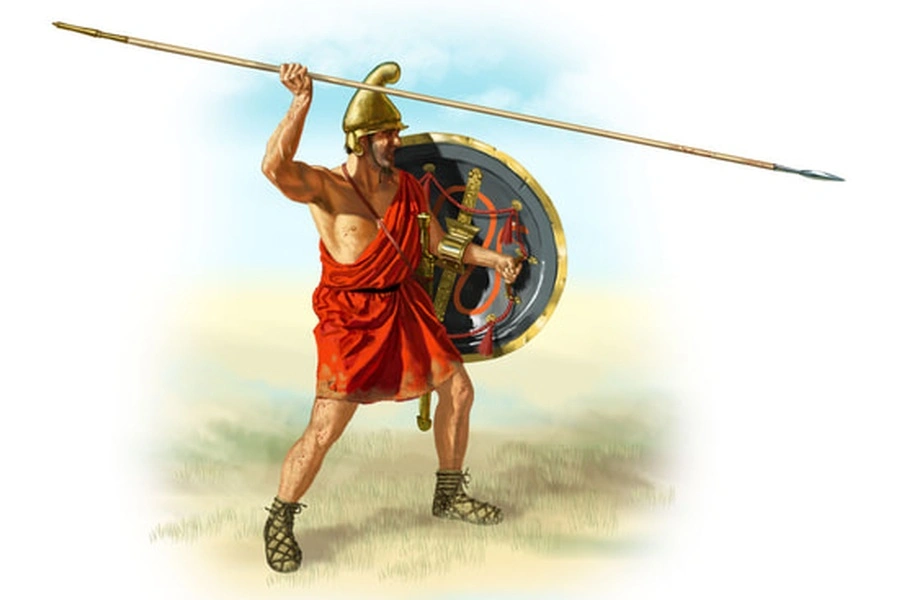
The king was also surrounded by experienced officers and elite troops. Alexander's personal protection included the somatophylakes, usually translated as "bodyguards." A scholarly study of Macedonian royal bodyguards notes that Alexander's campaigns involved both his personal bodyguards and the Royal Squadron of mounted guards, while the Hypaspistscould support and protect the army's right wing and the cavalry's movements. These men could not make Alexander invulnerable, but they reduced his exposure. At the Granicus, for example, Alexander's survival depended not only on his armor but also on the intervention of Cleitus the Black when a Persian warrior was preparing another blow against him.
Alexander the Great at the Battle of the Granicus
The Battle of the Granicus River in 334 BC provides perhaps the clearest answer to the question, "Did Alexander personally fight in battle?" Alexander's army had just entered Asia when it encountered a Persian force near the Granicus River. Rather than wait for ideal conditions, Alexander ordered an attack across the river. The crossing was dangerous. The riverbanks were difficult, the Macedonian cavalry had to negotiate the water, and the troops could not immediately form their normal battlefield arrangements. Once Alexander reached the opposite bank, he became involved in close combat.
Plutarch describes Alexander as being highly conspicuous because of his shield and the distinctive plumes on his helmet. According to his account, a javelin struck the joint of Alexander's breastplate without wounding him. Two Persian commanders then attacked the king. One of them, Rhoesaces, struck Alexander's helmet. The blow damaged it but did not kill him. Another attacker, Spithridates, raised a battle-axe and was preparing to strike Alexander again when Cleitus the Black intervened and killed him.
Arrian and Plutarch differ in some details of the episode, but both place Alexander in close combat and preserve the tradition that he narrowly escaped being killed. Alexander was personally engaged with Persian commanders and came extremely close to serious injury. This was not merely a commander observing the action from behind his troops. Alexander was fighting in the middle of a cavalry engagement. The Granicus also demonstrates why Alexander's survival cannot be explained simply by saying that he was a superb fighter. At least part of his survival came from the people around him. His helmet absorbed a potentially devastating blow, his cavalry supported him, and Cleitus intervened at precisely the moment when Alexander was vulnerable.
Alexander's Wound at the Battle of Issus
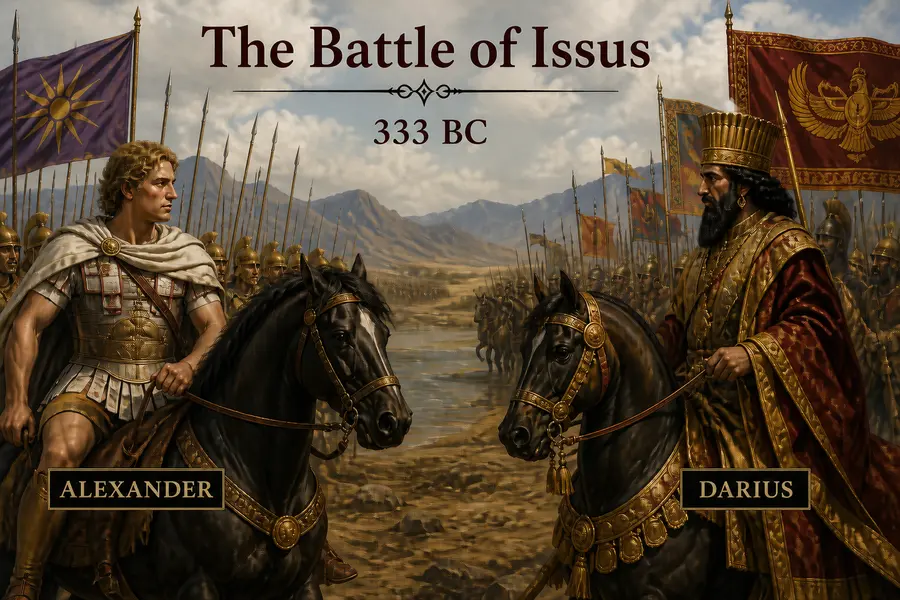
Two years later, Alexander again placed himself in extreme danger at the Battle of Issus in 333 BC. The battle was fought near the Pinarus River in a restricted area that limited the advantage of Darius III's much larger army. Alexander commanded the Macedonian right wing and personally led the Companion cavalry. His attack eventually drove toward the Persian center, where Darius was positioned.
Ancient sources agree that Alexander suffered a wound to the thigh during the battle. Plutarch says that he was wounded by a sword or dagger and records that Alexander himself later described the injury in a letter to Antipater as a wound to the thigh that had caused no serious consequences. One later tradition claimed that Alexander received the wound directly from Darius. That detail should be treated cautiously. Plutarch attributes the story to Chares, but it is not supported by the main accounts of the battle, and there is no good reason to assume that Alexander and Darius engaged in a prolonged personal duel.
The important historical point is simpler. Alexander was close enough to the fighting at Issus to receive a sword wound to the thigh. His injury did not prevent him from continuing the campaign. Darius fled the battlefield, and Alexander subsequently captured the Persian king's family, an episode discussed in our article on Alexander, Darius and the royal family at Issus.
Alexander Was Wounded During the Siege of Gaza
Alexander's injuries were not restricted to open-field battles. Some of his most dangerous moments came during sieges. At the Siege of Tyre, Alexander repeatedly exposed himself while directing an extraordinarily complicated operation involving siege works, ships, and an artificial causeway. Tyre was eventually captured, but the siege demonstrated the dangers Alexander accepted even when fighting from fortified positions.
At Gaza in 332 BC, he was wounded while fighting near the siege works during a sortie from the city. Arrian reports that Alexander was struck in the shoulder by a missile from a catapult. Plutarch also records a serious shoulder injury, although his account contains additional details that differ from Arrian's narrative.
The incident is particularly revealing because Alexander had apparently been warned about danger to himself. According to Arrian, an omen involving a bird dropping a stone led his seer Aristander to warn him to take care. Alexander initially kept away from the missiles but later rushed forward when the defenders attacked the Macedonian siege works.
Alexander's Injuries in Central Asia
Alexander's exposure to combat did not decrease after the major Persian battles. The fighting became increasingly difficult during the campaigns in Bactria and Sogdiana. Alexander faced guerrilla-style resistance, difficult terrain, and fortified settlements rather than simply large Persian armies. Plutarch reports that Alexander suffered an arrow wound to the leg at Maracanda, allegedly severe enough to damage the bone.
This injury is important because it shows how dangerous relatively small engagements could be. A commander did not need to participate in a gigantic pitched battle to receive a potentially disabling wound. Arrian also records Alexander being wounded by an arrow during fighting against the Aspasians. Plutarch's account associates this with a shoulder wound.
The Mallian Campaign: Alexander Nearly Dies
If one episode demonstrates how close Alexander came to death, it is the assault on the Mallian settlement in India in 325 BC. Alexander was campaigning through the Indian subcontinent when he attacked a fortified settlement belonging to the Mallians. During the assault, he climbed onto the walls with a small number of companions. The situation quickly became disastrous.
Alexander climbed onto the walls and ended up inside the enemy position while his supporting troops struggled to follow him. For a moment, the king was effectively isolated inside an enemy stronghold. According to Arrian, Alexander was struck in the chest by an arrow. The wound was so severe that his soldiers initially did not know whether he would survive. Plutarch provides a similarly dramatic account. He says that the arrow penetrated Alexander's breastplate and entered his chest. Alexander was eventually carried out on his shield after being rescued by his men.
The ancient accounts disagree over some details of the treatment. Arrian discusses competing traditions concerning whether the physician Critodemus or Perdiccas removed the weapon. What is clear is that the injury produced severe bleeding and that Alexander lost consciousness. His survival was remarkably fortunate. He had climbed onto an enemy wall and entered a fortified position with only a handful of men. It nearly cost him his life.
How Did Alexander the Great Survive So Many Battles?
Alexander's survival was not the result of a single secret. Several factors worked together.
1. He was surrounded by elite troops
Alexander did not ride into battle alone. The Royal Squadron of the Companion cavalry accompanied him during mounted attacks, while elite infantry such as the Hypaspists could protect the right side of the Macedonian battle line. His personal bodyguards were also drawn from the highest-ranking and most capable Macedonian families. The importance of these troops can be seen dramatically during the Mallian assault. Peucestas reportedly protected the wounded Alexander with his shield, an act for which Alexander later rewarded him with membership among the king's bodyguards.
2. His armor saved him more than once
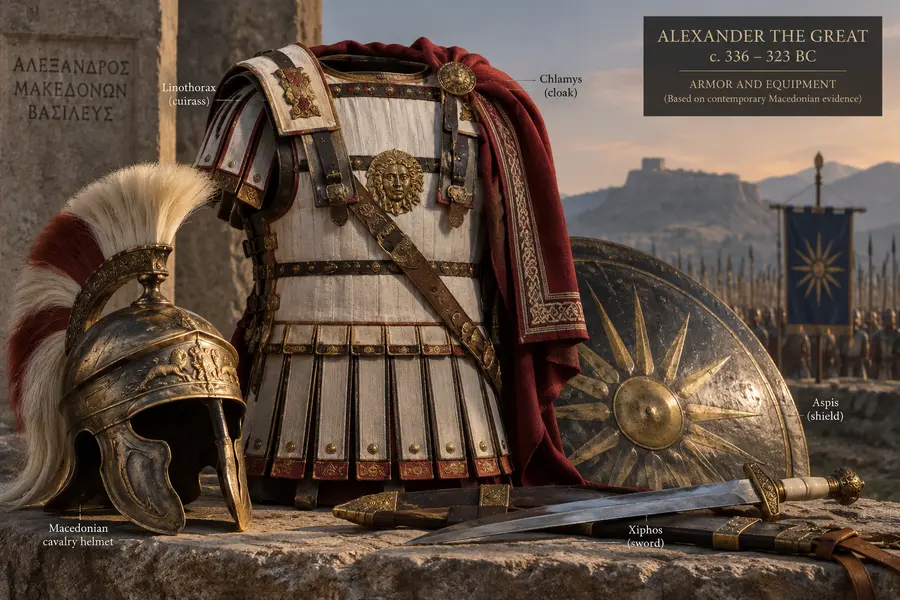
Ancient accounts repeatedly describe Alexander's armor absorbing or reducing the effect of attacks. At the Granicus, a javelin reportedly struck the joint of his breastplate without penetrating far enough to wound him. His helmet also protected him from a potentially fatal blow. This matters because surviving battle was not simply about avoiding weapons. Armor could turn a lethal strike into a glancing blow or a minor wound. Alexander's survival at Granicus is a particularly good example. His helmet was damaged by a powerful blow, but the weapon did not penetrate deeply enough to kill him.
3. Alexander was an experienced cavalryman
Alexander had grown up in a military environment and had been exposed to warfare from an early age. He understood cavalry movement, formations, and the behavior of troops in close combat. That did not make him immune to arrows or swords, but experience probably helped him judge when and where to attack. His greatest strength was not individual swordsmanship in isolation. It was his ability to combine personal leadership with the movement of an entire army.
4. His army created tactical opportunities
Alexander's battles were rarely decided by one reckless charge. The Macedonian phalanx could pin an enemy formation while cavalry exploited an exposed flank or gap. Light infantry could disrupt enemy positions, while elite troops protected key areas of the line. This combined-arms approach is one reason Alexander could personally lead the decisive charge without turning the entire army into a disorganized mass.
5. He had medical treatment
Alexander's army included physicians and medical attendants, and ancient sources describe medical treatment after several of his wounds. The treatment available to a fourth-century BC army was obviously primitive by modern standards, but it was not nonexistent. Wounds could be cleaned, foreign objects removed, bleeding controlled, and injuries treated with the medical knowledge available at the time. The Mallian wound is especially interesting because the ancient sources describe a physician or trusted officer extracting the arrow and dealing with the resulting bleeding.
6. Luck was probably the most important factor
No tactical explanation can eliminate the role of chance. Alexander repeatedly found himself within reach of weapons capable of killing him instantly. At Granicus, his helmet apparently absorbed a powerful blow. At the Mallian settlement, the arrow struck him in the chest but did not kill him immediately. At Issus, the thigh wound was serious enough to be remembered but not disabling. Alexander survived because his skill, protection, armor, medical care, and circumstances combined favorably. Some of his survival was simply luck.
Alexander the Great's Injuries: A Chronological List
One of the most interesting questions for readers is exactly how many times Alexander was wounded. The answer is complicated because the ancient sources disagree. Plutarch gives the most extensive catalogue, particularly in his On the Fortune or the Virtue of Alexander. However, that work is rhetorical rather than a straightforward medical record. Several injuries in Plutarch's list are not independently confirmed by other surviving sources.
| Period or location | Reported injury | Confidence and source situation |
|---|---|---|
| Illyrian campaign | Head injury from a stone and neck injury from a cudgel | Reported by Plutarch; not securely corroborated |
| Battle of the Granicus, 334 BC | Helmet struck by a weapon; Alexander was clearly exposed to a potentially fatal blow; accounts differ on whether he actually suffered a scalp wound. | Strong evidence that Alexander was nearly struck fatally; exact wound differs among sources |
| Battle of Issus, 333 BC | Wound to the thigh from a sword or dagger | Well attested by multiple ancient sources |
| Siege of Gaza, 332 BC | Shoulder wound from a missile | Reported by Arrian and other ancient traditions; exact nature of missile varies |
| Maracanda, c. 329-328 BC | Plutarch reports severe damage to the bone. | Reported by Arrian and Plutarch |
| Hyrcania | Neck injury from a stone, with temporary visual problems | Reported by Plutarch; not securely corroborated |
| Aspasian campaign | Arrow wound to the shoulder | Reported by Arrian and Plutarch |
| Assacenians | Arrow wound to the ankle | Reported in Plutarch's later account; less securely established |
| Mallian campaign, 325 BC | Severe arrow wound to the chest | Very strongly attested across several ancient traditions |
| Mallian campaign, 325 BC | Blow to the neck from a club | Reported by Plutarch alongside the chest wound |
This table illustrates why claims such as "Alexander was wounded exactly X times" should be treated cautiously. The number depends on which ancient source is being followed and whether injuries mentioned only by Plutarch are included.
Was Alexander Reckless in Battle?
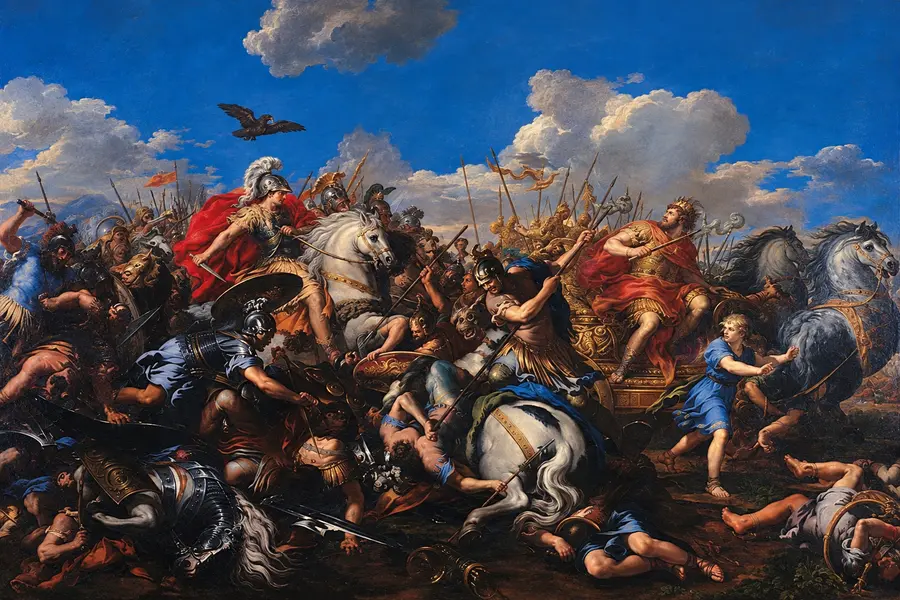
Alexander's battlefield behavior can reasonably be described as exceptionally risky, but calling him simply "reckless" can obscure what he was doing. There was a military purpose behind his presence. He needed to lead the cavalry, observe the battlefield and exploit opportunities quickly. His troops also expected their king to demonstrate courage. At the same time, several incidents went beyond what was necessary for effective command. The assault on the Mallian fortress is the clearest example.
Alexander did not merely position himself where he could see the assault. He climbed onto the walls and entered the enemy position with very few men. The decision left him dangerously isolated. Some ancient authors, including Plutarch in his discussion of the Granicus, present Alexander's behavior as exceptionally dangerous. Plutarch's account of the Granicus describes the river crossing as exceptionally dangerous and suggests that Alexander appeared to be acting more like a reckless commander than a cautious one. The historical reality was probably somewhere between the two extremes. Alexander was an exceptionally aggressive commander who understood tactical risk, but his appetite for personal danger sometimes exceeded what was necessary to control the battlefield.
Why Alexander's Personal Courage Mattered to His Army
Alexander's soldiers could see their king taking the same risks they faced. That mattered enormously in an ancient army. A commander who disappeared behind the army could still issue orders, but a king who rode into danger created a powerful visual symbol. Alexander's presence could reassure troops at moments when a battle was uncertain and demonstrate that the king himself was committed to the attack.
This should not be exaggerated into the claim that every Macedonian soldier fought harder simply because Alexander was nearby. Ancient historians naturally emphasized heroic leadership, and their accounts were written decades or centuries after many of the events. Nevertheless, Alexander's personal participation was clearly an important part of his leadership style. It also helps explain why his reputation became so closely associated with individual courage.
The Cost of Leading From the Front
Alexander's willingness to fight personally had a darker consequence. His army repeatedly risked losing its commander. Alexander's death would have created an enormous political crisis. He had no adult heir capable of immediately assuming effective control of his empire. The danger became obvious in 325 BC when the Mallian arrow nearly killed him. His survival allowed the campaign to continue, but the episode also demonstrated how fragile Alexander's empire was. Much of the system depended on the authority and personal leadership of one man.
That vulnerability became decisive after his death in Babylon in 323 BC. For more on the circumstances surrounding his death, see How Did Alexander the Great Die? His death eventually triggered the Wars of the Diadochi, in which his generals fought over the empire he had created.
Alexander Survived the Battlefield, But Not the Campaign
There is an irony at the heart of Alexander's story. He survived the Granicus, where a Persian weapon nearly struck him down. He survived Issus despite a thigh wound. He survived a serious injury at Gaza. He endured dangerous fighting in Central Asia. And in India, he survived an arrow that penetrated his chest during the Mallian assault. Yet Alexander did not die in battle.
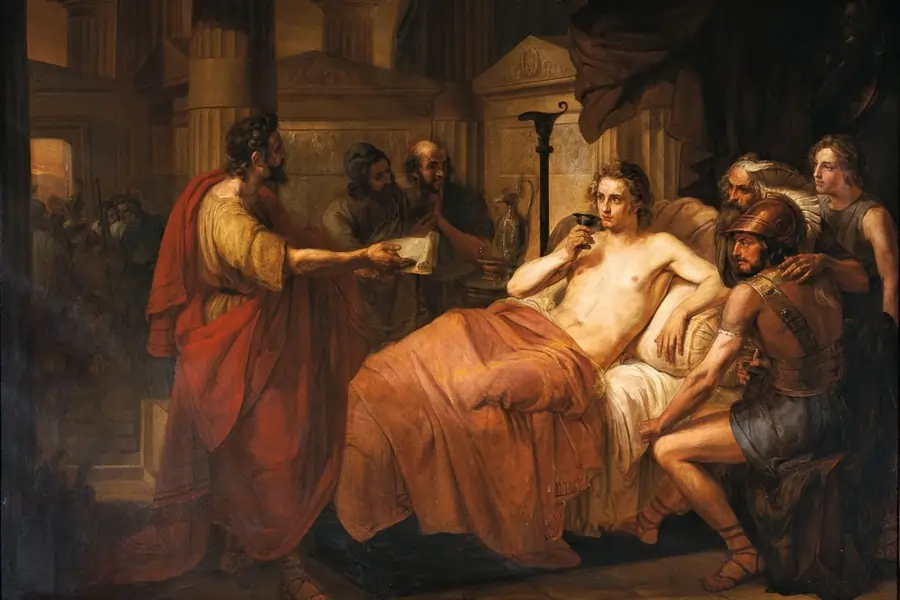
After more than a decade of campaigning, he died in Babylon in 323 BC at the age of 32. The exact cause of his final illness remains debated, and the surviving ancient accounts do not allow historians to establish a single certain medical diagnosis.
Alexander the Great really did fight at the front of his army. But he did not survive because he was invincible. He survived because an exceptional military system protected an exceptionally aggressive commander, and because countless moments that could have ended his life happened to turn in his favor. That may be the most revealing part of Alexander's battlefield career. His legend makes him seem almost untouchable. The surviving evidence tells a more human story. A brilliant commander who repeatedly placed himself in danger, suffered serious wounds, came remarkably close to death, and survived largely because skill, protection, and luck repeatedly arrived at exactly the right moment.
Sources and References
- Arrian, Anabasis of Alexander - one of the principal surviving narratives of Alexander's campaigns.
- Plutarch, Life of Alexander - an important biographical source that preserves numerous details about Alexander's battlefield behavior and injuries.
- Plutarch, On the Fortune or the Virtue of Alexander - particularly important for the famous catalogue of Alexander's wounds. The work should be used carefully because its purpose is rhetorical as well as historical. See the Perseus text.
- Diodorus Siculus, Library of History, Book XVII - another major surviving narrative source for Alexander's campaigns. The relevant sections are available through the LacusCurtius collection.
- Quintus Curtius Rufus, History of Alexander the Great - a later Latin narrative that provides additional details and alternative versions of several episodes.
- Waldemar Heckel, Brill's Companion to the Campaigns of Philip II and Alexander the Great - modern scholarly research on Alexander's army, commanders, and military organization. See the Brill publication.
- Carolyn Willekes, "Army and Warfare," in The Cambridge Companion to Alexander the Great - a modern scholarly overview of Alexander's army and battlefield system. See Cambridge University Press.
Books and Memorables
This article may contain affiliate links. If you purchase through these links, I may earn a small commission at no extra cost to you.


Related Articles
Frequently Asked Questions
Did Alexander the Great fight on the front lines?
Yes. Alexander the Great regularly placed himself close to the fighting, particularly when leading the Companion cavalry. Ancient accounts describe him personally engaging enemy troops at the Battle of the Granicus, leading the decisive cavalry attack at Issus and Gaugamela, and taking part in the assault on a Mallian fortress in India. He was therefore much more than a commander who directed battles from a safe position behind his army.
How many times was Alexander the Great wounded in battle?
Alexander the Great was wounded repeatedly during his military career, but there is no universally accepted exact number. Plutarch records numerous injuries, including wounds to his head, thigh, shoulder, leg, ankle and chest. Some of these are corroborated by other ancient historians, while others appear mainly in Plutarch's account. The most securely documented injuries include wounds suffered at Issus, Gaza, during the Central Asian campaigns and the severe chest wound he received fighting the Mallians.
What was Alexander the Great's worst battle injury?
Alexander's most dangerous recorded battle injury was the chest wound he suffered during the Mallian campaign in India in 325 BC. An arrow penetrated his armor and entered his chest, causing severe bleeding. Ancient accounts describe Alexander losing consciousness and being carried away by his soldiers. The wound was serious enough that his troops initially feared that their king had died.
Was Alexander the Great wounded at the Battle of Granicus?
Alexander was in extreme danger at the Battle of the Granicus in 334 BC, although the ancient accounts differ over whether he actually suffered a significant wound. Plutarch describes a Persian weapon piercing the joint of his breastplate and another blow splitting his helmet. The Persian commander Spithridates was preparing another strike when Cleitus the Black intervened and saved Alexander's life. The episode demonstrates how closely Alexander fought to the enemy.
Why did Alexander the Great survive so many battles?
Alexander survived repeated exposure to combat through a combination of military skill, elite protection, armor, experienced troops, medical treatment and luck. He was surrounded by bodyguards and elite Macedonian cavalry, while his armor protected him from some attacks. His tactical ability also allowed him to choose when to launch decisive attacks. Nevertheless, several incidents came extremely close to killing him, so his survival cannot be explained by skill alone.
How did Alexander the Great get the wound that nearly killed him?
Alexander received the wound that nearly killed him during the Mallian campaign in India in 325 BC. During an assault on a fortified settlement, he climbed onto the walls before enough of his soldiers could follow. He became isolated inside the enemy position and was struck in the chest by an arrow. His soldiers eventually rescued him, but the wound caused severe bleeding and left Alexander close to death.
Add Comment