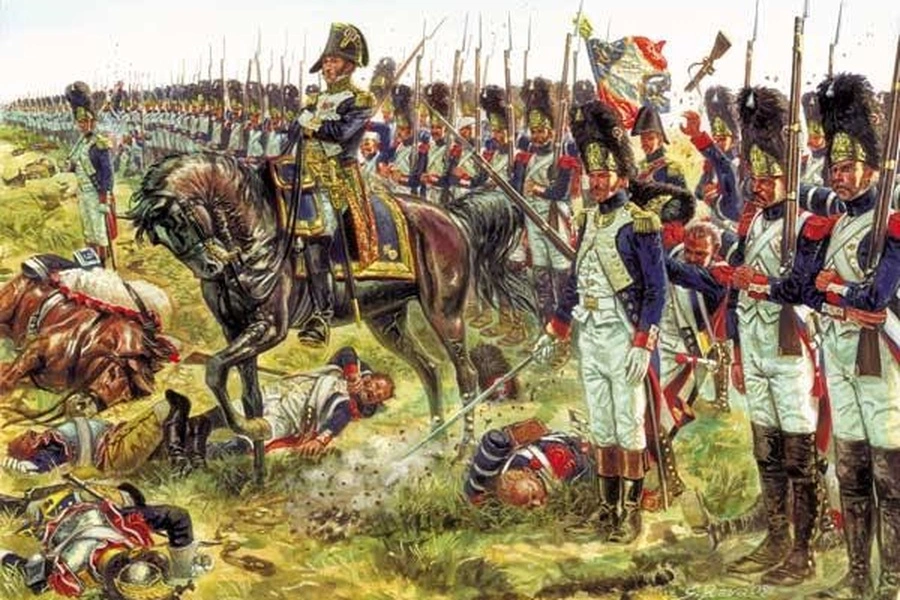
Napoleon's corps system transformed the way a large army could move, fight, and concentrate its strength. Instead of keeping tens of thousands of soldiers together in one enormous formation, Napoleon divided his army into semi-independent corps that could march along separate roads, gather supplies, fight limited engagements, and support one another. The result was an army that could spread across a huge area without permanently losing its ability to concentrate for a decisive battle. The system did not appear from nowhere, but Napoleon refined earlier developments into an exceptionally powerful method of warfare that helped produce victories such as Ulm, Austerlitz and Auerstädt.
Table of Contents
- How Were European Armies Organized Before Napoleon?
- How 18th-Century Armies Fought
- The Problem of Moving a Large Army
- The French Revolutionary Wars Changed Army Organization
- What Was Napoleon's Corps System?
- What Was the Difference Between a Division and a Corps?
- How Did Napoleon's Corps System Work?
- Why Was the Corps System Revolutionary?
- Napoleon's Marshals and the Corps Commanders
- The Corps System at Ulm
- The Corps System at Austerlitz
- Auerstädt: When a Corps Fought an Army
- The Limitations of the Corps System
- Why the System Struggled in Russia
- Did Napoleon Invent the Corps System?
- The Legacy of Napoleon's Corps System
- Conclusion
How Were European Armies Organized Before Napoleon?
To understand why Napoleon's corps system mattered, it is necessary to look at how European armies operated before the Napoleonic Wars. There was no single standardized European military organization. Austrian, Prussian, Russian, French, and British armies had different administrative structures and methods of command. Nevertheless, many armies shared an important characteristic. The regiment was the fundamental permanent building block of the army, while larger formations were often assembled for particular campaigns or operations.
Armies were certainly capable of organizing thousands of soldiers into brigades and divisions. The idea of dividing an army into smaller formations was not a Napoleonic invention. Military thinkers and commanders had experimented with larger combined-arms formations during the eighteenth century, and the French Revolutionary Wars subsequently made divisional organization increasingly important. The important distinction is therefore not between an army that was "organized" and one that was not. The real difference was how much independence a large formation possessed when operating away from the main army. An eighteenth-century European army might be arranged broadly along these lines:
| Formation | Typical function |
|---|---|
| Regiment | Permanent administrative and tactical unit of infantry or cavalry |
| Brigade | Grouping of several regiments for tactical command |
| Division | Larger formation used to coordinate several brigades and arms |
| Army | Large field force commanded by a senior general or monarch |
These arrangements varied considerably by country and period. It is therefore misleading to imagine that every European army followed exactly the same hierarchy before Napoleon.
How 18th-Century Armies Fought
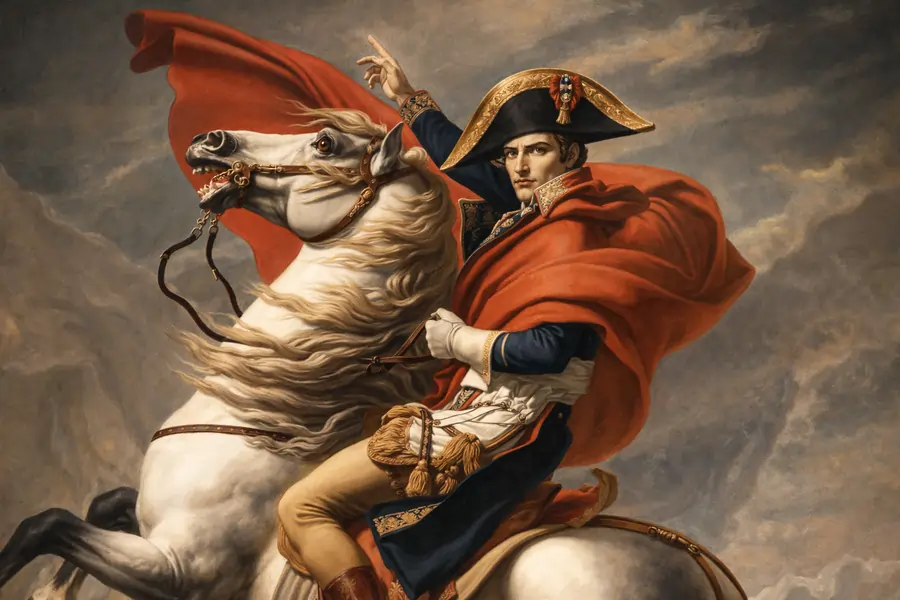
The battlefield environment of the eighteenth century was also very different from that of the twentieth century. Smoothbore flintlock muskets were relatively inaccurate at long range. Infantry therefore relied heavily on disciplined formations and concentrated volleys. European armies commonly deployed infantry in relatively thin linear formations so that as many soldiers as possible could bring their muskets to bear. Artillery was integrated into the battle line, while cavalry frequently operated on the flanks or was held in reserve. The system demanded considerable discipline. Soldiers had to maintain alignment, obey commands, and reload and fire according to drill. Contemporary linear warfare was therefore highly dependent on collective discipline rather than individual marksmanship. The U.S. Army's historical survey of eighteenth-century warfare describes how infantry deployed in lines several ranks deep and relied on controlled volleys to maximize firepower.
This did not mean eighteenth-century commanders were unimaginative or incapable of maneuver. Frederick the Great, Marlborough, and other commanders demonstrated considerable operational skill. Armies marched in multiple columns, maneuvered around enemy positions, conducted sieges, and extensively employed cavalry and light troops. The crucial issue was that large-scale battlefield command was difficult. Communications depended heavily on couriers, mounted officers, visual signals, and prearranged orders. Roads were poor, maps were imperfect, and an army could quickly become separated by rivers, forests, or difficult terrain. That created a fundamental problem.
The Problem of Moving a Large Army
Imagine trying to move an army of 60,000 soldiers through eighteenth-century Europe. It could not simply march down one road like a modern military convoy. Thousands of horses, wagons, artillery pieces, ammunition carts, and camp followers had to move with the army. Food and forage had to be found or transported. Bridges and roads could become bottlenecks. The solution was to spread the army out. Different columns could use different roads. Separate formations could move toward the same destination without forcing every soldier to march in a single enormous column. But this created a dangerous trade-off.
| Keeping the army concentrated | Spreading the army into columns |
|---|---|
| Strong mutual support | Greater marching speed |
| Easier central control | Less road congestion |
| Harder for the enemy to defeat isolated units | Greater geographical coverage |
| Slow movement | Risk of isolated formations being attacked |
| Greater logistical congestion | More difficult communication |
The problem was not simply getting an army from one place to another. The commander had to ensure that dispersed formations could reunite before the enemy could destroy them individually. Napoleon's corps system offered an elegant solution by giving each major formation enough combat power and support to operate independently for a period, while keeping the corps close enough to reinforce one another.
The French Revolutionary Wars Changed Army Organization
The corps system must be understood as part of a much larger transformation in French warfare. The French Revolution dramatically altered the scale and character of the French armies. The Republic had to mobilize enormous numbers of soldiers and organize them for campaigns across multiple fronts. Lazare Carnot, one of the leading figures responsible for French military administration, played a major role in reorganizing armies and their logistical support during the Revolutionary Wars. The French military history organization Napoleon.org notes Carnot's role in reorganizing the Army of the North and establishing and supporting multiple French armies during 1793-1794.
The French increasingly relied on divisions as practical operational formations. This was important because a division could march separately from other parts of the army while remaining under the overall command of the army headquarters. Napoleon inherited this environment and developed it further. By the time of the Consulate and Empire, the French army was increasingly organized into formations capable of operating independently. Napoleon's contribution was not to suddenly invent the idea of dividing an army. Instead, he made the independent corps a central instrument of operational warfare. This distinction is important. The corps system was an evolutionary development, but Napoleon's use of it at the scale of the Grande Armée gave it a new importance.
What Was Napoleon's Corps System?
A Napoleonic army corps was essentially a small combined-arms army within the larger army. A typical corps could contain several infantry divisions, artillery, cavalry, and supporting services. Its exact size and composition varied according to the campaign and its mission. Some corps were considerably larger than others. Most importantly, a corps was designed to operate without immediately requiring the entire army to come to its assistance. A corps could:
- march along its own route;
- conduct reconnaissance and screening;
- occupy and defend a position;
- fight an enemy formation;
- cross rivers and establish camps;
- manage its own immediate logistics;
- hold an area while neighboring corps maneuvered; and
- reinforce another corps when ordered.
This made the corps fundamentally different from simply splitting an army into arbitrary pieces. Napoleon's corps were designed to be mutually supporting, semi-independent formations.
What Was the Difference Between a Division and a Corps?
This is one of the most important distinctions for understanding Napoleon's army. A division was already a substantial formation. But the corps was generally larger and more self-contained, with the combined-arms resources needed to conduct operations independently.
| Division | Army Corps |
|---|---|
| Large combined formation | Larger combined-arms formation |
| Usually composed of brigades | Usually composed of several divisions, but composition varied |
| Could conduct independent tactical operations | Designed for sustained semi-independent operations |
| Had infantry, artillery and sometimes cavalry/support | Had multiple divisions plus artillery, cavalry and support elements |
| Normally operated under corps/army command | Could march, fight and maneuver independently for limited periods |
The distinction should not be treated as an absolute rule. Napoleonic corps varied in size and composition, and the organization changed over time. Nevertheless, operational independence is the key concept.
How Did Napoleon's Corps System Work?
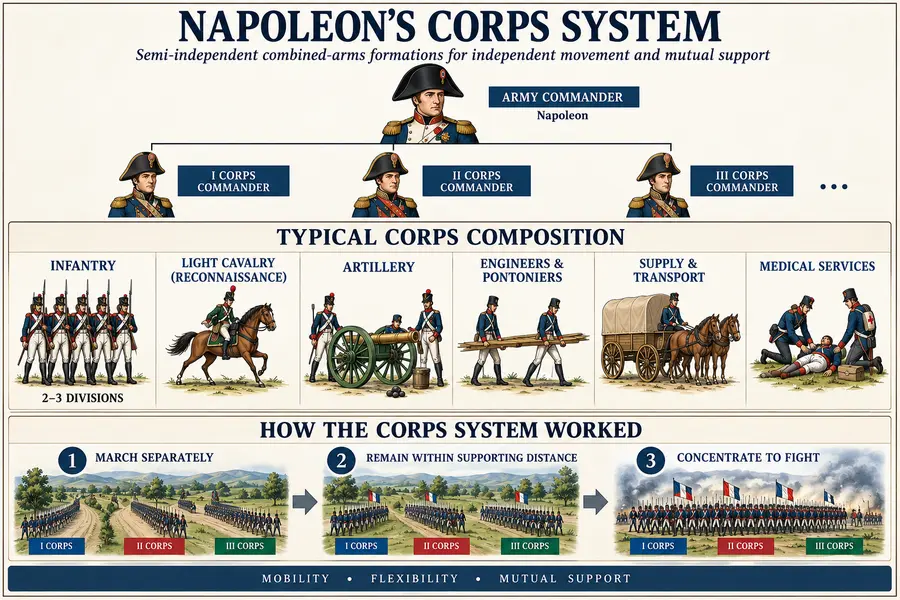
The simplest way to understand Napoleon's corps system is to imagine an army divided into several columns. Instead of marching 100,000 men together, Napoleon could send different corps along separate routes. One corps might advance north. Another could march south. A third could move through the center. A fourth could remain in reserve or protect a flank. They were not independent armies pursuing unrelated wars. They were parts of one operational machine. Napoleon could then concentrate several corps when the enemy's location became clear.
The underlying principle can be simplified as: disperse for movement and concentrate for battle. This gave Napoleon a combination that was extremely difficult for an opponent to handle. His army could occupy a wide geographical area while still possessing the ability to concentrate quickly against a vulnerable enemy. In 1805, for example, Napoleon organized the Grande Armée into seven corps commanded by Bernadotte, Marmont, Davout, Soult, Lannes, Ney, and Augereau. Napoleon.org records these seven formations as the major corps of the 1805 army.
Why Was the Corps System Revolutionary?
The corps system was revolutionary less because of the existence of corps themselves than because of what Napoleon could do with them.
1. It increased operational mobility
A huge army moving as one mass was constrained by the slowest and most congested part of the column. Separate corps could use several roads simultaneously. This allowed Napoleon to move large armies over surprisingly broad fronts.
2. It reduced congestion
Dividing an army between several routes reduced the enormous traffic jam that could develop when infantry, cavalry, artillery, wagons and supplies attempted to use the same roads. The result was not merely convenience. It affected the speed with which Napoleon could respond to an enemy.
3. It created operational flexibility
Napoleon could change the direction of individual corps without immediately redirecting his entire army. A corps could be ordered to secure a bridge, block an enemy route, or reinforce another formation while the remainder of the army continued its movement.
4. It increased uncertainty for the enemy
An opponent facing several French corps could have difficulty determining where Napoleon intended to make his main effort. A formation visible on one road might not represent the full French strength. Other corps could be approaching from several directions.
5. It allowed Napoleon to concentrate overwhelming force
This was perhaps the most important advantage. Napoleon did not need to keep his entire army concentrated all the time. He needed to concentrate it at the decisive moment and place. The 1805 campaign demonstrated this principle repeatedly. The Cambridge History of the Napoleonic Wars describes the Ulm and Austerlitz campaign as a classic example of Napoleon's ability to use rapid movement and operational maneuver to envelop and defeat the Austrian army before defeating the Austro-Russian force at Austerlitz.
Napoleon's Marshals and the Corps Commanders
The system depended on more than organization. It required commanders who could operate with considerable independence. Napoleon's marshals became the commanders of major corps. Davout, Ney, Soult, Lannes and Bernadotte were not merely ceremonial figures standing beneath Napoleon. They were responsible for moving and fighting substantial forces over large distances.
The relationship between Napoleon and his corps commanders was therefore crucial. Napoleon could issue broad instructions while allowing his subordinate commanders to execute them without requiring the emperor to personally direct every regiment. This also explains why Napoleon's chief of staff, Louis-Alexandre Berthier, was so important. Orders had to be transmitted rapidly and accurately between headquarters and the corps.
The Corps System at Ulm
The Ulm Campaign of 1805 provides one of the clearest examples of the corps system being used for operational maneuver. Napoleon's army crossed the Rhine in September 1805 and advanced toward the Danube. Rather than moving as one enormous block, the French corps advanced along multiple routes. The Austrian commander Karl Mack had concentrated his forces around Ulm, expecting the French to approach from a direction that would allow him to respond. Napoleon instead maneuvered his corps around the Austrian position. The result was a huge operational trap.
The French did not necessarily defeat the Austrian army by winning one gigantic frontal battle. They used movement, geography, and concentration to place the Austrian army in an increasingly dangerous position. The U.S. Army's Center for Military History describes the 1805 campaign as a particularly useful example of the movement of Napoleon's corps between Ulm and Austerlitz. The corps system gave Napoleon the ability to conduct a wide operational envelopment while maintaining enough cohesion to concentrate against the Austrians.
The Corps System at Austerlitz
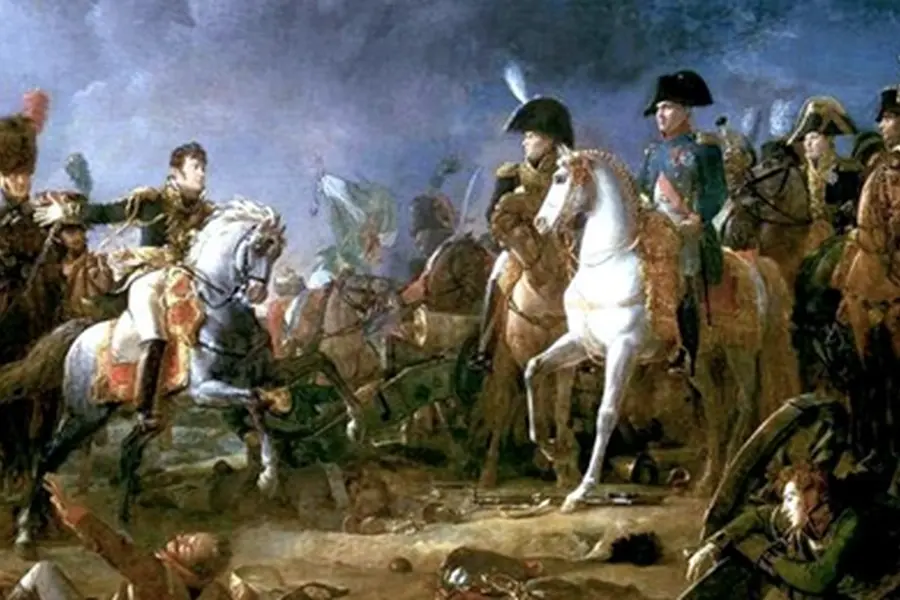
Austerlitz demonstrates the next stage of the process. Concentration at the decisive point. On 2 December 1805, Napoleon faced a combined Austrian and Russian army. His forces were not simply placed in one rigid mass. Different corps had specific roles across the battlefield. Soult's IV Corps played a critical role around the Pratzen Heights. Davout's III Corps was required to march rapidly to reinforce the French right, while Lannes and Bernadotte operated on the opposite side of the battlefield.
Napoleon's headquarters could therefore coordinate several large formations with different tasks while maintaining an overall battle plan. Napoleon.org's detailed account of Austerlitz describes how Davout's III Corps marched to reinforce the French right and how Soult's formations became central to Napoleon's attack on the Allied center.
The battle illustrates why the corps system was so useful. A formation could be far from the main point of decision at one moment and then become essential when the tactical situation changed. Davout's corps is particularly important because it demonstrated the value of rapid marching. Its arrival on the French right helped prevent the Allied attack there from collapsing the French position before Napoleon could launch his main counterstroke. Austerlitz demonstrates both corps-level independence and Napoleon's ability to coordinate corps as components of a single battle plan.
Auerstädt: When a Corps Fought an Army
The Battle of Auerstädt on 14 October 1806 provides perhaps the most dramatic demonstration of the independence of a Napoleonic corps. Marshal Louis-Nicolas Davout's III Corps encountered the main Prussian army while Napoleon's principal force was engaged elsewhere at Jena. Davout's force fought a major battle independently and defeated the larger Prussian force.
Davout's campaign records provide unusually valuable evidence of how a Napoleonic corps actually operated. The Fondation Napoléon notes that Davout's operational papers contain reports from brigade and division commanders documenting the movements and combat of III Corps during the campaigns of 1805-1807. Auerstädt demonstrates that a corps did not require Napoleon to function effectively. It could become the principal French army in a particular sector of the battlefield. This was one of the system's greatest strengths.
The Limitations of the Corps System
It would be a mistake to portray Napoleon's corps system as a perfect military machine. Its greatest strength, the ability to operate independently, also created serious risks.
Communication could fail
A corps operating many miles from Napoleon's headquarters could not receive instant instructions. A situation could change before an order arrived.
Corps could become isolated
If one corps advanced too far ahead of its neighbors, an enemy might concentrate against it before reinforcements arrived.
Command quality mattered
A highly capable commander could interpret Napoleon's intentions effectively. A weaker commander might misunderstand an order or react too slowly.
Terrain could disrupt the system
Mountains, rivers, forests and poor roads could separate corps far more effectively than Napoleon intended.
Logistics remained decisive
The corps system made an army more mobile, but it did not eliminate the need for food, ammunition, horses and replacement equipment. An army could not march indefinitely simply because it was divided into smaller formations. These limitations became increasingly important when examining Napoleon's later campaigns.
Why the System Struggled in Russia
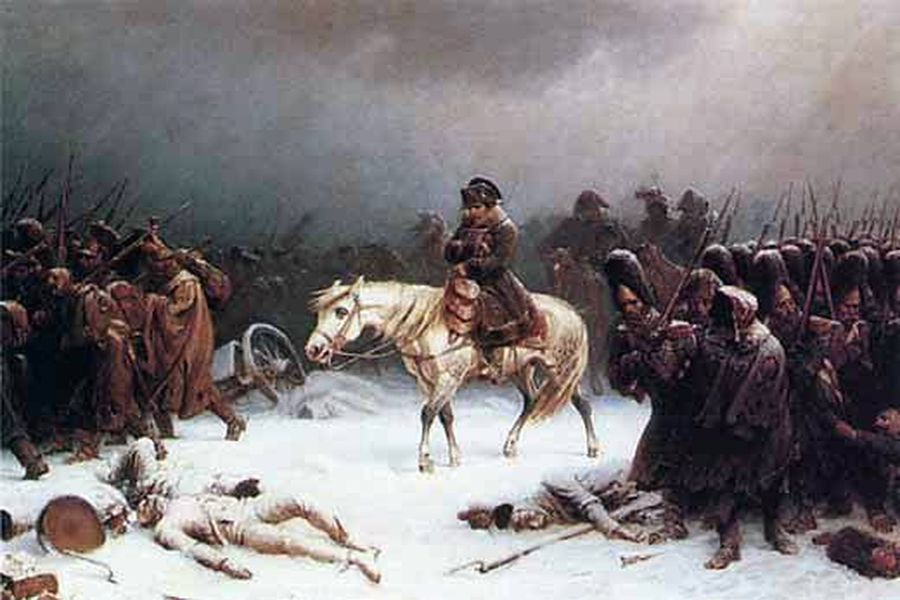
The invasion of Russia in 1812 demonstrated that organizational brilliance could not eliminate geography. Napoleon's army was enormous, and its formations had to operate across immense distances. Roads were poor, supply lines stretched over hundreds of miles, and the Russians repeatedly withdrew rather than allowing Napoleon to destroy their main army in a single decisive battle. The basic principles of the corps system remained useful, but the scale of the theater made coordination and supply increasingly difficult.
This reveals an important point about Napoleon's military system. The corps system was an instrument, not a guarantee of victory. It worked exceptionally well when Napoleon could identify an enemy's position, maneuver around it, and concentrate superior forces at the decisive point. It was much less effective when enormous distances, supply problems, and an elusive enemy prevented that concentration from producing a decisive result. Russia exposed the limits of the larger Napoleonic operational system, rather than simply proving that the corps system was defective.
Did Napoleon Invent the Corps System?
No, not in the sense of creating the entire idea from nothing. The development of the corps system was part of a longer evolution in European military organization. Combined-arms formations, divisions, and independent marching columns had predecessors. French armies during the Revolutionary Wars had already experimented with large formations capable of operating separately. Napoleon inherited these developments and transformed them into a more systematic operational method. The important innovation was therefore not simply the name corps. Napoleon's distinctive achievement was to combine these developments into a highly effective operational system and employ it repeatedly at unprecedented scale:
- large Revolutionary armies;
- divisional organization;
- semi-independent formations;
- combined arms;
- rapid marching;
- centralized strategic direction;
- delegated operational command; and
- rapid concentration against a selected enemy.
That combination created something far more powerful than any individual innovation. This is also why it is misleading to describe pre-Napoleonic armies as simply "primitive." Eighteenth-century commanders had sophisticated systems of maneuver, logistics, and battlefield command. Napoleon's achievement was to exploit a changing military environment more effectively and on a larger scale.
The Legacy of Napoleon's Corps System
The corps became one of the defining levels of organization in modern European armies. Later armies increasingly recognized the value of formations capable of operating independently while remaining components of a larger field army. The basic concept continued to evolve as weapons, communications, railways and logistics changed. In Napoleon's time, a corps depended heavily on marching speed, couriers and staff officers. By the nineteenth and twentieth centuries, railways, telegraphs, radios and motor transport radically altered how corps could operate.
Yet the underlying organizational principle remained recognizable. A large army could be divided into manageable operational formations without sacrificing the ability to concentrate its strength. That is why the Napoleonic corps system deserves to be regarded as more than an organizational chart. It was a method for solving one of warfare's oldest problems: how to control a large army spread across a large battlefield without allowing its parts to become isolated.
Conclusion: Why Napoleon's Corps System Mattered
Napoleon did not invent the idea of dividing armies into smaller formations. Nor were eighteenth-century European armies incapable of maneuvering in separate columns. The real transformation came from turning the corps into a reliable operational instrument. Napoleon's corps could march independently, fight independently, and maneuver over considerable distances while remaining part of a single army directed from Napoleon's headquarters. That gave him an extraordinary combination of mobility and concentration.
His army could spread out across several roads and approach an enemy from multiple directions. Once an opportunity appeared, separate corps could converge and create overwhelming strength at the decisive point. The campaigns of 1805 and 1806 show the system at its most effective. At Ulm, dispersed French formations helped envelop the Austrian army. At Austerlitz, corps operated across the battlefield while Napoleon concentrated his strength at the decisive point. At Auerstädt, Davout's III Corps demonstrated that a single corps could fight and defeat a major enemy army on its own.
The corps system therefore helps explain something fundamental about Napoleon's warfare. His advantage was not simply that he had more soldiers or that his commanders were individually talented. He had developed a way to turn a huge army into a collection of smaller armies that could move separately but fight together. That was the real power of the system.
References and Further Reading
- Cambridge University Press. Jacques Garnier and Alexander Mikaberidze, "The Ulm and Austerlitz Campaigns, 1805," in The Cambridge History of the Napoleonic Wars. Read the Cambridge University Press chapter.
- Fondation Napoléon. "Austerlitz, 2 December 1805: A Timeline." The source documents the organization of Napoleon's Grande Armée into seven corps in 1805. View the timeline.
- Fondation Napoléon. "The Battle of Austerlitz and the Principles of War." Includes discussion of the roles of Davout, Soult, and other corps during the battle. Read the article.
- U.S. Army Combined Arms Center. "History in Motion: Napoleon 1805." An educational study of the movements from Ulm through Austerlitz. View the U.S. Army resource.
- U.S. Army Center of Military History. American Military History, Volume I. Includes discussion of eighteenth-century linear tactics and battlefield organization. Read the historical study.
- Fondation Napoléon. "Lazare Carnot." Background on Carnot's role in reorganizing French armies during the Revolutionary Wars. Read the biography.
- National Army Museum. "Seven Years War." Background on eighteenth-century warfare and military developments before the Napoleonic period. Explore the Seven Years War.
- Fondation Napoléon. Scott Bowden, Napoleon's Finest: Marshal Louis Davout and his 3rd Corps, Combat Journal of Operations, 1805-1807. The publication draws on Davout's operational papers and campaign reports. View the publication.
Books and Memorables
This article may contain affiliate links. If you purchase through these links, I may earn a small commission at no extra cost to you.


Related Articles
Frequently Asked Questions
What was Napoleon's corps system?
Napoleon's corps system divided a large army into semi-independent corps, each containing infantry, cavalry, artillery and supporting troops. A corps was designed to march and fight independently for limited periods while remaining close enough to other corps to receive support. This allowed Napoleon to move his army across several routes and then concentrate multiple corps for a major battle.
How did Napoleon's corps system work?
Napoleon's corps system allowed different corps to advance along separate roads under general instructions from army headquarters. Each corps had enough infantry, cavalry, artillery and support troops to operate independently. When an enemy was located, nearby corps could rapidly converge on the battlefield, allowing Napoleon to combine the advantages of dispersed movement with the strength of a concentrated army.
What was the difference between a Napoleonic corps and a division?
A Napoleonic division was a large military formation, while a corps was a larger combined-arms formation containing several divisions and additional cavalry, artillery and support elements. A corps was designed to function as a small army and could conduct independent operations, whereas a division normally operated as part of a larger formation.
How many soldiers were in a Napoleonic army corps?
The size of a Napoleonic army corps varied according to the campaign and its mission. Many French corps during the major campaigns of the early Empire contained roughly 15,000 to 30,000 soldiers, although some were significantly larger or smaller. A typical corps included several infantry divisions along with cavalry, artillery, engineers and logistical support.
Why was Napoleon's corps system effective?
The corps system was effective because it allowed Napoleon to spread his army across several routes without completely sacrificing its ability to concentrate. Separate corps could march faster, reduce road congestion, gather supplies over a wider area and approach an enemy from different directions. When necessary, neighboring corps could converge and create overwhelming force at the decisive point.
Did Napoleon invent the corps system?
Napoleon did not invent the idea of dividing armies into large independent formations from nothing. French armies had experimented with divisions and semi-independent formations during the Revolutionary Wars, and General Jean Moreau used temporary corps in 1800. Napoleon developed these ideas into a more permanent and systematic corps organization and made the corps a central element of French operational warfare.
Add Comment