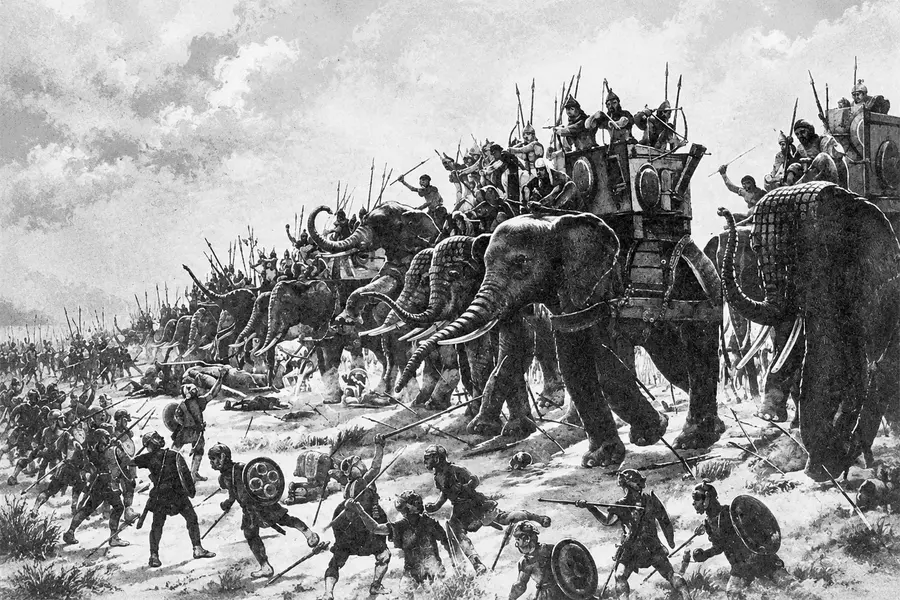
The Battle of Heraclea in 280 BC was a victory that might have transformed Pyrrhus' campaign against Rome. Instead, it revealed why Rome was so difficult to defeat. Pyrrhus of Epirus brought a powerful Hellenistic army into southern Italy, combining Macedonian-style phalanx infantry, elite cavalry, missile troops, and war elephants. He defeated the Roman army under the consul Publius Valerius Laevinus. Still, the cost of his victory was so severe that the victory became the archetype of a Pyrrhic victory. A success that inflicts losses so devastating that winning another battle may be impossible.
Heraclea was also a remarkable military encounter. The war was more than a simple duel between Rome and Pyrrhus: Greek cities, Italian peoples and other Mediterranean powers had their own interests in the conflict. For the first time, Rome faced a major Hellenistic army on the Italian battlefield. Roman legionaries found themselves confronting the long sarissas of the phalanx and the terrifying sight of elephants advancing against their cavalry. Yet the Romans did not collapse easily. Their discipline, manpower, and ability to recover from defeat would ultimately matter more than the result of a single battle.
Table of Contents
- Why Did Pyrrhus Fight Rome?
- The Armies at Heraclea
- Where Was the Battle of Heraclea Fought?
- The Battle of Heraclea
- Roman Legion vs. Macedonian Phalanx
- How Did Pyrrhus Use War Elephants?
- Why Did Pyrrhus Win?
- Battle of Heraclea Casualties
- Why Was Heraclea a Pyrrhic Victory?
- What Happened After the Battle of Heraclea?
- Why Was the Battle of Heraclea Important?
- The Military Legacy of Heraclea
- Sources and Further Reading
Battle of Heraclea
The ancient accounts of Heraclea are not completely consistent. Plutarch preserves a detailed narrative, including the river crossing, the struggle between the infantry formations, the apparent death of Pyrrhus, and the final intervention of the elephants. Other ancient traditions differ on the sequence of events and the scale of the forces involved. The battle can therefore be reconstructed with reasonable confidence at the broad level, but precise formations, troop numbers, and some tactical details remain uncertain.
| Fact | Details |
|---|---|
| Battle | Battle of Heraclea |
| Date | 280 BC |
| War | Pyrrhic War |
| Location | Near Heraclea and the River Siris, southern Italy |
| Pyrrhic commander | Pyrrhus, King of Epirus |
| Roman commander | Publius Valerius Laevinus |
| Result | Victory for Pyrrhus |
| Major weapons | Sarissa, cavalry, missiles and war elephants |
| War elephants | Approximately 20 on Pyrrhus' side |
| Historical significance | First major Roman encounter with Pyrrhus' Hellenistic army and an important example of a costly military victory |
Why Did Pyrrhus Fight Rome?
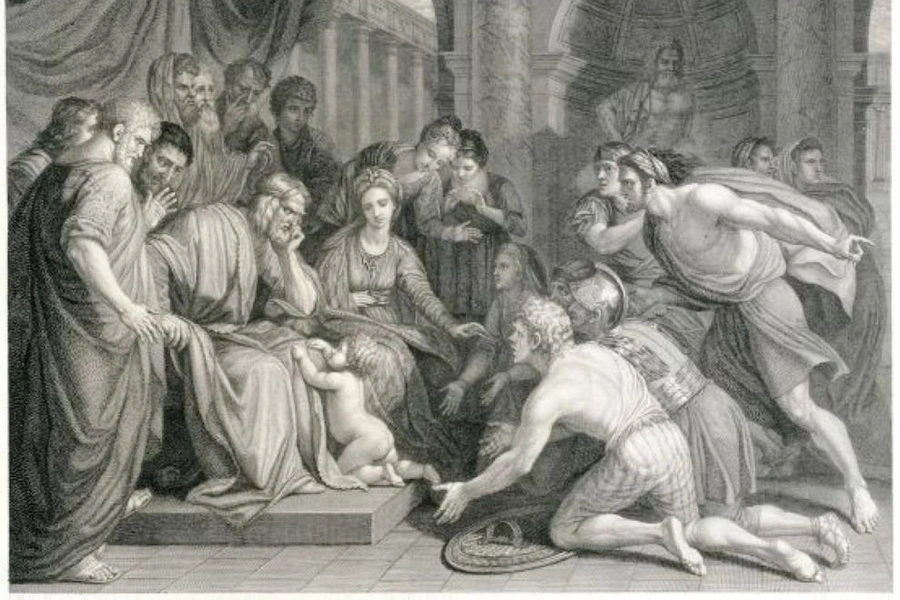
The Battle of Heraclea was the opening major battle of the Pyrrhic War, fought between Rome and Pyrrhus of Epirus from 280 to 275 BC. The conflict began in the Greek city of Tarentum in southern Italy, where Rome's growing power threatened the independence of the Greek communities of Magna Graecia. Tarentum had already come into conflict with Rome. Its leaders appealed to Pyrrhus, the ambitious king of Epirus, for military assistance. Pyrrhus was not simply responding to an appeal for help. He saw an opportunity to establish himself as a major power in the western Mediterranean.
His ambitions extended beyond Italy. Pyrrhus hoped to build a western empire and eventually challenge Carthage in Sicily. The Italian campaign therefore offered him a chance to intervene in the affairs of the Greek cities while expanding his own influence. Pyrrhus arrived in Italy in 280 BC with a professional Hellenistic army. His forces included infantry from Epirus and Macedonia, cavalry, archers, slingers, and twenty war elephants. He also expected support from Italian peoples opposed to Rome.
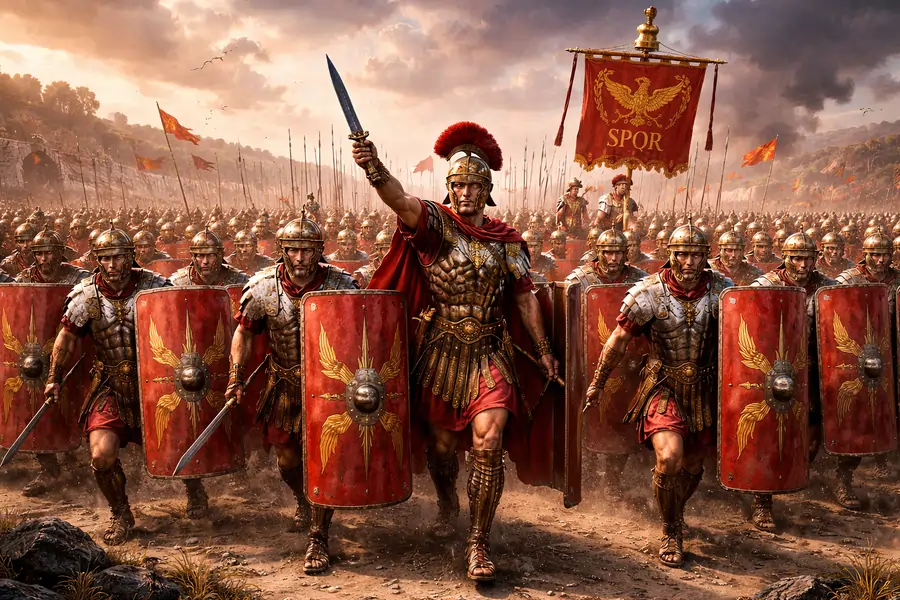
Rome responded by mobilizing a large consular army under Publius Valerius Laevinus. The Roman Republic had already developed an impressive capacity to raise armies from its citizens and allies. That difference would become one of the most important themes of the war. Pyrrhus could win battles. Rome could replace armies. That imbalance explains much of what followed.
The Armies at Heraclea
Ancient sources disagree about the exact size of the armies, so modern figures should be treated as estimates rather than precise census figures. Plutarch, Dionysius of Halicarnassus and other writers provide different casualty figures and details of the battle.
| Feature | Pyrrhus' Army | Roman Army |
|---|---|---|
| Commander | Pyrrhus of Epirus | Publius Valerius Laevinus |
| Core infantry | Hellenistic phalanx and allied infantry | Roman legions and Italian allies |
| Cavalry | Strong Thessalian and allied cavalry | Roman and allied cavalry |
| Missile troops | Archers and slingers | Light infantry and missile troops |
| War elephants | About 20 | None |
| Main tactical advantage | Combined-arms Hellenistic warfare | Manpower, discipline and flexible infantry |
Pyrrhus' army was not simply a mass of Greek soldiers. It was a combined-arms force. The phalanx supplied the heavy infantry power, cavalry could exploit weaknesses in the enemy line, and elephants could disrupt formations and terrify horses.
The Romans possessed no equivalent to the elephants and had not previously faced a Hellenistic army on this scale. Nevertheless, they were not an inexperienced military power. The Roman army of this period was based around legions supported by allied troops. Its organization was substantially different from the later professional imperial army. For background on how Roman military organization evolved, see Roman Legion Structure Explained: Organization, Tactics and Evolution.
Where Was the Battle of Heraclea Fought?
The Battle of Heraclea took place in southern Italy near the Greek city of Heraclea, close to the River Siris in what is now Basilicata. The location was strategically important because it lay within the territory of the Greek cities and Italian peoples involved in the conflict. Pyrrhus established himself near Heraclea while the Roman army approached from the opposite side of the river. According to Plutarch, Pyrrhus personally inspected the Roman camp before the battle. What he saw surprised him.
Instead of an undisciplined Italian army, Pyrrhus observed an organized camp, guards, and a systematic military arrangement. Plutarch records his reaction as an acknowledgment that the Romans might be barbarians by Greek standards, but their military discipline was anything but barbaric. This moment is worth emphasizing because it foreshadowed the entire battle. Pyrrhus would defeat the Roman army, but Heraclea would also demonstrate how difficult it was to translate a battlefield victory into the defeat of Rome itself.
The Battle of Heraclea
The battle began with the struggle to cross the River Siris. Pyrrhus had positioned troops to hinder the Roman advance. Laevinus, however, did not simply wait for the king to assemble his entire army. Roman troops attempted to cross the river at suitable points, forcing Pyrrhus to respond before all of his allied forces had arrived. According to Plutarch, Pyrrhus personally led approximately 3,000 cavalry toward the Romans. The Roman troops crossed in good order, and the initial fighting became intense.
Pyrrhus was not directing the battle from a safe position far behind his army. Ancient accounts emphasize his personal involvement. He moved around the battlefield, supporting threatened units and exposing himself to considerable danger. At one point, Pyrrhus' position became particularly dangerous when a Roman soldier killed an officer named Megacles. The Romans believed Pyrrhus himself might have been killed because Megacles had been wearing equipment associated with the king. The report caused confusion and alarm among the Epirote forces.
Pyrrhus responded quickly to the crisis. Pyrrhus' attendants removed the equipment from Megacles' body so that it could not be displayed as proof of the king's death. Pyrrhus then made himself clearly visible to his soldiers, showing them that he was still alive and preventing the rumor from spreading through his army. The battle soon settled into a prolonged struggle between the Roman infantry and Pyrrhus' phalanx.
The phalanx and the legion collide
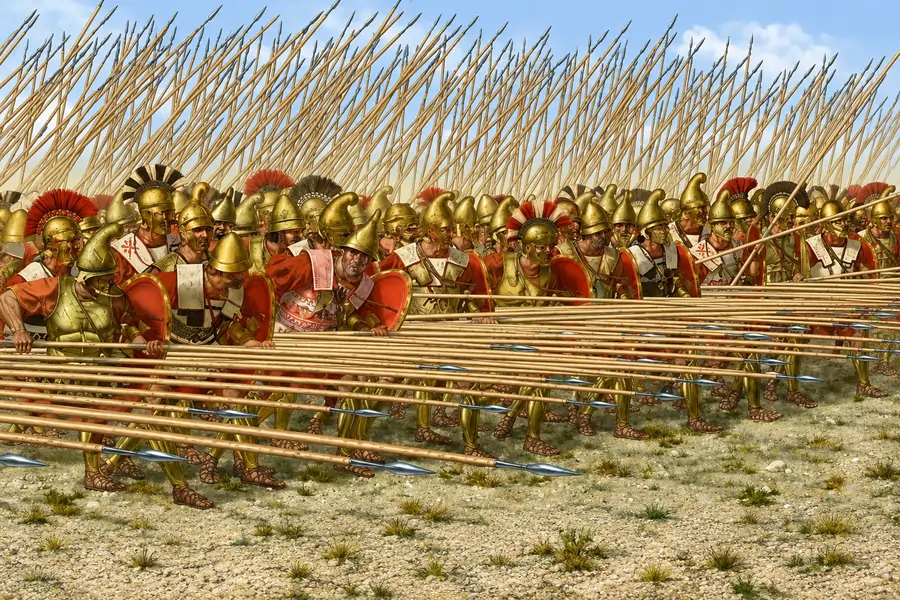
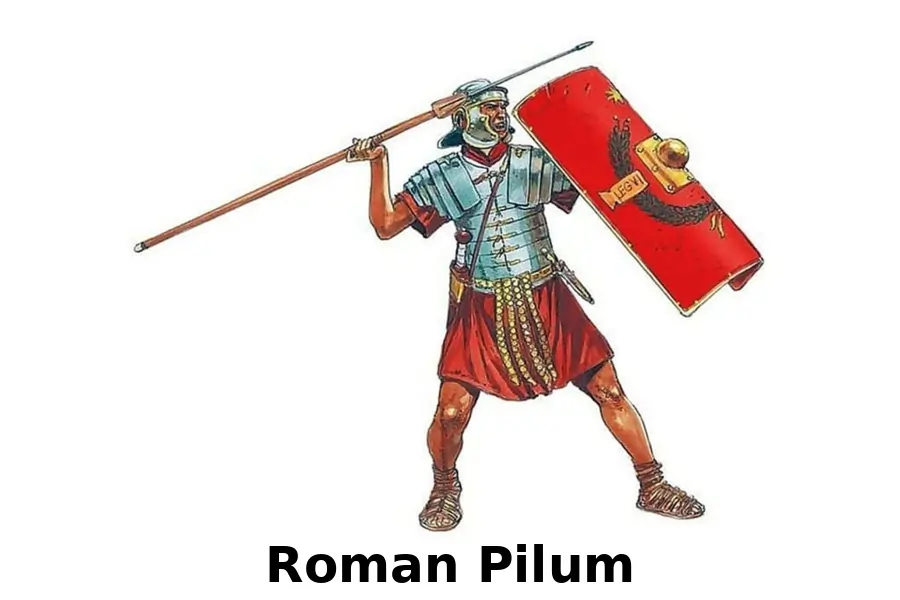
The two infantry systems were built around very different tactical principles. The Hellenistic phalanx relied upon dense ranks of infantry armed with the long sarissa. The weapon allowed several ranks of soldiers to project spearpoints beyond the front of the formation. A well-ordered phalanx presented an intimidating wall of spearheads. The Roman infantry formation was more flexible. Roman soldiers fought with throwing weapons and swords and operated in a formation that allowed greater tactical movement than a tightly packed phalanx.
At Heraclea, however, the legion did not simply cut through the phalanx. The fighting remained uncertain for a considerable period. Ancient accounts describe repeated attacks and counterattacks. The Romans could pressure the phalanx, but they struggled to break its cohesion. This is one of the most important points when examining the Macedonian phalanx and its effectiveness . Its strength was not simply the length of the sarissa. It was the ability of thousands of soldiers to maintain formation and concentrate combat power toward the front. But the phalanx alone did not win Heraclea.
Roman Legion vs. Macedonian Phalanx at Heraclea
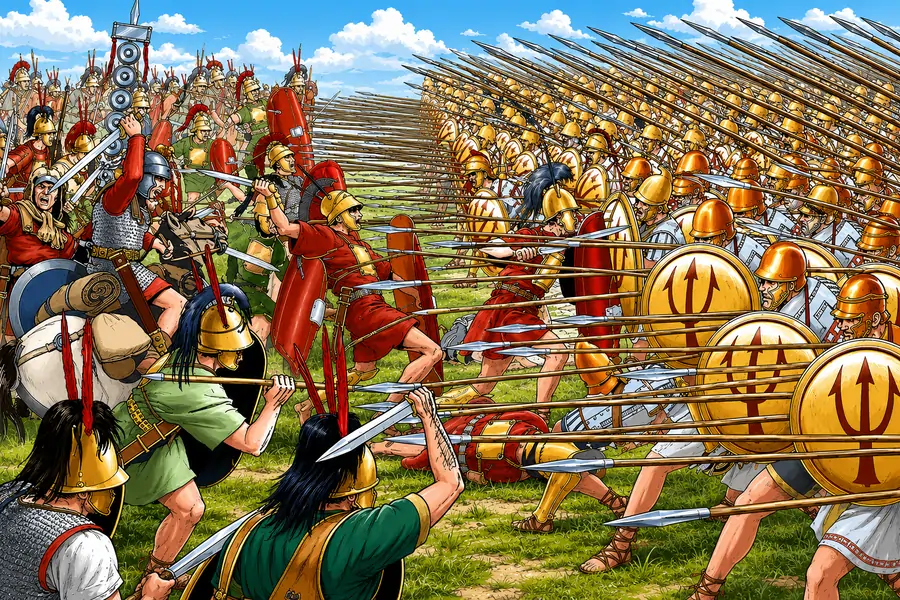
The Battle of Heraclea is sometimes presented as evidence that the Macedonian phalanx was superior to the Roman legion. That conclusion is too simple. Heraclea was a battle between complete armies, not an isolated laboratory experiment involving two infantry formations. Pyrrhus had cavalry, missile troops and elephants. The Romans had their own cavalry and allied contingents. The terrain, formation, leadership and timing all affected the outcome.
| Roman Infantry | Hellenistic Phalanx |
|---|---|
| Greater tactical flexibility | Exceptional frontal strength |
| Could maneuver more easily | Depended heavily on maintaining cohesion |
| Used javelins and swords | Used long sarissas |
| More adaptable formation | Highly effective on suitable open ground |
| Greater ability to operate despite local disruption | Disruption of the formation could be dangerous |
The distinction becomes especially important when considering later Roman victories against Hellenistic armies. Rome eventually defeated Macedonian and Hellenistic armies in several conflicts, including at Cynoscephalae and Pydna. Those battles demonstrated situations in which the flexibility of Roman infantry could be exploited against a phalanx. Heraclea therefore should not be interpreted as the moment when one military system proved universally superior. It was the first major encounter between Rome and the Hellenistic military tradition.
How Did Pyrrhus Use War Elephants?
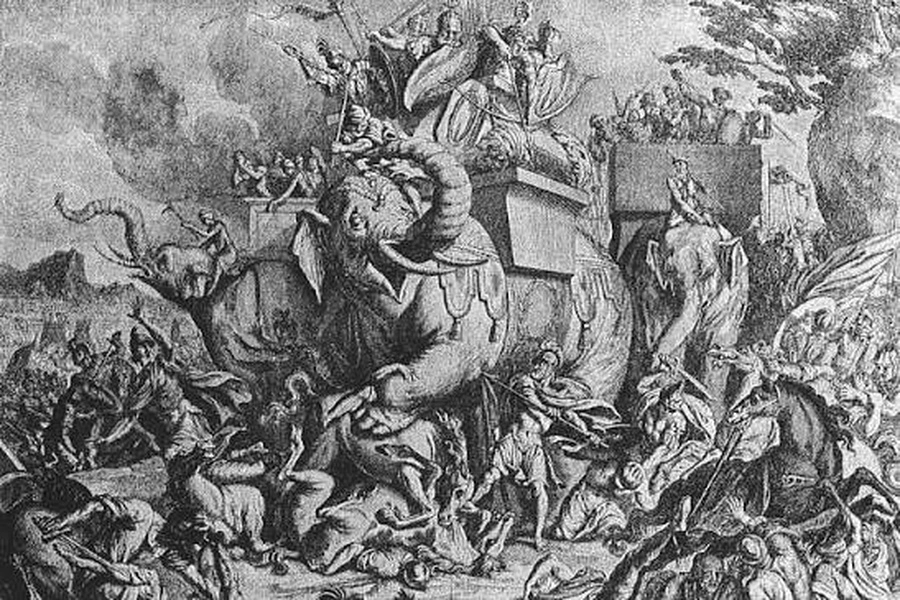
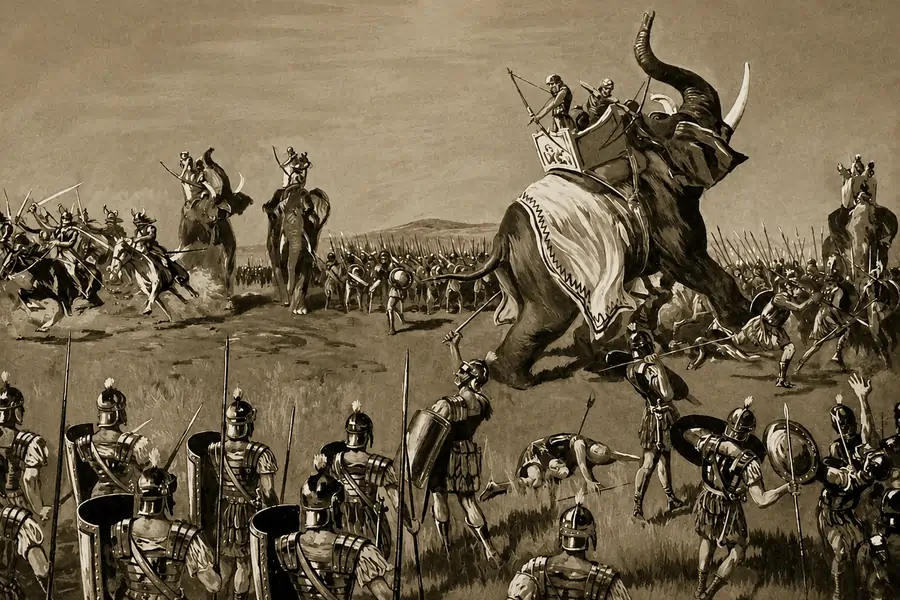
The decisive phase came when Pyrrhus committed his elephants. This was the Romans' first major battlefield encounter with war elephants. Their cavalry horses were particularly vulnerable because horses could react unpredictably to the animals' size, smell, sounds, and unfamiliar appearance. Ancient writers emphasize the psychological effect. Plutarch describes the Roman cavalry as being thrown into confusion when confronted by the elephants. The animals could also carry fighting men and create additional difficulties for troops attempting to maintain formation.
Pyrrhus did not simply send his elephants forward at the beginning of the battle. Their timing mattered. The infantry battle had already consumed considerable energy, while the Roman cavalry was attempting to influence the fight. When the elephants entered the engagement, they disrupted the Roman cavalry. This opened an opportunity for Pyrrhus' cavalry to attack. The result was a chain reaction.
- The Roman cavalry was disrupted by the elephants.
- The cavalry's withdrawal created disorder near the Roman infantry.
- Pyrrhus' cavalry exploited the opening.
- The Roman army's position became increasingly difficult to maintain.
- Laevinus' army eventually retreated from the battlefield.
This explains why describing Heraclea simply as "the battle where elephants defeated the Romans" misses the larger tactical picture. The elephants were most effective because they were integrated into Pyrrhus' combined-arms system. They disrupted the Roman cavalry at the moment when Pyrrhus needed to create a breakthrough. Heraclea also marked an important moment in Roman military history. Rome had now encountered one of the most important weapons of Hellenistic warfare. Roman armies would face elephants again, most famously during the later wars with Carthage.
Why Did Pyrrhus Win the Battle of Heraclea?
Pyrrhus won because he combined several advantages instead of relying on a single weapon or formation.
1. The phalanx held the Roman infantry at bay
The Roman infantry was unable to simply overwhelm Pyrrhus' heavy infantry. The phalanx's dense formation and long spears made a direct frontal assault extremely difficult.
2. Pyrrhus had superior cavalry resources
Pyrrhus was an experienced Hellenistic commander operating with strong cavalry forces. Once the Roman cavalry became disorganized, his mounted troops could exploit the opening.
3. The elephants created tactical disruption
The elephants were a weapon the Romans had no previous experience of countering. Their psychological impact was especially important against cavalry.
4. Pyrrhus commanded from the front
His personal intervention repeatedly helped stabilize his army. Ancient accounts may contain heroic embellishment, but there is little doubt that Pyrrhus was an exceptionally experienced commander.
5. The Romans were facing a new style of warfare
Rome had experience fighting Italian enemies, Greek cities, and other regional powers. Pyrrhus brought a sophisticated Hellenistic army into Italy, combining formations and weapons the Romans had not previously encountered on such a scale. Heraclea was therefore a tactical victory produced by the interaction of several military systems, not by one miraculous weapon.
Battle of Heraclea Casualties
Casualty figures for Heraclea are uncertain because the ancient sources disagree significantly. Plutarch, drawing on earlier material, gives approximately 7,000 Roman dead and about 4,000 losses for Pyrrhus. Dionysius' tradition gives approximately 15,000 Roman dead and 13,000 Pyrrhic losses.
| Source | Roman losses | Pyrrhic losses |
|---|---|---|
| Plutarch / tradition attributed to Hieronymus | About 7,000 | About 4,000 |
| Dionysius of Halicarnassus | About 15,000 | About 13,000 |
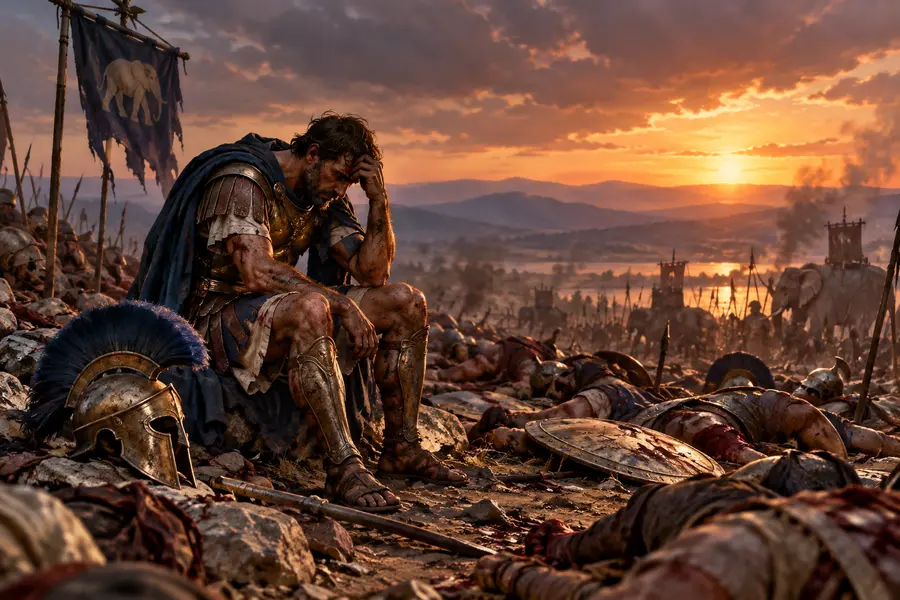
What matters strategically is that Pyrrhus could not easily replace his experienced soldiers. Rome could.
Why Was the Battle of Heraclea a Pyrrhic Victory?
The phrase "Pyrrhic victory" comes from the reputation Pyrrhus developed during his wars against Rome. Heraclea was the first major event that exposed the problem. Pyrrhus had defeated the Roman army. On a tactical level, there was no ambiguity about the result. The Roman army had been driven from the battlefield and suffered heavy casualties. But Pyrrhus had paid a frightening price. According to Plutarch, when his officers congratulated him on the victory, Pyrrhus reportedly replied that another such victory would destroy him. The famous statement is often rendered as:
"If we are victorious in one more battle with the Romans, we shall be utterly ruined."
The precise wording comes through later literary tradition, so it should not be treated as a verbatim battlefield quotation. But the sentiment captures the strategic problem accurately. Pyrrhus was fighting a war of limited resources against a republic with extraordinary reserves of manpower. Rome's strength did not depend entirely on the survival of one army. The Republic could draw upon its citizens and allied communities to raise new forces. Pyrrhus brought a relatively compact Hellenistic expeditionary army, including experienced Epirote and Macedonian troops, cavalry, missile troops and war elephants.
Every veteran he lost was difficult to replace. This is where the meaning of a Pyrrhic victory becomes much deeper than simply "winning while suffering casualties." A battlefield victory can be strategically disastrous when the winner's losses damage his ability to continue the war. Heraclea demonstrated that Rome could lose a major battle without losing the war.
What Happened After the Battle of Heraclea?
Pyrrhus did not stop after Heraclea. The victory strengthened Pyrrhus' position and encouraged additional Italian communities hostile to Rome to support him. Pyrrhus then moved northward, hoping that the defeat of a Roman army would encourage more Italian allies to abandon Rome. His diplomatic strategy was equally important. Pyrrhus sent his adviser Cineas to Rome with peace proposals. But Rome refused to accept a settlement that would allow Pyrrhus to dictate the terms after defeating a Roman army.
The Roman response is one of the most important aspects of the Pyrrhic War. Heraclea had demonstrated that Rome could be defeated tactically. The political system did not necessarily collapse as a result. Pyrrhus eventually came within striking distance of Rome but did not capture the city. Pyrrhus did not capture Rome. His army was operating far from Epirus, his Italian coalition was still developing, and defeating the Roman field army had not translated into the political collapse of the Republic.
The war continued. In 279 BC, Pyrrhus fought Rome again at the Battle of Asculum. Once again, he won, but again suffered serious losses. The pattern was becoming clear. Pyrrhus could defeat Roman armies. He was struggling to create a strategic situation in which those victories would produce a permanent Roman collapse.
Why Was the Battle of Heraclea Important?
The significance of Heraclea extends far beyond its immediate result.
Rome encountered the Hellenistic military world
Heraclea was a major confrontation between Roman and Hellenistic military traditions. Rome had already encountered Greek warfare in southern Italy, but Pyrrhus brought a highly capable professional army that demonstrated the sophistication of Hellenistic combined-arms warfare.
Rome learned about war elephants
The elephants were a completely new battlefield problem for the Romans. Their appearance at Heraclea would be followed by further Roman encounters with elephants during the Punic Wars and later conflicts in the eastern Mediterranean.
Pyrrhus Demonstrated the Limits of Tactical Victory
Heraclea is one of the clearest ancient examples of the difference between winning a battle and winning a war. Pyrrhus defeated the Roman army, but the victory did not break Rome's ability to continue the conflict. Instead, it demonstrated a problem that would confront other enemies of Rome centuries later: destroying a Roman army was not necessarily enough to defeat the Roman Republic.
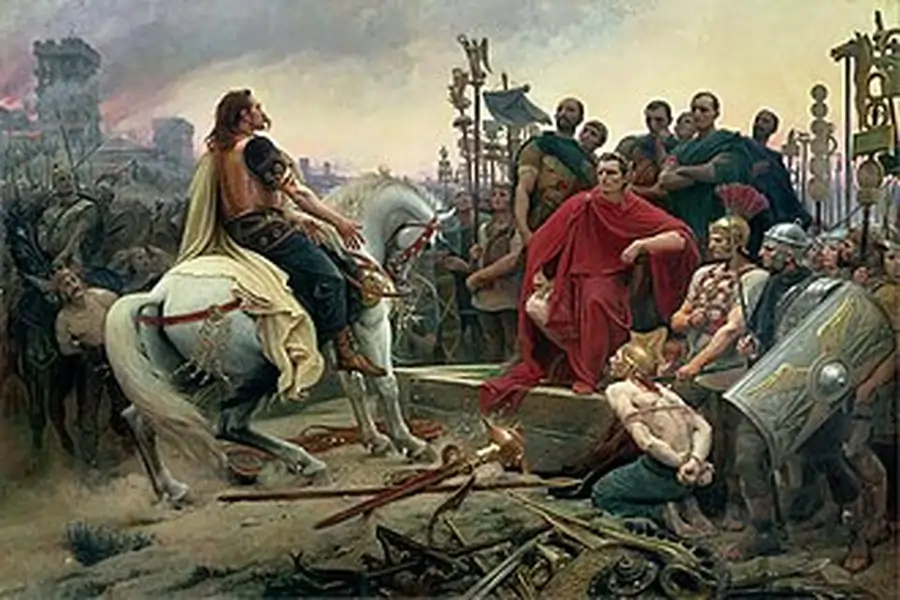
The Second Punic War provides the most striking comparison. When Hannibal Barca invaded Italy in 218 BC, Rome suffered a series of devastating defeats. At the Battle of Trebia, Hannibal destroyed a large Roman army through a combination of battlefield deception, careful positioning, and a coordinated attack. The following year, he inflicted another major defeat at the Battle of Lake Trasimene, where a Roman army was caught in an ambush and suffered catastrophic losses.
Then came the battle of Cannae in 216 BC. Hannibal's army surrounded and virtually destroyed a much larger Roman force in one of the most famous double-envelopment victories in military history. The scale of the Roman defeat was extraordinary, yet Rome did not surrender. The Republic raised new armies, recruited from an increasingly broad pool of citizens and allies, and continued the war.
This was a fundamentally different way of thinking about victory. Rome possessed a much deeper pool of citizen and allied manpower, allowing it to recover from battlefield defeats that would have been far more difficult for Pyrrhus to absorb. Hannibal, despite his remarkable battlefield record, could not easily replace his experienced troops or compel Rome to accept peace.
That pattern helps explain the significance of Heraclea. Pyrrhus had demonstrated that a skilled commander with a highly capable army could defeat Rome in a major battle. Hannibal would later demonstrate the same thing on an even greater scale. But neither commander could convert repeated battlefield victories into the destruction of Roman political and military power. The eventual outcome of the Second Punic War made the distinction even clearer. Rome recovered from Trebia, Trasimene and Cannae, carried the war into other theaters and eventually took the fight to North Africa. At the Battle of Zama in 202 BC, Scipio Africanus defeated Hannibal, bringing the Second Punic War to an end.
Hannibal's career therefore provides a striking parallel to Pyrrhus. Both commanders achieved extraordinary tactical successes against Rome, and both exposed weaknesses in the Roman military system. Yet Rome's resilience meant that battlefield victories did not automatically produce strategic victory.
The same resilience would eventually become one of the defining characteristics of Roman warfare. Rome could absorb battlefield disasters, rebuild its armies, and continue fighting until its opponent's ability to sustain the war was exhausted. Heraclea therefore offers an early glimpse of a recurring feature of Roman military history: Rome could lose the battlefield without losing the war. Pyrrhus won at Heraclea, but the Roman Republic remained intact, its manpower reserves remained available, and its political leadership was prepared to continue the struggle.
That is why the Battle of Heraclea matters beyond the famous phrase "Pyrrhic victory." It demonstrates that the destruction of an enemy army is only one measure of military success. A battle can be a tactical triumph while leaving the wider strategic problem unresolved.
It revealed the resilience of the Roman Republic
The Roman army at Heraclea had been defeated, but the Republic's military system remained intact. That resilience was partly institutional. Roman military power was connected to a large network of citizens and allied communities. The Roman soldier was not simply an isolated professional fighting for wages. He belonged to a political and social system capable of repeatedly mobilizing manpower. That broader relationship between military service, discipline, and the Roman soldier is explored in Daily Life of a Roman Soldier.
The Military Legacy of Heraclea
Heraclea should not be remembered merely as the battle that gave us the phrase "Pyrrhic victory." Its deeper significance lies in what the battle revealed about the strengths and weaknesses of both Rome and the Hellenistic military system. Pyrrhus had built an army capable of defeating Rome in a direct confrontation. His phalanx could withstand Roman infantry. His cavalry could exploit opportunities. His elephants could create battlefield disruption that the Romans had never experienced.
Yet the army was difficult to replace. Rome possessed the opposite advantage. Its armies could suffer enormous losses and still be rebuilt. This difference became increasingly important as the war continued. The Roman military system would later evolve dramatically. Its experience fighting Hellenistic armies contributed to Rome's growing familiarity with phalanx warfare, elephants, cavalry, and combined-arms armies. Heraclea therefore belongs near the beginning of that story.
Sources and Further Reading
Ancient Sources
How reliable are the accounts of Heraclea?
Our knowledge of the Battle of Heraclea comes mainly from later authors rather than a surviving contemporary account. Plutarch's Life of Pyrrhus preserves a detailed narrative and cites earlier traditions, including the historian Hieronymus of Cardia. Dionysius of Halicarnassus provides a different set of casualty figures, while other later authors preserve additional versions of the battle. As a result, the broad outcome and the importance of Pyrrhus' elephants are relatively secure, but exact troop numbers, casualty figures, and some tactical details remain uncertain.
- Plutarch, Life of Pyrrhus - One of the principal surviving narrative sources for Pyrrhus' Italian campaign, including his observation of the Roman camp, the crossing of the Siris and the fighting at Heraclea.
- Attalus: 280 BC - Ancient source references - Provides a useful collection of references to ancient accounts of the Pyrrhic War, including Plutarch, Dionysius of Halicarnassus, Diodorus and others.
Modern and Reference Sources
- A History of the Pyrrhic War by Patrick Alan Kent is an academic book that examines the multi-polar conflict of Pyrrhus of Epirus's western campaign in the early third century BCE.
- Encyclopaedia Britannica, "Heraclea" - Background information on the city of Heraclea and its location in ancient Lucania.
- University of Chicago, Encyclopaedia Romana: The Elephant in Rome - Discusses Rome's first encounter with war elephants at Heraclea and later Roman experience with elephants.
- Cambridge University Press, "Alexander and the Elephants" - Provides wider historical context for the use and perception of war elephants in the ancient Mediterranean.
Recommended Books
This article may contain affiliate links. If you purchase through these links, I may earn a small commission at no extra cost to you.


Related Articles
Frequently Asked Questions
What was the Battle of Heraclea?
The Battle of Heraclea was fought in 280 BC during the Pyrrhic War between the Roman Republic and the army of Pyrrhus, King of Epirus. Pyrrhus defeated the Roman army commanded by the consul Publius Valerius Laevinus near the River Siris in southern Italy. The battle was significant because it was one of Rome's first major encounters with a Hellenistic army using a Macedonian-style phalanx and war elephants.
Who won the Battle of Heraclea in 280 BC?
Pyrrhus of Epirus won the Battle of Heraclea in 280 BC. His Hellenistic army defeated the Roman forces under the consul Publius Valerius Laevinus after a prolonged infantry battle. Pyrrhus used his phalanx, cavalry and war elephants to break the Roman army and force it to retreat.
How did Pyrrhus defeat the Romans at Heraclea?
Pyrrhus defeated the Romans by combining several different battlefield forces rather than relying on the phalanx alone. His Macedonian-style phalanx held the Roman infantry in a difficult frontal engagement, while his cavalry contested the Roman horse. The decisive phase came when Pyrrhus committed his war elephants, which disrupted the Roman cavalry and helped his cavalry attack the Roman formation. The combination of phalanx, cavalry and elephants eventually forced the Romans to retreat.
Did Pyrrhus use elephants at the Battle of Heraclea?
Yes. Pyrrhus brought approximately 20 war elephants to Italy and used them at the Battle of Heraclea in 280 BC. The Romans had little or no previous battlefield experience against elephants on this scale. According to ancient accounts, the elephants frightened and disrupted Roman cavalry, contributing to the collapse of the Roman position. Heraclea was an important early encounter between Rome and war elephants.
What happened when the Roman legion faced the Macedonian phalanx at Heraclea?
The Roman infantry and Pyrrhus' Macedonian-style phalanx fought a prolonged and closely contested engagement at Heraclea. The phalanx's dense formation and long sarissas made it difficult for the Roman infantry to break through its front. The Romans were able to fight effectively against Pyrrhus' infantry, but they could not secure a decisive breakthrough. The eventual intervention of Pyrrhus' elephants and cavalry helped turn the battle in his favor.
Why is the Battle of Heraclea called a Pyrrhic victory?
The Battle of Heraclea is associated with the idea of a Pyrrhic victory because Pyrrhus won the battle but suffered heavy losses that were difficult for his army to replace. Ancient sources give different casualty figures, but they agree that Pyrrhus' losses were substantial. His victory therefore did not eliminate Rome's ability to continue the war. The term 'Pyrrhic victory' is more broadly associated with Pyrrhus' costly victories over Rome during the campaigns of 280 and 279 BC.
Add Comment