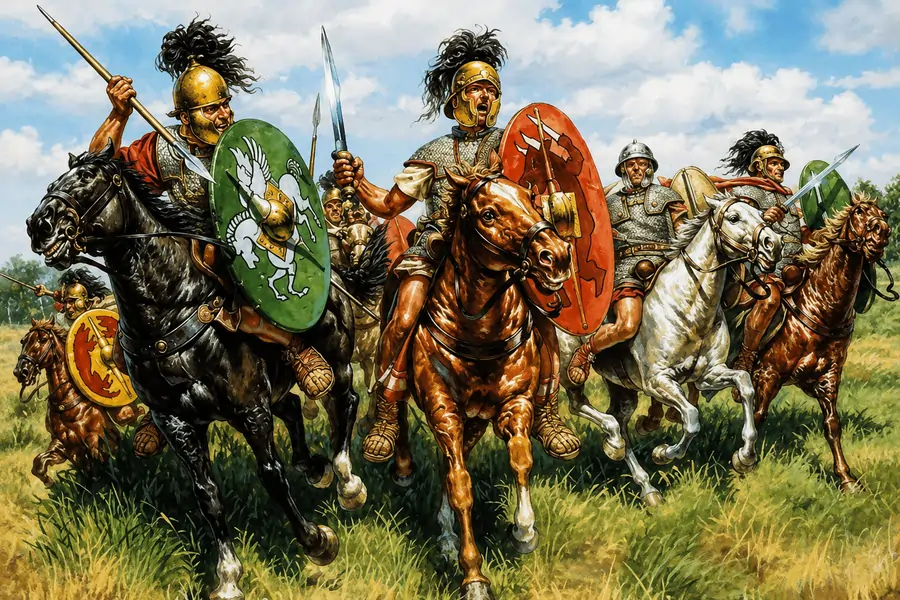
The Battle of Ticinus, fought in late November 218 BC, was the first major clash between Hannibal Barca and the Roman Republic after the Carthaginian army crossed the Alps. Although relatively small compared to later battles such as Trebia, Lake Trasimene, and Cannae, Ticinus proved to be an important decisive engagement for Hannibal. It demonstrated Hannibal's superior battlefield leadership, showcased the effectiveness of his Numidian cavalry, wounded the Roman commander Publius Cornelius Scipio, and forced Rome onto the defensive during the opening phase of the Second Punic War. More importantly, the battle persuaded many Gallic tribes in northern Italy to join Hannibal, dramatically strengthening his campaign before winter. The victory at Ticinus was not merely a tactical success-it marked the beginning of a series of devastating defeats that would shake the Roman Republic to its core.
Table of Contents
Battle Overview
| Date | Late November 218 BC |
|---|---|
| Location | Near the River Ticinus (modern Ticino River), northern Italy |
| Conflict | Second Punic War |
| Combatants | Roman Republic vs Carthaginian Empire |
| Roman Commander | Publius Cornelius Scipio |
| Carthaginian Commander | Hannibal Barca |
| Result | Decisive Carthaginian cavalry victory |
Background: The Road to the Battle of Ticinus
The Battle of Ticinus cannot be understood without examining the strategic developments that unfolded during the opening months of the Second Punic War. Roman leaders expected the conflict to be fought in Spain or North Africa. Hannibal instead adopted one of history's boldest strategic plans-marching his army across southern Gaul and the Alps to invade Italy itself. This daring campaign fundamentally altered Rome's expectations and remains one of the greatest military achievements of antiquity. His remarkable leadership during this expedition is one reason he is regularly included among the greatest military generals in history.
Hannibal's Crossing of the Alps
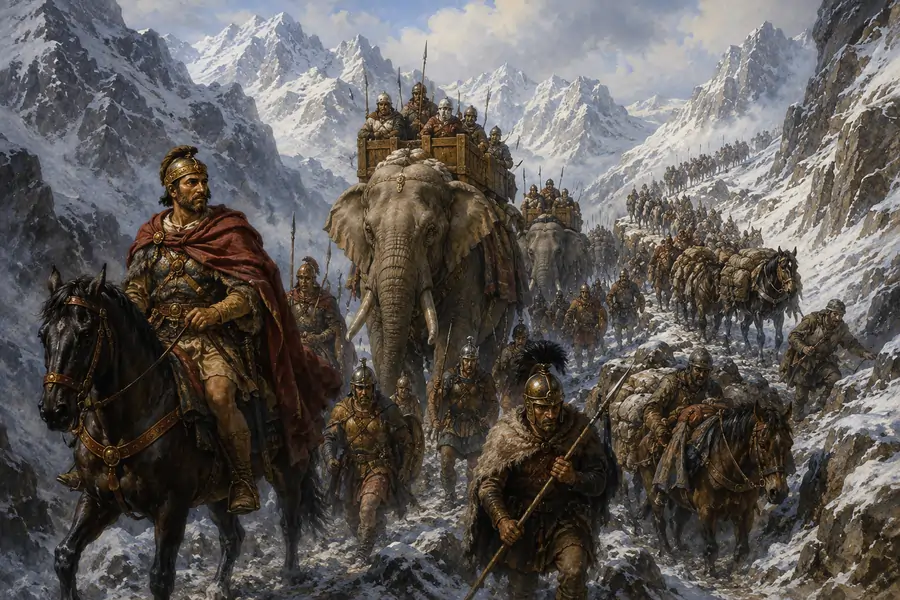
Hannibal departed New Carthage with an army estimated at around 90,000 infantry, 12,000 cavalry, and dozens of war elephants. By the time he emerged from the Alps, his force had been drastically reduced by mountain tribes, harsh weather, difficult terrain, starvation, and exhaustion.
Ancient sources differ regarding exact losses. Polybius estimates that Hannibal entered Italy with approximately 20,000 infantry and 6,000 cavalry, while Livy provides similar figures. Despite these losses, Hannibal retained the most important element of his army-its experienced officers, elite cavalry, and disciplined core of veteran soldiers.
This achievement immediately transformed the balance of the campaign. Hannibal had successfully carried the war into Roman territory, where he hoped to encourage Rome's allies to revolt. However, this would not be possible unless he could prove to everyone that he could defeat the Romans in battle. Without a decisive victory, Hannibal's brilliant plan could come to a premature end.
"Hannibal had not merely crossed the Alps-he had carried the war into the heart of Roman power."
Prelude to the Battle of Ticinus
After emerging from the Alps, Hannibal gave his exhausted soldiers several days to recover while securing food and supplies from nearby settlements. At the same time, he began diplomatic negotiations with local Gallic tribes, presenting himself as a liberator from Roman domination. Many tribes remained undecided, carefully observing whether Rome or Carthage appeared stronger.
Hannibal wanted a quick victory that would convince the Gauls to join him, while the Romans commanded by Scipio hoped to defeat Hannibal before his army could grow through local alliances. Rather than committing their full armies immediately, both commanders advanced with reconnaissance forces to determine each other's strength and position. Ancient warfare relied heavily on intelligence gathering because commanders often operated with limited knowledge of enemy movements.
Scipio led a mixed reconnaissance force composed primarily of Roman and allied cavalry supported by lightly armed infantry known as velites. These troops could move rapidly while providing flexibility if they encountered the enemy. Hannibal likewise advanced with a cavalry-heavy force that included his elite Spanish heavy cavalry alongside the highly mobile Numidian cavalry. Unlike Roman cavalry, which generally fought in relatively direct engagements, Numidian horsemen specialized in speed, harassment, feigned retreats, and attacks against vulnerable flanks.
Commanders and Opposing Forces
Publius Cornelius Scipio was an experienced Roman consul who had previously served with distinction during campaigns in northern Italy. Although competent, he had never faced an opponent possessing Hannibal's combination of tactical creativity, operational mobility, and cavalry superiority.
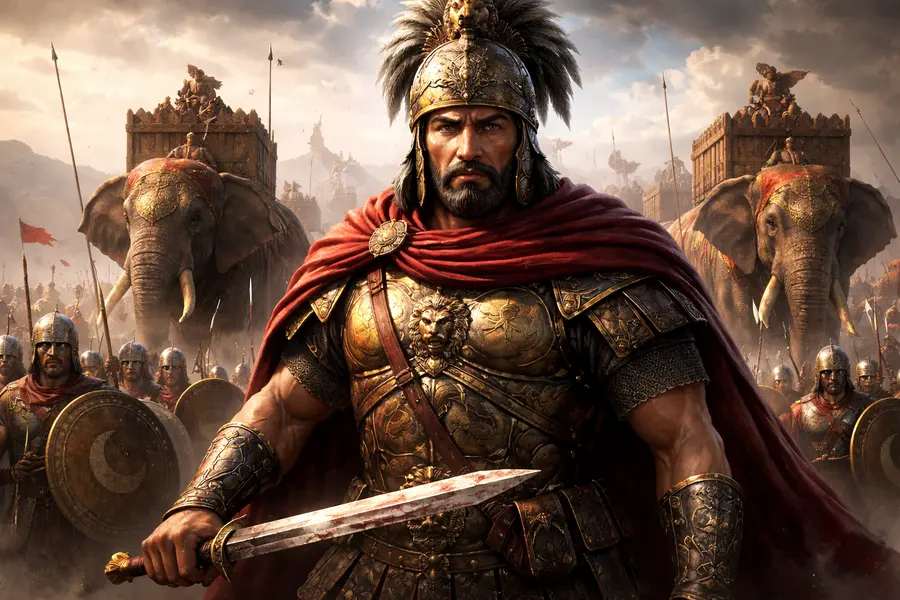
Hannibal Barca, meanwhile, entered Italy after years of successful campaigning in Iberia. His multinational army included Libyan heavy infantry, Iberian swordsmen, Celtic warriors, and one of the finest cavalry forces in the ancient Mediterranean. The diverse composition of Hannibal's army has been explored further in our guide to Hannibal's infantry units during the Second Punic War.
The greatest advantage available to Hannibal was unquestionably his superior cavalry. His Spanish heavy cavalry excelled in close combat, while his Numidian riders possessed unmatched speed and maneuverability. Together they formed an exceptionally balanced mounted force capable of executing sophisticated battlefield tactics.
The Battlefield at the River Ticinus
The Battle of Ticinus took place near the River Ticinus (modern Ticino River), a tributary of the Po River in northern Italy. The surrounding terrain consisted largely of open plains broken by rivers, small streams, patches of woodland, and cultivated farmland. Unlike the mountainous terrain Hannibal had recently crossed, the Po Valley provided ideal conditions for cavalry warfare.
The broad, relatively flat landscape allowed mounted troops to maneuver freely, launch rapid charges, and exploit gaps in enemy formations. This environment strongly favored Hannibal, whose army included some of the finest cavalry in the Mediterranean world. The open terrain also reduced the effectiveness of Roman infantry support, making mounted combat the decisive factor in the coming engagement.
Sequence of Events of the Battle of Ticinus
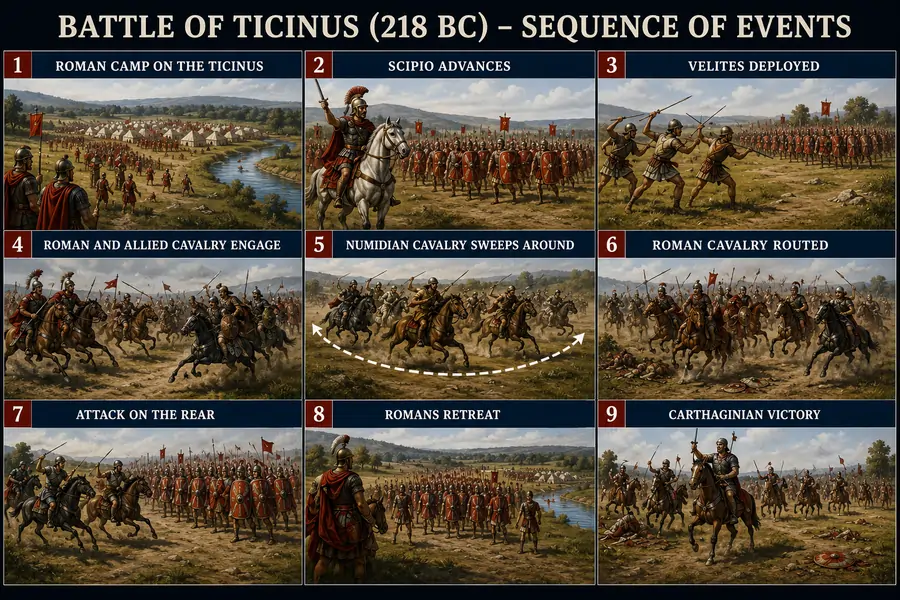
Although the Battle of Ticinus involved only a fraction of the forces available to both commanders, the engagement unfolded rapidly. It demonstrated many of the tactical principles that Hannibal would employ throughout the Second Punic War. Ancient historians Polybius and Livy describe the battle primarily as a cavalry engagement, with only limited participation from Roman light infantry. The encounter lasted only a short time, yet its consequences were felt for months afterward.
Both Commanders Advance to Gather Intelligence
After securing his army in the Po Valley, Hannibal sought accurate intelligence regarding Roman movements. Rather than waiting passively, he personally led a strong cavalry force supported by selected infantry. This aggressive reconnaissance reflected his style of command throughout the campaign-he preferred obtaining first-hand knowledge of the battlefield instead of relying solely on scouts.
Publius Cornelius Scipio adopted a similar approach. Aware that Hannibal's exact position remained uncertain, he advanced from his camp with Roman cavalry, allied Italian cavalry, and a screen of velites (light infantry). His objective was to locate Hannibal's army and assess its strength before committing the Roman legions. Neither commander appears to have intended a full-scale battle that day. Instead, both expected a reconnaissance in force. However, because each commander personally accompanied his mounted troops, the encounter quickly escalated into a serious engagement.
The Armies Meet Near the Ticinus River
As the two forces approached one another across the open plains, both commanders immediately recognized the opportunity to strike. Hannibal deployed his cavalry in a relatively straightforward formation that maximized the strengths of his different contingents. His experienced Spanish and Celtic heavy cavalry occupied the center, where they could deliver powerful frontal charges. On the wings he positioned his highly mobile Numidian cavalry, whose speed and maneuverability made them ideal for flanking operations.
Scipio arranged his own cavalry opposite Hannibal's mounted troops while placing his velites in front. The Roman commander likely intended the light infantry to disrupt the Carthaginian advance with javelins before the cavalry made contact. Although reasonable in theory, this deployment proved ineffective against Hannibal's aggressive attack.
Hannibal Launches an Immediate Cavalry Charge
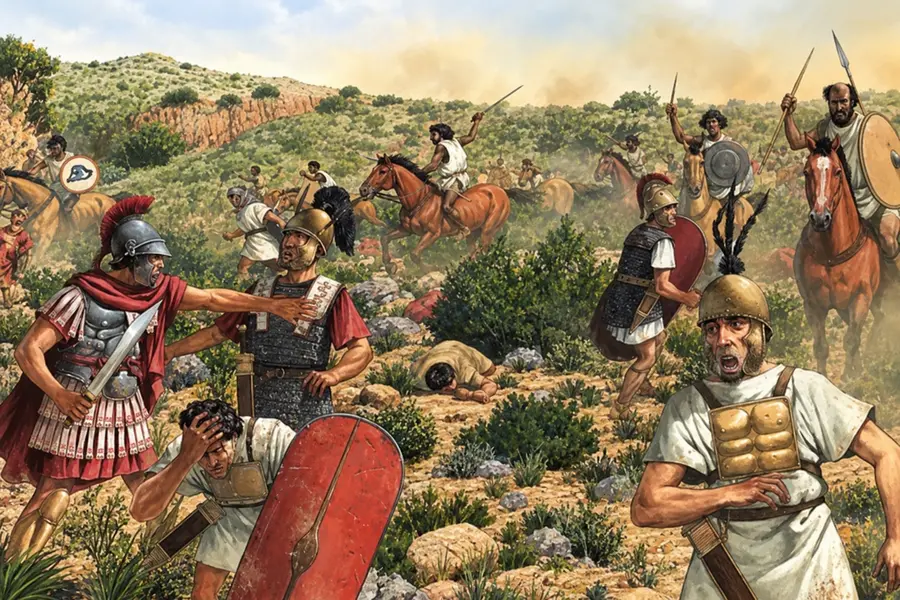
Recognizing that the Roman light infantry represented a temporary obstacle rather than a decisive threat, Hannibal ordered his cavalry to charge without hesitation. The rapid advance prevented the Roman velites from establishing an effective missile screen. Faced with hundreds of charging horsemen, many of the lightly armed infantry withdrew through the Roman cavalry or scattered to avoid being trampled. This left the Roman cavalry exposed much earlier than Scipio had anticipated.
The Clash of Heavy Cavalry
In the center of the battlefield, Hannibal's Spanish and Gallic cavalry collided with the Roman and allied horsemen in fierce hand-to-hand combat. The Spanish cavalry had earned considerable experience during Hannibal's campaigns in Iberia. Fighting in disciplined formations, they pressed aggressively against the Roman line while maintaining cohesion during the melee. Roman cavalrymen fought bravely, but they faced opponents who possessed superior battlefield experience and who had trained together under Hannibal for years.
The Numidian Cavalry Turns the Battle
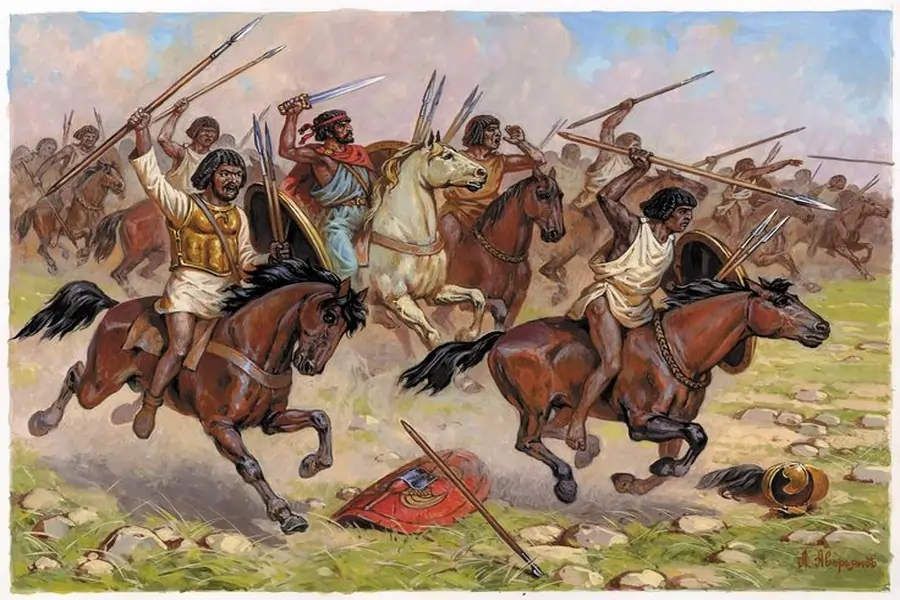
While the heavy cavalry fixed the Romans in front, Hannibal unleashed the arm that would become famous throughout the Second Punic War-his Numidian cavalry. Instead of joining the frontal struggle, the Numidians rode around the Roman flanks using their exceptional speed. Their lightly equipped horses could change direction rapidly, allowing them to avoid confrontations until opportunities appeared.
Once behind the Roman formation, the Numidians attacked from the rear. The Roman cavalry suddenly found itself under assault from two directions. Pressed by Spanish cavalry in front and harassed from behind by Numidian riders throwing javelins before closing with swords, Roman formations rapidly lost cohesion. This combination of frontal pressure and flanking maneuver became one of Hannibal's signature tactical methods.
Scipio Is Seriously Wounded
During the intense fighting, the Roman consul Publius Cornelius Scipio was seriously wounded. Ancient sources differ on the exact circumstances. Polybius reports that Scipio's life was saved by the courageous intervention of his young son, the future Scipio Africanus, who rode forward to rescue his injured father. Livy preserves a different tradition in which a loyal Ligurian slave performed the rescue.
Modern historians generally regard Polybius' account as more reliable because he wrote closer to the events and often demonstrated greater critical analysis of his sources. Nevertheless, both traditions agree on the essential fact that the Roman commander narrowly escaped capture or death. Scipio's injury had an immediate impact on Roman morale. In Roman warfare, commanders fought close to the front lines, and the apparent defeat of the consul quickly undermined confidence among his troops.
The Roman Cavalry Retreats
With their commander wounded and enemy cavalry attacking from multiple directions, Roman resistance began to collapse. Rather than allowing his force to be annihilated, Scipio ordered a withdrawal toward the safety of the Roman camp. The retreat was conducted under considerable pressure as Hannibal's cavalry pursued the fleeing Romans across the battlefield.
The Carthaginians remained in control of the field, giving Hannibal a clear tactical victory. Unlike later engagements such as Trebia or Cannae, casualties at Ticinus were relatively modest because only cavalry and light infantry participated. Nevertheless, the psychological impact greatly exceeded the actual losses.
Why Did Hannibal Win the Battle of Ticinus?
Several factors combined to produce Hannibal's victory at Ticinus. Although the engagement was relatively small, it highlighted many advantages that would characterize his entire Italian campaign.
Superior Cavalry
The single greatest factor was Hannibal's overwhelming superiority in cavalry. His mounted force combined heavily armed Spanish and Celtic cavalry capable of winning direct combat with exceptionally mobile Numidian horsemen who specialized in reconnaissance, harassment, and flanking attacks. This balanced cavalry arm proved significantly more versatile than Rome's relatively conventional mounted forces.
Better Battlefield Leadership
Hannibal personally directed operations throughout the engagement and reacted quickly as opportunities emerged. Rather than conducting a cautious reconnaissance, he immediately recognized the chance to overwhelm the Roman cavalry before the legions could intervene. His willingness to seize the initiative repeatedly forced Roman commanders into reactive positions throughout the war.
Effective Use of Combined Cavalry Arms
Instead of employing all cavalry in the same manner, Hannibal assigned distinct roles to different units. The Spanish cavalry fixed the Roman horsemen through direct combat while the Numidians maneuvered around the flanks. This combination of shock action and mobility proved extremely effective against Roman formations that were largely focused on frontal fighting.
Excellent Choice of Terrain
The flat plains surrounding the Ticinus River strongly favored cavalry operations. Unlike mountainous terrain or heavily wooded regions, the battlefield allowed Hannibal's mounted troops to exploit their superior speed, execute wide flanking maneuvers, and maintain battlefield momentum. Throughout his Italian campaign, Hannibal repeatedly demonstrated an exceptional ability to select terrain that amplified his own strengths while limiting Roman advantages.
Roman Mistakes at the Battle of Ticinus
Although Hannibal deserves considerable credit for his victory, several Roman decisions contributed significantly to the defeat.
Underestimating Hannibal's Cavalry
Scipio appears to have underestimated both the quality and tactical flexibility of Hannibal's mounted forces. Rather than expecting a highly coordinated cavalry attack, the Romans fought a relatively conventional engagement that quickly unraveled once the Numidians attacked their flanks.
Insufficient Infantry Support
The Roman velites were unable to provide meaningful support after Hannibal launched his rapid cavalry charge. Once the light infantry dispersed, Roman cavalry lost the missile support that Scipio had intended them to receive.
Fighting on Ground That Favored the Enemy
The open plains near the Ticinus River offered ideal conditions for Hannibal's cavalry. Rome's greatest military strength traditionally lay in its disciplined heavy infantry organized into manipular legions. By fighting an engagement dominated almost entirely by mounted troops, Scipio allowed Hannibal to exploit his greatest advantage while preventing Rome from employing its own.
Why Was the Battle of Ticinus Significant?
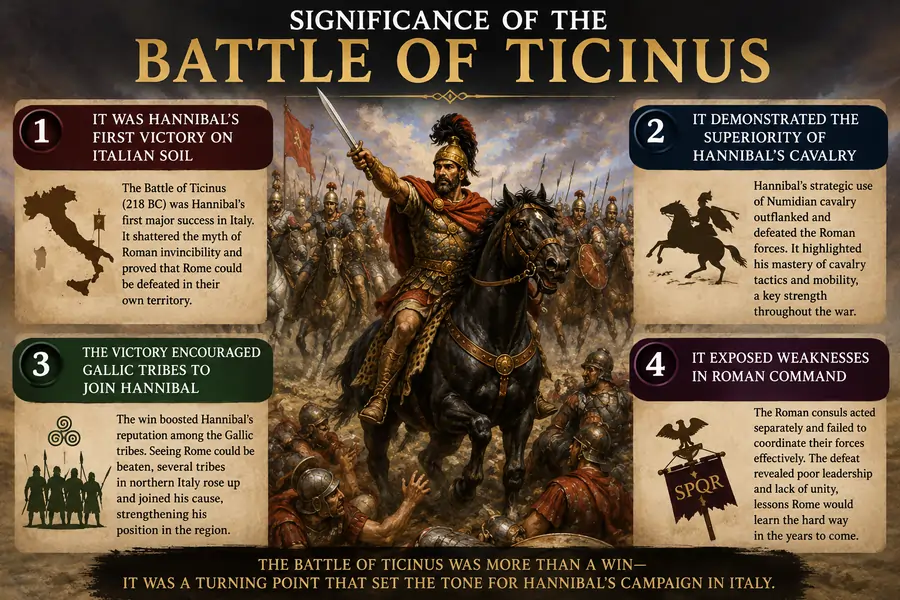
Measured purely by the number of troops engaged, the Battle of Ticinus was a relatively small cavalry engagement. However, its strategic consequences far outweighed its scale. In many respects, the battle established the pattern that would define the early years of the Second Punic War. Hannibal demonstrated that Rome's armies could be defeated in open battle, while the Romans learned that they were facing an opponent unlike any they had encountered before.
It Was Hannibal's First Victory on Italian Soil
The Battle of Ticinus marked Hannibal's first battlefield victory after his extraordinary crossing of the Alps. Although the Alpine expedition itself was one of history's greatest military achievements, many observers questioned whether the exhausted Carthaginian army remained capable of fighting effectively.
Ticinus answered that question decisively. Hannibal not only defeated the Romans but did so within weeks of emerging from the mountains. The victory restored the confidence of his multinational army, proving that the hardships of the Alpine crossing had not diminished its fighting effectiveness. For Hannibal personally, the battle validated his bold decision to invade Italy rather than fight a defensive war in Spain or North Africa. His strategic gamble had begun to pay dividends.
It Demonstrated the Superiority of Hannibal's Cavalry
One of the clearest lessons of Ticinus was the decisive role played by cavalry. Rome traditionally relied upon its disciplined infantry legions to decide battles, while cavalry generally performed supporting functions such as reconnaissance and pursuit. Hannibal reversed this expectation. At Ticinus, his mounted troops became the primary striking force. By combining heavy Spanish cavalry with agile Numidian horsemen, he created a flexible battlefield arm capable of delivering frontal attacks while simultaneously threatening enemy flanks.
The Victory Encouraged Gallic Tribes to Join Hannibal
Perhaps the most important strategic consequence of the battle was its effect on the Celtic tribes of northern Italy. Many Gallic communities had been conquered by Rome only a few decades earlier and remained deeply resentful of Roman rule. Before openly supporting Hannibal, however, they wanted proof that the Carthaginian army could defeat the Republic. The victory at Ticinus provided precisely that evidence.
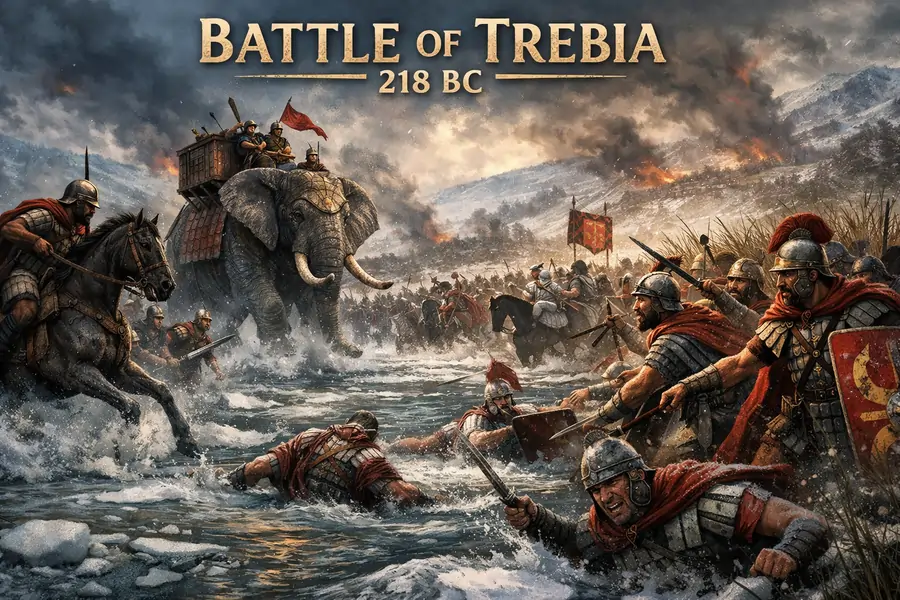
Following the battle, thousands of Gallic warriors joined Hannibal's army. Ancient sources suggest that these reinforcements significantly increased the size of his forces before the Battle of Trebia. The additional manpower replaced many of the soldiers lost during the Alpine crossing and gave Hannibal greater flexibility for future operations. Without these Gallic recruits, sustaining a prolonged campaign deep inside Italy would have been considerably more difficult.
It Exposed Weaknesses in Roman Command
The battle also highlighted several shortcomings in Rome's initial response to Hannibal's invasion. Roman commanders had underestimated both Hannibal's speed and his operational creativity. They expected to fight the war overseas and were forced to improvise after Hannibal unexpectedly appeared in northern Italy.
Scipio's defeat revealed that conventional Roman methods would not be sufficient against such an adaptable opponent. Hannibal consistently demonstrated a willingness to exploit terrain, maneuver aggressively, and rely on deception rather than simply overwhelming the enemy through numbers. These lessons would take Rome several years-and several disastrous defeats-to fully understand.
Historical Legacy of the Battle of Ticinus
The Battle of Ticinus is often overshadowed by other major battles in the war. Yet historians increasingly recognize its importance as the opening chapter of one of history's greatest military campaigns. The engagement demonstrated several characteristics that became hallmarks of Hannibal's generalship:
- Rapid operational movement.
- Excellent battlefield reconnaissance.
- Aggressive leadership from the front.
- Masterful employment of cavalry.
- Careful exploitation of terrain.
- The ability to convert tactical victories into strategic advantages.
Equally significant, the battle exposed Rome's vulnerability when facing an enemy willing to abandon conventional methods of warfare. Hannibal repeatedly forced Roman commanders to fight under unfavorable conditions, exploiting superior mobility rather than relying solely on numerical strength.
Although Hannibal would remain undefeated in Italy for many years, Rome ultimately adapted its military system, improved its cavalry, expanded its logistical capabilities, and carried the war into Africa. The conflict finally ended with Hannibal's defeat at the Battle of Zama in 202 BC, bringing the Second Punic War to a close and establishing Rome as the dominant power in the western Mediterranean. The Battle of Ticinus was far more than a successful cavalry skirmish. It was the opening demonstration of Hannibal's operational genius and the first indication that Rome would face one of the greatest military challenges in its history.
References
Ancient Sources
- Polybius, The Histories, Book 3.
- Livy, History of Rome, Books XXI-XXII.
- Appian. Roman History: Hannibalic Wars.
Modern Scholarship
- Goldsworthy, Adrian. The Fall of Carthage: The Punic Wars 265-146 BC. Cassell.
- Lazenby, J. F. Hannibal's War. University of Oklahoma Press.
- Hoyos, Dexter. Mastering the West: Rome and Carthage at War. Oxford University Press.
- Hoyos, Dexter. Hannibal's Dynasty. Routledge.
- Fields, Nic. Hannibal. Osprey Publishing.
- Bagnall, Nigel. The Punic Wars. Pimlico.
- Sabin, Philip. Lost Battles: Reconstructing the Great Clashes of the Ancient World. Continuum.
Books and Memorables
This article may contain affiliate links. If you purchase through these links, I may earn a small commission at no extra cost to you.


Related Articles
Frequently Asked Questions
Why was the Battle of Ticinus important in the Second Punic War?
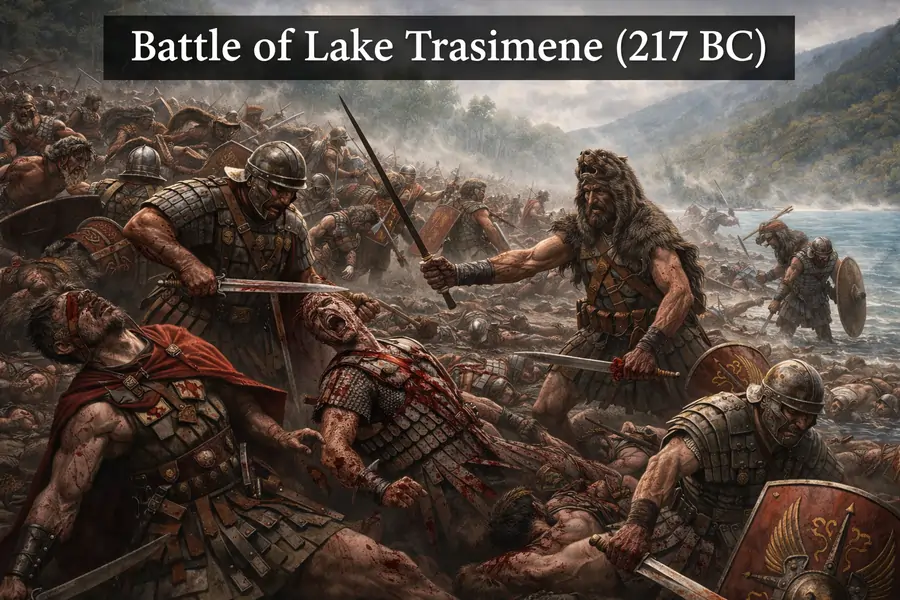
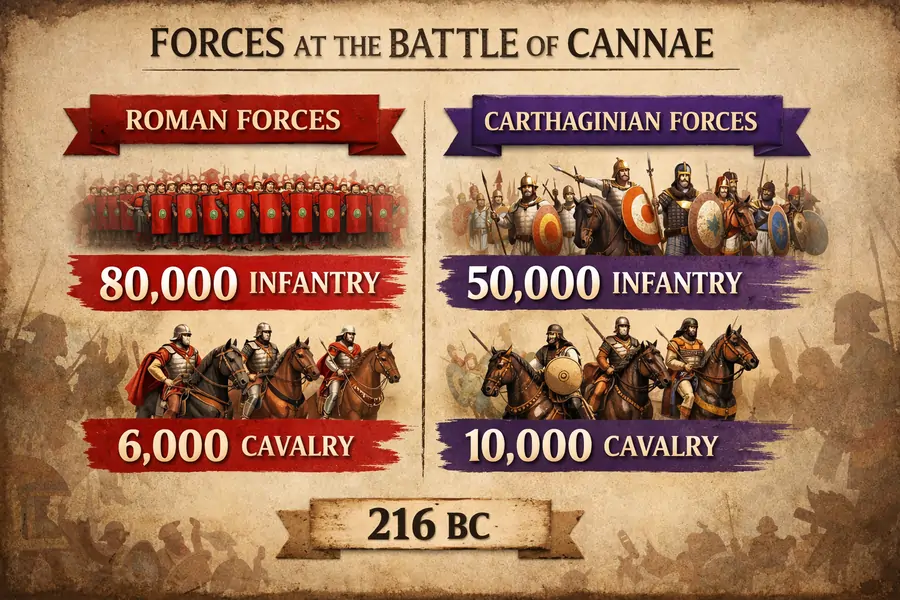
The Battle of Ticinus was important because it was Hannibal's first victory against Rome after crossing the Alps in 218 BC. Although it was primarily a cavalry engagement, the victory demonstrated Carthaginian military superiority, wounded the Roman consul Publius Cornelius Scipio, and encouraged many Gallic tribes in northern Italy to join Hannibal. These developments strengthened Hannibal's army before his larger victories at Trebia, Lake Trasimene, and Cannae.
How did Hannibal win the Battle of Ticinus?
Hannibal won the Battle of Ticinus by making excellent use of his cavalry. His Spanish heavy cavalry engaged the Roman horsemen head-on while his fast-moving Numidian cavalry attacked the Roman flanks and rear. This coordinated attack broke the Roman formation, wounded the Roman commander, and forced the Roman cavalry to retreat.
Why did the Gallic tribes support Hannibal after the Battle of Ticinus?
Many Gallic tribes had been conquered by Rome only a few decades earlier and remained hostile to Roman rule. Hannibal's victory at Ticinus proved that the Romans could be defeated in Italy, convincing thousands of Gallic warriors to join his army. These reinforcements helped replace losses suffered during the Alpine crossing and strengthened Hannibal before the Battle of Trebia.
What happened to the Roman consul Publius Cornelius Scipio at the Battle of Ticinus?
During the fighting, Publius Cornelius Scipio was seriously wounded while leading the Roman cavalry. According to Polybius, he was rescued by his young son, who later became the famous Scipio Africanus and defeated Hannibal at the Battle of Zama in 202 BC. The consul survived but was forced to withdraw his army after the defeat.
Why was cavalry the deciding factor in the Battle of Ticinus?
The Battle of Ticinus was fought on the open plains near the Ticinus River, where cavalry could maneuver freely. Hannibal's experienced Spanish and Numidian horsemen outperformed the Roman cavalry through superior mobility, discipline, and coordinated flanking attacks. Because only a small number of infantry took part, cavalry became the decisive arm of the battle.
What happened after the Battle of Ticinus?
After the Battle of Ticinus, the wounded Roman consul withdrew across the Po River to join forces with Tiberius Sempronius Longus near the Trebia River. Hannibal used the victory to gain the support of Gallic tribes, replenish his army, and prepare for the Battle of Trebia, where he inflicted another major defeat on the Romans only a few weeks later.
Add Comment