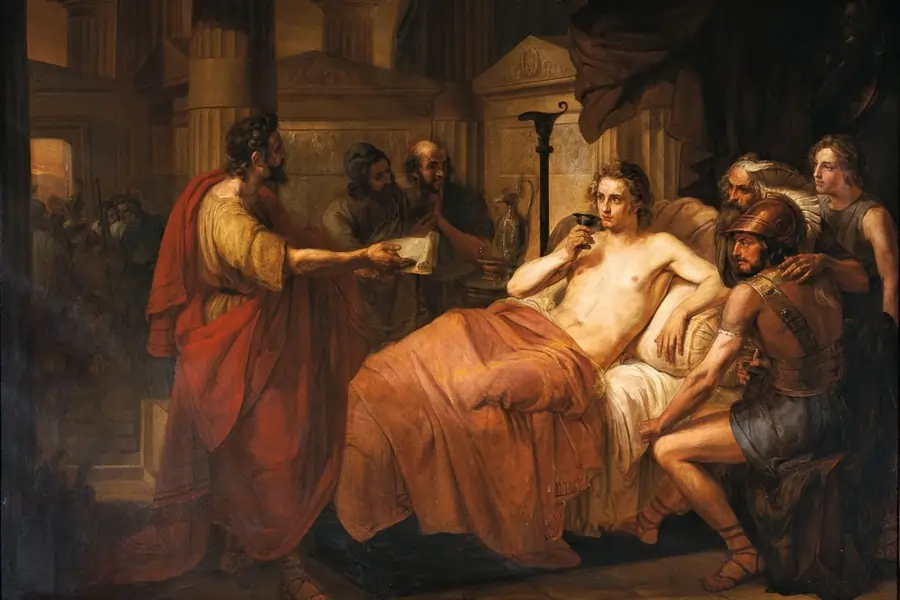
More than 2,300 years after his death, historians, physicians, and archaeologists continue to debate one of history's greatest mysteries: how did Alexander the Great die? The conqueror who defeated the mighty Persian Empire, marched farther east than any previous Macedonian king, and built one of the largest empires of the ancient world died unexpectedly at just 32 years old. Ancient writers recorded his final days in remarkable detail, describing a gradual illness, high fever, increasing weakness, and an astonishing claim that his body showed no signs of decay for several days after death. These accounts have inspired dozens of medical investigations, with theories ranging from infectious diseases and battlefield injuries to poisoning and rare neurological disorders. This article examines the historical evidence, the medical explanations proposed by modern researchers, and why Alexander's death remains one of antiquity's most enduring mysteries.
Table of Contents
- Alexander the Great's Extraordinary Achievements
- Why Alexander's Army Refused to March Further
- When, Where, and How Old Was Alexander When He Died?
- Alexander's Final Days: A Timeline
- What Symptoms Did Alexander the Great Experience?
- Why Did Alexander's Body Not Decay?
- The Leading Theories Behind Alexander's Death
- Why Alexander's Death Changed History
Alexander the Great's Extraordinary Achievements
Before examining the circumstances surrounding his death, it is important to understand why Alexander's passing sent shockwaves throughout the ancient world. By the time of his death in 323 BC, Alexander III of Macedon had transformed a relatively small kingdom into an empire stretching from Greece to Egypt and as far east as northwestern India.
Ascending the Macedonian throne in 336 BC after the assassination of his father Philip II, Alexander inherited one of the finest armies of antiquity. Rather than merely preserving his father's accomplishments, he launched an ambitious campaign against the Achaemenid Persian Empire. Within little more than a decade, he defeated one of history's largest empires and established himself as one of the greatest military commanders ever known.
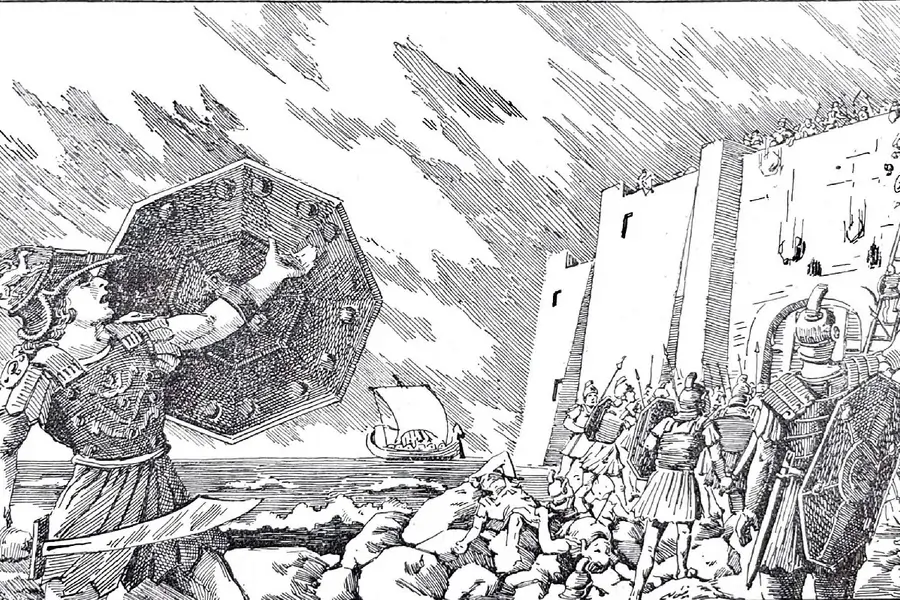
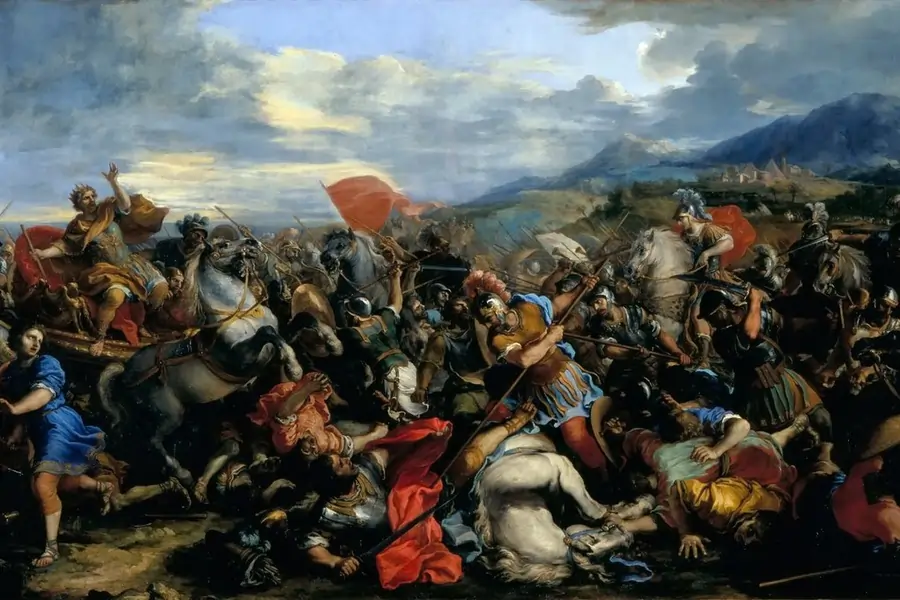
His victories at the Battle of the Granicus River, the Battle of Issus, and the decisive Battle of Gaugamela destroyed Persian resistance and forced King Darius III into flight. The successful Siege of Tyre further demonstrated Alexander's exceptional ability to combine engineering, logistics, and tactical innovation during difficult military operations.
| Achievement | Details |
|---|---|
| Empire Size | Over 5 million square kilometers at its greatest extent. |
| Major Victories | Granicus, Issus, Gaugamela, Hydaspes, and numerous sieges. |
| Campaign Duration | Approximately 11 years (334-323 BC). |
| Major Cities Founded | More than twenty cities traditionally attributed to Alexander, including Alexandria in Egypt. |
| Historical Impact | Spread of Hellenistic culture throughout the Near East and beyond. |
Why Alexander's Army Refused to March Further Into India
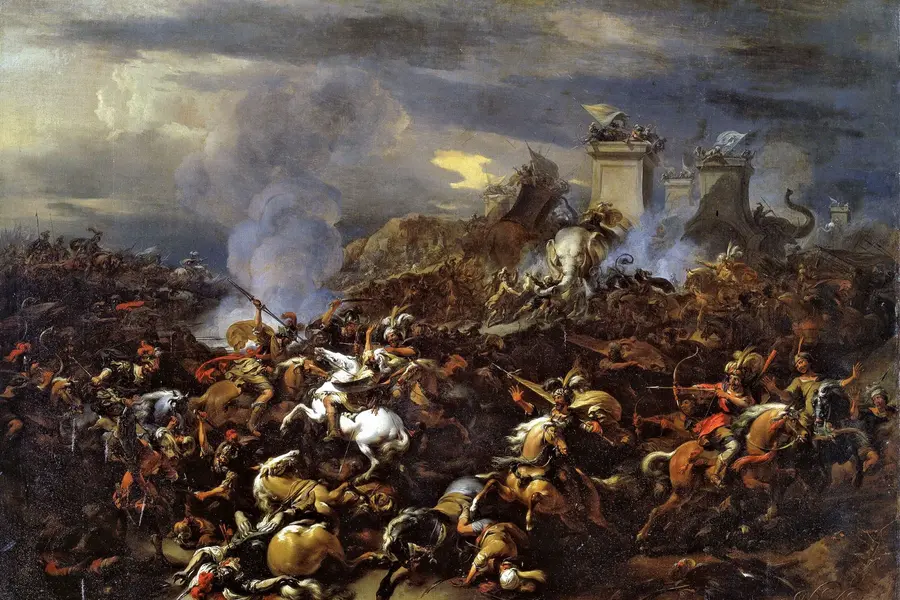
Alexander's death occurred only months after one of the most significant turning points of his military career. Although he remained undefeated, his soldiers had finally reached the limits of endurance. In 326 BC, Alexander defeated King Porus at the Battle of the Hydaspes, one of his most difficult victories. Unlike previous Persian armies, Porus fielded war elephants alongside experienced infantry and cavalry, forcing Alexander to adapt his tactics once again.
Despite the victory, morale within the Macedonian army had deteriorated significantly. Many veterans had spent nearly a decade campaigning thousands of kilometers from home. They had endured countless battles, dangerous sieges, tropical diseases, monsoon rains, unfamiliar terrain, and enormous physical hardship. The army's reluctance became clear when Alexander proposed marching east toward the Ganges River. Reports reached the Macedonians describing the powerful Nanda Empire, whose armies were said to include thousands of war elephants and vast numbers of infantry. Whether these reports exaggerated enemy strength remains debated, but they undoubtedly affected morale.
At the Hyphasis River (modern Beas River), the army finally refused to continue. According to the historian Arrian, even Alexander's trusted officers recognized that the soldiers had reached their breaking point. Coenus, one of his senior commanders, argued that the exhausted army deserved to return home after years of continuous campaigning (Arrian, Anabasis, Book V).
Although Alexander initially resisted, he ultimately accepted the decision. Instead of advancing farther into India, he ordered a difficult return journey that included the disastrous crossing of the Gedrosian Desert, where thousands of soldiers, camp followers, and animals perished from thirst, starvation, and extreme heat. Many historians believe this catastrophic march weakened both Alexander and his army long before the illness that ultimately claimed his life.
When, Where, and How Old Was Alexander When He Died?
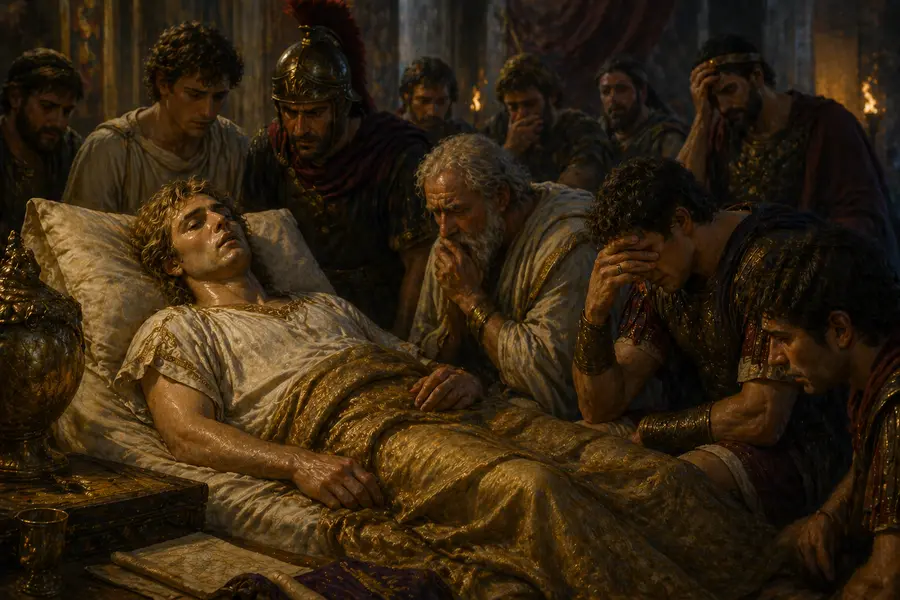
Alexander the Great died in June 323 BC in the city of Babylon, one of the principal capitals of his empire. Most modern historians place his death on either 10 June or 11 June 323 BC. However, exact conversion between the ancient Macedonian calendar and the modern Gregorian calendar remains uncertain.
He was only 32 years old. Babylon had become the center of Alexander's growing empire following his eastern campaigns. Rather than retiring after years of conquest, Alexander was actively planning ambitious new military expeditions. Ancient sources suggest he intended to invade Arabia, expand maritime exploration in the Persian Gulf, improve imperial administration, and possibly continue campaigns farther west. His sudden death therefore came at the height of his power rather than after military defeat or political decline.
| Fact | Information |
|---|---|
| Date of Death | June 323 BC (commonly 10-11 June) |
| Age | 32 years |
| Location | Babylon (modern Iraq) |
| Status | Undefeated ruler of the Macedonian Empire |
| Immediate Cause | Unknown; remains one of history's greatest medical mysteries |
Alexander's Final Days: A Timeline
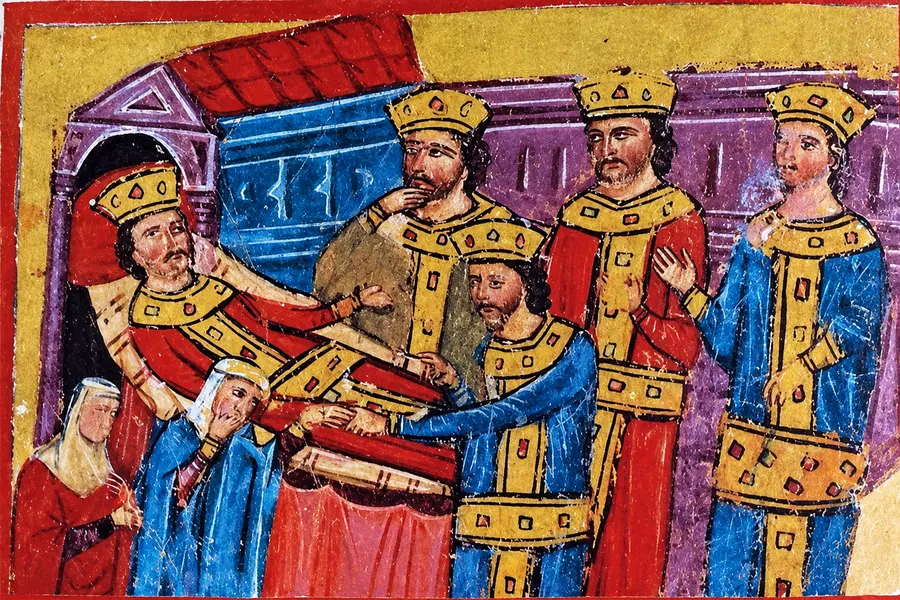
The most detailed account of Alexander's final illness comes from what scholars call the Royal Journals, preserved in later historical works by Arrian and Plutarch. While the accuracy of every detail remains debated, these accounts provide an unusually detailed sequence of events.
| Approximate Day | Events |
|---|---|
| Day 1 | Alexander attended a banquet and later developed a fever. |
| Days 2-4 | The fever gradually intensified, but he continued issuing military orders. |
| Days 5-7 | His strength declined significantly, although he remained mentally alert. |
| Days 8-10 | He became increasingly weak and was unable to perform normal activities. |
| Final Days | Alexander reportedly lost the ability to speak clearly before dying. |
Notably, ancient sources generally describe a gradual deterioration rather than a sudden collapse. This progression has become one of the strongest pieces of evidence used by modern historians and physicians when evaluating possible medical explanations for his death.
What Symptoms Did Alexander the Great Experience?
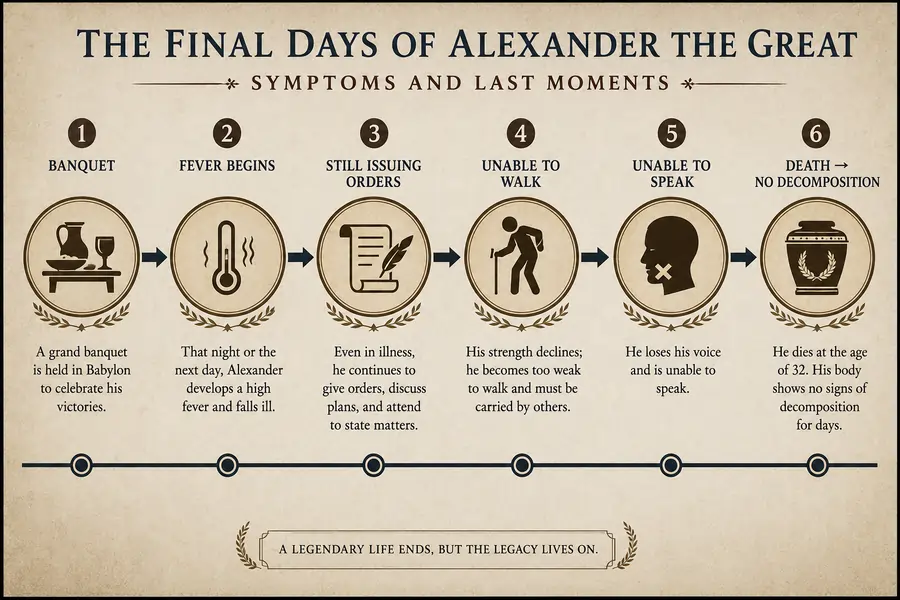
Although no modern medical records exist, ancient historians consistently describe several symptoms experienced during Alexander's final illness. Because several independent writers preserved similar details, researchers have attempted to compare these descriptions with modern medical conditions. The symptoms recorded in the ancient sources include:
- Persistent and worsening fever.
- Increasing physical weakness.
- Difficulty walking during the later stages of illness.
- Progressive loss of strength while remaining mentally aware.
- Gradual inability to speak.
- Death approximately ten to twelve days after symptoms first appeared.
One particularly intriguing aspect of these accounts is that Alexander reportedly continued making military decisions despite becoming physically weaker. Ancient writers do not consistently describe confusion or loss of consciousness during most of the illness, suggesting that his mental faculties remained largely intact until very late in the disease. This combination of prolonged fever, paralysis-like weakness, and preserved awareness has led physicians to propose several competing diagnoses over the past century. Some explanations fit the fever well, while others better explain the unusual progression of weakness.
Why Did Alexander's Body Reportedly Not Decay?
Among the most mysterious details recorded by ancient writers is the claim that Alexander's body showed no visible signs of decomposition for several days after death. Plutarch, writing centuries later but drawing on earlier traditions, states that the body remained remarkably well preserved despite the warm climate of Babylon. To many contemporaries, this appeared to confirm Alexander's semi-divine status. Some believed the gods themselves had preserved his body as proof of his extraordinary nature.
Modern historians are considerably more cautious. Several explanations have been proposed. The embalming process may have begun sooner than later traditions suggest, or ancient writers may have exaggerated the story to reinforce Alexander's legendary reputation. Another possibility is that observers misinterpreted an unusually well-preserved body under carefully controlled conditions within the royal palace.
An additional medical theory proposes that Alexander may not have been clinically dead when initially believed. Certain neurological disorders can produce extremely shallow breathing and paralysis that, without modern medical equipment, could be mistaken for death. While impossible to prove, this observation has become an important part of one of the more unusual modern theories discussed by medical researchers. The mystery surrounding his remarkably preserved body continues to fuel debate more than two millennia after his death, ensuring that Alexander's final days remain one of history's most fascinating unsolved medical cases.
The Leading Theories Behind Alexander the Great's Death
Despite centuries of research, historians have never reached a universal agreement on what caused Alexander's death. The ancient sources describe his symptoms but do not provide enough clinical detail for a definitive diagnosis. As a result, physicians, epidemiologists, neurologists, and historians have proposed numerous explanations over the last two centuries.
Most modern scholars agree that Alexander likely died from a natural illness rather than assassination. However, alternative theories continue to attract attention because several aspects of his final illness-including its duration and the reported preservation of his body-remain difficult to explain with complete certainty. The following sections examine the principal theories, the evidence supporting each one, and the reasons why historians either accept or question them.
1. Disease Theory: The Most Widely Accepted Explanation
Among professional historians and medical researchers, infectious disease remains the leading explanation for Alexander's death. Babylon, where Alexander spent his final weeks, was located within the fertile floodplain of the Euphrates River. Although strategically important, the region also contained marshes, stagnant water, and a warm climate that allowed numerous infectious diseases to flourish.
Ancient accounts consistently mention that Alexander developed a fever which gradually worsened over approximately ten to twelve days. Unlike poison, which many ancient toxins would have produced far more rapidly, infectious diseases often follow exactly this type of progression. Several diseases have been proposed under the broader disease theory.
Typhoid Fever
Typhoid fever has received considerable scholarly support since the early twentieth century. Caused by the bacterium Salmonella enterica serovar Typhi, the disease spreads through contaminated food and water. Poor sanitation in ancient cities made outbreaks relatively common. The symptoms described by ancient historians correspond reasonably well with severe typhoid:
- Persistent high fever.
- Gradual physical decline.
- Weakness lasting over a week.
- Death after prolonged illness if untreated.
A notable study published by Dr. David Oldach and colleagues argued that typhoid fever could explain both Alexander's symptoms and the duration of his illness (Oldach et al., Clinical Infectious Diseases, 1998).
Supporters also point out that Alexander frequently campaigned under harsh conditions where contaminated water supplies were common. His army had recently completed years of campaigning in regions where sanitation was inconsistent.
Malaria
Another possibility is malaria, which was endemic throughout Mesopotamia during antiquity. Mosquitoes breeding in the marshes surrounding Babylon could easily have transmitted the disease. Malaria can produce:
- Recurring high fever.
- Severe fatigue.
- Progressive weakness.
- Death in severe cases.
However, historians note that the ancient descriptions do not clearly mention the cyclical fever pattern commonly associated with malaria, making this explanation less convincing than typhoid.
West Nile Virus
In 2003, researchers proposed that Alexander may have contracted West Nile Virus after observing similarities between modern infections and ancient descriptions. The theory gained attention because outbreaks can occur near river systems and wetlands similar to those around Babylon.
The hypothesis was also supported by reports preserved in later traditions suggesting unusual bird deaths before Alexander's illness. Modern outbreaks of West Nile Virus sometimes affect bird populations before spreading to humans. However, many historians remain skeptical because these reports appear only in later sources and may not accurately preserve events from 323 BC.
Pneumonia or Other Systemic Infection
Some physicians argue that Alexander could have suffered from bacterial pneumonia or another severe systemic infection. After years of exhausting campaigns, repeated injuries, poor nutrition, and environmental exposure, his immune system may have been significantly weakened. A serious respiratory or bloodstream infection could account for:
- Persistent fever.
- Rapid physical deterioration.
- Death over roughly ten days.
The difficulty is that ancient writers rarely recorded respiratory symptoms such as coughing or breathing difficulties, making this explanation possible but difficult to confirm.
Why Many Historians Favor Disease
The disease theory enjoys the broadest academic support because it aligns closely with several independently recorded observations:
| Evidence | Supports Disease? | Reason |
|---|---|---|
| High fever | ✔ Yes | Common feature of many infectious diseases. |
| Gradual illness lasting 10-12 days | ✔ Yes | Typical progression of untreated infection. |
| No immediate collapse | ✔ Yes | Less consistent with most known poisons. |
| Location in Babylon | ✔ Yes | Region exposed to multiple endemic diseases. |
Although no single disease perfectly matches every recorded symptom, most historians consider a natural infectious illness to be the simplest explanation.
2. Was Alexander the Great Poisoned?
The poisoning theory is one of the oldest explanations for Alexander's death. Rumors began circulating only a few years after his passing and continued throughout antiquity. Political instability following his death encouraged speculation that powerful rivals had orchestrated his assassination.
Ancient writers implicated various individuals, including Antipater, one of Alexander's senior governors, and even Antipater's sons. Some traditions suggested that Aristotle himself had indirectly supported the conspiracy because of deteriorating relations with Alexander-a claim that most modern historians reject as political propaganda.
The principal argument supporting poisoning is straightforward: Alexander was young, physically active, and appeared healthy shortly before his illness. Supporters also note that his death benefited numerous ambitious generals who immediately began competing for control of the empire. Nevertheless, significant problems weaken the poisoning hypothesis.
First, the ancient sources consistently describe a prolonged illness lasting more than a week. Most poisons available during the fourth century BC would have caused vomiting, seizures, respiratory failure, or sudden collapse rather than a slowly progressive fever.
Second, no contemporary source records symptoms strongly associated with poisoning, such as severe gastrointestinal bleeding or violent convulsions.
Finally, many accusations appear only in later historical traditions written decades or even centuries after Alexander's death, when political legends had become intertwined with historical fact.
Could Slow-Acting Poison Have Been Used?
Some researchers have suggested plant-derived toxins such as white hellebore (Veratrum album), which can produce a slower illness than many classical poisons. While this idea cannot be ruled out entirely, it remains speculative because the ancient descriptions do not clearly match the known clinical effects of these toxins. Consequently, most historians regard deliberate poisoning as possible but unlikely.
3. Necrotizing Pancreatitis
A less widely known medical hypothesis suggests Alexander may have died from acute necrotizing pancreatitis, a severe inflammation of the pancreas that can rapidly become fatal. The theory gained attention because ancient sources mention Alexander participating in prolonged drinking during banquets shortly before his illness. Heavy alcohol consumption is a recognized risk factor for acute pancreatitis. In severe cases, inflammation destroys pancreatic tissue, leading to infection, multiple organ failure, and death. Researchers supporting this diagnosis point to several observations:
- Sudden onset following a banquet.
- Severe systemic illness.
- Progressive deterioration over approximately ten days.
- High mortality without modern treatment.
However, the evidence remains limited. Ancient historians never explicitly describe the severe abdominal pain that typically characterizes pancreatitis. While they mention discomfort and fever, they do not record the intense upper abdominal pain usually associated with the condition. As a result, necrotizing pancreatitis remains an interesting but minority opinion within medical scholarship.
4. Guillain-Barré Syndrome
One of the most fascinating modern theories was proposed by Dr. Katherine Hall in 2018. She suggested that Alexander may have developed Guillain-Barré syndrome (GBS), a rare autoimmune neurological disorder. GBS occurs when the body's immune system mistakenly attacks peripheral nerves, leading to progressive paralysis. The theory attempts to explain two longstanding mysteries simultaneously:
- The gradual paralysis described during Alexander's final illness.
- The reported lack of decomposition after his apparent death.
According to this hypothesis, Alexander may not have died immediately when observers believed he had. Instead, he could have entered a state of extremely shallow breathing and profound paralysis. Without modern medical equipment, ancient physicians might have concluded that he had died even though minimal vital signs remained. This would also provide a possible explanation for why his body allegedly showed no early signs of decomposition.
Evidence Supporting Guillain-Barré Syndrome
| Observation | How GBS Could Explain It |
|---|---|
| Progressive weakness | Characteristic feature of GBS. |
| Mental awareness preserved | Patients usually remain conscious. |
| Difficulty speaking | Can occur as paralysis progresses. |
| Body reportedly remained preserved | If death occurred later than believed. |
Despite its creativity, the theory also has significant weaknesses. Guillain-Barré syndrome rarely causes prolonged high fever by itself. Since fever is consistently reported in nearly every ancient source, most physicians believe another illness would still be needed to explain Alexander's symptoms. For this reason, many neurologists consider GBS intriguing but not entirely sufficient as a standalone explanation.
5. Could Alexander Have Died From Earlier Battle Injuries?
Alexander spent much of his adult life at the front of his army and suffered numerous serious wounds during his campaigns. Unlike many kings of antiquity, he regularly fought in the thickest fighting. Ancient historians describe him leading cavalry charges, storming city walls, and personally engaging enemy warriors. Among his better-documented injuries were:
- A severe head wound during the Battle of the Granicus.
- A shoulder injury during later campaigns.
- A fractured leg.
- A life-threatening chest wound sustained while assaulting the Mallian city in India, where an arrow penetrated his lung (Arrian, Anabasis, Book VI).
These repeated injuries undoubtedly weakened his body. Some historians believe chronic complications from these wounds, combined with years of relentless campaigning, may have reduced his ability to survive an otherwise treatable illness. However, few scholars believe old injuries alone directly caused his death. Rather, they likely acted as contributing factors by leaving Alexander physically exhausted before his final illness began.
Which Theory Is the Most Likely?
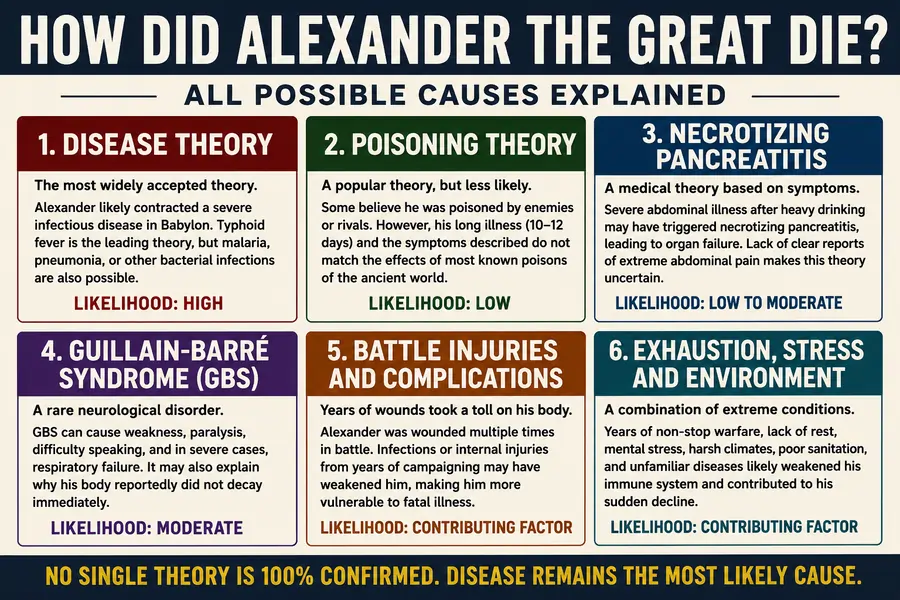
More than two millennia after Alexander's death, no single explanation has been universally accepted. The surviving evidence comes primarily from ancient historians writing years or even centuries after the event, and none were eyewitness physicians. Nevertheless, by comparing the historical record with modern medical knowledge, historians have been able to evaluate which theories best fit the available evidence.
Today, the majority of classical historians favor a natural disease rather than assassination. While typhoid fever has long been the leading diagnosis, there is no definitive proof that it was responsible. Other infectious diseases, including malaria, pneumonia, or another bacterial infection, remain plausible because they can produce prolonged fever and gradual physical decline.
The poisoning theory, despite its popularity in films and novels, has steadily lost support among scholars. Most poisons known in the ancient world would have acted much faster than the illness described by Arrian, Plutarch, and Diodorus. Furthermore, accusations of poisoning appear most prominently in later political traditions that emerged after Alexander's empire descended into civil war.
The Guillain-Barré syndrome hypothesis has attracted considerable media attention because it offers a potential explanation for both Alexander's progressive paralysis and the ancient claim that his body did not immediately decompose. However, many physicians note that GBS alone does not adequately explain the persistent high fever recorded by multiple ancient authors.
Necrotizing pancreatitis is medically possible but remains speculative due to the lack of detailed descriptions of severe abdominal pain, one of the condition's defining symptoms.
Rather than identifying a single definitive diagnosis, many modern researchers believe Alexander may have suffered from a combination of factors. Years of continuous campaigning, repeated battlefield injuries, exhaustion, psychological stress, exposure to unfamiliar diseases, and the harsh conditions of long military expeditions likely weakened his body significantly. Under those circumstances, an infectious disease that might otherwise have been survivable could have become fatal.
| Theory | Strengths | Weaknesses | Current Historical Support |
|---|---|---|---|
| Typhoid or Other Infectious Disease | Matches fever, gradual decline, Babylon's environment, illness duration. | No definitive medical evidence survives. | High |
| Malaria | Common in Mesopotamia. | Symptoms do not perfectly match ancient accounts. | Moderate |
| Poisoning | Political motive existed. | Illness progressed too slowly for most known poisons. | Low |
| Necrotizing Pancreatitis | Could explain rapid deterioration after heavy drinking. | Lack of reported abdominal pain. | Low to Moderate |
| Guillain-Barré Syndrome | Explains paralysis and preserved body. | Does not explain prolonged fever. | Moderate |
| Battle Injuries | Years of wounds weakened Alexander. | Unlikely to have directly caused death. | Contributing Factor |
Why Alexander's Death Changed History
Alexander's death did far more than end the life of one of history's greatest conquerors-it fundamentally reshaped the political landscape of the ancient world. Unlike many successful rulers, Alexander left behind no clear adult heir capable of ruling his enormous empire. His half-brother, Philip III Arrhidaeus, suffered from significant mental disabilities, while his son, Alexander IV, had not yet been born at the time of his death. With no universally accepted successor, the empire quickly descended into a struggle for power among Alexander's leading generals.
The conflict that followed became known as the Wars of the Diadochi ("Wars of the Successors"). Commanders who had once fought together under Alexander-including Ptolemy, Seleucus, Antigonus, Lysimachus, and Cassander-turned against one another in a series of brutal wars that lasted for decades. Instead of preserving Alexander's unified empire, they divided it into several powerful Hellenistic kingdoms. Ptolemy established the Ptolemaic Kingdom in Egypt, Seleucus founded the vast Seleucid Empire stretching across much of Asia, while Antigonid rulers eventually gained control of Macedon and Greece.
Although Alexander's empire fragmented remarkably quickly, his conquests left a lasting cultural legacy. Greek language, art, philosophy, science, and political institutions spread throughout Egypt, the Near East, and Central Asia in what historians call the Hellenistic Age. Cities founded or expanded by Alexander-most famously Alexandria in Egypt-became major centers of trade, scholarship, and learning. The blending of Greek culture with Egyptian, Persian, and Near Eastern traditions influenced everything from architecture and religion to mathematics and astronomy.
In many ways, Alexander's greatest legacy emerged not from the empire he ruled, but from the world that developed after his death. The Hellenistic kingdoms created by his successors preserved Greek culture for centuries, influenced the rise of the Roman Republic, and laid the cultural foundations upon which the Roman Empire later expanded. For this reason, historians often regard Alexander's death as one of the most consequential turning points in ancient history-not because it ended an empire, but because it gave rise to an entirely new era.
Conclusion
Alexander the Great's death remains one of the greatest mysteries of the ancient world. Ancient historians carefully recorded the symptoms of his final illness, yet the evidence is incomplete enough that no modern diagnosis can be proven beyond doubt. The balance of historical and medical evidence favors a severe infectious disease, most likely one contracted during his stay in Babylon after years of exhausting military campaigns. Other explanations-including poisoning, necrotizing pancreatitis, Guillain-Barré syndrome, and complications from earlier injuries-each explain certain aspects of the historical record but leave important questions unanswered.
Ironically, the conqueror who survived countless battles, led charges against enemy armies, and marched farther than any previous Macedonian king was probably defeated not by an enemy general, but by illness. Yet Alexander's greatest achievement was never simply the empire he built. Although that empire fragmented almost immediately after his death, the spread of Hellenistic civilization transformed politics, science, commerce, language, and warfare across three continents. More than twenty-three centuries later, his campaigns, leadership, and mysterious death continue to fascinate historians, physicians, and readers alike. Many years after his death Alexander's tomb was lost and remains one of antiquity's most enduring mysteries.
References
Primary Ancient Sources
- Arrian, Anabasis of Alexander, Books V-VII.
- Plutarch, Life of Alexander, in Parallel Lives.
- Diodorus Siculus, Bibliotheca Historica, Book XVII.
- Quintus Curtius Rufus (History of Alexander)
- Justin. Epitome of the Philippic History of Pompeius Trogus.
Modern Scholarship
- Bosworth, A. B. Conquest and Empire: The Reign of Alexander the Great. Cambridge University Press.
- Cartledge, Paul. Alexander the Great: The Hunt for a New Past.
- Lane Fox, Robin. Alexander the Great.
- Green, Peter. Alexander of Macedon, 356-323 BC.
- Oldach, D. W., et al. "A Mysterious Death." Clinical Infectious Diseases, 1998.
- Hall, Katherine. "Did Alexander the Great Die from Guillain-Barré Syndrome?" The Ancient History Bulletin, 2018.
Books and Memorables
This article may contain affiliate links. If you purchase through these links, I may earn a small commission at no extra cost to you.


Related Articles


Frequently Asked Questions
What disease is believed to have killed Alexander the Great?
Most modern historians and medical researchers believe Alexander the Great most likely died from a severe infectious disease rather than assassination. Typhoid fever has traditionally been the leading theory because it matches the prolonged fever and gradual decline described in ancient sources, although malaria, pneumonia, and other bacterial or viral infections have also been proposed. No single diagnosis has been conclusively proven.
Why do historians think Alexander the Great was not poisoned?
Most historians consider poisoning unlikely because ancient accounts describe Alexander suffering from a high fever and a gradual illness lasting around 10 to 12 days. Many poisons known in the ancient world would have caused a much faster death or different symptoms. In addition, the earliest reports of poisoning appeared years after Alexander's death and were likely influenced by political struggles among his successors.
Why did Alexander the Great's body reportedly not decay after his death?
Ancient writers claimed that Alexander's body showed no visible signs of decomposition for several days after his death in Babylon. Some people at the time viewed this as evidence of his divine status. Modern historians suggest more natural explanations, including early preservation methods, inaccuracies in later historical accounts, or the possibility that a rare neurological condition delayed the appearance of death.
How long was Alexander the Great sick before he died?
According to ancient historical sources, Alexander the Great was ill for approximately 10 to 12 days before his death in June 323 BC. During this period, he developed a high fever, gradually became weaker, lost the ability to walk, and eventually became unable to speak while reportedly remaining mentally aware for much of his illness.
Did Alexander the Great die after returning from India?
Yes. Alexander died in Babylon in 323 BC after returning from his Indian campaign. His army had refused to march farther east at the Hyphasis River, forcing him to abandon plans for further conquest. During the return journey, his forces suffered heavy losses while crossing the Gedrosian Desert before eventually reaching Babylon.
What happened to Alexander the Great's empire after he died?
After Alexander the Great died without naming a clear adult successor, his generals fought a series of conflicts known as the Wars of the Diadochi. The empire eventually split into several Hellenistic kingdoms, including the Ptolemaic Kingdom in Egypt, the Seleucid Empire in Asia, and the Antigonid Kingdom in Macedonia. Although the empire fragmented, Greek culture continued to spread across the eastern Mediterranean and the Near East for centuries.
Add Comment