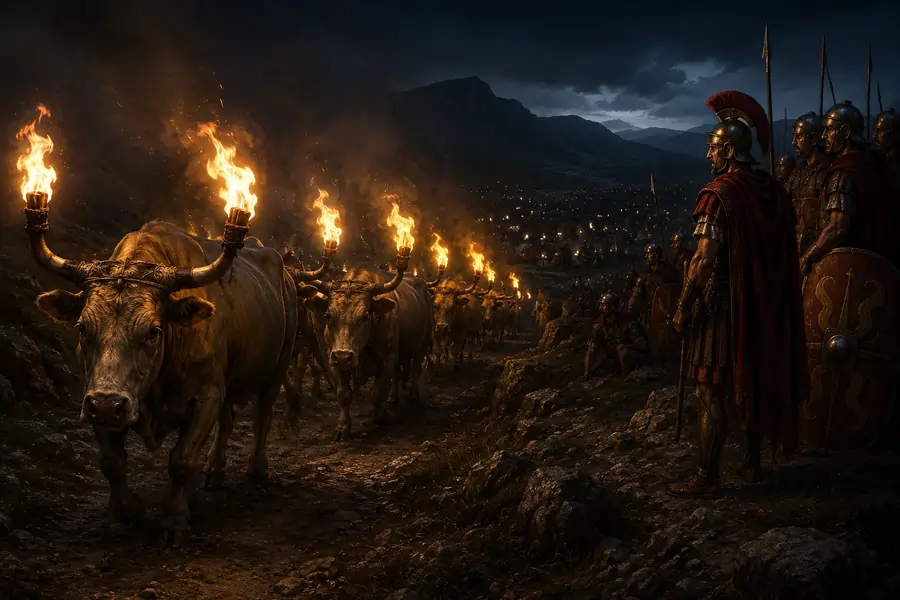
The Battle of Ager Falernus in 217 BC was not a significant clash by any means. The casualty figure pales in comparison to some of the other major battles of the Second Punic War. However, the outcome of this battle was far-reaching and defined the course of the war. After devastating Roman armies at the Battle of Trebia and the Battle of Lake Trasimene, Hannibal Barca found himself trapped in the fertile Falernian Plain by Roman forces under the dictator Quintus Fabius Maximus. What appeared to be Rome's best opportunity to destroy the Carthaginian army instead became another demonstration of Hannibal's military genius. By using deception, terrain, and psychological warfare, Hannibal escaped an encirclement that not only preserved Carthage's most important army but also became one of the most famous examples of battlefield ingenuity in ancient military history.
Table of Contents
- Overview of the Battle of Ager Falernus
- Prelude to the Battle
- The Fabian Strategy and Rome's New Approach
- How Hannibal Became Trapped in Ager Falernus
- Why the Trap Was So Dangerous
- How Hannibal Escaped the Roman Encirclement
- Roman Reaction to the Escape
- Significance of the Battle of Ager Falernus
- Military Lessons from Ager Falernus
- Why Historians Still Study Ager Falernus
- References
Overview of the Battle of Ager Falernus
The Battle of Ager Falernus, often called the escape from the Falernian Plain, occurred in late 217 BC during the Second Punic War. Following Rome's catastrophic defeat at Lake Trasimene, the Roman Republic abandoned aggressive offensive operations and appointed Quintus Fabius Maximus as dictator. Rather than risking another pitched battle against Hannibal, Rome adopted the Fabian Strategy of attrition, shadowing the Carthaginian army while denying it opportunities for decisive combat.
Although widely unpopular with the Roman public, this cautious strategy nearly achieved its greatest success when Hannibal entered the rich agricultural region known as Ager Falernus in Campania. Roman forces blocked the mountain passes and appeared to have trapped the invader. The Carthaginians were now cut off from supplies and trapped in enemy territory. Yet instead of being destroyed, Hannibal orchestrated a daring nighttime escape that became one of the most celebrated military deceptions of antiquity.
Prelude to the Battle
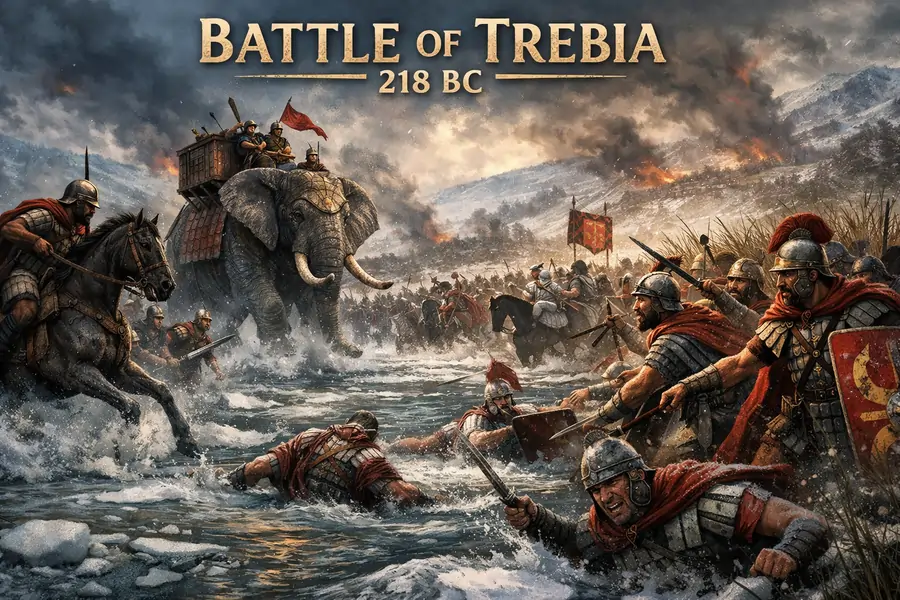
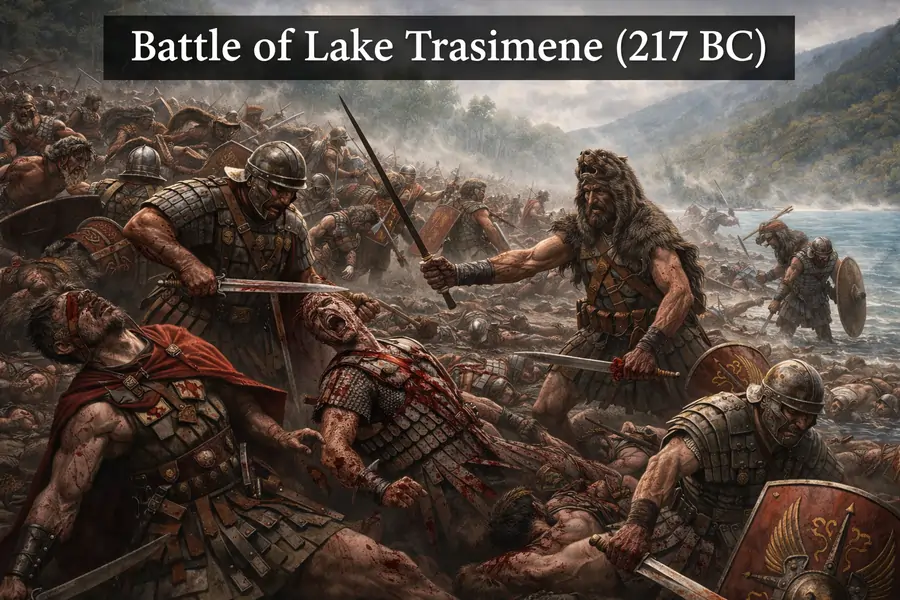
To understand the importance of Ager Falernus, it is necessary to examine the strategic situation in Italy during 217 BC. After crossing the Alps in 218 BC, Hannibal stunned Rome with a series of victories. At the Battle of Trebia, he used superior tactics to destroy a Roman army. Several months later, he inflicted another disaster at the Battle of Lake Trasimene, where Roman forces marched into one of history's largest ambushes. The overconfident Romans were shocked at these major losses.
Many Roman leaders had underestimated Hannibal's capabilities, believing that the superior Roman legions would prevail in a land engagement. Instead, Hannibal repeatedly demonstrated his battlefield brilliance and defeated the Romans handily. The Roman Senate soon realized that conventional methods were failing. As panic spread throughout Italy, Quintus Fabius Maximus was appointed dictator with extraordinary powers to stabilize the situation.
The Fabian Strategy and Rome's New Approach
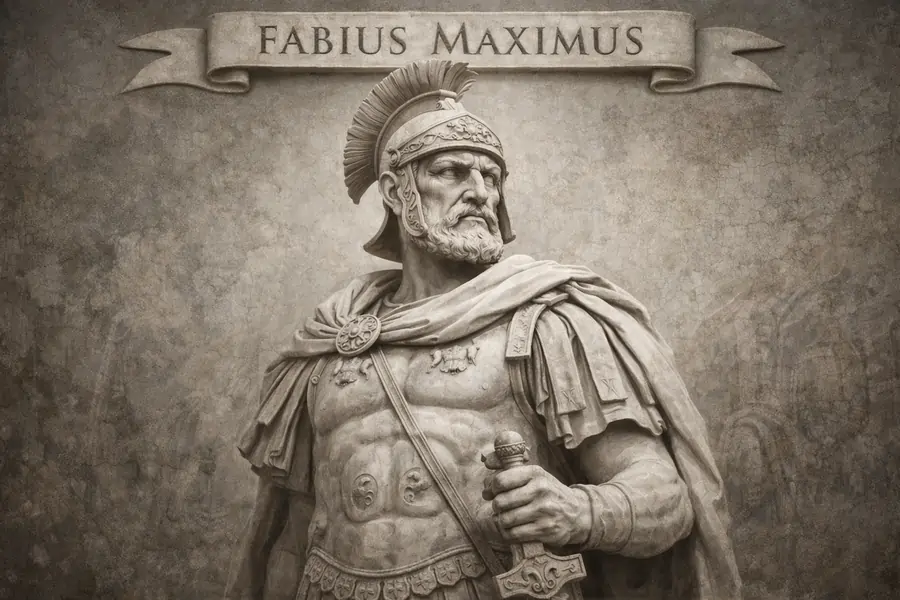
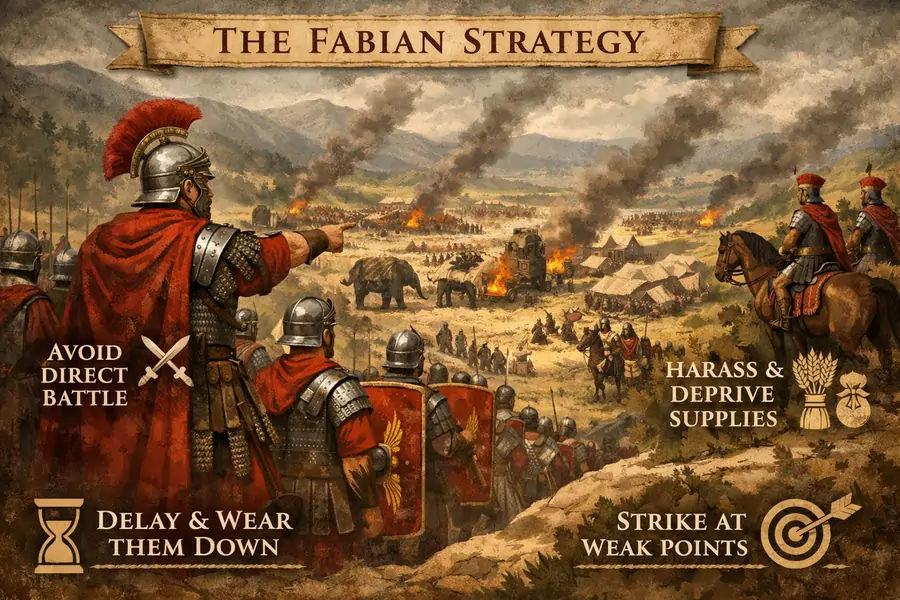
The Romans wanted to engage Hannibal in a decisive battle again soon, but Fabius recognized a critical reality: Hannibal excelled at winning open battles. Attempting to defeat him on his own terms would likely result in further disasters. Instead, Fabius implemented what later became known as the Fabian Strategy. This approach focused on avoiding major engagements while gradually wearing down the enemy through harassment, supply disruption, and strategic maneuver (Polybius, Histories 3.89; Goldsworthy, The Fall of Carthage, pp. 235-238).
The strategy involved:
- Avoiding pitched battles.
- Shadowing Hannibal's movements.
- Protecting important Roman strongholds.
- Destroying supplies that could benefit the enemy.
- Using Rome's superior manpower reserves to prolong the war.
- Winning key battles in other theatres of the war, preventing Carthage from reinforcing Hannibal.
Although militarily sound, the Fabian Strategy was unpopular among many Romans. Citizens accustomed to decisive victories viewed Fabius as overly cautious and cowardly. Critics mockingly referred to him as "Cunctator," meaning "The Delayer." To the Romans, victory was essential, and they would get it at any cost. Ironically, history would later vindicate his approach.
How Hannibal Became Trapped in Ager Falernus
During the Italian campaign, Hannibal moved into Campania, one of the richest agricultural regions in Italy. The fertile Falernian Plain offered abundant grain, livestock, and resources needed to sustain his multinational army. While Hannibal's troops gathered supplies and devastated the countryside, Fabius patiently maneuvered to cut off escape routes.
The geography of Ager Falernus worked heavily against the Carthaginians. Mountains surrounded the region, and the Carthaginian army could exit the region only through a limited number of passes. Fabius occupied key high grounds and stationed approximately 4,000 troops near the most important crossing point. For perhaps the first time during the Italian campaign, Hannibal appeared genuinely trapped. Finally, the Fabian strategy was paying off for the Romans. Adrian Goldsworthy describes the situation as one of the few occasions when the Roman strategy came close to placing Hannibal in a strategically untenable position (Goldsworthy, The Fall of Carthage, p. 238).
The Romans now believed that the Carthaginian army had finally reached a dead end. If Hannibal attempted to force a mountain pass, Roman defenders would enjoy significant advantages from elevated positions and narrow terrain. This appeared to give Rome its best opportunity to destroy Hannibal's army.
Why the Trap Was So Dangerous
The situation facing Hannibal was extremely serious. Unlike previous battles, he could not rely on superior cavalry maneuvering. The mountainous terrain restricted movement and reduced many of his traditional tactical advantages. Hannibal could not stay in the region indefinitely as he would run out of supplies. He had to act soon or risk losing in a battle of attrition.
However, if he attacked the Roman forces, then he would be in a very disadvantageous position as the Roman forces controlled all the exits. The Carthaginian army carried enormous amounts of plunder and livestock, both of which had to be safeguarded. Remaining stationary also risked gradual encirclement by other nearby Roman legions. A direct assault would likely result in heavy casualties, which Hannibal could ill afford.
For Rome, the trap represented an opportunity to achieve through strategy what previous commanders had failed to achieve through battle. This was also a chance for Fabius to gain much-needed support for his strategy. Many historians argue that this was one of the closest moments Hannibal came to strategic defeat before the later stages of the war.
How Hannibal Escaped the Roman Encirclement
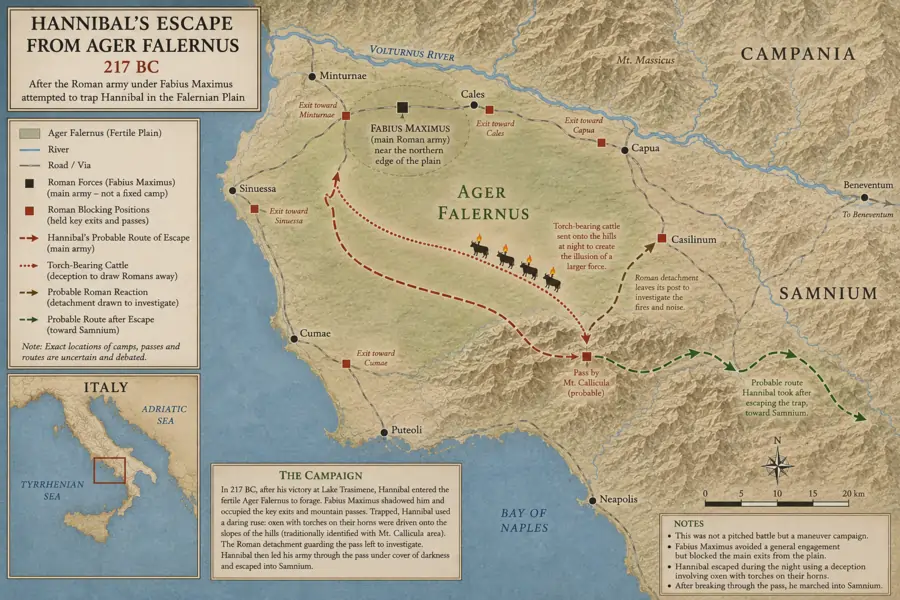
Hannibal's solution to the predicament was the brilliant use of deception. Rather than attacking directly, he devised an elaborate operation to draw off the Roman troops. According to the ancient historian Livy, Hannibal ordered thousands of oxen gathered from captured livestock. During the night, bundles of dry wood and burning torches were attached to the animals' horns.
Once darkness fell, the oxen were driven toward the hills overlooking the Roman positions. As the frightened animals moved across rugged terrain, the lights appeared to Roman observers as a massive army advancing through the mountains. The Roman guards became convinced that Hannibal was attempting a breakout along the heights. Confusion spread among the defenders, and many abandoned their carefully prepared positions to investigate the apparent movement.
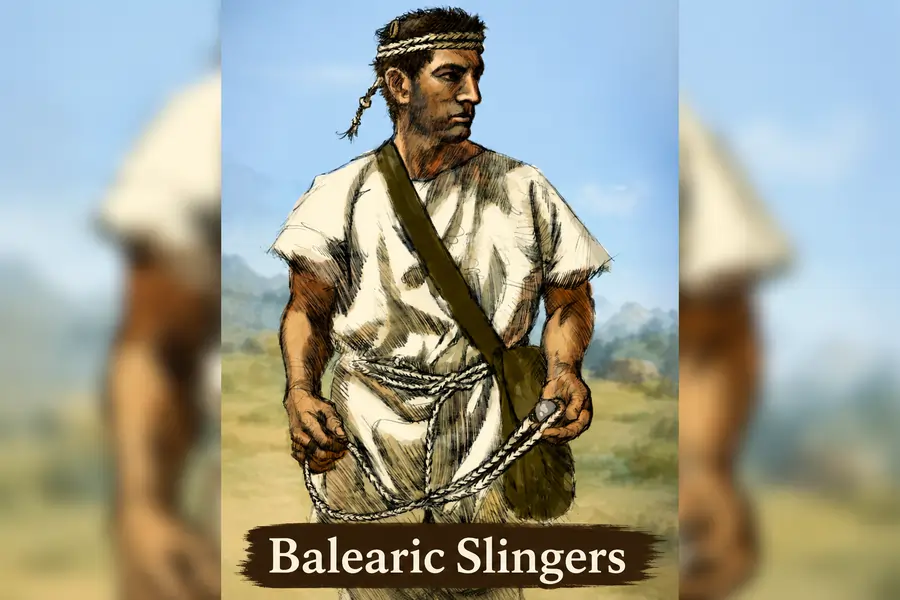
While Roman attention focused on the blazing lights, they were attacked by Carthaginian light infantry including Balearic slingers and lost about 1,000 troops. Hannibal, meanwhile, escaped with his veteran infantry and quietly marched through the unguarded main pass. With the Roman defenders distracted and disorganized, the Carthaginians secured the route and moved the remainder of the army, baggage train, and livestock through the opening.
The Roman commanders, seeing the Carthaginians escape, urged Fabius to attack them, but he refused. Fabius did not want to engage Hannibal in unfamiliar terrain. He was also unsure of the new Roman legion's ability to fight in night operations. Hannibal's maneuver required precise timing, discipline, and coordination. Any mistake could have exposed the operation and trapped the army permanently. Instead, it became one of ancient history's most successful examples of strategic misdirection.
Roman Reaction to the Escape
Roman frustration was immense. Many senators and military leaders believed that Fabius had missed a golden opportunity to destroy Hannibal. Critics argued that excessive caution allowed the Carthaginians to escape (Livy 22.18-19). Fabius defended his decisions by emphasizing the dangers of fighting Hannibal under uncertain conditions. He feared that an aggressive pursuit at night could lead Roman troops into an ambush.
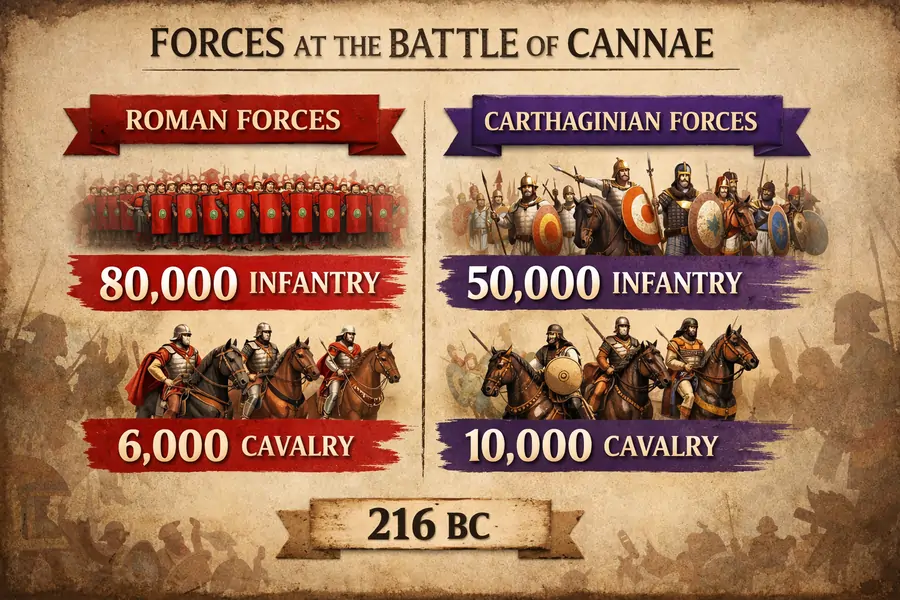
In hindsight, these concerns were reasonable. Hannibal had repeatedly demonstrated an ability to turn apparent weakness into battlefield advantage. Nevertheless, political pressure against Fabius continued to grow, eventually contributing to Rome's decision to pursue more aggressive operations. That shift culminated in the catastrophic Battle of Cannae in 216 BC, where Hannibal inflicted one of the worst defeats in Roman history.
Significance of the Battle of Ager Falernus
The significance of Ager Falernus extends far beyond the immediate campaign. In terms of the actual engagement, the Romans only lost about 1,000 troops. However, the long-term implications were huge. First, the escape preserved Hannibal's army. Had the Carthaginian force been trapped or destroyed, the entire course of the Second Punic War might have changed dramatically.
Second, this was a huge blow for Fabius Maximus. Although the Fabian strategy was unpopular among the Romans, when Hannibal was trapped in Ager Falernus, it was a big win for Fabius. However, Hannibal had outwitted him with a herd of oxen. The escape weakened confidence in Fabius among many Romans and intensified criticism of his cautious strategy.
Third, the incident highlighted the effectiveness of psychological warfare. Hannibal achieved success not through brute force but through manipulation of enemy perceptions. Finally, this incident proved that the Roman allies were not safe anywhere. The incident demonstrated that Hannibal remained capable of operating deep inside Roman territory despite Rome's efforts to contain him.
Military Lessons from Ager Falernus
Modern military historians frequently analyze Ager Falernus because it illustrates several enduring principles of warfare:
- Deception can outweigh numerical strength.
- Terrain influences strategic possibilities.
- Psychology often determines battlefield outcomes.
- Patience and discipline are essential in command.
- Operational flexibility can rescue seemingly hopeless situations.
The operation also serves as an excellent case study in how commanders can exploit enemy assumptions. Roman troops expected a breakout attempt and interpreted the torch-bearing oxen accordingly. Hannibal deliberately used those expectations against them, illustrating principles of deception still studied in military history today (Goldsworthy, The Fall of Carthage, pp. 238-240). These principles remain relevant in military academies today, even though the technologies of warfare have changed dramatically.
Why Historians Still Study Ager Falernus
Unlike famous battles won through direct combat, Ager Falernus demonstrates that military success often depends on creativity rather than battlefield violence. Trapped in a seemingly hopeless position by Quintus Fabius Maximus, Hannibal avoided destruction through a masterful deception involving torch-bearing oxen and a carefully coordinated nighttime breakout.
The escape preserved the Carthaginian army, reinforced Hannibal's reputation as a military genius, and demonstrated the power of psychological warfare. It also validated many aspects of the Fabian Strategy while exposing the challenges of converting strategic containment into decisive victory. More than two thousand years later, Ager Falernus remains a classic example of how intelligence, creativity, and leadership can overcome even the most dangerous circumstances. It stands as one of the greatest military escapes in ancient history and a defining moment in the long struggle between Rome and Carthage.
References
- Livy - History of Rome
- Polybius - Histories
- Goldsworthy, Adrian. The Fall of Carthage. Yale University Press.
- Lazenby, J.F. Hannibal's War. University of Oklahoma Press.
- Hoyos, Dexter. Mastering the West: Rome and Carthage at War.
- Scullard, H.H. Scipio Africanus and the Second Punic War.
- Encyclopaedia Britannica. "Hannibal Barca."
Recommended Books
This article may contain affiliate links. If you purchase through these links, I may earn a small commission at no extra cost to you.
Related Articles
Frequently Asked Questions
Why was Hannibal trapped at Ager Falernus?
Hannibal became trapped at Ager Falernus in 217 BC when the Roman dictator Quintus Fabius Maximus occupied the key mountain passes leading out of the Falernian Plain. By controlling the narrow exits and surrounding high ground, the Romans sought to contain the Carthaginian army and force it into a disadvantageous position.
How did Hannibal escape from the Falernian Plain?
Hannibal escaped from the Falernian Plain by using a clever deception involving thousands of oxen with burning torches attached to their horns. The moving lights convinced Roman defenders that the Carthaginians were attempting a breakout elsewhere, allowing Hannibal's main force to pass through a lightly defended route during the night.
What role did the Fabian Strategy play at Ager Falernus?
The Fabian Strategy was central to the events at Ager Falernus. Rather than engaging Hannibal in a major battle, Fabius Maximus sought to wear down the Carthaginian army through containment, harassment, and supply disruption. Trapping Hannibal in the Falernian Plain was one of the closest the strategy came to achieving a decisive success.
Why is the Battle of Ager Falernus considered a military deception?
The Battle of Ager Falernus is considered one of the greatest military deceptions of the ancient world because Hannibal used false signals to manipulate Roman decision-making. By creating the illusion of a large-scale breakout with torch-bearing oxen, he diverted Roman attention away from the actual escape route used by his army.
Did Hannibal win the Battle of Ager Falernus?
Although there was no large pitched battle, Hannibal achieved a strategic victory at Ager Falernus. He successfully escaped a Roman trap without suffering major losses, preserved his army, and maintained the initiative during the Second Punic War.
What happened after Hannibal escaped Ager Falernus?
After escaping Ager Falernus, Hannibal continued campaigning in Italy while Rome debated the effectiveness of the Fabian Strategy. Dissatisfaction with Fabius's cautious approach eventually led Rome to pursue more aggressive operations, culminating in the disastrous Battle of Cannae in 216 BC.
Add Comment