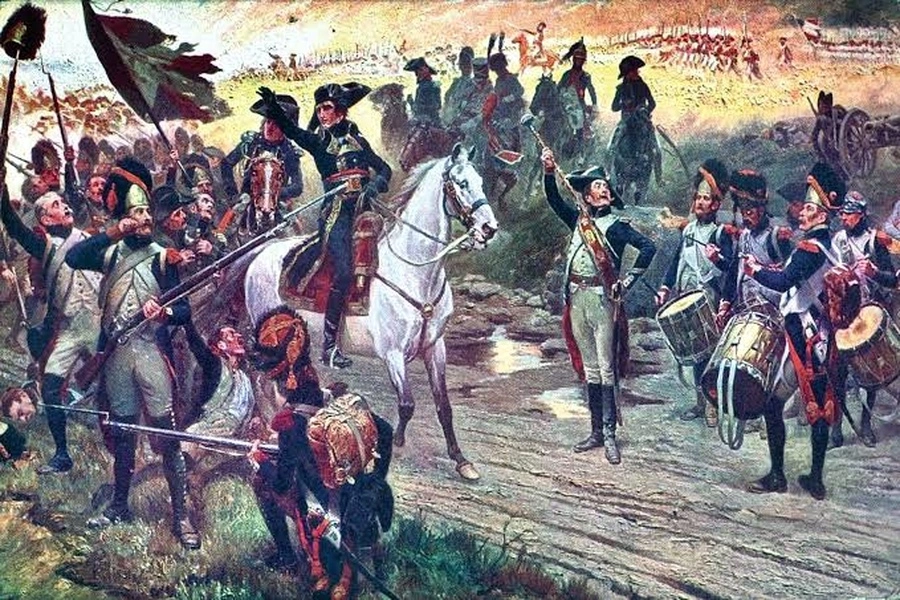
On 14 June 1800, Napoleon Bonaparte came dangerously close to losing his army, his Italian campaign, and the political prestige on which his new government depended. At Marengo, Austrian troops shattered the French defensive line, forced Napoleon's soldiers into retreat, and appeared to have won a decisive victory. Yet within hours, a counterattack led by General Louis Desaix and a devastating cavalry charge by François Étienne de Kellermann transformed apparent defeat into triumph. The Battle of Marengo became one of the most remarkable reversals in Napoleonic military history, demonstrating how battlefield leadership, tactical timing, artillery, cavalry, and the morale of exhausted soldiers could determine the outcome of a campaign.
Table of Contents
- 1. Prelude to the Battle of Marengo
- 2. Opposing Armies and Commanders
- 3. The Austrian Attack Across the Fontanone
- 4. The French Line Breaks
- 5. Napoleon and the Consular Guard Enter the Battle
- 6. General Desaix Returns to the Battlefield
- 7. Kellermann's Cavalry Charge and Zach's Capture
- 8. Casualties, Consequences, and the Convention of Alessandria
- 9. Why the Battle of Marengo Matters
- References and Further Reading
Prelude to the Battle of Marengo: Napoleon's Risky Italian Campaign
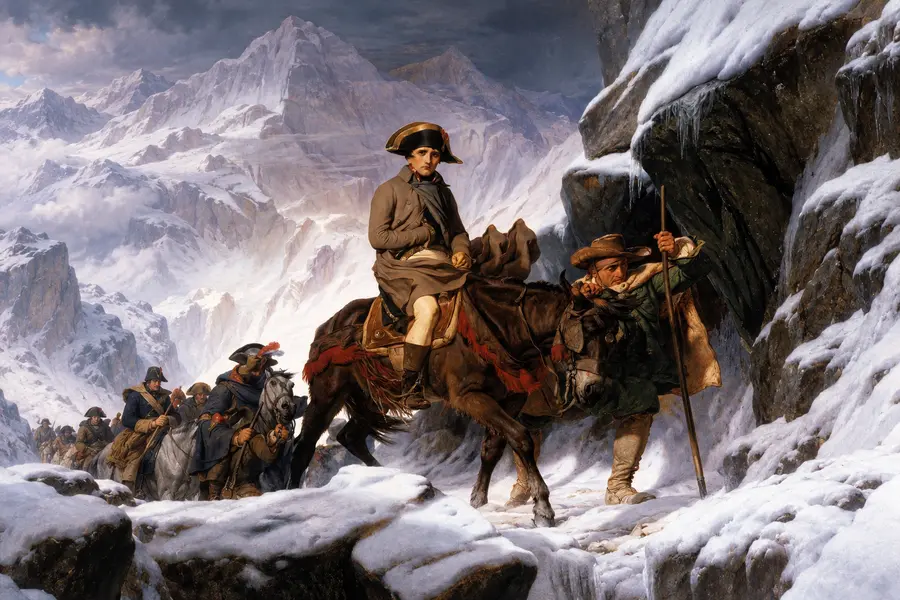
In the spring of 1800, France was fighting the Second Coalition, which included Austria and Britain. Austrian forces had recovered much of northern Italy after earlier French victories, threatening France's position on the peninsula. Napoleon, who had seized power in the coup of 18 Brumaire in November 1799, needed a military success to consolidate his authority as First Consul. Napoleon's Army of the Reserve crossed the Alps through the Great St Bernard Pass in May 1800. The operation allowed the French to emerge behind the Austrian forces in northern Italy, threatening their communications and supply routes. Napoleon hoped to force General Michael von Melas, the Austrian commander in Italy, into a decisive engagement before the enemy could escape or receive reinforcements.
Napoleon had reportedly identified the area around San Giuliano, near Alessandria, as a likely location for the decisive encounter. In his recollections, his secretary Louis Antoine Fauvelet de Bourrienne described Napoleon anticipating a battle in this vicinity because Melas had concentrated his supplies and headquarters at Alessandria. The prediction proved broadly correct, although Napoleon misjudged when and how the Austrians would attack.[1]
By 13 June, Napoleon believed the Austrian army was preparing to withdraw westward or move away from Alessandria. He therefore distributed his forces across several routes to intercept the enemy and prevent its escape. This was an aggressive operational plan, but it carried a dangerous weakness: the French troops were dispersed, and the units closest to Marengo would have to face a major Austrian assault before the rest could return.
Melas, meanwhile, had decided to attack. He needed to break through the French positions and reopen his army's route towards the east. The Austrians would advance across the Bormida River from their bridgehead near Alessandria and strike the French at Marengo. Rather than retreating, Melas was bringing a substantial force directly against Napoleon's exposed positions. The French commander had expected a decisive battle in this area. He did not, however, expect Melas to launch the main attack at dawn on 14 June. The Austrians would soon make him fight for his survival.
Opposing Armies and Commanders at Marengo
The Battle of Marengo was fought between Napoleon's Army of the Reserve and Melas's Austrian army. Exact troop totals vary between historical accounts, partly because some units were detached, arrived at different times, or did not participate throughout the battle. The Austrians possessed a numerical advantage during the opening phase, when Napoleon's forces were scattered.
| Category | French Army | Austrian Army |
|---|---|---|
| Commander-in-chief | Napoleon Bonaparte | Michael von Melas |
| Principal commanders | Louis Desaix, Jean Lannes, Claude Victor, François Kellermann, Joachim Murat | Anton von Zach, Peter Karl Ott, Johann von Kaim and other divisional commanders |
| Approximate strength | About 28,000-30,000 available across the wider battlefield, with fewer troops initially engaged | About 30,000-31,000 engaged or available for the main attack, depending on the account |
| Principal advantages | Experienced commanders, mobile reserves, effective counterattack | Numerical superiority at the point of attack, strong artillery, concentrated infantry |
| Principal vulnerability | Dispersed units and exposed forward positions | Overconfidence after the French retreat and vulnerability while advancing in columns |
Napoleon's most important subordinates included General Jean Lannes, who reinforced the French centre, and General Claude Victor, whose troops defended the Fontanone stream. General Louis Desaix commanded a detached force that would become crucial in the afternoon. Kellermann commanded the heavy cavalry whose charge helped halt the Austrian advance, while Joachim Murat led key cavalry operations throughout the campaign and fighting.
The Austrian commander, Melas, was an experienced general in his seventies. His troops began the battle with the advantage of a concentrated attack against a French army that was not fully assembled. General Anton von Zach, Melas's chief of staff, would later become a prominent prisoner during the Austrian collapse. For Napoleon, Marengo was not merely a contest between two armies. It was a test of whether his dispersed forces could survive the initial assault long enough for his reserves and detached divisions to return. His wider approach to concentration and manoeuvre can be compared with the operational principles explained in this guide to Napoleon's corps system and how it worked, although the Army of the Reserve at Marengo did not simply operate as a textbook example of the later corps system.
The Austrian Attack Begins: Fighting Along the Fontanone
At dawn on 14 June 1800, Austrian troops began crossing the Bormida River from their bridgehead near Alessandria. Their columns advanced towards Marengo, driving back French outposts and bringing artillery into action. The initial Austrian assault struck the French before Napoleon could concentrate his army. The French forward positions were anchored around the village of Marengo and the Fontanone, a small stream that offered a natural defensive obstacle. Victor's troops bore the brunt of the fighting, with Lannes bringing reinforcements into the centre as the battle developed. The stream, banks, fields, and built-up areas disrupted the Austrian advance, allowing the French to resist despite their numerical disadvantage.
The Austrians repeatedly pressed against the French line. Artillery battered the defenders, while fresh infantry moved forward to reinforce the attack. Victor's soldiers resisted fiercely, and Lannes's arrival helped prevent the centre from collapsing during the early fighting. The Fontanone became the focal point of the engagement. Crossing the stream under fire was difficult, and the defenders could exploit the obstacle to slow advancing formations. But the Austrian army possessed enough men and guns to sustain the pressure. As more troops crossed and attacked, the French could no longer maintain every part of their original position.
The Austrian advance was not a single uninterrupted charge. It involved repeated attacks, artillery support, attempts to cross the stream, and pressure on the French flanks. These movements gradually stretched the French line and reduced its ability to respond to threats in different sectors.
The French Line Breaks: Napoleon Is Still Not on the Battlefield
As the morning progressed, the Austrian attack gained momentum. Victor's men were exhausted and running short of ammunition. Lannes's troops faced growing pressure in the centre, while Austrian forces under Ott threatened the French right near Castelceriolo. Eventually, the French were forced to abandon their forward positions. Units withdrew from Marengo and the surrounding ground, and the retreat became increasingly difficult to control. The Austrians pushed across the Fontanone and drove the French eastward towards San Giuliano.
Napoleon was not present when the initial attack began. His headquarters had been several kilometres away, and he had wrongly interpreted the Austrian movements as something other than the main offensive. By the time he understood the scale of the attack and reached the battlefield, the situation had deteriorated considerably. He urgently needed his scattered forces. Desaix's division was away from the main battlefield, while other troops had been sent on separate missions. Napoleon dispatched orders recalling his detached formations, including Desaix and the force under General La Poype.
"I have thought to attack the enemy; they have attacked me. Come in the name of God if you still can."
- Message attributed to Napoleon to General Desaix and General La Poype
The wording is commonly presented in accounts of the battle in slightly different translations. The essential message is clear. Napoleon had expected to dictate the encounter but was now fighting to prevent disaster. Desaix's return became urgent because the French army had already spent much of its strength resisting the Austrian advance. The crisis exposed the inherent risk of Napoleon's deployment. His effort to intercept a retreating enemy had left too few troops concentrated against the force that actually attacked. The French were not yet defeated beyond recovery, but they had lost the ground and initiative that mattered most during the morning.
Napoleon and the Consular Guard: The Last Line of Resistance
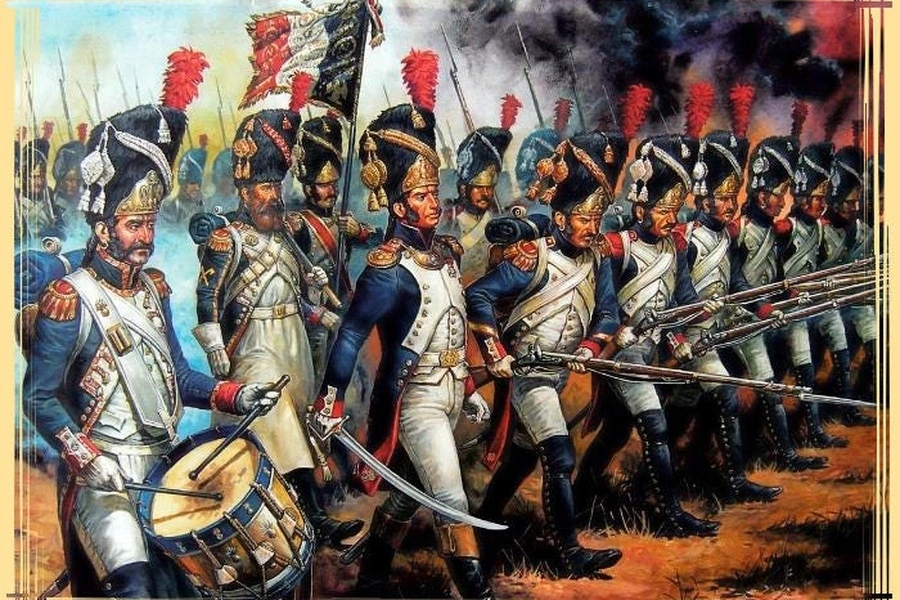
Napoleon rushed towards the battlefield and committed additional troops, including Monnier's division and the Consular Guard. The Guard was a relatively small elite formation intended to protect the First Consul and serve as a dependable reserve. Its presence offered more than extra bayonets. It gave Napoleon a body of disciplined soldiers on whom he could rely during a moment of extreme uncertainty.
The Consular Guard helped cover the French withdrawal and reinforce threatened positions. Its soldiers endured heavy pressure, including cavalry attacks, and suffered severe losses. Their role illustrates why a reserve could be strategically important even when it was too small to reverse a battle by itself. The Guard's reputation was still developing in 1800. Marengo became part of the legend of the formation, which would later evolve into the celebrated Imperial Guard under Napoleon. Yet the action at Marengo should not be reduced to a heroic story of the Guard single-handedly saving the army. The Guard helped prevent the retreat from becoming an immediate rout. It did not, on its own, defeat Melas.
Napoleon's situation remained desperate. The French were withdrawing, their forward positions had been lost, and the Austrians believed they had won. If Desaix failed to return in time, Napoleon might have had no fresh infantry with which to organise another serious attack. Marengo therefore demonstrates both the importance and the limitations of elite troops. A reserve can stabilise a collapsing line, protect a commander, and buy time. But the final reversal required fresh infantry, coordinated artillery, and a cavalry charge at precisely the right moment.
General Louis Desaix Returns: "There Is Still Time to Win Another"
Louis Charles Antoine Desaix was one of Napoleon's most trusted generals. He had served in the French Revolutionary Wars and distinguished himself during the expedition to Egypt. Desaix returned to France in 1800 and was given command of a division in the Army of the Reserve. Napoleon valued his judgement, courage, and independence, and the events at Marengo would make his name inseparable from the battle. Desaix had been operating away from the main battlefield when Napoleon's recall reached him. Rather than continuing his assigned movement, he turned his troops around and marched towards the sound of the guns. His division, including Boudet's infantry, moved rapidly towards San Giuliano as the battle reached its most dangerous stage.
When Desaix arrived late in the afternoon, the French army was in retreat. The sight of fresh troops arriving helped restore confidence among soldiers who had endured hours of fighting. The reinforcement was not merely numerical: Desaix brought a new formation that had not been worn down by the morning's struggle. Desaix is often credited with answering Napoleon's question about the situation with the words:
"This battle is completely lost, but there is time to win another."
- Commonly attributed to General Louis Desaix
The quotation survives in varying forms in later histories and memoirs, so its exact wording should be treated cautiously. Its meaning captures the situation well. Desaix recognised that the first battle had been lost, but a second engagement could still be fought with fresh troops and a new deployment. Napoleon organised a new defensive-offensive line near San Giuliano. Desaix's division was placed where it could strike the advancing Austrians, while artillery under General Auguste de Marmont was concentrated to disrupt their formations. The French were no longer simply trying to escape. They were preparing to counterattack.
As Desaix's men advanced, the momentum began to change. The French infantry attacked the Austrian column, forcing it to respond to a new threat after hours of pushing the enemy back. But Desaix would not live to see the outcome. A bullet struck him during the attack, killing him at the moment his division was helping to restore the French position.
His death could easily have broken the morale of his troops. Instead, it intensified their determination. Soldiers who had just watched their commander fall pressed forward in an effort to avenge him. The effect of leadership at Marengo was therefore paradoxical. The loss of one of France's best generals became a source of renewed aggression rather than immediate collapse. The episode offers a striking example of the relationship between command, sacrifice, and morale. For a wider discussion of how soldiers respond to fear, casualties, and the behaviour of their comrades, see the psychology of soldiers, battlefield morale, and survival. Although that article focuses on ancient warfare, the broader human dynamics of cohesion and leadership are relevant to battles across eras.
Kellermann's Cavalry Charge: The Turning Point at Marengo
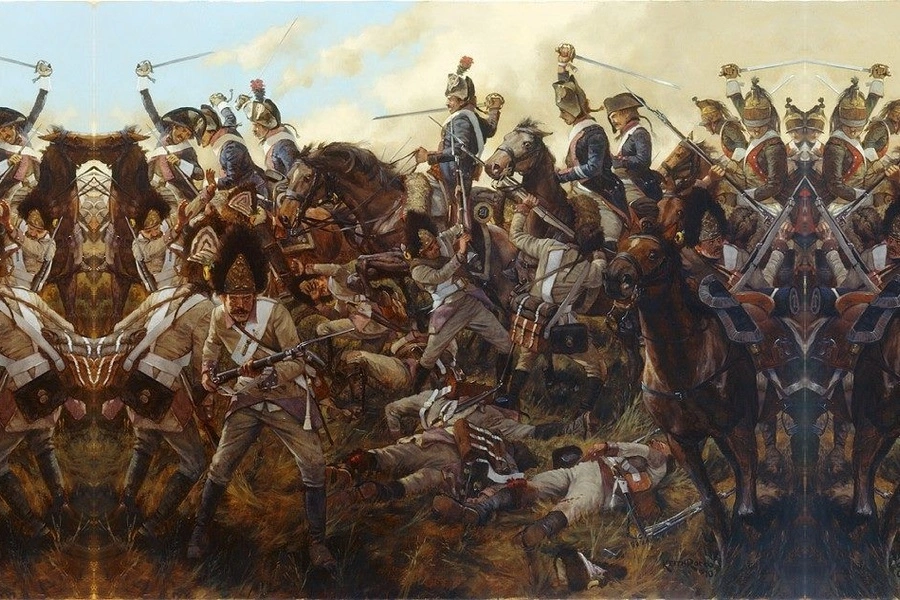
The French counterattack placed the Austrian advance in danger, but it needed a decisive blow to convert local success into victory. That blow came from François Étienne de Kellermann and his heavy cavalry. As the Austrian infantry pressed forward, Kellermann launched a charge against the enemy's exposed flank. The timing was critical. Desaix's infantry was engaging the Austrians from the front, while the cavalry struck at a moment when the enemy's formations were under pressure and not well positioned to absorb a sudden mounted attack. The cavalry charge disrupted the Austrian advance and helped turn an orderly movement into confusion.
Accounts differ over the exact number of cavalrymen involved, with figures varying according to which units and stages of the action are included. What matters operationally is that Kellermann used a relatively limited mounted force to strike a vulnerable point in the Austrian formation. Heavy cavalry could exploit disordered infantry, especially when the latter was already being attacked by fresh troops and artillery. As the French assault intensified, an Austrian ammunition wagon reportedly exploded amid the confusion, adding to the disorder. The explosion is frequently included in narratives of the battle, though the extent of its direct influence is harder to establish than the effects of the French infantry and cavalry attacks. It should be treated as a contributing episode rather than the sole cause of the Austrian collapse.
General Zach was captured during the rout, along with many Austrian soldiers. His capture was symbolically and practically important: the chief of staff and senior officers were swept up in the disintegration of the advancing force. The loss of command cohesion helped make it harder for the Austrians to rally and organise an effective defence. Jean-Roch Coignet, a French soldier whose memoirs became one of the best-known accounts of Napoleonic military life, is associated with vivid descriptions of the French troops' renewed fighting spirit. The following line is often reproduced in retellings of the battle, but its exact wording should be verified against a specific edition before being used as a direct quotation:
"The charge rang out everywhere. Each of us turned round and ran forward. We did not shout anymore; we roared!"
- Attributed to Jean-Roch Coignet, French grenadier
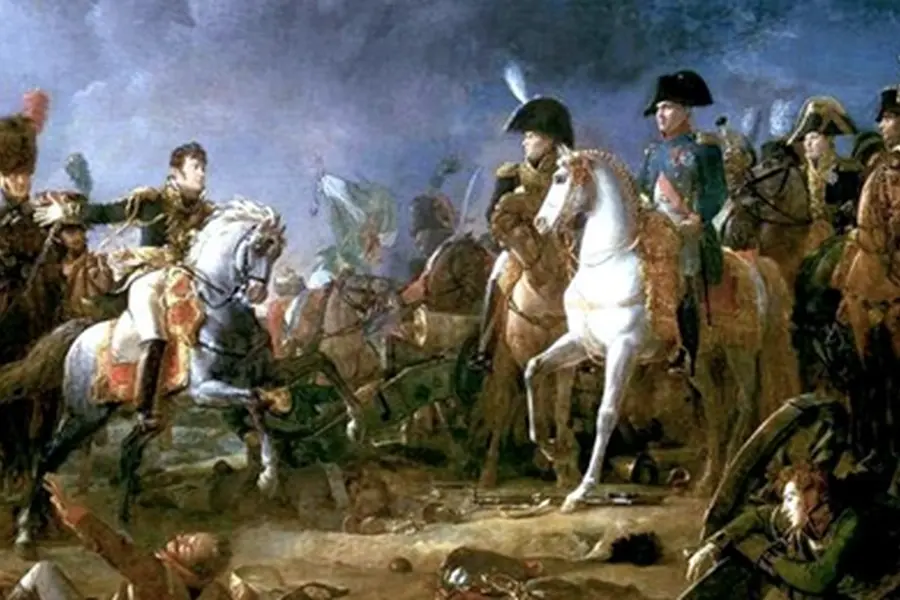
The image captures the central transformation of the afternoon. French soldiers who had been retreating began to turn and join the attack. Units that had lost ground now saw an opportunity to recover it. The Austrians, who had believed victory was secure, found themselves facing a fresh offensive at the very moment their formations were becoming disorganised.
The cavalry charge did not operate in isolation. Desaix's infantry assault, Marmont's artillery, Kellermann's manoeuvre, and the renewed advance of other French units combined to shatter the Austrian momentum. The importance of Kellermann lies in the timing and effect of his intervention: his charge helped convert the French counterattack into a general collapse of the Austrian advance. Some later accounts also emphasise Murat's cavalry and the pursuit that followed. Murat was an important cavalry commander in Napoleon's army, but the decisive charge traditionally associated with the turning point at Marengo is Kellermann's.
Casualties and Consequences of the Battle of Marengo
By evening, the Austrian army was retreating towards Alessandria. The French had transformed a severe reverse into a victory, but the cost was high. Both armies suffered thousands of casualties, and published totals vary according to whether missing soldiers, prisoners, and men who later returned to their units are counted.
| Outcome | Historical assessment |
|---|---|
| Date | 14 June 1800 |
| Location | Marengo, near Alessandria, northern Italy |
| Victor | French Army of the Reserve under Napoleon Bonaparte |
| French losses | Often estimated at approximately 5,000-7,700 killed, wounded, and missing, depending on the source |
| Austrian losses | Often estimated at approximately 6,000-12,000 killed, wounded, missing, or captured, depending on the source |
| Immediate result | Austrian retreat and negotiations leading to the Convention of Alessandria |
The figures should not be read as perfectly comparable totals: some accounts count prisoners separately, while others include them in overall losses. The French victory was nevertheless costly, particularly because the army had nearly lost the battle before its late-afternoon counterattack. Napoleon later expressed satisfaction with the victory but sorrow at Desaix's death. A famous recollection, attributed to Napoleon speaking to his secretary Bourrienne, conveys that mixed emotion:
"Yes, Bourrienne, I am satisfied. But Desaix! Ah, what a triumph this would have been if I could have embraced him tonight on the field of battle!"
- Attributed to Napoleon Bonaparte in Bourrienne's memoirs
The precise phrasing varies across editions and translations of the memoirs. The sentiment is consistent with the accounts of Napoleon's grief over the loss of a commander whose contribution had been essential to the victory. The aftermath was also political. Melas, believing the French had been defeated during the earlier stages, had handed over command of the pursuit and withdrawn towards Alessandria. Once the Austrian army collapsed, the situation changed completely. Rather than dictate terms to a beaten Napoleon, Melas had to negotiate with a French commander who now controlled the battlefield.
The resulting Convention of Alessandria, signed on 15 June 1800, required the Austrians to evacuate much of northern Italy and surrender a series of strategic positions. It was a major strategic success for France, although it did not end the wider war with Austria immediately. The battle helped restore French influence in Italy and strengthened Napoleon's political standing at home.[2][3] Marengo also entered popular culture through the dish known as chicken Marengo. According to a familiar story, Napoleon's cook prepared a hurried meal from locally available ingredients after the battle. The details of the tale are debated, and the recipe's history is less certain than the military events, but its association with Napoleon's victory has endured.[4]
Why the Battle of Marengo Matters in Military History
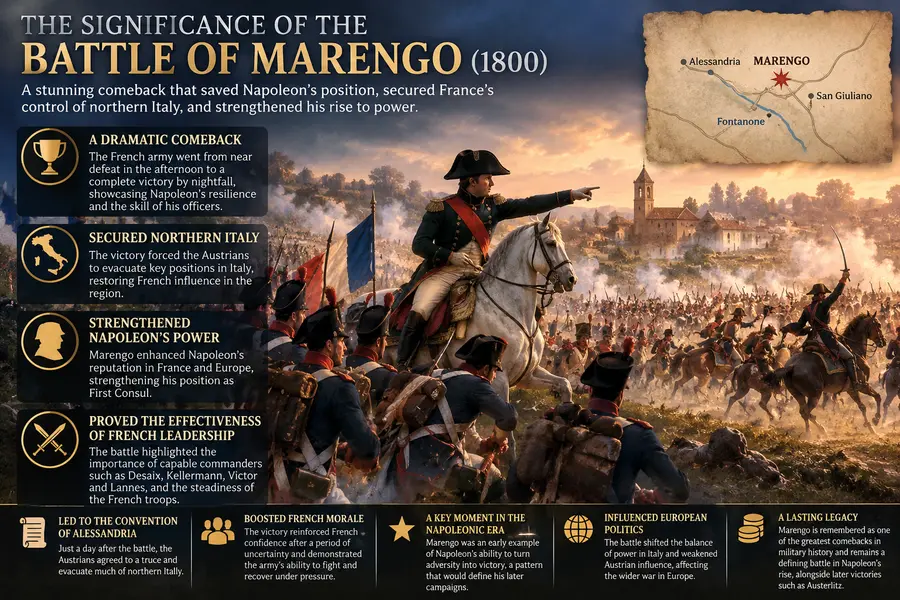
Napoleon's predicament was partly the result of his own operational assumptions. By dispersing his troops to block possible Austrian escape routes, he had weakened his ability to concentrate quickly against Melas's main attack. The French position near Marengo was therefore not simply overwhelmed by superior numbers. It was exposed because Napoleon had misread the enemy's intentions. His recovery depended on recalling detached forces and exploiting the fresh troops that returned before the Austrians could consolidate their apparent victory.
The Battle of Marengo was one of the most dramatic victories of Napoleon's career, but it was not a flawless demonstration of his command. His dispersed deployment left the French vulnerable to Melas's attack, and Napoleon was slow to recognise the scale of the Austrian offensive. The French victory depended on his ability to reorganise the fight, the resistance of his officers and soldiers, the return of Desaix, and the timing of Kellermann's cavalry charge.
Marengo's significance extended beyond the battlefield. Napoleon had nearly lost the engagement because he underestimated Melas's intentions and dispersed his forces in an attempt to intercept the Austrian army. Yet the victory soon became a cornerstone of his political reputation. Official French accounts gradually reshaped the narrative, downplaying the danger of the morning's fighting and presenting the outcome in a manner that enhanced Napoleon's image as a commander. Marengo therefore illustrates not only how a battle can be reversed, but also how a military victory can be turned into a political legend.
1. The Consular Guard bought time
The Guard helped steady the French withdrawal and protect the army during its most dangerous phase. Its role was not to win the battle alone, but to preserve enough cohesion for a counterattack to remain possible.
2. Desaix's return changed the balance
Fresh troops arrived when the French were close to defeat. Desaix's division gave Napoleon the manpower needed to form a new line and launch a renewed attack. His death then galvanised his soldiers rather than destroying their cohesion.
3. Kellermann exploited a vulnerable moment
The cavalry charge struck the Austrians when their advance was already under pressure. It helped turn a difficult counterattack into a rout and contributed to the capture of General Zach and thousands of prisoners.
4. Austrian confidence became a liability
Melas's army had good reason to believe it was winning. Yet the assumption that the French were beaten reduced Austrian caution at a critical moment. The advancing troops were vulnerable to a coordinated counterattack, and their command structure struggled to recover once the French struck.
5. The victory reshaped the Italian campaign
The Convention of Alessandria forced the Austrians to withdraw from key positions and gave France renewed control over much of northern Italy. Marengo became an important step in Napoleon's consolidation of power and a defining episode in the history of the Consulate.
Marengo belongs among the battles that demonstrate how quickly battlefield outcomes can change. It can be read alongside the wider survey of decisive battles in world history and the overview of Napoleon's major wars and campaigns. For a comparison with Napoleon's later operational victories, see the analysis of the Battle of Austerlitz and Napoleon's strategy and the account of the Battle of Waterloo in 1815.
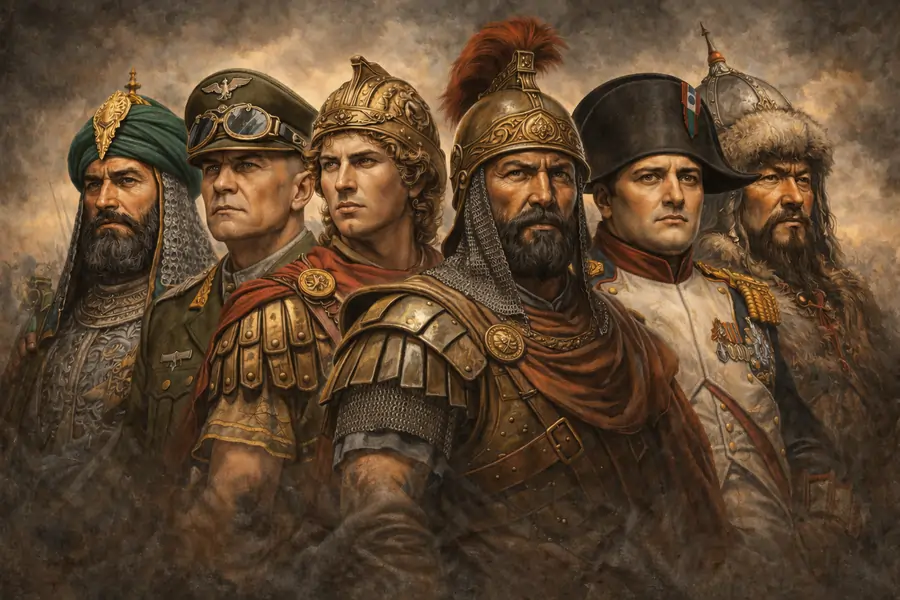
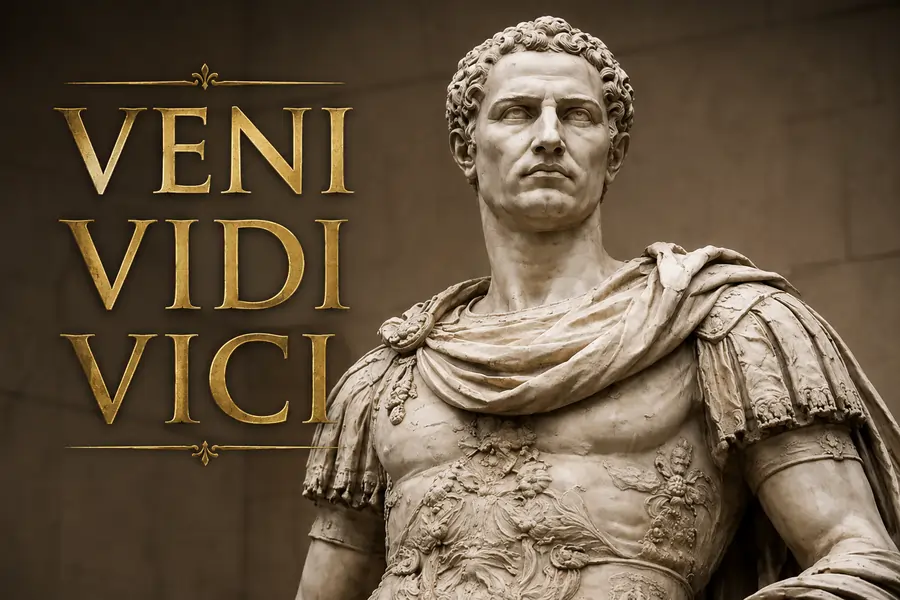
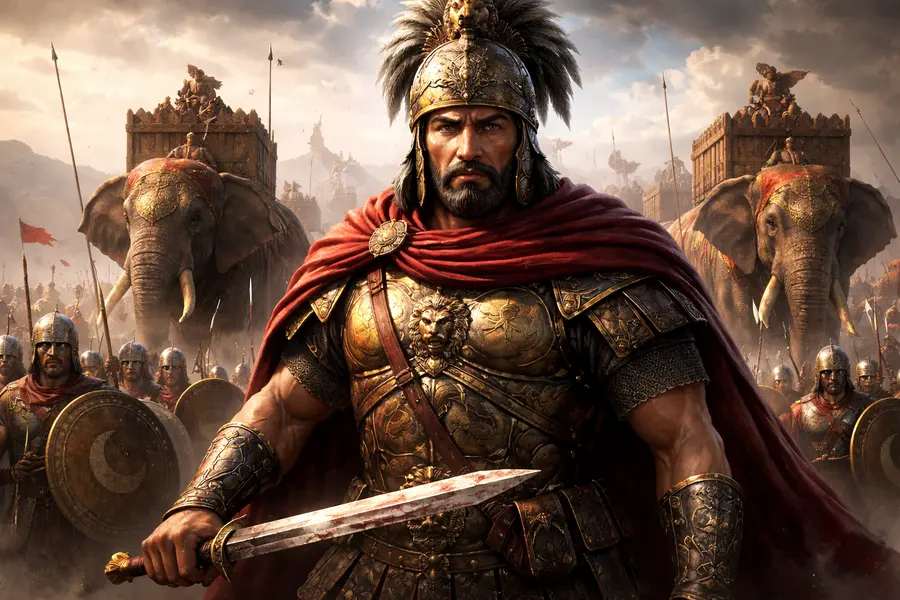
Napoleon's reputation also invites comparisons with earlier military leaders. His campaigns can be considered alongside the greatest military generals in history, including Alexander the Great, whose campaigns and command style are examined in the Alexander the Great biography and strategy guide. The political stakes of Napoleon's rise likewise invite comparison with the career of Julius Caesar, another commander whose military achievements helped transform the political order of his state.
Ultimately, Marengo was not won by one man or one charge alone. The Consular Guard helped keep the army in the fight, Desaix's return made a second battle possible, Marmont's artillery disrupted the Austrian advance, and Kellermann's cavalry exploited the moment of weakness. Napoleon's victory emerged from the interaction of leadership, timing, tactical coordination, and the determination of soldiers who refused to accept defeat.
References and Further Reading
- Louis Antoine Fauvelet de Bourrienne, Memoirs of Napoleon Bonaparte, Volume 5, chapters on the campaign and Battle of Marengo. Available through Project Gutenberg.
- World History Encyclopedia, "Battle of Marengo". A modern overview of the battle's sequence, commanders, and turning points.
- Napoleon.org, Fondation Napoléon, "Monumental Meaning at Marengo 1800". Discussion of the battle's outcome, losses, and later historical significance.
- Napoleon.org, Fondation Napoléon, "Chicken Marengo". Background on the dish associated with Napoleon's victory.
- The Napoleon Series, "Marengo 1800 - A Lost Account". A discussion of a historical account that helps illuminate the competing interpretations of the battle.
- David G. Chandler, "Adjusting the Record, Napoleon and Marengo," History Today, vol. 17 (1967), pp. 326-333. A study of the historical record and Napoleon's role in the victory.
- J. R. Elting and V. Esposito, A Military History and Atlas of the Napoleonic Wars (Greenhill Books and Stackpole Books, 1999). A reference for campaign geography, troop movements, and operational context.
- Battle of Marengo video by Epic History
Editorial note: The battle narrative is based on modern historical accounts and published memoirs. The quotations attributed to the Austrian order of the day, Napoleon, Desaix, and Coignet circulate in differing translations and versions. Before presenting them as exact primary-source wording, compare them with the relevant original document or a reliable scholarly edition. Casualty estimates also vary across sources because of differences in how prisoners, missing soldiers, and wounded men are counted.
Books and Memorables
This article may contain affiliate links. If you purchase through these links, I may earn a small commission at no extra cost to you.


Related Articles
Frequently Asked Questions
Why did Napoleon nearly lose the Battle of Marengo in 1800?
Napoleon nearly lost the Battle of Marengo because his army was dispersed across northern Italy when the Austrian army under Michael von Melas launched its main attack on 14 June 1800. French troops under Generals Victor and Lannes resisted along the Fontanone stream but were eventually forced to retreat. Napoleon's initial misjudgment of Austrian intentions left him struggling to concentrate his forces. The arrival of General Louis Desaix and a well-timed cavalry charge by François Étienne de Kellermann turned the battle around.
How did General Desaix change the outcome of the Battle of Marengo?
General Louis Desaix changed the outcome of the Battle of Marengo by returning with fresh French troops when Napoleon's army was retreating. Desaix recognised that the battle could still be won and helped organise a renewed attack near San Giuliano. His infantry advanced against the Austrian column, but Desaix was fatally shot during the assault. His division continued fighting, while Kellermann's heavy cavalry struck the Austrian flank and helped turn the French counterattack into a victory.
Why was Kellermann's cavalry charge decisive at Marengo?
Kellermann's cavalry charge was decisive because it struck the Austrian formation at a moment when French infantry and artillery were already disrupting its advance. The heavy cavalry attacked the flank of the Austrian column, causing severe confusion and contributing to its collapse. General Anton von Zach was captured, and many Austrian soldiers were taken prisoner. The charge worked in combination with Desaix's infantry attack rather than as an isolated action.
What was the role of Napoleon's Consular Guard at the Battle of Marengo?
Napoleon's Consular Guard helped protect the French army during the critical stages of the Battle of Marengo on 14 June 1800. The elite formation resisted Austrian pressure and helped cover the French withdrawal, buying time for other troops to regroup. Its steadfastness became part of its military reputation, and Napoleon praised the Guard for its conduct. However, the final French victory depended on the combined efforts of Desaix's returning division, concentrated artillery, Kellermann's cavalry, and other French units.
How did General Zach's capture affect the Austrian army at Marengo?
General Anton von Zach was a senior Austrian commander who was captured during the French counterattack at Marengo. His capture occurred as the Austrian advance was breaking down under infantry, artillery, and cavalry attacks. The loss of senior officers and the disintegration of the advancing formation made it harder for the Austrians to restore order. Thousands of Austrian troops were captured or scattered, turning an apparent victory into a serious defeat.
What were the consequences of Napoleon's victory at Marengo in 1800?
Napoleon's victory at Marengo restored French control over much of northern Italy and strengthened his political position as First Consul of France. On 15 June 1800, the Austrians agreed to the Convention of Alessandria, which required them to evacuate important positions in northern Italy. The battle did not immediately end the wider war with Austria, but it reversed the Austrian campaign in Italy and became one of the defining victories of Napoleon's early career.
Add Comment