Explore the world of ideas, ideologies, and imaginative thinking that have influenced human civilization. From philosophical movements to revolutionary concepts, discover the thinkers and ideas that have challenged conventional wisdom and shaped our world.
Articles in This Category
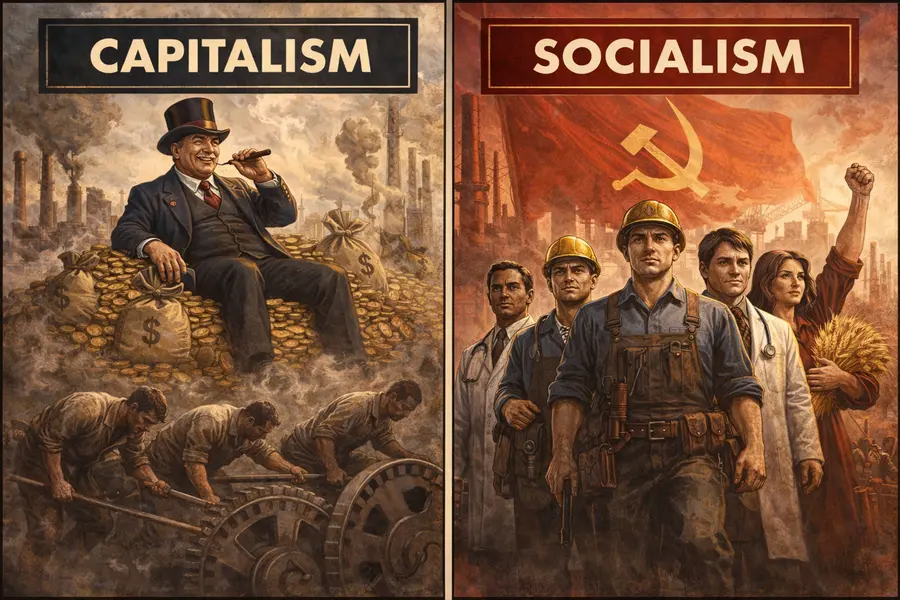
Capitalism vs Communism: The Battle That Shaped the Modern World (Which Really Won?)
Compare capitalism and communism, their core principles, advantages, flaws, and real-world impact to understand which economic system works better for...
Read Article →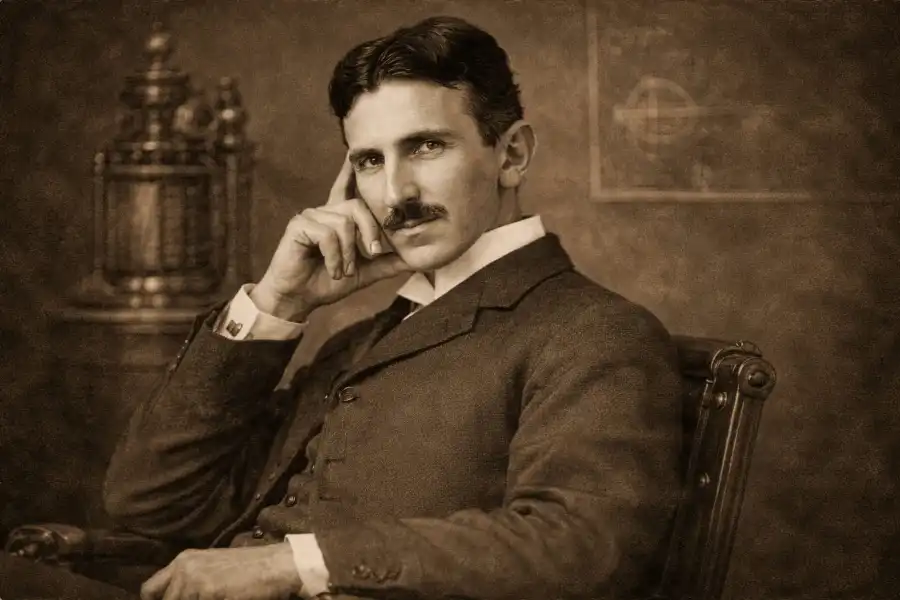
The Genius Edison Tried to Erase: How Nikola Tesla Invented the Future (And Got Nothing)
Explore Nikola Tesla's life, greatest inventions & contributions to AC electricity, wireless power transmission, and modern technology. The genius Edi...
Read Article →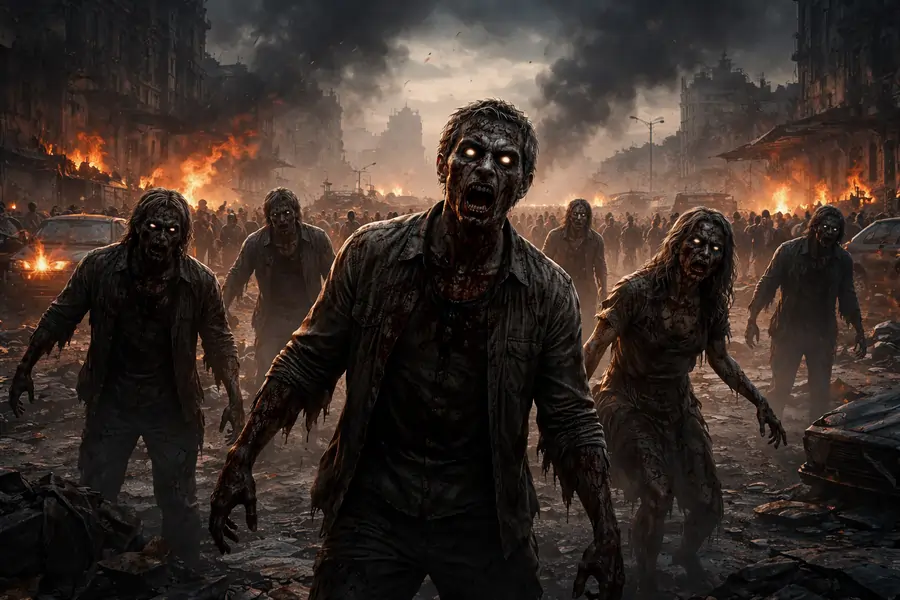
Would You Survive a Zombie Apocalypse? Is humanity doomed? (Zombie Apocalypse Survival Guide)
Could a zombie apocalypse really happen? Explore how a global outbreak might begin, spread, and whether humanity could realistically survive and rebui...
Read Article →Every civilization is built twice—first in the mind, and only later in stone, steel, and systems. Before nations rise, before technologies reshape daily life, and before societies decide what is right or wrong, there are ideas. Some are small sparks that fade quickly. Others grow into ideologies that shape generations. And some exist entirely in imagination—warnings, hopes, or thought experiments that reveal more about humanity than about the future itself.
This section of Myth and Memory is dedicated to exploring those invisible forces. Here, we examine how ideas are born, how ideologies compete and collide, and how imagination allows humans to test reality without living through its consequences. Whether grounded in historical fact, political philosophy, scientific vision, or speculative scenarios, every article in this category asks a single underlying question:
The Power of Ideas
Ideas are among the most powerful forces humanity has ever known—far more influential than weapons or wealth. An idea can:
- Inspire innovation
- Justify revolutions
- Reshape moral values
- Build empires—or bring them down
Unlike physical objects, ideas are not limited by borders or time. They travel across cultures, mutate with interpretation, and survive long after their creators are gone. A single concept, written in a book or spoken aloud, can quietly influence millions of lives.
In this category, we explore how ideas emerge—sometimes from careful reasoning, sometimes from frustration with existing systems, and sometimes from pure imagination. We also look at how ideas are received, resisted, misunderstood, or weaponized once they enter the world.
Visionaries Who Thought Beyond Their Time
Some individuals do not simply live within their era—they outgrow it. Visionaries challenge the limits of what their contemporaries believe is possible. Often misunderstood or dismissed during their lifetime, their ideas only gain recognition years—or even decades—later.
Our exploration of figures like Nikola Tesla is not just about inventions or scientific achievements. It is about imagination paired with intellect. Tesla's ideas stretched beyond immediate practicality, venturing into wireless energy, futuristic communication, and a world connected by invisible forces long before society was ready to accept such concepts.
By studying thinkers like him, we ask:
- What separates genius from eccentricity?
- Why do some ideas feel "impossible" until they suddenly become inevitable?
- How often does society resist progress simply because it disrupts comfort?
These stories remind us that imagination is not the opposite of reason—it is often its most advanced form.
Ideologies That Shape Societies
If ideas are sparks, ideologies are the fires that follow. Ideologies turn abstract thought into structured belief systems. They define how societies organize power, distribute resources, and measure fairness. They influence laws, economies, education, and even personal identity.
In this category, we explore ideological frameworks such as Capitalism and Communism, not as slogans or internet arguments, but as historical forces shaped by real human needs, fears, and ambitions. Rather than asking which ideology is "right," we examine:
- Why these systems emerged when they did
- What problems they aimed to solve
- How their ideals changed when applied in the real world
- Why they continue to inspire loyalty, resistance, and debate
By understanding ideologies in context, we move beyond surface-level arguments and begin to see them as evolving responses to human inequality, scarcity, and power.
Imagination as a Tool for Understanding Reality
Not all powerful ideas are meant to be implemented.
Some exist purely as thought experiments—imagined worlds that help us explore real fears, ethical dilemmas, and survival instincts without experiencing them firsthand. Scenarios like a zombie apocalypse may seem fictional, but they often reflect very real concerns about societal collapse, human behavior under stress, and the thin line between order and chaos.
When we imagine the end of the world, we are not predicting the future—we are questioning the present. These imaginative scenarios allow us to ask:
- How fragile are modern systems?
- What happens when trust disappears?
- Would humanity cooperate—or fracture—under extreme pressure?
In this sense, imagination becomes a mirror. It shows us who we might become when rules, comforts, and assumptions vanish.
Where History, Philosophy, and Speculation Meet
The purpose of this category is not to isolate ideas into neat boxes. In reality, ideas, ideologies, and imagination constantly overlap.
- A scientific vision can become political power.
- A philosophical argument can become economic policy.
- A fictional scenario can influence real-world preparedness and ethics.
At Myth and Memory, we treat these connections as essential rather than accidental. Every article in this category is written with the belief that understanding ideas—past or imagined—helps us better understand ourselves.