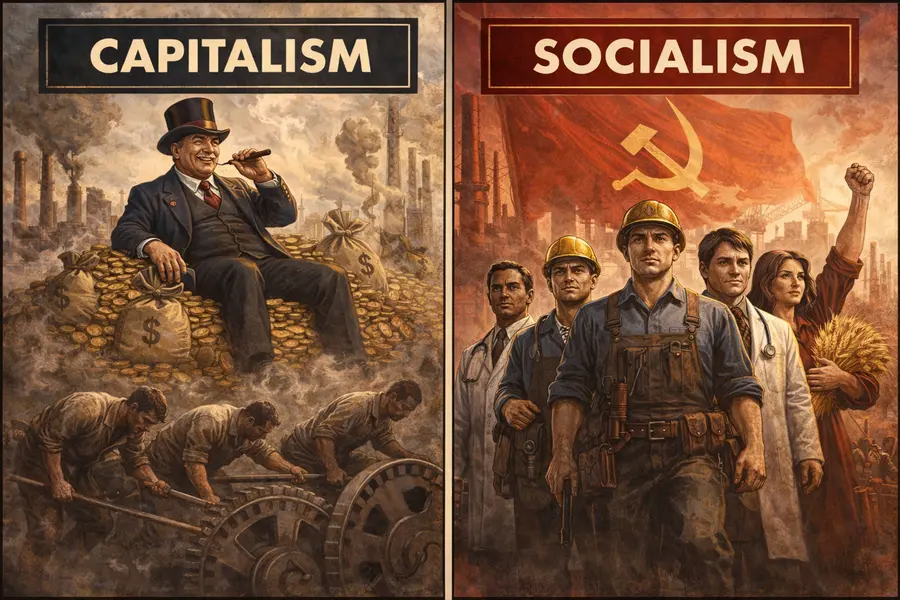
What is the difference between capitalism and communism, and which economic system works better? The capitalism vs communism debate has defined modern history, pitting two fundamentally opposed ideologies against each other. Capitalism emphasizes private ownership, free markets, and profit-driven competition, while communism explained centers on collective ownership, wealth redistribution, and classless society. This comprehensive guide explores capitalism pros and cons, examines how Karl Marx communism theories shaped the 20th century, compares economic systems including socialism vs capitalism, and analyzes why some nations prospered while others collapsed under these competing ideologies. Understanding these economic systems compared is essential for grasping global politics, Cold War history, and contemporary debates about wealth inequality and social justice.
Table of Contents
Capitalism vs Communism: Understanding the Core Differences
We live in a world shaped by the capitalism vs communism conflict. Most Western nations operate under capitalist systems, while the Soviet Union represented the world's most powerful communist state. During the Cold War, the ideological battle between these economic systems nearly led to nuclear war. After World War 2, America and its allies feared the global spread of communist ideologies.
But why was the spread of communism such a critical issue? What is the fundamental difference between capitalism and communism, and how do these economic systems compared shape society, wealth distribution, and individual freedom?
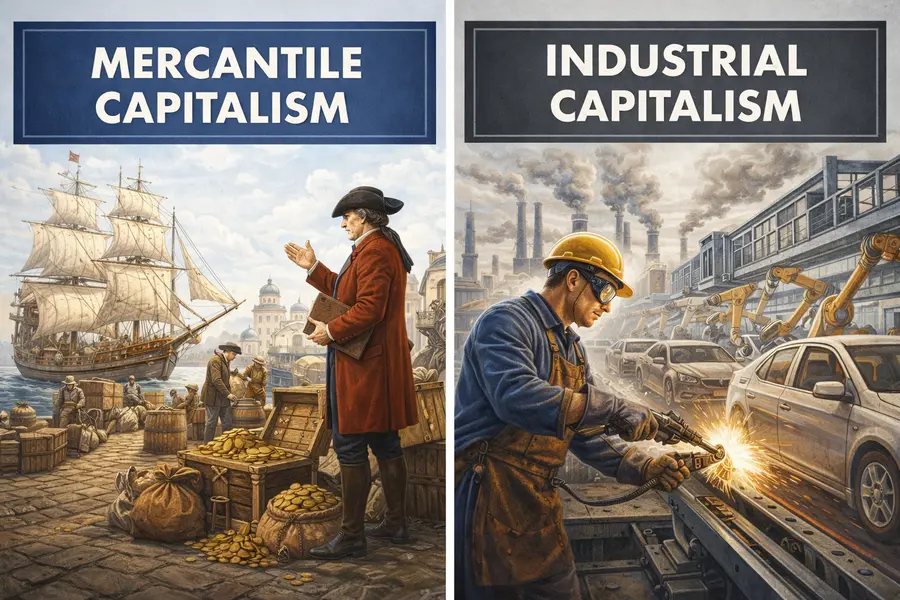
Mercantile Capitalism
Before the Industrial Revolution, common merchants needed some form of money or capital to buy goods which they could later sell at a profit. After making a profit, the merchants could then pay back the person who lent them the money. They would also be required to pay some interest to the lender. This perfectly explains mercantile capitalism. This was the earliest form of capitalism where common merchants could get the first capital they needed to start a trade from an investor who would then be properly compensated with interest.
Due to colonialism, there was a boom in trading between countries. It was, however, risky as pirates or the weather could disrupt the trade route. Thus, a group of people would unite to create joint stock companies where multiple people could invest in large trade ventures. This somewhat reduced the risk of losses as multiple people shared the risk. However, mercantile capitalism wasn't widespread and affected only a minor section of the population who were in the trade.
Industrial Capitalism: How Free Markets Drive Economic Growth
The British Empire with its vast colonial empire introduced industrial capitalism in the 19th century. Capitalism is an economic and social system in which the industries and capital are privately owned and operated for making a profit. Such an economic system relies on investments in technology to increase production. These goods can then be sold for a bigger profit.
For example, the investments made in the field of agriculture introduced new tools and technologies for increasing crop yield which reduced the price of food. This then forced further innovations to increase the yield of crops even more to compensate for the drop in prices of crops. With the price of food crops dropping low, the people now had more disposable income which they could now spend on other consumer goods.
This meant that people now had an incentive to find new and creative ways to increase production and cut the cost of manufacturing. This also meant that lesser people needed to work in agriculture which dropped from 80% of the population to less than 25% in a few centuries. So far, so good. We now know that capitalism has helped improve the productivity and manufacturing potential, which improved the standard of living.
Capitalism Pros and Cons: The Dark Side of Free Markets
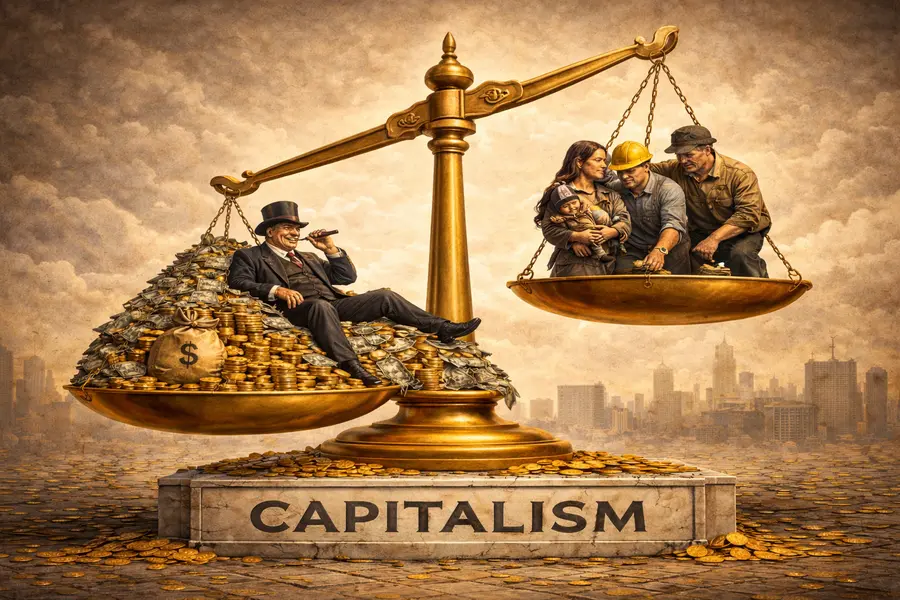
There are, however, many flaws in this approach. The main concept of capitalism is the need for private investors to turn a profit for their effort. It required people with money to invest in new innovative and radical technologies which could then pay them back if they succeeded. There were risks involved in investing capital, but the rewards would be the profits that they would hopefully produce.
This, however, meant that the landlords or investors owned the industry, land or any means to produce goods, but the common worker would become very poor. The working conditions for the industrial workers were very poor, the work was monotonous and they were all living in poverty. The workers wanted equality, and they were against the current social conditions where the rich kept getting richer and the poor started getting poorer. One way of combating such poor conditions was to form worker unions.
Karl Marx Communism: Das Kapital and the Critique of Capitalism
Karl Marx, the father of communism, was a renowned philosopher and historian who wanted to expose the fundamental flaws in capitalism. He wrote Das Kapital, which highlighted that Capitalism relied on the work of unpaid laborers who were the source of surplus income. This surplus income was then claimed by the owner based on property rights. In a capitalist economy, technological improvements and the next increase in production results in diminished profit due to under-utilization: "poverty in the midst of plenty".
There are two classes in society: the "worker class", consisting of the manual laborers who do the real work, and the "capitalist class", consisting of the land and capital owners who invest in manufacturing. Karl Marx believed that it is the struggle between the classes that define classes themselves. Through conflict only can they get a sense of themselves. The struggle here is between the capitalists who own try to produce goods at the least cost possible and the workers who struggle to work at the most wage possible.
Communism Explained: The Vision of a Classless Society
According to Karl Marx communism theory, it is the workers with their manual labor who are the most important in an economy, and as humans, it is only when we share resources that we work effectively. But capitalism replaces that with a sense of conflict between the capitalists and workers. The word "communism" means "common or universal". It is a socioeconomic order built upon the concept of common ownership of the means of manufacturing goods. It aims at creating a classless, cashless and stateless society.
This means that the community owns all the factories, lands and properties. There is no incentive for surplus production as it is only based on the needs of the people. The workers get an equal share of the profit. This means that there is an equal distribution of wealth and there are no classes in society. Since the workers own the capital, there is no exploitation. The workers are then expected to work out of a collective responsibility and not a need or compulsion.
It is, however, very difficult to create a pure communist state. Technically there are no purely communist countries. All the countries which aspire to become communist are actually socialist countries.
Socialism vs Capitalism: The Transitional Economic System
It is very difficult for a capitalist country to become a communist state. Socialism represents a middle ground through which a country transitions toward communism. Understanding the difference between capitalism and communism requires examining socialism's role as an intermediary system. Wealth distribution in capitalism is "to each according to his needs". In socialism, it is "to each according to his contribution".
Socialism is not a stateless structure but can co-exist with other political systems. The government owns the means of production and wealth instead of the workers. There is also freedom of religion in socialist countries, but communist countries are atheistic. In a socialist country, some sectors of the economy are private, but the government controls most of the economy. Healthcare, education, transportation, etc., are all usually run by the government to give access to all people without any constraints.
Why Communism Failed: Fatal Flaws in Collective Ownership
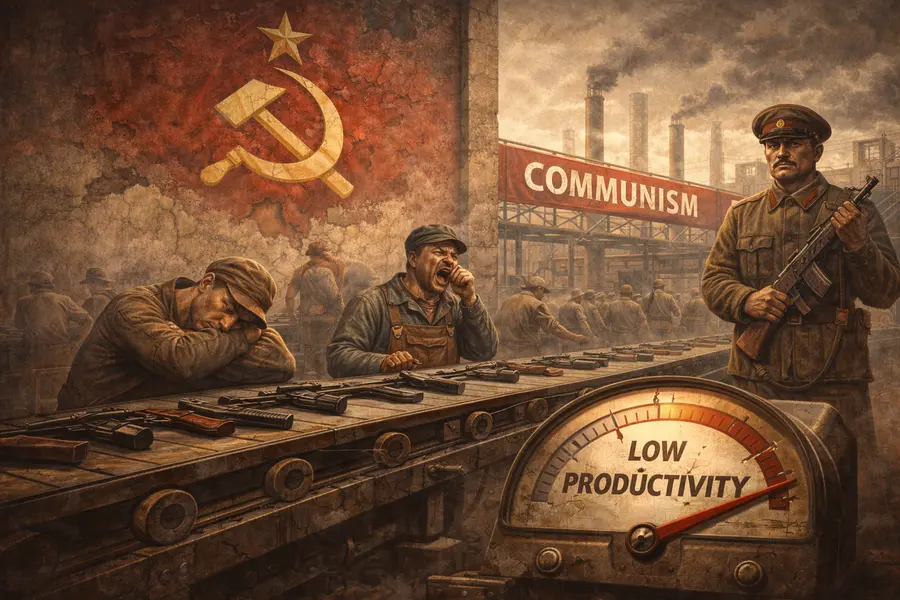
Although the concept of a stateless, cashless and classless state is attractive, there are various fundamental flaws in this approach. Let us consider the following example.
A college professor wanted to teach his students the concept of communism. So he came up with an experiment for the upcoming tests. The final score for each student will be the average score of the entire class and not their individual scores. The students agreed this would be a relatively safe way to get good scores without the risk of failing the exam.
- During the first test, the students got an average score of 70%.
- During the next test, the average dropped to 60% and then to 50% until they eventually failed.
The students who studied well still got low scores, as the class average was lower. This led them to put less effort into their next tests. The students who scored less felt that there was no need to study as the other good students would eventually make up for their low scores and that they would pass. Since the amount of effort going into studying declined, they all failed. This was precisely the cause of the downfall of communism.
Economic Systems Compared: Problems with Communist Theory
In an ideal society, the people work to the best of their ability for the greater good of society. They should work out of a sense of responsibility for the society. However, the people get rewarded based on their needs and not their contribution. Therefore it is understandable that they won't have the incentive to work more.
- In a capitalist society, the more you work, the more you get rewarded which creates a competitive environment and increases production. But in communism, the production is low as the people do not tend to work more than they really have to due to lack of rewards. There is no individualism and perks for being productive. So progress is very slow.
- Corruption is also rampant in communism. The people who are in power tend to abuse their power for their own personal good. This means that profits do not reach people properly.
- The government also is not very effective in running industries or handling resources. A privately controlled firm will be more successful in handling such operations and hence will produce more profit.
Capitalism vs Communism: Which Economic System Works Better?
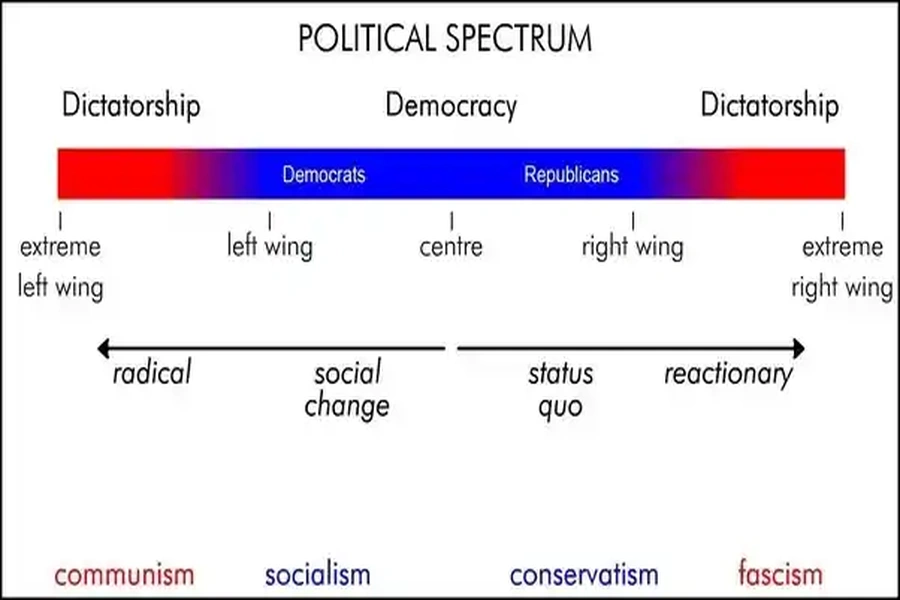
Although communism explained offers a tempting vision of equality, it doesn't function effectively in practice. Those kinds of ideals do not exist in the real world, and purely communist societies inevitably crumble, as the Soviet Union demonstrated. However, when examining economic systems compared, a hybrid approach combining socialism vs capitalism elements provides the best outcomes. Every person should have access to basic amenities like health care and education without any discrimination. They should be provided free of cost to all by the government. The manufacturing industries owned by private capitalists get the ideal output.
Even today, economists and political theorists debate the capitalism vs communism question and which system brings greater prosperity to society. Understanding the difference between capitalism and communism, along with capitalism pros and cons, is essential for informed political discourse. An economy will prosper if we harness the strengths of both systems while mitigating their weaknesses.
Frequently Asked Questions
What is the main difference between capitalism and communism?
Why did communism fail in the Soviet Union?
What is the difference between socialism and communism?
What are the pros and cons of capitalism?
Who was Karl Marx and what did he believe?
Which economic system works better - capitalism or communism?
Reference and Links
Economic Systems - Communism & Socialism - YouTube- Discusses the differences between communism, socialism, and capitalism
Communism vs Socialism - Difference and Comparison | Diffen - What's the difference between Communism and Socialism? In a way, communism is an extreme form of socialism. Many countries have dominant socialist political parties but very few are truly communist.