Delve into the rich tapestry of military history spanning centuries. Learn about legendary commanders, pivotal battles, military strategies, and the evolution of warfare. From ancient tactics to modern warfare, understand how military campaigns have shaped civilizations.
Articles in This Category
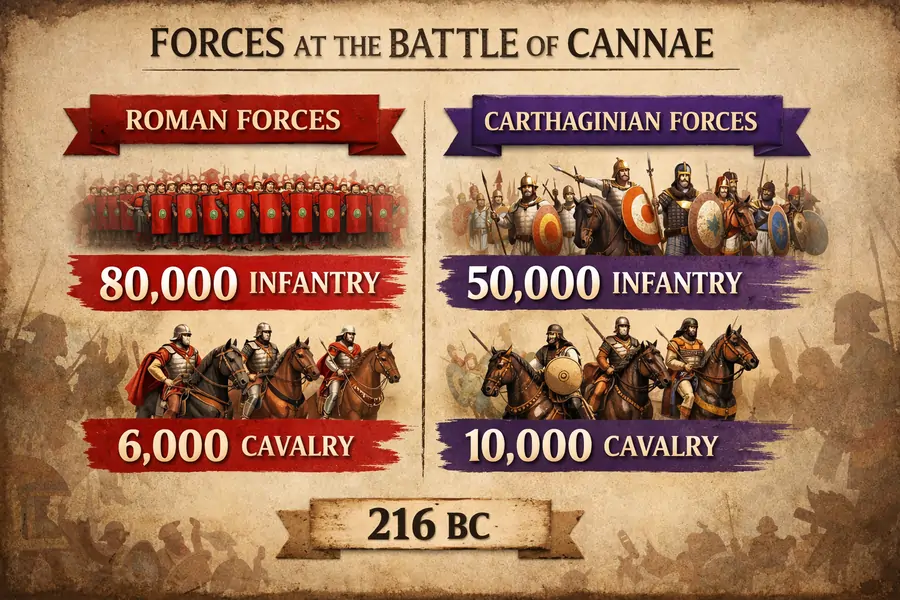
Battle of Cannae (216 BC): Hannibal’s Greatest Victory Explained
Explore the Battle of Cannae (216 BC), where Hannibal crushed Rome using the legendary double envelopment in one of history’s deadliest battles.
Read Article →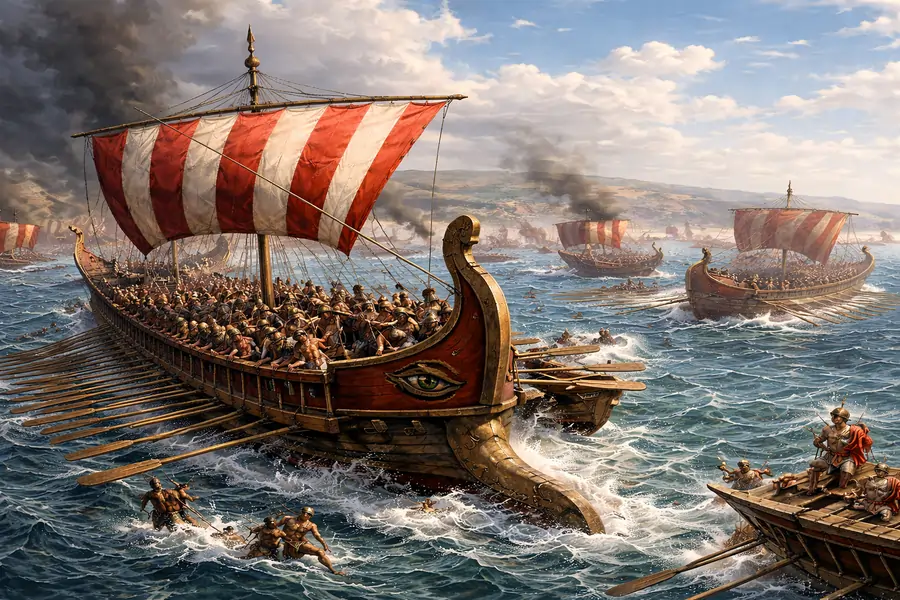
The First Punic War Explained: Rome vs Carthage and the Fight for the Mediterranean
Explore the history of the First Punic War between Rome and Carthage—from Sicily and naval warfare to the Corvus and Rome's rise as a Mediterranean po...
Read Article →
The Weapon That Changed Everything: How Nuclear Bombs Reshaped Human History Forever
Explore the history, devastating power, global impact, and legacy of the nuclear bomb—the world's most destructive weapon and its role in war, peace, ...
Read Article →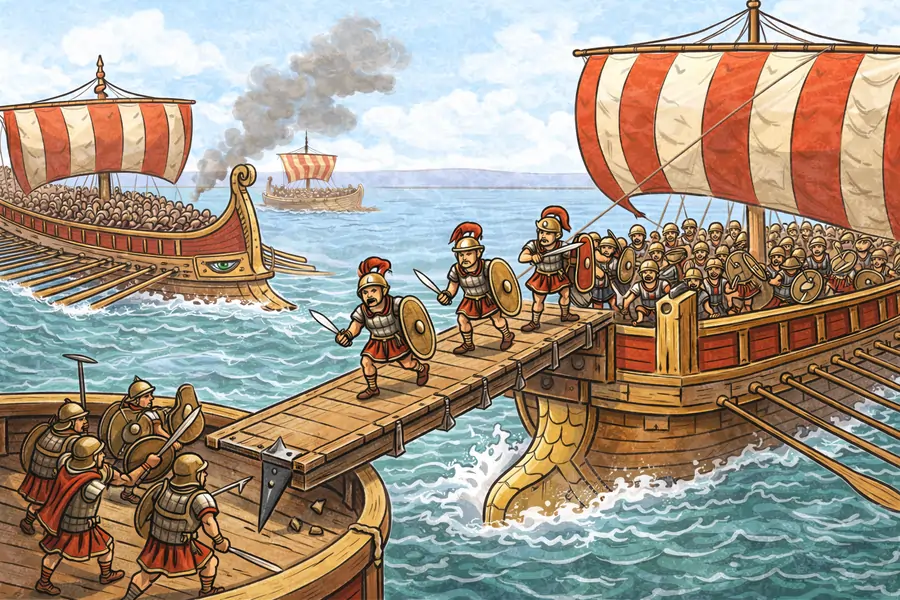
The Roman Corvus Explained: How Rome Defeated Carthage at Sea
Discover how the Roman corvus boarding bridge transformed naval warfare, neutralized Carthaginian fleets, and helped Rome win the First Punic War.
Read Article →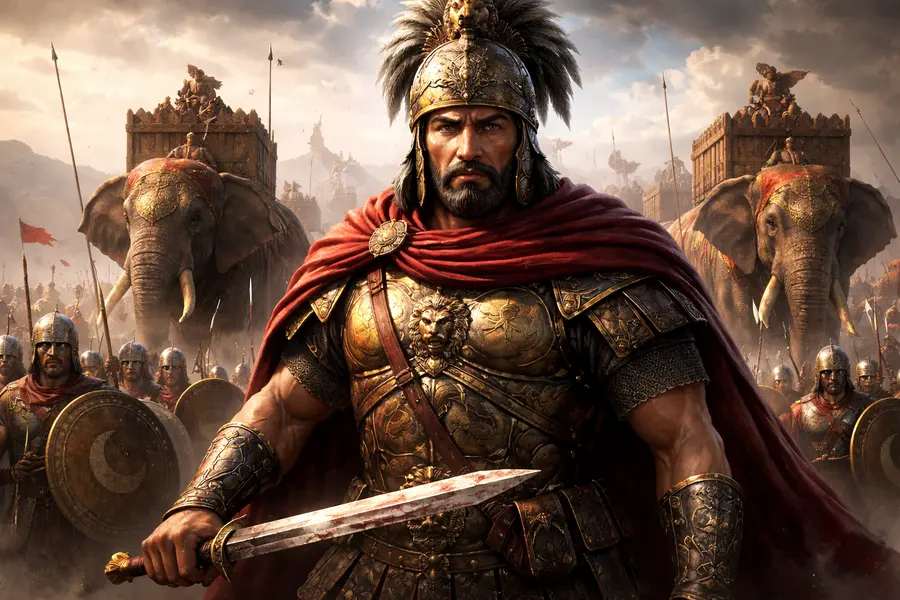
When Hannibal Crossed the Alps With Elephants to Destroy Rome (And Almost Succeeded)
Discover how Hannibal challenged Rome in the Second Punic War, crossing the Alps with elephants and winning legendary battles at Cannae, Trebia, and L...
Read Article →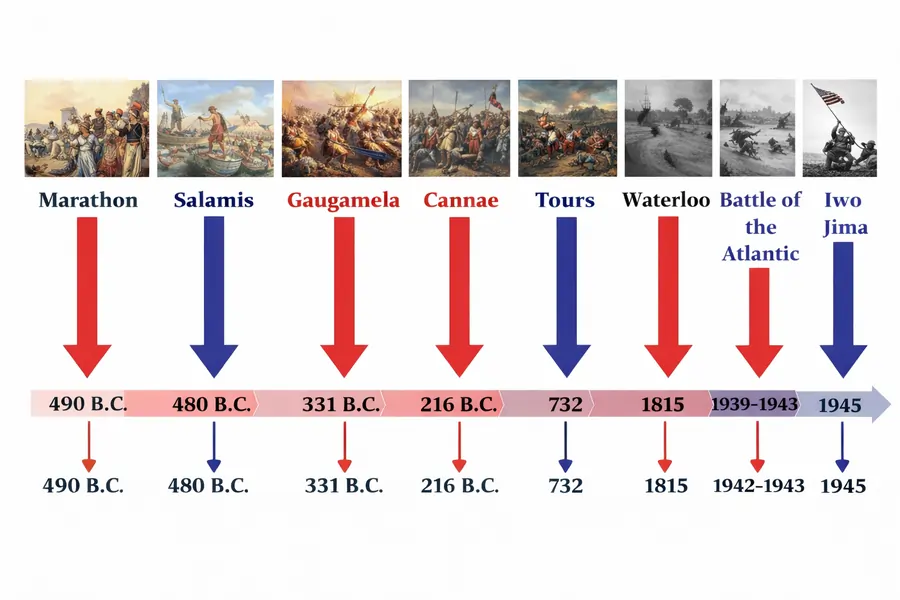
Top 10 Decisive Battles in History That Changed the World
Explore the top 10 decisive battles in history—from Marathon and Cannae to Stalingrad and Iwo Jima—that shaped empires, wars, and civilizations.
Read Article →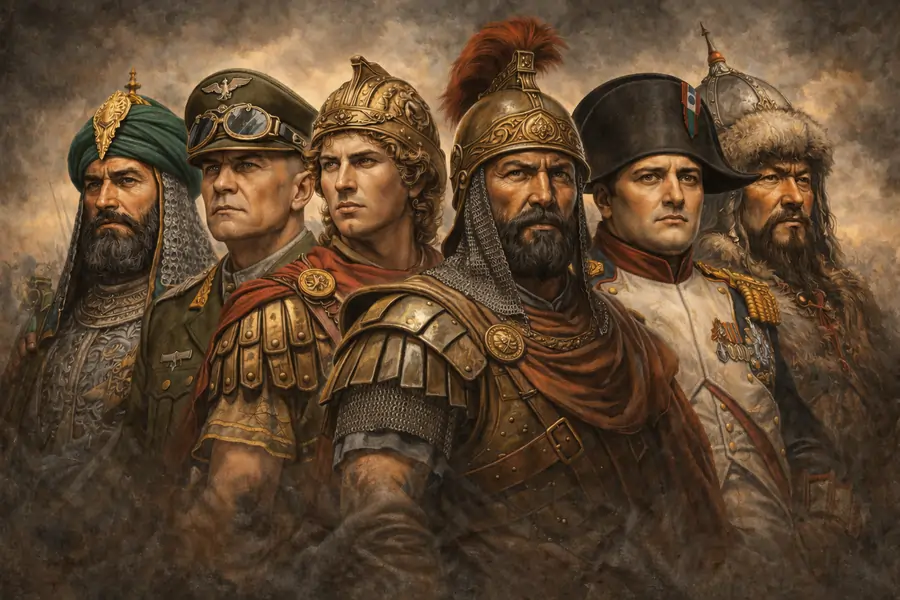
10 Most Brilliant Military Generals Who Ever Lived: From Alexander to Napoleon
Discover the top 10 greatest military generals in history—from Hannibal and Alexander to Napoleon and Caesar—ranked by strategy, victories, and legacy...
Read Article →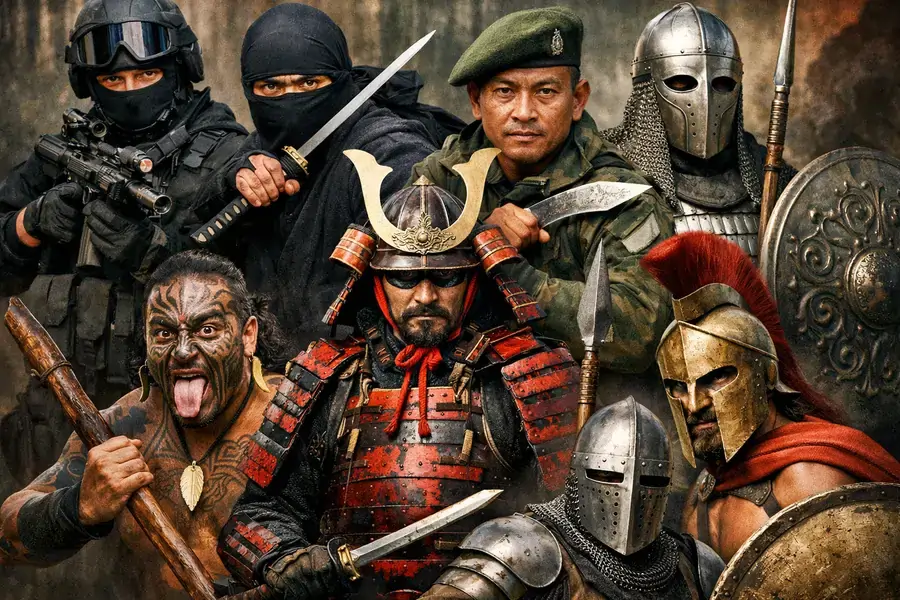
10 Most Feared Warrior Groups in History: From Spartans to Mongols (Ranked)
Discover the top 10 greatest warrior groups in history—from Mongol horse archers and Spartans to samurai and Gurkhas—and how they shaped warfare.
Read Article →Military history is often reduced to dates, weapons, and casualty numbers—but war has never been just about armies colliding on a battlefield.
It is about decisions made under pressure, leaders gambling entire civilizations on a single march, soldiers enduring fear and exhaustion, and societies reshaped forever by victory or defeat. Every war leaves behind more than ruins; it leaves behind lessons, myths, and memories that echo long after the fighting ends. This section of Myth and Memory explores war not as spectacle, but as a deeply human experience—one shaped by ambition, survival, strategy, and sometimes sheer desperation.
Beyond Battles and Bloodshed
When we study military history, we are not simply studying violence. We are studying organization, adaptation, and human behavior at its limits. Wars reveal:
- How societies mobilize resources
- How leadership rises—or collapses—under pressure
- How technology changes the balance of power
- How fear, morale, and discipline shape outcomes as much as weapons
A smaller force can defeat a larger one through planning and timing. A powerful empire can collapse because of arrogance or overextension. A single decision—made in hours or minutes—can alter the course of centuries. Military history reminds us that outcomes are never inevitable.
Wars That Defined Civilizations
Some conflicts are not just wars—they are turning points in human history. The struggle between Rome and Carthage during the First Punic War and Second Punic War was not merely a contest between two powers. It was a clash of cultures, strategies, and visions of dominance in the ancient Mediterranean.
These wars shaped:
- Rome's transformation from a regional power into an empire
- The evolution of naval warfare and military logistics
- The careers of legendary commanders
- The fate of entire cities and populations
By examining such conflicts in detail, we move beyond simple narratives of winners and losers and begin to understand why certain civilizations endured while others faded.
The Minds Behind the Armies
Wars are not fought by nations alone—they are fought by people. Great generals are often remembered as strategic geniuses, but their true significance lies in how they understood human psychology as much as battlefield tactics. Leadership in war is about morale, trust, timing, and knowing when to risk everything.
In this category, we explore famous military leaders not as flawless icons, but as complex individuals shaped by their circumstances. Figures like Hannibal Barca and Julius Caesar were not just tacticians—they were political thinkers, propagandists, and risk-takers who understood that perception could be as powerful as force.
By studying military commanders, we ask:
- What separates boldness from recklessness?
- How much of victory comes from preparation versus opportunity?
- Why do some leaders inspire absolute loyalty while others fail?
Battles That Changed Everything
Some battles are remembered because they were large. Others because they were brutal. But the most significant battles are those that changed the direction of history. A single engagement can:
- End an empire's expansion
- Secure a dynasty's legitimacy
- Shift the balance of power across continents
When we study famous battles, we do more than reconstruct troop movements. We examine terrain, supply lines, intelligence failures, weather conditions, and morale. Often, what decided the outcome was not superior weapons—but adaptability and timing. Military history teaches us that chaos is always present in war. Even the best plans collapse when reality intervenes.
Elite Forces and Warrior Cultures
Across history, some military groups gained reputations that outlived their actual numbers. Elite forces—whether defined by discipline, training, or cultural identity—often became symbols of fear and prestige. Their legacy was not just what they achieved, but what they represented to both allies and enemies.
This category explores top military groups across eras, examining:
- How they were trained
- What made them effective—or feared
- How myth and reputation amplified their power
- Why some elite units endured while others vanished
The Human Cost of War
While strategy and leadership are fascinating, military history cannot be understood without acknowledging its cost. Behind every campaign are soldiers who marched long distances, endured hunger and disease, and faced the constant reality of death. Entire populations were displaced. Cities were destroyed. Generations lived with the aftermath.
At Myth and Memory, we do not glorify war—but we recognize its role in shaping the world we inherited. Understanding military history helps us appreciate the fragility of peace and the consequences of unchecked ambition.