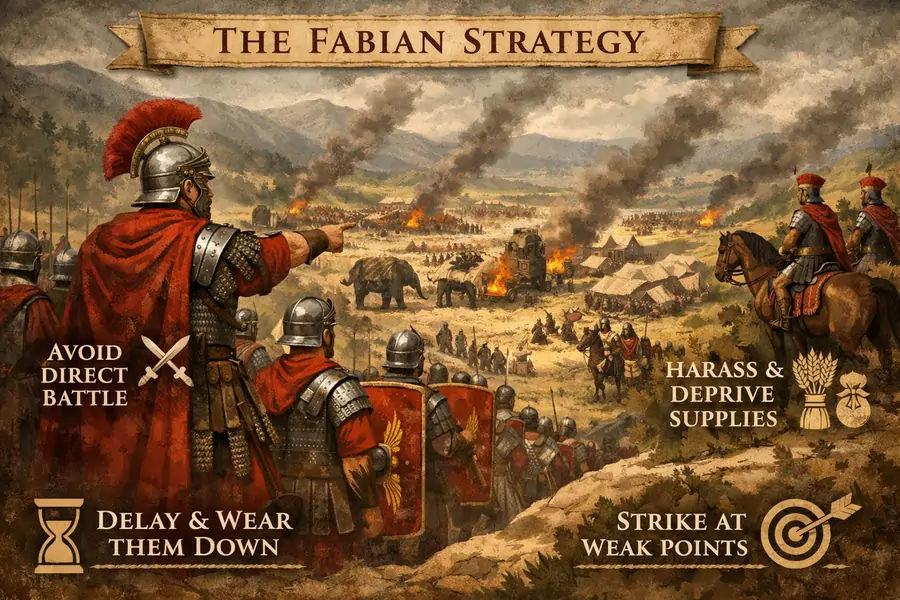
In one of the most desperate phases of the Second Punic War, Rome abandoned its traditional aggressive military doctrine. It was forced to embrace a strategy of patience, delay, and calculated endurance. Known as the Fabian Strategy, this approach, named after the Roman statesman Quintus Fabius Maximus, became the cornerstone of Rome's survival against Hannibal Barca. While controversial and deeply unpopular at the time, Fabian tactics ultimately reshaped the course of the war. It bought Rome the much-needed time to recover, regroup, and eventually triumph over Carthage.
Table of Contents
- Background: Crisis After Trebia and Trasimene
- The Appointment of Fabius Maximus as Dictator
- The Nature of Roman Dictatorship
- Core Principles of the Fabian Strategy
- Why Romans Were Displeased with Fabian Tactics
- The Return to Aggressive Strategy and the Disaster at Cannae
- The Revival of the Fabian Strategy
- Impact of the Fabian Strategy on the War
- Fabian Strategy vs. Scorched Earth Policy
- Effectiveness and Historical Legacy
- Conclusion: A Strategy of Survival and Victory
Background: Crisis After Trebia and Trasimene
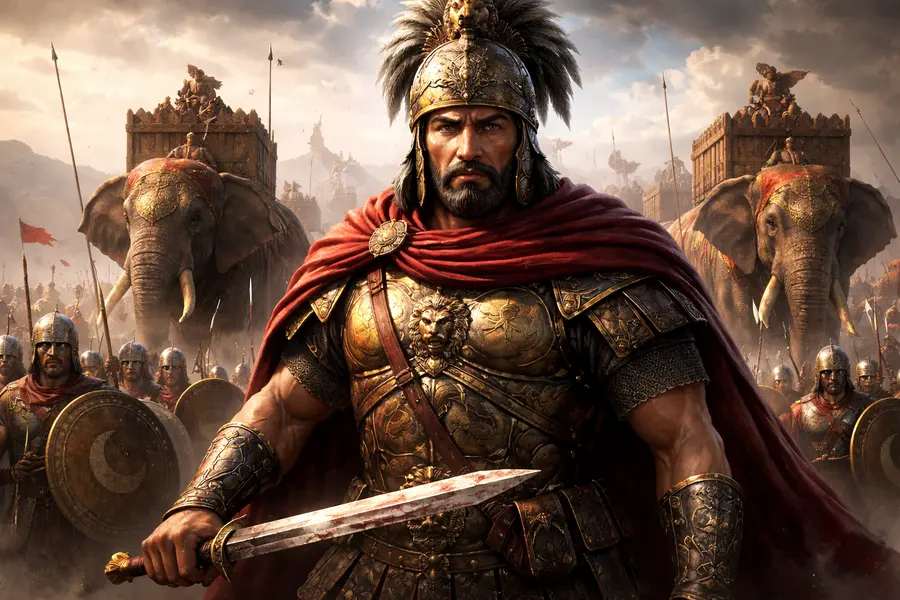
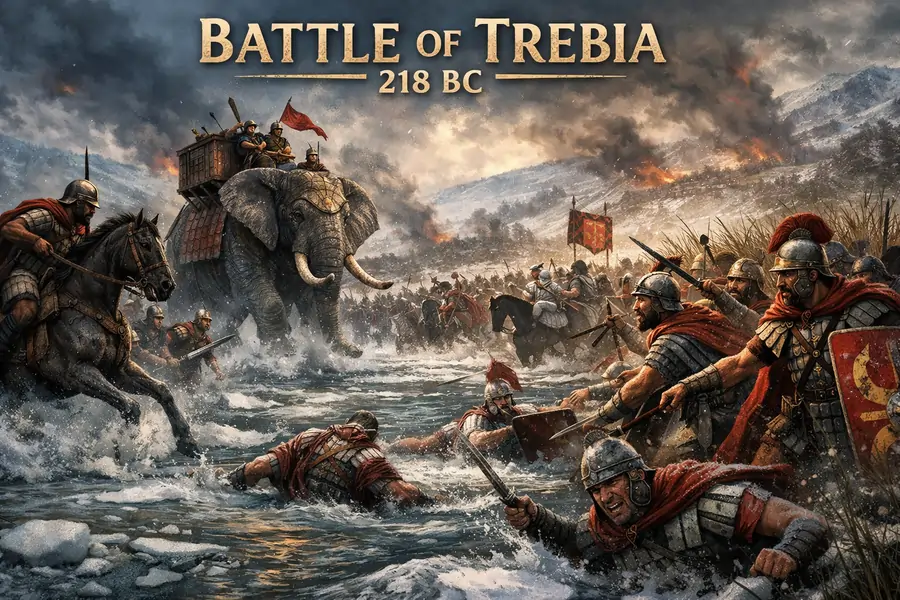
The Fabian Strategy was no glorious military tactic. The proud Romans considered it to be a disgrace. However, it was born out of sheer necessity. A necessity for Rome to survive the existential threat posed by Hannibal Barca of Carthage. Rome's early encounters with Hannibal were catastrophic. The undefeated Roman army was outmaneuvered and crushed in the Battle of Trebia (218 BC). Roman forces suffered a devastating defeat due to Hannibal's superior tactics, ambush techniques, and use of terrain. The Romans, confident in the strength and discipline of their heavy infantry, were caught off guard by Hannibal's cunning and adaptability.
The new Roman consul, Gaius Flaminius, was eager to defeat Hannibal and gain glory. His impatience cost the Romans dearly in the Battle of Lake Trasimene (217 BC), where Hannibal executed one of history's most brilliant ambushes. The entire Roman army was trapped and annihilated, with 20,000 Romans killed or captured. Panic spread throughout Rome. The Roman Republic, which had long prided itself on military invincibility, was now on its knees.
Rome was bleeding its army to Hannibal. Rome was preparing its defenses for a siege. These consecutive defeats exposed a harsh reality: traditional Roman tactics based on decisive pitched battles were ineffective against Hannibal. The Senate realized that a radical shift in strategy was essential for survival.
The Appointment of Fabius Maximus as Dictator
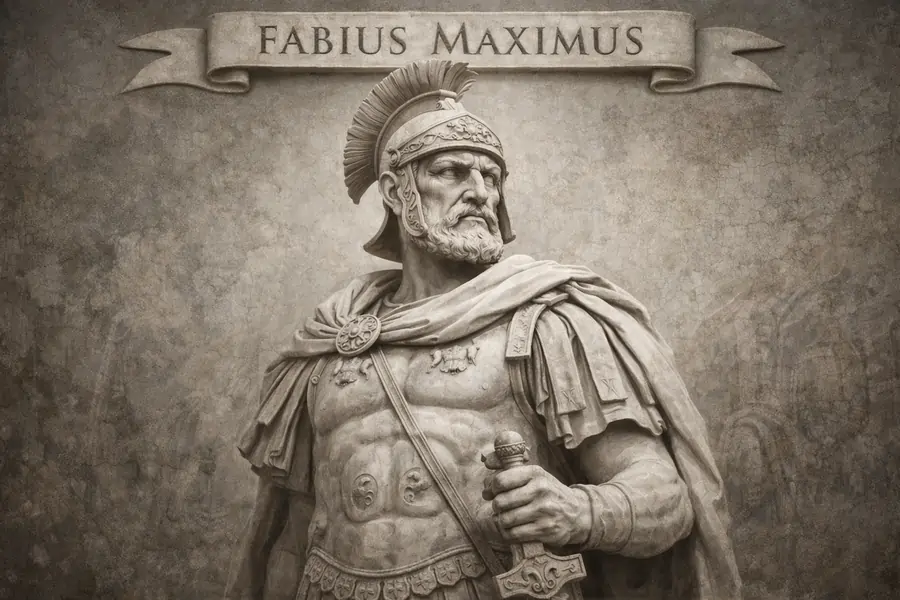
In moments of crisis, Rome appoints a dictator to take radical steps to help stabilise the situation. The Senate appointed Quintus Fabius Maximus as dictator, granting him near-absolute authority to deal with the threat of Hannibal. This was a rare moment, as dictators were only appointed during extreme emergencies. Rome was now in such a desperate situation.
Fabius was a practical man. He knew that based on the current situation, Rome could not hope to defeat Hannibal in open battle. This pessimistic thought process was heavily criticized by the Roman public. Fabius believed Rome needed to avoid confrontation and gradually weaken the Carthaginian army through attrition. Thus was born the Fabian Strategy, a method of warfare centered on delay, attrition, and strategic harassment rather than decisive engagement.
The Nature of Roman Dictatorship
It is important to understand that the Roman dictatorship was fundamentally different from the dictatorships that we see in modern times. In the Roman Republic, dictators were appointed by the senate for a limited duration, typically six months. They were expected to relinquish power voluntarily once the crisis had passed or the time period had ended.
The Roman dictators during the early period of the empire strictly adhered to this policy and voluntarily relinquished their power for over 500 years. The most famous example is that of Cincinnatus, who was appointed as dictator to save a besieged army in 458 BC. Once his task was completed in 15 days, he stepped down as dictator and returned to his farm. Fabius Maximus also adhered strictly to this tradition. Despite wielding immense power and authority, he stepped down when his term concluded. This shows the Roman commitment to republican principles. This voluntary relinquishment of power distinguished Rome from many other ancient states and helped preserve political stability even during times of crisis.
Core Principles of the Fabian Strategy
The Fabian Strategy was built on several key principles:
- Avoidance of pitched battles: Fabius knew that Hannibal wanted to decisively defeat the Romans in a pitched battle again. Therefore, he refused to engage Hannibal directly, recognizing the Carthaginian general's tactical superiority.
- Attrition warfare: The Carthaginians were far away from home in a foreign land. Therefore, the Roman forces harassed Hannibal's army, targeted supply lines, and foraging parties.
- Strategic shadowing: Roman armies followed Hannibal at a distance, limiting his movements without risking full-scale engagement.
- Scorched earth elements: Although some do not consider this a core principle, there were instances where crops and resources were destroyed to deny Hannibal sustenance.
This approach frustrated Hannibal, who relied on decisive victories to force Rome into submission. These major victories prompted Roman allies to defect to Hannibal's side, growing his army and providing supplies. Without such victories, his position in Italy became increasingly precarious.
Why Romans Were Displeased with Fabian Tactics
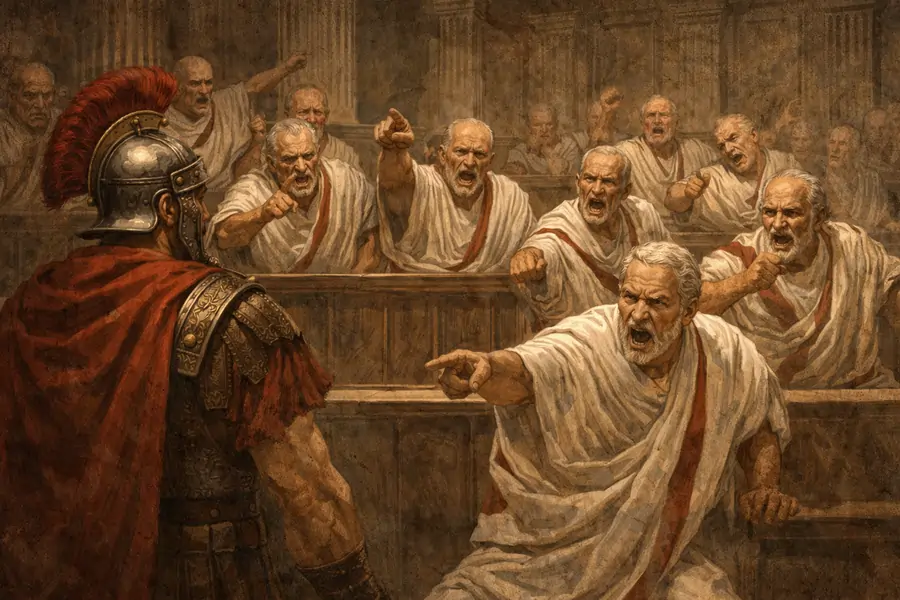
Despite its strategic logic and practical use, the Fabian Strategy was very unpopular among the Romans. The Roman military tradition valued courage, aggression, and decisive action. Avoiding battle was seen as cowardly and dishonorable. The Romans were angry and frustrated at Rome's repeated losses and wanted swift revenge.
Fabius earned the nickname “Cunctator”, meaning “the Delayer,” for his delaying tactics. The term Cunctator was initially used as an insult. Many Romans believed that his tactics were prolonging the war unnecessarily. It also allowed Hannibal to ravage the Italian countryside, threatening the safety of their Italian allies and impacting Roman reputation.
Political pressure mounted against Fabius. Hannibal was aware of the Romans' displeasure with the tactics employed by Fabius. Hannibal, being a genius of mental warfare, located Fabius' property. He then proceeded to destroy all other properties around it and spared the land owned by Fabius. This was done intentionally to create suspicion among the Roman senate of a secret deal between Hannibal and Fabius.
Fabius sold his property to fund the ransom of Roman prisoners of war to help suppress the rumors. However, his cautious approach clashed with the expectations of Roman citizens and politicians, who demanded swift and decisive victories. This dissatisfaction would ultimately lead to a temporary abandonment of Fabian tactics.
The Return to Aggressive Strategy and the Disaster at Cannae
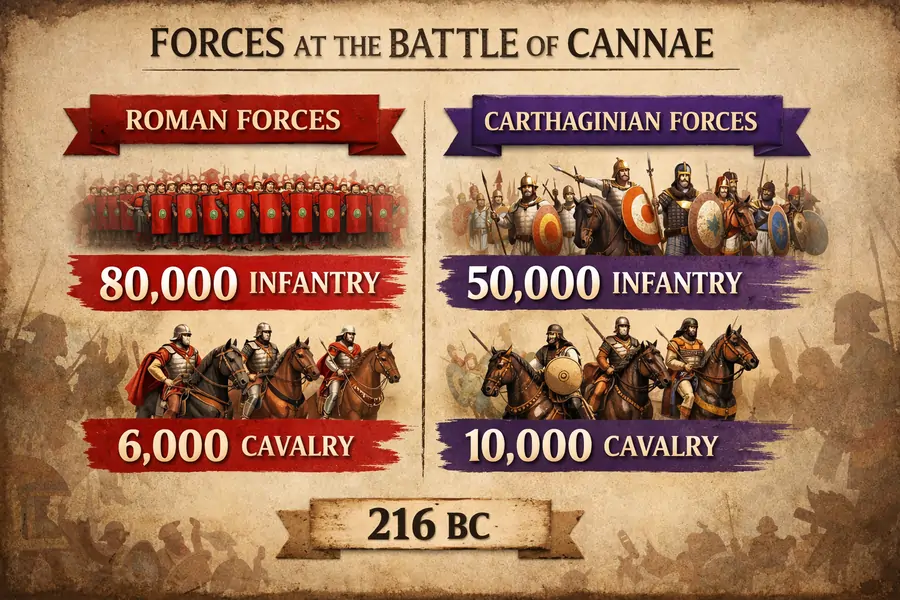
At the end of his six-month term, Fabius stepped down, and Roman leadership reverted to traditional methods. Determined to crush Hannibal in a single decisive battle, Rome assembled one of the largest armies in its history. Fabian tactics had helped preserve the Roman army and rebuild its strength.
The largest Roman army was, however, unable to overcome Hannibal and lost decisively at the infamous Battle of Cannae (216 BC). Hannibal, once again, demonstrated his tactical genius by executing the first double envelopment maneuver and annihilating the Roman forces. The loss was catastrophic, with Roman losing 70,000 soldiers in a single day.
Cannae stands as one of the greatest military disasters in Roman history and is often listed among the most decisive battles in history. The defeat proved Fabius right. Confrontation with Hannibal was a mistake, and Rome could not afford further losses of this magnitude.
The Revival of the Fabian Strategy
In the aftermath of Cannae, Rome returned to Fabian tactics with renewed commitment. Rome was in a desperate situation and prepared for a siege that never came. The Senate recognized that survival depended on avoiding further catastrophic battles. Fabius was recognized as one of the most important figures in the Roman senate.
Roman forces resumed their strategy of attrition, harassment, and containment. Hannibal was denied the opportunity to achieve another decisive victory, and his army gradually weakened over time. This shift marked a turning point in the war. While Hannibal remained a formidable presence in Italy, he was increasingly isolated and unable to secure the resources or reinforcements needed to sustain his campaign.
Impact of the Fabian Strategy on the War
The Fabian Strategy had several profound impacts on the Second Punic War:
- Preservation of Roman manpower: By avoiding large-scale battles, Rome prevented further catastrophic losses.
- Gradual weakening of Hannibal: Without access to consistent supplies and reinforcements, Hannibal's army diminished over time.
- Stabilization of Roman morale: Although initially unpopular, the strategy restored confidence after the shock of Cannae.
- Strategic flexibility: Rome was able to fight on multiple fronts, including campaigns in Spain and North Africa.
Ultimately, the Fabian Strategy was what kept Rome alive and bought it the time it needed to develop new leaders and strategies. Figures like Scipio Africanus would later take the fight to Carthage itself, leading to Rome's eventual victory in the war.
For a broader understanding of the conflict, see the Second Punic War overview.
Fabian Strategy vs. Scorched Earth Policy
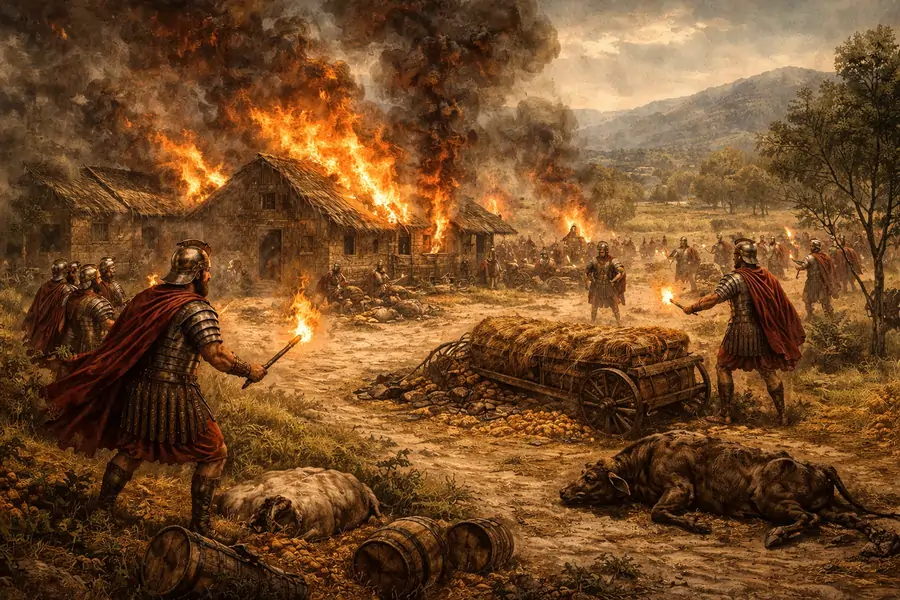
The Fabian Strategy is often compared to the scorched earth policy, but the two are not identical.
Similarities
- Both aim to weaken the enemy by denying the availability of resources.
- Both avoid confrontation when the opponent is stronger.
- Both rely on endurance and long-term strategic thinking.
Differences
- Scope: Scorched earth involves widespread indiscriminate destruction of resources, while Fabian tactics use it selectively.
- Flexibility: Fabian Strategy includes shadowing and harassment, not just resource denial.
- Political impact: Scorched earth can harm one's own population more severely, making it harder to sustain politically.
In essence, the Fabian Strategy can be seen as a broader strategic framework that may incorporate elements of scorched earth tactics when necessary.
Effectiveness and Historical Legacy
The Fabian Strategy proved highly effective in the context of the Second Punic War. Though initially unpopular among the public, it proved to be essential for Rome's survival. While it did not deliver quick victories, it ensured that Rome could fight on without collapsing during its darkest hours.
Over time, the Fabian strategy influenced military thinking across centuries. The “Scorched Earth policy” followed by many countries like Russia during the invasion of Napoleon and the Soviet Union during World War II was developed based on the Fabian strategy. It demonstrated that patience and endurance could be as powerful as aggression and decisive action.
Fabius Maximus himself is often regarded as one of the greatest military strategists in history, not for winning battles, but for understanding how to avoid losing a war.
Conclusion: A Strategy of Survival and Victory
The Fabian Strategy stands as a testament to Rome's adaptability and resilience. Faced with an enemy of extraordinary skill, Rome chose not to fight on Hannibal's terms but to redefine the nature of the conflict itself. After the debacle at Cannae, it took a huge amount of courage and pride not to give up and keep fighting.
By embracing delay, attrition, and strategic patience, Rome transformed a series of devastating defeats into an eventual victory. The lessons of the Fabian Strategy continue to be used by military strategists, proving that sometimes the best way to win is not to fight head-on according to the enemy's terms.
This approach ultimately contributed to Rome's dominance in the Mediterranean, culminating in later conflicts such as the Third Punic War, where Carthage was finally destroyed. In the end, the Fabian Strategy was not merely a tactic; it was a philosophy of warfare that turned patience into power and survival into victory.
Frequently Asked Questions
What was the Fabian Strategy in the Second Punic War?
The Fabian Strategy was a military approach adopted by Rome under the leadership of Quintus Fabius Maximus during the Second Punic War. Instead of engaging Hannibal in direct battles, the Romans avoided confrontation, harassed supply lines, and used delay tactics to gradually weaken the Carthaginian army.
Why did Rome adopt the Fabian Strategy?
Rome adopted the Fabian Strategy after suffering devastating defeats at the Battle of Trebia in 218 BC and the Battle of Lake Trasimene in 217 BC. These losses demonstrated that Hannibal was superior in open battle, forcing Rome to shift to a more cautious and defensive approach.
Why was the Fabian Strategy unpopular in Rome?
The Fabian Strategy was unpopular because it avoided direct combat, which many Romans saw as cowardly and dishonorable. Roman culture valued decisive victories, and Fabius Maximus was criticized for delaying action and allowing Hannibal to continue raiding the Italian countryside.
How did the Battle of Cannae prove the Fabian Strategy was effective?
After abandoning Fabian tactics, Rome engaged Hannibal directly at the Battle of Cannae in 216 BC and suffered one of the worst defeats in its history. This disaster demonstrated the wisdom of Fabius Maximus’s cautious approach, leading Rome to return to Fabian tactics afterward.
What is the difference between the Fabian Strategy and scorched earth tactics?
While both strategies aim to weaken the enemy without direct confrontation, scorched earth tactics involve widespread destruction of resources to deny them to the enemy. The Fabian Strategy is broader, combining avoidance of battle, harassment, and selective resource denial rather than total devastation.
Did the Fabian Strategy ultimately help Rome win the war?
Yes, the Fabian Strategy played a crucial role in Rome’s survival during the Second Punic War. By avoiding further catastrophic defeats and weakening Hannibal over time, it allowed Rome to recover and eventually go on the offensive, leading to final victory over Carthage.