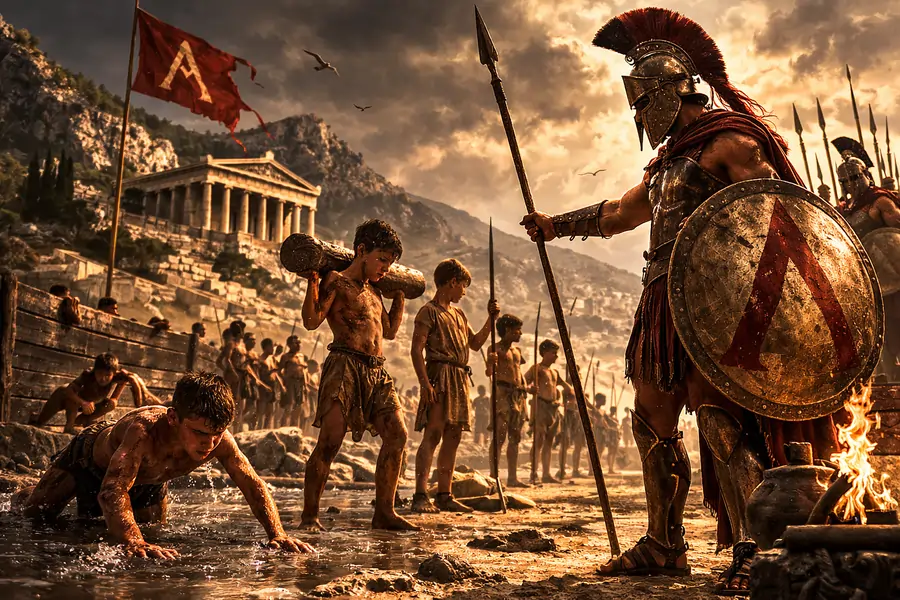
The Spartan agoge was one of the most brutal military training systems in history. Beginning at the age of seven, Spartan boys were taken from their families and subjected to years of relentless discipline, hardship, and combat training designed to transform them into elite warriors. This harsh system forged the legendary Spartan soldiers whose courage and battlefield skill made Sparta one of the most feared military powers of the ancient world. Few warrior societies in history are as famous and legendary as the Spartans of ancient Greece. Their reputation was hard-fought, with tears, sweat, and bloodshed.
The agoge was much more than simple military training. It was a brutally efficient system designed to transform boys into elite warriors who valued discipline, loyalty, and sacrifice above all else. Spartan citizens were trained from early childhood to endure hardship, fight without fear, and serve the state with absolute dedication.
The agoge produced warriors capable of incredible feats. These were the warriors who resisted a vastly larger Persian army in the famous last stand at Thermopylae. Understanding the agoge helps us reveal how Sparta built one of the most formidable warrior cultures in history. This article explores the origins, structure, and brutal methods of Spartan training, explaining how the agoge moulded the most feared soldiers of ancient Greece.
What Was the Spartan Agoge?
The Spartan agoge was the state-controlled education and military training program for male citizens of ancient Sparta. The word "agoge" roughly means "upbringing" or "training." Unlike the other city-states of ancient Greece, Spartans valued military training above all else. The agoge system was established around the 7th century BC by Lycurgus, who reorganized Spartan society.
The agoge served several purposes:
- Train young boys to become elite warriors
- Instill discipline and obedience at a very young age
- Build physical strength and endurance
- Promote complete loyalty to Sparta above family or personal interests
- Create unity and cooperation among soldiers
All male Spartan citizens were required to complete the agoge training. Without completing the training, a man could not become a full citizen of Sparta. As shown in movies, the system was incredibly demanding, combining physical training, combat instruction, survival skills, and psychological conditioning. The rigorous training produced the greatest warriors the world has ever seen.
Spartan Society: A Civilization Built for War
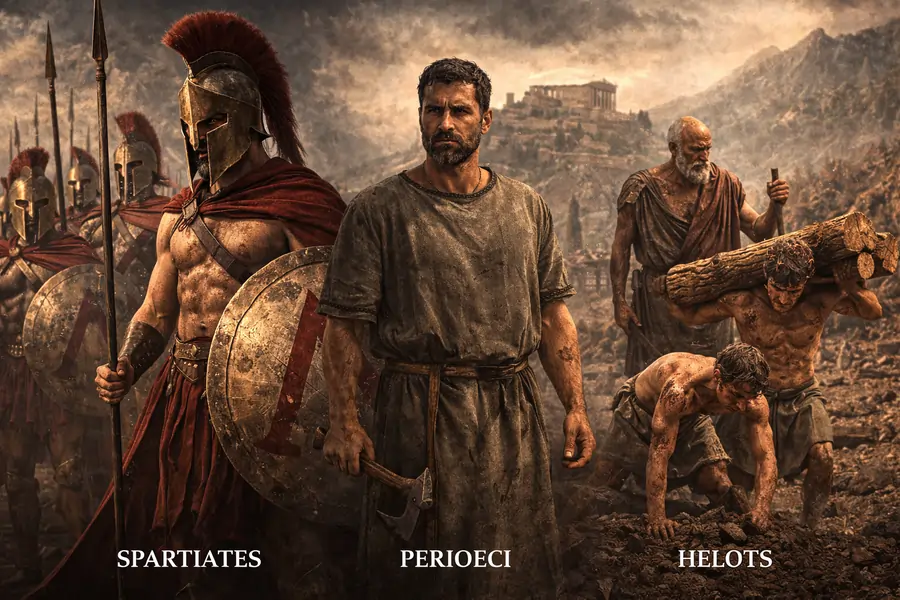
Sparta was inherently different from the other Greek city-states. Most cities like Athens and Thebes focused their efforts on philosophy, arts, and democracy. Spartan society, however, focused on military training and discipline. Serving the city as a warrior was the highest honor, and all Spartan citizens were expected to fight and die for the glory of Sparta. Their society was organized into three main groups:
Spartan Citizens (Spartiates)
These were the elite ruling class. Only Spartans who completed the agoge were considered citizens. They were professional soldiers whose sole duty was to fight and defend the state.
Perioeci
These were free non-citizens who handled trade, manufacturing, and crafts. They were second-tier citizens from cities within Spartan-controlled territories. The Perioeci were the economic backbone of Sparta and helped manufacture goods and weapons.
Helots
The helots were state-owned serfs who worked the land and produced food for Sparta. They vastly outnumbered Spartan citizens, sometimes by a ratio of 7 to 1. Because helots frequently revolted, Sparta needed a powerful military to maintain control. The agoge ensured that every Spartan male became a highly trained soldier capable of suppressing uprisings and defending the state.
Selection at Birth: The First Test of Spartan Training
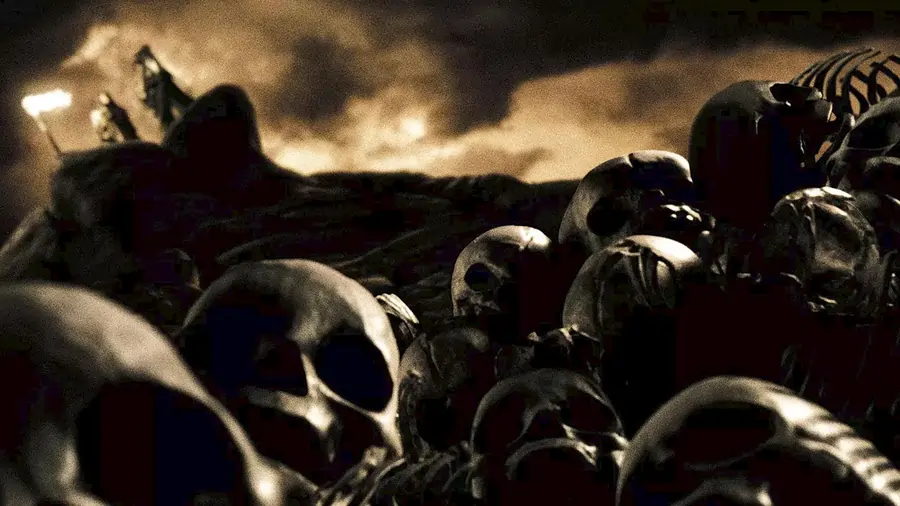
Spartan training effectively began at birth. Spartan newborns were inspected by state officials. This inspection determined if the child was fit to be a Spartan warrior. If a baby appeared weak, sickly, or deformed, he was considered unfit for Spartan society.
According to ancient sources such as Plutarch, these infants were abandoned on the slopes of Mount Taygetus, where they were left to die. A cruel but crucial part of the Spartan selection process. There is still debate on how widespread this brutal practice was. However, the story reflects Sparta's harsh philosophy: only the strongest were worthy of life and citizenship. Those who survived this first test were expected to grow into capable warriors for the state.
Age 7: Boys Enter the Agoge
At the tender age of seven, Spartan boys were taken away from their families to enrol in the agoge. From this moment forward, the state assumed control of their upbringing. The boys were organized into groups called agelai, meaning "herds." These groups were supervised by older youths and instructors known as paidonomoi, who enforced strict discipline.
Life in the agoge was intentionally harsh. The small boys endured hunger, cold, exhaustion, and punishment without complaint. The goal was to develop strength, toughness, and obedience from an early age. Key elements of early training included:
- Physical conditioning
- Wrestling and athletics
- Running and jumping
- Group discipline
- Basic combat instruction
Harsh Living Conditions
The living conditions were very harsh and challenging. The boys were given minimal food, simple clothing, no shoes, and only one cloak per year. This forced them to adapt to cold weather and harsh environments.
Food rations were also limited. This was intentionally done to encourage them to steal food to survive. However, if they were caught stealing, they were punished severely. The punishment was not for stealing itself, but for being careless enough to get caught. This encouraged the boys to learn stealth and cunning. It was to prepare them to survive in hostile territory. The agoge, therefore, trained not only physical strength but also resourcefulness and intelligence.
Discipline and Punishment
The Spartans did not hold back when it came to discipline and punishment. Mistakes, disobedience, or weakness were punished harshly. Punishments included flogging, public humiliation, starvation, and extra training.
One famous example of Spartan discipline was the ritual whipping contest at the Temple of Artemis Orthia. During this brutal ceremony, innocent young Spartans were flogged before a crowd. The intention was to teach them endurance and self-control by silently enduring the pain and suffering. Those who cried out in pain were considered weak. Some reportedly died during the ritual, which demonstrated the brutality of Spartan society.
Education in the Agoge
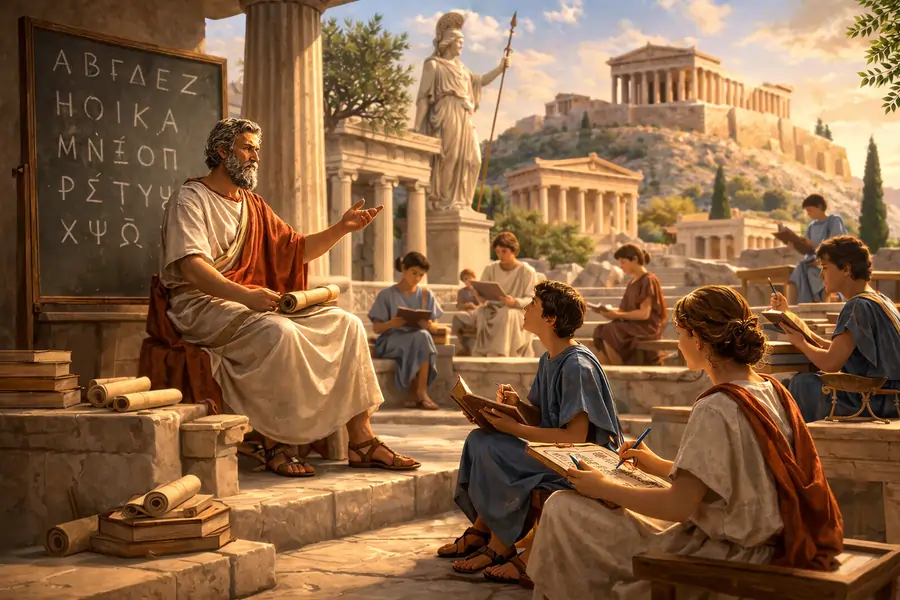
Although the primary focus of the agoge was military training, it also included a limited form of education. Spartan boys learned basic literacy and music, but these subjects were secondary to military preparation. Education focused on obedience, loyalty, courage, and discipline.
Spartans also practiced laconic speech, a style of speaking that was brief, direct, and witty. The word "laconic" comes from Laconia, the region where Sparta was located. The Spartanswere encouraged to give short, sharp, witty responses rather than make lengthy explanations. This style of communication reflected Spartan values: simplicity, clarity, and strength.
Combat Training and Military Skills
As the Spartan boys grew older, the focus of the agoge slowly shifted to combat skills. Training included:
- Spear fighting
- Shield use
- Formation combat
- Wrestling and grappling
- Endurance running
- Weapon drills
One of the most important aspects of Spartan warfare was the phalanx formation. In the phalanx formation, soldiers stood shoulder-to-shoulder with large overlapping shields. Each soldier protected the man next to him, creating a powerful defensive wall. The agoge trained Spartans to fight as a unit rather than as individuals. This was the single essential factor that ensured the phalanx remained strongin battle.
Age 12: Increased Hardship
At around age twelve, Spartan training became even more intense. Boys were given even less clothing, harsher sleeping conditions, and increased physical training. They were forced to sleep outdoors in freezing conditions on just reeds gathered from riverbanks. This phase of training emphasized survival skills and mental toughness, preparing them for the brutal realities of warfare.
The Krypteia: Sparta's Secret Police
Krypteia was one of the most controversial aspects of Spartan training. The Krypteia was a secret organization made up of elite Spartan youths. The members of the Krypteia were sent into the countryside to spy and harass the local helot population. They were armed with daggers and limited supplies.
Some sources also claim that they were even encouraged to assassinate any rebellious helots. This helped train the young Spartans in stealth and combat. It also helped to keep the helots in check and avoid rebellions. It also helped reinforce Spartan dominance. This practice demonstrated the harsh realities of Spartan society and the extreme measures used to maintain control.
Age 18-20: Military Apprenticeship
At the age of eighteen, the Spartans entered a more advanced phase of training. They became ephebes, young soldiers preparing for active military service. They were the interns of the ancient era. During this stage, they:
- Patrolled Spartan territory
- Practiced advanced combat tactics
- Participated in military exercises
The training now was to cultivate leadership, endurance, and battlefield coordination. This effectively concluded their agoge training. By the age of twenty, most Spartans were considered fully trained warriors ready for active duty.
Age 20-30: Active Military Service
At age twenty, Spartan men officially joined the Spartan army. They were still not allowed to return to their families. They lived in a military barracks and continued training and fighting alongside other Spartan soldiers. During this period, they also joined syssitia, communal dining groups of about fifteen soldiers.
These groups ate together, trained together, and fought together. The syssitia helped strengthen the bond between soldiers, ensuring loyalty and cooperation on the battlefield. Finally, after reaching the age of thirty, Spartan men could live with their families and participate fully in Spartan political life.
Weapons and Equipment of Spartan Warriors
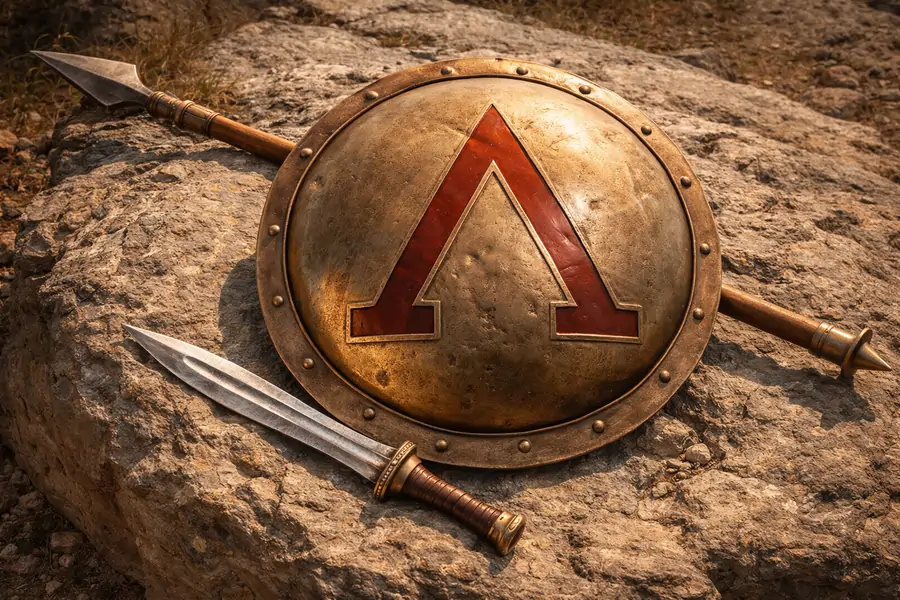
Spartan soldiers used a variety of weapons that complemented their training. They were also trained to fight in the phalanx formation and effectively use their weapons.
Dory (Spear)
The primary Spartan weapon was the dory, a long spear used in phalanx combat. It was 7 to 9 feet long with a wooden shaft, a spear tip, and a counterweight.
Hoplon (Shield)
The Spartan shield was large and round. It protected both the soldier and the man beside him. The shield was especially important. Spartan mothers were famously said to tell their sons:
"Come back with your shield—or on it."
This meant that they could either come home victorious, carrying their shield, or die and be carried back on their shield.
Xiphos (Sword)
This xiphos was a short sword that served as a backup weapon. If the spear broke, the Spartans could continue fighting with their sword. It was a double-edged one-handed sword ideal for close combat.
Armor
The Spartan soldiers were heavily armored. Spartan armor typically included:
- Bronze helmet
- Bronze breastplate
- Greaves for leg protection
Spartan Discipline and Warrior Ethos
Spartan training instilled a powerful warrior ethos that emphasized courage and sacrifice. The primary focus was on the prioritization of the state over the individual. Key Spartan values included:
Loyalty to the State
The most important trait for the Spartans was loyalty to the state. The needs of the state were more important than the needs of the individual. The Spartans were expected to sacrifice themselves for the well-being of the state.
Courage in Battle
Spartans were expected to stand their ground and fight to the death rather than retreat. This can be seen in the last stand of Thermopylae, where 300 Spartans sacrificed their lives to buy time for Greece.
Discipline
Strict obedience to commanders was expected on the battlefield. Orders were followed without question.
Endurance
Spartans were trained to endure pain, hunger, and exhaustion without complaint. These values helped Sparta maintain one of the most feared armies of the ancient world.
The Battle of Thermopylae: Spartan Training in Action
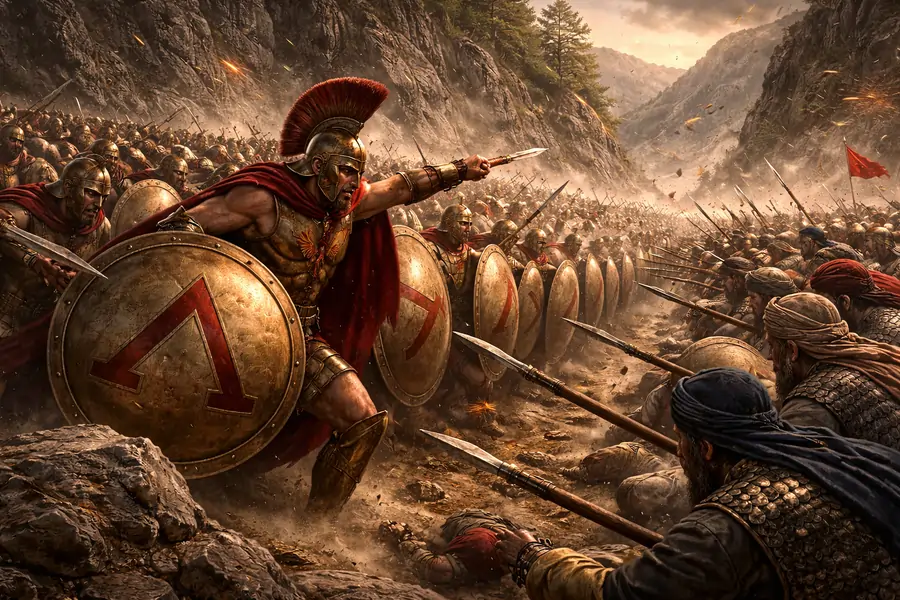
The most famous example of the Spartan military's brilliance occurred during the Battle of Thermopylae in 480 BC. A small Greek force led by King Leonidas of Sparta defended a narrow mountain pass against a massive Persian army of Xerxes.
300 Spartans and a couple of thousand other Greeks held their position for three days despite being heavily outnumbered. When the Persians eventually surrounded them, the Spartans chose to fight to the death rather than retreat. Despite the loss of all Spartan soldiers, their heroic stand helped save Greece and etched their names in history.
The Decline of the Spartan Military System
Sparta was one of the most powerful city-states in Greece, rivaled only by Athens. However, their dominance as a military power slowly declined over time. Several factors contributed to this decline:
- Population decline among Spartan citizens
- Economic stagnation
- Resistance from subject populations (the helots)
- Military defeats by rival Greek states
One of the most decisive moments occurred in 371 BC at the Battle of Leuctra, where Theban forces defeated the Spartans and ended their dominance in Greece. Over time, the rigid Spartan system became difficult to sustain.
The Legacy of Spartan Training
Although Spartan society eventually declined, its legacy continues to fascinate historians and military scholars. The Spartan agoge remains one of the most extreme military training systems ever created. The bravery, dedication, and loyalty shown by Spartan soldiers still inspire modern military units and popular culture. Movies like The 300 continue to explore the Spartan warrior ideal.
The Spartan agoge system produced disciplined warriors capable of defending the state with their lives. This was the most intense, deadly, and efficient training program in history. From the inspectionat birth to decades of rigorous military service, Spartan citizens were molded into killing machines. Sparta may have faded away, but the legend of Spartan warriors forged by the agoge lives on.
Frequently Asked Questions
What was the Spartan agoge?
The Spartan agoge was the state-controlled education and military training program for male citizens of ancient Sparta, established around the 7th century BC by Lycurgus. It was a brutal system that began at age seven and transformed boys into elite warriors through relentless discipline, physical training, and psychological conditioning. The agoge emphasized military training above all else, producing the most feared Spartan warriors in history.
How did Spartan training work?
Spartan training, known as the agoge, began at age seven when boys were taken from their families and placed in state-run barracks. The system included physical exercises, combat training, survival skills, and psychological conditioning. Boys learned to endure hardship, fight without fear, and prioritize loyalty to Sparta. The training was extremely harsh, with punishments for failure and rewards for excellence, creating disciplined Spartan warriors capable of legendary feats.
What were Spartan warriors known for?
Spartan warriors were legendary for their discipline, courage, and battlefield prowess. Trained from childhood through the agoge system, they became elite soldiers who valued honor, loyalty, and sacrifice above all. Spartans were known for their phalanx formations, long spears, and shields, and they achieved fame at battles like Thermopylae, where 300 Spartans held off a massive Persian army. Their military training made them one of the most formidable warrior groups in ancient history.
How did Spartan military training prepare warriors?
Spartan military training through the agoge prepared warriors by building physical strength, endurance, and combat skills from a young age. Boys learned to use weapons, march in formation, and survive in harsh conditions. The training instilled absolute obedience, promoted unity among soldiers, and taught them to fight as a cohesive unit. This rigorous preparation created Spartan army training that produced warriors who could withstand extreme hardship and dominate on the battlefield.
What was Spartan society like?
Spartan society was uniquely organized around military training and discipline, unlike other Greek city-states that focused on arts and philosophy. It consisted of three main groups: Spartiates (elite citizens and warriors), Perioeci (free non-citizens handling trade), and Helots (state-owned serfs). The society emphasized military service as the highest honor, with all aspects of life geared toward producing and maintaining a powerful army. Spartan discipline was enforced through the agoge and strict social codes.
How did the Spartan military system function?
The Spartan military system centered on the agoge training program, which produced professional soldiers from childhood. All male citizens underwent rigorous training to become warriors, while Helots handled labor and Perioeci managed the economy. The system created a standing army of highly disciplined troops who lived in barracks and were always ready for war. This structure allowed Sparta to maintain military dominance despite its small population, with warriors fighting in phalanx formations using spears and shields.
What happened to the Thermopylae Spartans?
The Thermopylae Spartans, led by King Leonidas, achieved legendary status by holding off a massive Persian army of over 100,000 soldiers with just 300 Spartans and allies in 480 BC. They defended the narrow pass of Thermopylae for three days, buying time for Greek forces to prepare. Though ultimately betrayed and overwhelmed, their stand became a symbol of Spartan courage and military training excellence, inspiring the phrase 'Come back with your shield or on it.'
What was Spartan discipline?
Spartan discipline was legendary and enforced through the agoge system from a young age. Boys were taught absolute obedience, endurance of pain, and loyalty to the state above family. Punishments were severe for infractions, including beatings and starvation, while excellence was rewarded. This harsh discipline created warriors who fought without fear, maintained formation in battle, and prioritized collective success over individual glory, forming the backbone of Spartan military training.