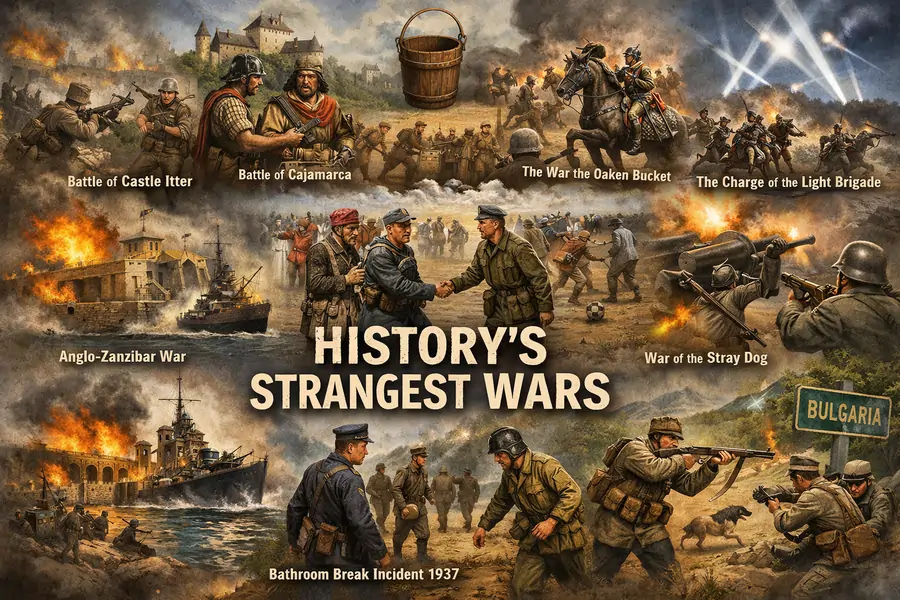
History is filled with legendary battles and decisive wars, but some military encounters are so strange that they seem almost unbelievable. From armies fighting birds and wars lasting less than an hour to enemies sharing Christmas celebrations in the trenches, these bizarre conflicts reveal the unpredictable and often surreal nature of warfare throughout history.
While many wars were fought for territory, power, or survival, others began through accidents, misunderstandings, or surprisingly trivial events. The following list explores ten of the strangest military encounters ever recorded—moments where history took an unexpected turn and the battlefield became a stage for the absurd.
Table of Contents
- The Great Emu War (1932)
- An Unlikely Partnership: The Battle of Castle Itter (1945)
- Battle of Cajamarca (1532)
- The War of the Oaken Bucket (1325)
- The Charge of the Light Brigade (1854)
- The Battle of Los Angeles (1942)
- The Christmas Truce of 1914
- The Anglo-Zanzibar War (1896)
- The "Bathroom Break" That Sparked a War (1937)
- The War of the Stray Dog (1925)
1. The Great Emu War (1932)
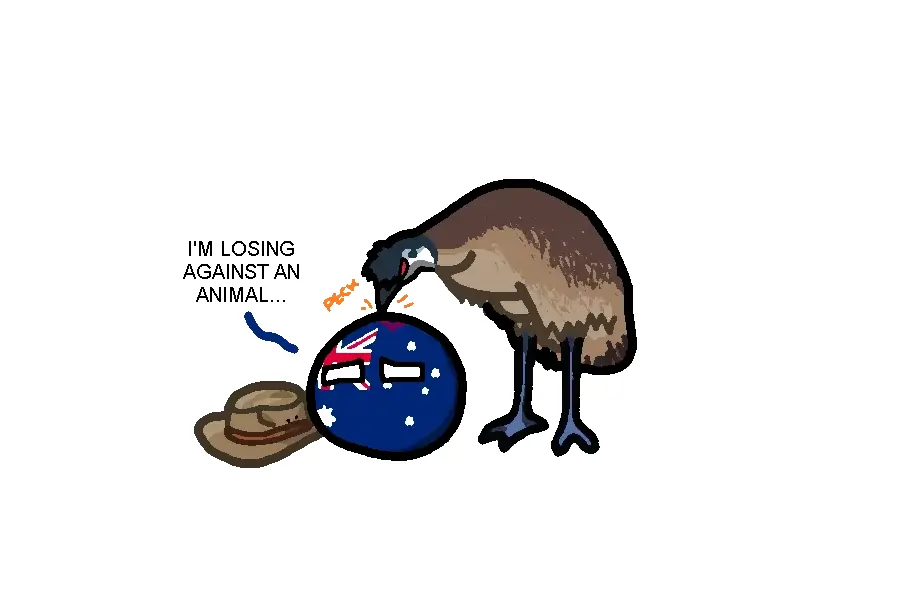
The Great Emu War was one of the strangest military conflicts in history. It took place between November 2 and December 10, 1932, in Western Australia. The cause of the war: thousands of Emus invading farmlands and destroying crops.
After World War I, many veterans had been given land to farm in the region. But every year, large flocks of Emus migrated through the area, capitalising on the opportunity for a free snack. In 1932, nearly 20,000 Emus flooded the wheat-growing districts of Campion and Walgoolan, trampling crops and breaking fences. These farms were not equipped to handle the onslaught of the ramaging Emus.
Desperate farmers appealed to the government for help. In response, the Australian government decided to handle the situation in the best way that they thought was possible: by deploying soldiers armed with Lewis machine guns to "manage" the Emu population.
The operation quickly turned into a fiasco. Emus proved surprisingly fast and agile, capable of running up to 50 km/h (31 mph). The Emus adapted quickly, and when attacked, the flocks scattered into smaller groups, making them difficult targets. The machine guns also frequently jammed, allowing the birds to escape.
Despite firing thousands of rounds of ammunition, the soldiers managed to kill only a small number of Emus. The campaign was soon halted, and newspapers mocked the military effort as a defeat for humans. Although often remembered humorously, the Great Emu War of 1932 remains one of the most bizarre episodes in military history—an unusual conflict where Australia's army struggled to defeat a flock of birds.
2. An Unlikely Partnership: The Battle of Castle Itter (1945)
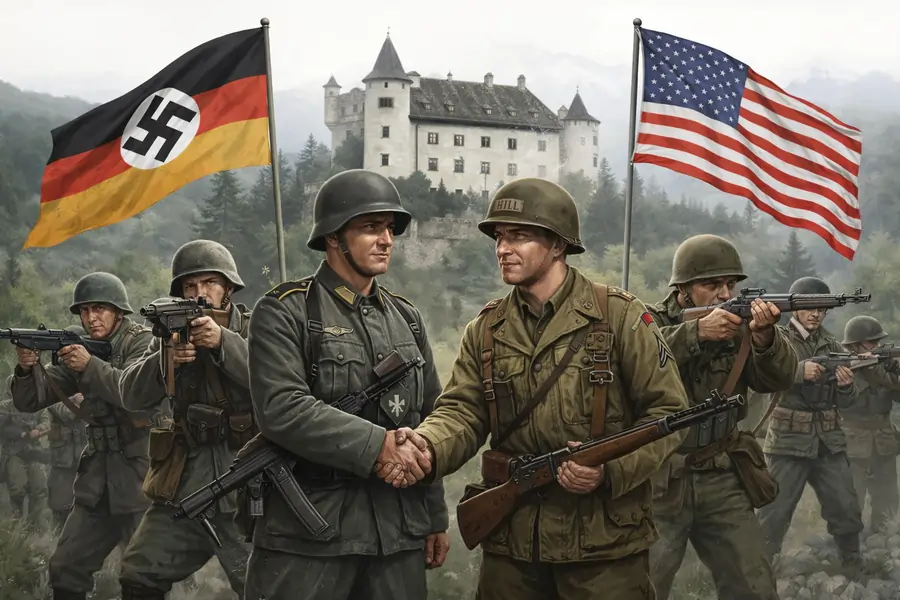
One of the strangest moments of World War II occurred on 5 May 1945 at Castle Itter. In a strange incident that proved that humanity was still present among some German troops, American and German soldiers fought side-by-side against the Nazi Waffen-SS troops.
By this point, the Nazi regime was collapsing following the death of Adolf Hitler. Castle Itter had been used as a special prison holding prominent French political figures, including former prime ministers Édouard Daladier and Paul Reynaud. The Germans had no use for these prisoners now that the Nazi regime was over.
When Waffen-SS troops moved to execute the prisoners, an extraordinary alliance formed. A small force of 14 soldiers from the United States Army joined with about 10 anti-Nazi soldiers from the Wehrmacht. The German troops knew the war was already lost and chose to defend the prisoners instead of obeying SS orders. They chose to hold onto their humanity and do the right thing.
Together, the unlikely allies defended the castle against a larger SS force. After hours of fighting, American reinforcements arrived, and the attack was finally repelled. The Battle of Castle Itter remains one of the most unusual battles of World War II—the only known instance where American and German soldiers fought together during the war, united against a common enemy.
3. Battle of Cajamarca (1532)
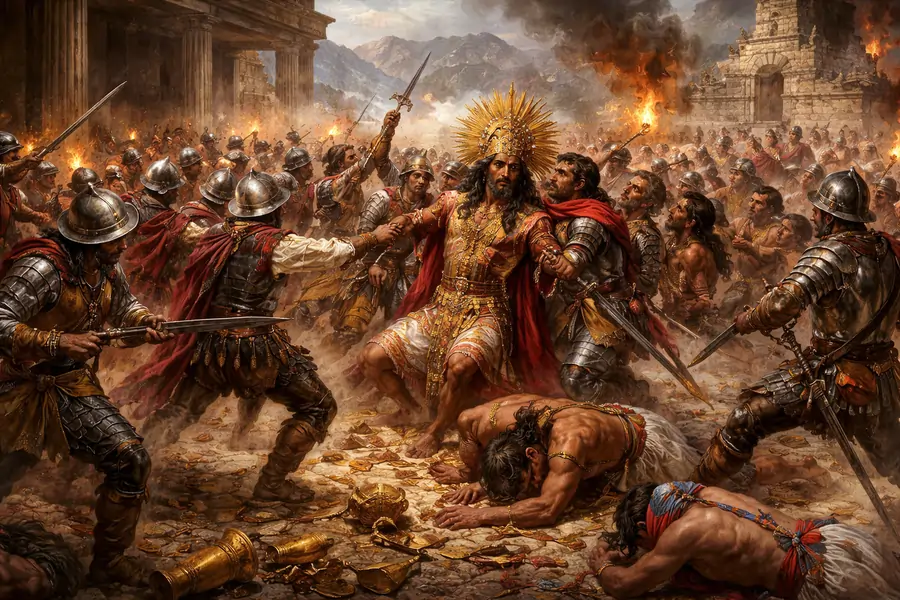
The Battle of Cajamarca, fought on 16 November 1532, showed the world what technological advancements can accomplish in battle. A tiny Spanish force led by Francisco Pizarro faced the massive army of the Atahualpa, the emperor of the Inca Empire.
Pizarro had only 168 Spanish conquistadors, while Atahualpa arrived with thousands of attendants and 3,000-8,000 lightly armed guards in the city of Cajamarca in present-day Peru. Despite the overwhelming difference in numbers, the Spanish planned to take the Incas by surprise.
The two leaders initially met for negotiations, but tensions quickly escalated. At a signal from Pizarro, the Spanish sprang their trap. Hidden troops opened fire with gunpowder weapons and cannons. The Incas had never faced such weapons before and were completely demoralized and confused.
The Spaniards then launched a devastating cavalry charge with just 62 horsemen. The Incas were thrown into confusion by the noise of firearms and the sight of armored riders on horseback. They had not seen horses before either. In the chaos, Spanish soldiers managed to capture Atahualpa. The capture of their leader forced the Incas to surrender.
By the end of the battle, the Spanish had suffered only a handful of casualties, while around 2,000 Incas were killed. The capture of the emperor effectively crippled the Inca leadership and paved the way for the Spanish conquest of the empire. The Battle of Cajamarca remains one of history's most astonishing military encounters—a tiny force defeating a vastly larger army through surprise, technology, and strategy.
4. The War of the Oaken Bucket (1325)

Wars have been waged for glory, territory, or revenge. But there was a war that was waged over a simple wooden bucket. One of the strangest conflicts in medieval Europe is known as the War of the Oaken Bucket, a feud between the rival Italian city-states of Bologna and Modena.
The dispute escalated after soldiers from Modena reportedly entered Bolognese territory and stole a wooden bucket from a public well. This simple prank turned into a full-scale conflict when Modena refused to return the bucket.
The confrontation culminated in the Battle of Zappolino in November 1325. Bologna launched a massive invasion force of roughly 30,000 infantry and 2,000 cavalry. Modena, however, had far fewer troops—about 5,000 infantry and 2,000 cavalry.
Despite being heavily outnumbered, the Modenese forces achieved a stunning victory. In a battle that reportedly lasted less than two hours, they routed the Bolognese army and chased the invaders from the battlefield.
To this day, the famous bucket that helped spark the conflict is preserved in Torre della Ghirlandina, the bell tower of Modena's cathedral—serving as a reminder of one of history's most bizarre wars fought over a simple wooden bucket.
5. The Charge of the Light Brigade (1854)
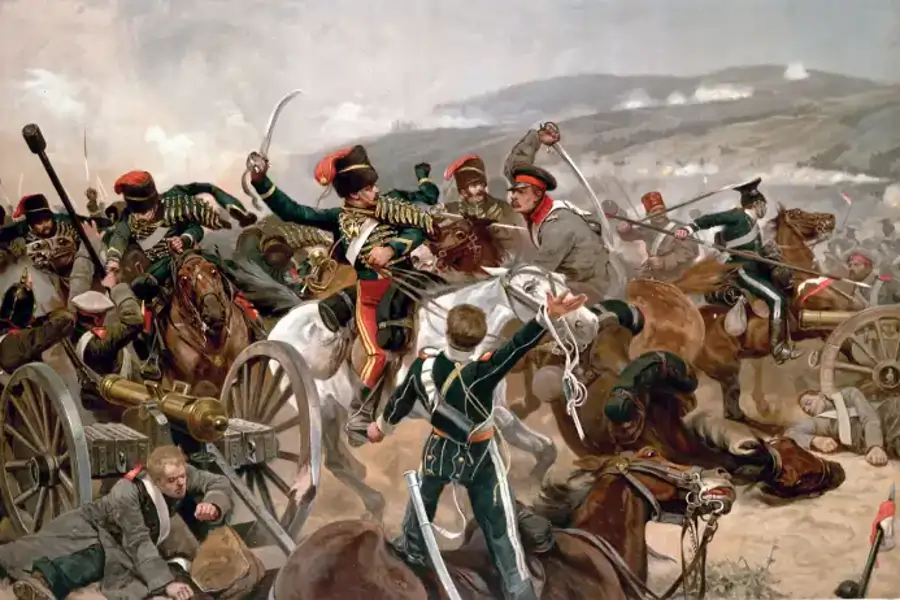
The Charge of the Light Brigade remains one of the most tragic military blunders in history. It occurred during the Battle of Balaclava on 25 October 1854 during the Crimean War. The clash happened when the British light cavalry, commanded by James Brudenell, 7th Earl of Cardigan, was originally ordered to stop Russian Empire forces from removing captured artillery from abandoned Ottoman positions.
However, due to a critical miscommunication in the chain of command, the order was misunderstood. Instead of attacking a vulnerable target, the light cavalry was directed to charge straight down a valley heavily defended by Russian artillery positioned on three sides.
No man questioned the order. No man deserted his fate. Around 670 British cavalrymen rode directly into what later became known as the "Valley of Death". As they advanced, Russian cannons and guns unleashed devastating fire from all three sides.
Despite the overwhelming danger, the Light Brigade pressed forward and actually reached the Russian artillery positions. The Ottoman troops manning the guns were so shocked by this mad charge that they initially retreated in fear. But without infantry or artillery support, the cavalry had no choice but to retreat back through the cannon fire again.
The charge resulted in heavy British casualties and no strategic gain, making it one of the most costly mistakes of the war. Yet the courage of the soldiers became legendary, later immortalized in the famous poem The Charge of the Light Brigade by Alfred, Lord Tennyson. Today, the charge is remembered as a powerful example of extraordinary bravery in the face of a disastrous command decision.
6. The Battle of Los Angeles (1942)
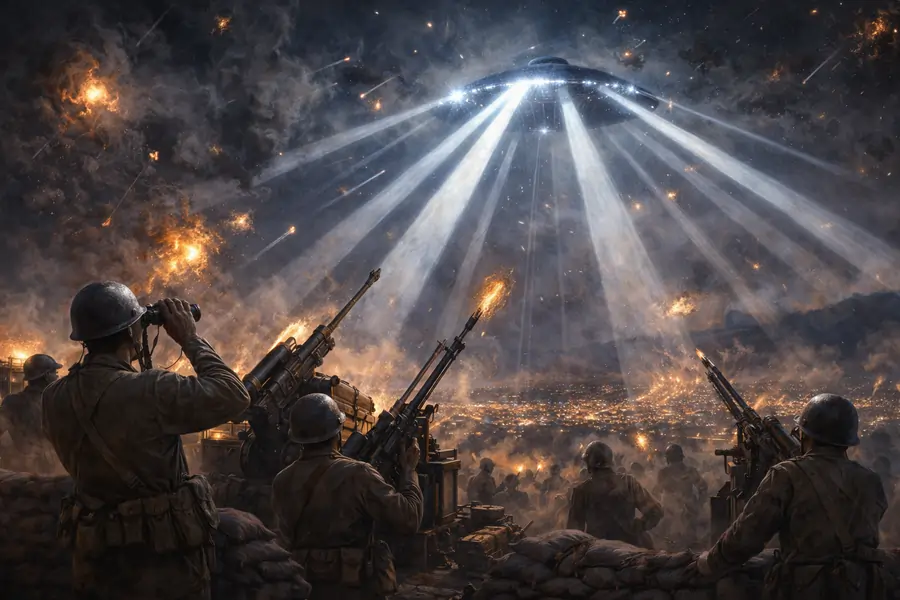
Another strange incident happened on the night of 24-25 February 1942 during World War II. This incident became known as the Battle of Los Angeles or the Great Los Angeles Air Raid. Just weeks after the Attack on Pearl Harbor, American forces were on high alert for a possible Japanese attack on the U.S. mainland. In such a tense moment, radar contacts and visual reports suggested that around 25 unidentified aircraft were approaching Los Angeles.
Air raid sirens blasted across the city, and a complete blackout was ordered. The city was bracing for the eventual bombardment from the skies. The 37th Coast Artillery Brigade began firing anti-aircraft shells into the night sky in the hope of defending the city from the incoming threat. Over the next several hours, American defenses fired around 1,400 shells at the mysterious objects.
Residents watched as searchlights swept across the sky and explosions filled the air. Although no enemy aircraft were confirmed, falling shrapnel from the anti-aircraft shells caused damage across the city. Five civilian deaths were reported, including two people who suffered fatal heart attacks during the intense bombardment.
The following day, officials announced that the incident had likely been a false alarm, possibly triggered by weather balloons or stray flares. However, the dramatic photographs of searchlights converging on unidentified objects fueled speculation for decades. Because of the mystery surrounding the event, the Battle of Los Angeles is sometimes cited in UFO folklore, though historians generally consider it a wartime panic.
7. The Christmas Truce of 1914
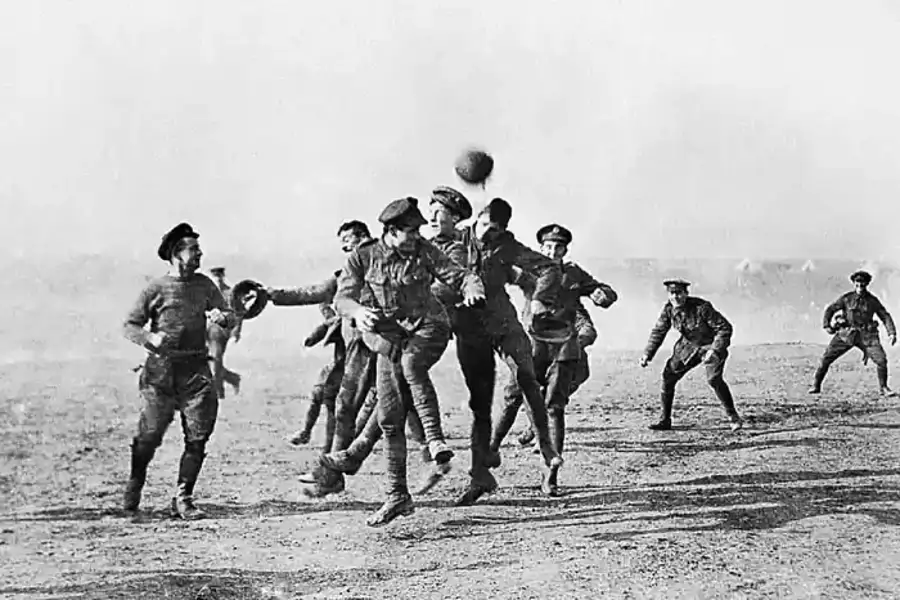
One of the most remarkable moments of World War I occurred during the Christmas of 1914 along the Western Front. The whole world was wrapped in a brutal conflict, and the mood was grim. Earlier that month, Pope Benedict XV proposed a temporary ceasefire for Christmasto provide much-needed respite for the soldiers. But the idea was rejected by all the countries. This, however, did not stop the soldiers from creating an unofficial truce on 25 December 1914.
German troops began the event by climbing out of their trenches and calling out "Merry Christmas" to nearby British and Allied soldiers. At first, the Allied troops were cautious, but when they saw that the Germans were unarmed, they slowly emerged from their trenches as well.
Soon, the battlefield transformed into an extraordinary scene. Soldiers from both sides met in no man's land, shook hands, and exchanged small gifts such as cigarettes, food, and souvenirs. They even sang Christmas carols together across the trenches. For a small moment, the anger and pain of war seemed to disappear, even if just for a moment.
In some sectors, soldiers organized informal football matches, while others used the temporary peace to retrieve and bury the bodies of fallen comrades. The truce lasted only briefly, and the war soon resumed. The men no longer had the resolve to pull the trigger anymore, but they were eventually forced to continue the bloodshed. The Christmas Truce of 1914 remains a powerful reminder that even in the middle of a brutal war, humanity and compassion could still prevail among ordinary soldiers.
8. The Anglo-Zanzibar War (1896)
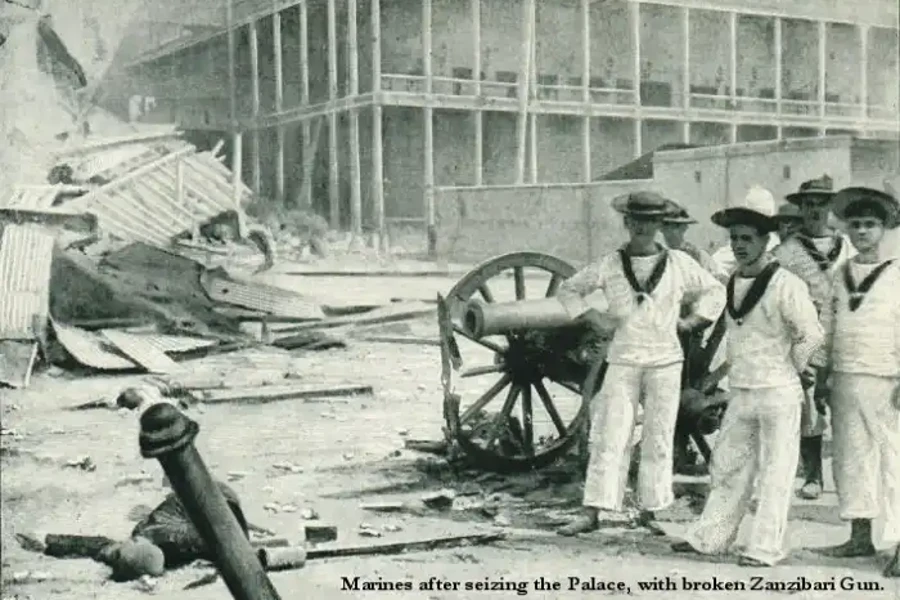
Another example of how technology can impact the outcome of a war. The Anglo-Zanzibar War is widely known as the shortest war in recorded history, lasting only about 40 minutes on 27 August 1896.
The conflict took place between the United Kingdom and the Zanzibar Sultanate after the death of the pro-British Sultan Hamad bin Thuwaini. His successor, Khalid bin Barghash, seized the throne without British approval, which angered the British.
When Khalid refused to step down, British forces launched a military invasion. They deployed about 150 sailors and marines, supported by 900 Zanzibari troops loyal to Britain, along with three cruisers and two gunboats positioned in the harbor.
Khalid's forces had roughly 2,800 soldiers, along with artillery, machine guns, and the royal yacht HHS Glasgow. However, when the British fleet began bombarding the Beit al-Hukm Palace, the palace quickly caught fire, and the defending artillery crews were thrown into chaos.
British naval gunfire also destroyed the HHS Glasgow, effectively ending the resistance. After just 40 minutes of fighting, Khalid fled, and the war was over. Despite the brief battle, the Zanzibar forces suffered hundreds of casualties, while the British reported only one injured sailor. The conflict remains one of history's most unusual wars—a full-scale war that ended in less than an hour.
9. The "Bathroom Break" That Sparked a War (1937)
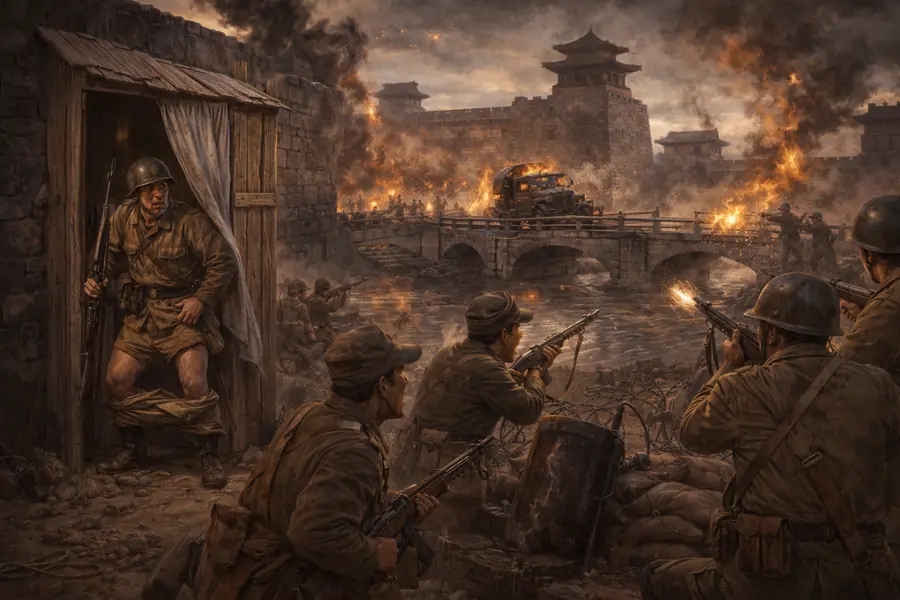
One of the most unusual triggers for a major conflict occurred during the Marco Polo Bridge Incident on 7 July 1937. This event eventually ignited the Second Sino-Japanese War between Japan and China.
That night, Japanese troops were conducting training exercises near the Marco Polo Bridge. During the exercise, a Japanese soldier (Private Kikujiro) briefly went missing for a while. Fearing that he had been captured by Chinese forces, Japanese commanders demanded permission to search the nearby Chinese-controlled town.
Tensions escalated rapidly when Chinese forces refused entry to the Japanese. Shots were fired soon afterward, and both sides mobilized their troops. Ironically, the "missing" soldier eventually returned to camp unharmed—he had simply stepped away to relieve himself. By then, however, the situation had already spiraled out of control.
The clash at Marco Polo Bridge quickly escalated into a full-scale war between China and Japan. Although the tension between the two nations was already at its peak, this incident helped spark the conflict. The Second Sino-Japanese War later merged into the wider World War II, making this small incident one of the most consequential military escalations in modern history.
10. The War of the Stray Dog (1925)
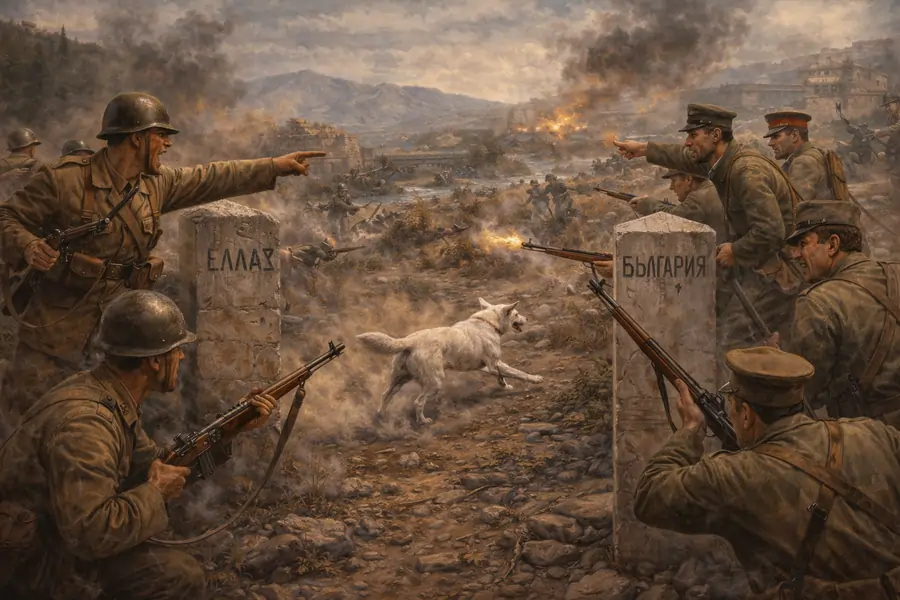
One of the strangest border conflicts in modern history is the Incident at Petrich, often nicknamed the "War of the Stray Dog." It took place in 1925 during a tense period between Greece and Bulgaria.
The incident began when a Greek soldier chased his runaway dog across the border into Bulgarian territory. Bulgarian border guards shot and killed the soldier after he crossed the frontier. Outraged by the killing, Greece demanded compensation and an apology. When Bulgaria refused, Greek forces launched a military incursion toward the town of Petrich.
The Bulgarians resisted the advance with local militias and managed to hold out until international pressure forced both sides to halt the fighting. The conflict ended only after the League of Nations intervened.
Around 50 people were killed before the ceasefire took effect. In a surprising outcome, the League of Nations ruled against Greece and ordered it to pay Bulgaria about $45,000 in compensation. The bizarre chain of events turned a runaway dog into the trigger for a military conflict, making the War of the Stray Dog one of history's most unusual causes of war.
Frequently Asked Questions
What are the strangest military encounters in history?
The list on this page ranks ten of the strangest military encounters – from the Great Emu War and the bizarre Anglo-Zanzibar War to the surreal Christmas Truce of 1914 and the unlikely Battle of Castle Itter. Each entry represents a weird war or unusual battle where real armed forces clashed under almost unbelievable circumstances.
Which wars are considered the weird wars in history and how are they ranked?
Strange or weird wars in history include the Great Emu War (Australia vs. emus), the Anglo-Zanzibar War (40‑minute conflict), the War of the Oaken Bucket (fought over a bucket), and the War of the Stray Dog (sparked by a lost pet). This article ranks them from most to least bizarre, following the same numbered format used in our 'top 10 decisive battles' pages.
Why is the Great Emu War listed among bizarre battles in history?
The Great Emu War of 1932 is often cited as one of the strangest military encounters because soldiers armed with Lewis machine guns failed to defeat a flock of flightless birds. Farmers and the government deployed troops, yet the emus largely won, making it a classic example of a bizarre and unusual war.
What happened during the Anglo-Zanzibar War?
Fought on August 27, 1896, the Anglo-Zanzibar War lasted only about 40 minutes, making it the shortest recorded war. It began when Zanzibar's sultan refused to step down for a British‑approved successor. British naval ships bombarded the palace, ending the conflict with minimal British casualties and hundreds of Zanzibari losses.
Can you explain the Christmas Truce of 1914?
During the First World War, soldiers from both sides spontaneously ceased fighting on Christmas Day 1914. They met in no man's land, exchanged gifts, sang carols, even played football. The informal peace lasted only a day but stands out as one of the most human moments in a brutal conflict.
What was the Battle of Castle Itter and why is it unique?
The Battle of Castle Itter (May 5, 1945) saw American and anti‑Nazi German soldiers team up to defend French prisoners from the SS. It's the only known instance during WWII where U.S. and German troops fought together, making it one of the most unusual battles in military history.
What triggered the War of the Stray Dog and what was its outcome?
The War of the Stray Dog began in 1925 after a Greek soldier chased his runaway dog across the Bulgarian border and was shot. The resulting skirmish saw about 50 casualties before the League of Nations intervened and ordered Greece to pay compensation. It remains one of the most unusual wars ever fought.