Explore the fascinating world of mythology from ancient civilizations across the globe. Discover the gods, goddesses, heroes, and legendary creatures that shaped human culture and imagination. Our collection covers Egyptian, Greek, Roman, Norse, Hindu, and many other mythological traditions.
Articles in This Category
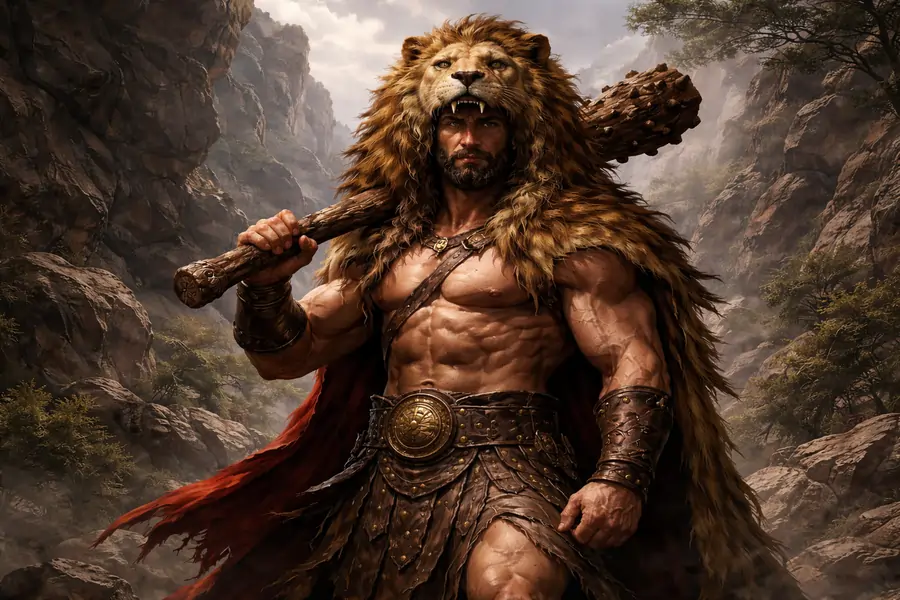
Hercules and the Twelve Labors Explained: The Complete Myth of Greece's Greatest Hero
Discover the complete story of Hercules—from Hera's hatred and divine madness to the Twelve Labors, redemption, and immortality in Greek mythology.
Read Article →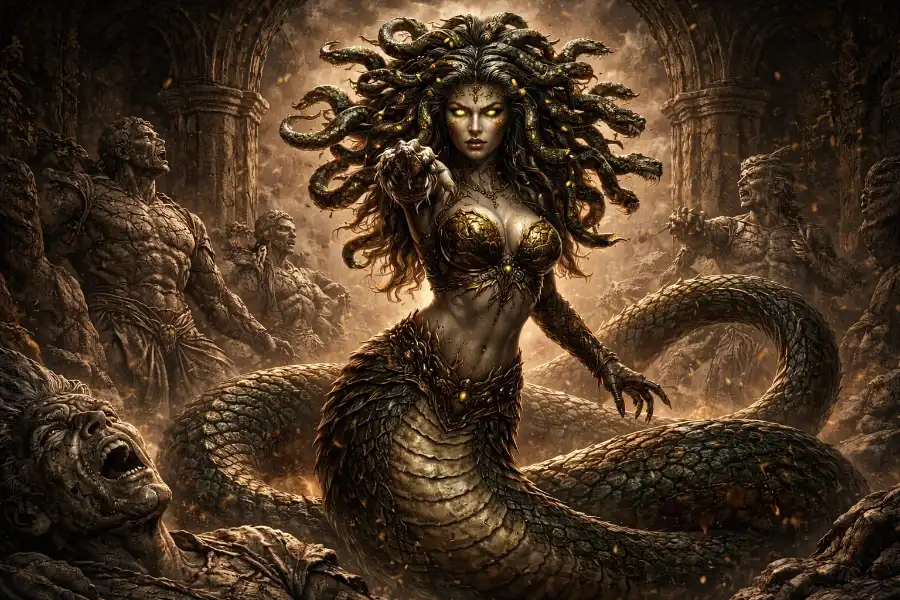
Medusa's Tragic Story: The Gorgon's Curse in Greek Mythology
Discover the tragic story of Medusa—from a beautiful priestess to a cursed Gorgon—her punishment, death by Perseus, and modern symbolism in Greek myth...
Read Article →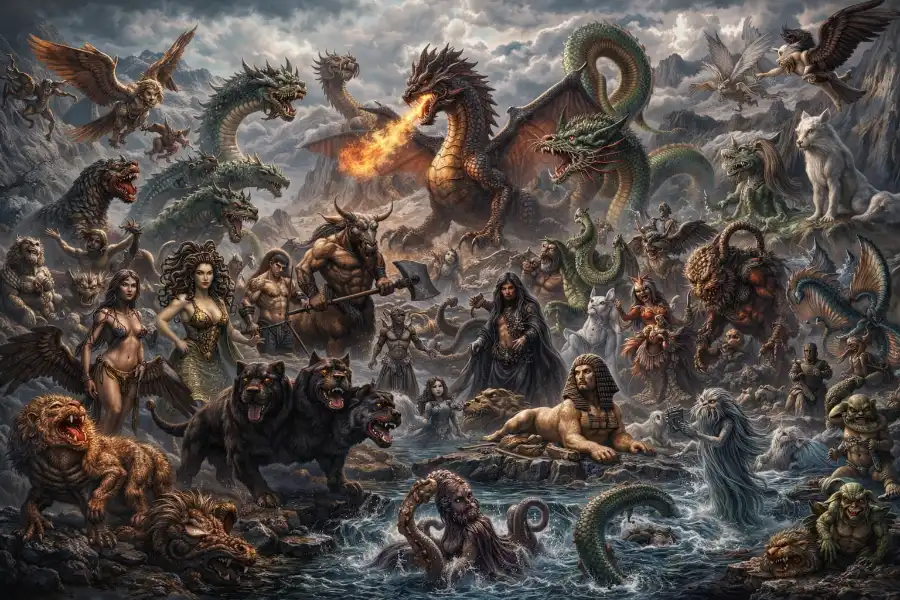
20 Terrifying Mythological Creatures That Still Haunt Our Nightmares (Ranked by Fear Factor)
Explore the 20 most dangerous mythological creatures and monsters from Greek, Norse, Japanese, and Celtic folklore—their origins, powers, and legends.
Read Article →
Scary Christmas Creatures: Krampus, Grýla & Dark Christmas Legends
Discover scary christmas creatures from mythology—Krampus folklore, Grýla iceland folklore, Yule Cat mythology, and other christmas demons that punish...
Read Article →Long before history was written down, humans told stories. They told them around fires, in temples, on long journeys, and across generations. These stories explained what people feared, what they worshipped, what they hoped for, and what they could not yet understand. Over time, those stories became myths—and myths became the foundation of cultures, religions, and civilizations.
This section of Myth and Memory is dedicated to mythology in all its forms: heroic legends, terrifying creatures, divine punishments, and symbolic tales that blur the line between imagination and belief. Mythology is not simply about gods and monsters. It is about how ancient people made sense of the world—and, in many ways, how we still do.
More Than Stories of Gods
It's easy to think of mythology as fantasy—colorful tales of immortal beings performing impossible feats. But for the people who told them, these stories were not entertainment. They were explanations, warnings, and moral frameworks. Myths answered questions like:
- Why does the world work the way it does?
- Why do humans suffer?
- What happens after death?
- What does it mean to be heroic—or monstrous?
Through myth, ancient societies explored ideas of justice, fate, pride, sacrifice, and chaos. Even today, many of these themes remain instantly recognizable because they reflect universal human experiences.
Heroes and the Burden of Greatness
One of the most enduring elements of mythology is the hero. Mythological heroes are rarely perfect. They are strong, clever, or divinely favored—but also flawed, emotional, and often tragic. Their journeys reflect the struggle between human limitations and extraordinary expectations.
The story of Hercules and his Twelve Labors is a powerful example. His feats are legendary—slaying beasts, capturing monsters, defying death itself—but beneath the spectacle lies a story of guilt, punishment, endurance, and redemption.
Through such heroes, mythology explores questions that still resonate:
- Can strength make up for moral failure?
- Is redemption earned through suffering?
- How much can one individual endure before breaking?
These stories endure because they speak not to gods, but to humans trying to rise above their circumstances.
Mythological Creatures: Fear Given Form
Every culture creates monsters. Some lurk in forests. Others guard the underworld. Some punish the arrogant, while others exist as symbols of chaos and the unknown. Mythological creatures are rarely random—they are shaped by the fears and environments of the cultures that imagined them.
Dragons, giants, demons, hybrids, and spirits often represent:
- Natural disasters
- Death and disease
- Moral transgression
- The boundary between civilization and wilderness
By giving fear a face, ancient societies made the unknown manageable. A named monster is less terrifying than a nameless one. Our explorations of top mythological creatures focus not just on what they looked like—but what they meant. Why did people believe in them? What role did they play in reinforcing social rules, religious beliefs, or survival instincts?
Dark Myths and Seasonal Terrors
Not all myths are heroic or hopeful. Some are deliberately frightening—designed to warn, discipline, or explain darker aspects of human behavior. Across cultures, mythology often blends with seasonal traditions, creating figures meant to instill fear during particular times of the year.
Scary Christmas monsters, for example, are not simply folklore curiosities. They reflect deep-rooted ideas about judgment, reward, punishment, and moral behavior—especially toward children and communities. These myths remind us that mythology is not always comforting. Sometimes it exists to enforce order, confront fear, or acknowledge the darker side of human nature.
Myth as Cultural Memory
One of the most fascinating aspects of mythology is how it preserves memory. Long before written records, myths carried fragments of real events:
- Natural disasters remembered as divine punishment
- Wars retold as battles between gods
- Ancient rulers transformed into demigods
Over generations, memory blends with symbolism. Facts are reshaped to fit meaning. What survives is not always historically accurate—but it is emotionally true to the culture that preserved it. At Myth and Memory, we approach mythology with this perspective: not asking whether a myth is "true" or "false," but why it mattered and why it endured.
Shared Themes Across Cultures
One of the most striking aspects of mythology is how similar stories appear across unrelated cultures. Flood myths. Trickster figures. Heroic journeys. Divine punishment for arrogance. Monsters guarding forbidden knowledge.
These shared themes suggest that mythology arises from common human concerns:
- Survival
- Power
- Morality
- Fear of the unknown
- Desire for meaning
By studying myths from different cultures side by side, we gain insight into what unites humanity across time and geography.