Hercules was not born a hero—he was forged through suffering. Hated by the gods, driven mad by divine cruelty, and burdened with unbearable guilt, he was forced to atone through twelve impossible labors that tested not just his strength, but his soul. These labors transformed Hercules from a broken mortal into the greatest hero of Greek mythology and, ultimately, an immortal god.
Table of Contents
- Why the Twelve Labors Still Fascinate the World
- Who Was Hercules
- Why Hera Hated Hercules
- Hercules' Childhood and Early Strength
- The Tragedy: Madness and Murder
- The Twelve Labors
- Labor 1: Nemean Lion
- Labor 2: Lernaean Hydra
- Labor 3: Ceryneian Hind
- Labor 4: Erymanthian Boar
- Labor 5: Augean Stables
- Labor 6: Stymphalian Birds
- Labor 7: Cretan Bull
- Labor 8: Mares of Diomedes
- Labor 9: Girdle of Hippolyta
- Labor 10: Cattle of Geryon
- Labor 11: Golden Apples
- Labor 12: Cerberus
- Disqualified Labors
- Completion of the Labors
- Death and Apotheosis
- The Meaning of the Twelve Labors
Why the Twelve Labors of Hercules Still Fascinate the World?
Among all figures of ancient mythology, Hercules (known to the Greeks as Heracles) stands alone as the ultimate symbol of enduring heroic struggle. His life was not a straight path to glory but a brutal journey shaped by divine jealousy, human weakness, madness, and redemption. The Twelve Labors of Hercules are not merely adventures involving monsters—they represent spiritual trials, moral purification, and the transformation of a flawed mortal into an immortal god.
Unlike many heroes who succeed through cleverness alone, Hercules suffers deeply. He fails. He commits unforgivable acts. And yet, through endurance and penance, he becomes worthy of Olympus itself. Let us explore the legend of Hercules as he overcomes his hardships and achieves immortality.
Who Was Hercules? Origins of the Greatest Hero in Greek Mythology
Hercules was the divine son of Zeus, ruler of the Olympian gods, and Alcmene, a mortal woman famed for her virtue. Zeus, unable to resist Alcmene, disguised himself as her husband Amphitryon and conceived a child with her. This act of deception would unleash consequences that shaped Hercules' entire life.
From birth, Hercules embodied contradiction: divine strength bound to mortal suffering. Though he possessed godlike power, he lacked divine protection from fate, pain, or madness. This duality made him unique among heroes—and deeply vulnerable.
Why Hera Hated Hercules: Divine Jealousy and Eternal Persecution
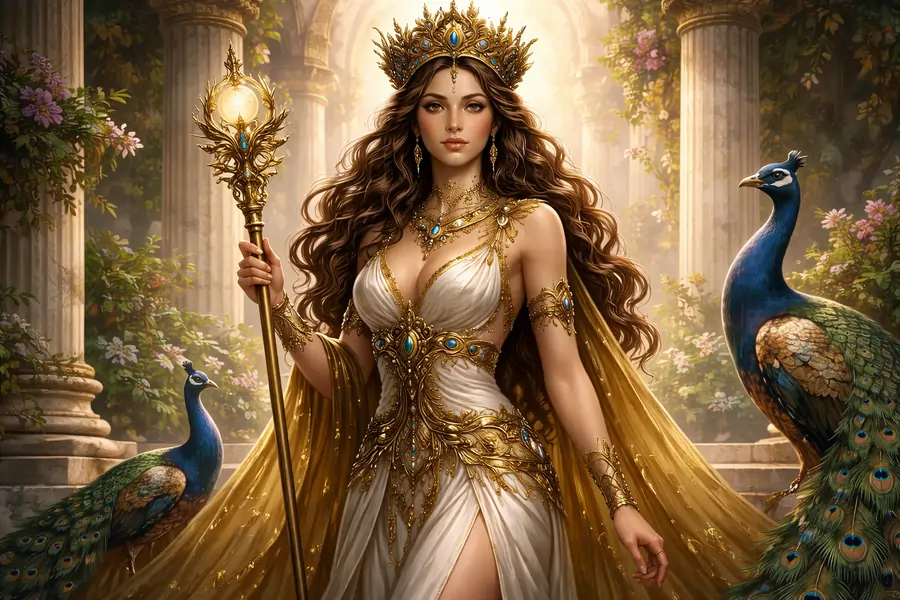
The greatest enemy of Hercules was not a monster but Hera, queen of the gods. Hera's hatred of Hercules was absolute and lifelong—not because of anything he did, but because he was living proof of Zeus's infidelity.
Hera could not punish Zeus directly, so she punished his son instead. Her cruelty was calculated: she did not seek a swift death for Hercules but a life filled with humiliation, suffering, and loss. From delaying his birth to manipulating kings and sending madness into his mind, Hera's influence looms over every major tragedy in Hercules' story.
Hercules' Childhood and Early Signs of Superhuman Strength
While Hercules was still in Alcmene's womb, Zeus made a fateful proclamation before the gods. He boasted that:
"The next child born of the house of Perseus shall rule Mycenae."
Hercules was a descendant of Perseus through Alcmene. Zeus fully intended this prophecy to apply to his unborn son, granting Hercules kingship and power from birth. But Zeus made one crucial mistake. He spoke too soon—and within earshot of Hera. Hera rushed to Thebes, where Alcmene was in labor, and summoned Eileithyia, the divine overseer of birth. Eileithyia sat before Alcmene's chamber with her legs crossed and her fingers interlocked. This ritual posture magically prevented childbirth.
Alcmene suffered for days in agonizing labor, unable to give birth no matter how strong her body or will. While Alcmene was trapped in endless labor, Hera acted swiftly elsewhere. She caused Eurystheus, another descendant of Perseus, to be born prematurely. Though weak and premature, Eurystheus was born first. The prophecy was fulfilled—technically. Zeus could not undo his own oath.
Even as an infant, Hercules demonstrated extraordinary power. Hera sent two serpents to kill him in his cradle, yet the baby Hercules strangled them effortlessly. This moment revealed his destiny but also sealed Hera's resolve to destroy him.
As he grew, Hercules trained under the finest teachers in Greece, mastering combat, athletics, and music. Yet his strength came with volatility. He was prone to uncontrollable rage—a fatal flaw that would later bring catastrophic consequences.
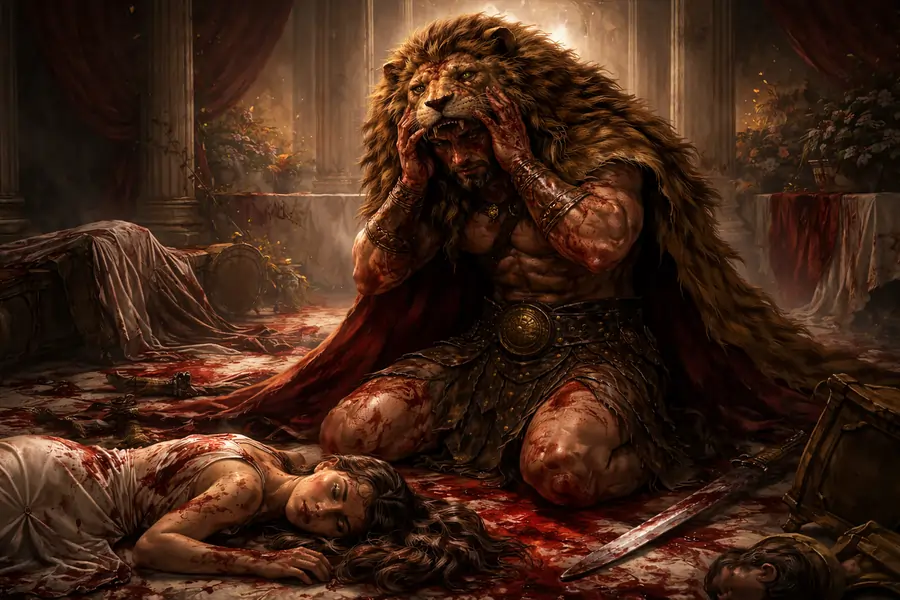
The Tragedy of Hercules: Madness and the Murder of His Family
At the height of his mortal happiness, Hercules married Princess Megara and fathered several children. For a brief time, he lived as a respected hero, husband, and father. Hera, however, could not allow such peace. She struck Hercules with divine madness.
In a horrific hallucination, Hercules believed his family were enemies. In his frenzy, he slaughtered his wife and children with his own hands. When the madness lifted, he stood amid the bodies of those he loved most. This moment is the darkest chapter in Greek mythology—a hero broken not by weakness, but by divine cruelty.
The Oracle of Delphi and the Path to Redemption
Consumed by guilt and grief, Hercules sought guidance from the Oracle of Delphi, sacred to Apollo. The oracle delivered a harsh command: Hercules must serve King Eurystheus for twelve years and perform ten labors as punishment and purification.
Eurystheus, a weak and cowardly ruler elevated by Hera's manipulation, designed the labors not to redeem Hercules—but to humiliate and destroy him. Hercules accepted without resistance. His journey toward redemption had begun.
The Twelve Labors of Hercules - Complete and Detailed Explanation
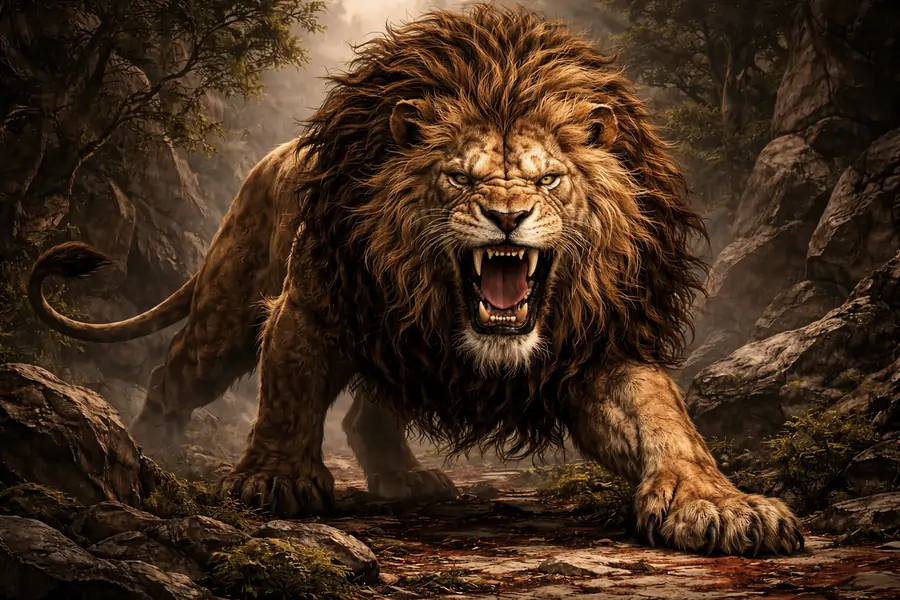
Labor 1: Slaying the Nemean Lion - Confronting Invincible Violence
The first labor required Hercules to kill the Nemean Lion, a monstrous beast terrorizing the countryside. The Nemean Lion was said to dwell in caves near Nemea, using multiple entrances to ambush prey. It was not only invincible but also intelligent, retreating into confined spaces where its power was greatest.
The lion's golden hide was impervious to all weapons—swords shattered, arrows bounced harmlessly away. This moment is critical. For the first time, Hercules faced a problem his strength alone could not solve. The labor forces him to adapt, think, and fight on the monster's terms.
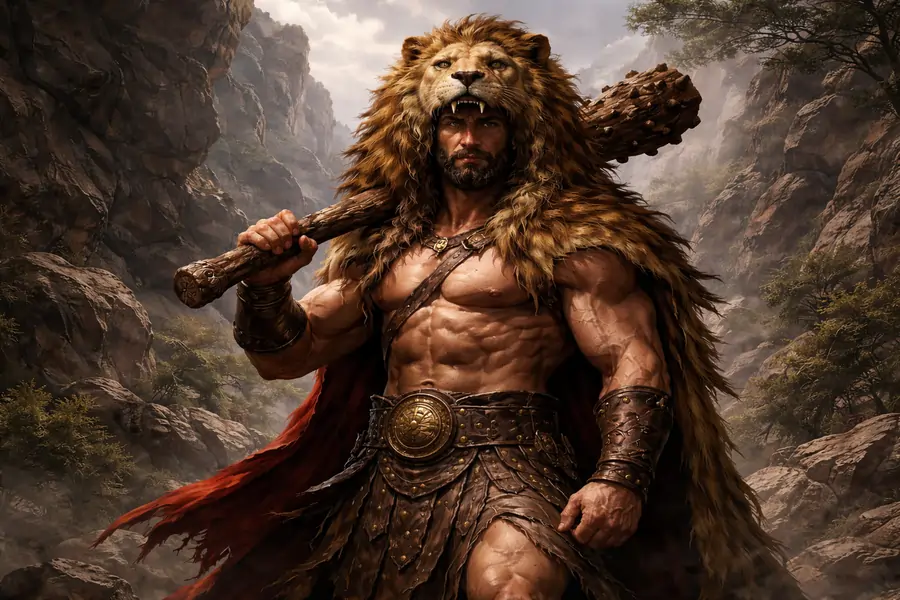
Realizing brute force alone would not suffice, Hercules trapped the lion in a narrow cave and engaged it in hand-to-hand combat. Using his immense strength, he strangled the beast to death. Unable to skin it with ordinary tools, he used the lion's own claws to remove its hide. The lion skin which he wore as a cloak becomes his iconic symbol. When Hercules returned carrying the lion's body, Eurystheus was terrified. Some myths say the king hid in a large bronze jar.
Symbolism: This labor represents mastering raw violence with discipline. Hercules learned that strength must be controlled, not recklessly applied.
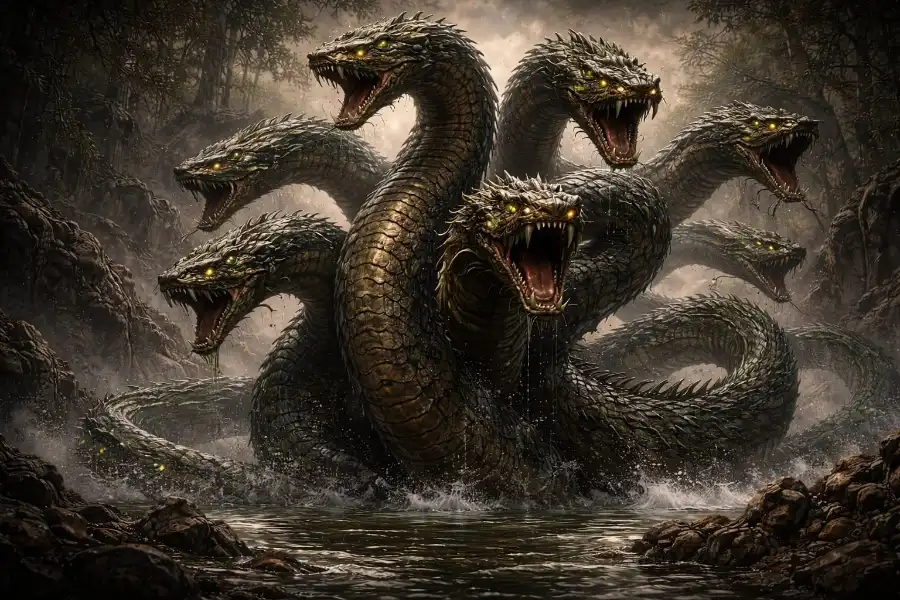
Labor 2: The Lernaean Hydra - The Monster That Multiplied
Hercules was ordered by Eurystheus to travel to the swamp of Lerna and destroy the Hydra, a monstrous serpent that plagued the countryside. The Hydra dwelled in the swamps of Lerna, a poisonous creature with multiple serpent heads. Each time Hercules severed a head, two more grew in its place. Worse still, one head was immortal. As Hercules struggled, Hera sent a giant crab to distract him—proof that the gods actively worked against his success.
Realizing he could not win alone, Hercules called upon his nephew Iolaus. Together, they devised a solution: for every head Hercules cut off, Iolaus cauterized the wound with fire, preventing regeneration. The immortal head was buried beneath a massive stone. Hercules then dipped his arrows in the Hydra's poisonous blood, making them deadly for future labors. Eurystheus later disqualified this labor because Hercules received help—an important detail explaining why the labors increased to twelve.

Labor 3: Capturing the Ceryneian Hind - Mastery Through Restraint
The Ceryneian Hind was no monster - it was a sacred animal belonging to Artemis. With golden antlers and bronze hooves, it could outrun arrows and never tired. Hercules was forbidden to harm it. He pursued it for an entire year across Greece, demonstrating patience and restraint rather than violence.
When he finally captured it, Hercules carefully explained his divine mission to Artemis, who allowed him to proceed - on the condition it be returned unharmed. When Hercules presented the Hind to Eurystheus, the king wanted to keep it but as Hercules let it down, the Hind sprang away into the wilderness.
Symbolism: True heroism requires respect for divine law, not just strength.
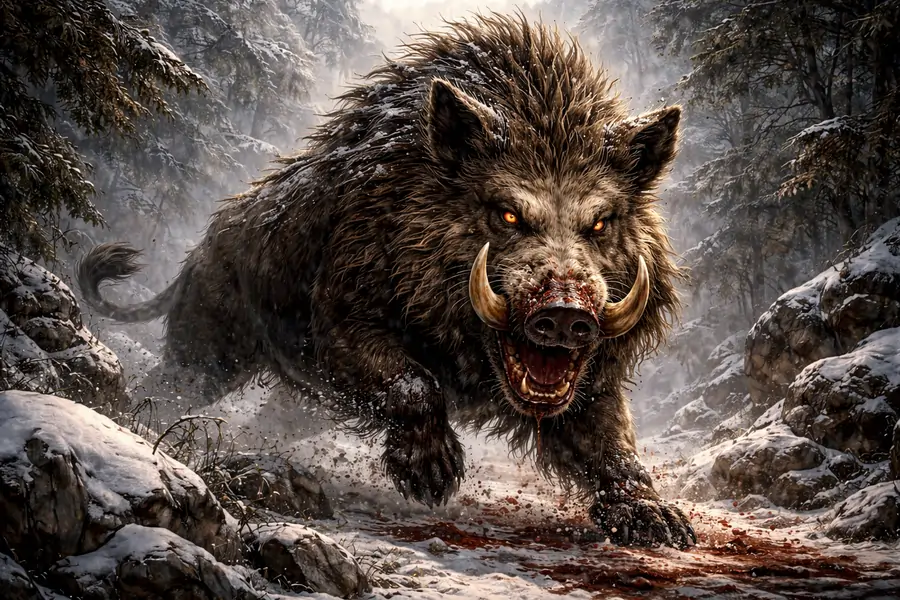
Labor 4: Capturing the Erymanthian Boar - Overcoming Chaos with Endurance
The Erymanthian Boar was a massive, savage beast that devastated villages and farmland. Unlike the lion, it relied on sheer ferocity rather than invincibility. Hercules pursued the boar into the mountains during winter. By driving it into deep snow, he exhausted the animal until it collapsed. He then bound it alive and carried it back.
When Eurystheus saw the boar, he was so terrified that he hid in a chest and ordered Hercules to return it to the wilds. This labor proved Hercules' strategy of endurance and cleverness over brute force.
Labor 5: The Augean Stables - Intelligence Over Strength
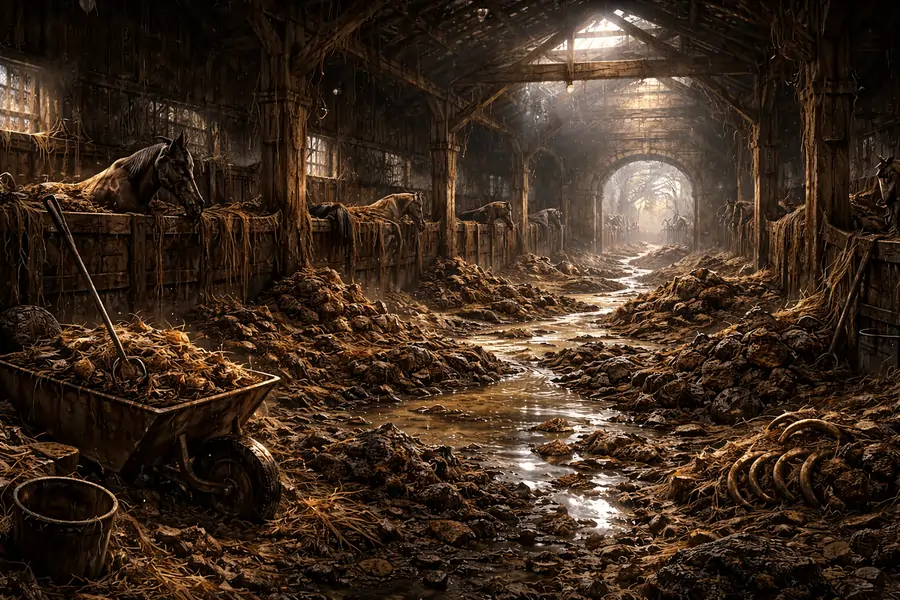
The Fifth Labor of Hercules is one of the most misunderstood—and most intellectually impressive—of all his tasks. Unlike the earlier labors, this one was not about killing a monster or overpowering a beast. Instead, it was designed to humiliate Hercules, reduce him to a common laborer, and test whether brute strength alone could solve every problem.
RThese stables belonged to King Augeas, ruler of Elis, who possessed enormous herds of cattle, sheep, and horses. The problem was not simply that the stables were dirty—but that they had not been cleaned for decades. Eurystheus thought that the proud son of Zeus would give up rather than do such a humiliating task.
When Hercules arrived in Elis, he approached King Augeas and offered to clean the stables in a single day—on one condition: if he succeeded, Augeas would reward him with a portion of his cattle. Augeas laughed. Confident that the task was impossible, the king agreed. This moment is important, because it later becomes the reason Eurystheus refuses to accept the labor as valid.
Rather than attempting to shovel mountains of filth by hand, Hercules used intelligence and engineering. Hercules examined the land around the stables and noticed that two powerful rivers—the Alpheus and the Peneus—flowed nearby. He dug up a canal to route the flow of the rivers through the stables. By sunset, the stables were completely clean—something no human workforce could have achieved in years. Once the stables were clean, Hercules diverted the flow of the rivers back to their original path.
When Augeas later refused to honor the promised reward, Hercules returned years later, defeated him, and installed Augeas' son on the throne. This act reinforced a recurring theme in Hercules' life: those who exploit him ultimately face consequences.
Labor 6: The Stymphalian Birds - Conquering Terror from the Sky
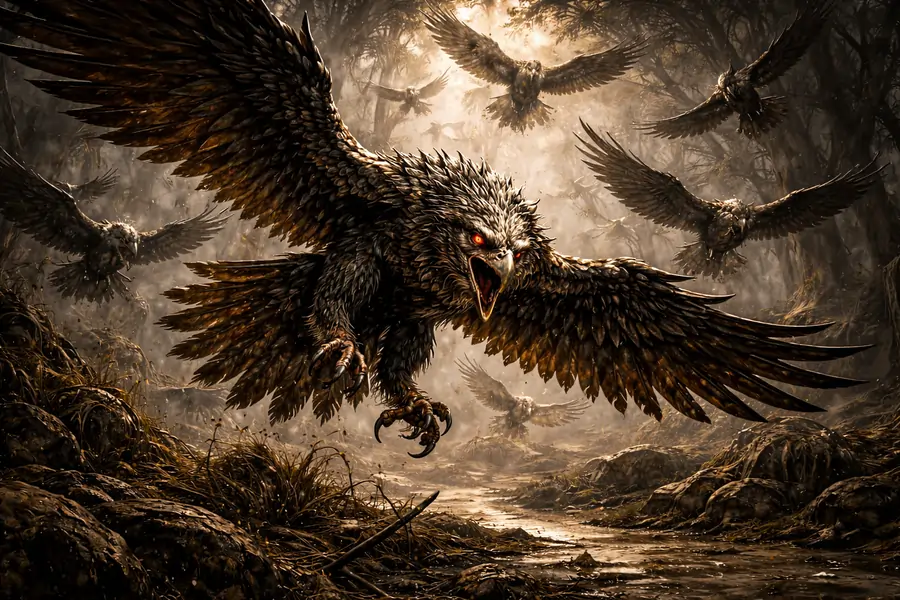
Hercules was ordered by Eurystheus to rid the region around Lake Stymphalus in Arcadia of the Stymphalian Birds. These birds possessed bronze feathers they could launch like arrows and fed on human flesh. The swamp they inhabited made direct combat impossible.
Recognizing the difficulty of the task, Athena intervened—not to fight for Hercules, but to provide him with a solution. Athena gave Hercules a set of bronze castanets (or a rattle) forged by Hephaestus. When shaken, they produced a terrifying metallic sound.
Hercules climbed to a high vantage point overlooking Lake Stymphalus and began shaking the bronze castanets. The piercing sound echoed across the swamp. Startled and terrified, the birds burst from their nests into the sky. This was exactly what Hercules needed. As the birds took flight, Hercules used his bow—many of his arrows still tipped with Hydra poison—to shoot them down.
Labor 7: The Cretan Bull - Subduing Divine Wrath
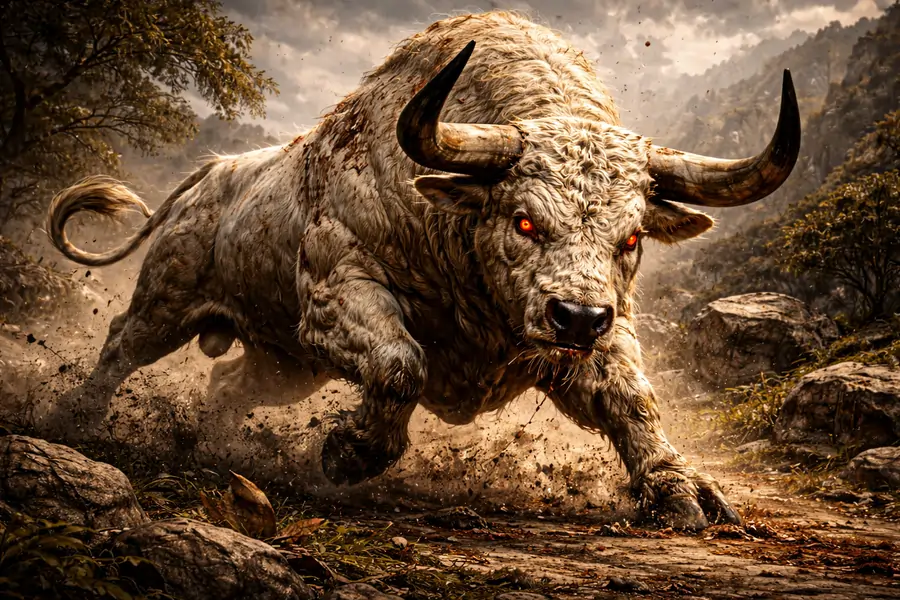
For his seventh task, Hercules was ordered by Eurystheus to travel to the island of Crete and capture the Cretan Bull, returning it alive to Mycenae. This bull was no ordinary animal. It was a creature sent by the gods and imbued with supernatural strength. By the time Hercules arrived, it had already devastated the countryside, destroying crops, flattening villages, and spreading terror across Crete.
The Cretan Bull was given by Poseidon to King Minos of Crete intended as a sacrifice offering to the Gods. Minos did not sacrifice the creature who admired its beauty. Angered by this disobedience, Poseidon cursed the bull, driving it mad and turning it into a force of destruction. In some versions, this same bull later fathered the Minotaur, linking Hercules' labor to one of the most famous myths of Crete.
The key difficulty of the Seventh Labor was that Hercules could not kill the bull. Killing it would risk offending Poseidon and invalidating the task. Hercules dodged the bull's charges, grabbed it by the horns and wrestled it to the ground after a prolonged struggle. Using sheer endurance, Hercules drained the bull of its strength. Once subdued, he bound it securely and prepared to transport it back to Mycenae.
When Hercules delivered the bull to Eurystheus, the king was once again terrified. Some versions say Eurystheus released the bull immediately, fearing to keep such a powerful creature nearby. After its release, the bull wandered Greece until it was eventually slain by Theseus—another example of how Hercules' labors connect different heroic cycles in Greek mythology.
Labor 8: The Mares of Diomedes - Cruelty Devours Itself
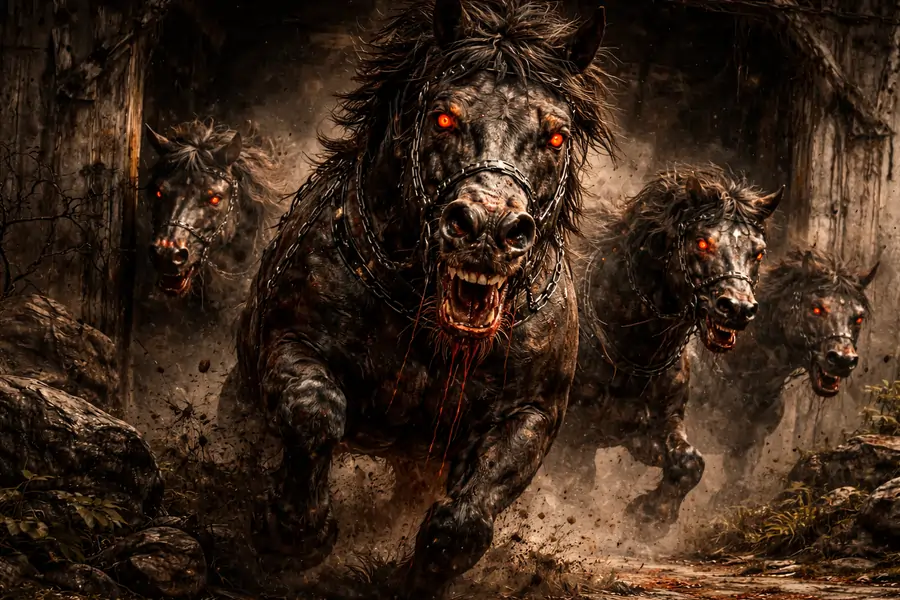
For his eighth task, Hercules was commanded by Eurystheus to travel to Thrace and deal with the Mares of Diomedes—four savage horses named Podargos, Lampon, Xanthos, and Deinos. The Eighth Labor of Hercules is one of the darkest and most morally charged of all his trials. Unlike earlier labors that focused on monsters or divine beasts, this task confronts human cruelty taken to monstrous extremes. Here, the villain is not a creature born of myth—but a king who has willingly embraced savagery.
Diomedes was a brutal king of Thrace and a son of Ares, the god of war. This lineage is crucial: Diomedes embodied war without honor, violence without restraint. Unlike monsters who act on instinct, Diomedes chose cruelty. His horses were not cursed by the gods—they were trained to kill.
When Hercules arrived in Thrace, he immediately recognized the danger. The land itself was hostile, ruled by fear and bloodshed. Diomedes did not hide his crimes—he boasted of them. Hercules attacked Diomedes directly. After a fierce struggle, Hercules overpowered the Thracian king.
Instead of killing him outright, Hercules made a symbolic and terrifying choice: He fed Diomedes to his own horses. Once the horses tasted the flesh of their master- their madness faded, their hunger was satisfied, they became calm and obedient. When Hercules returned with the mares, Eurystheus was once again struck with fear. The king accepted the labor as completed—he had no grounds to disqualify it.
Labor 9: The Girdle of Hippolyta - Deception and Tragedy
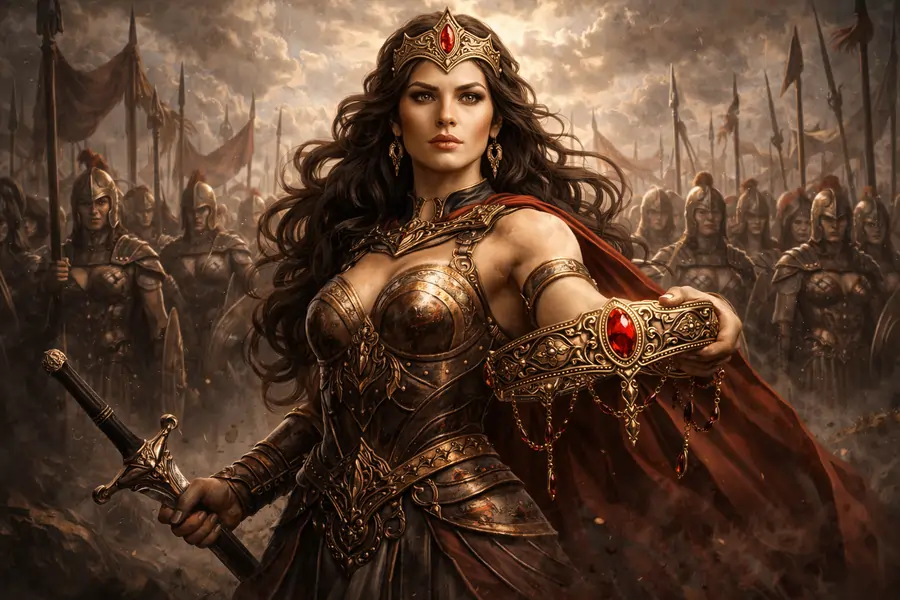
For his ninth task, Hercules was commanded by Eurystheus to obtain the girdle (belt) of Hippolyta, queen of the Amazons. The girdle was no ordinary ornament. It was:
- A symbol of Hippolyta's royal authority
- A sacred gift from Ares, her father in some traditions
- A representation of power, honor, and leadership among the Amazons
Unlike many of his previous labors, Hercules did not arrive as a conqueror. When he met Hippolyta, he explained his punishment and his task to retrieve the girdle. Hippolyta, impressed by Hercules' reputation and sincerity, agreed to give him the girdle willingly.
Seeing Hercules succeed peacefully, the jealous Hera intervened. Disguised as an Amazon, Hera spread rumors that Hercules intended to abduct Hippolyta. Fear spread quickly. Armed Amazons gathered, believing their queen was in danger.
When the Amazons attacked, Hercules believed he had been betrayed. Surrounded and under assault, he fought back. In the chaos, Hippolyta was killed and Hercules took the girdle by force. This is one of the most tragic outcomes of the labors—violence caused not by malice, but by misunderstanding and manipulation.
Labor 10: The Cattle of Geryon - Journey to the Edge of the World
For his tenth task, Eurystheus ordered Hercules to retrieve the red cattle of Geryon and bring them back to Mycenae. The Tenth Labor of Hercules is one of the grandest and most wide-ranging of all his trials. Unlike earlier labors that focused on a single monster or region, this task sent Hercules to the very edge of the known world, transforming him from a local hero into a mythic traveler and civilizing force.
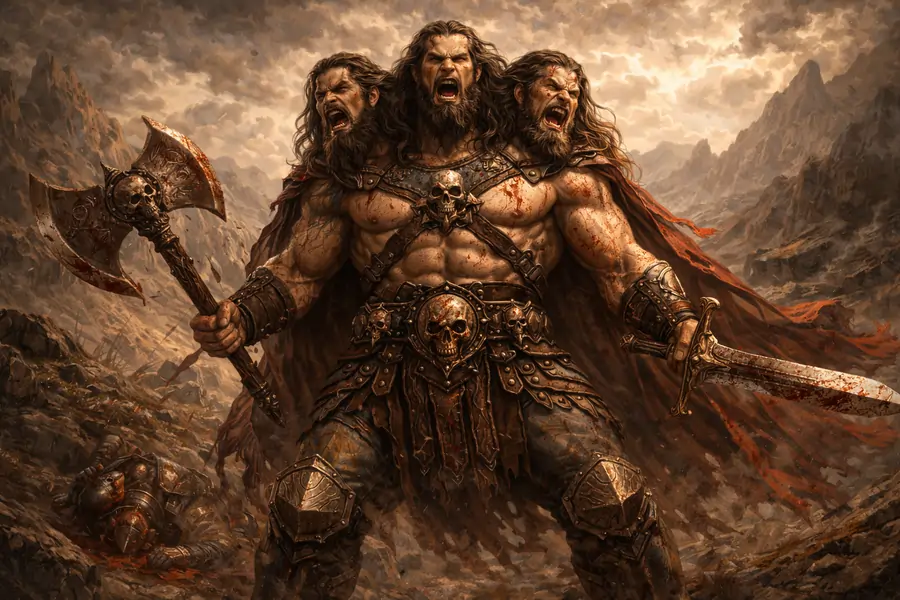
The cattle belonged to Geryon, a monstrous being who lived on the distant island of Erytheia, located in the far west—beyond the familiar Greek world, near the mythical boundary of the Ocean. Ancient sources describe Geryon as a giant with three bodies joined at the waist. He possessedimmense strength and divine lineage. His cattle was also protected by:
- Orthrus, a monstrous hound (brother of Cerberus)
- Eurytion, a powerful warrior
Hercules' journey west was itself a heroic saga. During his journey, Hercules marked the limits of the known world by erecting the Pillars of Hercules, traditionally identified with the Strait of Gibraltar. Upon reaching Erytheia, Hercules confronted the guardians one by one.
The two-headed dog Orthrus attacked first. Hercules killed it swiftly, demonstrating that even creatures akin to Cerberus could not stop him. Next came Eurytion, the herdsman. Hercules defeated him in combat, clearing the final obstacle before Geryon himself appeared. Geryon was unlike any enemy Hercules had faced. With three bodies acting in unison, he wielded overwhelming force. Hercules chose not to engage in wrestling combat. Instead, he used one of his most powerful tools—arrows dipped in the poisonous blood of the Hydra. With a single well-aimed shot, Hercules pierced Geryon, killing him despite his monstrous form.
With the cattle secured, Hercules began the long journey back to Greece—a trial almost as dangerous as stealing them. When Hercules finally returned to Mycenae, Eurystheus was astonished. The cattle—once symbols of unreachable wealth at the edge of the world—now stood before him. Eurystheus sacrificed the cattle to Hera, the very goddess who had orchestrated Hercules' suffering—a bitter irony that underscores the injustice of his punishment.
The disqualified labors: The Lernaean Hydra and Augean Stables
During the Second Labor, Hercules fought the Hydra—an enemy that multiplied when attacked. When the battle became impossible, Hercules accepted help from his nephew Iolaus. Iolaus cauterized the Hydra's necks to stop regeneration. Eurystheus seized upon this technicality and ruled:
The labor does not count because Hercules did not act alone.
In the Fifth Labor, Hercules cleaned the Augean Stables in a single day by diverting rivers—an extraordinary feat of intelligence. However, Hercules had made an agreement with King Augeas for payment if he succeeded. Eurystheus ruled:
The labor does not count because Hercules accepted payment.

Labor 11: The Golden Apples of the Hesperides - Outsmarting a Titan
For his eleventh task, Hercules was ordered by Eurystheus to retrieve the Golden Apples of the Hesperides. The Eleventh Labor of Hercules is one of the most intellectually rich and philosophically significant of all his trials. Unlike many earlier labors that demanded brute strength or combat, this task required wit, negotiation, patience, and deception. It also placed Hercules face to face with primordial forces that existed before the Olympian gods themselves.
These apples were sacred to Hera and given as a wedding gift to Hera from Gaia. The garden was guarded by:
- The Hesperides, nymphs tasked with protecting the apples
- The dragon Ladon, a multi-headed serpent that never slept
Unlike previous labors, Hercules did not even know where to begin. Eventually, Hercules reached the Titan Atlas, condemned to hold up the sky for eternity. Atlas was the father of the Hesperides.
Hercules asked Atlas for help in retrieving the apples. Atlas agreed, but only if Hercules would hold up the sky in his place while he fetched the apples. Hercules agreed, and Atlas went to retrieve the apples. Hercules—once a man crushed by guilt—now bore the weight of the heavens themselves.
When Atlas returned with the apples, he refused to resume his burden. He offered to deliver the apples himself—hoping to escape his punishment forever. Hercules pretended to agree. He asked Atlas to hold the sky just long enough for him to adjust his cloak. The moment Atlas took the sky back, Hercules picked up the apples and left. This act was not cruelty—it was necessary cunning.
Labor 12: Cerberus - Confronting Death Itself
For his final task, Eurystheus commanded Hercules to bring back Cerberus, the monstrous guardian of the Underworld. The Twelfth and final Labor of Hercules is the most terrifying, symbolic, and spiritually significant of all his trials. Unlike previous labors that took place in the mortal world, this task required Hercules to do what no living hero had ever done before—descend into the Underworld and return alive. This labor represents the ultimate boundary: death itself. By conquering it, Hercules completed his transformation from a guilt-ridden mortal into a figure worthy of immortality.
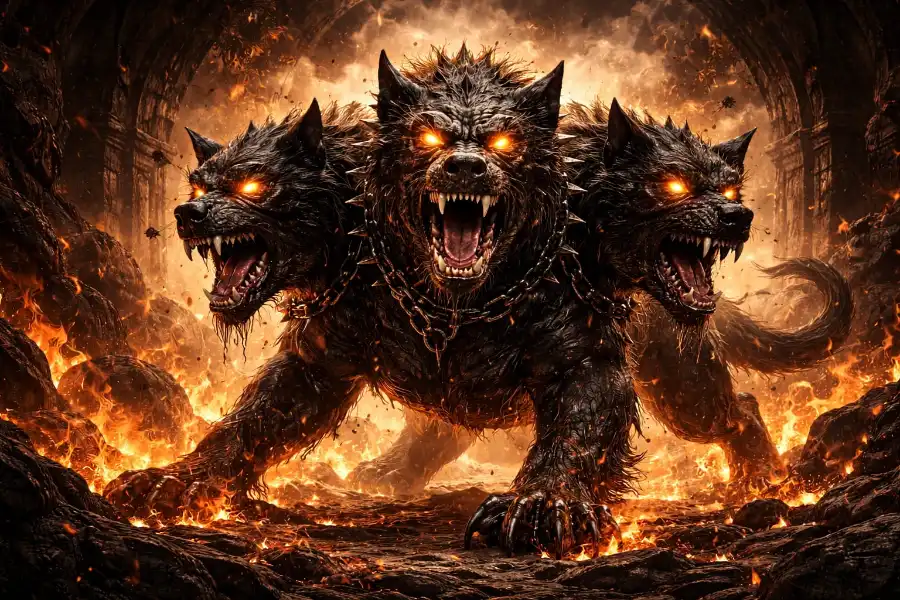
Cerberus was the fearsome hound of Hades, stationed at the gates of the Underworld to ensure that: the dead never escaped and the living never entered. Cerberus was described as a three-headed dog with a serpent tail, a mane of writhing snakes and a venemous bite.
Hermes, the messenger God, helped Hercules navigate through the Underworld safely. Hercules approached Hades directly and asked permission to take Cerberus. Hades agreed—on one condition:
- Hercules must subdue Cerberus without using any weapons
- The dog must be returned unharmed after the labor was completed
When Hercules confronted Cerberus, the struggle was brutal and exhausting. Using only his strength, Hercules wrapped his arms around the beast and wrestled it into submission. He endured pain, poison, and terror without yielding. Eventually, Cerberus was subdued—not broken, but mastered.
Completion of the Labors
Hercules led Cerberus back to the surface world. When Eurystheus saw the creature, he was overcome with terror and begged Hercules to return it immediately to the Underworld. After Hercules returned Cerberus to the Underworld and reported his success, Eurystheus had no choice but to accept the outcome. Despite his fear and resentment, Eurystheus:
- Officially acknowledged the completion of the labors
- Released Hercules from his twelve years of servitude
- Lost all authority over him
This moment is deeply symbolic. The cowardly king who once tried to destroy Hercules had been powerless to stop him. The servant had surpassed the master in every possible way.
Death, Apotheosis, and Life Among the Gods
The death of Hercules is one of the most tragic and ironic endings in all of Greek mythology. After surviving monsters, giants, kings, and even the Underworld itself, Hercules was ultimately undone not by battle, but by deception, jealousy, and poisoned blood—all set in motion by the dying revenge of a centaur. The centaur responsible for Hercules' death was Nessus, a violent and treacherous being who lived near the river Evenus. Like many centaurs, Nessus embodied uncontrolled desire and lawlessness.
Hercules was traveling with his wife Deianira when they reached the flooded river Evenus. Nessus offered to help by carrying Deianira across the river. But halfway across the river, Nessus attempted to abduct and assault Deianira, revealing his true nature. Hearing Deianira's screams, Hercules acted instantly. Hercules shot Nessus with an arrow dipped in the Hydra's venom.
As Nessus lay dying, he conceived a final act of revenge. Nessus called out to Deianira and told her that he wanted to make amends for his act. He claimed:
- His blood was a love charm
- If Deianira ever feared Hercules' affection was fading, she should apply it to his clothing
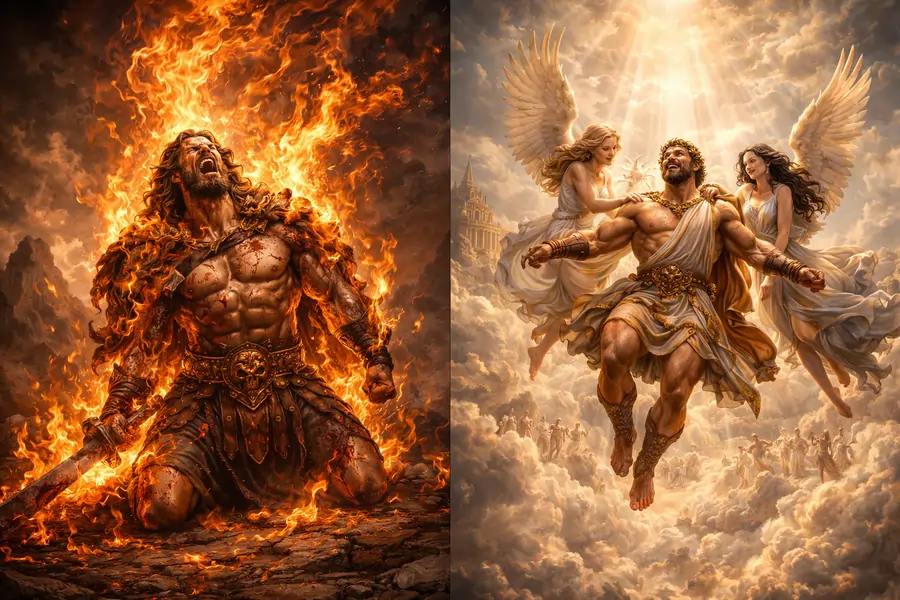
Years later, Deianira grew fearful that Hercules might abandon her for another woman. Remembering Nessus' words, she soaked a robe in the centaur's blood and gave it to Hercules. The moment Hercules put on the robe, the poison took effect. In agony, Hercules tore at the garment, ripping away his own flesh. No medicine, magic, or divine aid could stop the poison.
The greatest hero of Greece—who had strangled lions and wrestled death—was helpless. Accepting that he could not be saved, Hercules ordered a funeral pyre built on Mount Oeta. No one dared light it—until a young man named Philoctetes stepped forward. At the moment of death, Zeus intervened. As Hercules' mortal body was consumed, his divine essence ascended to Mount Olympus and he was granted immortality.
The Meaning of the Twelve Labors
The Twelve Labors are not simply monster hunts. They are stories of:
- Strength controlled by wisdom
- Power humbled by obedience
- Guilt transformed into redemption
- A man becoming more than human through suffering
Hercules was never perfect. He was violent, flawed, and tormented. That is precisely why his story endures. He was not born a god. He earned it.
Frequently Asked Questions
Why did Hera curse Hercules to perform the Twelve Labors?
Hera did not mandate the Twelve Labors—the Oracle of Delphi did. Hera sent divine madness that drove Hercules to murder his own family in a hallucination, believing they were enemies. Consumed by guilt and seeking redemption, Hercules consulted the Oracle, who commanded him to serve King Eurystheus for twelve years. Hera had manipulated events, but it was Hercules' own remorse that began his redemptive journey. The Labors were his self-imposed penance for unforgivable violence.
How many of the Twelve Labors did Hercules actually complete?
Hercules completed all 12 labors, though some versions initially counted only 10. Two were deemed invalid: the Lernaean Hydra (because Hercules received help from his nephew Iolaus) and the Augean Stables (because Hercules demanded payment from King Augeas). Later accounts added two replacement labors—the Stymphalian Birds and the Cretan Bull—bringing the total to twelve. After completing these tasks, Hercules was pardoned of his guilt and could marry again.
Did Hercules really die and become a god?
Yes, according to Greek mythology. Hercules was poisoned by his own wife when she unwittingly used Nessus the centaur's blood, believing it would keep him faithful. The poison caused unbearable agony, and Hercules ordered a funeral pyre built on Mount Oeta. As his mortal body burned, his divine essence—granted by his father Zeus—ascended to Mount Olympus. He became a true god, achieving immortality. He married Hebe, goddess of youth, in Olympus.
What is the meaning of the Twelve Labors?
The Twelve Labors represent spiritual transformation, not mere adventures. Each labor symbolizes: strength disciplined by wisdom, power humbled through obedience, courage tested against impossible odds, and guilt transformed into redemption. The Labors show that heroism isn't about perfect strength—it's about endurance, adaptability, and the willingness to suffer for redemption. Hercules earned godhood not through birth but through proving worthy of it through suffering and self-improvement.
Which labor was the most difficult for Hercules?
The Lernaean Hydra with infinite regenerating heads required intelligence and help from Iolaus, making it strategically challenging. Some myths emphasize Labor 12 (Cerberus), requiring Hercules to venture into the Underworld itself, as most difficult. Others highlight Labor 11 (Golden Apples), requiring cunning and diplomacy. The difficulty varied by version, but all acknowledged that Hercules' greatest victories combined physical strength with strategic thinking.
What happened to Hercules after completing the Twelve Labors?
After completing the labors, Hercules was pardoned of his guilt and considered redeemed. He eventually married Deianira and lived peacefully for several years, earning respect throughout Greece. However, tragedy struck when a centaur he once wounded sought revenge. The dying Nessus gave Deianira poisoned blood. When Deianira used it decades later fearing abandonment, the poison killed Hercules. His mortal body perished on Mount Oeta's funeral pyre, but his divine essence ascended to Olympus achieving immortality.
Is Hercules a real historical figure or purely mythological?
Hercules is purely mythological with no confirmed historical basis. However, archaeologists believe the stories may reflect distant memories of a powerful Bronze Age warrior. The historical Heracles evolved into legendary tales over centuries, accumulating increasingly fantastical elements. Ancient Greek audiences understood the Twelve Labors as symbolic stories with moral lessons, not historical records. The myths explore universal themes: redemption, the burden of strength, guilt, and transformation rather than documenting real events.
How have the Twelve Labors influenced modern culture?
The Twelve Labors remain deeply embedded in Western culture: structure mimicked in countless hero journeys (Star Wars, Marvel, video games); the concept of impossible tasks requiring strategy permeates literature and film; psychological analysis uses Labors as metaphors for personal challenges; business speakers reference the Labors as examples of perseverance; constant retellings in books, films, and TV shows. The themes of redemption through suffering and achievement through endurance remain universally relevant, making Hercules one of history's most frequently retold heroes.