Hannibal inflicted one of the most crushing defeats on the Roman Empire in the Battle of Cannae. Hannibal, however, did not march on Rome, and the dragged-out conflict resulted in Roman victory for the Romans in the Second Punic War. What if Hannibal had laid siege to Rome immediately? Would he have been able to capture Rome, and would Carthage have won the Second Punic War?
Please note that this is a speculative historical analysis based on real events following the Battle of Cannae.
Table of Contents
- What Happened at the Battle of Cannae (216 BC)
- Alternate History: Hannibal Marches on Rome After Cannae
- The Road to Rome
- The Problem of Supplies: Why Hannibal Could Not Easily March on Rome
- Hannibal Arrives at Rome
- Siege of Rome: Roman Army vs Carthaginian Army Comparison
- The Roman Defences
- The Odds at The Battle of Rome
- The Battle of Rome Begins
- The Roman Counter-Attack
- The Battle of Attrition Begins
- Why Hannibal Could Not Capture Rome After Cannae
What Happened at the Battle of Cannae (216 BC)
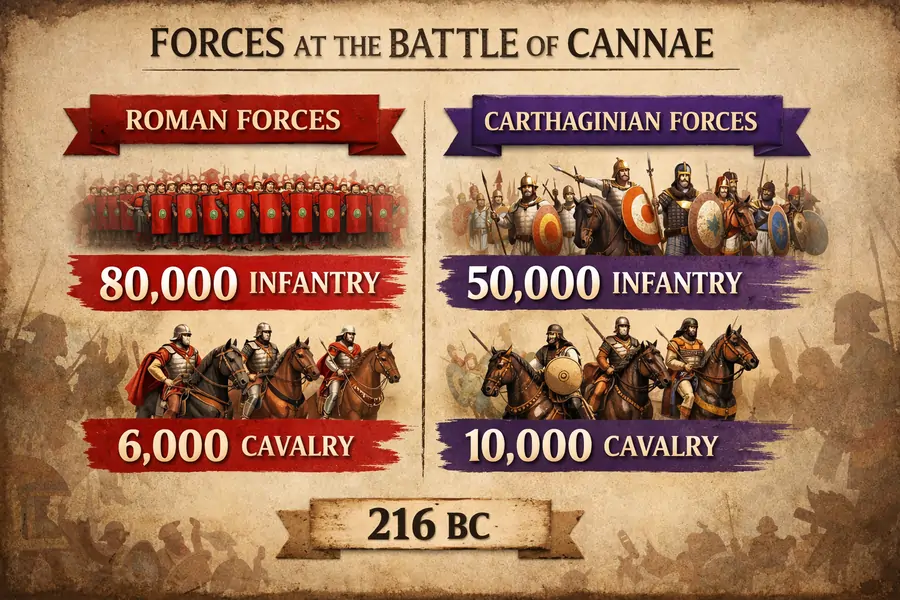
Hannibal Barca engaged the largest Roman army ever assembled, comprising 80,000 infantry and 6,000 cavalry. Hannibal had only about 40,000 infantry and 10,000 cavalry. The Carthaginians, however, had superiority in cavalry, which was utilised by Hannibal. A large Roman army, twice the size of the Carthaginians, was surrounded and crushed in a double envelopment maneuver that would be studied by historians and military generals for centuries. The Roman field army was crushed, and the city was exposed. The road to Rome lay open for Hannibal.
However, Hannibal did not attack Rome immediately. Instead, he consolidated his position in southern Italy and regrouped his troops. He expected Rome to sue for peace and even sent an envoy, which was rejected by the Roman senate. Hannibal requested reinforcements from Carthage to help siege Rome, but this never came. He then tried to convince Roman allies in southern Italy to defect, with many cities joining Hannibal, including Capua, which was the second-largest city in Italy. He also tried to improve his supply situation by capturing ports with limited success.
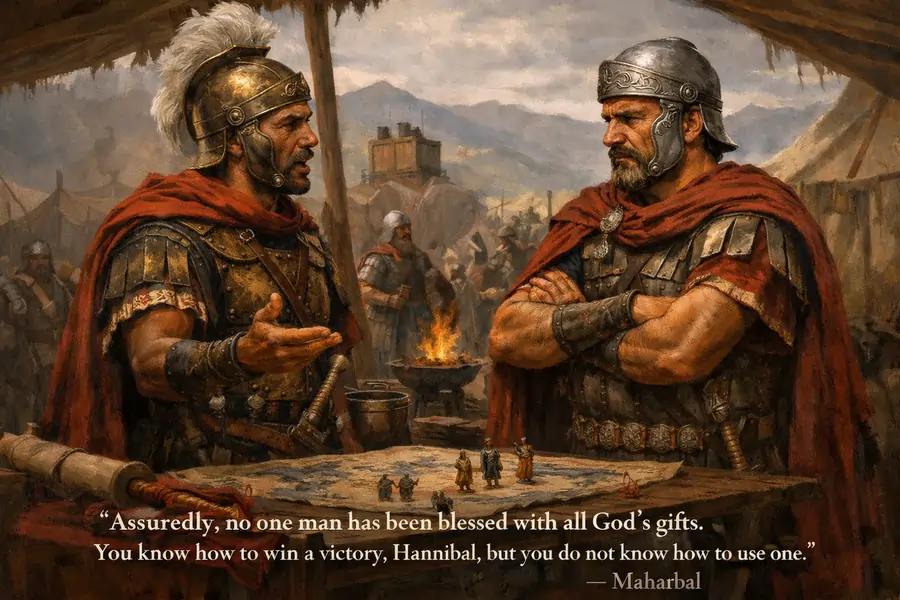
Hannibal's cavalry commander Maharbal is known to have commented: "Assuredly, no one man has been blessed with all God's gifts. You know how to win a victory, Hannibal; but you do not know how to use one". In the end, his strategy of trying to isolate Rome by convincing Italian cities to defect was not enough, as most of Rome's allies remained loyal. Rome refused to engage Hannibal in another major battle and concentrated on capturing Carthaginian territories in Iberia and then later in North Africa. Finally, after 13 years of campaigning in Italy, he was recalled to Carthage for the defence of the city in the Battle of Zama.
"Assuredly, no one man has been blessed with all God's gifts. You know how to win a victory, Hannibal, but you do not know how to use one"
Alternate History: Hannibal Marches on Rome After Cannae
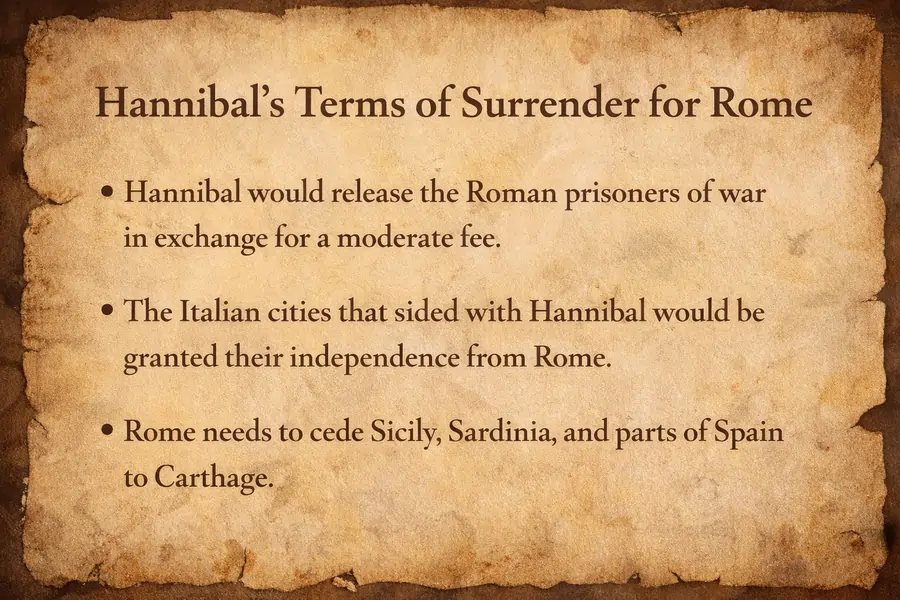
After the complete victory at Cannae on 2 August 216 BC, Hannibal now feels confident that Rome will sue for peace and sends his envoys to discuss the terms of their surrender. The terms are moderate considering the chaotic situation the Romans are currently in right now.
- Hannibal would release the Roman prisoners of war in exchange for a moderate fee.
- The Italian cities that sided with Hannibal would be granted their independence from Rome.
- Rome needs to cede Sicily, Sardinia, and parts of Spain to Carthage.
However, the Roman senate refuses to discuss any peace terms and is willing to fight till the end. They passed a resolution to prevent paying ransom for captured prisoners and immediately began rebuilding their legions. Hannibal is furious at the Romans for not accepting his "generous" offer. He immediately starts making plans for an assault on Rome itself. Maharbal, the cavalry commander under Hannibal, among many others, was more than happy to take the fight to the city.
"That you may know what has been gained by this battle, I prophesy that in five days you will be feasting as victor in the Capitol. Follow me; I will go in advance with the cavalry; they will know that you are come before they know that you are coming".
The Road to Rome
Rome had other armies in Italy, but the largest army that they ever assembled was annihilated at Cannae. There was no other force capable of intercepting the victorious Carthaginians in battle. Hannibal, however, faced the problem of logistics as Rome was 250 miles away from Cannae. The Carthaginian army was already exhausted from the battle at Cannae. They need time to rest and recuperate before they can start their long journey toward their ultimate target of Rome.
Another major problem is logistics. For a fast-moving army, the journey would be faster, and Maharbal claimed that he would have reached the gates of Rome with his cavalry in 5 days. This was not, however, the case for the huge exhausted Carthaginian army, which also needed supplies in a foreign land. For Hannibal to march his entire army from Cannae to Rome, it would take him at least two weeks.
The Problem of Supplies: Why Hannibal Could Not Easily March on Rome
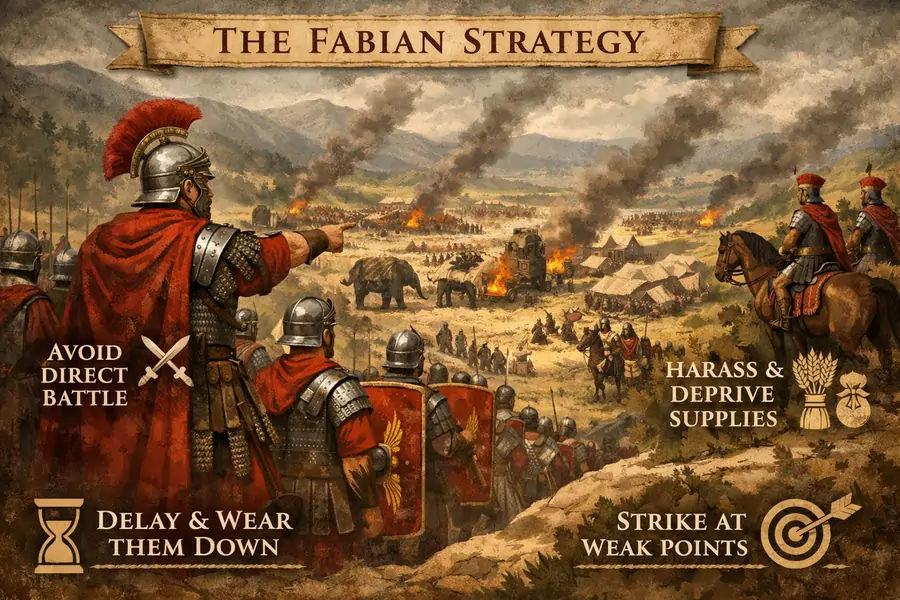
Hannibal rests his army for a couple of days and begins the forced march to Rome. He has already stripped the armour and weapons of dead Roman soldiers in the Battle of Cannae and armed his army. The army has to forage from the fields and surroundings on route, but this is severely hampered by what remains of the Roman army. The Romans are following the Fabian Strategy of not giving battle to Hannibal but engaging in hit and run tactics on his foraging troops. The fields and supply depots that could not be protected are set ablaze.
There are also a few cities like Capua that defected to the Carthaginian side, which helped Hannibal supply his troops. This was essential for his troops, but not all cities have switched. Some major cities like Nola remained a steadfast ally of Rome, much to Hannibal's frustration. Supply from Carthage was also difficult, with the Roman fleet controlling the coast.
Hannibal Arrives at Rome
After a gruelling march, Hannibal arrives at the outskirts of Rome on 17 August 216 BC. It has taken his army 15 days to march through the 250-mile-long terrain, battling Roman skirmishes and keeping the army fed and supplied. Hannibal immediately sets camp and recovers his army, which needs to recover from the forced march. He sends out his scouts to scan the surrounding areas and monitor the defenses of the city.
The Romans were doing everything they could to build up the city's defenses. Public mourning was prohibited. They immediately started recruiting new legions. They were desperate enough to break their traditional requirements to recruit. The age for recruiting was reduced; they recruited convicts and even armed 8,000 slaves in exchange for their freedom.
Siege of Rome: Roman Army vs Carthaginian Army Comparison
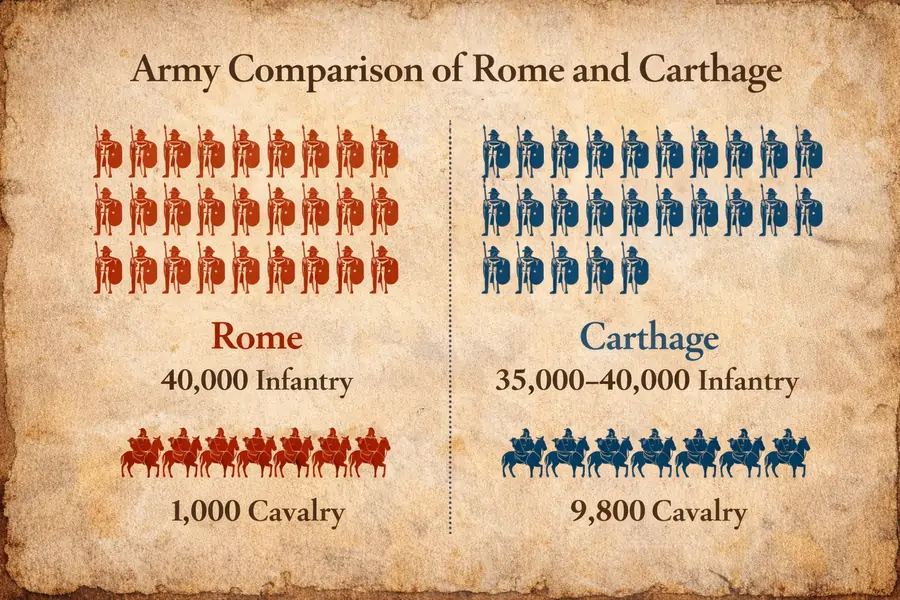
Hannibal was not able to receive any significant reinforcements or supplies from Carthage, as they were more worried about their territory in Iberia than Hannibal's personal war in Italy. However, the losses in Cannae were minimal, especially his cavalry, which was relatively unscathed. At the Siege of Rome, he had about 35,000 - 40,000 infantry and 9,800 cavalry. The major problem that Hannibal faced was the lack of siege engines.
The Carthaginians were actually skilled at building war machines. By the 4th century BC, they were skilled innovators capable of building mobile siege towers and battering rams. However, in Italy, they lacked resources, equipment, and a base of operations to build these advanced weapons. Without these siege units, Hannibal faced a tough time inflicting any damage to the Roman walls.
The Romans, on the other hand, were desperately scrambling to recruit new legions.
- They purchased 8,000 slaves and armed them in exchange for their freedom.
- About 6,000 criminals and debtors were released from prison in exchange for their service in the army.
- Rome also typically had two legions for internal defence and security, which would have numbered 10,000 soldiers.
- Rome had also removed the minimum/maximum age of recruitment under 17 and over 45, which added about 6,000 men.
- Marcus Claudius Marcellus had a fleet and about 10,000 troops nearby at Ostia and Casilinum. These troops were immediately recalled to the city for its defense.
- Most of the Roman cavalry was decimated at Cannae. They only had about 1,000 cavalry units to guard the city.
The Roman Defences
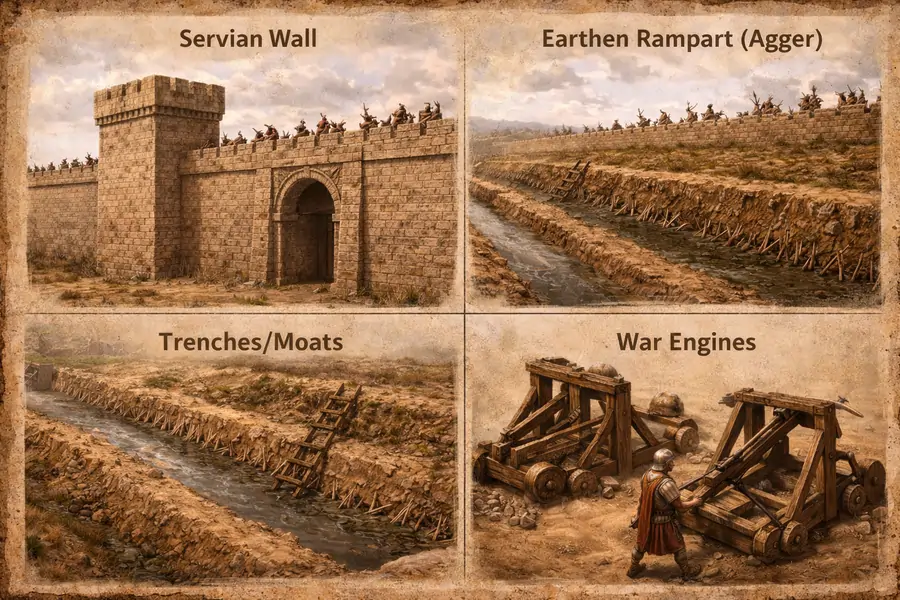
In total, the Romans had about 40,000 infantry and 1,000 cavalry to defend the city. This number seems pretty significant, but most of these units were poorly trained emergency recruits. Apart from troops, the Roman defenses included
- A 11 kilometers (7 miles) Servian Wall, which was about 10 meters (33 feet) high and 3.6 metres (12 feet) wide.
- An Earthen Rampart (Agger) along the weaker northern side.
- In many sections of the wall, there was a deep trench or moat which was dug directly in front of the wall.
- War Engines: The ramparts were outfitted with catapults and ballistae to rain hell on the attackers.
- Rome was stocked with massive grain supplies, which would last them a year.
Apart from these extensive defenses, Rome had also made strict rules and religious preparation to strengthen the morale of the defenders.
- The word "peace" was banned. It was a crime to even mention the possibility of suing for peace.
- The citizens were prevented from fleeing the city in panic. Guards were stationed at the gates to prevent deserters.
- Rome refused to ransom captured soldiers. Purchasing slave soldiers was "cheaper".
- In a fanatical religious move, two Gauls and two Greeks were buried alive in the Forum Boarium.
- Mourning was limited to 30 days to prevent loss of morale.
The Odds at The Battle of Rome
During this period in history, a successful siege would require a troop advantage of 2:1 in favour of the attackers to ensure that the city is fully surrounded and cut off from supplies. Although Hannibal does not have such an overwhelming advantage, the Roman troops are fresh recruits and not adequately trained. They are also very low on morale with the recent crushing defeats. Hannibal hoped that the mere presence of his army outside their gates would persuade the Romans to sue for peace. This, however, did not happen.
The Romans are a proud people. They believe that victory in war is more essential than anything else. Setbacks and defeats are inevitable and acceptable as long as they can achieve ultimate victory. Hannibal was not able to anticipate Roman resolve and fanatical resistance. The Roman troops may be made of broken remnants of armies, of thugs and slaves, of teenagers and old men, but if they man the 10-foot Servian Wall of Rome, there is no way the Carthaginian army could hope of getting through. The famous Carthaginian cavalry was also completely useless in the siege.
The Battle of Rome Begins
The Roman city was well manned and well supplied. They could withstand a siege for well over a year. The Carthaginian army could forage and survive for 3 days. With each passing day, Rome was recruiting more soldiers, and with no more defectors, the Carthaginians did not stand to gain any more troops or supplies. Hannibal needed a swift, decisive victory, or his army would bleed to death at the walls of Rome.
Without siege engines, Hannibal did not have many cards to play. He tried to taunt the Romans to fight outside the walls by attacking the surrounding countryside, but the Romans stayed put. They would not give Hannibal the battle he so desperately needed. With no other choice, Hannibal launched an attack on the Roman walls with makeshift ladders and rams made of wooden logs from nearby trees.
The Roman Counter-Attack
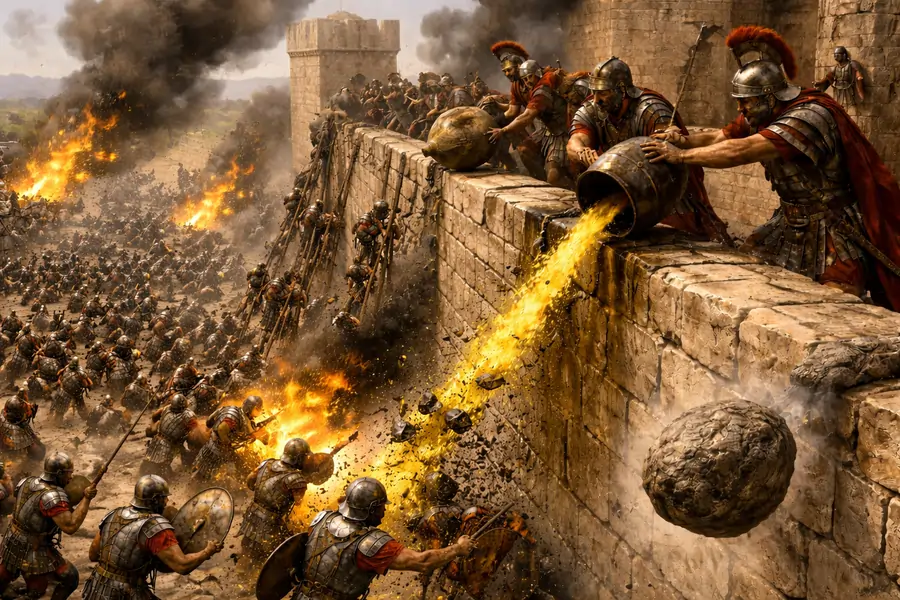
The Roman soldiers were not well-trained and were very low on morale. The very sight of the legendary Hannibal and his massive army must have been daunting. However, the Romans were facing an existential crisis. There was nowhere left to run, and a defeat here would mean death or being sold off to slavery, if not worse. They did not need much training to man the already sturdy walls of Rome. Their goal was to make sure no Carthaginian soldier would cross the walls.
The Romans had ballistae and catapults that rained down huge bolts and boulders on the Carthaginian army. Any man who dared to venture close enough would have met with volleys of rocks shot by Roman slingers. Carthaginians trying to scale the walls with makeshift ladders would have a hard time with the Romans throwing huge rocks and scalding hot oil or pitch from the walls. Early attacks by the Carthaginians are met with severe casualties, which bolster Roman morale.
The Battle of Attrition Begins
The Carthaginians soon ran into supply issues. Hannibal disperses some of his army to forage the surrounding areas. The Romans dispatch small guerrilla forces to harass the foraging troops, which further puts a strain on the logistics. After a week of assaulting the walls with no gains and with his supplies running dangerously low, Hannibal is forced to retreat to Capua.
For the Romans, this is a huge victory as they were able to defend Rome without much casualities. For Hannibal, this is a major setback as he is not able to force Rome to surrender. A small Roman force shadows his army and harasses him all the way back to Capua. The losses are significant. Hannibal loses about 10,000 of his veteran troops. Rome's losses are minor and are only around 1,000 to 2,000.
Why Hannibal Could Not Capture Rome After Cannae
Hannibal's chances of capturing Rome were not good from the start. Hannibal's army was fast-paced and suited for fighting on the open plains and was not equipped with heavy war machines like catapults and rams, which are necessary to take on siege defenses. He also did not have enough supplies to lay siege to the city, which would usually take one to two years. With Rome dominating the seas, it was also not possible to expect reliable reinforcements from Carthage.
Rome would have been able to reinforce the city with more troops with each passing day; Hannibal could not expect any reinforcements. Roman morale was extremely low, but their ideology of not surrendering was strong. After the crushing loss at Cannae, any other city-state would have surrendered, but Rome was not going to give up. It was this grit and determination in terms of crisis that brought Rome out of this dark period and eventually won the Punic Wars.
Frequently Asked Questions
Why didn't Hannibal march on Rome after the Battle of Cannae?
Hannibal did not march on Rome after the Battle of Cannae in 216 BC primarily due to logistical challenges, lack of siege equipment, and insufficient reinforcements from Carthage. His army was exhausted, and a direct assault on Rome's well-defended walls without proper supplies or siege engines would have been extremely risky. Instead, he aimed to weaken Rome by encouraging its allies to defect.
Could Hannibal have captured Rome if he marched immediately after Cannae?
Most historians believe Hannibal would have struggled to capture Rome even if he had marched immediately after Cannae. While Rome was vulnerable, the city had strong fortifications, large reserves of manpower, and the ability to rapidly recruit new soldiers. Without siege equipment and sustained supply lines, Hannibal's chances of taking the city were low.
How long would it have taken Hannibal to march from Cannae to Rome?
The distance from Cannae to Rome was roughly 250 miles (400 km). For a large army like Hannibal's, which needed to move cautiously and gather supplies along the way, the march would likely have taken around two weeks. This delay would have given Rome valuable time to strengthen its defenses.
What were the main challenges Hannibal faced in attacking Rome?
Hannibal faced several major challenges, including lack of siege equipment, limited supplies, and no naval support to bring reinforcements from Carthage. Additionally, Rome's strong walls, large population, and ability to recruit new troops made it extremely difficult to capture the city through a direct assault.
What was the Fabian Strategy and how did it affect Hannibal?
The Fabian Strategy was a Roman military approach that avoided direct battles with Hannibal and instead focused on delaying tactics, harassment, and cutting off supplies. This strategy prevented Hannibal from achieving decisive victories after Cannae and made it difficult for him to sustain a prolonged campaign in Italy.
Did Rome ever come close to surrendering during Hannibal's campaign?
Despite suffering devastating defeats like the Battle of Cannae, Rome never seriously considered surrendering. The Roman Senate refused peace negotiations and continued to raise new armies. This resilience and determination were key factors in Rome eventually winning the Second Punic War.