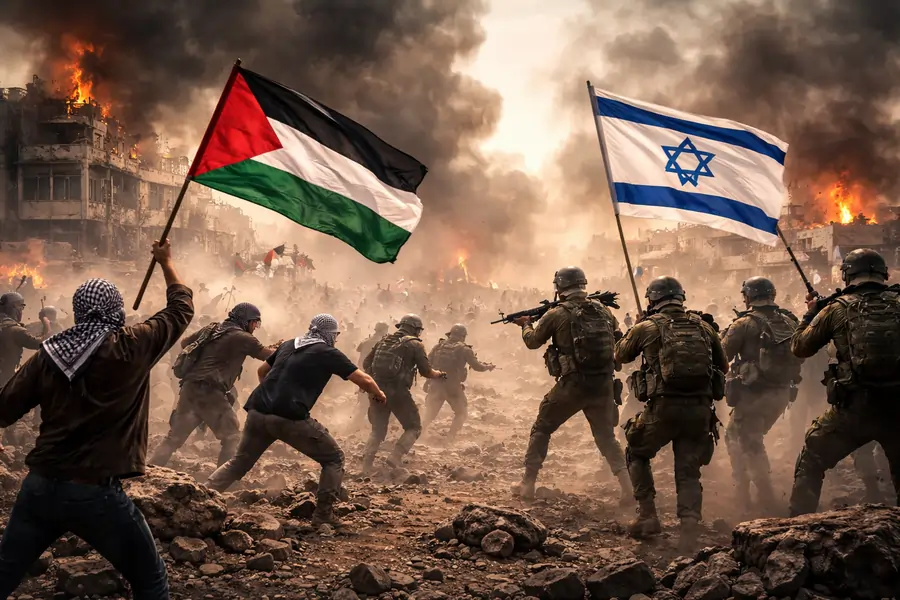
The Arab-Israeli conflict is one of the most complex and long-running struggles in modern history. This conflict has dragged on for more than seven decades, and it has shaped global politics, influenced regional alliances, and sparked multiple wars between Israel and its neighboring Arab states. From the creation of Israel in 1948 to the ongoing tensions involving Iran, Gaza, and regional actors, understanding this conflict requires examining its historical roots, key wars, and evolving dynamics. This comprehensive guide breaks down the Arab-Israeli conflict in a clear, neutral, and structured way—making it easier to understand how past events continue to influence the present.
Table of Contents
- Origins of the Arab-Israeli Conflict
- The 1948 Arab-Israeli War
- The Six-Day War (1967)
- The Yom Kippur War (1973)
- The Intifadas and Palestinian Uprisings
- Modern Phase: Hamas, Hezbollah, and Iran
- Current Conflict and Regional Escalation
- Why the Arab-Israeli Conflict Matters Globally
- The Human Cost of the Arab-Israeli Conflict
Origins of the Arab-Israeli Conflict
The roots of the Arab-Israeli conflict trace back to the late 19th and early 20th centuries, during a period of rising nationalism across Europe and the Middle East. Two parallel movements played a central role in shaping the conflict: Zionism and Arab nationalism.
The Jews were persecuted by the Germans during the Second World War, and millions lost their lives and their livelihood. The Jews were in a state of constant fear. To solve this identity issue, Zionism emerged as a movement advocating for the establishment of a Jewish homeland in Palestine, a region historically significant to Jewish identity. Due to the holocaust, there was widespread support for establishing the Jewish state in Palestine. This led to the Balfour Declaration of 1917, with the British promising the creation of a Jewish state in Palestine while ensuring that the Arab population would not be affected.
At the same time, Arab nationalism was gaining momentum among the Arab population living in the same region, who sought independence from foreign rule and control over their own lands. During World War I, the Ottoman Empire, which had controlled much of the Middle East, collapsed. The British took control of Palestine under a mandate system. The contradiction starts here when Sir Henry McMahon, British high commissioner in Egypt, pledged to Sharif Hussein of Mecca (1915-1916) that Britain would recognize and support Arab independence in most territories in exchange for support in the war.
This dual commitment created tensions. There was also another contradiction involving the Sykes-Picot Agreement (1916), where Britain and France planned to divide the Arab lands of the Ottoman Empire into spheres of influence. Jewish immigration to Palestine increased, leading to growing friction with Arab communities who feared displacement. By the 1930s and 1940s, violence between Jewish and Arab groups had escalated significantly.
Britain had made the following promises:
- To the French to split the Ottoman territories between them.
- To grant the Arabs independence in exchange for support in the war.
- To create a new Jewish state in Palestine.
As tensions between the parties began to escalate, in 1947, the United Nations proposed a partition plan to divide Palestine into separate Jewish and Arab states. While Jewish leaders accepted the plan, many Arab leaders rejected it, setting the stage for a long, gruesome war.
The 1948 Arab-Israeli War
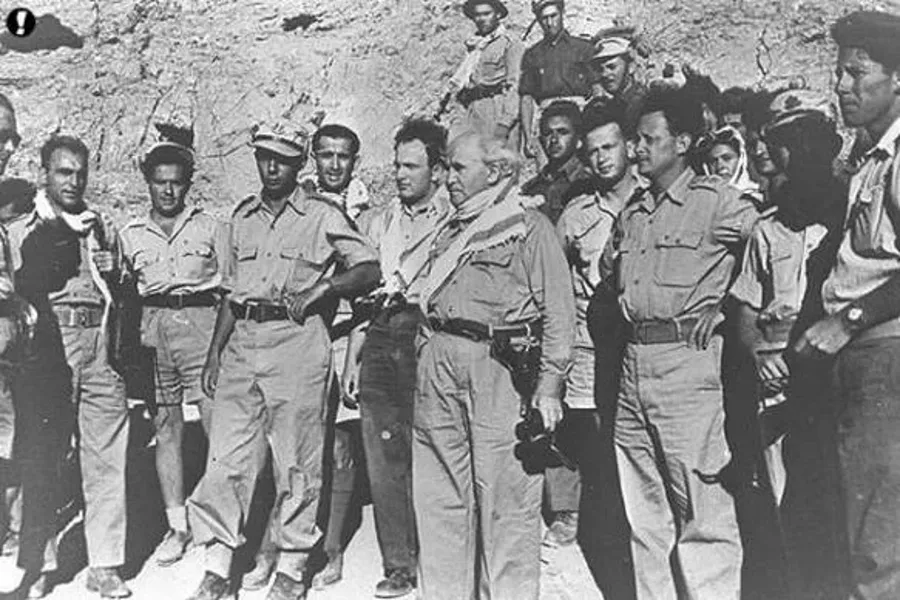
The Arabs and Jews could not fight as long as the region was under the British mandate, which was in effect till midnight on 14 May 1948. When the mandate ended, the Arab states bordering Israel, which included Egypt, Jordan, Syria, and Iraq, all invaded the newly formed state of Israel. The Arab-Israeli conflict officially began in 1948 when Israel declared independence.
Israel was initially not fully prepared at the start of the war, but managed to hold onto most of its territories by the start of the first UN truce on June 11. The IDF (Israeli Defence Force) was able to make large arms purchases from Czechoslovakia, which helped turn the tide of the war. The war eventually resulted in a decisive Israeli victory. By the end of the conflict, Israel had expanded beyond the boundaries proposed in the UN partition plan. Jordan took control of the West Bank, while Egypt controlled the Gaza Strip.
One of the most significant consequences of the war was the displacement of hundreds of thousands of Palestinians, an event often referred to as the Nakba, or "catastrophe." This refugee issue remains one of the central and unresolved aspects of the conflict today. The 1948 war established the basic geopolitical framework of the conflict and set the stage for future confrontations.
- The Arab nations were humiliated by the defeat, and they would never accept the displacement of the Arab people by the Israelis.
- Israel had captured new territory, which was colonised by expelling the local inhabitants. This would cause long-lasting implications.
The Six-Day War (1967)
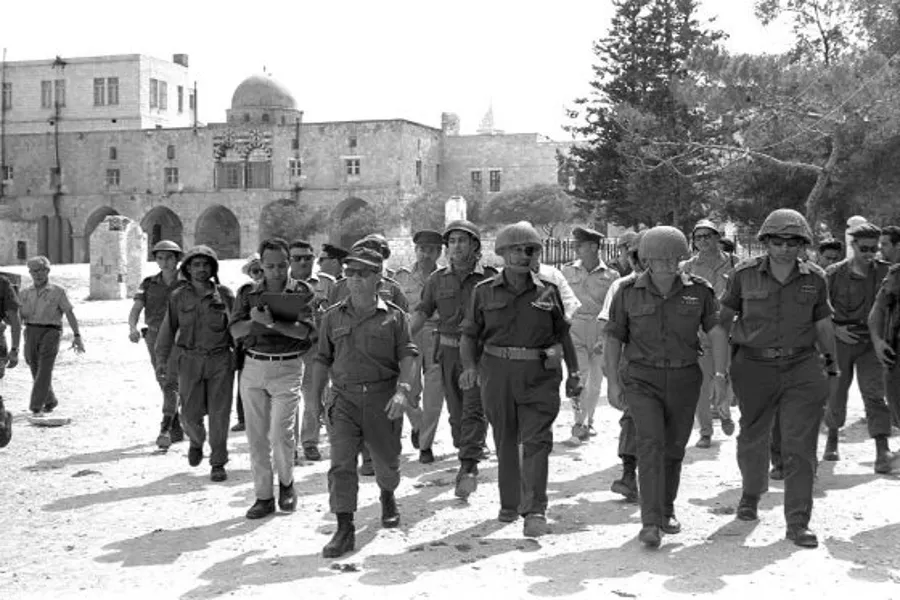
The Six-Day War in 1967 marked a turning point in the Arab-Israeli conflict. Soviet intelligence had falsely warned the Egyptians that Israel was planning an assault against Syria. This led to the military mobilization of the Egyptian army. Abdel Nasser sent his army into the Sinai and expelled the UN peacekeeping troops. The tensions were at their peak when the Egyptians blocked the Straits of Tiran to Israeli shipping
In a preemptive strike, Israel launched attacks against Egypt, Syria, and Jordan. Within six days, Israel achieved a decisive military victory and captured several key territories:
- The West Bank (from Jordan)
- The Gaza Strip (from Egypt)
- The Sinai Peninsula (from Egypt)
- The Golan Heights (from Syria)
This war dramatically altered the map of the region and introduced the issue of Israeli-occupied territories, which remains a core point of contention in the conflict. The aftermath of the Six-Day War also shifted international attention toward the conflict, with major global powers becoming more involved diplomatically and strategically.
- The Arab states were humiliated by the complete victory of the Israelis. An aura of Israeli invulnerability was born. This would directly result in the Yom Kippur War.
- Millions of Palestinians in the occupied territories were displaced by the war. This further exacerbated the refugee issue, which had initially triggered the conflict.
The Yom Kippur War (1973)
In 1973, Egypt and Syria launched a surprise attack on Israel during the Jewish holiday of Yom Kippur. Their objective was to regain territories lost in the Six-Day War. The Israelis were complacent after the complete victory in the Six-Day War. They were caught completely off guard by the Egyptians. Initially, Arab forces made significant advances. However, once the Egyptians went past the protective cover of their SAM (Surface to air missiles) batteries, they were pushed back. The Israelis eventually regained the upper hand and took back the lost territories.
Although militarily inconclusive in some respects, the war had major political consequences. This led to increased diplomatic efforts, which eventually resulted in the Camp David Accords between Egypt and Israel in 1978. This agreement marked the first peace treaty between Israel and an Arab country, demonstrating that negotiated settlements were possible despite deep-rooted tensions.
- The Egyptians had broken the notion of Israeli invulnerability. They had accomplished their objective of regaining their pride and signed an agreement on even footing with the Israelis.
- The Israelis were shocked by the Egyptian attack, which was cleverly disguised and planned. It led to the resignation of Prime Minister Golda Meir and Defense Minister Moshe Dayan.
- Direct conflict with the Israelis will be avoided in the future, and most of the fighting will be done by resistance movements.
The Intifadas and Palestinian Uprisings
The late 20th century saw a shift in the conflict, with increased focus on Palestinian resistance movements. The First Intifada (1987–1993) was a spontaneous uprising in the West Bank and Gaza Strip, characterized by protests, civil disobedience, and clashes with Israeli forces.
This period led to the Oslo Accords in the 1990s, which aimed to establish a framework for peace and the creation of a Palestinian state. However, many key issues—such as borders, refugees, and the status of Jerusalem—remained unresolved. The Second Intifada (2000–2005) was more violent, involving armed confrontations, suicide bombings, and military operations. This further deepened mistrust between both sides and stalled peace efforts.
Modern Phase: Hamas, Hezbollah, and Iran
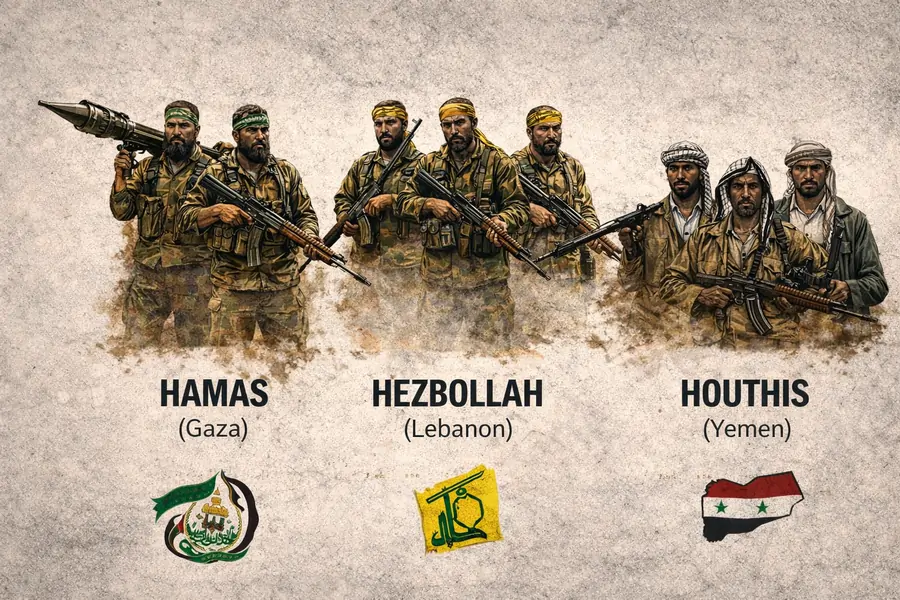
The modern phase of the Arab-Israeli conflict is significantly more complex than its earlier state-to-state wars. Since the late 20th century, the conflict is no longer a fixed war between two nations. It has transformed into terrorist attacks carried out by proxy militant groups, which are funded by the Arab nations. At the center of this transformation are three key players: Hamas, Hezbollah, and Iran.
Hamas: The Gaza-Based Actor in the Conflict
Hamas emerged in 1987 during the First Intifada as a Palestinian political and militant organization. It operates primarily in the Gaza Strip, where it has exercised governing authority since 2007. The group combines political governance with armed resistance and has been involved in multiple conflicts with Israel. These confrontations typically involve rocket attacks launched from Gaza and Israeli airstrikes or ground operations in response.
Over time, Hamas has developed increasingly sophisticated military capabilities, including rocket systems, tunnel networks, and coordinated attacks. External support has played a role in this development, particularly in terms of funding, training, and weapons supply. Hamas is a central actor in the Israel-Palestine dimension of the broader Arab-Israeli conflict, and its actions often trigger wider regional tensions.
Hezbollah: The Lebanon Front
Hezbollah, founded in the early 1980s during the Lebanese Civil War, is both a political organization and a powerful armed group based in Lebanon. It was initially formed in response to Israel's presence in southern Lebanon and has since become one of the most significant non-state military forces in the region. Unlike Hamas, which is geographically concentrated in Gaza, Hezbollah operates along Israel's northern border and has a much larger and more advanced arsenal. It is believed to possess tens of thousands of rockets and missiles capable of striking deep into Israeli territory.
Hezbollah has been involved in repeated clashes with Israel, most notably the 2006 Lebanon War. In recent years, tensions have escalated again, with cross-border exchanges involving rockets, drones, and airstrikes. Hezbollah is both a political entity within Lebanon and a military force. This means that any actions involving Hezbollah can also impact Lebanon's internal stability.
Iran: The Regional Power and Strategic Backer
Iran plays a central role in the modern phase of the Arab-Israeli conflict as a regional power that supports groups such as Hamas and Hezbollah. This support includes financial assistance, military training, and the transfer of weapons technology. Since the 1979 Iranian Revolution, relations between Iran and Israel have been characterized by deep hostility. Over time, this rivalry has developed into a long-running proxy conflict, with Iran backing armed groups that oppose Israel while avoiding direct large-scale confrontation for many years.
This network of allied groups is sometimes referred to as the "Axis of Resistance," which includes Hezbollah, Hamas, and other organizations aligned with Iran's strategic objectives in the region. Iran's strategy allows it to project influence across the Middle East without direct engagement in every conflict. By supporting non-state actors, Iran extends its reach into Lebanon, Gaza, Syria, and beyond.
The Shift to Proxy Warfare
One of the defining features of the modern Arab-Israeli conflict is the rise of proxy warfare. Instead of large-scale wars between national armies, the conflict now involves indirect confrontations through allied groups. For example:
- Hamas operates in Gaza and engages Israel in periodic conflicts
- Hezbollah operates from Lebanon and maintains a northern front
- Iran provides support, coordination, and strategic direction
This structure creates a multi-front conflict environment, where tensions can escalate simultaneously in different regions. This also allows Iran to safely engage Israel without worrying about a direct conflict or declaration of war.
Escalation into Regional Conflict
In recent years, the conflict has increasingly taken on a regional dimension. Israel has conducted strikes against Iranian-linked targets in Syria and elsewhere, while Iran and its allies have responded through missile and drone attacks.
By the mid-2020s, this proxy conflict began to shift toward a more direct confrontation. Exchanges of missile strikes, attacks on infrastructure, and involvement of additional actors have raised concerns about a broader regional war. At the same time, Hezbollah has intensified its operations along Israel's northern border, launching rockets and drones and prompting military responses.
Why This Phase Is Different
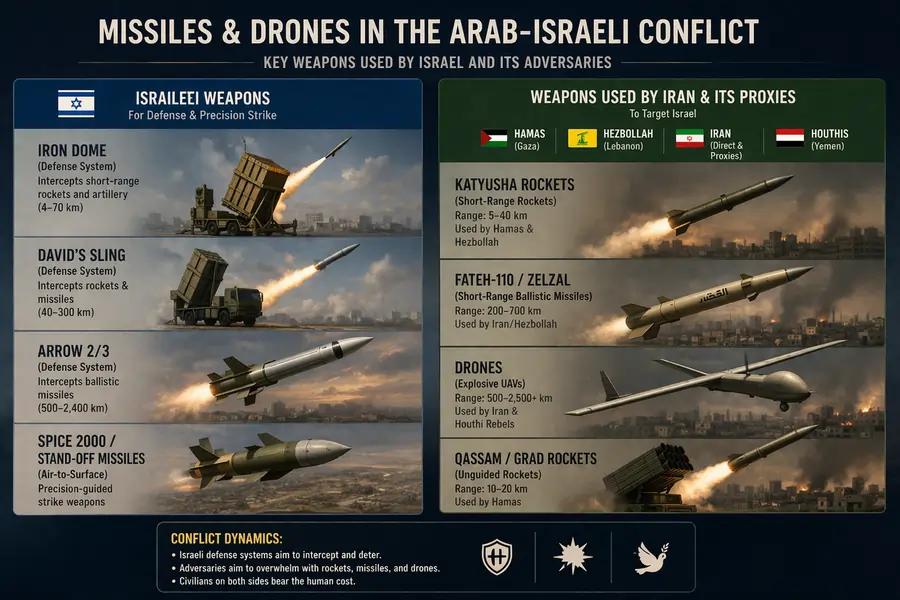
The modern phase of the Arab-Israeli conflict differs from earlier periods in several key ways:
- Non-state actors play a central role rather than traditional armies with conventional warfare
- Conflicts are continuous rather than being fought at specific periods, with frequent flare-ups
- Regional powers like Iran influence outcomes beyond immediate borders
- Technology has transformed warfare, including drones, precision missiles, and cyber capabilities
This evolution has made the conflict more unpredictable and harder to resolve. Instead of clear victories or defeats, the region experiences ongoing cycles of escalation and de-escalation.
Long-Term Impact on the Arab-Israeli Conflict
The involvement of Hamas, Hezbollah, and Iran has expanded the Arab-Israeli conflict from a territorial dispute into a broader geopolitical struggle. It now involves questions of regional influence, ideological rivalry, and long-term security concerns. As a result, any future resolution will likely require not only addressing Israeli-Palestinian issues but also resolving the issues created by the wider regional dynamics shaped by these actors.
Current Conflict and Regional Escalation
Currently, the conflict has reached a new high. In the surprise airstrikes on 28 February 2026 by the United States and Israel, the Iranian leader Ali Khamenei and several other key officials were killed. Donald Trump and his administration had given a variety of reasons for the attack:
- To prevent an imminent Iranian threat
- To prevent Iranian retaliation on US assets following the expected attack by Israel
- To destroy Iran's military and missile capabilities
- To prevent Iran from acquiring a nuclear weapon
- To secure Iran's natural resources
- To achieve a regime change by bringing the opposition into power
Following the surprise attack by Israel and the United States, Iran responded with missile and drone attacks on Israel and US bases in the Middle East. Although the top leaders of the Iranian regime were killed, the command structure was decentralised enough to enable them to respond strongly without disruption.
Why the Arab-Israeli Conflict Matters Globally
Although many of the missile launchers had been destroyed by US and Israeli attacks, Iran is still capable of launching attacks using mobile launchers, which are hard to detect, and drones. Iran has also taken the approach of causing maximum damage to its neighbors, making the war very costly. Iran has primarily targeted the UAE, Kuwait, and Saudi Arabia, causing severe disruption to their economy.
Iran had also closed off the Straits of Hormuz to shipping on March 5, 2026. 20 to 25% of the global oil and LPG supplies pass through this chokepoint. This has led to an energy crisis around the globe. Trump has called on his allies to help open the straits, but till now, all countries have declined, stating that it is not their war and out of fear of further escalation.
The Middle East is a critical region for global energy supplies. Instability in the region can affect oil prices and economic stability worldwide. The involvement of the US has brought the conflict to a global scale. It is currently threatening to pull other players such as Russia, China, and the countries of the European Union into the quagmire. There doesn't seem to be any quick end in sight, with neither Iran nor the US willing to back down.
The Human Cost of the Arab-Israeli Conflict
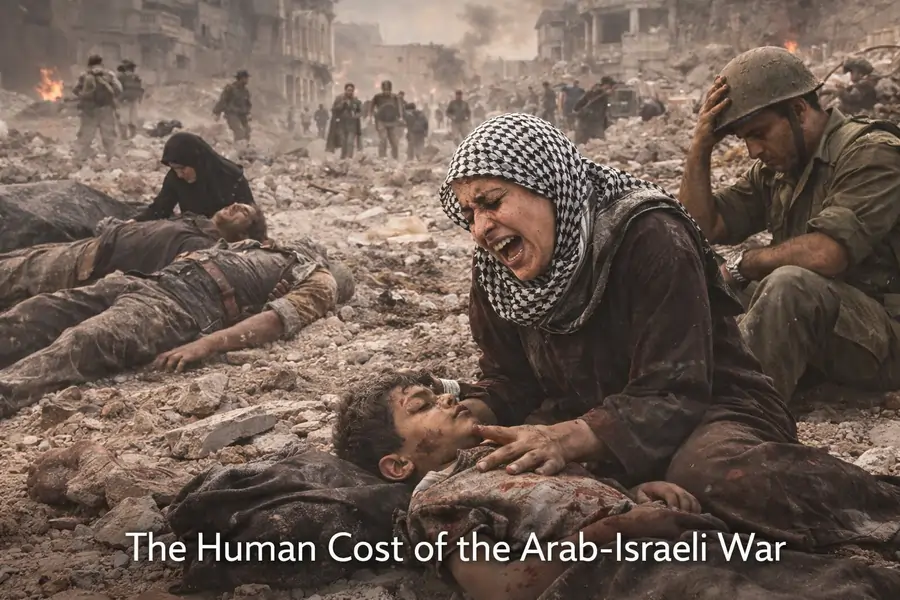
It is the innocent civilians who face the consequences of any conflict. Millions of people are dragged into the mindless struggle each day. Thousands have lost their lives already, and millions have been left homeless. The civilians on both sides of the conflict have to face the harsh realities of war. They live each day in fear of death and uncertainty.
Ironically, the Arab-Israeli conflict was initially started to safeguard the interests of the civilians who called the region their home. The refugee problem is escalating more than before as more and more people are displaced from the war zone. Civilians are no longer the focus as war-hungry leaders continue to prolong the already costly war.