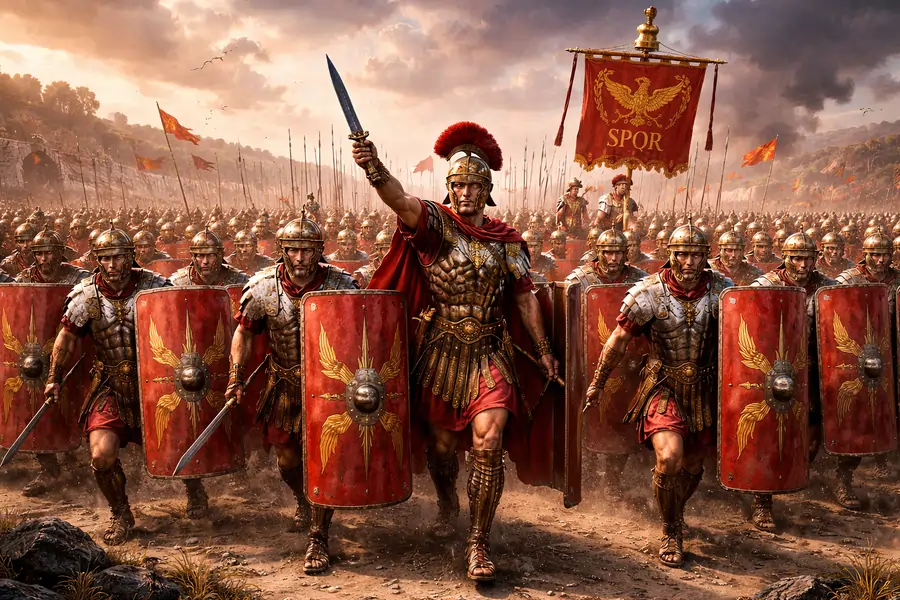
The Roman legion was not an ordinary army. It was a killing machine forged by discipline, innovation, and relentless adaptability. From humble beginnings as a small city-state militia, Rome built one of the most formidable military systems in history. The Roman legion combined organization, engineering, training, and tactical flexibility to dominate the ancient Mediterranean world for centuries. This article examines how Rome emerged as a military power, what distinguished its legions, their organizational structure, evolution, and performance in the defining battles that earned them legendary status.
Table of Contents
The Rise of Rome as a Military Power
Rome had risen from a small settlement on the banks of the Tiber to a Mediterranean superpower that dominated the region with brutal efficiency. This transformation was driven largely by its military system. Unlike many ancient civilizations that relied on elite warrior classes or mercenaries to fight wars, Rome built its strength on citizen-soldiers.
In the early years of the Republic, Rome faced constant threats from neighboring barbarian tribes such as the Etruscans, Samnites, and Gauls. Rome faced a choice: to innovate and adapt rapidly or risk being erased from the face of the earth. The Samnite Wars, in particular, played a crucial role in shaping Roman military tactics during the early stages of the Republic. These wars led to the development of the manipular system.
Rome's ability to recover from defeats was equally important. Rome was a militaristic society where victory was considered essential. Short-term defeats and losses were acceptable as long as they could win the war. Even after catastrophic losses like those in the Battle of Trebia, Battle of Cannae, and the Battle of Lake Trasimene, Rome continued to raise new armies without surrendering.
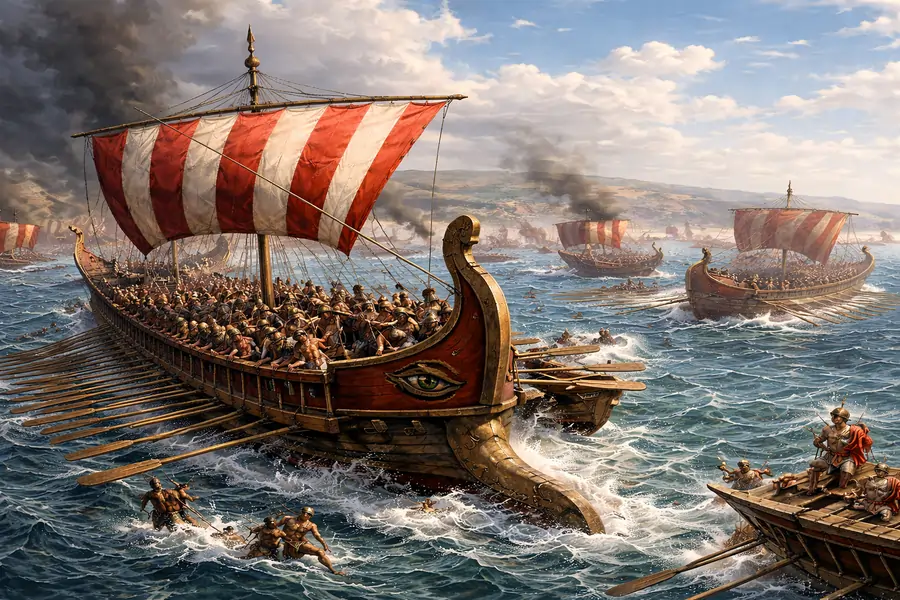
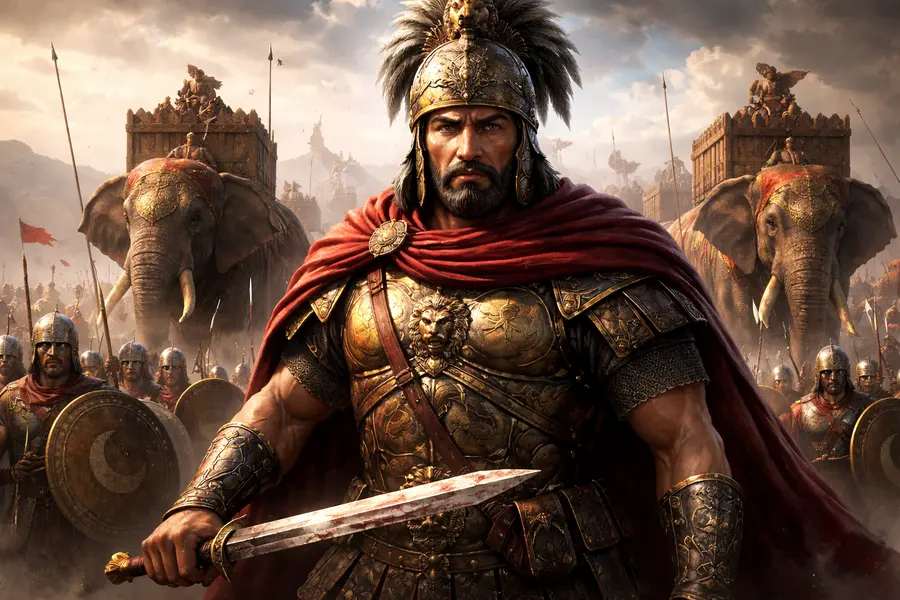
Roman resilience became legendary during the course of the Punic Wars when they rebuilt their navy and army several times to secure the final victory. During the Second Punic War, Rome faced one of its greatest enemies—Hannibal Barca. Despite facing devastating defeats and humiliating losses, Rome ultimately emerged victorious, proving the strength of its military system and the perseverance of its people.
What Made Roman Legions So Strong?
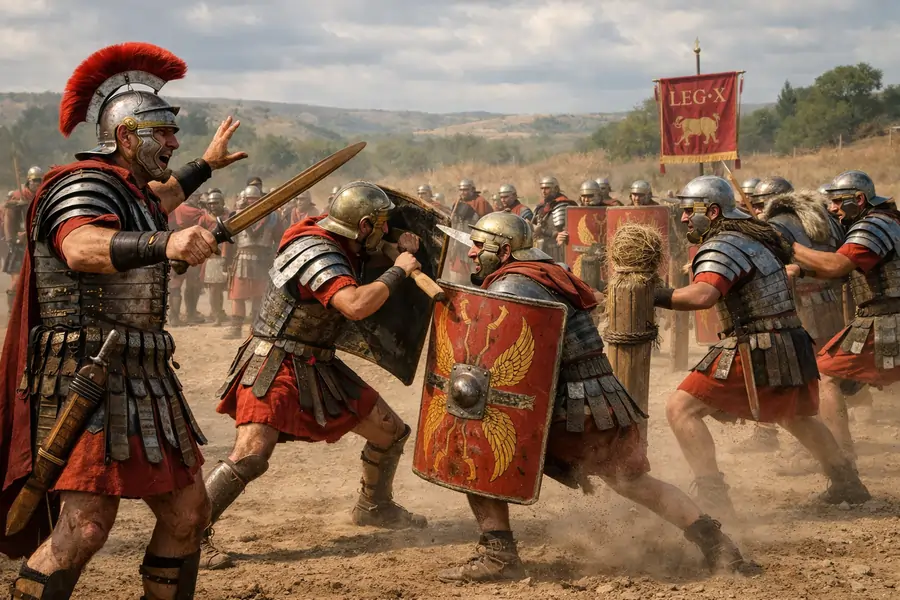
The strength of the Roman legion was not built overnight. This was built from years of adapting and experience in battle. It came from a combination of factors that worked together seamlessly.
1. Discipline and Training
Roman soldiers trained relentlessly, even during peacetime. Drills were intense, involving long marches and drills with weapons twice their normal weight. Discipline was strict, with Centurions using a vine staff to punish disobedience immediately. Soldiers were expected to build camps, march long distances, and fight in formation under pressure. This ensured that the army was capable of fighting in unfavourable conditions and following orders without question.
2. Standardization
Roman legions were highly standardized. Weapons, armor, and formations were consistent, allowing soldiers to operate as a cohesive unit. This was essential for training recruits on a massive scale. The Roman legion was capable of churning out recruits in record time. Each soldier in the army was trained to perform his role in the Roman meatgrinder.
3. Engineering Excellence
Roman legions were also excellent engineers. This made them very adaptable, as they built roads, bridges, and fortified camps quickly, giving them a strategic advantage. Roman engineering was one of the reasons for the brilliant victory in the Battle of Alesia (52 BC), where Julius Caesar defeated a much larger Gallic army using fixed double-layered fortifications.
4. Tactical Flexibility
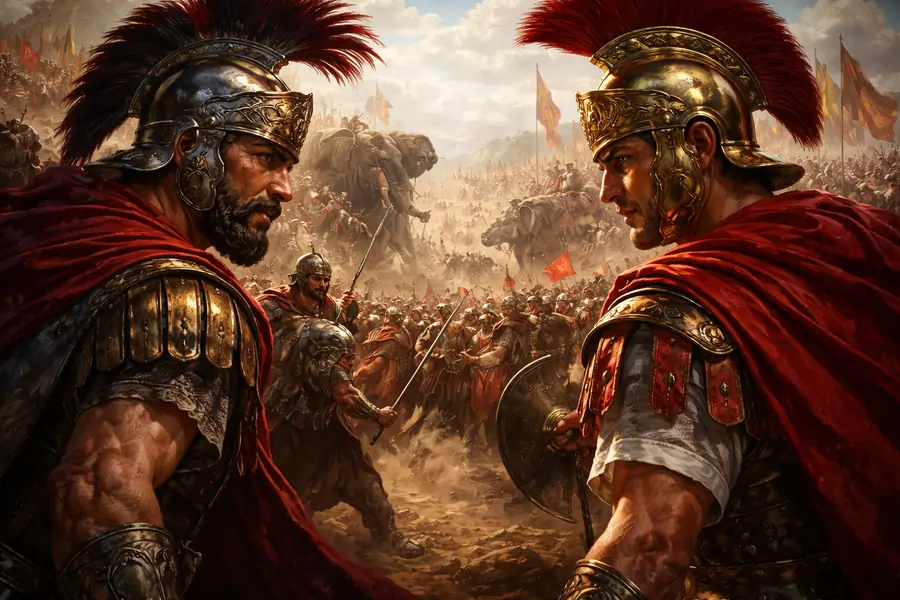
Unlike rigid phalanx formations used by Greek armies, Roman legions could adapt to different terrains and situations. This was due to the use of maniples and the later cohorts approach. This enabled smaller units to act autonomously and maneuver according to the terrain. This flexibility allowed Scipio Africanus to use a checkerboard formation, allowing his troops to handle the Carthaginian war elephants in the Battle of Zama.
5. Logistics and Organization
Rome excelled in supply and organization. They maintained a complex system of logistics that included roads, shipping, and fortified depots (horrea). Armies could stay in the field longer and recover faster from losses.
These strengths helped Roman legions stand among the greatest warrior groups in history.
What Made Roman Armies Different?
Roman legions differed from other ancient armies in several key ways:
- Citizen Army Model: Early Roman soldiers were citizens with a stake in the state. The Romans took pride in fighting for the state. In the early years, only landowning Romans were allowed in the army. Richer citizens were drafted into the cavalry, whereas the poorer citizens were part of the infantry.
- Modular Formation: The manipular system allowed flexibility in battle. Greek phalanx formations were very rigid and did not provide flexibility which was solved by the manipular/cohort system.
- Adaptability: Rome adopted and improved ideas from enemies. This can be seen in how their armies changed over time, adapting to recent changes in military warfare. They had also created a new navy from scratch during the First Punic War, which was an incredible feat of engineering.
- Professionalization: The citizen army model had issues, as the recruited units were temporary. The reforms initiated by Gaius Marius enabled Rome to have a professional standing army (c. 107 BC - 14 AD). This ensured that Rome had a professional, veteran army capable of dealing with any external threat and maintaining Pax Romana (Roman Peace)
Roman Legion Structure Explained
The Roman legion was one of the most sophisticated military organizations of the ancient world. It was one of the strongest fighting units of the ancient world. Their strength did not come from numbers but from the professional training, discipline, flexibility, and battlefield efficiency. Unlike many ancient armies that relied on rigid formations or individual heroism, the Roman legion functioned as a coordinated system where every unit, rank, and role had a defined purpose.
Basic Composition of the Roman Army
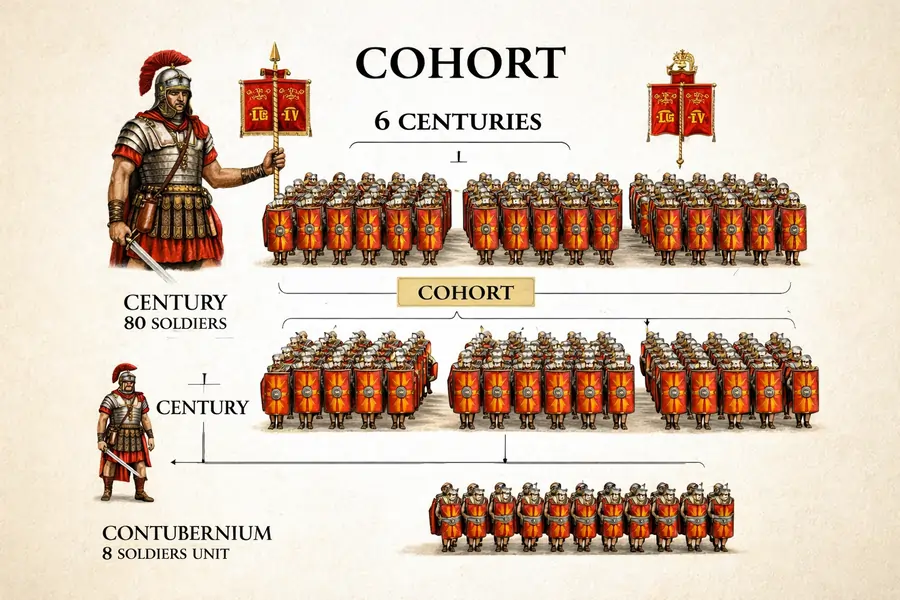
A standard Roman legion during the late Republic and early Empire typically consisted of 4,800 to 6,000 soldiers, though this number could vary depending on the campaign and period.
- 10 Cohorts were the backbone of the legion
- 1st Cohort: Elite unit, often double strength (~800 men)
- Remaining 9 Cohorts: ~480 men each
- Total Centuries: 60 (6 per cohort)
- Century Strength: ~80 soldiers (during the early stages of the Republic, this was originally 100, hence the name)
This modular composition allowed legions to act independently. They can be split, reinforced, or redeployed efficiently. This provided flexibility unmatched by most ancient armies.
Detailed Breakdown of Units
Contubernium (Smallest Unit)
The smallest unit in the Roman army was the contubernium, consisting of 8 soldiers who shared a tent, equipment, and daily responsibilities. These men formed tight bonds, increasing cohesion in battle.
Century
Each century (~80 men) was commanded by a centurion and supported by junior officers:
- Centurion - Commander of the century. He was assisted by four junior officers.
- Optio - Second-in-command to the centurion.
- Signifer - Standard bearer of the centurion. He was also the treasurer, keeping track of the pay and expenses for the men.
- Tesserarius - Guard commander who exercised command over nightly guard duties.
During the early Roman Republic, a century consisted of 100 men, but in later periods it was reduced; its legacy name remained.
Cohort
The cohort was the primary tactical unit. Each cohort consisted of 6 centuries and could operate independently in battle. The first cohort was the most prestigious and elite unit of the legion. It often held the legion's eagle standard (Aquila).
Legion
The full legion combined all cohorts into a single fighting force, supported by cavalry, engineers, and auxiliary troops.
Command Structure
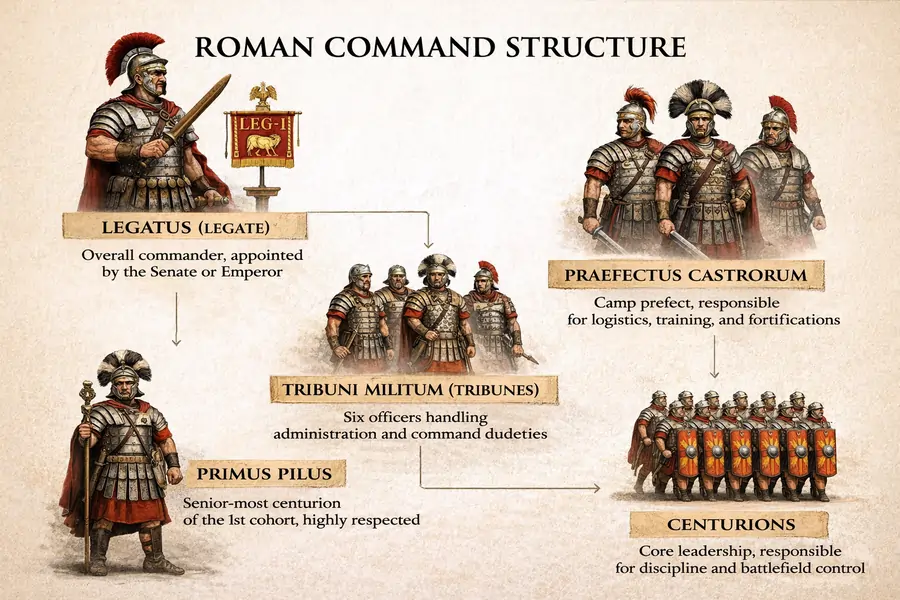
The Roman chain of command was highly organized, ensuring discipline and rapid execution of orders. The army was built into cohorts to enable them to operate individually, and the command structure was also versatile to suit this.
- Legatus (Legate): Overall commander, appointed by the Senate or Emperor
- Praefectus Castrorum: Camp prefect, responsible for logistics, training, and fortifications
- Tribuni Militum (Tribunes): Six officers handling administration and command duties
- Primus Pilus: Senior-most centurion of the 1st cohort, highly respected
- Centurions: Core leadership, responsible for discipline and battlefield control
Centurions were the backbone of the Roman army. Their experience and skill were essential in maintaining unit formation and discipline during chaotic situations.
The Cohort System and Tactical Flexibility
The Manipular system allowed maneuverability in rough terrain with 30 maniples arranged in a checkerboard formation. This system was harder to coordinate, and sometimes smaller units were overwhelmed easily. The transition from maniples to cohorts marked a major evolution in Roman military organization. The cohort system allowed:
- Greater battlefield cohesion: This allowed better cohesion of units with harder-hitting power
- Simplified command structure: The command structure was simplified and easier to manage in long campaigns.
- Improved maneuverability: The cohort system still maintained the maneuverability offered initially by the Manipular system.
- Standardised equipment: The Manipular system relied on citizens purchasing their own equipment, which meant the quality of the weapons and armour was not reliable. The Cohort system had state-equipped professional soldiers.
Unlike the earlier manipular system, which required complex coordination between smaller units, cohorts could act as independent blocks. This made Roman armies more adaptable in varied terrains—from open plains to mountainous regions.
Specialized Units Within the Legion
The majority of the Roman legion comprised heavy infantry. However, apart from the standard infantry, it included or was supported by several specialized units:
- Equites (Cavalry): Used for reconnaissance, flanking, and pursuit.
- Auxiliaries: Supporting non-citizen troops providing archers, slingers, and light infantry.
- Engineers (Fabri): Roman engineering was as famous and important as the army. They were responsible for building roads, bridges, siege engines, and camps.
- Artillery Units: Operated ballistae and onagers for ranged attacks and sieges.
Auxiliaries were especially important, as they complemented the heavy infantry by providing capabilities the legion lacked, such as missile troops and specialized cavalry.
Roman Military Equipment
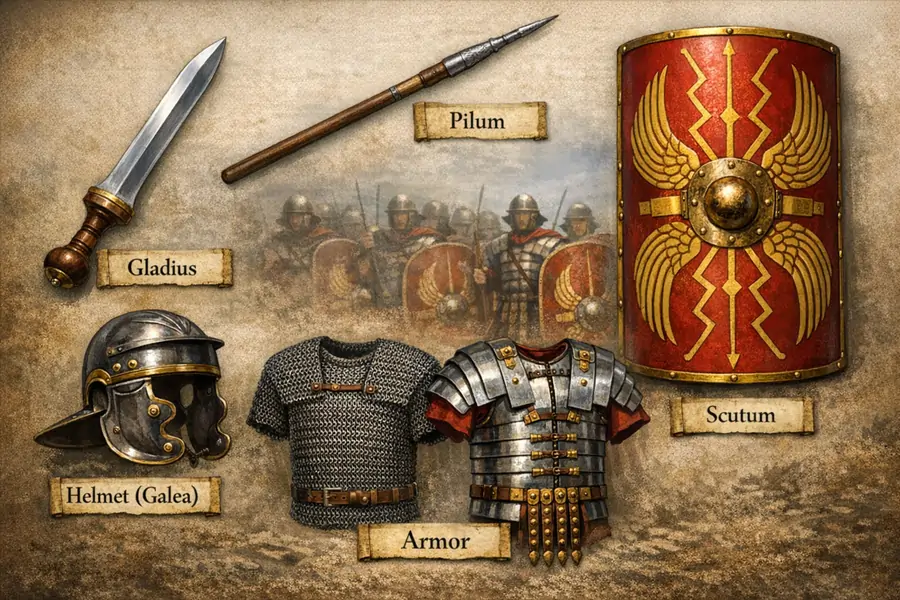
After the introduction of the Cohort system, the Roman soldiers were equipped in a standardized manner, ensuring uniformity and effectiveness. The Roman legion equipment comprised the following:
- Gladius: The iconic short stabbing sword designed for close combat
- Pilum: A heavy javelin designed to break the momentum of the advancing enemy troops. The volley of javelins would pierce the shields. Once pierced, they would bend on impact, disabling enemy shields.
- Scutum: A large rectangular shield providing excellent protection.
- Helmet (Galea): Metal helmet with cheek guards.
- Armor: Typically chainmail (lorica hamata) or segmented armor (lorica segmentata).
The combination of pilum and gladius was particularly deadly. Soldiers would throw their pila to disrupt enemy formations and then close in for hand-to-hand combat.
Daily Life and Camp Structure
Roman legions were as effective in building camp as they were in battle. Every day, soldiers built fortified camps with:
- Defensive ditches (fossa)
- Ramparts (agger)
- Wooden palisades
Camps were laid out in a standardized grid, ensuring order and quick deployment. In some cases, like the Battle of Alesia, very intricate, strong, interlinked walls connected by towers were built, ensuring easy supply and reinforcement. This discipline reduced surprise attacks and maintained readiness.
Why This Structure Was So Effective
The Roman legion's structure was revolutionary because it combined:
- Flexibility: Units could operate independently or together
- Discipline: Strict hierarchy ensured control
- Standardization: Uniform equipment and training
- Adaptability: Ability to evolve based on enemy tactics
Roman Army Salary (Salarium)
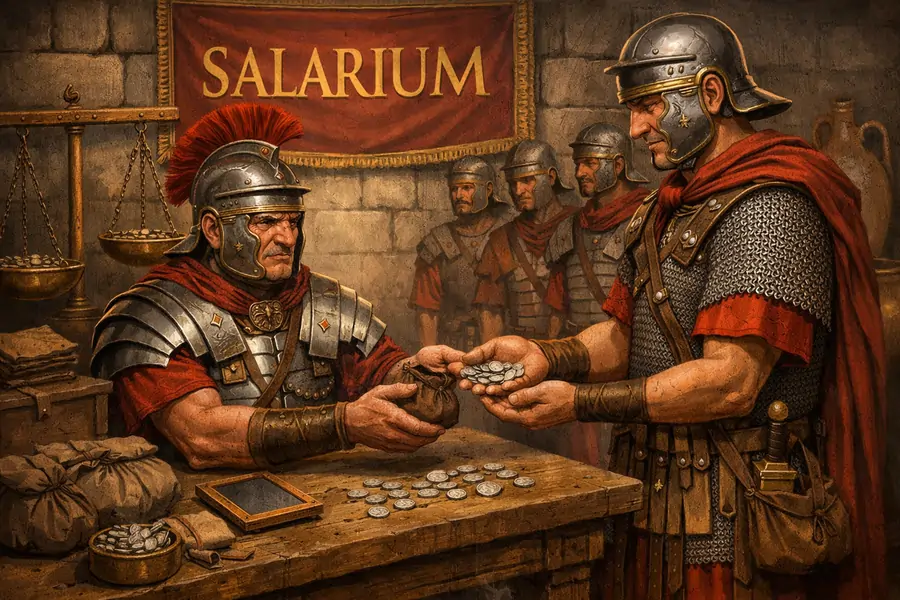
The word "salary" that we use today is derived from the Roman term salarium, which is the payment given to Roman soldiers, originally linked to the cost of salt—a valuable commodity in the ancient world. Over time, it came to mean regular wages paid in coin. Roman legionaries received standardized pay, which was often supplemented by bonuses (donativa), loot from campaigns, and land grants upon retirement. This structured compensation helped transform the Roman army into a loyal and professional fighting force.
Evolution of the Roman Legion
The Roman legion was not perfect during the initial years of the Roman Republic. It evolved over centuries, adapting to new enemies, terrains, and strategic challenges.
1. Early Republic (Phalanx System)
In its earliest form, the Roman army adopted the Greek phalanx, a dense formation of heavily armed infantry. The phalanx was a tried and tested formation and was very effective on flat terrain; however, it struggled in Italy's uneven landscape.
2. Manipular System (Middle Republic)
To overcome these limitations, Rome developed the manipular system:
- Army divided into 30 maniples and arranged in three lines (Hastati, Principes, Triarii)
- Flexible spacing allowed movement and reinforcement
- Units could operate individually and rotate out fresh units during battle
This system proved crucial during conflicts like the Second Punic War, where adaptability was key against Hannibal. This enabled Scipio to eventually win the Battle of Zama.
3. Marian Reforms (Late Republic)
The reforms of Gaius Marius (c. 107 BC) transformed the Roman army into a professional force:
- Recruitment opened to landless citizens
- State provided standardized equipment for all soldiers
- Cohort replaced maniple as main unit
- Soldiers became long-term professionals
This shift created a more disciplined and experienced army, capable of extended campaigns.
4. Imperial Legion
Under the Roman Empire, legions became permanent standing units:
- Stationed along frontiers (Rhine, Danube, Britain)
- Supported by large auxiliary forces
- Integrated into a broader imperial defense system
Legions were no longer temporary citizen forces but highly trained professional armies loyal to the Emperor.
5. Late Roman Changes
In later centuries, the Roman army evolved again:
- Greater reliance on cavalry
- More mobile field armies (comitatenses)
- Frontier troops (limitanei) for defense
These changes reflected new threats and the shifting nature of warfare.
Through continuous adaptation, the Roman legion remained effective for over 500 years—an achievement unmatched by most military systems in history.
Roman Legions in Famous Battles
Battle of Zama (202 BC)
Rome was following the Manipular system during the Second Punic War. The Battle of Zama marked Rome's ultimate victory over Hannibal. Scipio Africanus used flexible formations and countered war elephants effectively. This neutralized Hannibal's trump card, and the discipline of the Roman army managed to triumph over the larger enemy force.
Battle of Alesia (52 BC): Engineering Meets Legion Power
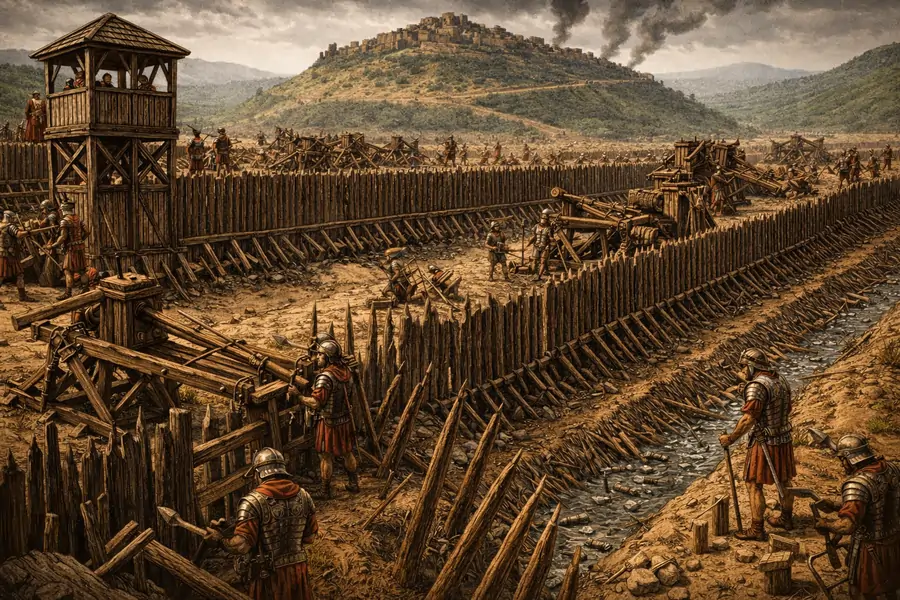
The Battle of Alesia is a strong testament to the power and skill of Roman military engineering. The Romans had employed the Cohort system by this time. Fought during Julius Caesar's Gallic Wars, the battle saw Roman forces besiege the Gallic stronghold of Alesia, defended by Vercingetorix. When a massive relief army approached, Caesar employed an extraordinary engineering solution. The Romans constructed two massive lines of fortifications:.
- Circumvallation: An inner wall surrounding Alesia to trap the defenders
- Contravallation: An outer wall facing outward to defend against incoming Gallic reinforcements
When the Gallic relief force attacked, Roman legions were forced to fight on two fronts simultaneously. Despite being outnumbered, the legions held their positions due to:
- Superior discipline: Soldiers maintained formation under extreme pressure
- Flexible cohort system: Reinforcements could be shifted quickly to weak points
- Engineering advantage: Fortifications neutralized enemy numerical superiority
At the critical moment, Caesar personally led a counterattack, and Roman cavalry struck the Gallic forces from behind. This coordinated effort broke the enemy's assault, forcing Vercingetorix to surrender. The victory at Alesia showcased the true strength of the Roman legion—not just as a fighting force, but as an integrated system of engineering, discipline, and tactical brilliance. It remains one of the clearest examples of how the Roman army had evolved and adapted to new circumstances.
The Legacy of Roman Military Organization
The Roman legion influenced military systems for centuries. Its emphasis on discipline, organization, and adaptability became a model for future armies. Rome had also created and inspired many of history's greatest generals.
The legacy of the Roman legion lives on in modern military command structures, proving that its design was far ahead of its time. From its early beginnings to its imperial dominance, the legion evolved continuously to meet new challenges. Its structure, tactics, and resilience allowed Rome to build one of the greatest empires in history. Even today, the Roman legion remains a symbol of military excellence and organizational brilliance.
Frequently Asked Questions
What was the structure of a Roman legion?
A Roman legion was typically composed of 10 cohorts, with each cohort containing 6 centuries of about 80 men each. The legion was supported by cavalry, auxiliaries, and engineers, making it a highly organized and flexible military unit capable of operating independently or as part of a larger force.
Why were Roman legions so effective in battle?
Roman legions were highly effective due to their discipline, standardized training, flexible cohort system, and strong leadership by experienced centurions. Their ability to adapt tactics, maintain formations, and use engineering advantages gave them a decisive edge over most ancient armies.
How did the Roman legion evolve over time?
The Roman legion evolved from a Greek-style phalanx to the manipular system during the Republic, and later into a professional standing army after the Marian reforms. Under the Empire, legions became permanent units supported by auxiliaries and stationed across the frontiers.
What weapons did Roman soldiers use?
Roman legionaries were equipped with the gladius (short sword), pilum (throwing spear), and scutum (large shield). They also wore helmets and armor such as chainmail or segmented armor, which provided protection and effectiveness in close combat.
What role did Roman engineering play in warfare?
Roman engineering was crucial to their success, allowing legions to build roads, bridges, fortified camps, and siege works بسرعة. This gave them logistical advantages, improved mobility, and the ability to control battlefields, as seen in battles like Alesia.
How did Roman legions win major battles like Zama?
In battles like Zama (202 BC), Roman legions used flexible formations, disciplined infantry tactics, and coordinated cavalry support to defeat enemies like Hannibal. Their ability to adapt and counter enemy strategies was key to their success.