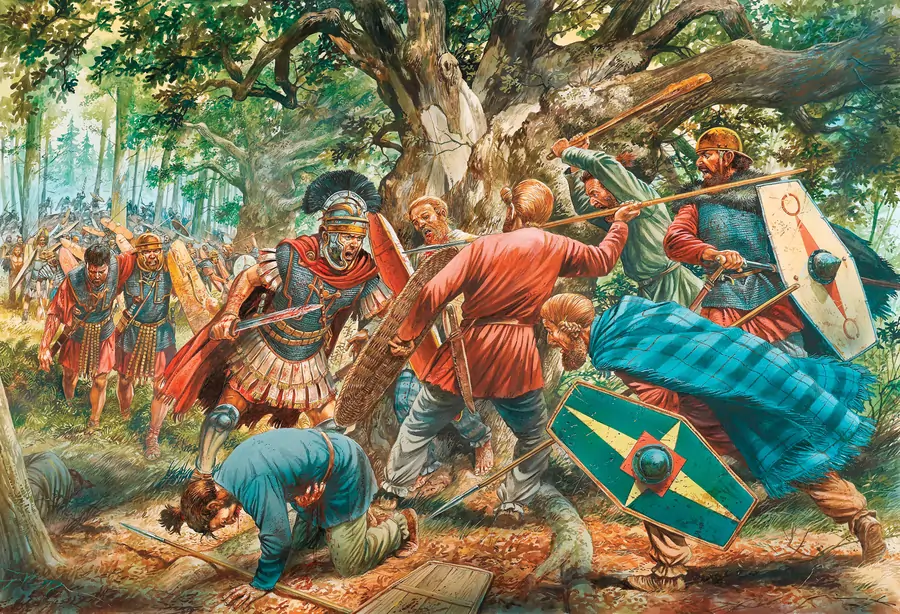
The Battle of the Teutoburg Forest (9 AD) was one of the worst defeats ever suffered by the Roman Empire, when Germanic tribes led by Arminius ambushed and destroyed three Roman legions commanded by Publius Quinctilius Varus in the dense forests of Germania. This detailed guide to the Battle of the Teutoburg Forest explains exactly how Arminius defeated Varus, why the Roman legions were trapped, and how the three legions XVII, XVIII, and XIX were annihilated. Learn the full story of the Teutoburg Forest ambush shared by Sudhir Devapalan, including the lead-up to the battle, Roman and Germanic troop strengths, a day-by-day breakdown of the fighting, reasons for the Roman defeat, and how the battle permanently stopped Roman expansion into Germania.
Table of Contents
- Background: Rome Expands into Germania
- Publius Quinctilius Varus Takes Command
- Arminius: The Germanic Leader Who Betrayed Rome
- The Opposing Armies at Teutoburg Forest
- Roman Forces
- Germanic Forces
- Arminius Sets the Trap
- The Battle of the Teutoburg Forest: Day One
- Day Two: The Roman Army Begins to Collapse
- Day Three: The Roman Army is Destroyed
- The Destruction of Three Roman Legions
- Why Rome Lost the Battle of the Teutoburg Forest
- 1. Underestimating the Germanic Tribes
- 2. Trusting Arminius
- 3. Poor Terrain Choice
- 4. Extended Marching Column
- 5. Weather Conditions
- 6. Germanic Guerrilla Tactics
- 7. Lack of Reconnaissance
- Aftermath of the Battle of Teutoburg Forest
- Germanicus and the Roman Revenge Campaigns
- Strategic Significance of the Battle of Teutoburg Forest
- Archaeological Discovery of the Battlefield and Legacy
- Battle of Cannae vs Teutoburg Forest: Rome's Worst Defeats Compared
Background: Rome Expands into Germania
By the late 1st century BC, the Roman Empire was rapidly expanding. Having passed the trials of the Punic Wars and Gallic Wars, the Roman Empire had expanded across Western Europe. Julius Caesar's conquest of Gaul brought Rome to the Rhine River. This natural boundary separated Roman-controlled territory from the lands inhabited by various Germanic tribes.
Roman leaders saw Germania as the next logical step for expansion. Augustus, Rome's first emperor, wanted to secure the empire's northern border and eliminate the threat of Germanic raids. Rome's strategy was simple: conquer Germania, organize it into provinces, impose taxation, and integrate local elites into Roman administration. Rome had done this many times on its road to conquest and expansion.
Between 12 BC and 6 AD, Roman generals, including Drusus and Tiberius, conducted multiple campaigns into Germania. Roman legions built roads, forts, and supply bases. Several Germanic tribes submitted peacefully. Those who resisted were defeated in battle by the Roman juggernaut. By 7 AD, Rome believed Germania was effectively conquered. This assumption would prove catastrophic as the Germanic people still had a lot of fight left in them.
Publius Quinctilius Varus Takes Command
To govern the newly acquired territory, Augustus appointed Publius Quinctilius Varus as governor of Germania. Varus was not an experienced military commander but an administrator who had previously governed Syria. The Romans believed that there would be no conflict in Germania, and it is therefore unnecessary to post someone with military experience.
Varus made a critical mistake: he treated Germania as a fully pacified province. He imposed taxes, enforced Roman law, and punished dissent harshly. For the Germanic tribes, this was unacceptable. They did not consider themselves to be conquered and were waiting for an opportunity to strike. Varus underestimated the fragile political situation. The tribes outwardly cooperated but secretly resented Roman rule. Among them was a man who would soon orchestrate Rome's worst defeat.
Arminius: The Germanic Leader Who Betrayed Rome

Arminius was a Cherusci noble who had served in the Roman army. He had received Roman citizenship and equestrian rank. Arminius understood Roman tactics, command structure, and battlefield discipline. He also knew the strengths and weaknesses of the Roman army all too well.
To Varus, Arminius appeared loyal and trustworthy. In reality, he was secretly organizing a coalition of Germanic tribes. These included the Cherusci, Bructeri, Marsi, and others. Arminius devised a plan to lure the Roman army into difficult terrain where Roman discipline and formation advantages would be neutralized. He would exploit forests, marshes, and narrow paths to destroy the Roman legions piecemeal.
The Opposing Armies at Teutoburg Forest
Roman Forces
Varus might be inexperienced in battle, but he commanded a substantial Roman force. His army included:
- Legio XVII
- Legio XVIII
- Legio XIX
- Auxiliary infantry
- Auxiliary cavalry
- Camp followers and civilians
The total strength is estimated between 15,000 and 20,000 soldiers, with thousands of non-combatants accompanying them. The column also included baggage wagons, animals, families, and administrative personnel. This made the Roman army slow and vulnerable. Instead of a compact marching formation, the Romans stretched across miles of forest track. This was also due ot Varus' inexperience.
Germanic Forces
Arminius commanded a coalition army made up of multiple tribes. Estimates range from 15,000 to 25,000 warriors. Unlike the Romans, they were lightly equipped but highly mobile. The Germanic warriors used a variety of weapons:
- Spears
- Axes
- Short swords
- Shields
- Javelins
They were familiar with the terrain and could move quickly through forests and marshes. This advantage would prove decisive in the coming battle.
Arminius Sets the Trap
On September 9 AD, Arminius (who was still in the Roman army) informed Varus of a supposed rebellion in the north. He advised Varus to march his army through the Teutoburg Forest to suppress it. Varus accepted the advice. He split his forces and moved deep into unfamiliar terrain. Arminius then left the Roman column under the pretense of gathering allied troops. Instead, he joined the waiting Germanic warriors.
The Roman army entered a narrow corridor between wooded hills and marshland. Rain had also turned the ground muddy. This made the march even more difficult, which left the long Roman army disorganized. This was exactly what Arminius wanted.
The Battle of the Teutoburg Forest: Day One
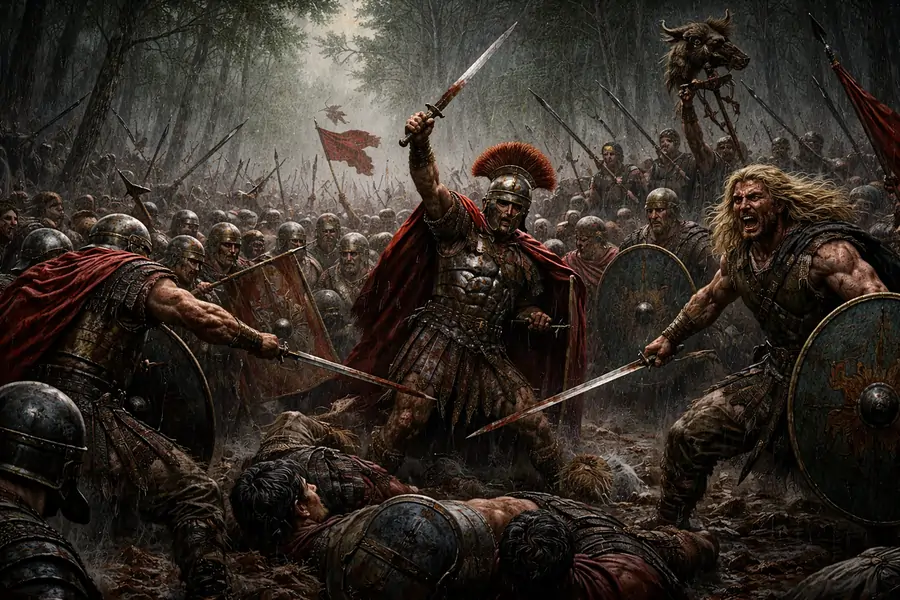
The Roman column was stretched long and struggling through the muddy terrain when the Germanic attack suddenly began. The warriors emerged from the forest and launched javelins at the Romans. The Romans were unable to form proper battle lines. The terrain prevented the Romans from ordering into formations. Shields could not lock together. Units became separated. Communication broke down.
The Germans knew that they could not win against the Roman heavy infantry in a head-on attack. So they frustrated the Romans with hit-and-run tactics. The Geramic warriors would attack quickly and withdraw into the forest. Heavy rain worsened the situation. Roman shields became waterlogged. Armor weighed soldiers down. Roads turned into a muddy bog. By nightfall, the Romans managed to construct a temporary camp to protect themselves from the elements and the German attacks. They had already suffered heavy losses.
Day Two: The Roman Army Begins to Collapse
The next day, Varus attempted to move toward open ground. However, Arminius continued harassing the Romans with hit-and-run attacks. Germanic warriors struck from hidden positions. The Roman cavalry struggled in the wet terrain. Infantry cohesion collapsed. Since the Romans also had a big baggage train, they were further hindered from moving fast.
Some Roman units attempted breakout maneuvers, but once they were isolated from the main army, the Germans collapsed on them and destroyed them. Morale slowly began to crumble. The Rain continued to fall, worsening Roman conditions. The army was now exhausted, wounded, and surrounded.
Day Three: The Roman Army is Destroyed
On the third day, the Romans reached a narrow pass near Kalkriese Hill. Here, the Germanic tribes had prepared fortifications. They built an earthen wall along the forest edge. From behind this barrier, warriors launched missiles at the Romans. They slowly whittled down the Roman legions.
The Roman column had now become trapped between the hill and the marshland. There was no room to maneuver. Sensing victory, Germanic forces charged repeatedly at the Roman units. The command structure failed as more and more Roman officers were killed.
Realizing that the situation was hopeless, Varus committed suicide rather than risk being captured. Many of the Roman officers followed his example. They would rather take their own life than face failure and torture. The remaining Roman soldiers were either slaughtered or captured. Only a rare few managed to escape.
The Destruction of Three Roman Legions
The destruction of the Roman army was total. Legions XVII, XVIII, and XIX were completely wiped out. Their standards were also captured, which was a huge humiliation to the Romans and caused a significant drop in morale of the troops. The survivors of the battle were sacrificed or enslaved. The loss shocked Rome. The legions that were destroyed were never reformed, and their numbers were permanently retired. The battlefield remained littered with bones for years. Later Roman expeditions found skulls nailed to trees.
Why Rome Lost the Battle of the Teutoburg Forest
1. Underestimating the Germanic Tribes
Varus believed Germania was already pacified and that they would not fight back. He did not expect organized resistance, which led to a state of complacency.
2. Trusting Arminius
Arminius exploited Roman trust and used his position in the Roman army to trick Varus into leading the Roman army into a disadvantageous position. Varus, for his part, ignored warnings about the loyalty of Arminius.
3. Poor Terrain Choice
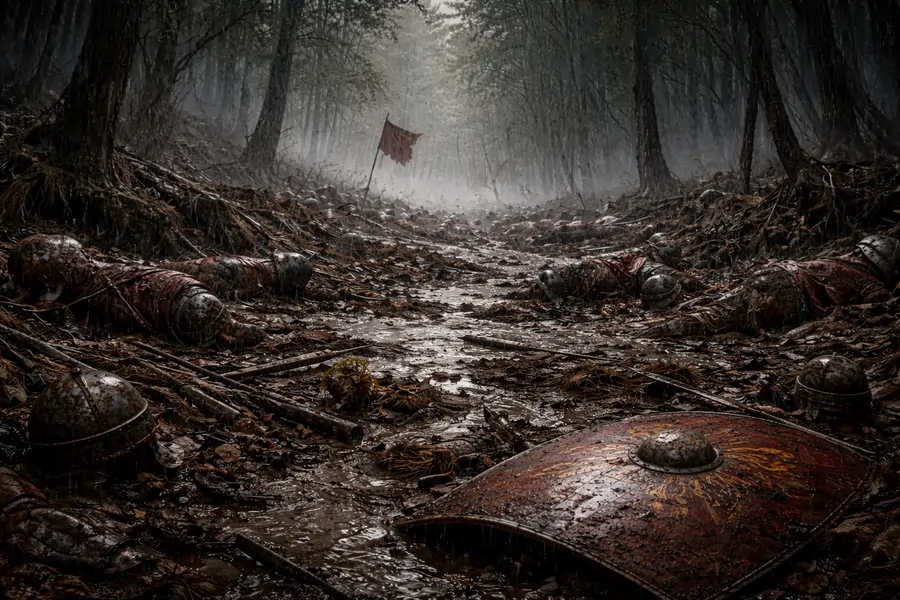
The heavy Roman legions excelled in open battlefields. They needed space to maneuver into formation and engage in battle. Forest and marsh terrain neutralized their strengths.
4. Extended Marching Column
The Roman army was marching through the forest in a long line that stretched for miles. Units could not support each other.
5. Weather Conditions
Heavy rain slowed movement and reduced the effectiveness of Roman equipment. The soaking wet heavy equipment of the Romans further slowed them down.
6. Germanic Guerrilla Tactics
The light Getman infantry engaged in hit-and-run attacks that prevented the Roman troops from forming up. Before the Romans could engage in an organized counterattack, the Germans would flee.
7. Lack of Reconnaissance
Roman scouts failed to detect the ambush preparations. This led to the Roman troops being caught completely off guard.
Aftermath of the Battle of Teutoburg Forest
News of the disaster reached Rome months later. Augustus was devastated on hearing the scale of the Roman losses. Ancient sources claim he shouted:
"Quinctilius Varus, give me back my legions!"
The defeat of the Roman legions was a big shock to the Romans. Following the defeat, Rome feared a Germanic invasion. Reinforcements were rushed to the Rhine frontier. Roman commanders fortified defenses and prepared for further attacks.
Germanicus and the Roman Revenge Campaigns
Between 14 AD and 16 AD, Germanicus Caesar led punitive expeditions into Germania. He defeated several tribes and recovered two legionary standards that were lost in the battle. Despite battlefield victories, Rome did not attempt permanent conquest again. The risk was too high, and Rome feared another debacle.
Strategic Significance of the Battle of Teutoburg Forest
End of Roman Expansion into Germania
The Rhine River became Rome's permanent frontier. Germania remained outside Roman control.
Shift in Roman Military Strategy
Rome primarily wanted a buffer zone to ward off any invasions. After the defeat at Teutoburg, Rome adopted defensive strategies. Fortifications replaced expansion.
Preservation of Germanic Independence
Germanic tribes remained culturally independent from Rome.
Long-Term Impact on Europe
The battle influenced the later development of medieval European states. Without this loss, Rome would have expanded further into Europe.
Archaeological Discovery of the Battlefield and Legacy
The likely battlefield at Kalkriese was discovered in the late 20th century. Archaeologists found Roman coins, weapons, and armor. The finds confirmed historical accounts of the ambush and destruction. The Battle of the Teutoburg Forest remains one of history's most famous ambushes. It demonstrated that even Rome's powerful legions could be destroyed if they were poorly led and lured into unfavourable conditions. The battle also elevated Arminius as a symbol of resistance. In later German history, he became a legendary figure.
Battle of Cannae vs Teutoburg Forest: Rome's Worst Defeats Compared
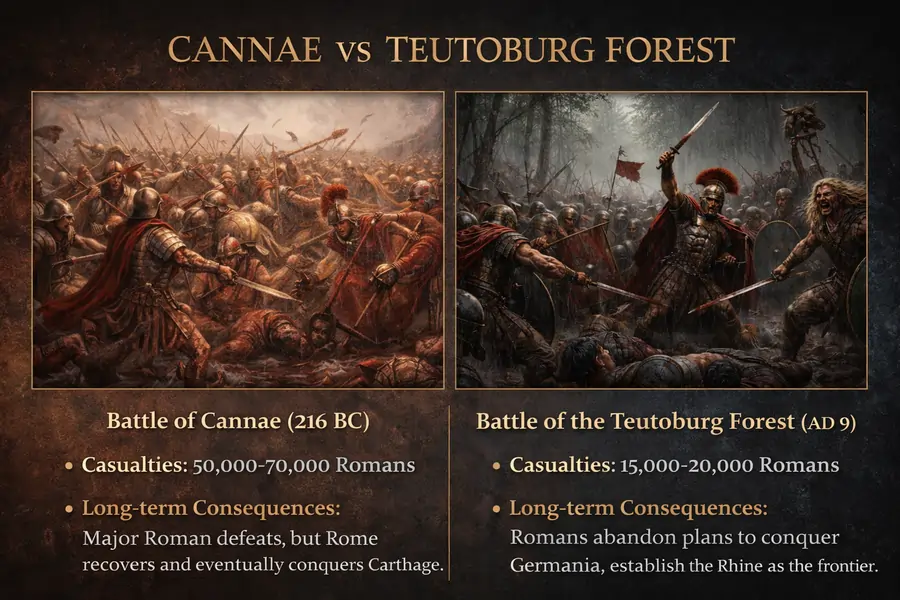
The Battle of the Teutoburg Forest in 9 AD stands as one of the greatest military battles in history. It is also the worst military defeat in Roman history. Why is this battle considered to be the greatest defeat if the Battle of Cannae by far has the highest casualty count?
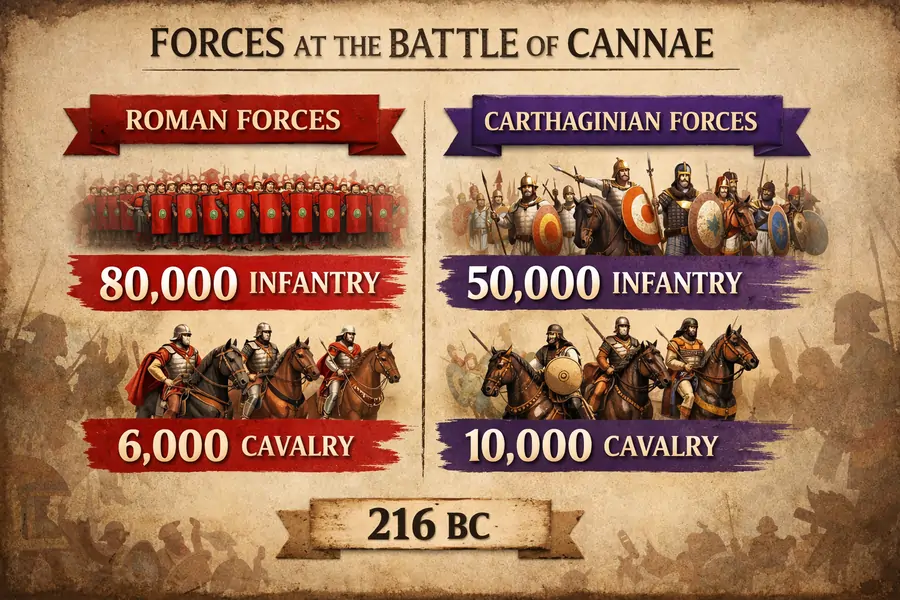
Rome lost 15,000 to 20,000 troops in the Battle of Teutoburg Forest, whereas at Cannae they lost about 50,000 to 70,000. At Cannae, Rome had gathered the largest army in history and faced a much smaller army on flat ground, which was favourable for their legions. Despite all the advantages, they were soundly and thoroughly defeated by Hannibal Barca using the double envelopment maneuver. However, despite the scale of the defeat, it did very little to change the outcome of the war. Hannibal could not force Rome to surrender, and Rome simply raised new legions and eventually won the Second Punic War.
The impact of the Battle of Teutoburg Forest was far-reaching and permanent. The Romans lost three full legions along with their battle standards. These were trained professional veteran troops who could not be replaced easily. The aura of Roman invincibility was shattered. Rome halted its plans of expansion and took a more defensive approach. There was a permanent shift in Roman expansion plans, with Rome deciding the Rhine to be its permanent northern frontier.
Related Articles
Frequently Asked Questions
Where exactly was the Battle of the Teutoburg Forest fought?
The Battle of the Teutoburg Forest was fought in 9 AD in Germania, most likely near modern Kalkriese in northwestern Germany. The battlefield consisted of dense woodland, marshy ground, and narrow paths that prevented the Roman legions from forming their usual battle formations. This difficult terrain allowed Arminius and the Germanic tribes to ambush and destroy the Roman army.
Which Roman legions were destroyed in the Teutoburg Forest?
Three Roman legions were destroyed in the Battle of the Teutoburg Forest: Legio XVII, Legio XVIII, and Legio XIX. These legions were commanded by Publius Quinctilius Varus and were completely wiped out during the three-day ambush by Germanic tribes led by Arminius. After the defeat, Rome permanently retired these legion numbers.
How many soldiers died in the Battle of the Teutoburg Forest?
Historians estimate that between 15,000 and 20,000 Roman soldiers were killed in the Battle of the Teutoburg Forest. This included three full legions along with auxiliary troops and camp followers. Germanic casualties are unknown but believed to be significantly lower due to the ambush tactics and favorable terrain.
Why did Arminius betray the Romans?
Arminius betrayed the Romans because he wanted to unite the Germanic tribes and resist Roman rule in Germania. Although he had served in the Roman army and gained citizenship, he opposed Roman taxation and control over his homeland. Using his knowledge of Roman tactics, Arminius organized a coalition of tribes and lured Varus into an ambush in the Teutoburg Forest.
Did Rome try to conquer Germania again after the Teutoburg Forest?
Rome launched several revenge campaigns into Germania after the Battle of the Teutoburg Forest, led by Germanicus between 14 AD and 16 AD. These expeditions defeated some Germanic tribes and recovered lost legionary standards. However, Rome ultimately abandoned plans to permanently conquer Germania and instead established the Rhine River as its defensive frontier.
Why is the Battle of the Teutoburg Forest considered important?
The Battle of the Teutoburg Forest is considered important because it stopped Roman expansion into Germania and established the Rhine River as the empire's northern frontier. The destruction of three Roman legions shattered the aura of Roman invincibility and forced Rome to adopt a more defensive strategy. The battle also helped preserve the independence of the Germanic tribes.