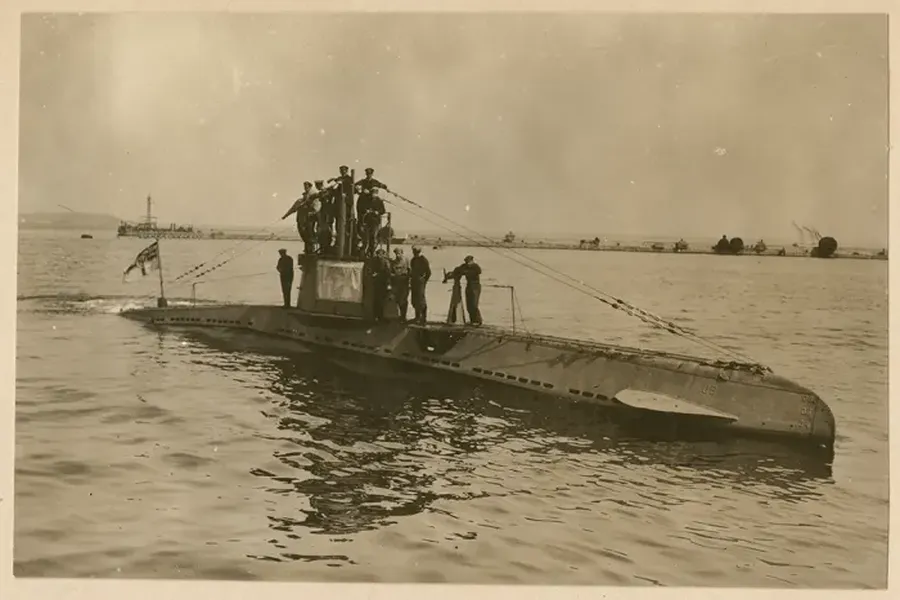
Unrestricted submarine warfare was a controversial naval strategy that allowed submarines to sink merchant ships without warning, reshaping warfare at sea during both world wars. This strategy, combined with wolf pack tactics employed by German U-boats, became one of the most devastating aspects of naval combat in World War 1 and World War 2.
When discussing unrestricted submarine warfare, Germany and her U-boats immediately come to mind. There has been significant criticism of Germany for resorting to unrestricted submarine warfare in World War 1 as well as World War 2. Understanding the history of submarine warfare and why Germany pursued this strategy requires examining the broader context of naval conventions and the circumstances that forced this escalation.
What is Unrestricted Submarine Warfare?
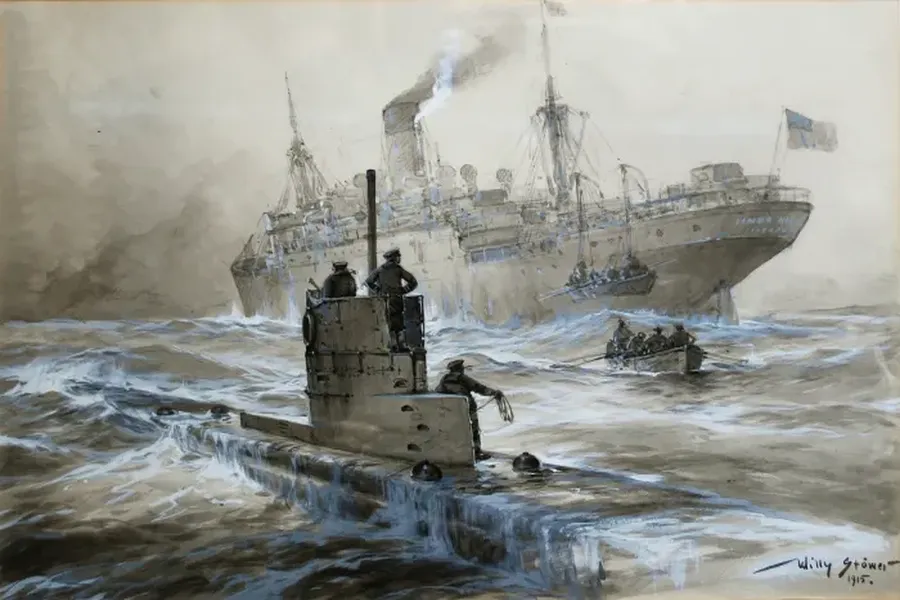
Unrestricted submarine warfare, a key tactic in submarine warfare history, is a type of naval warfare in which submarines have no restrictions or code governing the sinking of vessels. No warning is provided before attacking merchant ships—a stark contrast to traditional naval conduct. The "prize rules" or "cruiser rules" required submarine crews to surface, investigate merchant vessels for military cargo, and ensure the safety of civilian crews.
When attacking a merchant vessel, submarine crews were traditionally required to follow these rules to protect civilian lives. However, this could be disregarded if the ship was armed or the crew refused to cooperate and would not stop. During World War 1 and World War 2, Germany chose to ignore these established conventions and began sinking ships on sight, raising international alarm and reshaping submarine warfare history.
Unrestricted Submarine Warfare in World War 1
During the initial stages of World War 1, Germany did not employ unrestricted submarine warfare. German U-boats were sinking numerous British ships, and Germany was confident they could force Britain's surrender. Faced with mounting losses, Britain sought solutions and developed Q-ships as a countermeasure to German U-boat tactics.
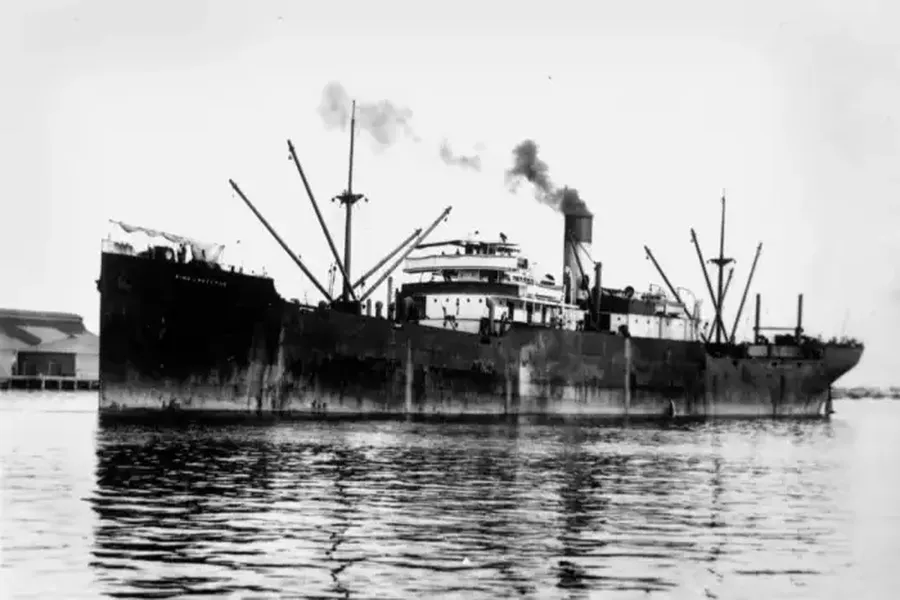
Q-Ships or Decoy Ships
Also known as decoy ships or mystery ships, these were heavily armed merchant vessels with concealed weaponry. According to prize rules naval warfare conventions, submarines were required to surface and search merchant vessels to ensure crew safety. These Q-ships exploited that requirement by luring submarines to surface, then attacking with hidden guns. Since ramming or surfacing was the most effective way to sink a submarine during WW1, this tactic proved highly effective.
Some crews even staged fake abandonments to draw submarines to the surface. Submarines were extremely vulnerable at this point, prompting desperate countermeasures. Consequently, in early 1915, Germany declared the area around the British Isles a war zone, announcing that any neutral ships entering would be attacked. This escalation led to the sinking of the Lusitania on May 7, 1915—a British passenger liner carrying 1,201 people, including 128 Americans, along with munitions.
The Lusitania sinking prompted U.S. President Woodrow Wilson to send a stern message to Germany demanding an end to attacks on unarmed merchant vessels. More stringent rules were consequently imposed on U-boat crews, severely hampering their operations. Unrestricted submarine warfare resumed only in fall 1917, when Germany concluded it was the only path to victory over Britain.
German U-Boat Conduct in Early World War 2
Under the Treaty of Versailles following World War 1, Germany was prohibited from possessing submarines. However, Germany circumvented this ban by training submarine crews abroad. When World War 2 erupted, German U-boats resumed operations to attempt to strangle Britain's vital resources. During the early war stages, U-boat crews initially adhered to prize rules as required by international naval law.
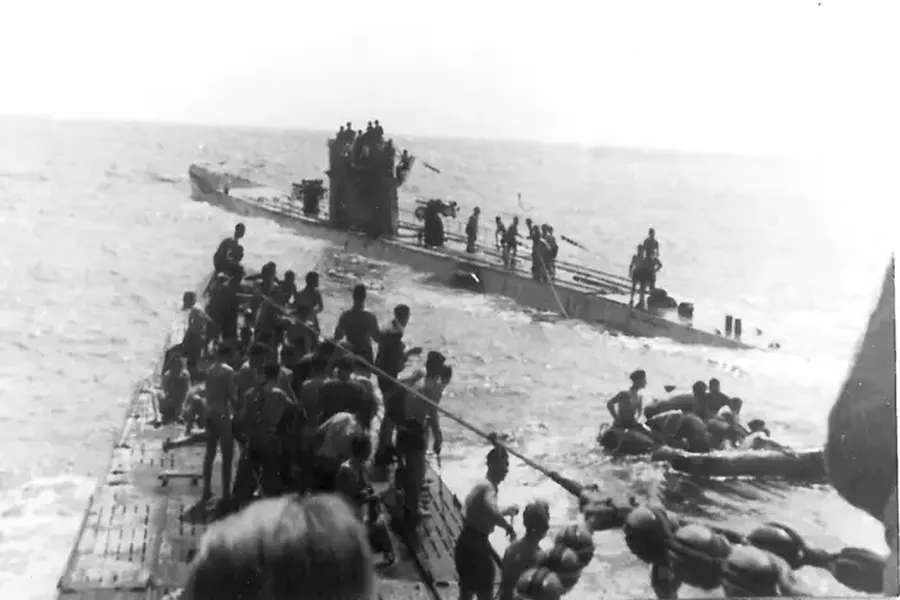
The Laconia Incident
During the early war period, whenever a merchant ship was sunk by a German U-boat, the submarine crew would surface and ensure survivors' safety. They even radioed neighboring naval vessels to request rescue assistance. This humanitarian conduct changed dramatically after the Laconia incident—a pivotal moment that reshaped German submarine warfare strategy.
The RMS Laconia, a British troopship, was carrying 2,732 people including crew, soldiers, and prisoners of war. On September 12, 1942, the ship was torpedoed and sunk by German submarine U-156. Following established prize rules, U-156's captain, Korvettenkapitän Werner Hartenstein, immediately surfaced and began rescue operations. Admiral Dönitz, commanding submarine operations, ordered seven U-boats to divert and assist the survivors.
U-156 transmitted distress signals providing its location and explicitly announced humanitarian rescue intentions to nearby Allied forces. Several other U-boats joined the rescue effort, displaying Red Cross banners to signal peaceful intent. The crew transferred survivors to lifeboats and towed them, while some women and children were taken aboard the submarine for protection.
The situation deteriorated when a USAAF B-24 Liberator bomber spotted the U-boats. Despite being informed of the U-boat's location, rescue mission, and the presence of survivors, the pilots were ordered to attack. The bomber's strafing and bombing runs killed numerous survivors and forced the submarine to abandon the remaining people and crash-dive to escape. The B-24 crew falsely reported sinking the submarine—they had actually sunk two lifeboats full of survivors—and received medals for their actions.
Following the Laconia incident, Grand Admiral Karl Dönitz issued the "Laconia Order," forbidding German U-boat commanders from attempting any rescue operations. This order effectively mandated unrestricted submarine warfare for the remainder of the war. While a few U-boat commanders continued performing rescues, the practice became rare after this pivotal incident shaped the future conduct of U-boat operations.
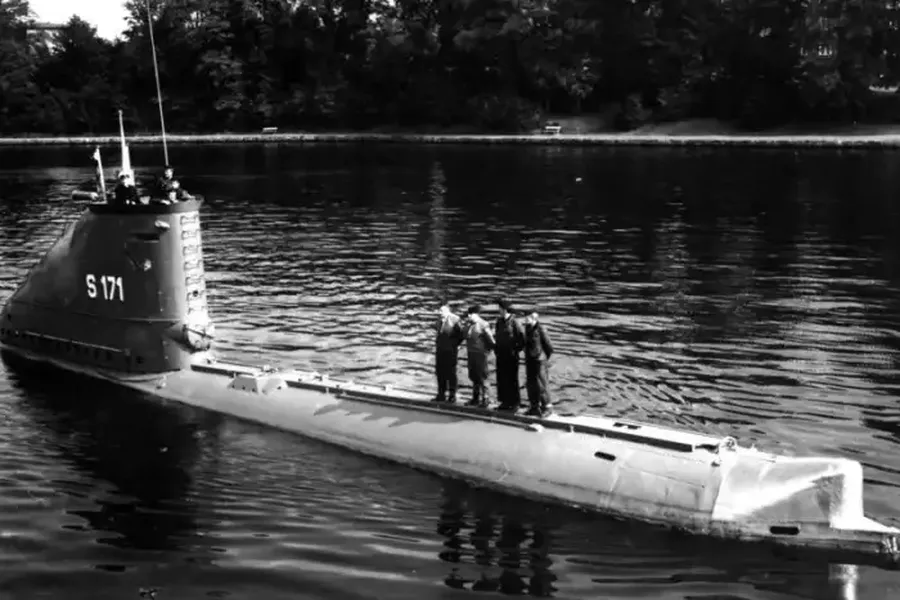
Wolf Pack Tactics and German U-Boat Strategy
As unrestricted submarine warfare intensified, German U-boats increasingly adopted wolf pack tactics—coordinated group attacks by multiple submarines on convoys. These tactics proved devastatingly effective during the Battle of the Atlantic, where German U-boats sought to intercept and sink merchant vessels supplying Britain. Wolf pack tactics represented a significant evolution in submarine warfare history, allowing German U-boats to overwhelm escort vessels and maximize casualties to merchant shipping. The combination of unrestricted submarine warfare and organized wolf pack tactics created an unprecedented threat to Allied naval commerce during World War 2.
Allied Use of Unrestricted Submarine Warfare
Evidence clearly demonstrates that unrestricted submarine warfare was imposed upon Germany by Allied actions. Rather than a choice rooted in disregard for human life, it became a necessity driven by circumstances created during the conflict. Unrestricted submarine warfare was also employed by other nations. Primarily used to blockade and starve countries reliant on merchant shipping, this strategy targeted Britain and Japan. Although most nations eventually resorted to unrestricted submarine warfare tactics, Germany's campaign against Britain and the United States' operations against Japan were the most extensive. During the Battle of the Atlantic, both unrestricted submarine warfare and the evolution of naval strategy fundamentally altered the course of the war.
Frequently Asked Questions
What is unrestricted submarine warfare?
Unrestricted submarine warfare is a naval combat strategy where submarines sink merchant vessels without warning and without adhering to prize rules that normally require surfacing, investigation, and ensuring crew safety. This tactic was employed extensively by German U-boats during World War 1 and World War 2.
What are wolf pack tactics?
Wolf pack tactics involve coordinated attacks by multiple submarines on a single convoy. German U-boats used this strategy during the Battle of the Atlantic to overwhelm escort vessels and maximize merchant ship sinkings. This coordinated approach proved far more effective than individual submarine attacks.
What was the Lusitania sinking?
On May 7, 1915, the British passenger liner Lusitania was sunk by German submarine U-20 during World War 1. Despite officially carrying munitions, the ship was a civilian vessel with 1,201 people aboard, including 128 Americans. The incident provoked international outrage and prompted the U.S. to pressure Germany to restrict submarine attacks.
What was the Laconia incident?
On September 12, 1942, German U-156 sank the British troopship Laconia carrying 2,732 people. When the U-boat crew attempted a humanitarian rescue, American B-24 bombers attacked despite being informed of the rescue mission, killing numerous survivors. This led Admiral Dönitz to issue the Laconia Order, forbidding further rescue attempts.
What are prize rules in naval warfare?
Prize rules are international maritime conventions requiring that submarines surface before attacking merchant vessels, investigate cargo, verify armament, and ensure civilian crew safety before sinking a ship. These rules were designed to protect non-combatants during naval conflict.
How did German U-boats impact the Battle of the Atlantic?
German U-boats, employing unrestricted submarine warfare and wolf pack tactics, posed a severe threat to Allied merchant shipping during the Battle of the Atlantic. Their campaign against British supply convoys nearly succeeded in starving Britain of essential resources, becoming one of World War 2's most critical naval struggles.