What was blitzkrieg and why did it revolutionize modern warfare? Blitzkrieg explained: the German blitzkrieg strategy was one of the most devastating ww2 military tactics ever developed, combining speed, surprise, concentrated armor, and air power to overwhelm enemies before they could mount effective defenses. These blitzkrieg tactics ww2 transformed warfare by abandoning static trench fighting in favor of rapid, coordinated strikes that could conquer entire nations in weeks. Understanding what was blitzkrieg means understanding how Germany nearly won World War II through sheer tactical innovation.
Table of Contents
- Blitzkrieg Explained: What Was Blitzkrieg and How Did It Work?
- Origins of Blitzkrieg: From Theory to German Blitzkrieg Strategy
- Blitzkrieg Tactics WW2: German Success in Poland and France
- The Ardennes Breakthrough: Blitzkrieg's Masterpiece
- German Panzers: The Steel Fist of Blitzkrieg
- Allied Response: Learning to Counter Blitzkrieg
- Outdated tactics of the Allies
- German Blitzkrieg Strategy: Heinz Guderian's Revolutionary Approach
- Why Blitzkrieg Tactics WW2 Eventually Failed
Blitzkrieg Explained: What Was Blitzkrieg and How Did It Work?
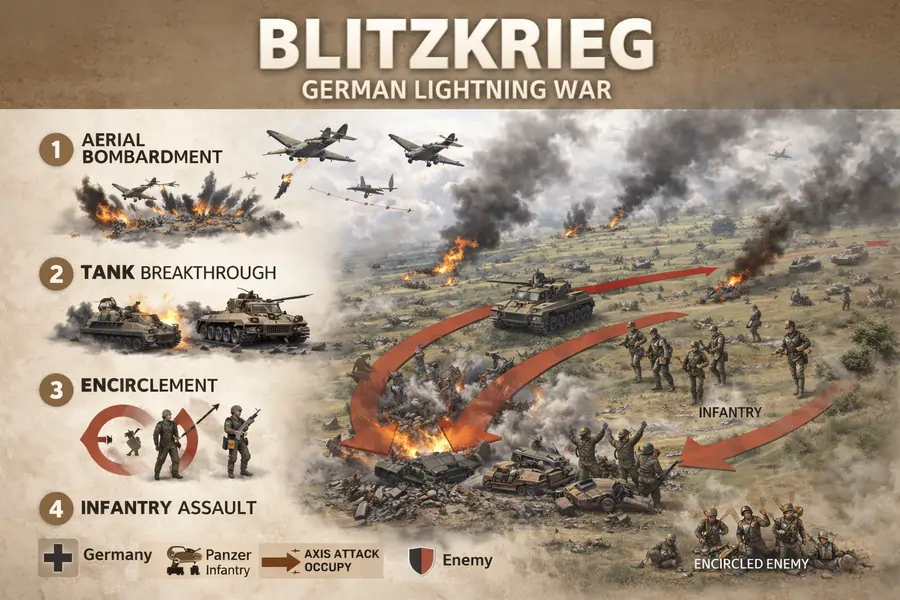
The German blitzkrieg strategy was a revolutionary approach to ww2 military tactics that fundamentally changed modern warfare. The word 'blitzkrieg' translates to 'lightning war,' perfectly capturing its essence. These blitzkrieg tactics ww2 relied on the speed and surprise of highly mobile units—mechanized infantry and armor striking in coordinated waves supported by devastating air attacks. The surprise attacks were spearheaded by panzer divisions that would punch through enemy lines as deep as possible without stopping to consolidate positions. This was incredibly risky as advancing units became vulnerable to counterattack, but speed was the essential ingredient for success. The goal was to paralyze enemy command structures and shatter defensive lines before they could react.
Origins of Blitzkrieg: From Theory to German Blitzkrieg Strategy
The conceptual foundations of blitzkrieg tactics ww2 emerged long before World War II. In the 1870s, German Field Marshal Alfred von Schlieffen developed principles remarkably similar to what would become the German blitzkrieg strategy. Recognizing that Germany would inevitably be outnumbered and out-resourced in future conflicts, Schlieffen proposed striking hard and fast to secure victory before enemies could mobilize their superior resources.
Schlieffen's concept called for specialized crack troops to penetrate deep into enemy defenses, bypassing main forces to achieve decisive victory without prolonged engagements. British Tank Commander J.F.C. Fuller further developed these ideas, advocating for concentrated use of tanks and air power in his 1923 book "Reformation of War." While the Allies largely ignored Fuller's insights, German military theorists—particularly Heinz Guderian—studied them intensively. Heinz Guderian blitzkrieg doctrine would synthesize these concepts into the devastating ww2 military tactics that shocked the world.
Blitzkrieg Tactics WW2: German Success in Poland and France
While the concept of concentrated attack existed since the 1870s, it was Germany's execution of blitzkrieg tactics ww2 that made the strategy legendary. When Germany invaded Poland on September 1, 1939, the battle was over in just over a month—a stunning demonstration of what was blitzkrieg at its most effective. The German blitzkrieg strategy relied on panzer divisions supported by luftwaffe close air support. Total air superiority was absolutely essential for success.
The devastation was repeated during the Battle of France. French commanders never expected Germans to attack through the supposedly tank-impenetrable Ardennes forest, concentrating fewer troops in that sector. German panzer divisions exploited this weakness brilliantly, cutting off and encircling large Allied formations. France fell on June 25, 1940—conquered in just over six weeks. This represented blitzkrieg explained in its purest, most devastating form.
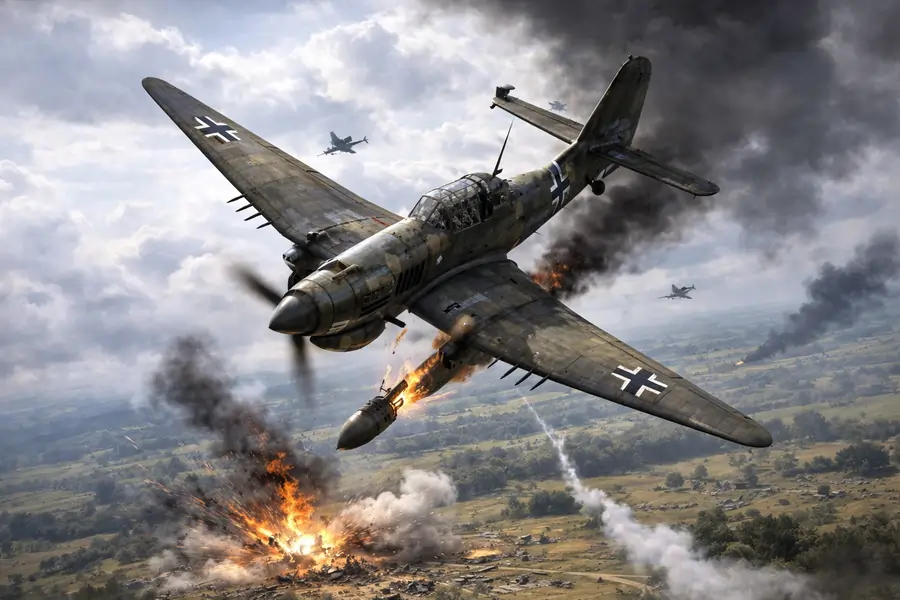
The Luftwaffe close air support proved critical to German success by providing total air dominance. German Junkers Ju 87 Stuka dive bombers delivered precision strikes against ground targets directly ahead of advancing panzer divisions. The sirens attached to Stukas—nicknamed "Jericho Trumpets"—made a terrifying wailing sound during dives, serving as psychological warfare that often paralyzed enemy units before bombs even fell. This coordination between armor and air power defined blitzkrieg tactics ww2.
The Ardennes Breakthrough: Blitzkrieg's Masterpiece
The Ardennes offensive of May 1940 stands as the most spectacular demonstration of blitzkrieg tactics ww2. General Erich von Manstein devised the audacious plan (Fall Gelb - Case Yellow) that would exploit Allied expectations. The French had concentrated their best forces along the Belgian border and built the supposedly impregnable Maginot Line along the German frontier. They considered the heavily forested, hilly Ardennes region unsuitable for large-scale armored operations and defended it with second-rate divisions.
On May 10, 1940, Germany launched diversionary attacks into the Netherlands and Belgium, exactly as the Allies expected. French and British forces rushed north to meet this "main" threat. Meanwhile, the real hammer blow was forming in the Ardennes. Three panzer corps—containing seven panzer divisions with approximately 1,500 tanks—began threading through the forest roads in massive columns stretching over 100 miles. The traffic jam was so severe that if French bombers had struck, they could have paralyzed the entire offensive. But French intelligence had dismissed the possibility of a major attack through the Ardennes.
By May 13, German panzer divisions under Heinz Guderian reached the Meuse River at Sedan—the historic weak point in French defenses. Despite fierce French resistance, German combat engineers established bridgeheads while Stuka dive bombers provided devastating luftwaffe close air support, attacking French artillery positions and strongpoints with precision. The psychological impact of the Stuka sirens and the intensity of the bombardment broke French morale. By nightfall, panzer divisions were across the Meuse and racing west toward the English Channel.
The German blitzkrieg strategy now operated at peak effectiveness. Panzer divisions drove 30-40 miles per day westward, creating a corridor that split Allied forces in two. French commanders, trained for methodical WWI-style warfare, couldn't react fast enough. Communications broke down as command posts were overrun or bypassed. French armor—often superior to German tanks individually—was scattered across the front in small groups rather than concentrated like German panzer divisions. Allied counterattacks came too late and were too weak to seal the breach.
By May 20, just ten days after the offensive began, German forces reached the Channel coast at Abbeville. The entire British Expeditionary Force, the French First Army, and Belgian forces were trapped in a pocket around Dunkirk. While the famous evacuation saved 338,000 troops, all their heavy equipment was lost. France had been strategically defeated in less than two weeks. The Ardennes breakthrough demonstrated that with proper execution, blitzkrieg tactics ww2 could achieve what World War I offensives failed to accomplish in four years of bloodshed.
German Panzers: The Steel Fist of Blitzkrieg
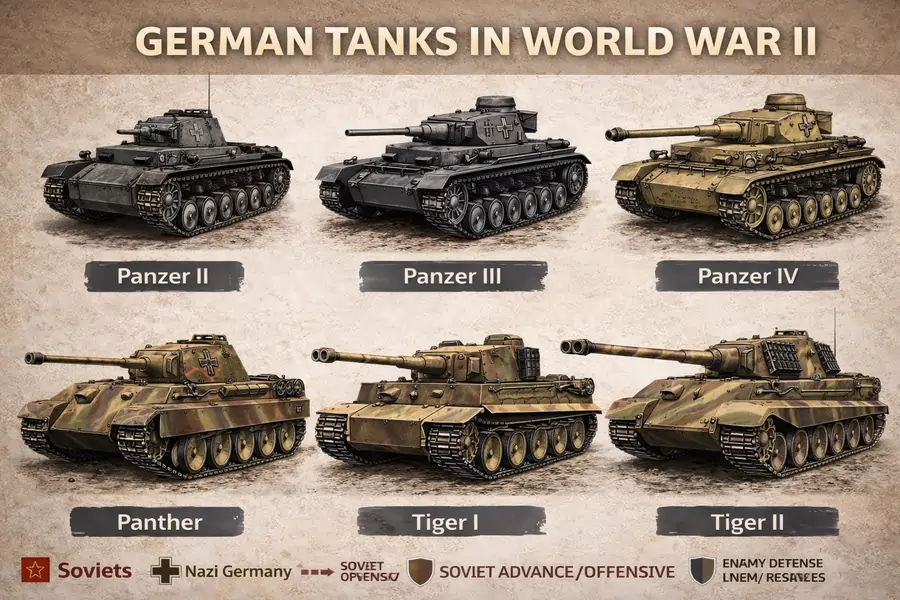
The panzer divisions that executed the German blitzkrieg strategy relied on several tank models, each with distinct roles. Understanding these vehicles reveals why Germany's ww2 military tactics initially succeeded—and why they eventually failed against superior Allied production.
Panzer I and II were light tanks designed primarily for reconnaissance and training. The Panzer I weighed only 5.4 tons and carried just machine guns—no main cannon. The Panzer II (9 tons) mounted a 20mm autocannon. While inadequate for tank-versus-tank combat, they provided crucial mobile firepower during the Polish and French campaigns when facing weaker opposition. By 1941, both were obsolete as main battle tanks.
Panzer III was Germany's primary medium tank during the early war years. Weighing 23 tons and armed initially with a 37mm gun (later upgraded to 50mm), it was designed to fight enemy tanks while Panzer IVs provided fire support. The Panzer III had excellent optics, radio communication in every tank (unlike many Allied tanks), and good crew ergonomics. These advantages in command and control made German panzer divisions far more effective than the sum of their individual tanks.
Panzer IV became Germany's workhorse tank throughout the war. Initially armed with a short-barreled 75mm gun for infantry support, it was upgraded in 1942 with a long-barreled 75mm gun that could defeat any Allied tank at the time. Weighing 25 tons with 80mm of frontal armor, the Panzer IV remained competitive throughout the war. Germany produced over 8,500 Panzer IVs—more than any other German tank model.
Panzer V (Panther) and Panzer VI (Tiger) were Germany's responses to Soviet T-34 and KV-1 tanks. The Panther (45 tons, 75mm gun) combined sloped armor like the T-34 with German engineering precision. The Tiger I (57 tons, 88mm gun) was nearly invincible in combat but mechanically unreliable and expensive. Both arrived too late and in too few numbers to change Germany's strategic situation.
German vs Allied Tanks: The Critical Comparison
In 1939-1940, German tanks weren't superior to Allied tanks individually—Germany won through superior tactics and concentration. The French Char B1 bis (32 tons, 60mm armor, 47mm gun) was better armored and armed than any German tank. The British Matilda II was nearly impervious to German 37mm guns. However, these advantages meant nothing when Allied tanks were scattered across the front while German panzer divisions concentrated overwhelming force at decisive points.
French Armor: France actually had more tanks than Germany in 1940 (approximately 3,000 vs 2,500). French tanks like the SOMUA S35 (20 tons, 47mm gun) were excellent designs. The critical difference was doctrine. French tanks were distributed to support infantry divisions. They lacked radios—commanders often had to dismount and communicate by hand signals. French tanks couldn't coordinate like German panzer divisions, making them vulnerable to being defeated piecemeal.
British Armor: Britain's approach was similarly flawed. They divided tanks into "infantry tanks" (heavily armored but slow, like the Matilda) and "cruiser tanks" (faster but lightly armored). This prevented concentration of armor. British tanks also suffered from poor reliability and inadequate guns. Not until the American-supplied Sherman arrived in 1942 did Britain have a reliable, well-armed medium tank in quantity.
Soviet Armor: The Soviet T-34 (1940) was arguably the best tank design of the war—26 tons, sloped armor, excellent mobility, and a powerful 76mm gun. When German forces first encountered T-34s in 1941, their 37mm and short-barreled 50mm guns couldn't penetrate its armor. However, poor Soviet crew training, lack of radios, and catastrophic leadership during the initial German invasion meant T-34s were often defeated despite their technical superiority. Only after surviving the initial disasters did the Soviets develop the doctrine and training to use the T-34 effectively.
American Armor: The M4 Sherman (33 tons, 75mm gun) became the backbone of Allied armored forces from 1942 onward. While inferior to German Panthers and Tigers in gun power and armor, Shermans were reliable, easy to produce (50,000+ built), and easy to maintain. More importantly, American doctrine emphasized coordination with infantry, artillery, and air power—the combined arms approach that Germany pioneered but could no longer sustain due to resource shortages.
The critical lesson: tank quality mattered less than doctrine, production capacity, and combined arms coordination. Germany's early success came from better tactics, not better tanks. When the Allies adopted similar combined arms doctrine while outproducing Germany 10-to-1, German technical superiority in late-war tanks couldn't compensate.
Allied Response: Learning to Counter Blitzkrieg
The devastating German successes of 1939-1941 forced Allied powers to fundamentally rethink their approach to warfare. The ww2 military tactics that defeated France and nearly destroyed the Soviet Union in 1941 would be progressively neutralized through adaptation, innovation, and overwhelming material superiority.
Soviet Deep Battle Doctrine
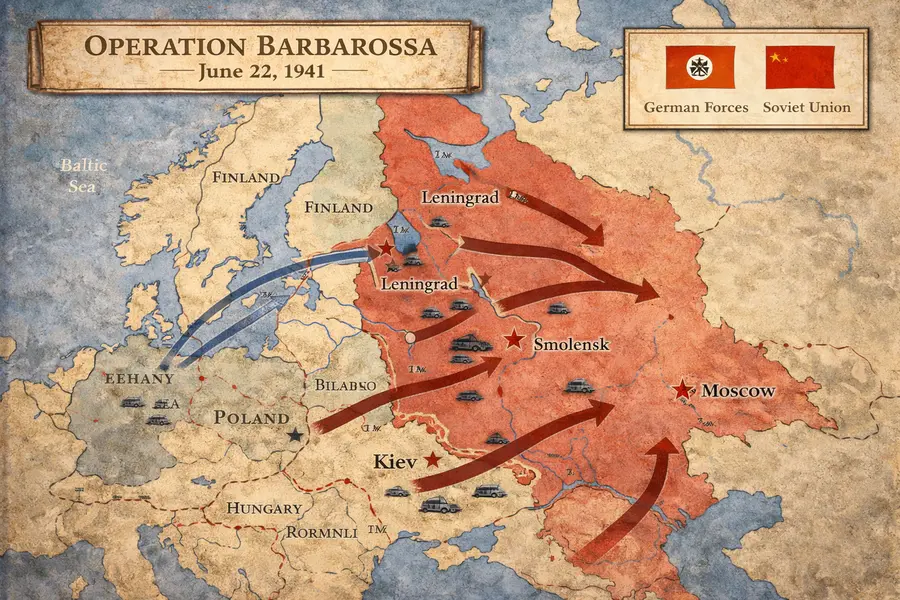
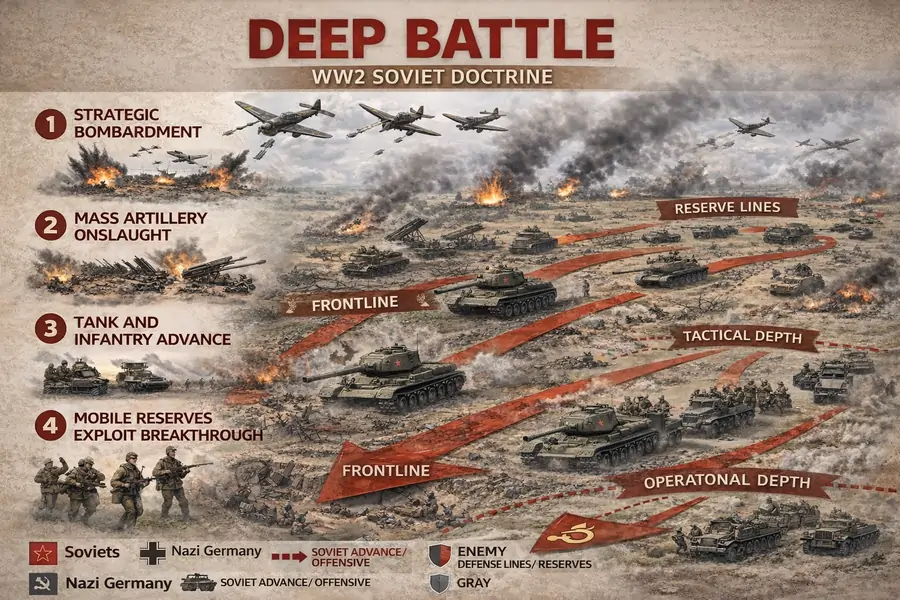
The Soviets paid the highest price learning to counter the German blitzkrieg strategy. Operation Barbarossa initially destroyed entire Soviet armies through encirclements. However, Soviet military theorists had already developed "Deep Battle" doctrine in the 1930s—a concept remarkably similar to blitzkrieg emphasizing rapid penetration, encirclement, and exploitation. Stalin's purges had killed many of these theorists, and the Red Army abandoned the doctrine.
After catastrophic defeats in 1941-1942, the Soviets revived and refined Deep Battle doctrine. By 1943, Soviet forces were executing their own devastating encirclements. The Battle of Stalingrad (1942-43) trapped the German Sixth Army using classic blitzkrieg tactics against Germany itself—rapid advances, encirclement, and cutting supply lines. Operation Bagration (1944) destroyed German Army Group Center using multiple simultaneous breakthrough operations that prevented German reserves from responding effectively. The Soviets essentially perfected what was blitzkrieg by combining German tactical concepts with Soviet operational art and overwhelming material superiority.
British and American Combined Arms Development
Britain learned painful lessons in France (1940) and the Western Desert (1940-42). By 1942-43, British forces developed effective countermeasures. The key was defensive depth—instead of linear defenses, British forces created layered defensive zones with mobile reserves positioned to counterattack penetrations. At the Second Battle of El Alamein (1942), British General Montgomery refused to be rushed, built overwhelming material superiority, and systematically ground down Rommel's forces.
The Americans brought industrial might and a pragmatic approach to combined arms warfare. Rather than pursuing technical excellence in individual weapons, American doctrine emphasized reliability, standardization, and coordination between branches. American forces pioneered close air support that rivaled the luftwaffe close air support of early German operations. The P-47 Thunderbolt became the Allies' "Stuka"—providing devastating ground attack capability. American artillery, coordinated through radio networks and using sophisticated fire control, could mass fires from multiple battalions on targets within minutes.
The Atlantic Wall and Defensive Innovation
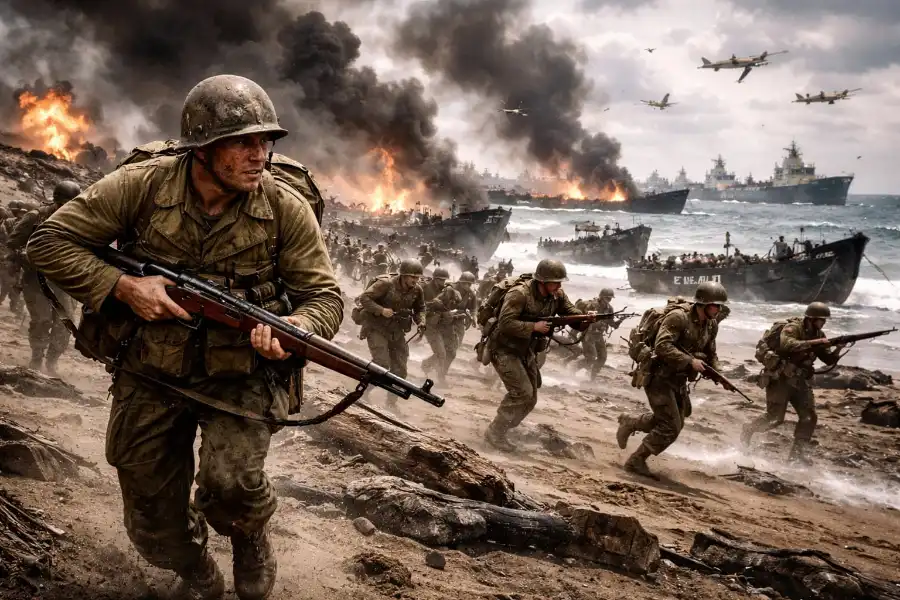
By 1944, Germany found itself on the defensive everywhere. The Normandy invasion demonstrated how completely the tactical situation had reversed. Allied forces achieved the surprise, concentration, and air superiority that characterized early German blitzkrieg. The Allies coordinated naval gunfire, strategic bombing, tactical air support, airborne operations, and amphibious assault in ways Germany never could. When German panzer divisions attempted counterattacks, they were smashed by overwhelming Allied air power—exactly how German forces had destroyed Polish and French armor in 1939-1940.
Key Elements of Allied Response
The Allied answer to blitzkrieg tactics ww2 consisted of several critical elements: Strategic depth—particularly crucial for the Soviet Union, where vast spaces allowed trading territory for time to mobilize. Air superiority—by 1943, Allied air forces dominated the skies over every front, denying Germany the luftwaffe close air support that made blitzkrieg effective. Material superiority—Allied production vastly exceeded German capacity; the USA alone outproduced all Axis powers combined. Tactical adaptation—Allied forces developed their own mobile warfare doctrine, often executing it better than Germany by 1944.
Perhaps most importantly, Allies learned that blitzkrieg tactics ww2 required perfect execution and ideal conditions—rapid breakthrough, continuous advance, maintenance of surprise, and air superiority. By creating conditions where Germany couldn't achieve any of these, the Allies neutralized what was blitzkrieg without necessarily defeating individual German units in open battle. The German blitzkrieg strategy that conquered Poland in weeks and France in six weeks couldn't break Allied defenses that were prepared, properly resourced, and supported by total air superiority.
Outdated tactics of the Allies
During WW1, trench warfare was more prevalent and the border remained stationary for long periods of time. It took a lot of time and huge losses to gain even a few meters in the front. Most countries were preparing for another static trench warfare with fixed defence positions. All this changed with the introduction of the tanks. Since WW2 was fought with a large number of tanks, the tactics needed to be modified to fully utilize them.
During that time, tanks were used along with support infantry. There was no specific tank division with a large number of tanks. This was because they believed that tanks could not operate alone for the fear of them being overrun by the enemy units. The tanks that were available were therefore spread across all divisions evenly. This meant that the tanks were not capable of using thier speed and concentrated firepower to attack or counterattack enemy units. They were predominatly used in a very defensive role.
German Blitzkrieg Strategy: Heinz Guderian's Revolutionary Approach
While tanks supporting infantry proved useful, it couldn't deliver the decisive knockout blow Germany needed. German military planners understood they lacked the manpower and resources for prolonged conflict. The German blitzkrieg strategy therefore aimed at delivering killing blows to secure victory before battles devolved into the static trench warfare that characterized World War I. These ww2 military tactics represented a complete paradigm shift.
The architect of blitzkrieg tactics ww2 was General Heinz Guderian. Heinz Guderian blitzkrieg doctrine called for concentrated thrusts of armored divisions penetrating deep inside enemy lines, supported by ground attack aircraft providing luftwaffe close air support. Speed and surprise were paramount. Since panzer divisions didn't wait for slower infantry divisions to catch up, they could penetrate deeper into enemy territory and execute devastating pincer movements to encircle entire enemy armies. This was what was blitzkrieg at its tactical core—mobility, concentration, and shock.
Hitler approved Guderian's revolutionary concepts, and the German blitzkrieg strategy was unleashed upon Europe. Panzer divisions rolled across battlefields crushing opposition in coordinated waves. The panzers were supported by Stuka dive bombers providing precision luftwaffe close air support against ground targets. Germany crushed Poland in one month and France in under two months—stunning vindication of these ww2 military tactics. Although Germany achieved initial success against the Soviets in Operation Barbarossa, they ultimately failed to secure final victory in the East.
Why Blitzkrieg Tactics WW2 Eventually Failed
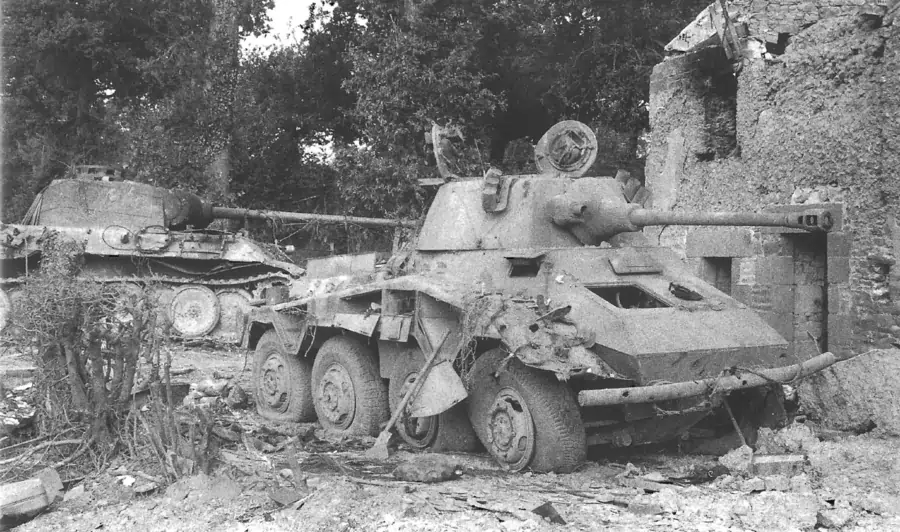
Despite initial triumphs, the German blitzkrieg strategy began revealing critical weaknesses. Logistics posed an insurmountable challenge. The deeper panzer divisions penetrated into enemy territory, the more stretched their supply lines became, leading to chronic shortages of fuel, ammunition, and essential supplies. Additionally, the Luftwaffe struggled to maintain air superiority later in the war, depriving ground forces of the luftwaffe close air support that made blitzkrieg tactics ww2 so devastating.
The Russian winter and fierce Soviet resistance stopped German advances in their tracks. Even with excellent tanks remaining late in the war, Germany couldn't replicate early successes. Understanding what was blitzkrieg also meant understanding its limitations—the strategy depended absolutely on surprise, which evaporated as the war progressed.
Allied forces studied and adapted German tactics, developing effective countermeasures. Code breaking allowed Allies to predict German attacks, eliminating the element of surprise that made the German blitzkrieg strategy so effective. Germany also lost air superiority, meaning ground troops no longer received the luftwaffe close air support that Heinz Guderian blitzkrieg doctrine considered essential. These ww2 military tactics required total air dominance to function.
Germany found itself outnumbered on all fronts, facing well-prepared enemies who had learned from past defeats. With fuel and resources running critically low, defeat became inevitable. Even during the Battle of the Bulge in December 1944—Germany's last major offensive—panzer divisions managed to break through Allied lines but lacked fuel to exploit the breakthrough. Allied reinforcements sealed the gap, and Germany's final blitzkrieg attempt failed. The lightning war had run out of thunder.
Frequently Asked Questions
What was blitzkrieg and how did it work?
Blitzkrieg was the German blitzkrieg strategy that revolutionized modern warfare during World War II. The term means 'lightning war' and describes rapid, coordinated military operations combining panzer divisions (armored tank units), mechanized infantry, and luftwaffe close air support to overwhelm enemies before they could organize effective defenses. Blitzkrieg tactics ww2 emphasized speed over consolidation—attacking forces would punch deep into enemy territory without pausing to secure flanks or rear areas. The goal was to paralyze enemy command structures, cut supply lines, and encircle large formations before they could retreat or counterattack. This approach allowed Germany to conquer Poland in one month and France in six weeks.
How are blitzkrieg tactics ww2 explained in simple terms?
Blitzkrieg explained simply: imagine a fist punching through paper rather than pushing against it. Traditional ww2 military tactics involved broad-front advances where armies moved forward together. Blitzkrieg tactics ww2 instead concentrated forces at weak points, creating narrow breakthroughs that panzer divisions exploited by driving deep behind enemy lines. Luftwaffe close air support acted as 'flying artillery,' destroying enemy positions directly ahead of advancing tanks. The rapid penetration created chaos in enemy rear areas, cutting communication lines and supply routes. By the time enemies realized what happened, German forces had encircled them. Speed and shock were everything—hesitation meant failure.
What role did Heinz Guderian play in developing blitzkrieg?
Heinz Guderian blitzkrieg doctrine formed the theoretical foundation of the German blitzkrieg strategy. Guderian, a German general and armored warfare theorist, synthesized ideas from earlier military thinkers into a comprehensive system for modern mechanized warfare. He advocated creating dedicated panzer divisions—large formations composed primarily of tanks supported by motorized infantry, artillery, and engineers—rather than spreading tanks evenly across infantry divisions as most armies did. Guderian emphasized that armor must operate independently at high speed, supported by luftwaffe close air support, to achieve strategic breakthroughs. His books and training programs convinced German high command to adopt these revolutionary ww2 military tactics. When war came, Guderian personally led panzer divisions in Poland, France, and the Soviet Union, proving his theories worked.
How did panzer divisions operate in blitzkrieg attacks?
Panzer divisions were the spearhead of blitzkrieg tactics ww2. These specialized formations combined hundreds of tanks with motorized infantry, self-propelled artillery, combat engineers, and reconnaissance units—all mechanized for speed. During attacks, panzer divisions concentrated at narrow points in enemy lines identified by reconnaissance as weak or lightly defended. After luftwaffe close air support softened targets, panzers would smash through defenses and drive deep into enemy territory at speeds of 30-40 miles per day or more. They bypassed strong points rather than attacking them directly, leaving those for following infantry. The rapid advance created 'pockets' where enemy forces were surrounded and cut off from supply and communication. This was the German blitzkrieg strategy in action—speed and concentration over brute force.
What was the role of luftwaffe close air support in blitzkrieg?
Luftwaffe close air support was absolutely critical to blitzkrieg tactics ww2 success. The Luftwaffe provided three essential functions: first, achieving air superiority by destroying enemy aircraft and airfields, preventing enemy air attacks on German ground forces; second, acting as mobile artillery by bombing and strafing enemy positions directly ahead of advancing panzer divisions; third, disrupting enemy command and logistics by attacking headquarters, supply depots, and communication centers. The Junkers Ju 87 Stuka dive bomber became the iconic symbol of luftwaffe close air support. Stukas could deliver precision strikes on bunkers, artillery positions, and tank concentrations while their sirens ('Jericho Trumpets') created psychological terror. Without luftwaffe close air support, the German blitzkrieg strategy would have failed—air power and armor were inseparable in these ww2 military tactics.
Why did the German blitzkrieg strategy eventually fail?
The German blitzkrieg strategy failed for several interconnected reasons. First, blitzkrieg tactics ww2 depended on surprise, which evaporated as enemies studied German methods and developed countermeasures. Allied intelligence, including code breaking, allowed prediction of German attacks. Second, logistics proved insurmountable—the deeper panzer divisions advanced, the longer and more vulnerable their supply lines became, leading to chronic fuel and ammunition shortages. Third, Germany lost air superiority, depriving ground forces of the luftwaffe close air support essential to Heinz Guderian blitzkrieg doctrine. Fourth, Germany faced enemies with superior resources and manpower on multiple fronts simultaneously. Finally, terrain and weather—especially Russian winters and vast distances—negated the speed advantage that made blitzkrieg effective. By 1943-44, these ww2 military tactics that once conquered nations in weeks had become ineffective against well-prepared opponents.