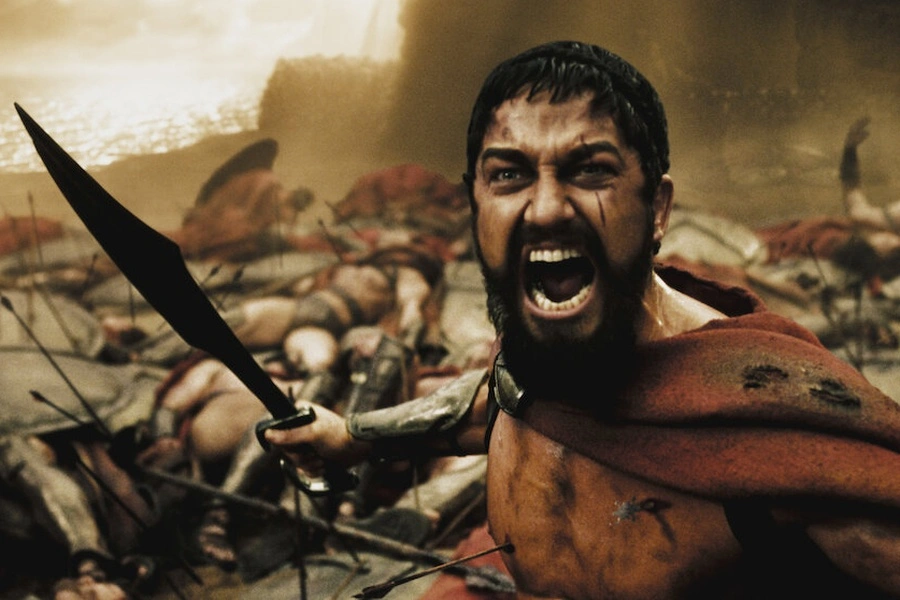
Three hundred Spartans against an empire. A king portrayed as a god. Arrows that blotted out the sun. Zack Snyder's 300 (2006) turned the Battle of Thermopylae into one of cinema's most spectacular depictions of ancient warfare. But how much of it actually happened? Leonidas really did command 300 Spartan warriors, but they were part of a much larger Greek coalition. A Greek named Ephialtes really did reveal a mountain route to the Persians, while the famous remark about fighting in the shade has its roots in Herodotus. Yet the film also features fictional monsters, an exaggerated Persian king and a political conspiracy with little historical basis. Here are ten famous elements of 300 examined against ancient sources and historical evidence.
Table of Contents
- The Real Battle of Thermopylae: What Happened?
- 1. Were There Really Only 300 Spartans?
- 2. Did Ephialtes Betray the Greeks?
- 3. Was Xerxes Really a Giant?
- 4. Did the Persian Army Have Millions of Soldiers and Wild Beasts?
- 5. Did the Persians Say Their Arrows Would Blot Out the Sun?
- 6. Did Leonidas Really Die at Thermopylae?
- 7. Did Leonidas Kick Persian Envoys into a Well?
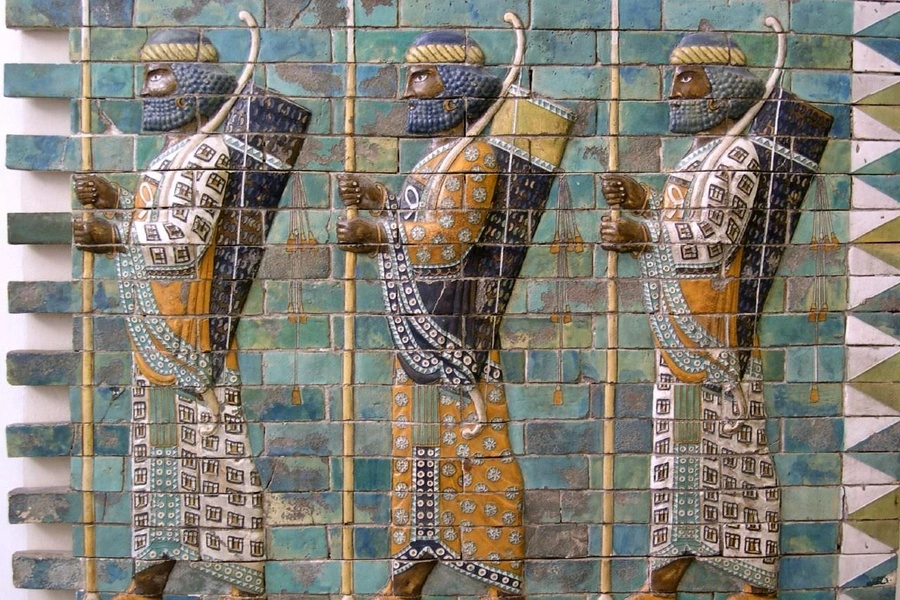
- 8. Were the Persian Immortals Real?
- 9. Was the Oracle of Delphi Bribed by the Persians?
- 10. Was Queen Gorgo Really Involved in Spartan Politics?
- Final Verdict: How Accurate Is 300?
- References and Further Reading
The Real Battle of Thermopylae: What Happened?
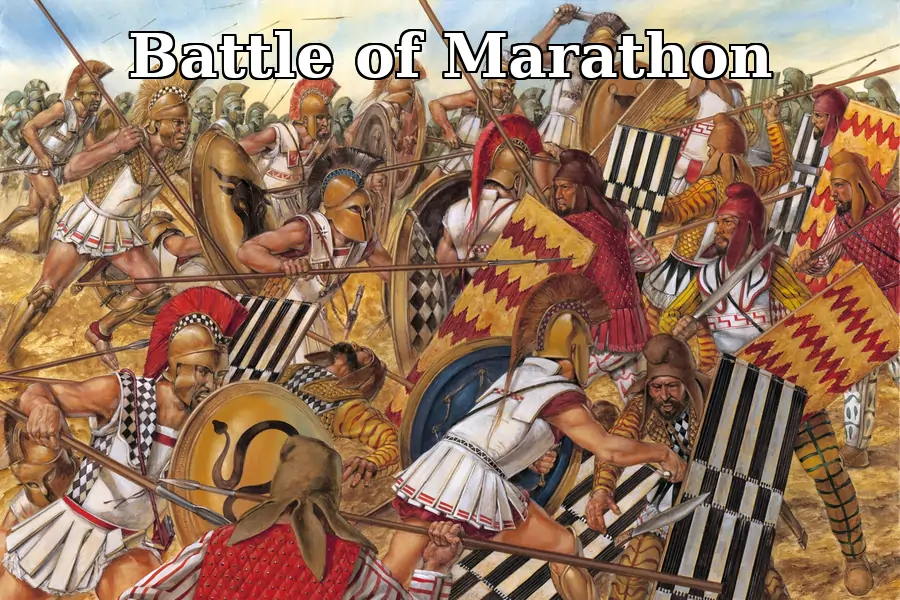
In 480 BC, Xerxes I, king of the Achaemenid Persian Empire, invaded Greece with a vast multinational army. It was the second major Persian invasion, following his father Darius I's defeat at the Battle of Marathon in 490 BC. Facing an enormous invading force, the Greek city-states decided to defend Thermopylae, a narrow coastal passage in central Greece. Its restricted terrain offered an important advantage: the Persians could not easily deploy their numerical superiority or cavalry against the Greek defenders.
A Greek coalition assembled under the command of Leonidas I, one of Sparta's two kings. His force included 300 Spartan hoplites, but they were accompanied by thousands of soldiers from other Greek communities. Meanwhile, the Greek fleet positioned itself near Artemisium to challenge the Persian navy. For two days, the Greeks successfully resisted repeated Persian assaults. Their heavy armour, long spears and disciplined formations proved particularly effective in the narrow pass. Even the Persian Immortals, an elite infantry formation, struggled to break through.
The situation changed when a local Greek named Ephialtes revealed a mountain path to the Persians. Xerxes sent Hydarnes and a force of elite soldiers along the route, allowing them to approach the Greek position from behind. Realising that his army was about to be surrounded, Leonidas dismissed much of the allied force. The Spartans, 700 Thespians and 400 Thebans remained. Herodotus reports that the Thebans eventually surrendered, although he suggests they had been compelled to stay. The Thespians, by contrast, chose to remain and fought alongside the Spartans until the end.
The Persian victory opened the route into central Greece. Xerxes subsequently occupied Athens, but the invasion was not over. The Greek naval victory at Salamis in 480 BC and the land victory at Plataea in 479 BC eventually ended his campaign. Thermopylae was therefore a Greek military defeat, not a victory. Its importance came from the resistance offered by the Greek coalition and the example of courage and sacrifice that the final stand represented. It remains one of the most recognisable episodes in ancient military history and is frequently discussed among the most decisive battles in history.
How Historically Accurate Is the Movie 300? Ten Famous Scenes Examined
1. Were There Really Only 300 Spartans Defending Thermopylae?
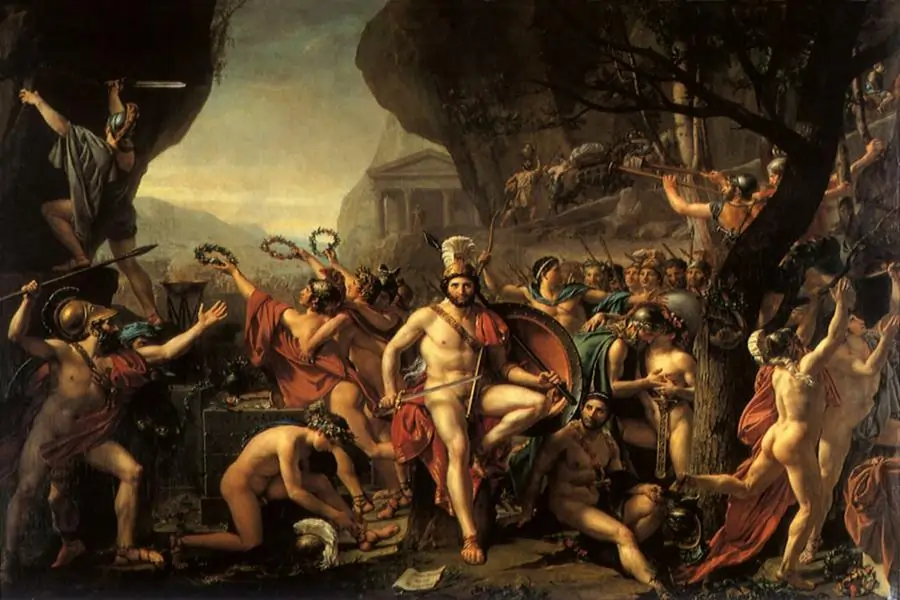
What the movie shows: Leonidas leads 300 Spartan warriors against the Persian army. The film gives the impression that these 300 men formed almost the entire Greek force defending the pass.
What actually happened: The 300 Spartans were real, but they were part of a much larger Greek coalition. Herodotus provides a detailed list of the contingents in his Histories (7.202-203).
| Greek contingent | Number |
|---|---|
| Spartans | 300 |
| Tegeans and Mantineans | 1,000 |
| Orchomenians | 120 |
| Other Arcadians | 1,000 |
| Corinthians | 400 |
| Phlians | 200 |
| Mycenaeans | 80 |
| Thespians | 700 |
| Thebans | 400 |
| Phocians | 1,000 |
| Opuntian Locrians | Unspecified |
Herodotus' listed contingents total 5,200, excluding the Locrians, whose exact number he does not provide. He also mentions other personnel accompanying the Greek force. Not everyone remained until the final stand. After learning that the Persians had discovered the mountain route, Leonidas dismissed much of the allied army. The Spartans, 700 Thespians, and 400 Thebans stayed behind. The Thebans eventually surrendered, while the Thespians willingly fought alongside the Spartans. The contribution of the Thespians deserves particular attention. Their 700 soldiers knowingly remained in a position from which survival was unlikely, yet their role is largely overlooked in popular accounts of Thermopylae.
Verdict: The 300 Spartans are historical, but they were part of a much larger Greek force. The film significantly understates the contribution of the other city-states, particularly the Thespians.
Source: Herodotus, Histories, 7.202-203 and 7.222. See also our account of the Battle of Thermopylae.
2. Did Ephialtes Really Betray the Greeks at Thermopylae?
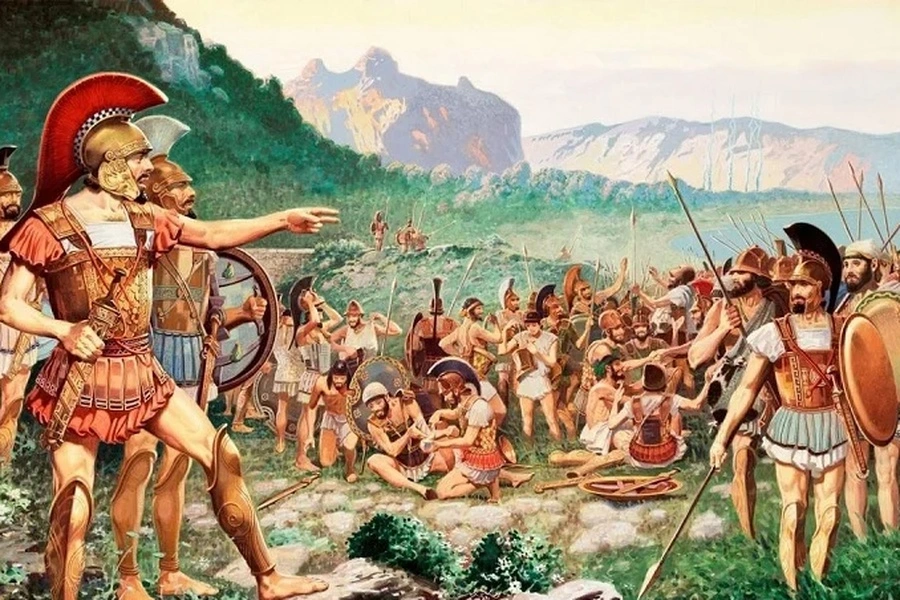
What the movie shows: Ephialtes is portrayed as a physically deformed Spartan rejected by Leonidas because he cannot hold his shield properly in the phalanx. Humiliated, he approaches Xerxes and offers to reveal a secret mountain path in exchange for wealth and acceptance.
What actually happened: The betrayal is historical. A Greek named Ephialtes of Trachis really did reveal a mountain route that allowed the Persians to outflank the defenders.
According to Herodotus (7.213-214), Ephialtes approached Xerxes and offered to guide his soldiers along the Anopaia path. This route crossed the mountains and descended behind the Greek position. The Persians accepted his offer. Hydarnes led a force of selected soldiers along the path during the night. At dawn, they encountered 1,000 Phocian soldiers guarding the mountain route. Taken by surprise, the Phocians eventually withdrew, allowing the Persians to continue towards the Greek rear.
There is no evidence that Ephialtes was physically deformed, that he was a Spartan, or that Leonidas had rejected him from military service. These details were invented for the film. Herodotus presents Ephialtes as a man seeking a reward for revealing the route, although the precise motives behind his decision cannot be independently established. After the battle, Ephialtes fled to Thessaly. The Greeks placed a price on his head, and he was eventually killed by Athenades of Trachis, although Herodotus says the killing was motivated by a separate grievance.
Verdict: Ephialtes really betrayed the Greeks, but his appearance, background, and personal motivations in the movie are fictional.
Source: Herodotus, Histories, 7.213-218.
3. Was Xerxes Really a Giant as Depicted in 300?
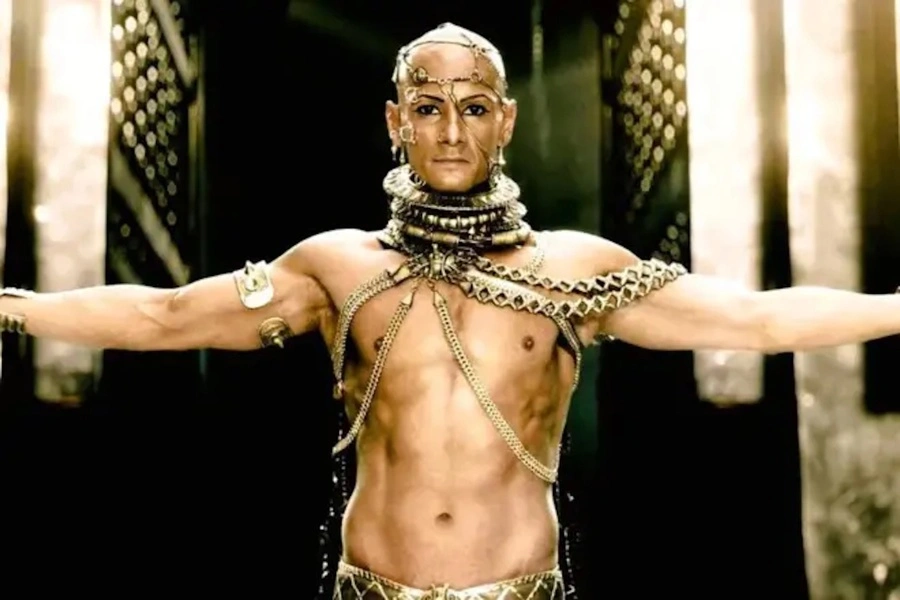
What the movie shows: Xerxes, played by Rodrigo Santoro, is an enormous, almost supernatural figure. Covered in elaborate jewellery and piercings, he presents himself as a god rather than an ordinary mortal ruler.
What actually happened: Xerxes I was a real historical ruler, the son of Darius I and king of the Achaemenid Persian Empire from approximately 486 to 465 BC. He personally led the invasion of Greece in 480 BC.
There is no historical evidence that Xerxes was a giant or possessed supernatural physical characteristics. Herodotus does describe him as exceptionally handsome and impressive in appearance, but not as the towering figure portrayed in the film. Surviving Persian royal reliefs offer a very different image. They depict the king in elaborate royal clothing, with carefully maintained hair and beard, surrounded by attendants and symbols of imperial authority.
The movie's portrayal is heavily influenced by Frank Miller's graphic novel 300, which transforms historical characters into exaggerated, almost mythical figures. In reality, Xerxes did not need supernatural characteristics to be formidable. He commanded a vast empire, mobilised a multinational army and organised an extraordinary military expedition into Greece.
Verdict: Xerxes was a powerful historical emperor, but his giant-like appearance in 300 is entirely fictional.
Sources: Herodotus, Histories, Book 7; Pierre Briant, From Cyrus to Alexander: A History of the Persian Empire.
4. Did the Persian Army Have Millions of Soldiers and Wild Beasts?
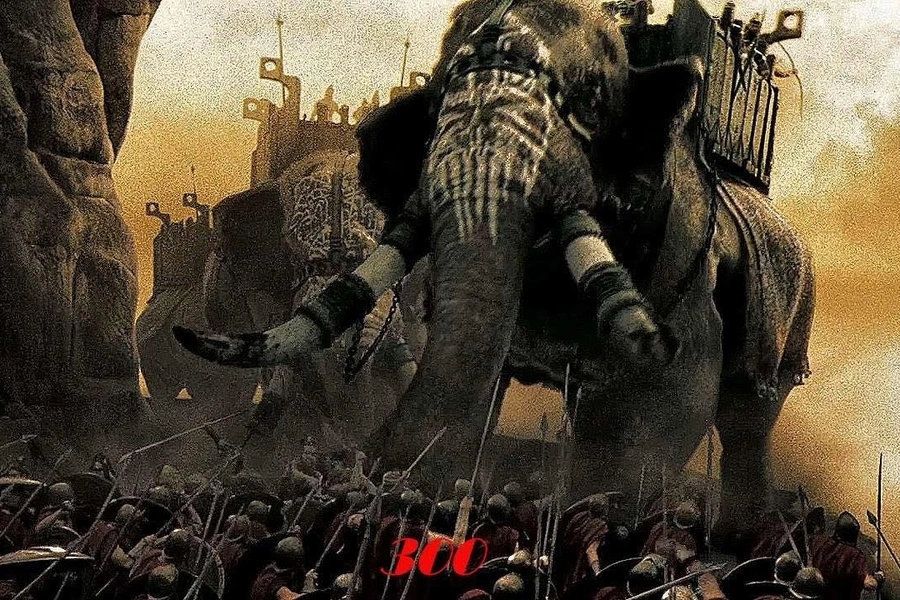
What the movie shows: Xerxes commands an apparently endless army containing gigantic elephants, a monstrous rhinoceros, and bizarre creatures. These forces make the Persian invasion appear almost supernatural.
What actually happened: The Persian army was genuinely enormous and multinational. Xerxes mobilised troops from across his empire, including Persians, Medes, Egyptians, Indians, Scythians and numerous other peoples.
Herodotus (7.60-99) provides a detailed description of the different contingents. However, his numerical estimates are widely regarded as exaggerated. He claims that the Asian land forces alone included approximately 1.7 million infantrymen and 80,000 cavalrymen. His total estimate, including naval personnel and support staff, exceeds five million.
Modern estimates are considerably lower, but historians disagree about the actual size. Figures ranging from tens of thousands to several hundred thousand fighting men have been proposed. Estimates around 100,000-300,000 are frequently discussed, although none can be established with certainty. The Persian army's strength came from its diversity and organisation:
- Infantry: Soldiers equipped with spears, bows, shields and swords.
- Archers: An important component of Persian military tactics.
- Cavalry: Mounted troops used for reconnaissance, mobility and battlefield support.
- Elite formations: Specialist units such as the Immortals.
- Logistical support: Camels, pack animals, supply vessels and transport arrangements.
As for the movie's animals, there is no reliable evidence that Xerxes deployed giant rhinoceroses or war elephants at Thermopylae. Herodotus does mention camels accompanying the expedition and even records lions attacking some of the Persian army's camels during its march through northern Greece (7.125-126). These were real logistical challenges, not monstrous battlefield encounters.
Verdict: The Persian army was a vast multinational force, but Herodotus' millions are almost certainly exaggerated. The giant rhinoceros and other monstrous creatures are Hollywood inventions.
Sources: Herodotus, Histories, 7.60-99 and 7.125-126; Pierre Briant, From Cyrus to Alexander.
5. Did the Persians Really Say Their Arrows Would Blot Out the Sun?
What the movie shows: A Persian general warns the Spartans that the Persian army is so enormous that its arrows will blot out the sun. Stelios, played by Michael Fassbender, responds with the famous line: "Then we will fight in the shade."
What actually happened: The exchange has a historical foundation, but the movie changes both the characters involved and the circumstances.
In Histories (7.226), Herodotus attributes the remark to a Spartan warrior named Dienekes. A local man from Trachis reportedly warned him that the Persian archers were so numerous that their arrows would hide the sun. Dienekes supposedly replied that this was excellent news because they would then fight in the shade.
In the historical account, there was no dramatic confrontation with a Persian general. The remark was reportedly made in response to a warning from a local Greek before the fighting. The film transfers the anecdote to Stelios and places it in a confrontation with a Persian envoy. Although the circumstances and speaker are changed, the underlying exchange is drawn from Herodotus.
Verdict: The "fight in the shade" remark is recorded by Herodotus, but it was attributed to Dienekes, not Stelios. The movie gives the line to Stelios and creates a different setting for the exchange.
Source: Herodotus, Histories, 7.226; 300 (2006), film dialogue.
6. Did Leonidas Really Die at Thermopylae? Why Didn't He Retreat?
What the movie shows: Leonidas refuses to retreat even after his warriors are surrounded. In the final confrontation, he attempts to kill Xerxes with a spear before being struck down by Persian arrows.
What actually happened: Leonidas really did die at Thermopylae. Herodotus (7.225) describes a fierce struggle over his body, with the Greeks reportedly fighting repeatedly to recover it before being overwhelmed.
Why did Leonidas stay when much of the allied army was allowed to withdraw?
Herodotus offers several possible explanations. He suggests that Leonidas may have wanted to save the other Greeks while remaining with his own Spartans. He also connects the decision to a prophecy from Delphi warning that either Sparta would be destroyed by the Persians or one of its kings would perish.
There were military considerations as well. The remaining defenders could continue resisting the Persian advance, giving the retreating Greeks additional time to withdraw. Once the Persians had discovered the mountain route, however, the Greek position was no longer defensible.
Herodotus describes how the defenders continued fighting after their spears were broken, using swords and whatever weapons remained available. After the Persian victory, Xerxes ordered Leonidas' head to be cut off and his body impaled. The movie's attempted assassination of Xerxes is fictional. There is no historical evidence that Leonidas personally confronted the Persian king during the final fighting.
Leonidas' decision is also connected to Spartan military culture, which placed considerable importance on discipline, loyalty, and duty. The Spartan Agoge training system helped shape this identity, although the film exaggerates the idea that Spartan warriors were almost superhuman fighters. The decision should therefore not be understood simply as a preference for glorious death over retreat. The remaining force could continue to resist and potentially delay the Persian advance, while Leonidas also faced the political and religious obligations associated with his position as a Spartan king. Herodotus preserves several possible explanations, and it is difficult to establish which considerations were decisive.
Verdict: Leonidas died fighting at Thermopylae, and his decision to remain with the defenders has a historical basis. The prophecy and military circumstances help explain his actions, but the final confrontation with Xerxes is fictional.
Source: Herodotus, Histories, 7.220-225 and 7.238.
7. Did Leonidas Really Kick Persian Envoys into a Well?
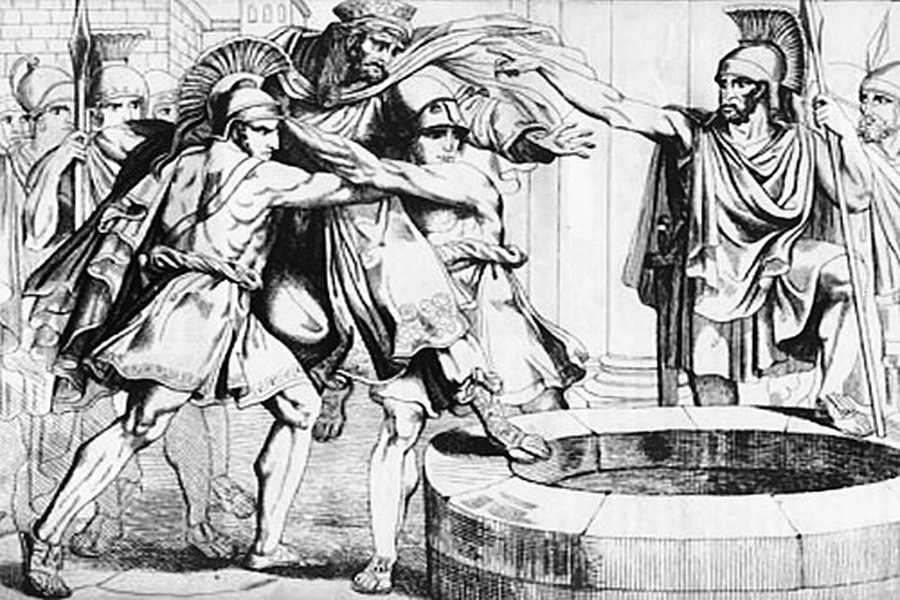
What the movie shows: Persian messengers arrive in Sparta demanding earth and water as symbols of submission to Xerxes. Leonidas responds by kicking the messenger into a deep well and declaring, "This is Sparta!"
What actually happened: The incident is based on a genuine historical account, but the film changes its chronology and attributes it to the wrong Persian king.
According to Herodotus (7.133), it was Darius I, Xerxes' father, who had previously sent heralds to the Greek cities demanding earth and water. The Spartans responded by throwing the Persian envoys into a well, telling them to obtain their earth and water there. The Athenians reportedly threw their envoys into a pit.
This happened before Xerxes' invasion in 480 BC. There is also no evidence that Leonidas personally carried out the act. Accepting the Persian demand meant acknowledging the authority of the Great King. The Spartans' response was therefore a deliberate act of defiance against Persian imperial power. The film combines this earlier incident with the events of Xerxes' invasion to create one of its most memorable scenes.
Verdict: The Spartans really did throw Persian envoys into a well, but this occurred during the reign of Darius I, not Xerxes. The film changes both the timing and the identity of the person responsible.
Source: Herodotus, Histories, 7.133-137.
8. Were the Persian Immortals Real? Did They Fight the Spartans?
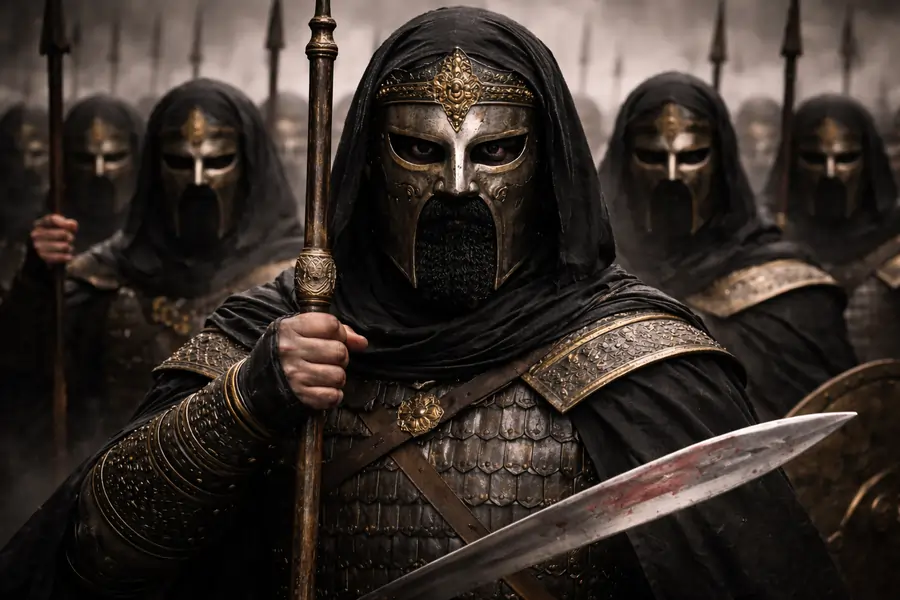
What the movie shows: Xerxes unleashes his elite Immortals after ordinary Persian soldiers fail to break the Greek defensive position. These masked, heavily armed warriors appear almost supernatural, but they struggle against Leonidas and his men.
What actually happened: The Immortals were a genuine elite Persian infantry formation. Herodotus (7.83) describes a force of 10,000 selected soldiers commanded by Hydarnes.
They were supposedly called Immortals because their number was maintained at exactly 10,000. Whenever a soldier died or became unfit for service, another replaced him. They were among the most prestigious formations in the Persian army. Their equipment included spears, bows, shields and swords, along with distinctive clothing. The elaborate masks and monstrous appearance shown in the film have no reliable historical basis.
The Immortals were deployed at Thermopylae and initially struggled against the Greek defenders. The narrow terrain limited their ability to use their numerical advantage, while the heavily equipped Greek hoplites proved difficult to dislodge through frontal attacks. However, the Immortals played a crucial role in the Persian victory. Hydarnes led them along the mountain route revealed by Ephialtes, allowing the Persians to approach the Greek position from behind.
Verdict: The Immortals were real and participated in the campaign. Their initial difficulties against the Greeks and their role in the outflanking manoeuvre are recorded by Herodotus, but their appearance in the movie is fictionalised.
Sources: Herodotus, Histories, 7.83 and 7.211; Rüdiger Schmitt, "Immortals", Encyclopaedia Iranica.
9. Was the Oracle of Delphi Bribed by the Persians to Mislead Leonidas?
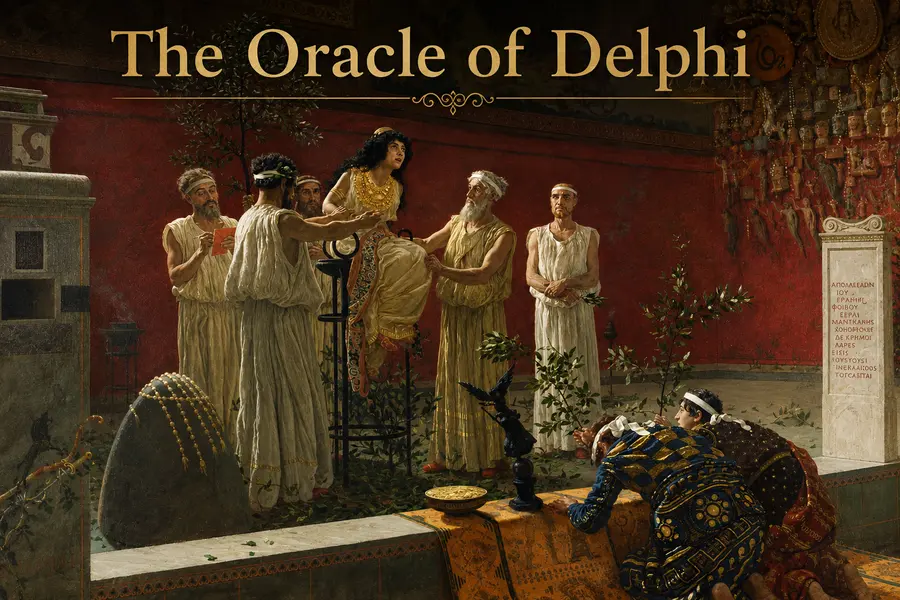
What the movie shows: The Spartan ephors are portrayed as corrupt priests who have been bribed by the Persians. They manipulate the Oracle of Delphi and prevent Leonidas from receiving permission to march against Xerxes.
What actually happened: The Oracle of Delphi was a real and influential religious institution. Herodotus records a prophecy warning the Spartans that either their city would be destroyed by the Persians or one of their kings would perish.
However, there is no reliable historical evidence that the Persians bribed the oracle or the Spartan ephors. The ephors were also not a group of religious priests. They were elected Spartan magistrates who exercised considerable political, judicial and administrative authority.
There is a more credible historical explanation for Leonidas' relatively small initial force. Herodotus (7.206) explains that the Spartans were celebrating the Carneia, a religious festival associated with Apollo. Religious restrictions affected military mobilisation, and the Spartans intended to send a larger force after the celebrations. The Olympic festival also affected the plans of other Greek allies. Leonidas therefore initially marched with a selected contingent while the wider Greek coalition prepared to support the defence.
Verdict: The Oracle and ephors were real, and religious obligations influenced Spartan military decisions. The Persian bribery conspiracy and the film's portrayal of the ephors as corrupt religious priests are unsupported by the surviving historical evidence.
Source: Herodotus, Histories, 7.206 and 7.220.
10. Was Queen Gorgo Really Involved in Spartan Politics?
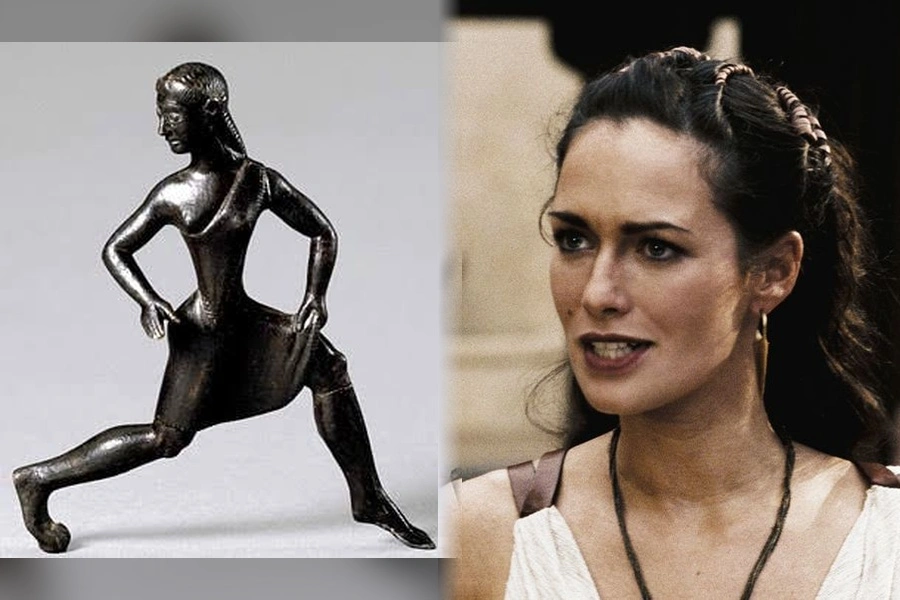
What the movie shows: Queen Gorgo, played by Lena Headey, attempts to persuade the Spartan council to support Leonidas. She becomes involved in political negotiations and eventually uncovers a conspiracy involving the corrupt politician Theron.
What actually happened: Gorgo was a real historical figure, the daughter of King Cleomenes I and the wife of Leonidas. Herodotus mentions her in two particularly interesting episodes.
The first occurred when Gorgo was reportedly around eight or nine years old. Aristagoras of Miletus visited Sparta to persuade King Cleomenes to support the Ionian Revolt against Persian rule. When Aristagoras offered the king increasing amounts of money, Gorgo reportedly warned her father that the visitor would corrupt him unless he was sent away. Cleomenes listened to her advice.
The second episode is directly connected to the Persian invasion. Demaratus, a former Spartan king living in exile at the Persian court, wanted to warn Sparta about Xerxes' military preparations. To avoid detection, he used a wooden writing tablet. He scraped away the wax, wrote his message on the wood, and covered it with fresh wax. The tablet appeared blank, allowing it to pass through Persian scrutiny.
When the tablet reached Sparta, its meaning initially confused the recipients. According to Herodotus (7.239), Gorgo realised that the wax needed to be removed. Once the message was uncovered, the Spartans understood the warning. These anecdotes suggest that Gorgo had access to important political information and could influence decisions within the royal household. Spartan women also enjoyed greater economic independence than women in many other Greek city-states, including the ability to inherit and own property.
However, this did not mean that women held formal political office or participated in the assembly as male citizens did. There is no historical evidence for the particular council campaign, confrontation with Theron, or political conspiracy shown in the film.
Verdict: Gorgo was a real Spartan queen whose intelligence and influence appear in Herodotus' account. The film draws on her historical reputation but invents much of her political storyline.
Sources: Herodotus, Histories, 5.51 and 7.239; Stephen Hodkinson, "Female Property Ownership and Status in Classical and Hellenistic Sparta".
Final Verdict: How Much of 300 Is Historically Accurate?
300 is a stylised retelling of the Battle of Thermopylae, not a documentary reconstruction. Its historical foundations are genuine, but the film transforms several events and characters to create a dramatic contrast between Spartan resistance and Persian imperial power.
Leonidas really commanded 300 Spartan warriors, Ephialtes betrayed the Greeks, the Immortals existed, and the famous remark about fighting in the shade was recorded by Herodotus. Leonidas also died at Thermopylae, although his final confrontation with Xerxes is fictional. The biggest distortions concern the size of the Greek force, Xerxes' appearance, the Persian army's supposed monsters, and the conspiracy involving the Oracle of Delphi. The film also gives too little attention to the other Greek defenders, especially the 700 Thespians who remained alongside the Spartans.
| Movie element | Historical assessment |
|---|---|
| 300 Spartan warriors | Historical |
| Ephialtes' betrayal | Historical event; fictionalised character |
| Xerxes as a giant | Fictional |
| Persian army and monstrous animals | Army historical; scale exaggerated and creatures fictional |
| Fight in the shade | Based on Herodotus' anecdote |
| Leonidas' death | Historical; final confrontation dramatised |
| Persian envoys thrown into a well | Historical event; wrong chronology |
| The Immortals | Historical unit; fictional appearance |
| Oracle bribery conspiracy | Fictional |
| Queen Gorgo's political role | Historical person; fictionalised storyline |
The real Battle of Thermopylae was remarkable without Hollywood's embellishments. A coalition of Greek city-states used geography, discipline, and heavy infantry to resist a much larger invading army. Although the Persians eventually captured the pass, the Greek resistance became a lasting symbol of courage and sacrifice. That is why 300 continues to resonate with audiences. Its historical details may be unreliable, but its central story is rooted in an extraordinary event that genuinely happened.
References and Further Reading
The following ancient and modern sources provide a foundation for examining the historical events behind 300. Herodotus is the principal surviving narrative source for Thermopylae, but his reported speeches, anecdotes, and numerical estimates should be treated critically.
- Herodotus. The Histories, Book VII. Chapters 60-99 (the Persian army), 133-137 (the Persian envoys), 175-239 (Thermopylae, Ephialtes, Leonidas and Gorgo). Read Book VII - University of Chicago, LacusCurtius.
- Herodotus. The Histories, Book VIII. For the subsequent Greek naval campaign and the Battle of Salamis. Read Book VIII - LacusCurtius.
- Rüdiger Schmitt. "Immortals." Encyclopaedia Iranica. A scholarly examination of the elite Persian military formation. Read the article.
- Stephen Hodkinson. "Female Property Ownership and Status in Classical and Hellenistic Sparta." An academic study of women's social and economic position in Sparta. Read the paper - Harvard Center for Hellenic Studies.
- Pierre Briant. From Cyrus to Alexander: A History of the Persian Empire. Eisenbrauns, 2002. A major study of the Achaemenid Empire and its military organisation.
- George Cawkwell. The Greek Wars: The Failure of Persia. Oxford University Press, 2005. An examination of the Persian Wars and Greek resistance.
- Peter Green. The Greco-Persian Wars. University of California Press, 1996. A detailed account of the conflict between the Greek city-states and the Persian Empire.
Related Articles
Frequently Asked Questions
How many Spartans and Greeks actually fought at the Battle of Thermopylae?
King Leonidas initially commanded 300 Spartan warriors as part of a much larger Greek coalition. Herodotus records at least 5,200 Greek soldiers from various city-states, excluding the Locrians, whose numbers are unspecified. During the final stand, 300 Spartans, 700 Thespians and 400 Thebans remained, although the Thebans eventually surrendered. The film 300 largely overlooks the contribution of these other Greek forces.
Was Ephialtes a real person who betrayed Leonidas at Thermopylae?
Yes. Ephialtes of Trachis was a real Greek who revealed a mountain route to the Persian king Xerxes I in 480 BC. He guided the Persians towards the rear of the Greek defensive position, allowing them to outflank Leonidas. However, the film's portrayal of Ephialtes as a physically deformed Spartan rejected by Leonidas is fictional. Herodotus identifies him as a local Greek from Trachis.
Was Xerxes really as tall and powerful as he appears in the movie 300?
No historical evidence suggests that Xerxes I was a giant or possessed supernatural physical characteristics. He was the fourth ruler of the Achaemenid Persian Empire and commanded the invasion of Greece in 480 BC. The movie's towering, heavily decorated portrayal of Xerxes was inspired by Frank Miller's graphic novel rather than historical descriptions.
Were the Persian Immortals a real army unit during the Battle of Thermopylae?
Yes. The Immortals were an elite Persian infantry formation described by the Greek historian Herodotus. Their strength was supposedly maintained at exactly 10,000 soldiers, with replacements provided whenever a member died or became unfit for service. They fought at Thermopylae and later helped the Persians outflank the Greek defenders by taking the mountain route revealed by Ephialtes.
Did the Spartans really say they would fight in the shade when Persian arrows blocked the sun?
The famous remark is recorded by Herodotus in Book VII of his Histories. However, he attributes it to a Spartan warrior named Dienekes, not Leonidas or Stelios, as depicted in the 2006 movie 300. When a local man warned that Persian arrows would hide the sun, Dienekes reportedly replied that the Greeks would then fight in the shade.
Was Queen Gorgo a real Spartan queen who helped defend Greece against Persia?
Yes. Queen Gorgo was the daughter of Spartan king Cleomenes I and the wife of Leonidas I. Herodotus records that she recognised how to uncover a secret message sent to Sparta by Demaratus, warning the Greeks about Xerxes' invasion preparations. Although she was an influential figure in the Spartan royal household, the political conspiracy and council negotiations involving her in the movie 300 are fictional.
Add Comment