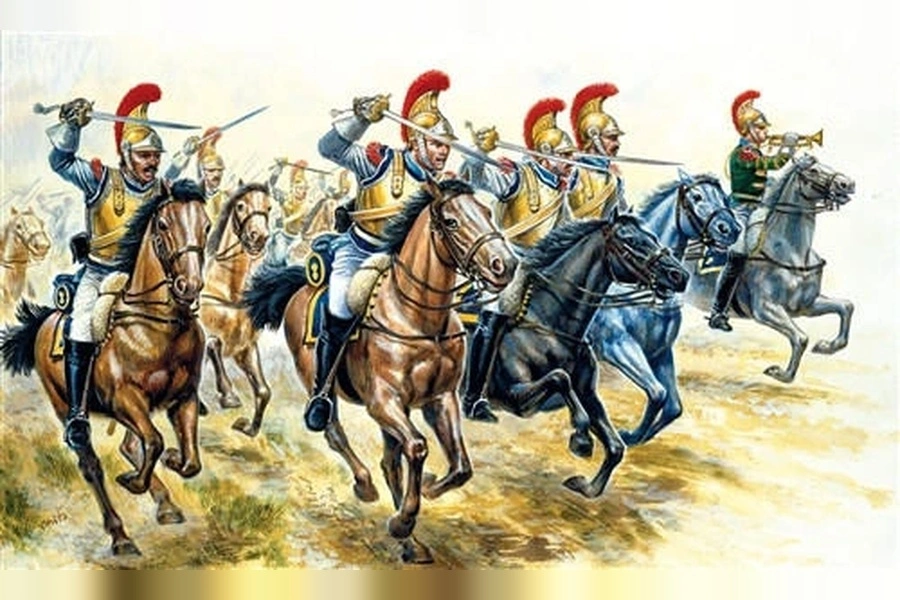
Napoleon's cavalry was one of the most formidable mounted forces in European military history. From the flamboyant hussars racing ahead of the army to the heavily armoured cuirassiers charging enemy formations, each cavalry type had a distinct purpose. Napoleon used his cavalry for a multitude of roles. It could gather intelligence, protect advancing armies, disrupt enemy communications and turn a battlefield victory into the destruction of an entire army. This combination of speed, shock and coordination helped make French cavalry a decisive weapon during the Napoleonic Wars.
Table of Contents
- The Evolution of Napoleon's Cavalry
- Types of Cavalry in Napoleon's Army
- What Role Did Cavalry Perform?
- How Napoleon Organised His Cavalry
- Napoleon's Cavalry Compared to Other European Armies
- The Role of Cavalry in Major Battles
- Famous French Cavalry Commanders
- The Decline of Napoleon's Cavalry
- Legacy of Napoleon's Cavalry
- References and Further Reading
The Evolution of Napoleon's Cavalry
When Napoleon rose to power, the French cavalry was recovering from the disruption caused by the French Revolution. The old royal army had possessed a strong cavalry tradition, but revolutionary upheaval had weakened its officer corps, recruitment and training. Napoleon recognised the importance of restoring this military arm. He expanded the number of regiments, improved organisation and placed experienced commanders in charge of larger formations. His campaigns in Italy had already demonstrated how mounted troops could exploit an enemy's weakness and pursue retreating forces.
By the campaigns of 1805 and 1806, French cavalry had become a central component of the Grande Armée. Napoleon increasingly concentrated substantial cavalry formations under senior commanders rather than distributing every regiment among individual infantry units. This allowed him to retain a powerful mounted reserve that could intervene at critical moments. French cavalry broadly consisted of three categories:
- Light cavalry: Hussars and chasseurs à cheval, responsible for reconnaissance, screening and pursuit.
- Medium cavalry: Versatile mounted troops capable of performing reconnaissance, supporting infantry and fighting enemy cavalry.
- Heavy cavalry: Cuirassiers and carabiniers, primarily intended for shock action against enemy formations.
Lancers were subsequently added to the French cavalry system, while the Imperial Guard maintained its own elite mounted regiments.
Types of Cavalry in Napoleon's Army
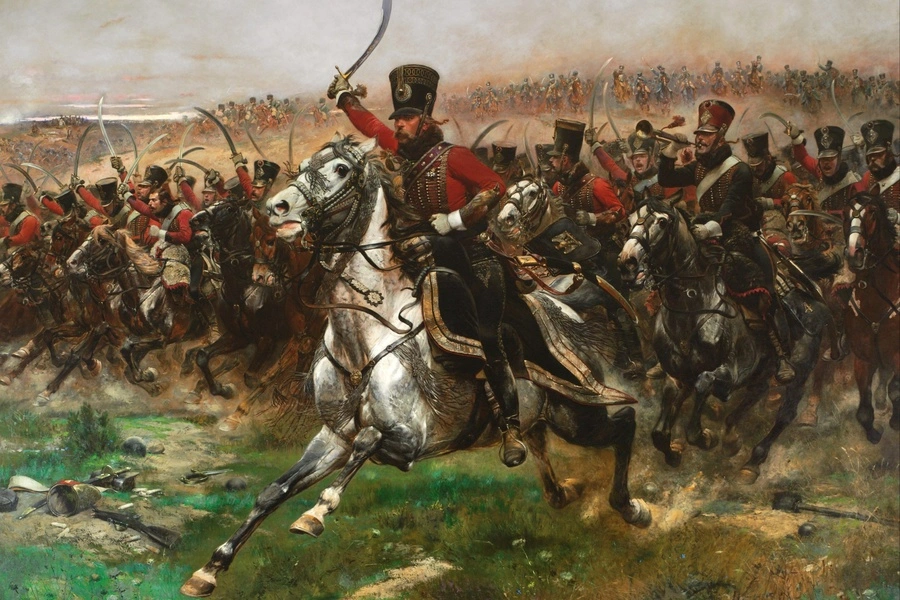
Although all cavalrymen fought on horseback, their equipment, training, and battlefield responsibilities differed considerably.
| Cavalry Type | Category | Primary Role | Distinctive Equipment |
|---|---|---|---|
| Hussars | Light | Reconnaissance, raids and pursuit | Curved sabre and pistols |
| Chasseurs à Cheval | Light | Scouting and screening | Sabre and carbine |
| Cuirassiers | Heavy | Shock charges | Metal cuirass and heavy sabre |
| Carabiniers | Heavy | Heavy cavalry combat | Carbine, sabre and cuirass |
| Dragoons | Medium | Versatile mounted operations | Sabre and carbine |
| Lancers | Light/medium cavalry | Shock action, pursuit and attacks against disorganised troops | Long lance and sabre |
1. Hussars: The Elite Light Cavalry
Hussars were among the most recognisable soldiers of the Napoleonic era. Their elaborate uniforms, braided jackets and fur-trimmed pelisses reflected their origins in Central European cavalry traditions, particularly Hungary. Unlike heavy cavalry, hussars relied on speed and mobility rather than physical impact. Their primary responsibilities included scouting enemy positions, protecting army flanks, attacking supply columns, and pursuing retreating troops.
They typically carried curved sabres and pistols, with some regiments also equipped with carbines. Their emphasis on mobility and reconnaissance allowed them to operate ahead of the main army, covering considerable distances while screening its movements. Antoine Charles Louis de Lasalle became the most celebrated French hussar commander. His daring operations during the 1806 campaign against Prussia demonstrated the effectiveness of light cavalry in pursuing and disrupting a defeated enemy. Lasalle was killed at Wagram in 1809.
2. Chasseurs à Cheval: The Versatile Light Cavalry
The chasseurs à cheval, or mounted hunters, performed many of the same duties as hussars. They were particularly useful for reconnaissance, screening infantry columns and engaging enemy light cavalry. They generally wore less elaborate uniforms than hussars and carried sabres, pistols and sometimes carbines. Their responsibilities frequently overlapped with those of other light cavalry formations. The Imperial Guard maintained its own Chasseurs à Cheval, an elite regiment that served as Napoleon's personal mounted escort while also participating in important battlefield operations.
3. Cuirassiers: Napoleon's Armoured Shock Cavalry
Cuirassiers were the most recognisable heavy cavalry of Napoleon's army. Their defining feature was the metal cuirass, which protected the chest and back against certain sword blows and pistol fire. They rode large, powerful horses and carried heavy straight-bladed swords and pistols. Their purpose was to deliver concentrated charges against vulnerable enemy formations.
Cuirassiers were particularly effective against enemy cavalry, exposed artillery and infantry that had already lost its cohesion. Napoleon often retained them as a reserve rather than committing them at the beginning of a battle. Their limitations were equally important. Heavy cavalry required suitable ground, well-trained horses and sufficient room to manoeuvre. A cuirassier charge against disciplined infantry in square formation was unlikely to succeed without artillery or infantry support.
Even when cavalry could not break an infantry square, its presence forced infantry to adopt a defensive formation that restricted their mobility. This created opportunities for artillery and infantry to attack the stationary formation. Cavalry therefore influenced the battlefield even when its charge did not produce a direct breakthrough.
At Austerlitz in 1805, French heavy cavalry under commanders including Étienne Nansouty and Louis d'Hautpoul fought against Allied cavalry on the northern flank, helping secure the French position.
4. Carabiniers: Elite Heavy Cavalry
Carabiniers originally developed as elite mounted troops associated with the carbine. By the Napoleonic period, their role increasingly resembled that of conventional heavy cavalry. They carried sabres, carbines and pistols. Following heavy losses at Wagram in 1809, where Austrian cavalry armed with lances inflicted serious casualties, Napoleon ordered the two French carabinier regiments to receive metal cuirasses in 1810. This brought their appearance and equipment closer to those of the cuirassiers. This brought their appearance closer to that of the cuirassiers.
Carabiniers participated in major heavy cavalry operations and formed part of Napoleon's mounted reserve. Their equipment and training made them valuable troops, although their battlefield responsibilities increasingly overlapped with those of cuirassiers.
5. Dragoons: The Versatile Medium Cavalry
Dragoons had originally developed as mounted infantrymen who rode to battle but frequently dismounted to fight. By Napoleon's time, French dragoons had become conventional cavalry, although their ability to operate on foot remained part of their military tradition. They carried sabres, pistols and carbines and were generally more versatile than specialised heavy cavalry. Their duties included reconnaissance, supporting infantry, fighting enemy cavalry and operating in difficult terrain.
Dragoons were particularly useful when commanders needed mounted troops that could perform several different tasks. They could support a cavalry charge in open country or dismount when terrain made mounted operations impractical.
6. Lancers: Cavalry Armed with the Lance
The lance gave cavalrymen a significant reach advantage over opponents armed with shorter sabres. Napoleon became increasingly interested in lancer formations after witnessing the performance of Polish cavalry during the campaigns in Spain. The Polish light cavalry charge at Somosierra in 1808 became particularly famous. Impressed by their performance, Napoleon expanded the use of lancers within his army. In 1811, several French dragoon regiments were converted into chevau-légers lanciers.
Lancers were effective against enemy cavalry and retreating infantry, especially when formations had lost their cohesion. However, the weapon required specialised training and was less convenient during close, congested fighting.
7. Imperial Guard Cavalry
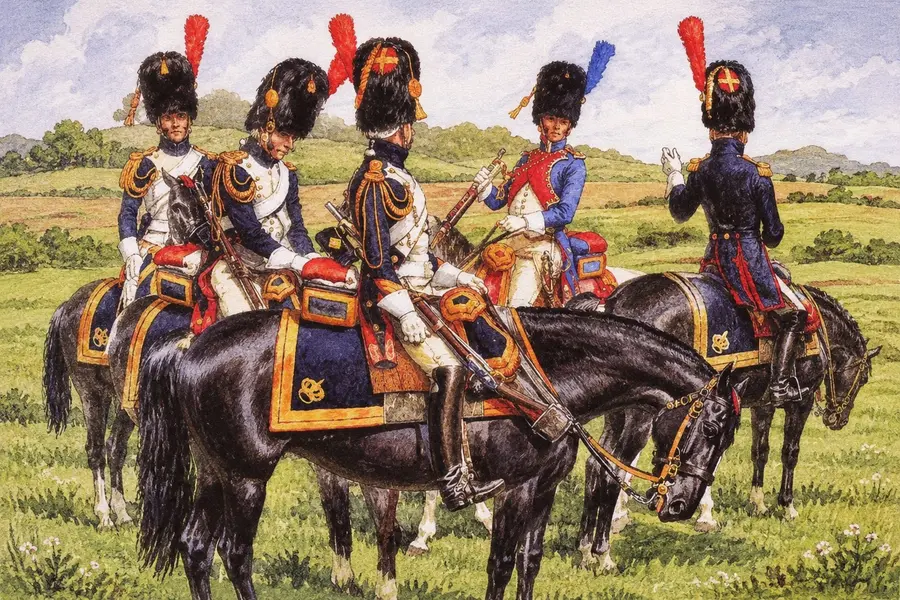
The Imperial Guard contained some of Napoleon's finest mounted troops. These formations were carefully selected, experienced, and often better equipped than ordinary line cavalry. Its principal cavalry units included:
- Grenadiers à Cheval: Elite heavy cavalry.
- Chasseurs à Cheval: Light cavalry who also served as Napoleon's escort.
- Polish Lancers: Famous for their aggressive mounted charges.
- Mamelukes: A small cavalry unit associated with Napoleon's Egyptian campaign.
- Empress Dragoons: A Guard dragoon regiment established in 1806.
The Guard cavalry was not merely ceremonial. Napoleon could commit it as a powerful reserve when the outcome of a battle was at stake. Its engagement against the Russian Imperial Guard at Austerlitz in 1805 became one of its most celebrated achievements.
What Role Did Cavalry Perform in Napoleon's Army?
Napoleon's cavalry performed several interconnected functions. Its importance extended beyond the battlefield, influencing how armies marched, gathered intelligence, and pursued their opponents.
Reconnaissance and Screening
Light cavalry operated ahead of the main army, identifying enemy positions, monitoring movements, and capturing patrols. It also protected the flanks of advancing infantry columns and prevented opposing cavalry from gathering intelligence. This was particularly important under Napoleon's corps system, where separate formations marched along different routes but needed to remain informed about enemy movements.
Shock Action
The cavalry charge was the most dramatic function of Napoleon's mounted troops. A large formation advancing at speed could overwhelm enemy cavalry, attack exposed artillery and exploit weaknesses in infantry positions. Heavy cavalry was especially effective against troops that had suffered casualties or lost formation. However, cavalry could not reliably break an intact infantry square. Napoleon therefore relied on cooperation between infantry, artillery, and mounted troops to create opportunities for successful charges.
Pursuit and Exploitation
After an enemy army broke, cavalry could pursue retreating troops much faster than infantry. Hussars and chasseurs attacked stragglers, captured artillery, and disrupted attempts to reorganise. The pursuit following Jena-Auerstedt in 1806 demonstrated how French cavalry could turn a battlefield defeat into a wider military disaster for the opposing army.
Raids and Communication Disruption
Light cavalry could attack couriers, supply columns, and communication routes behind enemy lines. These operations disrupted the movement of reinforcements and supplies while forcing opponents to divert troops to protect vulnerable routes.
How Napoleon Organised His Cavalry
Napoleon organised his cavalry into regiments, squadrons, brigades and divisions. Several divisions could be combined into a larger cavalry corps under a senior commander. Two broad arrangements were particularly important:
- Corps cavalry: Smaller mounted formations attached to army corps for reconnaissance, screening and local support.
- Reserve cavalry: Larger formations concentrated under senior commanders and held back for major battlefield operations.
This system allowed Napoleon to retain mounted troops for immediate operational duties while preserving a substantial force for decisive attacks. Horse artillery was another important element. Unlike conventional foot artillery, horse artillery batteries used lighter guns and moved alongside cavalry formations. They could bombard enemy positions and weaken infantry before a mounted attack. The combination of cavalry and horse artillery was far more effective than relying on charges alone. It helped Napoleon integrate mounted warfare into his wider battlefield tactics.
Napoleon's Cavalry Compared to Other European Armies
Napoleon's opponents also maintained formidable mounted forces. The French advantage was not necessarily the individual quality of every cavalryman, but the organisation and coordination of their formations.
| Army | Major Cavalry Types | Strengths |
|---|---|---|
| French | Hussars, cuirassiers, dragoons and lancers | Strong reserve formations and coordinated battlefield employment. |
| British | Household cavalry, heavy cavalry and hussars | Well-mounted troops with considerable regimental fighting ability. |
| Austrian | Cuirassiers, dragoons, hussars et chevau-légers | Long cavalry tradition and capable heavy and light formations. |
| Russian | Hussars, dragoons, cuirassiers, uhlans and Cossacks | Large cavalry establishment and excellent irregular reconnaissance. |
| Prussian | Dragoons, cuirassiers, hussars and uhlans | Strong traditional cavalry culture, substantially reformed after 1806. |
French vs British Cavalry
British cavalry was generally well mounted and could be extremely effective in direct combat. However, some British regiments struggled to maintain formation after successful charges and occasionally pursued retreating opponents too far. Waterloo illustrated both their strengths and weaknesses. British cavalry achieved impressive success against French infantry formations, but several regiments advanced too far and became vulnerable to French counterattacks.
French vs Austrian Cavalry
The Austrian army possessed a strong cavalry tradition, including experienced hussars and heavy cavalry. Its weakness was sometimes organisational rather than individual. The French increasingly emphasised concentrated formations and coordinated attacks, an approach that proved effective at Austerlitz and Wagram.
French vs Russian Cavalry
Russian cavalry was particularly diverse. Regular formations were supported by Cossacks, whose mobility made them excellent at reconnaissance, harassment and attacks against supply routes. During the Russian campaign of 1812, Cossacks became a serious threat to the retreating French army. Their operations against isolated formations and supply columns exposed the vulnerability of Napoleon's exhausted forces.
French vs Prussian Cavalry
Prussian cavalry suffered alongside the rest of the army in 1806. However, subsequent military reforms improved its organisation and effectiveness. By the campaigns of 1813 and 1814, Prussian mounted troops had become an important component of the Allied military effort. Overall, French cavalry was particularly effective during the early and middle years of the Empire because of its experienced leadership and integration into Napoleon's wider military system.
The Role of Cavalry in Napoleon's Major Battles
The effectiveness of Napoleon's cavalry is best understood through its performance in major engagements. These battles demonstrate both the extraordinary impact of mounted attacks and their limitations against prepared infantry.
Battle of Marengo (1800): Kellermann's Decisive Charge
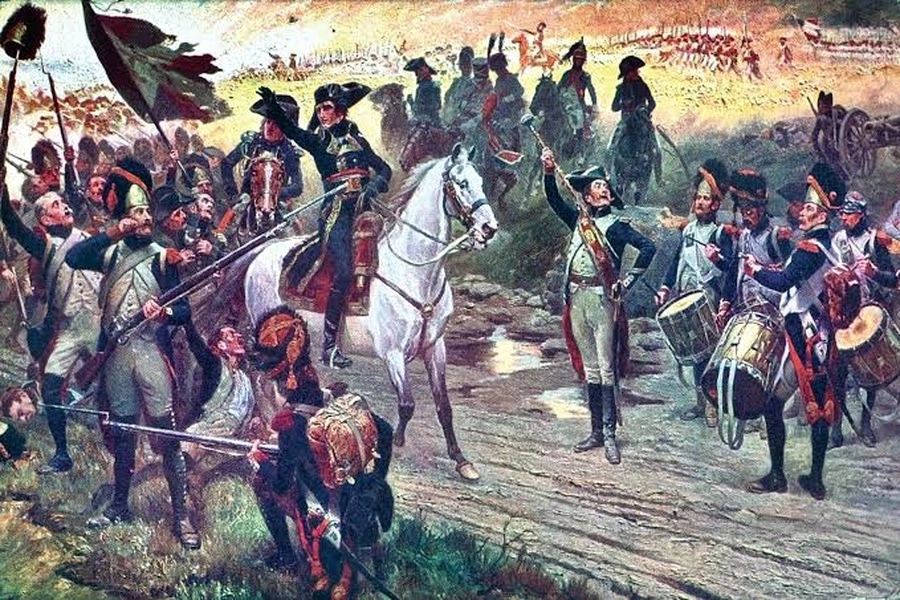
At Marengo on 14 June 1800, Austrian forces initially pushed Napoleon's army into retreat. The arrival of General Louis Desaix helped restore the French position, but cavalry played a decisive role in the final reversal. General François Étienne de Kellermann led a cavalry charge against the advancing Austrians at a critical moment. The attack struck formations that were beginning to lose cohesion, helping turn the Austrian advance into a retreat. Marengo demonstrated how a well-timed cavalry attack could exploit an enemy's vulnerability and transform the outcome of a battle.
Battle of Austerlitz (1805): The Imperial Guard Against the Russian Guard
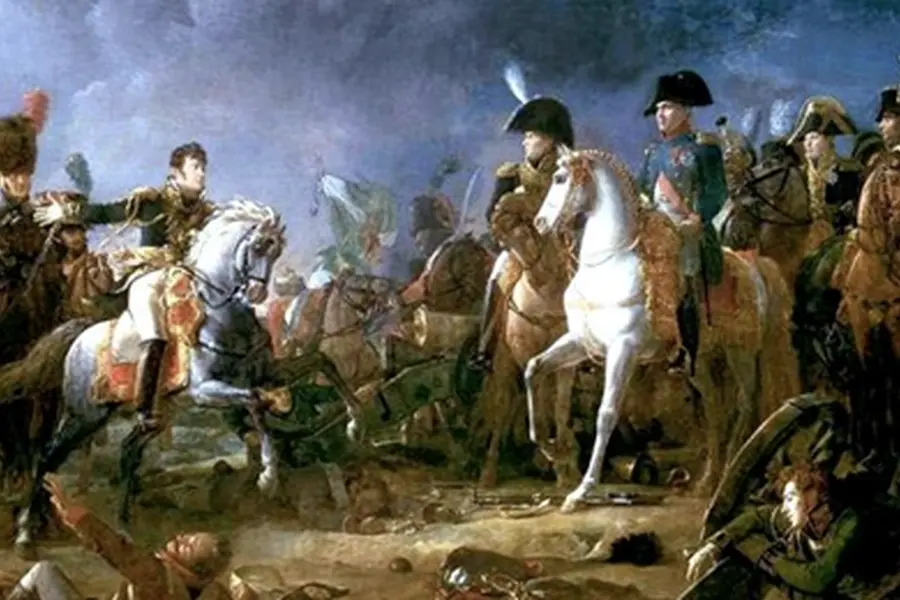
At Austerlitz, Russian Imperial Guard cavalry and infantry threatened the French position during the fighting on the northern part of the battlefield. Napoleon responded by committing his Imperial Guard cavalry under Jean-Baptiste Bessières. General Rapp led the attack against the Russian Guard cavalry, capturing prisoners and standards, including Prince Nikolai Repnin. Meanwhile, Murat's cavalry fought Allied mounted formations elsewhere on the battlefield. The engagement demonstrated how concentrated cavalry could protect an important position and defeat elite enemy troops.
Battle of Eylau (1807): Murat's Massive Cavalry Charge
Eylau was one of Napoleon's bloodiest battles. On 8 February 1807, a Russian attack threatened to break the French centre after Augereau's infantry became disorganised in the snow. Napoleon ordered Murat to lead a massive cavalry counterattack. Approximately 10,700 horsemen, including heavy cavalry and elements of the Imperial Guard, advanced against the Russian formations.
The charge broke through sections of the Russian line and prevented the enemy from exploiting the crisis. However, the French cavalry suffered heavy casualties, and General d'Hautpoul was mortally wounded. Eylau demonstrated the destructive potential of concentrated cavalry, but also the risks of committing large formations against a strong opponent.
Battle of Somosierra (1808): The Polish Lancers' Charge
During Napoleon's advance into Spain, Spanish forces defended the narrow mountain pass of Somosierra on 30 November 1808. Their artillery batteries dominated the road, making a direct French advance extremely difficult. Napoleon ordered the Polish light cavalry of the Imperial Guard to attack. Led initially by Jan Kozietulski, the horsemen charged up the narrow road despite suffering casualties from artillery and musket fire.
Additional Polish and French cavalry joined the attack, eventually overrunning the Spanish positions and opening the route towards Madrid. Somosierra became one of the most famous cavalry charges of the Napoleonic Wars. It demonstrated the determination of the Polish Lancers, although such an attack was exceptional rather than a typical example of cavalry defeating prepared artillery.
Battle of Borodino (1812): Cavalry at the Great Redoubt
At Borodino, French cavalry played an important role in the fighting around the Russian defensive positions. General Louis-Pierre Montbrun and other French cavalry commanders participated in attacks against the Russian positions near the Great Redoubt. After Montbrun was killed, General Auguste de Caulaincourt led cavalry into the redoubt, helping capture the position. Caulaincourt was also killed during the assault.
The battle demonstrated that cavalry could still contribute to attacks against fortified positions when combined with infantry and artillery. However, the enormous losses suffered by the French army further weakened its already exhausted cavalry during the Russian campaign.
Battle of Waterloo (1815): The Failure of the French Cavalry Charges
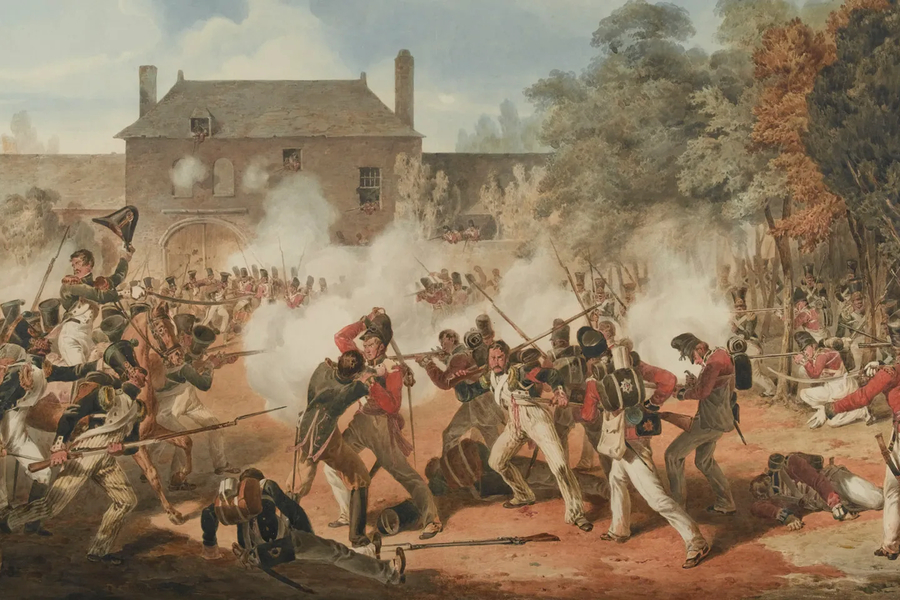
Waterloo provided a dramatic demonstration of the limitations of cavalry when employed without adequate support. On 18 June 1815, Marshal Michel Ney launched repeated French cavalry attacks against Wellington's Anglo-Allied infantry positions. Thousands of horsemen, including cuirassiers and other mounted formations, advanced against the Allied centre.
However, Wellington's infantry formed defensive squares. Their bayonets faced outwards on every side, making it extremely difficult for cavalry to penetrate the formations. The French cavalry rode around the squares but could not destroy them. Allied artillery and infantry inflicted casualties, while counterattacks threatened disorganised French formations.
The attacks were repeated without producing the breakthrough Ney expected. The central weakness was the lack of coordinated infantry support to exploit any disruption caused by the cavalry. The French horsemen repeatedly forced Allied infantry to remain in defensive squares, but could not destroy those formations on their own. The squares survived, while the French cavalry gradually lost its cohesion and suffered mounting casualties. The Battle of Waterloo demonstrated that courage and numbers alone could not overcome disciplined infantry. It remains one of the clearest examples of the importance of combined-arms tactics in Napoleonic warfare.
Famous French Cavalry Commanders
Napoleon's cavalry owed much of its reputation to a generation of experienced commanders. Their ability to control formations, recognise opportunities and time their attacks was essential to the success of mounted operations.
| Commander | Contribution |
|---|---|
| Joachim Murat | Led major cavalry formations at Austerlitz and Eylau. |
| Antoine Charles Louis de Lasalle | One of the most celebrated light cavalry commanders. |
| Étienne Nansouty | Commanded French heavy cavalry at major engagements. |
| Louis-Pierre Montbrun | Led important cavalry operations during the Russian campaign. |
| Auguste de Caulaincourt | Led the cavalry attack that captured the Great Redoubt at Borodino. |
| François Étienne de Kellermann | His charge helped turn the Battle of Marengo. |
| Jean-Baptiste Bessières | Commanded the Imperial Guard cavalry. |
Joachim Murat: Napoleon's Most Famous Cavalry Commander
Joachim Murat was arguably the most famous cavalry commander of the Napoleonic era. Known for his extravagant uniforms and personal bravery, he became Napoleon's principal cavalry leader during several major campaigns.
His greatest achievements included the cavalry operations at Austerlitz and the massive counterattack at Eylau. Murat was particularly effective at inspiring mounted troops and leading aggressive attacks, although his enthusiasm sometimes encouraged unnecessarily risky charges. Napoleon eventually made him King of Naples. Their relationship deteriorated during the final years of the Empire, and Murat was executed in 1815 following his failed attempt to regain his kingdom.
Antoine Charles Louis de Lasalle: The Hussar Legend
Lasalle became famous for his daring raids and aggressive light cavalry operations. His contribution during the 1806 campaign against Prussia demonstrated how light cavalry could destroy an enemy's ability to retreat and reorganise after defeat. He was killed at Wagram in 1809, depriving Napoleon of one of his finest mounted commanders.
Étienne Nansouty: Master of Heavy Cavalry
Nansouty developed a reputation for discipline and precise battlefield control. He commanded heavy cavalry at Austerlitz and several subsequent engagements. His ability to maintain formation made him particularly valuable in large-scale cavalry operations.
For more on the military leaders who shaped history, see our article on the greatest military generals in history.
The Decline of Napoleon's Cavalry
Napoleon's cavalry reached its greatest strength during the early and middle years of the Empire. However, continuous warfare gradually weakened its manpower, horses, and experienced leadership. The Russian campaign of 1812 was particularly destructive. Long marches, poor roads, inadequate supplies, and extreme weather caused enormous losses of horses. Replacing experienced cavalrymen was difficult, but rebuilding entire regiments of trained horses was even harder.
The campaigns of 1813 and 1814 placed further pressure on the French mounted arm. Napoleon could still raise cavalry formations, but many contained inexperienced recruits and lacked the quality of the veterans who had fought at Austerlitz and Jena. By Waterloo in 1815, France could no longer field cavalry with the same depth of experience and resources that had characterised the early Empire.
The problem was not simply replacing the lost horses. Effective cavalry required trained riders, experienced officers and well-conditioned mounts capable of operating together in large formations. Napoleon could raise new regiments relatively quickly, but rebuilding the experience and cohesion of his pre-1812 cavalry was far more difficult.
Legacy of Napoleon's Cavalry
Napoleon's cavalry was among the most effective mounted forces of its age. Its success came from combining different cavalry types within a coordinated military system rather than relying on spectacular charges alone. Hussars and chasseurs gathered intelligence and pursued defeated enemies. Dragoons provided versatility, while cuirassiers and carabiniers delivered powerful shock attacks. Lancers added reach and effectiveness against enemy cavalry, while the Imperial Guard provided an elite mounted reserve.
Marengo, Austerlitz, Eylau and Somosierra demonstrated the extraordinary potential of mounted warfare. Waterloo, however, exposed its limitations against disciplined infantry formations. Napoleon's greatest contribution was recognising that cavalry could influence every stage of a campaign, from reconnaissance and manoeuvre to the destruction of a retreating army. His mounted forces were not invincible, but their organisation, leadership and battlefield employment helped shape European warfare for generations.
References and Further Reading
- David G. Chandler, The Campaigns of Napoleon (1966). A comprehensive account of Napoleon's military campaigns and battlefield organisation.
- Philip J. Haythornthwaite, Armies of the Napoleonic Wars. An illustrated reference on the armies, uniforms and equipment of the period. Osprey Publishing.
- Alessandro Barbero, The Battle: A New History of Waterloo (2003). A detailed study of the Waterloo campaign and its battlefield tactics.
- Joo Jung-youl, "A Study of Napoleon's Cavalry Tactics." An academic study of French cavalry doctrine and its battlefield application. Read the study.
- Cadet Waitman Beorn, "Heads Up, By God! French Cavalry at Eylau, 1807 and Napoleon's Cavalry Doctrine." A detailed examination of the Eylau cavalry charge. The Napoleon Series.
- The Cambridge History of the Napoleonic Wars. Research on the military organisation and warfare of the Napoleonic period. Cambridge University Press.
Frequently Asked Questions
What were the different types of cavalry in Napoleon's army?
Napoleon's army had several types of cavalry, broadly divided into light, medium and heavy cavalry. Hussars and chasseurs à cheval performed reconnaissance, scouting and pursuit operations. Dragoons were versatile mounted troops capable of fighting on horseback or on foot. Cuirassiers and carabiniers were heavy cavalry designed for powerful charges against enemy formations. Napoleon also introduced lancer regiments, while the Imperial Guard maintained elite cavalry units such as the Polish Lancers, Grenadiers à Cheval and Chasseurs à Cheval.
What was the difference between French hussars, cuirassiers and dragoons?
The main difference was their battlefield role, equipment and method of fighting. Hussars were light cavalry who specialised in reconnaissance, raids and pursuing retreating enemies. Cuirassiers were heavily armoured cavalry wearing metal breastplates and were primarily used for shock charges against enemy formations. Dragoons occupied a middle position, serving as versatile mounted troops who could perform reconnaissance, support infantry and fight dismounted when necessary.
Why did Napoleon use heavy cavalry like cuirassiers in battle?
Napoleon used heavy cavalry, particularly cuirassiers and carabiniers, to deliver concentrated attacks against vulnerable enemy formations. Their large horses, heavy sabres and protective metal cuirasses made them effective against enemy cavalry, exposed artillery and infantry that had lost its formation. Napoleon often held them in reserve until artillery and infantry had weakened the opposing position, creating an opportunity for a decisive cavalry charge.
How were Napoleon's cavalry tactics different from those of other European armies?
Napoleon's cavalry tactics emphasised the concentration of different cavalry types into coordinated formations. French armies combined light cavalry for reconnaissance and pursuit, dragoons for versatile operations, and heavy cavalry for decisive battlefield attacks. Although British, Austrian, Russian and Prussian armies also possessed excellent cavalry, Napoleon frequently used larger cavalry reserves under experienced commanders. His approach allowed cavalry to support wider infantry and artillery operations rather than fight as an isolated force.
Why did French cavalry fail to break Wellington's infantry squares at Waterloo?
French cavalry failed to break Wellington's infantry squares at Waterloo in 1815 because the Allied infantry maintained disciplined defensive formations. Each square presented a wall of bayonets facing outwards, making it extremely difficult for horsemen to charge directly into the formation. French cavalry repeatedly attacked but lacked sufficient infantry and artillery support to force the squares to break. The attacks inflicted pressure but failed to produce the breakthrough Marshal Ney expected.
Who were the most famous French cavalry commanders during the Napoleonic Wars?
Some of the most famous French cavalry commanders included Joachim Murat, Antoine Charles Louis de Lasalle, Étienne Nansouty, François Étienne de Kellermann and Louis-Pierre Montbrun. Murat led major cavalry formations at Austerlitz and Eylau, while Lasalle became famous for his light cavalry operations. Nansouty was an accomplished heavy cavalry commander, and Kellermann's charge helped secure Napoleon's victory at Marengo in 1800. Montbrun played an important role during the Russian campaign and was killed at Borodino in 1812.
Add Comment